The Best Plein Air Palette for Oils, Watercolour and Everything In Between
Practical guide to choosing the best plein air palette for oils, acrylics, watercolour and gouache. Covers grey surfaces, glass, wood, disposable pads and folding palettes for travel.

Key takeaways
- • Pick the palette that matches your medium: flat surfaces for oils and acrylics, wells for watercolour and gouache.
- • Grey mixing surfaces give more reliable value and colour judgement outdoors than bright white.
- • Travel method matters: glass is best by car, acrylic or disposable pads are better for walking or public transport.
- • Recommended picks by type include grey acrylic inserts, clear or grey glass, sealed wooden palettes, disposable pads, and folding metal palettes for watermedia.
- • Clean and seal appropriately: scrape glass clean, seal wood before use, clean acrylics quickly, and use a knife and rag for oils in the field.
Your studio palette probably isn't doing you any favours outdoors. Finding the best plein air palette is one of those decisions that sounds minor until you're standing in a field with colours that look nothing like what you mixed, or scrambling to stop a glass palette sliding off your easel tray. This guide covers the main types: wood, glass, acrylic, disposable paper, and folding watercolour palettes, with specific product picks available to buy in the UK for each one. Whether you paint in oils, watercolour, gouache, or acrylics, there's a practical recommendation here for your setup.
Does Your Palette Actually Matter for Plein Air?
Outdoors, time works against you. The light shifts, clouds move, and the scene you sat down to paint looks different twenty minutes later than it did when you arrived. A palette that slows you down, confuses your colour judgements, or is a pain to transport genuinely costs you painting time.
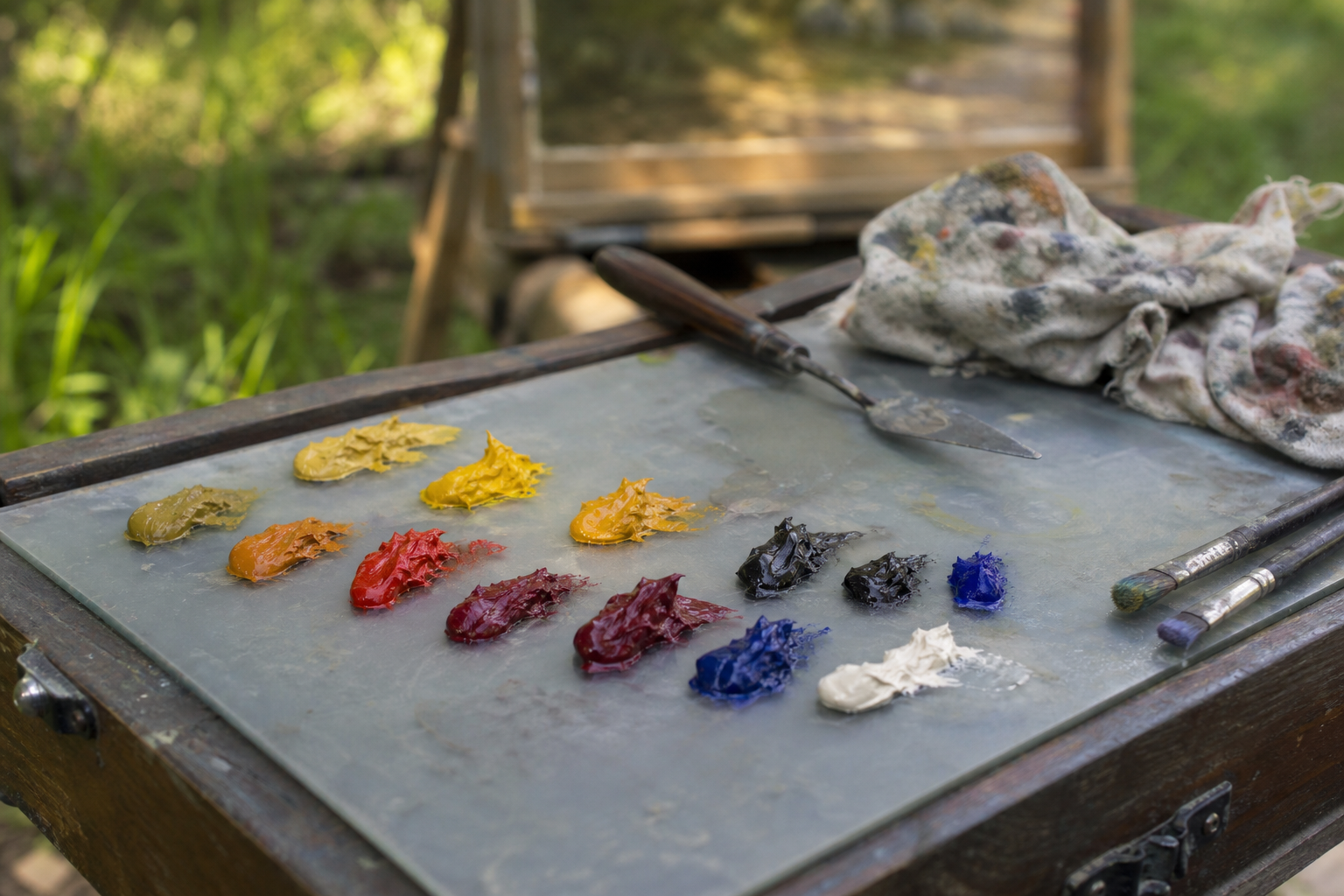
A few things matter more outdoors than they do in the studio. The surface colour of your palette affects how you see your mixed colours: a glaring white surface makes your mixes look darker by contrast, which leads to mixes that are slightly too light when they hit the canvas. A mid-grey surface removes that distortion and lets you judge value more honestly. In a studio with controlled lighting you might compensate for this without noticing; outdoors, where you're working fast and reading your mixes against changing light, it matters more.
Weight and packability matter too. If you're walking to your spot, carrying an oversized glass palette in a backpack is an unpleasant risk. If you're catching a train with your kit, a palette that closes over wet paint is worth considerably more than one that doesn't. UK painters often don't have the option of loading everything into a car boot, so these aren't abstract concerns.
Finally, medium matters. Oils and acrylics need a flat surface for knife-mixing and paint-laying. Watercolour and gouache need wells to hold fluid pigment in place while you work. No single palette design serves both equally well.
The Best Plein Air Palettes: Our Picks by Type
Rather than listing one "winner", the honest answer is that the right palette depends on your medium and how you travel. Here's what we'd recommend for each situation.
Best Acrylic Palette Insert for a Pochade Box
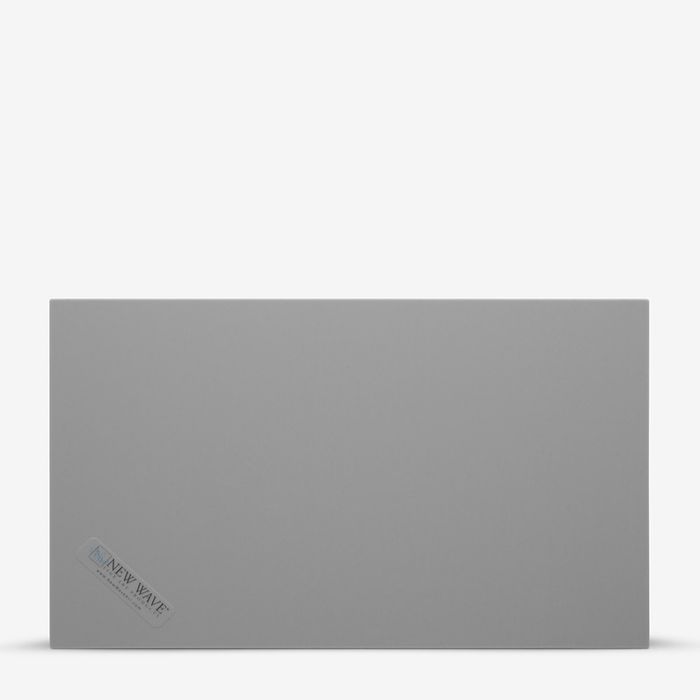
If you're painting in oils or acrylics outdoors and you're using a pochade box, the New Wave U.GO Acrylic Palette in Grey is the clearest recommendation at this price point. It's designed to sit inside the U.GO pochade system, but it works well as a standalone portable palette too.
The grey surface is the reason to buy this over a plain white acrylic sheet. Outdoors, where your panel is typically toned and your light is constantly shifting, a grey mixing surface helps you judge both colour and value without the distortion you get from bright white. It's a small thing that makes a real difference when you're mixing quickly.
At £15.90, it's an accessible entry point. It's acrylic rather than glass, so it's lightweight and safe in a backpack without any of the fragility concerns that come with a glass insert. The honest trade-off is that acrylic surfaces scratch over time, especially if you're scraping paint with a metal knife regularly. It won't look pristine forever. Also worth checking: it's sized for the U.GO system specifically, so if you're using a different pochade box, measure before you buy.
Jackson's
New Wave : U.GO : Plein Air : Anywhere : Acrylic Palette : Grey : For ENW702
The U.go Anywhere Grey Plastic Palette Is An Excellent Option When Looking For A Lightweight Grey Palette For The U.go Anywhere Pochade Box (https://www.jacksonsart.com/new-wave-u-go-plein-air-anywhere-pochade-box-8-4x11-25in). Made From Durable High Density Grey Acrylic, The Gre
Best Glass Palette for Plein Air Oil Painting
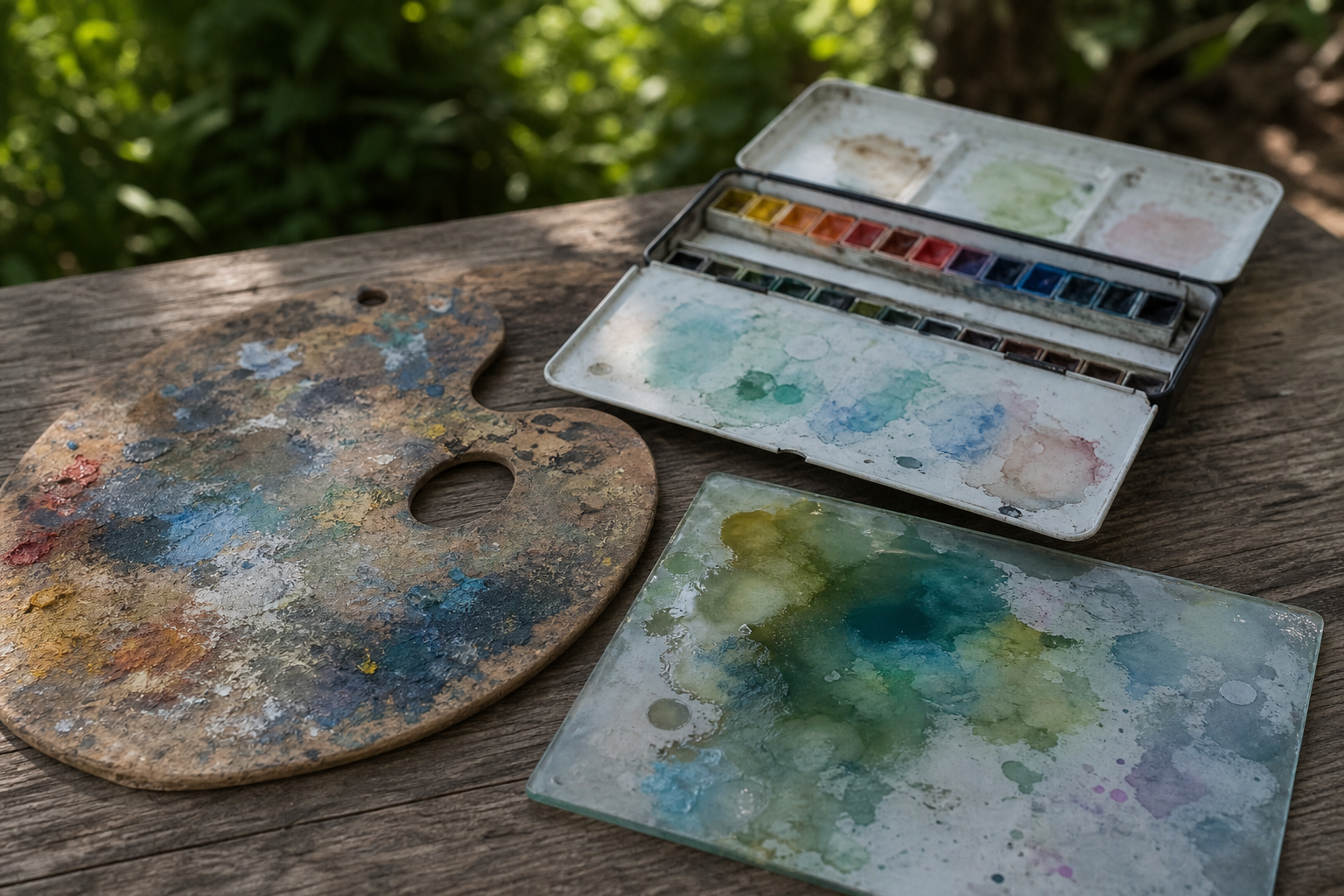
Glass palettes are the preferred choice for many experienced oil painters, and for good reason. The surface is completely non-porous, which means paint doesn't soak in, knife-mixing is smooth and precise, and at the end of a session you can scrape the whole palette clean with almost no residue left behind.
The Richeson Glass Palette 9x10in is our pick for painters who want the benefits of glass without spending a lot. At £22.50, the 9x10in size maps well onto typical plein air panel sizes, a 6x8 or 8x10 panel fits neatly alongside it, and the bevelled edges reduce the sharpness risk slightly. It's a clear glass surface rather than grey, which means you'll want to slide a neutral grey card underneath it if you want to use it as a value reference.
For painters who want that grey surface built in, the New Wave Posh Table Top Glass Palette 9x12in in Grey is the step-up option. The grey coating is applied to the underside of the glass, so the mixing surface itself is still smooth glass but you're looking at a neutral mid-tone ground as you mix. It's a genuinely better working surface for oils, and the larger format gives more room to organise your colours.
The important caveat with both: glass palettes are for painters who travel by car. They're heavier, they're fragile, and carrying one in a backpack on a wet day introduces a real risk. If you're walking to your painting spot or using public transport, read on before committing to glass.
Glass palette picks
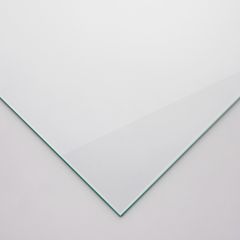
Richeson : Glass Palette : 9x10in
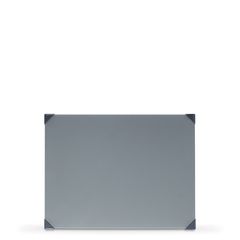
New Wave : Posh : Table Top Glass Palette : 9 x 12in : Grey
Best Wooden Palette for Plein Air
There's something satisfying about a wooden palette, and for oil painters working from a French easel or a traditional field easel, it's the most natural choice. The Studio Essentials Rectangular Wooden Palette 20x30cm at £5.90 is an honest, no-fuss option that does the job well. If you want something a little sturdier, the Mabef Rectangular Wooden Palette at £9.80 is slightly thicker and holds up better with repeated use.
One thing that trips up beginners: wooden palettes must be sealed before you use them for oils. Raw wood is porous, which means it absorbs the oil from your paint and leaves your mixes looking duller than they should. A few coats of linseed oil, left to dry thoroughly between applications, will seal the surface and give you a slick, oil-resistant working area. You can also use a proprietary wood sealant if you prefer. Either way, don't skip this step.
The 20x30cm size is well-suited to plein air work: large enough to mix freely, small enough to hold comfortably in your non-painting hand while you work. If you're left-handed, note that kidney-shaped palettes can be awkward to hold in a left-handed grip. A rectangular palette like these avoids that problem entirely.
The main limitation with wooden palettes is transport: there's no lid, so wet paint is exposed. If you're heading home by car, cling film pressed over the surface works well enough. If you need something that closes over wet paint, a disposable pad or clamshell palette is a safer bet.
Wooden palette picks
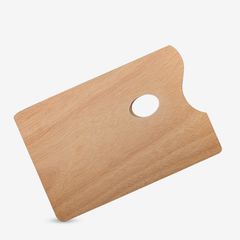
Studio Essentials : Wooden Palette : Rectangular : 20x30cm
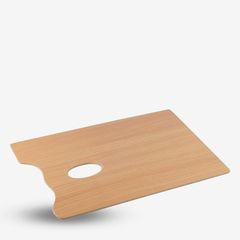
Mabef : Rectangular Wooden Palette (3.7 mm thick)
Best Disposable Paper Palette for Plein Air
Disposable palettes sometimes get a slightly snobbish response, but they're a legitimate tool for the right situations. Workshops, residential painting holidays, short sessions where cleanup isn't practical, or any time you're using acrylics that skin over fast on a reusable palette: these are the moments where a disposable pad earns its place.
The New Wave Grey Pad Rectangular Disposable Paper Palette is worth the small premium over the standard white version. The grey surface gives you the same value-judging advantage as a grey glass or acrylic palette, and outdoors that's genuinely useful. The New Wave White Pad Disposable Palette is the more economical option if you don't want to pay extra for the grey surface.
One practical problem outdoors: sheets of paper catch the wind. A single bulldog clip attaching the pad to a piece of MDF or a drawing board solves this completely and adds almost no weight to your kit.
The environmental note is worth making honestly: paper palettes generate waste, and if you're painting outdoors regularly, that adds up. Position them as a situational tool rather than your everyday palette. If you're painting several times a week, a reusable surface is a better habit.
Disposable paper palette picks
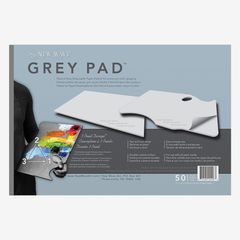
New Wave : Grey Pad Rectangular Disposable Paper Palette
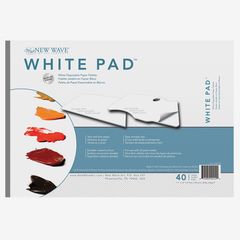
New Wave : White Pad Disposable Paper Palette : Rectangular
Best Folding Palette for Watercolour and Gouache
Watercolour and gouache need wells, not a flat surface. Pigment needs to stay put while you work, and a flat mixing area gives it nowhere to go. A folding metal or plastic palette with defined wells is the right tool for these mediums outdoors, and a flat oil painter's palette is the wrong one.
The Jackson's Black Folding Metal Watercolour Palette at £12.20 is a solid, accessible starting point. It holds 12 full pans or 24 half pans, closes firmly (important when it's in your bag during a shower), and the metal construction is more resistant to staining than plastic over time. Enamel and metal palettes clean more thoroughly than plastic, which matters when you're working with deeply pigmented colours.
For painters who want a more considered setup, the Liz Deakin Palette with Easel Attachment at £18.60 is worth the extra. It's designed with an easel-mounting clip, which means it sits directly on your easel rather than needing a separate surface or a hand to hold it. The 15 pan spaces for tube colours and 7 deep wells make it practical for both watercolour and gouache. It's a UK-designed product, which is a small but pleasing thing.
The Frank Herring Compact Palette is worth a mention for painters who want something more minimal: it's a well-made compact option if you're carrying very light.
A note for gouache users specifically: gouache is thicker than watercolour, and the wells on some folding palettes are quite shallow. The deeper wells on the Liz Deakin palette handle gouache better than a standard watercolour palette will.
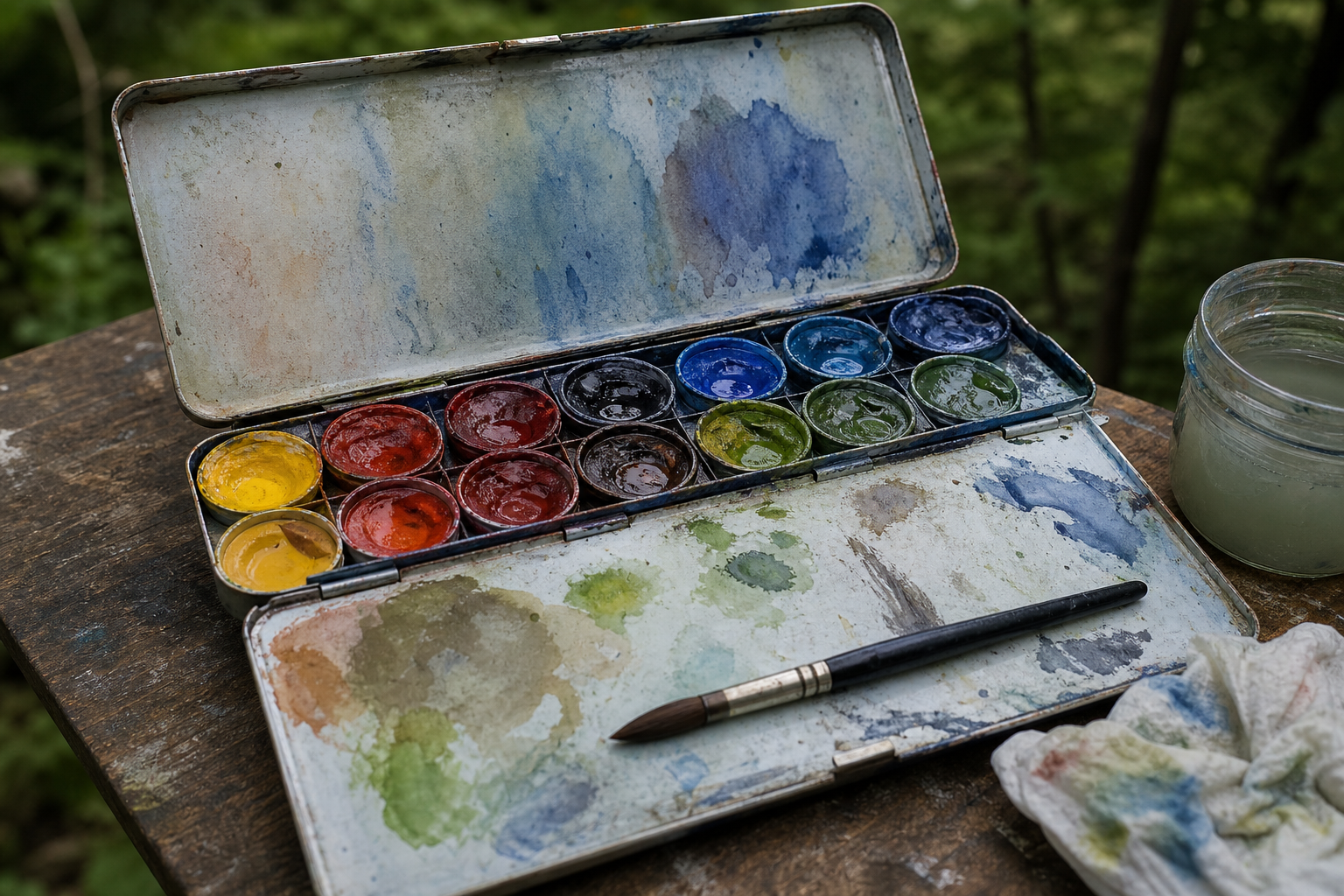
Folding palette picks for watercolour and gouache
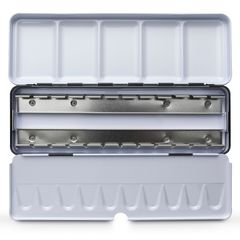
Jackson's : Black Folding Metal Watercolour Palette : Holds 12 Full or 24 Half Pans
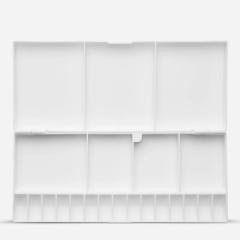
Liz Deakin : Palette with Easel Attachment : 15 Pans for Tubes and 7 Deep Wells
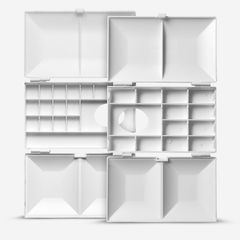
Frank Herring : Compact Palettes
How to Choose the Right Plein Air Palette for Your Setup
If you've read the sections above and you're still not sure which direction to go, here's the practical logic.
1. Start with your medium
Oils and acrylics need a flat surface. Glass or a grey acrylic palette gives you the best control over value and colour mixing, and they're easy to clean. Watercolour and gouache need wells to hold pigment in place; none of the flat palettes above will serve you well for these mediums. The folding metal palettes in the watercolour section are the right starting point.
2. Think about how you travel
Car-based painters have the most flexibility. Glass palettes are perfectly practical when you're loading into a boot and driving to your spot. If you're walking any distance with your kit, keep the palette under 500g and under A4 in size. A grey acrylic palette or a disposable paper pad is far more sensible than a 9x12in glass plate in a rucksack. If you travel by train or bus regularly, a palette that closes over slightly wet paint is worth paying more for.
Travelling by train or bus?
Choose a palette that closes over wet paint, or use a disposable paper pad. A glass palette with no lid is a genuine hazard in a bag on public transport.
3. Match your palette surface colour to your panel
If you work on a toned mid-grey panel (which many oil painters do), a white palette will make your mixed colours appear darker than they are. You'll compensate by mixing slightly lighter, and the result can be muddy or overworked. A grey-surface palette removes that mismatch. This matters most for alla prima oil painting, where you're making fast decisions and there's no time to second-guess every mix.
4. Consider cleaning in the field
For oils, a palette knife and a lint-free rag gets you most of the way through a day's painting without needing to carry solvent. Glass surfaces scrape completely clean at the end of the session. Wooden and acrylic surfaces hold a little more residue. For acrylics specifically, you need to clean quickly before the paint skins over; a disposable paper pad or a smooth non-porous surface is the most practical choice. Watercolour needs only water, so cleaning in the field is rarely a problem.
Palette Surface Colour: Why Grey Is Worth It
Several of the picks above come in grey as well as white, and the grey option consistently costs a little more. It's worth understanding why that premium is justified, because it's not just a stylistic preference.
When you mix a colour on a bright white surface, your eye is constantly comparing it against that white background. White is the lightest value you can see, and by contrast, every colour you mix will appear darker than it actually is. You compensate by making the mix slightly lighter, which means when you pick it up and put it on a mid-toned or toned painting surface, it often comes out lighter than you intended. Over a session, this leads to accumulated errors in your value structure.
A mid-grey surface approximates the visual midpoint of a typical painting, which means the value of a mixed colour on the palette corresponds more closely to how it will read on the canvas. Your eye doesn't have to compensate, and your mixes are more reliable.
This matters most for oil painters working alla prima on toned panels, but it's useful for any medium where you're making fast value decisions outdoors. It's one of those adjustments that feels immediately obvious once you've tried it.
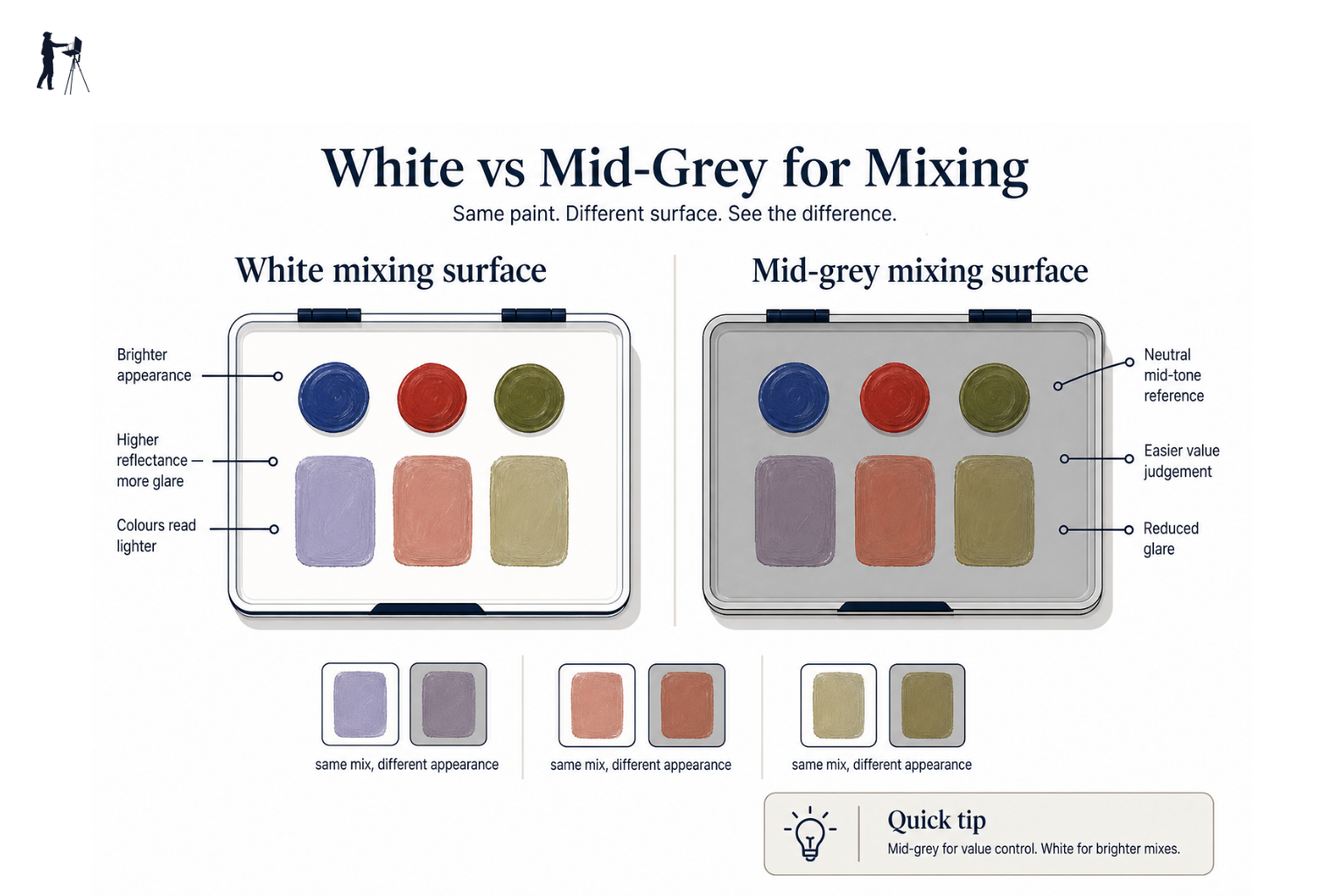
Can't justify a grey palette yet?
If you're using a white paper palette or an untreated wood palette, try laying a mid-grey card underneath or behind it as a reference point. It won't fix the problem entirely, but it trains your eye to compensate while you mix.
Our Shortlist at a Glance
Here's a quick-reference summary of every palette recommended in this guide, so you can compare options side by side before making a decision.
The portable oil painting palette options range from the budget-friendly wooden picks through to the grey glass surface of the New Wave Posh, with the acrylic U.GO sitting in a sensible middle ground for pochade box users. For watercolour and gouache, the folding metal palettes are the only practical choice. And if you need something genuinely disposable for a workshop or a trip, the grey paper pad is worth the small extra cost over white.
| Palette | Best for | Surface | Price band |
|---|---|---|---|
| New Wave U.GO Acrylic Palette (Grey) | Pochade box users (oil/acrylic) | Grey acrylic | £15.90 |
| Richeson Glass Palette 9x10in | Oil painters, car-based | Clear glass | £22.50 |
| New Wave Posh Glass Palette 9x12in Grey | Oil painters wanting value control | Grey glass | £40.00 |
| Studio Essentials Wooden Palette 20x30cm | Oil painters, French easel | Wood (seal before use) | £5.90 |
| Mabef Rectangular Wooden Palette | Oil painters, sturdier option | Wood (seal before use) | £9.80 |
| New Wave Grey Pad Disposable Palette | Acrylics, workshops, travel | Grey paper | £17.60 |
| Jackson's Black Folding Metal Palette | Watercolour/gouache | White enamel | £12.20 |
| Liz Deakin Palette with Easel Attachment | Watercolour/gouache on an easel | White plastic | £18.60 |
FAQ
Frequently Asked Questions
Which palette is best for oil plein air painting?
For car-based oil painters a glass palette is ideal for knife work and easy scraping. For pochade box users the grey New Wave U.GO acrylic insert is a lightweight alternative. Wooden palettes work too but must be sealed and are exposed in transit.
Why should I choose a grey palette surface?
A mid grey removes the contrast distortion caused by bright white and helps you judge value and colour more accurately outdoors, especially for alla prima work on toned panels.
What is the right palette for watercolour and gouache?
Folding palettes with defined wells are best. Metal or enamel folding palettes (for example Jackson's or the Liz Deakin) hold pans or tubes and close securely for travel. Gouache benefits from deeper wells.
How do I transport a palette when travelling by foot or public transport?
Choose lightweight palettes under A4 and under 500g if walking. On trains or buses use palettes that close over wet paint or carry a disposable pad clipped to a board to prevent spills.
Are disposable paper palettes a good long term option?
They are useful for workshops, short sessions and acrylics that skin quickly, but they do create waste. If you paint frequently outdoors, a reusable palette is more economical and eco friendly.
Author

PleinAirPainting Editorial Team
PleinAirPainting.co.uk helps artists paint outdoors with confidence through UK-focused guides, equipment advice, resources and plein air inspiration.