The Best Alkyd Mediums for Plein Air Oil Painting
A practical UK guide to the best alkyd medium for plein air painting, with product comparisons, drying advice, solvent guidance, and layering tips for outdoor work.

Key takeaways
- • Alkyds speed drying and make same-day transport and next-day reworking realistic for plein air painting.
- • Choose fluid or gel based on whether you want thin flow or texture and brushmarks.
- • Decide between solvent and solvent-free options by location and ventilation; solvent-free is cleaner but more fat.
- • Liquin Original is a practical starter; Gamblin solvent-free and Jackson's and M. Graham each fit specific needs.
- • Use small amounts, respect fat-over-lean, do not use alkyds as a final varnish, and allow layers to touch-dry before overpainting.
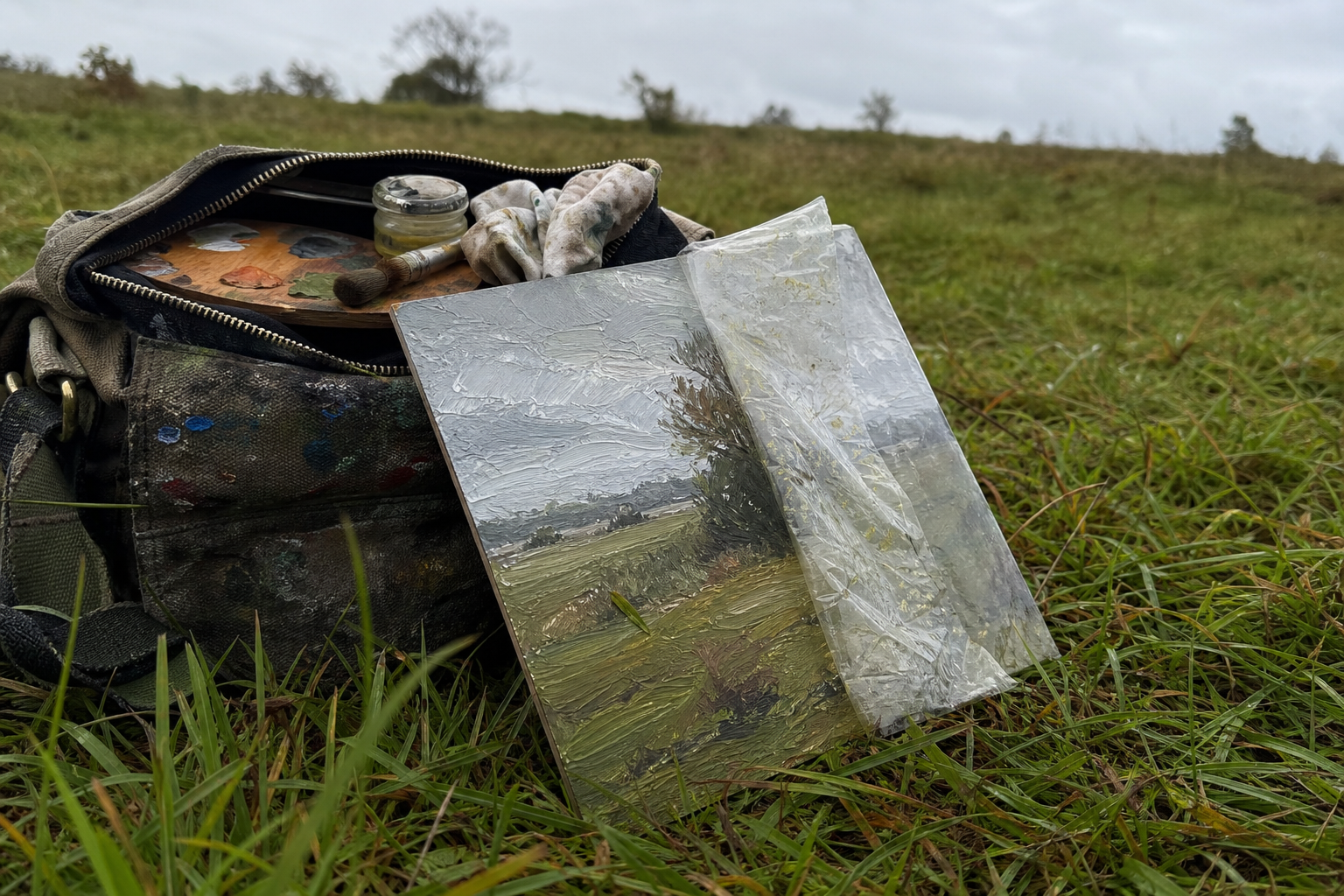
You've packed up at the end of a session, tucked your panel into your bag, and walked back to the car -- only to find the painting has smeared across the panel carrier, or worse, transferred onto the back of another work. If you paint outdoors with oils in the UK, wet panels are a real and recurring problem. Short daylight windows, cold air, and damp autumn afternoons don't help. Finding the best alkyd medium for plein air use is one of the most practical steps you can take to work around these constraints. This article compares the main options available to buy in the UK right now: what each one does, who it suits, and where the trade-offs lie.
What an Alkyd Medium Actually Does (and Why It Matters Outdoors)
Alkyd mediums are made from a synthetic resin binder. They dry by oxidation, the same process as oil paint, but significantly faster. In thin applications and reasonable conditions, you can expect an alkyd-modified layer to be touch-dry within 24 hours rather than the several days you'd be waiting with straight oil. That difference matters a great deal when you're working outdoors.
The practical benefit for plein air painting is straightforward. Faster surface drying means you can transport a panel the same day without smearing it, return to a piece the next morning, or build glazing layers during a second session later in the week. In cold, damp British conditions where standard oil paint can stay tacky for days, an alkyd medium oil painting approach gives you a more predictable working rhythm.
They come in two main forms (fluid and gel) and two main types (solvent-based and solvent-free). Fat-over-lean still applies, which means leaner layers should go down first and richer, medium-heavy layers later. And as with most things in painting: a small amount goes a long way.
A quick rule of thumb
Use alkyd mediums sparingly — a little goes a long way. Most painters find a ratio of roughly one part medium to two or three parts paint works well. More than that and you risk soft films, wrinkling, and a surface that looks plasticky.
What to Think About Before You Buy
How quickly do you need your panel to dry?
If you're walking home with your panel in a bag or driving back from a painting location the same day, you want something that genuinely moves drying along. A strong alkyd fluid or an alkyd paint system is worth it in this situation. If you're leaving the panel overnight and returning to your studio the next morning, almost any alkyd fluid will do the job adequately. Factor in the season: a cold October morning in Scotland is not the same as a mild September afternoon in the Cotswolds, and alkyds will still slow down in genuinely cold, damp air.
Do you want a solvent-free kit?
Fluid alkyds like Liquin, Jackson's, and Daler-Rowney need white spirit or odourless mineral spirits (OMS) for thinning and cleanup. Solvent-free options from Gamblin remove volatile solvents from your kit entirely. This matters more than you might think outdoors: many UK painting locations, including nature reserves, Sites of Special Scientific Interest, and urban spots with restricted ventilation, may discourage or prohibit strong solvents. Working solvent-free is a genuinely practical choice, not just a health preference. Note that solvent-free alkyds are entirely fat, so they require especially careful use to avoid soft, wrinkled films.
Fluid or gel: which feel suits you?
Fluid alkyds thin paint, improve flow, and work well for lean early layers, transparent colour, and general outdoor painting. Gel alkyds hold texture and brushmarks, support impasto, and suit broken colour and more textured outdoor work. Neither is objectively better. It comes down to how you like to paint.
The Best Alkyd Mediums for Plein Air Painting
Here's how the main options available in the UK compare.
Winsor & Newton Liquin Original: the dependable workhorse
Liquin Original is the default answer to the question of which fast drying oil medium to try first, and for good reason. It's widely available across the UK, thoroughly documented by Winsor & Newton and by decades of painters who've used it, and reliably effective. Mixed into oil paint in modest amounts, it brings surface drying time down to under 24 hours in thin applications, improves flow, and gives a slight gloss finish that suits transparent and semi-transparent work well.
For painters new to alkyd mediums, the 75ml bottle is the sensible starting point. It's compact enough to carry in a field kit, affordable enough to experiment with, and will last a good while given how little you use per session. The 250ml is better value per ml once you've confirmed it suits your way of working.
The honest trade-offs: Liquin needs white spirit or OMS for thinning and cleanup, so it's not a solvent-free option. It can cause problems if overused, particularly in early lean layers where too much medium reverses fat-over-lean. And it should never be used as a final varnish, a point worth stating clearly and returning to later.
Liquin Original — available sizes
Winsor & Newton : Liquin Original : 75ml
Winsor & Newton : Liquin Original : 250ml
Jackson's Alkyd Oil Medium: slightly more body, restrained gloss
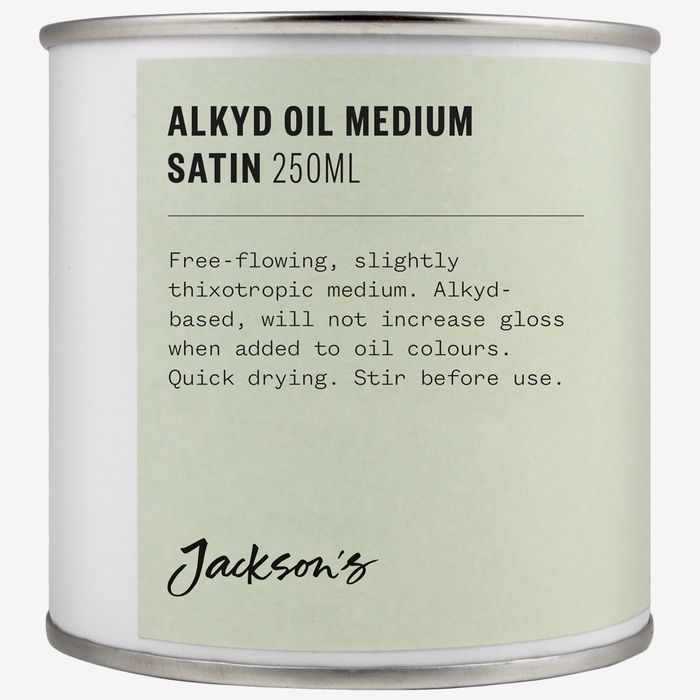
If you've tried Liquin and found it a little too runny, or the gloss finish isn't quite what you're after, Jackson's Alkyd Oil Medium is worth comparing. It has a slightly thicker, more oily feel that suits direct alla prima brushwork and gives a satin rather than glossy finish. For painters who value brushmark texture and don't want their outdoor work looking too slick, that distinction matters.
At around £15.70 for 250ml, it represents good value per ml. One thing to be aware of: like most fluid alkyds, it can thicken irreversibly in the bottle if stored poorly. Keep the lid on tight between uses, store it away from heat and direct sun, and it'll serve you well through a full season of outdoor painting.
Jackson's
Jackson's : Fast Drying Alkyd Oil Medium : Satin : 250ml
Free Flowing Slightly Thixotropic Medium With An Alkyd Based. This Medium Will Not Increase Gloss When Added To Oil Colours. Fast Drying And Non-yellowing. Use This Medium To Thin Oil Paint. Stir Before Use. It Is Is Advised To Store Jackson's Oil Medium At A Stable Temperature.
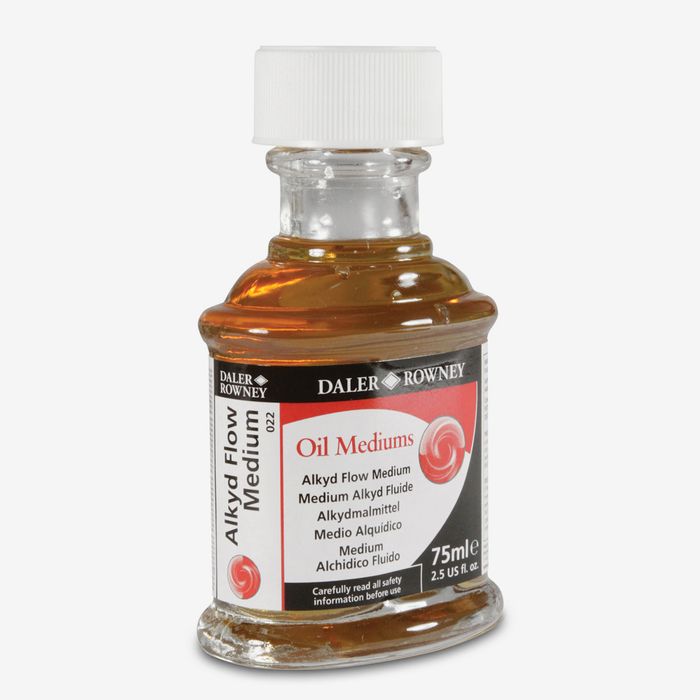
Daler-Rowney Alkyd Flow Medium: the budget-friendly option
For painters who use medium regularly and would rather not spend heavily on it, Daler-Rowney's Alkyd Flow Medium is a solid, no-frills performer. At around £7.70 for 75ml, it's competitively priced within this category, and Daler-Rowney's UK distribution means it's available in a wide range of art shops rather than being limited to specialist online stockists.
There's less community documentation around this one than Liquin, which can make troubleshooting slightly harder if you run into issues. But the same basic principles apply as with any fluid alkyd: use it sparingly, stay lean in early layers, and it will do its job reliably.
Jackson's
Daler-Rowney : Alkyd Flow Medium : 75ml
Slightly Thinner Than Liquin Or Other Alkyd Gel Mediums, It Increases The Transparency And Flow Of Oil Colour, Allowing Paint To Be Brushed Out More Smoothly. Alkyd Flow Medium Reduces Drying Time.
Gamblin Solvent-Free Gel: for a cleaner outdoor kit
Gamblin's Solvent-Free Gel is the recommendation for painters who want to remove volatile solvents from their kit entirely. There are no fumes, nothing to carry in a separate container, and no risk of spilling white spirit in your bag or on the grass. For sessions in enclosed spots, on nature reserves, or anywhere with restricted ventilation, this is a genuinely practical choice rather than a luxury preference.
The trade-off is that solvent-free alkyds are entirely fat, which means discipline in how much you use is particularly important. Keep additions modest, especially in early layers, and resist the temptation to use it generously just because it feels more comfortable to apply. The gel consistency holds texture and brushmarks well, which suits painters who work with more impasto outdoors.
The Solvent-Free Fluid version offers the same solvent-free benefit in a more liquid form, better suited to general painting use and transparent layers. UK availability for both is primarily online and through specialist suppliers, so it's worth ordering in advance rather than relying on finding it locally.
Gamblin Solvent-Free — gel and fluid options
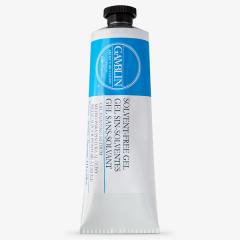
Gamblin : Solvent Free Gel : Oil / Alkyd Painting Medium : 150ml
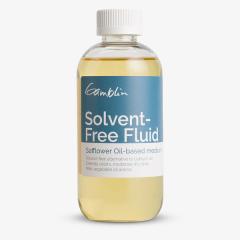
Gamblin : Solvent Free Fluid Oil / Alkyd Painting Medium : 250ml
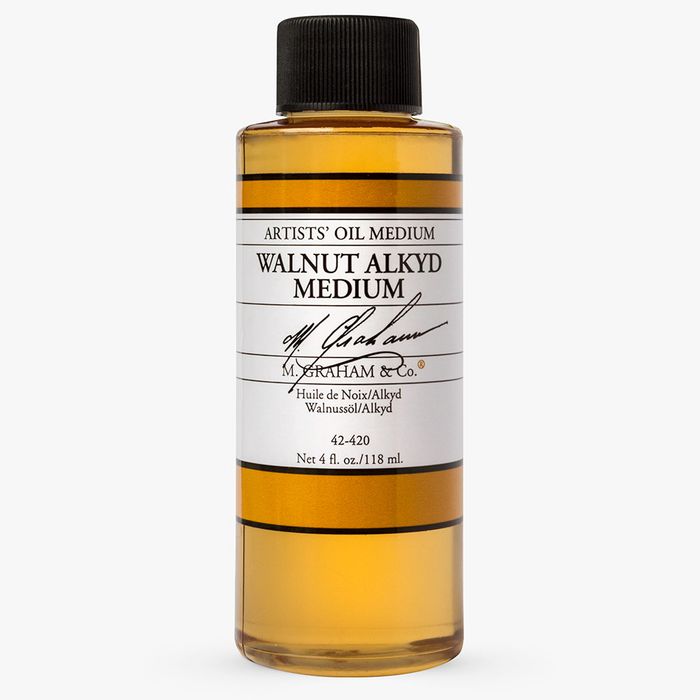
M. Graham Walnut Alkyd Medium: for light colours and reduced yellowing
M. Graham's Walnut Alkyd is the medium to consider if yellowing in light passages is a concern, or if you prefer a more oil-like feel in your medium rather than the slightly synthetic quality some painters notice with Liquin-type fluids. The walnut oil base gives a noticeably smoother, more fluid texture that many painters find pleasant to work with.
It still speeds drying compared to unmodified oil, and it's still an alkyd at heart, so the same handling principles apply. It's more expensive per ml than Liquin or Daler-Rowney (around £17.50 for 118ml) and harder to find in UK shops, so online ordering is the likely route. For the right painter, particularly those working with a lot of whites or pale colours where long-term yellowing matters, it's worth the extra cost.
Jackson's
M. Graham : Artist's Oil Medium : 118ml : Walnut Alkyd Oil Medium
M. Graham Walnut Alkyd Oil Medium Makes Paints More Transparent And Increases Flow. This Alkyd Oil Will Dry Much Faster Than The Non-alkyd Alternative, M. Graham Walnut Oil Medium. (https://www.jacksonsart.com/m-graham-artist-s-oil-medium-118ml-walnut-oil-medium) Use Sparingly -
Winsor & Newton Griffin Alkyd Paints: when you want the drying built in
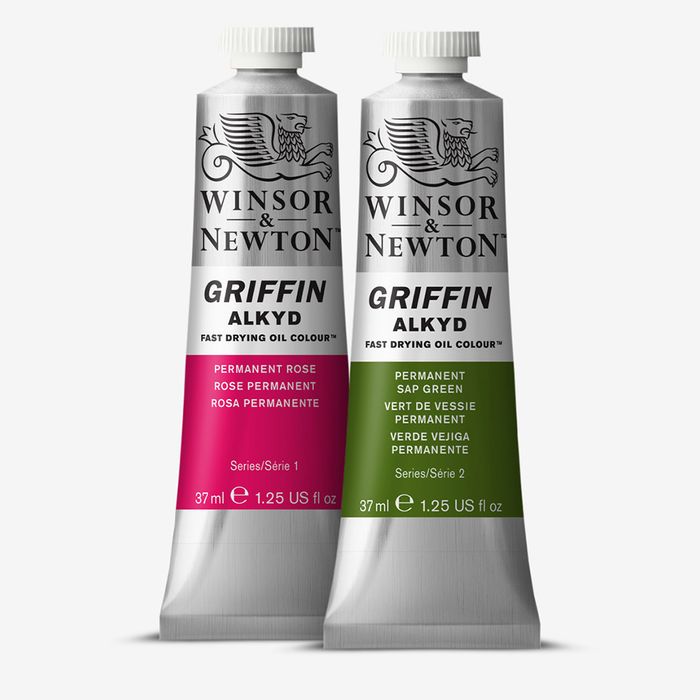
This one is slightly different from the other entries: rather than adding a medium to your existing oil paints, Griffin Alkyd Paints build the fast-drying alkyd resin directly into the paint itself. The result is touch-dry in 18 to 24 hours without the need for a separate medium in most layers. It's a different approach to the same destination.
For painters who want to simplify their outdoor kit, or who do a lot of underpainting and want fast-drying initial layers they can work back over quickly, Griffin is a practical option. The handling feel is slightly different from traditional oils, a little firmer and with slightly less blending time, which takes some adjustment. But pairing Griffin whites and mid-tones with an alkyd medium for glazing or adjustment layers makes for a very capable system in cold, damp UK conditions.
At around £6.20 per 37ml tube, the per-tube cost is similar to student-grade traditional oils, making this an accessible entry into the alkyd paint system.
Jackson's
Winsor & Newton : Griffin Alkyd Oil Paint
Winsor & Newton Griffin Alkyd Oil Paints Are Fast-drying Oil Colours Made With An Oil-modified Alkyd Resin Vehicle, Offering The Working Qualities Of Conventional Oil Colour With A Quicker Drying Time. The Range Offers Over 40 Colours, And Each Colour Is Individually Formulated T
How to Get the Best Out of an Alkyd Medium Outdoors
The key practices are straightforward, and following them consistently makes the difference between alkyd mediums working well and causing problems.
- Use small amounts. A ratio of roughly one part medium to two or three parts paint is a good working guide. Less for early layers.
- Stay lean early. Underpaint with little or no medium. Build richness in later layers. Fat-over-lean still applies with alkyds, and it matters: lean layers first, richer layers later.
- Let layers dry before overpainting. Especially relevant for multi-session plein air work. Touch-dry is not the same as fully cured, but for most overpainting purposes a surface-dry layer is safe to work back into.
- Match your medium to the environment. Solvent-based fluids work well in open-air locations with good ventilation. Solvent-free gels are the better choice in enclosed spots, restricted areas, or anywhere fumes are a concern.
- Keep the lid on tight. Fluid alkyds can thicken over time in the bottle. It won't ruin the medium entirely, but thickened Liquin is harder to use and harder to clean up.
A few things to avoid: don't use alkyd medium as a varnish. Liquin, Galkyd, and similar products are not suitable as final coatings. Conservation practice is clear on this point, and it isn't a minor caution. Use a proper conservation-grade varnish once your painting is fully cured. Don't overload early layers with a fat alkyd medium, as this reverses fat-over-lean and creates a cracking risk over time. And don't assume an alkyd medium fully substitutes for solvent in early lean layers.
One specialist option worth a brief mention: Kremer Pigmente produce an alkyd resin product that some experienced painters use. It's a niche, advanced option and not something to seek out as a first medium. Note also that it contains lead compounds, which requires careful handling and appropriate precautions. It's mentioned here for completeness, not as a mainstream recommendation.
Cold weather and slow drying
Alkyd mediums still dry by oxidation, so cold and damp conditions will slow them down. In a British November, "touch-dry overnight" can mean touch-dry in 36 to 48 hours. Factor this in if you're transporting panels the same day — keep them horizontal and protected even if they feel set.
Which Alkyd Medium Is Right for You?
| Medium | Type | Solvent needed? | Best for |
|---|---|---|---|
| Liquin Original | Fluid | Yes | Most plein air painters; first choice |
| Jackson's Alkyd Oil Medium | Fluid (mild body) | Yes | Painters wanting less gloss and more control |
| Daler-Rowney Alkyd Flow | Fluid | Yes | Budget-conscious regular users |
| Gamblin Solvent-Free Gel | Gel | No | Solvent-free kits; textured work |
| Gamblin Solvent-Free Fluid | Fluid | No | Solvent-free kits; general use |
| M. Graham Walnut Alkyd | Fluid | Minimal | Light passages; reduced yellowing |
| Griffin Alkyd Paints | Paint system | Minimal | Simplified kit; fast underpainting |
If you're not sure where to start, Liquin Original is the most practical first choice for most UK plein air painters. It's available almost everywhere, thoroughly documented, and reliably fast-drying in conditions that would leave standard oils tacky for days. If you want to keep solvents out of your bag entirely, Gamblin's Solvent-Free Gel is the cleaner option, though it asks for a little more care in how you layer it.
The broader point is that there isn't a single correct answer here. The best alkyd medium for plein air painting depends on where you paint, how you paint, and what problem you're actually trying to solve. Wet panels on the walk back to the car, slow drying in autumn air, difficulty returning to a piece the following day: alkyd mediums address all of these, and any of the options above will do that job reliably if you use them with a bit of restraint.
FAQ
Frequently Asked Questions
What does an alkyd medium do for plein air painting?
Alkyd mediums speed surface drying by oxidation, often making thin layers touch-dry in under 24 hours. That lets you transport panels the same day, return to work quickly, and build glazes across sessions.
Should I choose solvent-free alkyds for outdoor work?
Solvent-free alkyds remove fumes and suit enclosed or protected sites, but they are fully fat so use them sparingly to avoid soft films and wrinkling. They are a practical choice when solvents are restricted.
Which alkyd medium is best to start with as a UK plein air painter?
Winsor & Newton Liquin Original is the most practical first choice for many UK painters because it is widely available, reliable for faster drying, and well documented by users.
Can I use alkyd medium as a final varnish?
No. Alkyd mediums are not conservation-grade varnishes. Use a proper varnish only after the painting is fully cured to protect the surface long term.
How do I avoid problems like wrinkling or tacky films when using alkyds?
Use small amounts, follow fat-over-lean, let layers touch-dry before overpainting, and avoid overloading early layers with fat alkyds. Keep lids tight and store away from heat to prevent thickening in the bottle.
Author

PleinAirPainting Editorial Team
PleinAirPainting.co.uk helps artists paint outdoors with confidence through UK-focused guides, equipment advice, resources and plein air inspiration.