What Is Plein Air Painting? A Beginner's Guide to Painting Outdoors
A concise guide to plein air painting in the UK covering history, practical tips, suitable media, and how to begin.

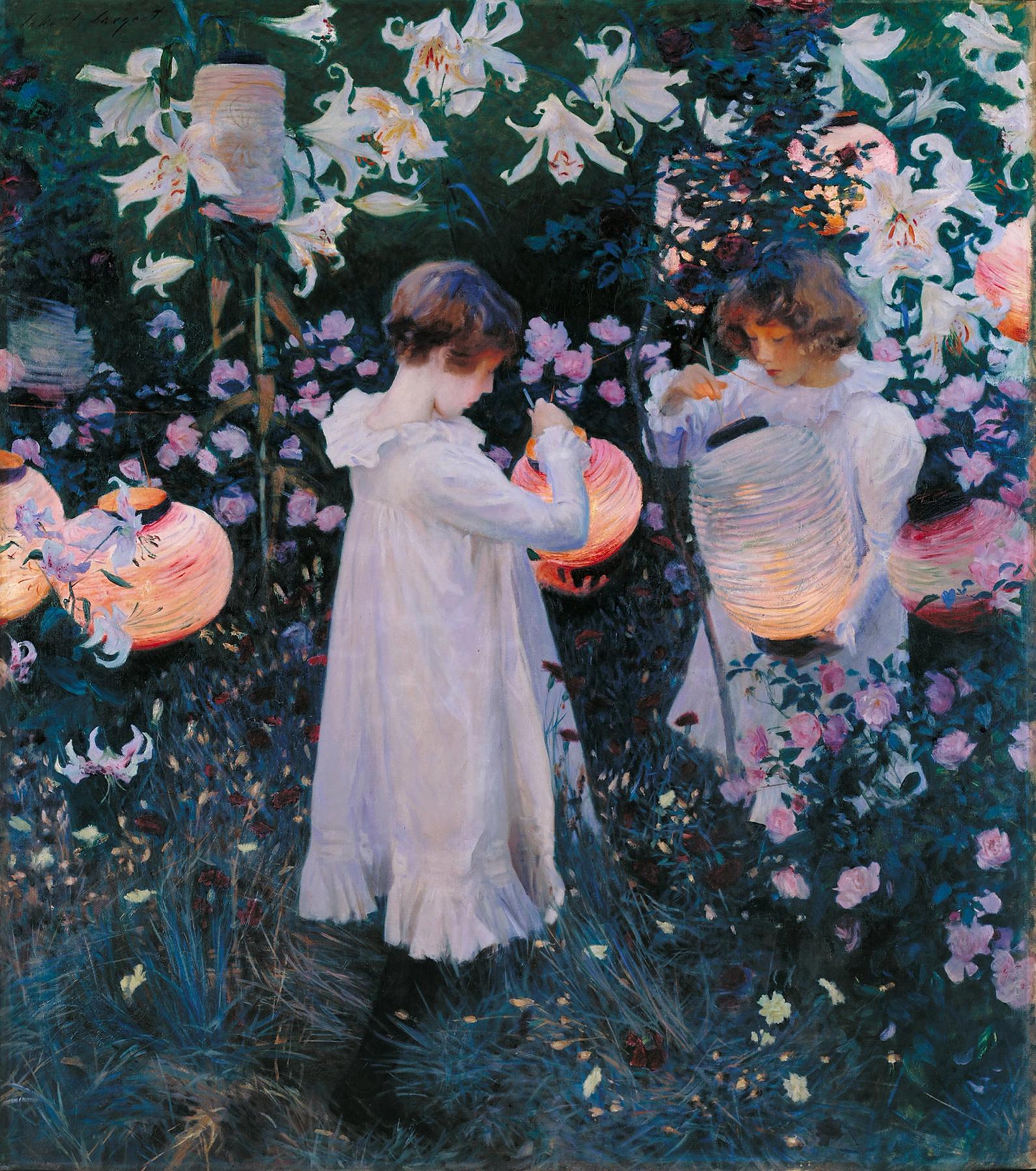
Carnation, Lily, Lily, Rose (c. 1885–86) by John Singer Sargent, painted outdoors in repeated short sessions to capture the evening light.
Credit: John Singer Sargent; Google Arts & Culture / Tate; Public domain
Key takeaways
- • Plein air painting means painting outdoors from direct observation in the open air.
- • Natural light and being present on location give plein air work a sense of immediacy and honesty.
- • Portable paint tubes and 19th century movements made outdoor oil painting practical and popular in Britain.
- • A typical session includes scouting the view, small thumbnails, blocking in large shapes, and working toward the light.
- • Start small, use the medium you know, dress for the weather, and consider joining a local group for support.
Painting outdoors is one of the most direct ways to learn how light, weather and place actually look. That practice is often called plein air painting. The French name can sound a little foreign at first, but the idea is simple: you take your paints outside, look at something real, and paint from direct observation. This guide explains what painting outdoors involves in practice, how it differs from studio work, and how UK beginners can start with confidence.
Painting Outdoors: What Plein Air Means in Practice
"En plein air" is French for "in open air" (pronounced roughly "plahn air", if you were wondering, though nobody will quiz you on it). In plain English, it means painting outdoors. The phrase was adopted by French painters in the nineteenth century to describe the practice of going outside and painting directly from observation, on location, in the actual landscape or place being depicted.
The simplest definition of plein air painting is this: you are outside, you are looking at something real, and you are painting what you see. In other words, outdoor painting from direct observation. That is it.
What it is not: painting from a photograph at home, working from a sketch you made last week, or building up an imaginary landscape in your studio. Plein air painting is about direct observation in real time, with all the unpredictability that brings. The concept is more intuitive than the French name suggests, and it has been part of British artistic practice for a very long time.
Why Do Artists Paint Outside?
Ask any painter who works outdoors regularly why they do it, and you will get a variety of answers. But a few themes come up again and again.
The most significant is light. Natural light behaves in ways that are genuinely impossible to reproduce indoors or from a photograph. The way morning sun rakes across a field, or how a cloudy afternoon flattens shadow and reveals subtle colour in the landscape: these are things you have to observe directly to understand them. Photographs interpret light through a lens; studios interpret it through memory. Outdoor painting works from the source.
There is also the quality of presence that comes from being in a place. A painting made in a specific field on a specific day, with the wind moving through the grass and the light shifting every twenty minutes, carries something that cannot be manufactured later. It does not have to be technically brilliant to have that quality. Often it is precisely the rough edges and the quick decisions that give outdoor work its character.
The constraints themselves are part of the appeal. Because the light is always changing, you cannot afford to fuss. You have to decide quickly what matters. Many painters find that this pressure produces better decisions than the open-ended freedom of the studio. You simplify because you must, and simplification often strengthens a painting.
And then there is the simpler fact that being outside is good for you. There is a reason so many artists describe their outdoor sessions as mentally restorative. You are focused on looking and responding, not scrolling or worrying. Add in the social dimension: painting groups, informal outdoor sessions, the occasional curious passer-by, and plein air painting becomes as much a way of engaging with the world as a way of making pictures.
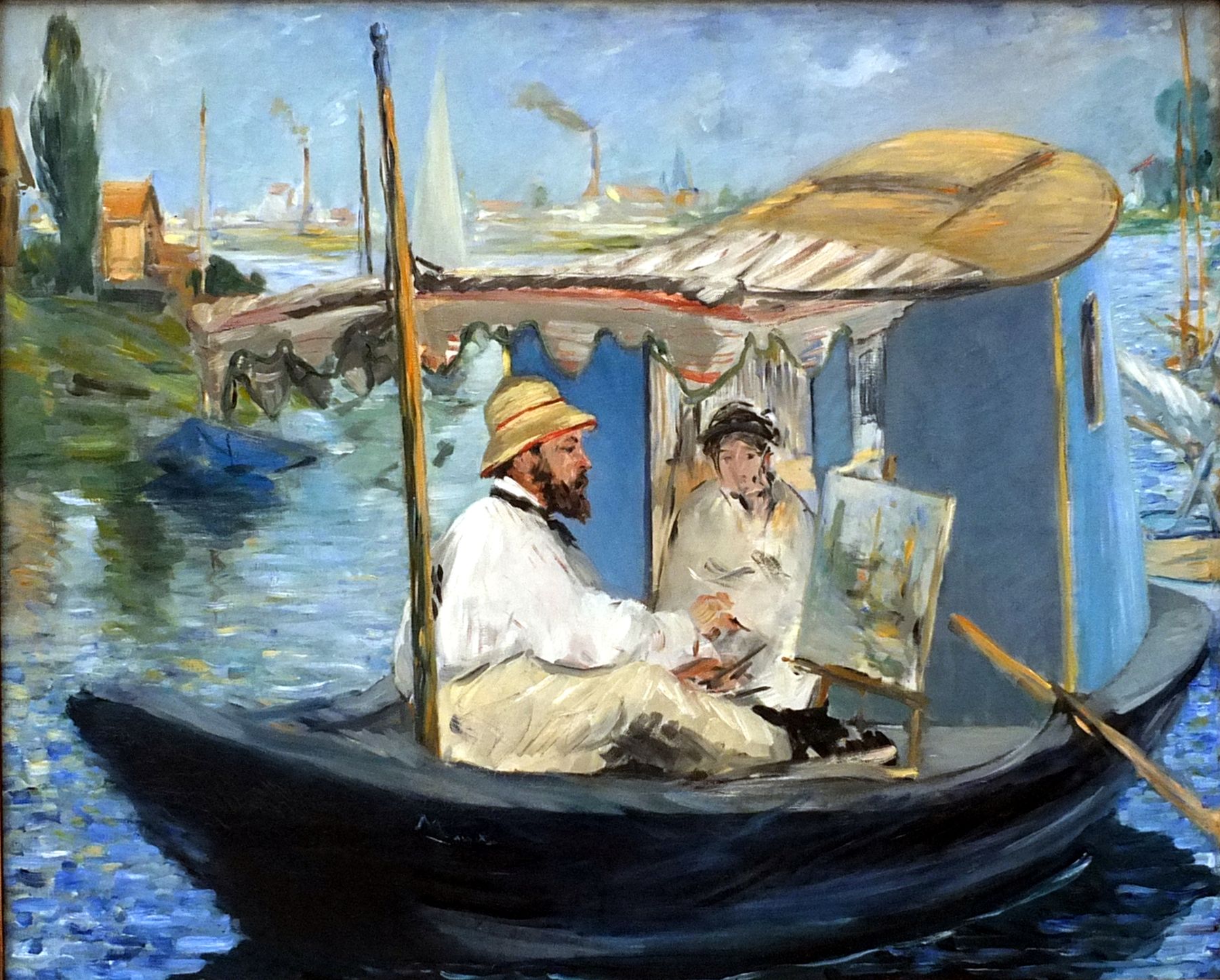
Claude Monet Painting in His Studio Boat (1874) by Édouard Manet, a direct depiction of an artist working from nature.
Credit: Édouard Manet; photograph by Ad Meskens / Wikimedia Commons; Public domain
A Very Brief History of Plein Air Painting
Artists have always made studies outdoors. Sketching from nature is as old as drawing itself. But painting in oils on location, as a serious and sustained practice, became more common from the early nineteenth century onwards, and it was a specific technological development that made it practical on a wider scale.
Before the 1840s, oil paint was stored in pig bladders, which were messy, unreliable, and not at all suited to carrying across a field. In 1841, an American portrait painter named John Rand invented the collapsible tin paint tube. It was adopted rapidly across Britain and Europe, and it changed everything. Suddenly, a painter could pack a full range of colours into a small bag and take them anywhere. The portable painting kit as we know it dates from this moment.
In France, the Barbizon School had already been working in the Forest of Fontainebleau from the 1830s, making direct studies of landscape and rural life. The French Impressionists, Monet, Pissarro, and Sisley among them, built on this and made en plein air painting famous internationally. But it is worth being clear: the Impressionists developed and popularised an existing practice; they did not invent it.
Britain's own outdoor painting tradition is older and richer than it is often given credit for. John Constable made oil sketches directly from nature in Suffolk with a freshness and immediacy that was radical for its time. Turner travelled extensively across Britain and Europe, working from direct observation to develop the visual material that fed his extraordinary studio output. Both were working from the landscape itself, not from a comfortable remove.
Later in the nineteenth century, a group of painters settled in Newlyn, a fishing village on the Cornish coast, and began making large-scale paintings that were grounded in direct observation of working life and coastal light. The Newlyn School produced significant work by artists including Stanhope Forbes and Walter Langley, and it established Cornwall as a centre of outdoor painting that persists to this day. The St Ives colony continued that tradition well into the twentieth century.
Britain's plein air heritage is not borrowed from France. It is its own.
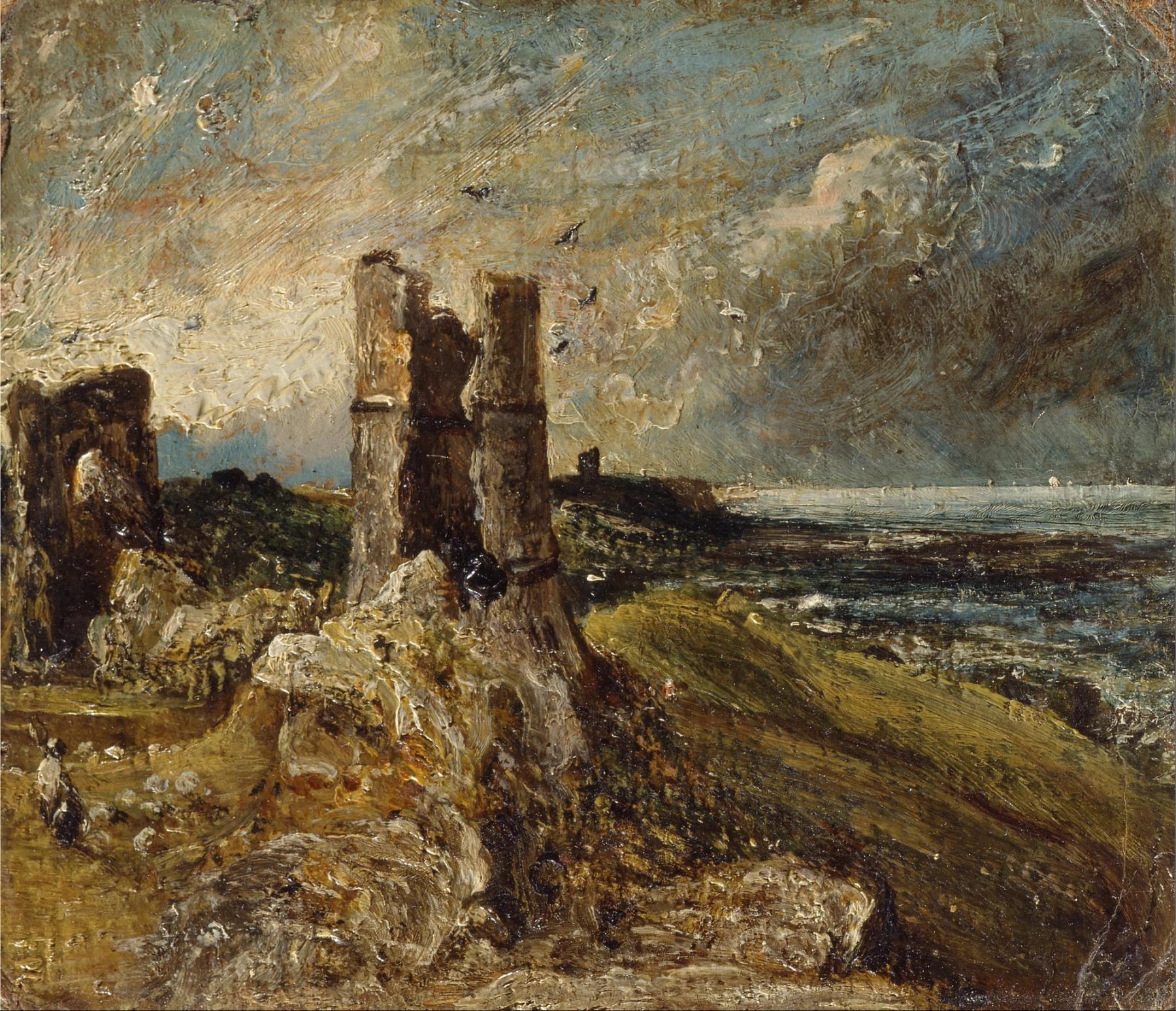
Sketch of Hadleigh Castle (1828–29) by John Constable.
Credit: John Constable; Google Cultural Institute; Public domain
Plein air painting at a glance
- "En plein air"
- French for "in open air"
- Paint tube invented
- 1841
- Key UK movement
- Newlyn School
- Typical session length
- 1 to 2 hours
- Common beginner format
- 20x25 cm (8x10 in)
The term used by 19th-century painters
Made portable outdoor painting practical
Late 19th-century painters based in Cornwall
Longer in stable conditions
Small enough to finish before light shifts
Outdoor Painting vs Studio Painting
The most obvious difference is time pressure, and everything else follows from that. In a studio, you can step back, make a cup of tea, and look again tomorrow. Outdoors, the light that made your scene interesting at nine in the morning will be entirely different by eleven. You cannot pause it or replay it. That constraint is real, and it takes some getting used to.
What it forces, though, is decisive mark-making. When you know the shadow across the path will be gone in half an hour, you stop fussing over whether your brush is quite the right size and you make a decision. Many experienced painters describe their outdoor work as more direct and more honest than anything they produce in the studio, precisely because there was no time to second-guess it.
There is also the physicality of the experience. Standing in a field, feeling the temperature of the air, hearing the sounds of the place, being aware of weather moving in: all of this feeds into how you paint, even if you could not articulate exactly how. It is a different kind of engagement with a subject than looking at a photograph pinned to a studio wall.
That said, plein air work and studio work are not in competition. Many painters move between the two constantly. Studies made outdoors provide source material for larger studio pieces; time in the studio with brushes and colour develops skills that carry back outside. The two practices feed each other.
It is also worth noting that a plein air painting does not have to be finished on location. Many artists take outdoor studies and develop them further in the studio. What matters is that the initial observation was made directly, in the place itself.
If you came here because you searched for painting outdoors or outdoor painting, this is the core distinction to keep: the work begins outside, with the subject in front of you. Studio finishing can come later. The outdoor observation is what makes it plein air.
Plein air vs studio painting
Pros
- + You observe real light, not imagined or photographed light
- + The pressure of changing conditions forces decisive mark-making
- + Paintings carry a sense of presence and place that is hard to replicate indoors
- + It gets you outside, which is good for your wellbeing as well as your practice
Cons
- - Light and weather change constantly, which takes some getting used to
- - You are limited to what you can carry
- - Conditions can make concentration harder: wind, insects, curious passers-by
- - You may not finish a piece in a single session
Your First Outdoor Painting Session in the UK
If you have never painted outdoors before, the experience can feel a little abstract to imagine. Here is what a typical session actually looks like, from arrival to packing up.
A typical plein air session
Arrive and look around
Before setting up, spend a few minutes walking the location. You're looking for a view that interests you, not necessarily the most dramatic one.
Choose your spot
Pick somewhere you can set up comfortably and stay for the session. Consider where the light is coming from and where it will move to.
Set up your kit
Easel, palette, paints, and a small panel or pad. Keep it simple, especially to begin with. You don't need everything you own.
Make a quick thumbnail
A small pencil sketch in your sketchbook helps you commit to a composition before touching paint. Two minutes spent here saves twenty minutes of confusion later.
Block in the main shapes
Start broad. Large masses of colour and tone first. Don't get drawn into detail before you have the whole surface covered.
Work towards the light
Identify your light source and let that drive your decisions. Where are the darkest darks? Where is the brightest light? Establish these relationships early.
Know when to stop
Plein air paintings rarely benefit from overworking. When the main impression is there, the painting is often finished. Packing up while you're ahead is a skill in itself.
One thing beginners consistently underestimate is how much of the session happens before any paint goes down. Arriving and taking time to look, really look, rather than immediately setting up and starting, changes the quality of everything that follows. The walk around is not wasted time.
The other common mistake is trying to paint too large a surface. A small panel, 20x25 cm or thereabouts, is genuinely easier to complete in a single session. There is no shame in working small. Some of the finest plein air studies in art history are tiny.
For a fuller beginner walkthrough after this overview, see how to start plein air painting. If you want a simple outdoor kit later, the beginner plein air kits guide is the next practical step.
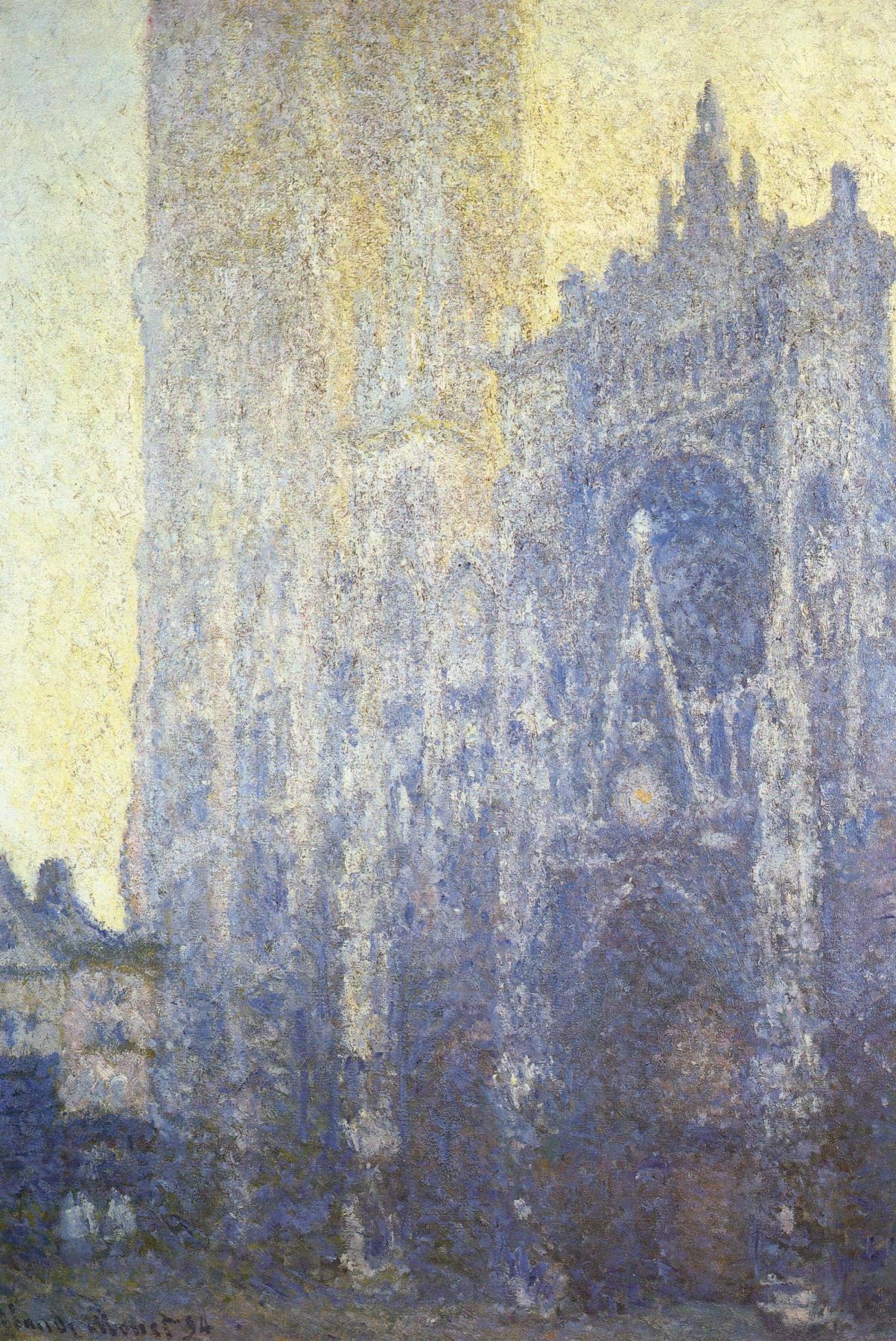
Rouen Cathedral: Façade and Tour d’Albane, Morning Effect (1894) by Claude Monet, showing how a painter can concentrate on one motif under specific light conditions.
Credit: Claude Monet; Wikimedia Commons; Public domain
What Mediums Work Best for Plein Air Painting?
The honest answer is that there is no single right medium for plein air work. The best choice depends on your existing experience, what you enjoy, and the conditions you are likely to be painting in.
Oil paint is the most traditional plein air medium, and for good reason. The relatively long working time means you can adjust and blend on the surface as you go, which suits the slow evolution of a painting over an hour or two. The main trade-offs are the kit required (panels, medium, solvent, cleaning cloths) and the fact that cold temperatures can thicken the paint noticeably. If you are heading out on a January morning in Scotland, oils require a little more preparation than they would on a mild day.
Watercolour is probably the most popular medium for outdoor location work among UK artists, and it is easy to see why. The kit is lightweight, it sets up in seconds, and a small travel palette can fit in a coat pocket. The challenges are the reverse of oil: watercolour dries quickly, which is a problem in direct sun or a stiff breeze, and it requires some shelter in genuinely wet weather. A drizzly afternoon in the Lake District calls for a bit of improvisation.
Gouache has grown considerably in popularity for outdoor work over recent years. It is opaque and water-soluble, sits somewhere between watercolour and oil in character, and handles the grey days of the British outdoor painter particularly well. The matte finish can feel very natural when depicting overcast light.
Acrylic works outdoors, but it comes with a specific challenge: it dries fast under normal conditions, and in warm or windy weather it can dry on the palette before you have finished mixing. Some painters find this manageable; others find it genuinely frustrating. If you already paint with acrylics at home and enjoy them, it is worth trying outdoors before assuming you need to switch.
Not sure which medium to start with?
If you already paint at home, start outdoors with whatever you use there. Getting outside matters more than choosing the perfect medium. You can experiment once you've had a few sessions under your belt.
Getting Started with Plein Air Painting in the UK
Let's address the obvious thing directly: yes, the British weather is unpredictable. It rains. It is frequently grey. There will be days when you set up optimistically and spend the next twenty minutes watching a squall roll in from the west. This is simply part of outdoor painting in the UK, and acknowledging it honestly is more useful than pretending otherwise.
But here is the thing that surprises most beginners: overcast days are often excellent for painting. Soft, consistent cloud cover diffuses the light evenly, eliminates harsh shadows, and makes colours easier to read. Many experienced plein air painters will tell you they actually prefer a grey day to full sun, where glare and fast-moving shadows can make observation genuinely difficult. The grey British sky is not the obstacle it appears to be.
You do not need to travel to dramatic scenery for your first sessions. Local parks, canal towpaths, village streets, coastal paths, and even a decent garden all offer more than enough visual material to work with. The quality of the location matters far less than the quality of your observation. A corner of an ordinary field observed carefully will produce a better painting than a spectacular view painted carelessly.
In terms of access, most public footpaths, parks, and open access land in England, Wales, and Scotland allow you to set up and paint without any special permission required. If you want to paint on private land, a polite ask is usually enough and rarely refused. This is not something to worry about unduly for your first few sessions.
Joining a local painting group is worth considering early on. Most areas of the UK have plein air or outdoor sketching groups that meet regularly, often advertised through local art societies or community groups. Going out with others takes the pressure off navigation and decision-making on early sessions, and you will pick things up quickly just from watching how more experienced painters approach a view.
A few practical notes before you go out. Dress in more layers than you think you need: standing still to paint is colder than walking. Tell someone where you are going if you are heading somewhere remote. And bring a hot drink. It does more for concentration than almost any piece of equipment.
Is Plein Air Painting Right for You?
It is worth being honest here: outdoor painting is not universally loved by everyone who tries it. Some painters find the changing conditions frustrating rather than energising. Some genuinely prefer the quiet control of the studio, and there is nothing wrong with that. Both are valid ways to make paintings.
What plein air painting asks of you, specifically, is a tolerance for uncertainty. The light will change. The painting may not go as planned. You might set up in what seemed like a good spot and realise after ten minutes that it was the wrong choice. You will almost certainly have sessions that feel difficult or unresolved. First sessions especially tend to be more about learning what outdoor painting feels like than about producing anything you want to keep.
If you can approach your first time out with low expectations and a spirit of experimentation, you are giving yourself the best possible start. One session is not enough to know whether plein air painting is for you; two or three gives you a much clearer sense of it.
What tends to stick, for people who take to it, is the directness of the experience. You are in a place, looking hard at something real, and making quick decisions with paint. The results are imperfect and alive in a way that is quite different from anything produced in a controlled environment. Many painters who try outdoor work find it changes how they see, even when they are not painting, and that is not a small thing.
The only way to find out is to get outside and try it.
FAQ
Frequently Asked Questions
What does plein air painting mean?
Plein air painting means working outdoors and painting directly from what you observe in the open air, rather than from photographs or memory.
Which medium should I start with outdoors?
There is no single best medium. Start with whatever you already use at home. Watercolour is lightweight, oil gives longer working time, gouache handles grey days well, and acrylics dry fast.
How long is a typical plein air session and what size should I use?
Most sessions last about one to two hours. Beginners find a small panel around 20 x 25 cm (8 x 10 in) easier to complete before the light changes.
Do I need permission to paint outside in the UK?
No special permission is usually required for public footpaths, parks, and open access land. For private land ask the landowner politely before setting up.
How will I know if plein air painting suits me?
Try a few sessions with low expectations. If you enjoy direct observation, quick decision making, and being outside, plein air painting may suit you. Joining a group can help you decide.
Author

PleinAirPainting Editorial Team
PleinAirPainting.co.uk helps artists paint outdoors with confidence through UK-focused guides, equipment advice, resources and plein air inspiration.