How to Find and Join Plein Air Painting Groups in the UK
A practical guide to finding and joining plein air painting groups across the UK, covering formats, costs, what to bring, and how to start your own meet up.

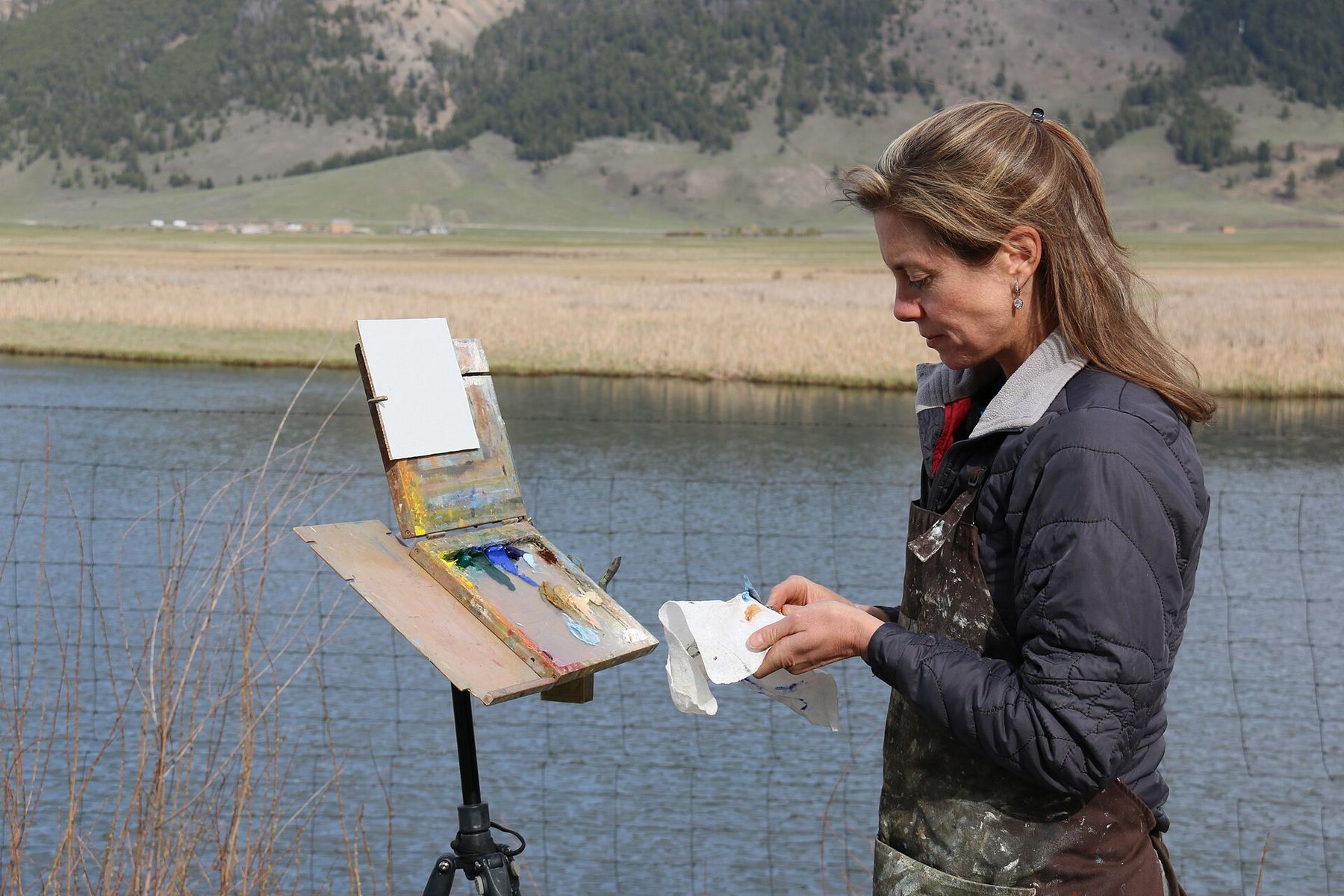
Photo by Lori Iverson / USFWS — public domain.
Credit: Lori Iverson / USFWS; public domain
Key takeaways
- • Plein air painting groups range from informal drop-in meetups to structured monthly societies and workshops.
- • Joining a group boosts learning through peer observation, accountability, local knowledge, and social support.
- • Costs vary: drop-in sessions are about £15 to £19, day workshops about £150, and private tuition varies by tutor.
- • Find groups via Facebook, Meetup, local art societies, the British Plein Air Painters site, art shops, and word of mouth.
- • If no group exists near you, start one with a simple WhatsApp or Facebook group, a set time, and a regular meeting spot.
If you've been painting outdoors on your own and wondering whether there's a community of artists doing the same thing, there is. Plein air painting groups exist across the UK, from informal weekend meetups in city parks to structured monthly societies with regular membership. Finding one can genuinely transform your practice, not just technically, but in terms of motivation, local knowledge, and the simple pleasure of painting alongside people who share the same enthusiasm. This guide explains what's out there, how the different formats work, and how to find a group that suits you.
What Are Plein Air Painting Groups?
At their simplest, plein air painting groups are gatherings of artists who meet regularly to paint outdoors together. That might be a handful of people meeting at a local park on a Sunday morning, or a well-established society with monthly events and a growing membership. Some groups are entirely informal, with no fixed agenda other than showing up and painting. Others are more structured, with demonstrations, instructor-led sessions, and consistent meeting locations.
What they share is the core idea: get outside, paint what's in front of you, and do it with other people. The social dimension matters as much to most members as the painting itself. For many artists, joining a group is the thing that moves plein air painting from an occasional experiment to a genuine regular practice.
UK groups span a wide variety of settings. You'll find artists painting in urban parks and along canal towpaths, on coastal clifftops, in village high streets, and across open moorland. The formats vary too, which is useful if your schedule, budget, or experience level means that one type of group suits you better than another.
Why Join a Group Rather Than Paint Alone?
Painting outdoors on your own is perfectly valid, and many artists prefer it for at least some of their sessions. But there are real, practical reasons why a group can move your work forward in ways that solo practice doesn't.
Peer learning is underrated. When you paint the same scene as five other artists and then see how each of them handled it, you're exposed to five different approaches to tone, composition, colour mixing, and problem-solving. That's something no YouTube tutorial replicates. You'll notice things about your own choices that you'd never have seen if you only had your own painting to look at.
Accountability gets you out. When the weather in October is grey and your enthusiasm is low, knowing that a group is meeting at 10am on Saturday is often enough to get you out of the door. That might sound like a small thing, but consistency is where real improvement happens.
Local knowledge is genuinely useful. Experienced members of a group often know the best viewpoints in an area, which landowners are happy for artists to paint on their land, where you can park without causing problems, and which spots have natural shelter when the wind picks up. That kind of knowledge takes years to gather on your own.
The social side matters. Outdoor painting can be quite solitary even when you're enjoying it. Painting alongside others, chatting over a flask of tea at the end of a session, and building relationships with people who understand what you're trying to do is genuinely nourishing. Many artists find it's one of the most enjoyable parts of their week.
Feedback, even informal, is valuable. Even if no formal critique happens, an end-of-session conversation where people share what they've painted and talk about what they were trying to achieve teaches you to articulate your own thinking and to see your work more clearly.
Types of Plein Air Painting Group in the UK
Not all groups work the same way, and finding one that fits your life is part of the process. Here's a breakdown of the main formats you're likely to encounter.
Informal Drop-In Sessions
These are the most accessible entry point. Drop-in sessions are low-commitment, low-pressure, and welcoming to complete beginners. You turn up, find a spot, paint for a couple of hours, and leave when you're ready. There's usually minimal structure and no expectation that you've been before or will come again. Many happen in public parks, botanical gardens, or heritage sites.
In London, sessions near major landmarks and green spaces are fairly well established. Tea and coffee are often shared informally, and the atmosphere tends to be friendly rather than instructional. Costs are typically in the £15 to £19 range per session where a nominal fee applies, though some groups operate on a voluntary basis.
Monthly Organised Groups
These groups have a more consistent membership and meet on a regular schedule, usually monthly. You get to know the same people over time, which builds a sense of community that drop-in sessions can't quite replicate. The painting location changes each month, which keeps things fresh and exposes members to a variety of settings.
London Plein Air Painters (LPAP) is one of the most active examples of this format in the UK. Monthly groups like this are well-suited to artists who want some structure without the commitment of a formal workshop.
Workshops and Day Courses
If you want more focused instruction, a day workshop is worth considering. These are typically instructor-led, with a demonstration at the start of the session followed by independent painting time and often a group review at the end. They run roughly from 9:30am to 5pm and typically cost around £150 for a full day.
Workshops are available at beginner and intermediate level, so there's no reason to hold back until you feel "ready." Regional providers can be found across England, including in East Sussex (areas around Battle and Rye are popular) and in various parts of Yorkshire. They're a particularly good option if you want to develop your technique quickly or if you're trying plein air for the first time and want some guidance.
Private and Small-Group Tuition
For the most tailored experience, one-to-one or small-group tuition keeps numbers to around four at most. Sessions are adapted to your level and goals, which makes them effective at any stage. If you're struggling with a specific aspect of outdoor painting, a focused session with an experienced tutor will move things along faster than a larger group setting.
A practical note on timing: most tutors recommend a minimum of three to four hours for outdoor sessions. Shorter than that and you rarely have enough time to settle in, deal with the logistics of setting up, and make meaningful progress on a piece.
Many groups across all formats have indoor backup plans for poor weather. This is a very UK-specific reality, and any established group will have a contingency: a village hall, a studio space, or simply a rescheduled date. It's worth asking about this when you join.
| Format | What to expect | Typical cost |
|---|---|---|
| Drop-in sessions | Casual, low-key meetups in parks or public spaces. Often weekly or monthly. Minimal structure. | £15–£19 per session |
| Monthly organised groups | Regular meetups with a consistent membership. London Plein Air Painters is a well-known example. | Varies by group |
| Day workshops | Instructor-led intensive sessions, often with a demonstration and guided painting. | Around £150 per day |
| Private or small-group tuition | One-to-one or groups of up to four. Tailored to your level. | Per-head rates vary |
UK Plein Air Groups and Societies Worth Knowing About
British Plein Air Painters
Treat listings as four different things. A juried professional association is not an informal local meet-up. A general art society that runs outdoor days is not a paid workshop or course. Confirm what you are joining before you pay or travel. British Plein Air Painters is a professional association for outdoor painters. Use its current website to confirm artists, exhibitions and contact routes. Do not assume open membership from a third-party listing.
London Plein Air Painters
An informal local meet-up may be a monthly paint-out with no jury and little paperwork. A general art society may add outdoor days to an indoor programme. A paid workshop or course sells tuition, not membership. If the listing mixes those, ask which one you are actually attending.
Regional Groups and Local Societies
Regional cover is uneven. Some counties have a dedicated plein air group. Others only have a society with occasional outdoor days, or nothing named at all. That is not a reason to invent a club. It is a reason to search properly and then attend once before paying a long membership.
Yorkshire has an active plein air community, with artists gathering around locations like Flockton Moor, the Mirfield canal, and the Selby Abbey area. Bristol and the South West have a growing number of outdoor painting events. East Sussex, as mentioned, is well served for day workshops.
British Plein Air Painters: use the association's current website to confirm its artists, exhibitions and contact route before relying on third-party listings. Historical artist images on this page are context, not evidence of a listed modern group.
Finding groups near you
If you can't find a named plein air group in your area, check local art societies — many now run regular outdoor sessions alongside their studio work. Facebook groups and Meetup.com are also worth searching. A lot of informal groups don't have their own websites.
What to Expect at Your First Session
Turning up to a group for the first time can feel a little nerve-wracking, especially if you’re not sure how good everyone else will be or whether you’ll have the right kit. The honest answer is that groups are almost always more welcoming than you’re expecting.
Most groups attract artists at a range of levels. Beginners are common, and experienced members tend to remember what it felt like to be new. Nobody is there to judge your work; the focus is on painting, not on competing.
Bring whatever you normally paint with. There’s no expectation that you'll have specialist outdoor gear for your first session. A sketchbook and watercolours is fine; so is a pochade box and oils. You'll get a feel for what others use over time, but don't let kit anxiety stop you from going.
What a typical plein air group session looks like
Arrive and get set up
Most groups ask you to arrive a little early. Bring your usual kit — there's no expectation to have anything special for your first session.
The group chooses or is shown a location
For structured sessions, the instructor often selects a spot with interesting light or composition. Drop-in groups may spread out across a site.
Paint
You work on your own piece for the main part of the session. Some groups include a demonstration at the start; others let you get straight on with it.
Share and discuss
Many sessions end with an informal show-and-tell. This is optional in most groups, but it's one of the best parts — seeing how others have interpreted the same scene teaches you a great deal.
It's also worth knowing that groups vary in atmosphere. Most are warm and encouraging, but occasionally a group's culture isn't quite right for you. If that happens, try another one rather than writing the whole idea off. Finding the right group is worth a little searching.
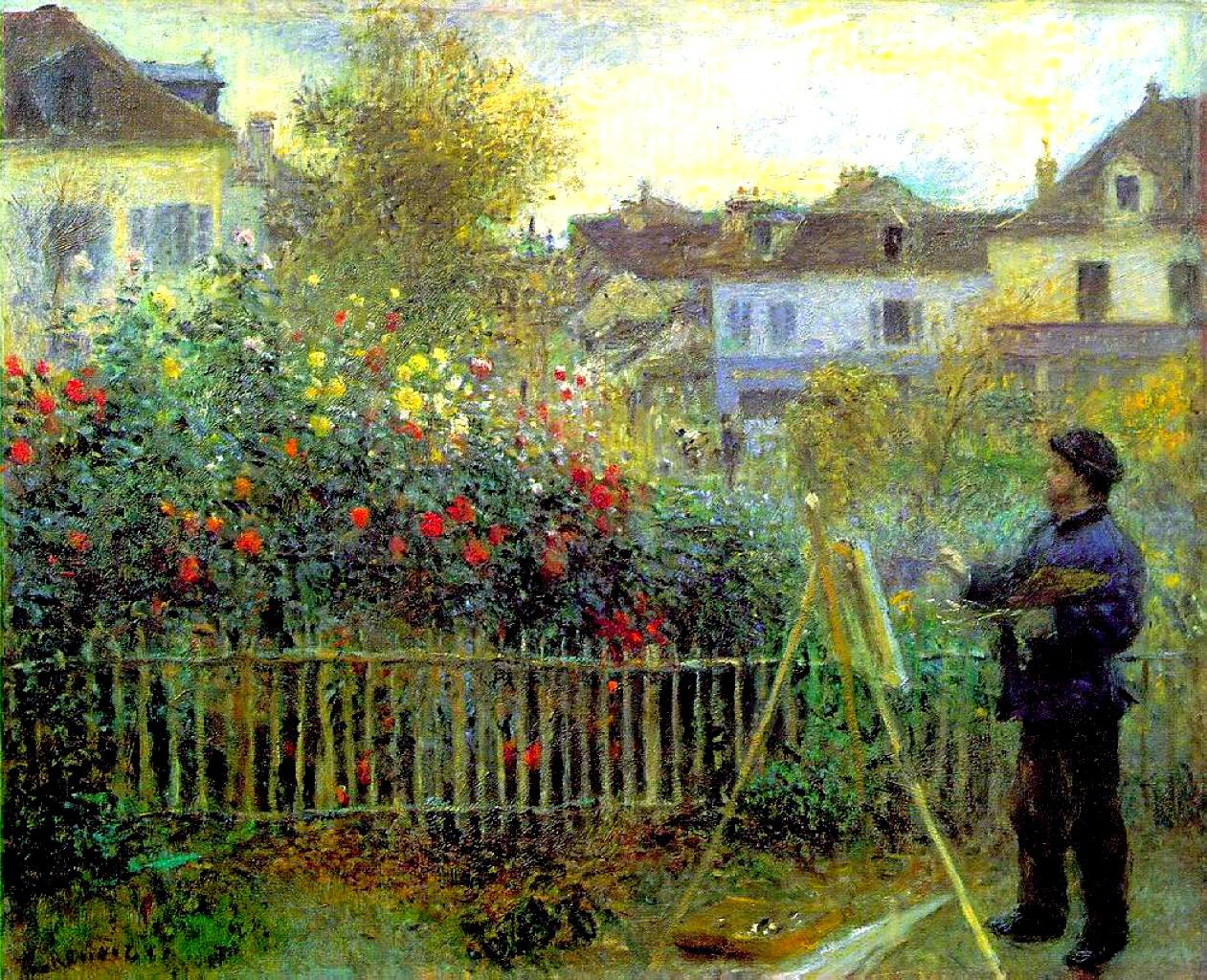
Claude Monet Painting in His Garden by Pierre-Auguste Renoir.
How to Find Plein Air Painting Groups Near You
Search the town or county plus plein air and outdoor painting. Then check local art societies and galleries for outdoor days. Look at recent posts, not a stale homepage, and ask how they handle weather cancellations.
Ask about pace, media, transport, accessibility, insurance and venue restrictions before you go. A genuine beginner-friendly listing says who it is for, where you meet, what happens if it rains, and whether the first visit is free or observed. If those answers are missing, treat it as unknown rather than friendly.
Meetup.com is worth checking in larger towns and cities. Outdoor painting meetups are listed here in a number of UK locations, and the platform makes it straightforward to see dates, locations, and attendance numbers before committing to anything.
Attend once before paying a long membership. This page owns finding and evaluating groups. It does not sell tuition. Keep kit mentions contextual.
The British Plein Air Painters website is a useful community hub, particularly if you want to connect with more serious practitioners or find artists in your region.
Art supply shops are a genuinely useful local resource. Shops with a community-minded approach, including some branches of Cass Art and independent art suppliers, often have noticeboards or staff who know about local groups and events.
Word of mouth still works. If you know any artists locally, ask them. The plein air community is small enough that one conversation often leads directly to an introduction.
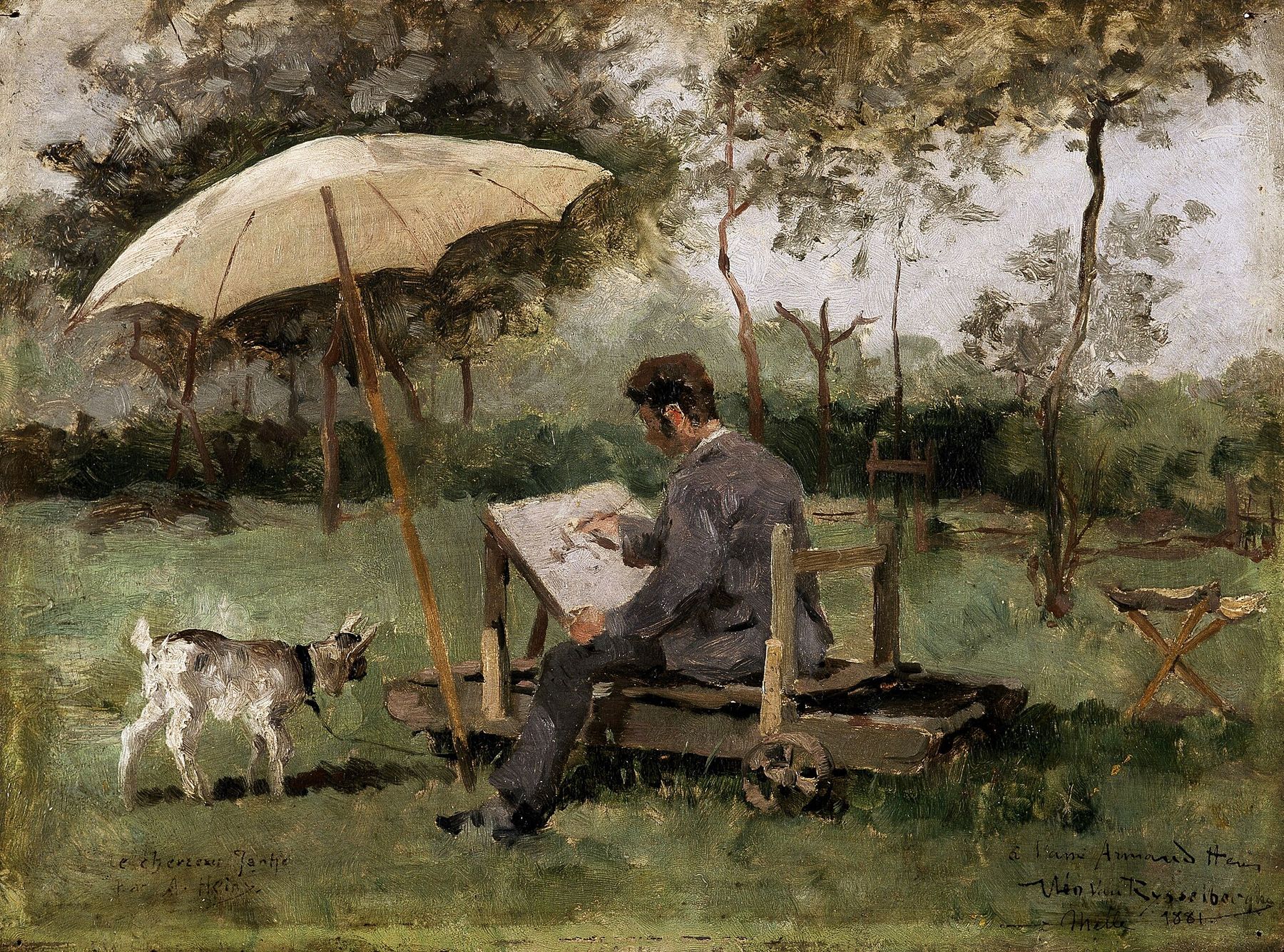
Armand Heins Painting Outdoors by Théo van Rysselberghe.
Starting Your Own Group
If you've looked and genuinely can't find anything near you, starting a group yourself is more straightforward than it might sound.
You don't need a formal structure, a committee, or a website to begin. A WhatsApp group and a public Facebook group for your area, combined with a regular meeting spot and a consistent time, is enough to get started. Announce it, show up, and see who comes. Even two or three people painting together regularly, and sharing what they're working on, creates something worth having.
As a group grows, you can look at affiliating with broader organisations like British Plein Air Painters, which can give you more visibility and connect you with resources and events. But that's a later step. The first step is simply picking a date and a location, telling people about it, and going.
The UK plein air community is still growing, and there are parts of the country where local provision is genuinely thin. If you're in one of those places, you might end up being the person who creates something that didn't exist before. That's a good thing for everyone who comes after you.
FAQ
Frequently Asked Questions
How can I find plein air painting groups near me?
Start with Facebook, Meetup, local art societies, and the British Plein Air Painters website. Ask at art supply shops and speak to local artists for word of mouth leads.
What should I bring to my first outdoor session?
Bring the kit you normally use. A sketchbook and watercolours are fine, as is a pochade box and oils. Dress for the weather and bring something to sit on and a drink.
How much do group sessions typically cost?
Drop-in sessions often cost around £15 to £19. Monthly groups vary. Day workshops are roughly £150 and private tuition depends on the tutor and group size.
What types of plein air groups exist in the UK?
Formats include informal drop-in sessions, monthly organised groups, day workshops, and private or small-group tuition. Each offers different levels of structure and support.
How do I start my own plein air group?
Pick a regular time and location, create a WhatsApp or Facebook group to advertise, and turn up. Two or three regular painters are enough to begin and you can expand from there.
Author

PleinAirPainting Editorial Team
PleinAirPainting.co.uk helps artists paint outdoors with confidence through UK-focused guides, equipment advice, resources and plein air inspiration.