Plein Air Painting Workshops in the UK: A Guide to Events, Retreats, and Where to Find Them
A practical guide to UK plein air painting workshops. Learn formats, costs, where to find events, how to choose a tutor, and how to get more from a day or residential retreat.

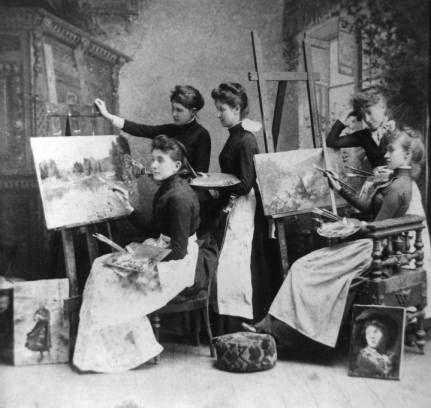
Painting class taught by Adelia Armstrong Lutz.
Credit: Public domain via Wikimedia Commons
Key takeaways
- • Workshops accelerate progress by offering live tutor demonstrations, targeted feedback, and peer learning.
- • Formats range from single-day sessions through multi-day nonresidential courses to full residential retreats with accommodation.
- • Typical costs: day workshops £85–£150, multi-day nonresidential about £70–£80 per day, residential retreats around £810–£855 for three days.
- • Provision is strongest in the South West and North West; the Midlands and East may require travel or choosing residential options.
- • Find events via tutors' mailing lists, art schools, local societies, and social media; ask about group size, medium compatibility, and bad weather plans.
There is a point in most painters' outdoor practice where self-guided learning starts to slow down. You know how to set up, you can read a scene well enough, and you've developed some working methods, but progress feels harder to come by. Plein air painting workshops are one of the most effective ways through that ceiling. This guide covers what's available across the UK, what different formats involve, what they typically cost, and how to find and choose the right one for where you are in your practice. Rather than listing specific dates that may have already passed, the focus here is on how the UK workshop landscape works and how to navigate it effectively.
Why Workshops Are Worth It (Even When You Can Already Paint Outside)
There is a reasonable question here: if you can already get outside and produce work you're broadly satisfied with, why pay for instruction?
What a Good Workshop Gives You That Solo Practice Can't
The short answer is feedback and proximity to better decision-making. When you paint alone, you can only compare your work to your own previous attempts and to paintings you've studied from a distance, usually reproductions. A workshop puts you next to a skilled painter who is making real decisions in real conditions, in front of the same scene you're looking at. That is genuinely hard to replicate.
A tutor working through a study outdoors will make choices about what to simplify, where to start, how to handle a difficult sky, what to leave out, and when to stop. Watching that process live, with the possibility of asking why, is qualitatively different from watching a video. The light changes for them just as it does for you. The wind catches their palette. They make mistakes and deal with them.
Peer learning matters too. Watching other participants approach the same subject will surface approaches you would not have considered. Someone else's question during a critique will often answer something you hadn't quite found the words for.
There is also the social dimension. Painting outdoors alone is rewarding, but it can also be isolating. Workshops create shared experience and, often, longer-term connections with other painters who are serious about their practice.
One honest note: a single workshop is unlikely to produce a dramatic leap forward. What it can do is identify specific problems in your practice and give you something precise to work on. The painters who benefit most from workshops are those who follow up what they learn in their own sessions in the weeks afterwards.
Types of Plein Air Workshop Available in the UK
The UK market offers a reasonably varied range of formats, though provision is not evenly spread geographically.
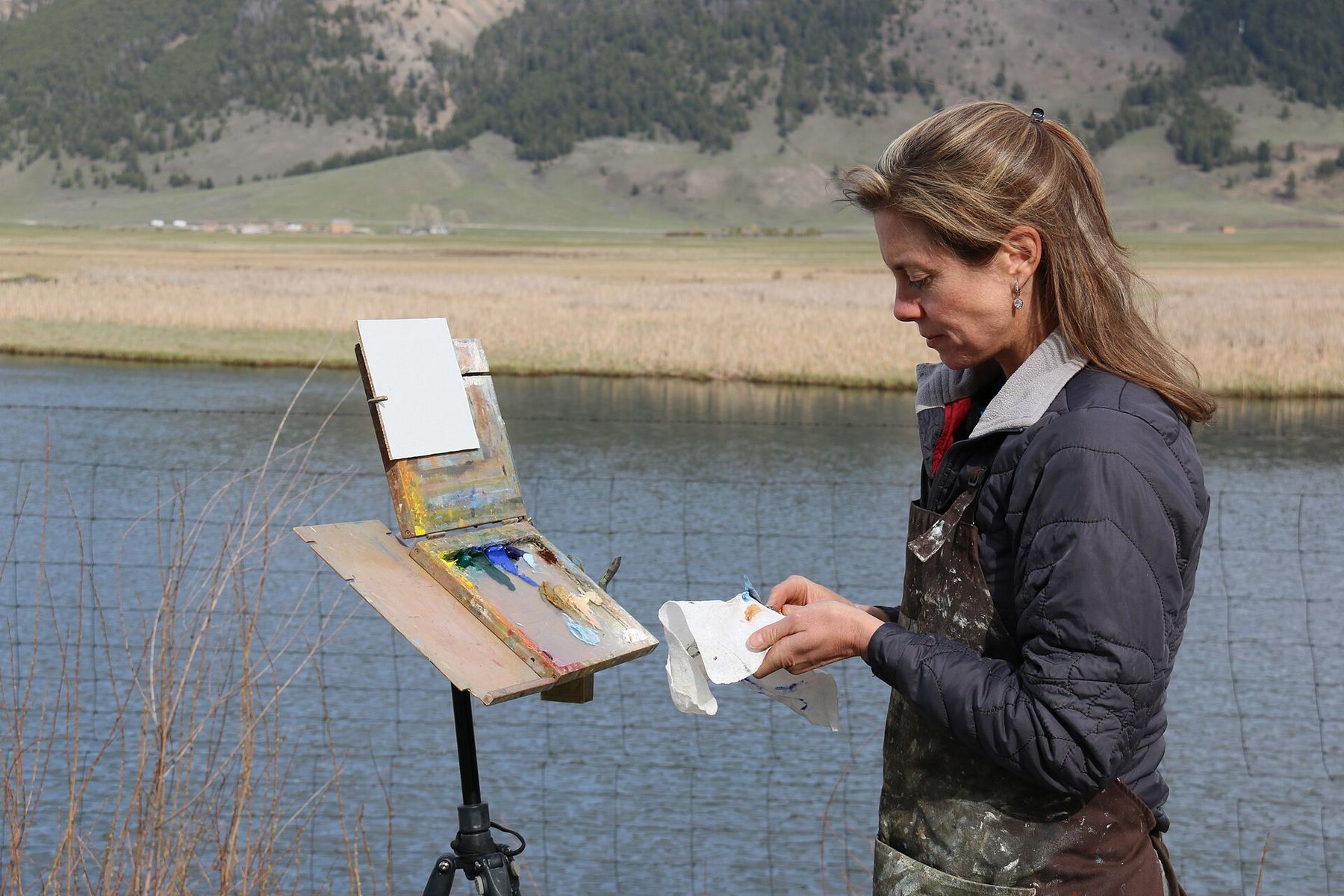
Photo by Lori Iverson / USFWS — public domain.
Single-Day Workshops
These are the most accessible entry point. A typical single-day workshop runs five to eight hours and usually follows a similar pattern: an introduction to the location, a tutor demonstration of an hour or more, independent painting time through the middle of the day, and individual feedback or a group critique towards the end. Group sizes tend to range from around 12 to 25 participants.
Single-day workshops are a practical way to test a tutor's approach before committing to a longer course. Northern Realist's 2026 programme listed six Tonalist-focused days at Tegg's Nose Country Park with Christopher Clements and Kieran Ingram. Its Composition workshop on 4 September runs from 10am to 3.30pm and covers design, balance, harmony and visual rhythm. Places are limited to support individual feedback. Check the provider's page before booking because dates and availability change.
The 4 September 2026 workshop is listed at £85, with a £20 deposit and an optional £15 equipment package. Compare what is included, not just the headline price.
Multi-Day Retreats with Accommodation
This is the most immersive format available. Residential retreats usually include accommodation, all meals, and tuition as a single package. They are typically held in scenic rural or coastal settings and run for three to five days.
Residential retreats give you several days focused on painting, feedback and one landscape. Westcott Barton's June 2026 retreat with Maria Rose ROI is a useful dated example. The event has passed: the stay ran from 17 to 21 June, with painting days from 18 to 20 June. It included demonstrations, guided outdoor painting, studio access in poor weather and a North Devon coast trip when conditions allowed. The course suited painters with some experience of oils or acrylics.
For that June 2026 retreat, Westcott Barton listed £810 per participant for single or shared accommodation with shared bathroom facilities; that option required at least two participating guests. Single occupancy with a private bathroom was £855. Both prices included accommodation, meals and tuition. These are historical examples, not current market averages, so check the latest course page before comparing costs.
Multi-Day Courses Without Accommodation
These occupy a useful middle ground. Participants attend for multiple consecutive days but make their own arrangements for accommodation. This format suits painters who live within reasonable travel distance of the venue, or who prefer to organise their own stay.
Non-residential multi-day courses sit between a single workshop and a residential retreat. You receive sustained teaching but arrange your own travel, meals and accommodation. There is no reliable fixed daily benchmark, so compare the full course fee, teaching hours, materials, travel and bad-weather provision on the provider's current page.
The teaching dynamic can feel more intensive than a single-day workshop without requiring the full residential commitment.
Informal Painting Days and Peer-Led Groups
Not all useful outdoor painting sessions involve a paid tutor. Many painting societies and local art groups organise regular outdoor sessions where more experienced members offer informal guidance to others. Some of these are free; others charge a small fee to cover venue costs or materials.
These sessions are less structured than formal workshops but offer regular practice, accountability, and community. They are particularly worth seeking out if you're between workshops or if formal tuition is out of reach financially. Painting societies active in your area are the main route into this kind of provision.
What to Expect from a UK Plein Air Workshop
A Typical Day's Structure
Most single-day and multi-day workshops follow a broadly similar pattern. You'll gather at the location, often briefed on the site and the day's aims before anything else. The tutor then demonstrates, painting a full study from scratch while explaining their thinking as they go. This demonstration is usually the most valuable part of the day; pay close attention and take notes or photographs if the tutor permits it.
Independent painting time follows, typically making up the bulk of the day. The tutor circulates during this period, offering feedback on individual works. The day usually closes with a group critique where everyone's work is reviewed, questions are raised, and common themes are addressed.
Some providers, particularly those working in locations with unpredictable weather, will mix outdoor sessions with periods in a studio or covered space. This is worth asking about in advance.
Group Sizes and the Teaching Dynamic
Smaller groups, typically eight to fifteen participants, allow for more substantive individual attention. Larger groups, which are common in single-day formats, mean the tutor's time is spread more thinly. This doesn't make larger workshops less valuable, but it does change the experience. If one-to-one feedback is important to you, it's worth asking about group sizes when booking. Some tutors also offer a degree of informal email or image follow-up after the event, which can extend the benefit considerably.
How Much Do Plein Air Workshops Cost?
Headline tuition is only the start of the bill. Add travel, rooms, meals, materials, deposits you might lose, and the cost of a cancelled weather day. Then compare that total with demonstration time, individual feedback, group size, and a real indoor or covered fallback. The 2026 figures below are dated examples, not a promise that those dates or prices are still open.
Typical UK plein air workshop costs
- Single-day workshop (2026 example)
- £85
- Multi-day course (day attendance)
- No fixed benchmark
- Residential retreat (shared bathroom, June 2026 example)
- £810 per person
- Residential retreat (private bathroom, June 2026 example)
- £855 per person
- Informal peer-led painting day
- Free or low-cost
Dated 2026 example: Northern Realist Composition workshop, 4 September 2026; £20 deposit and optional £15 equipment package. Verify the current listing.
Compare the current total course fee, teaching hours, materials, meals, travel and weather plan
Dated 2026 example: Westcott Barton; minimum booking of two participating guests; accommodation, meals and tuition included. Verify the current listing.
Dated 2026 example: Westcott Barton single occupancy; accommodation, meals and tuition included. Verify the current listing.
Check whether tuition, materials or venue fees are included
Before you book a residential week, cost the same trip as a day course plus your own travel and lodging. If the packaged retreat is similar or cheaper once meals and shared logistics are included, that may be the better deal. If it is far more expensive, ask whether extra teaching hours and one-to-one time justify the gap.
Single-day workshops and peer-led painting days remain useful if you want practice without a large outlay. Two dated 2026 examples: Northern Realist listed a composition workshop around £85 for 4 September 2026, and Westcott Barton advertised a June 2026 residential from about £810 per person with meals and tuition. Check those providers' current pages before treating either figure as bookable.
Where Are UK Plein Air Workshops Held?
Region still matters, but format matters more. A coastal retreat only helps if you can reach it, handle the days, and still paint if the weather turns. Use the regional snapshot as a starting map, then confirm this year's venues, access, and bad-weather plan on the current listing.
| Region | Activity Level | Notable Locations |
|---|---|---|
| South West | High | Devon, Cornwall, Dartmoor, coastal locations |
| North West | Active | Cheshire, Peak District fringes, Macclesfield |
| South East | Active | London (Bankside), East Sussex coast |
| Yorkshire | Moderate | Moors, Dales, varied landscape |
| East Anglia | Emerging | Norfolk, Suffolk coast, Constable Country |
| Midlands | Limited | Fewer dedicated providers; worth searching online |
| Scotland | Patchy | Some residential retreats; strong landscape tradition |
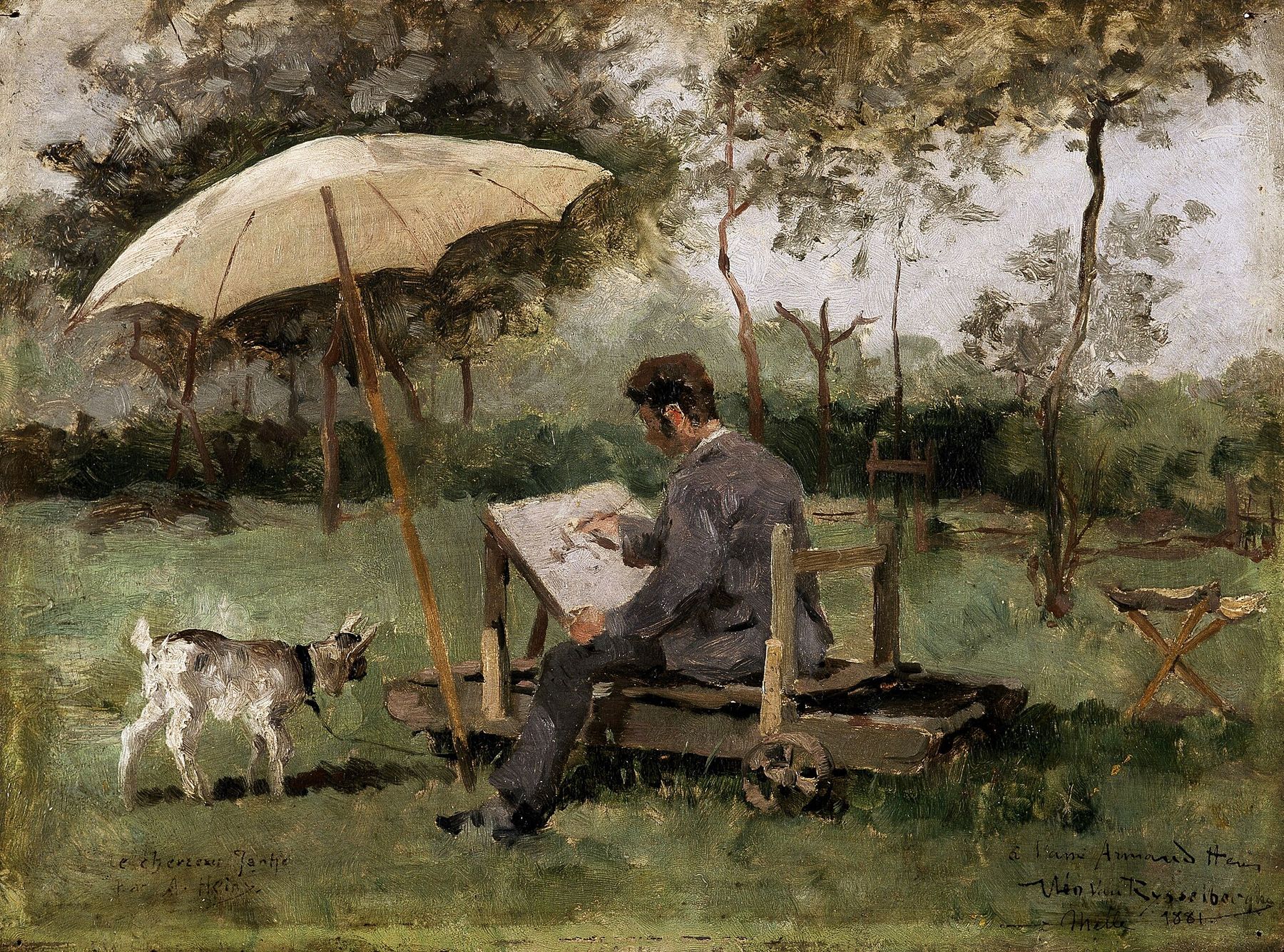
Armand Heins Painting Outdoors by Théo van Rysselberghe.
Search by teaching style as well as county. Rural and coastal venues often suit multi-day retreats; towns may offer day courses. If local options are thin, widen the search to nearby counties and confirm parking, access, and the indoor fallback before you pay.
Scotland has a strong landscape painting culture, but formal workshop listings are patchy. Search Scottish tutors and venues directly rather than assuming a UK-wide directory is complete.
If you live in the Midlands or East, fewer local options can make one packaged residential trip more efficient than several separate day trips. Cost the overnight stays either way, and do not treat travel as an afterthought.
How to Find Plein Air Painting Events in the UK
Dedicated Workshop Providers
Independent tutors still announce most UK plein air workshops on their own sites and mailing lists. Follow painters whose work you already trust, then verify dates, group size, materials, demonstration time, and cancellation terms on the current page. Popular residential weeks can fill quickly.
Art Schools and Adult Education
Art schools, adult-learning services and further education colleges may run seasonal outdoor sessions. Treat them as one option beside independent tutors. Confirm medium, experience level, how much individual feedback is included, group size, equipment list, and cancellation terms before you book.
Painting Societies and Local Groups
Local art societies and informal meet-ups are different from paid tuition. They are often the right first step if you want company and a place to paint, not a structured critique. For how to find and assess groups, use the companion guide to plein air painting groups.
A five-question shortlist before you book
Ask five questions from the current listing: What is the total cost including travel and materials? How much individual feedback is promised, and in what group size? What happens if the weather fails? Do the dates and travel actually fit? Does a dedicated tutor, art school, local society or informal group match the goal? If you cannot answer those, wait rather than guessing.
How to Choose the Right Workshop for You
There are a few factors that matter more than others when working through the options.
Questions to ask before booking
What skill level does the workshop assume? Some require prior experience with oils or acrylics. How many participants are in the group? Smaller groups mean more individual attention. Is the session mostly outdoors, mostly studio, or a mix? What happens in bad weather? A good provider will have a plan. Is travel and accommodation included, or do you need to arrange your own?
Beyond the practicalities, the most important thing is whether the tutor's painting makes sense to you. Look at their work online before booking. You don't need to paint in the same style, but you should respond to the quality of their decision-making and the way they handle light, colour, and composition. You'll spend a significant portion of the day watching how they work. It's worth caring about what you're watching.
Medium compatibility is also worth checking. Most UK plein air workshops are designed around oils. Watercolour-specific provision exists but is less common; acrylic workshops are rarer still. If you work in watercolour, confirm before booking that the workshop is designed for your medium rather than assuming it will be adaptable.
Getting the Most from a Workshop Once You're There
Arrive with a specific question or problem in mind. Painters who come with vague intentions tend to leave with vague results. If you've been struggling with how to handle tonal values in overcast light, or where to place the horizon when the composition feels flat, say so. Tutors can direct their feedback more usefully when they know what you're working on.
Don't arrive expecting to produce your best work. Workshops are for learning, and learning often looks messy. The study you paint on a workshop day is less important than what you take away from the experience.
Watch the other participants as well as the tutor. Their questions during critiques will often be your questions. Their approaches to the same subject will show you choices you wouldn't have made and some of those choices will be worth borrowing.
If the tutor permits it, photograph their demonstration at various stages. The detail of early decisions, how they block in the initial tones, how they simplify the foreground, fades faster than you'd expect. Having visual reference for those stages is useful when you're back in your own practice.
Finally, paint again within a few days of returning home. The lessons from a workshop are most accessible while they're recent. Give yourself a session outdoors specifically aimed at applying what you worked on. That is when the value of the day tends to consolidate.
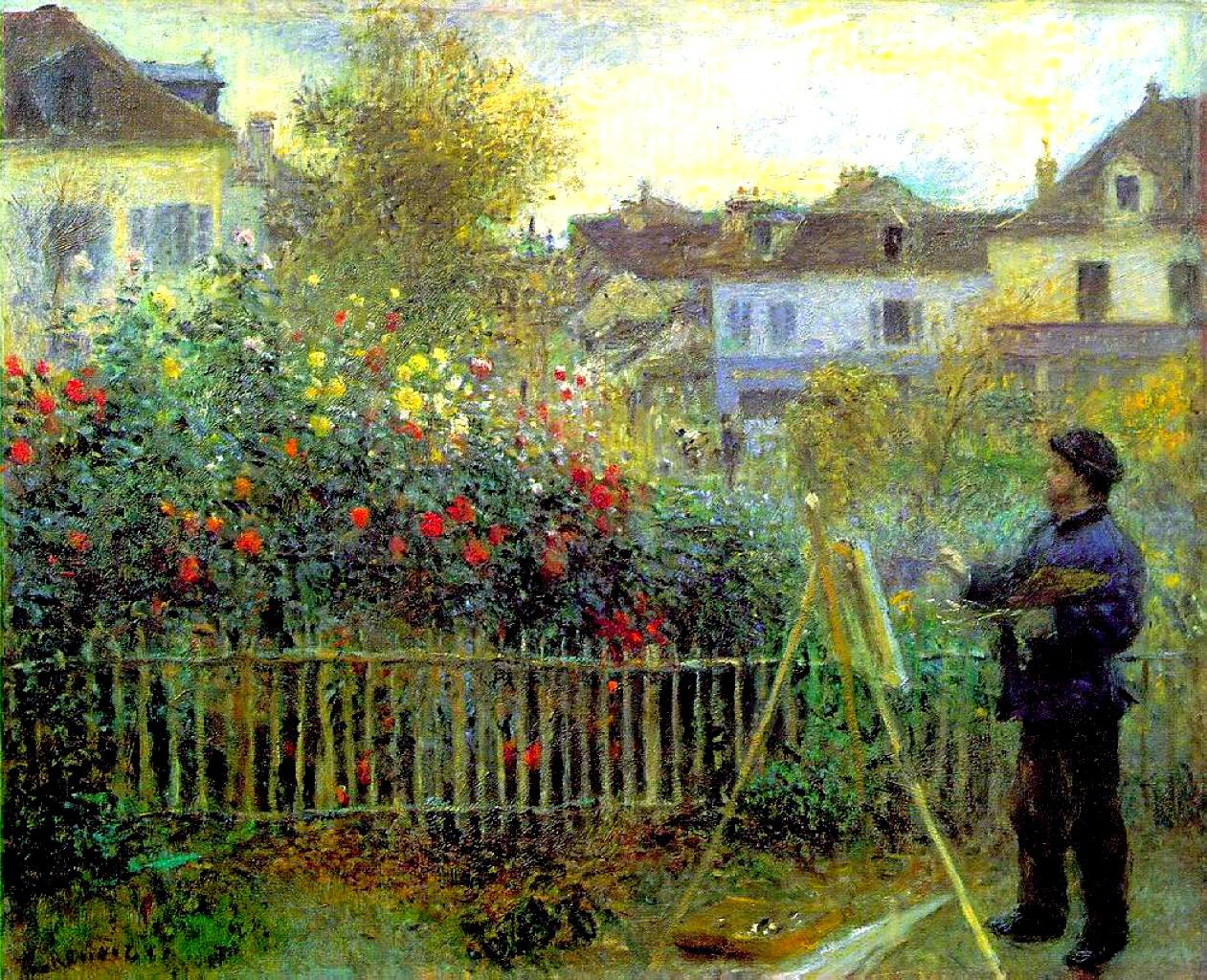
Claude Monet Painting in His Garden by Pierre-Auguste Renoir.
FAQ
Frequently Asked Questions
How much do UK plein air painting workshops typically cost?
Single-day workshops usually cost £85 to £150. Multi-day nonresidential courses run around £70 to £80 per day. Residential retreats often total around £810 to £855 for three days. Peer-led sessions can be free or up to about £20.
Are workshops suitable for beginners?
Yes. Many workshops are open to a range of abilities, but check the listing for any required prior experience and confirm the medium, especially if you use watercolour or acrylics.
Where is the best place to find events and tutors?
Follow tutors on social media and sign up to their mailing lists, check art schools and adult education providers, join local painting societies, and search groups or listings on Eventbrite and Facebook.
What should I bring to a plein air workshop?
Bring your usual plein air kit, weather appropriate clothing, a camera or phone if the tutor allows photos of demonstrations, a notebook, spare materials, and any specific questions you want to work on.
What will I gain from attending a workshop?
You will get direct feedback, see a tutor make live decisions in the same light, learn alternative approaches from peers, and leave with specific issues to practise in the weeks after the event.
Author

PleinAirPainting Editorial Team
PleinAirPainting.co.uk helps artists paint outdoors with confidence through UK-focused guides, equipment advice, resources and plein air inspiration.