Capturing Light in Plein Air: Techniques That Actually Work Outdoors
Practical guide to capturing light in plein air. Tone your ground, limit your palette, work alla prima, and use decisive brushwork to keep outdoor paintings luminous.

Key takeaways
- • Tone the ground first to gain a neutral mid value for accurate judgement.
- • Work alla prima and block in large value masses before refining.
- • Limit your palette to stay decisive and avoid muddiness.
- • Use confident, fresh brushwork and avoid overblending to hold light.
- • Plan for typical UK conditions by using temperature shifts and committing to one light effect.
Capturing light in plein air painting is one of those problems that sounds straightforward until you are standing in a field with a loaded brush, the sun has moved, and the painting in front of you looks nothing like what you were looking at twenty minutes ago. The frustration is real, and it is almost universal among outdoor painters at the intermediate stage. This article is about understanding why it happens and what to do about it.
Before you read on
This article assumes you have painted outdoors at least a few times. If you are just starting out, it is worth getting a couple of sessions under your belt first so the technique advice here will make more immediate sense.
Why Light Is So Difficult to Capture Outside
Before fixing the problem, it helps to understand what is actually going wrong. Most painters assume it is a colour mixing issue. Usually, it is not. It is a value issue, combined with a pace problem.
The light keeps moving
The sun moves roughly 15 degrees per hour. That sounds abstract until you realise that the shadow cast by a gate post at 9am looks completely different by 11am. Over a two-hour session, the light that originally drew you to a scene can shift significantly, or disappear entirely behind cloud cover.
The instinct is to chase it: to keep adjusting the painting as the light changes. This rarely ends well. The painting ends up recording five different light effects at once, and none of them read clearly. Commitment is the skill here, not observation.
White canvas and the value trap
A white canvas is one of the most misleading surfaces you can paint on outdoors. Against a stark white ground, every mixture you put down looks too dark. So you lighten it. Then you lighten the next mixture. Before long, every passage in the painting is clustered in the upper value range, the darks are not dark enough, and the lights have nowhere to go. The painting looks washed out, or flat, even when the original scene was full of contrast.
This is not a talent problem. It is a perceptual problem caused by the white ground, and it has a straightforward solution.
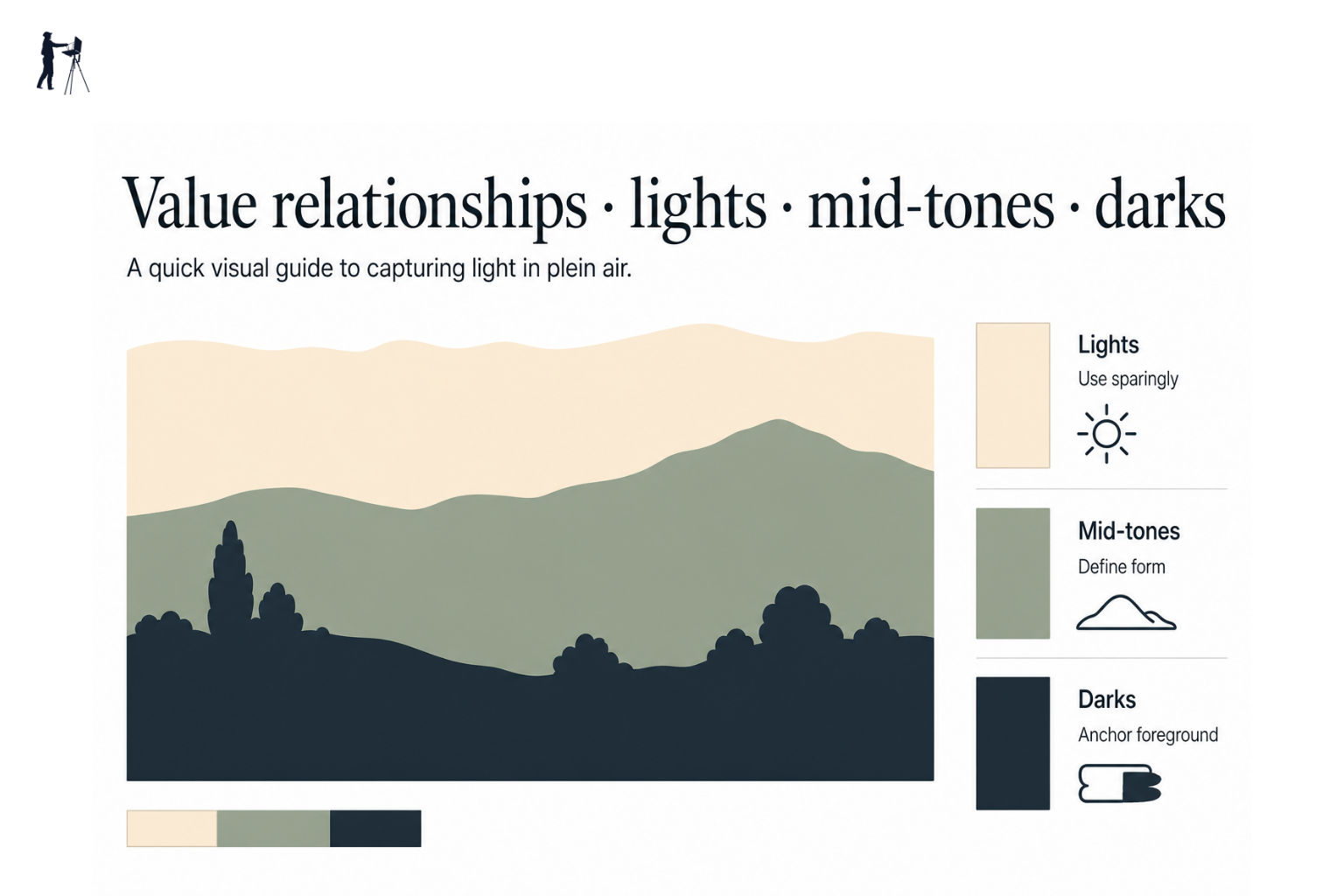
Start With a Toned Canvas (And Why It Changes Everything)
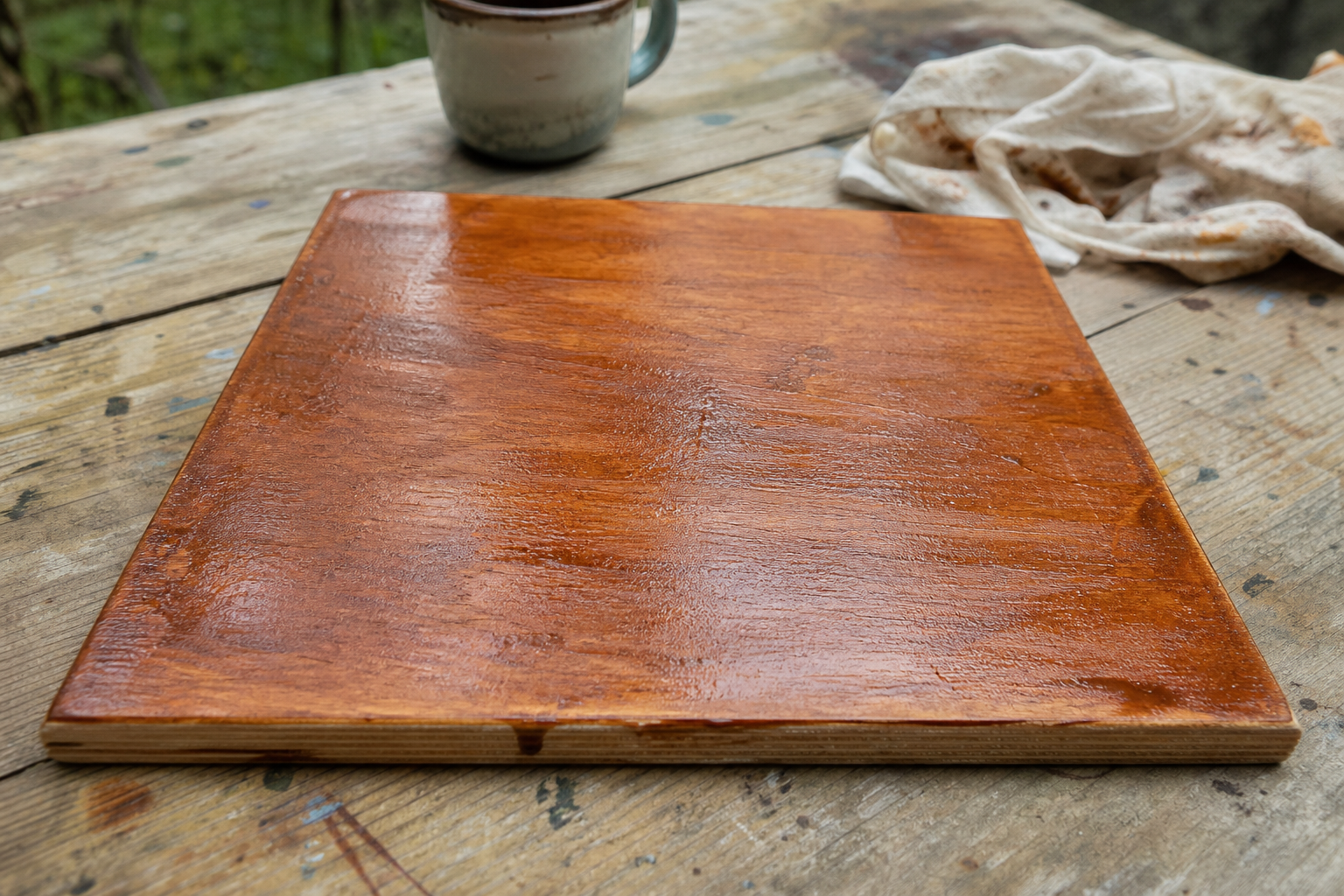
Toning the canvas before you paint, a practice sometimes called applying an imprimatura, is one of the most practically useful habits an outdoor oil painter can develop. It solves the white ground problem immediately and gives you a working surface that makes value judgements far more accurate.
The method is simple. Before you begin painting, brush a thin wash of oil colour across the whole canvas or panel. Thin it with a little solvent or medium so it is translucent, not opaque. The ground colour should show through slightly. Let it lose its wet sheen before painting on top; in cold UK weather, give it an extra few minutes.
The toned ground works because it gives you a neutral mid-value to judge against. Instead of everything looking too dark against white, you are now placing darks against a mid-tone and lights against a mid-tone. Both judgements become easier and more accurate. The painting develops more quickly and with fewer corrections.
You do not need the tone to be perfectly even. A loose, brushy wash is fine and often livelier than a flat coat.
| Colour | Effect | Best for |
|---|---|---|
| Burnt Sienna (thinned) | Warm, earthy neutral | Sunny days, landscapes with warm light |
| Phthalo Blue + a touch of black | Cool, muted grey | Overcast days, coastal scenes, cool light |
| Yellow Ochre (thinned) | Soft warm ground | Autumn tones, golden light sessions |
| Raw Umber (thinned) | Neutral mid-value | All-purpose; works in most UK conditions |
Working Alla Prima: Committing to the Light You See Now
Alla prima means completing the painting in a single session, working wet paint into wet paint throughout. For plein air work, it is arguably the most honest approach available. You are painting the light as it is right now, not as you remember it, not as you hope it will return to being.
The method has a built-in discipline. Because you are working wet-into-wet and racing against the changing light, you have to make decisions and move on. You cannot keep a section open while you deliberate over the next. This is not a disadvantage. It is exactly what produces the freshness and directness that makes strong plein air work compelling.
The practical rule is to keep the whole painting at roughly the same stage of development. Do not finish one corner before the rest is blocked in. Work large to small, establishing the major value masses first, then refining once the overall structure is in place. If you let one area dry while another is still being developed, you lose the ability to blend or adjust across edges, and the painting starts to look assembled rather than unified.
Alla prima demands speed and decisiveness. Those are skills that develop with practice, and they develop faster if you approach each session with the intention of finishing, rather than treating it as a study to be completed later.
Limiting Your Palette to Stay in Control
A crowded palette is a slow palette. When there are too many colour options, mixing decisions multiply and the session loses momentum. More practically, too many colours can lead to muddy, over-mixed passages that kill the light relationships you are trying to establish.
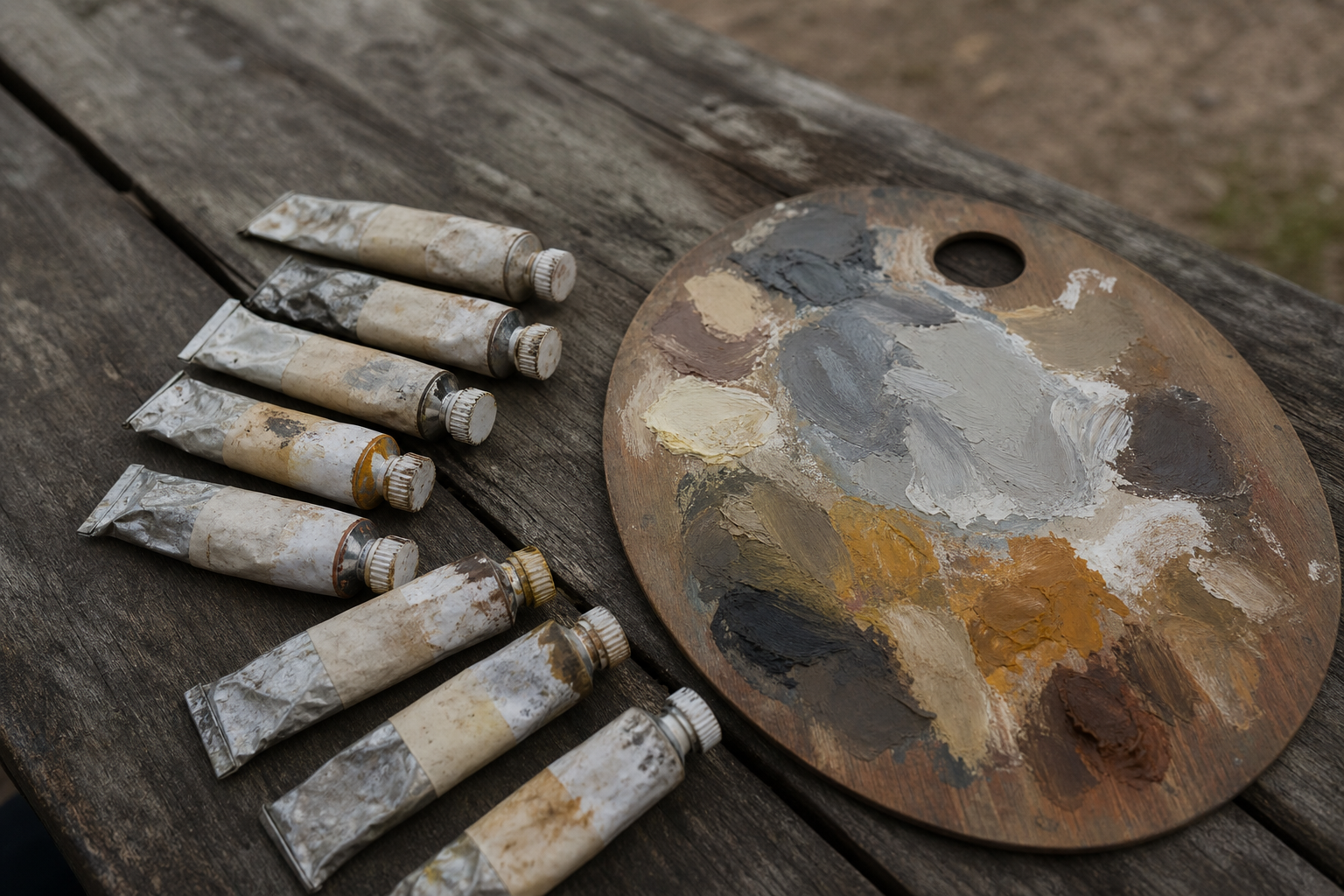
A reliable starting palette for plein air oil painting in UK conditions: Titanium White, Yellow Ochre, Burnt Sienna, Cadmium Red Light (or a good-quality substitute if cadmium is a concern), Alizarin Crimson, Ultramarine Blue, and one cool blue, either Phthalo Blue or Cerulean. That is seven colours, enough to mix a wide range, few enough to stay in control.
The restraint forces you to see colour relationships more clearly. When you cannot reach for a ready-made green, you have to mix one from blue and yellow and adjust it against what is actually in front of you, which is almost always more interesting than any tube colour.
Invest in artist-grade paints rather than student-grade. Student-grade colours contain fillers that extend the pigment, which dulls the colour and makes value shifts harder to read. The difference is noticeable outdoors, where subtle temperature and value distinctions are doing a great deal of work. Jackson's Art, Ken Bromley, and Cass Art all carry a good range of artist-grade oils; buying individual tubes rather than sets gives you better control over what goes on your palette.
Palette tip
Pre-mix your lightest light and darkest dark before you start painting. This gives you anchor points to judge every other value against as the session progresses.
Brushwork That Holds the Light
Confident brushwork and light capture are directly connected, in a way that is not always obvious until you have overworked a painting and watched the light disappear from it.
The principle is this: a fresh mark holds the visual contrast between its edges and the paint around it. That contrast is part of what reads as light. When you blend that mark into its surroundings, the edge softens, the contrast reduces, and the sense of light diminishes. Overblending is one of the single most common reasons intermediate plein air paintings look flat.
Bravura brushwork simply means making purposeful marks and leaving them alone. Load the brush with enough paint to carry through the stroke. Place the mark. Step back and look. If it works, move on. If it needs adjustment, make a fresh mark rather than softening the existing one.
A traditional practice worth adopting: thick, opaque paint in the lights; thinner, more transparent paint in the shadows. This difference in paint quality reinforces the light and dark relationship physically as well as tonally. The lights sit forward. The darks recede. The painting has depth.
Stepping back regularly is not optional. What looks like chaos from 30 centimetres usually reads well from a metre or more. Train yourself to make a mark, step back, assess, then return to the canvas. It slows the overblending instinct and improves the painting considerably.
A brush range that supports bravura work, with enough stiffness to place paint decisively and enough variety in size and shape to handle both large masses and smaller details, makes this approach much easier. The site's brushwork content covers specific recommendations if you want to go further on that.
Capturing Light in Typical UK Conditions
Most instructional material on plein air painting is written with consistent, warm sunshine in mind. That is not the default condition for painters working outdoors in the UK. A more honest starting point is to plan for overcast, accept variable light as normal, and treat bright sunshine as a welcome bonus.
Overcast light is not bad light. It is soft, diffuse, and consistent. The challenge is that it reduces hard shadow edges, which are one of the most reliable tools for establishing value contrast. Without strong shadows, a painting can easily drift toward uniform grey.
The way through this is colour temperature. In diffuse light, warm colours advance and cool colours recede, even when the value differences between areas are small. A field that sits in cool shadow and a track that catches the slightly warmer diffuse light overhead: those temperature differences may be subtle, but paint them accurately and the painting will read as luminous rather than flat. Colour temperature is doing the work that cast shadows do on sunny days.
Low-angle winter and autumn light is worth planning sessions around. The raking shadows it creates are excellent for value contrast, and the warm colour of late afternoon or early morning light in October or November can be genuinely beautiful. Sessions are shorter (the light changes fast at low angles and the days are brief), but the quality of the light is often high.
The most practically challenging condition is rapidly shifting light: cloud cover that breaks and closes throughout the session. When this happens, the temptation is to keep adjusting the painting to match whatever is happening in the sky at any given moment. The better approach is to make a decision in the first ten minutes. Are you painting a sunny scene or an overcast one? Commit to that and hold the light effect consistent throughout, even as it changes around you. The painting will be more coherent for it.
Light and time in the UK
- Golden hour duration
- 20–40 minutes
- Overcast days per year (UK average)
- 150–200+
- Sun angle change per hour
- Roughly 15 degrees
Shorter in winter, longer in midsummer
Most plein air sessions will involve some cloud cover
Shadows shift significantly in a 2-hour session
Choosing the Right Medium for Variable Weather
Oil paint does not dry at a consistent rate outdoors in the UK. Cold temperatures slow the process considerably; wet air adds unpredictability. Working without a medium is possible, but using a small amount of the right medium gives better control over paint consistency and, importantly, over how quickly layers become touch-dry.
Liquin Original by Winsor & Newton is the medium most commonly recommended for outdoor oil painting, and for good reason. It thins paint smoothly without making it too fluid, and it accelerates drying in a way that is genuinely useful when you need a passage to set before you work over it. In cold or damp weather, this consistency matters. In warmer conditions it is still helpful; Liquin keeps the paint workable without the tackiness that can develop on dry, warm days.
Use it sparingly. A small amount on the palette, added to individual mixes as needed, is enough for a full session. Overuse makes the paint too loose for confident outdoor marks. A small dropper bottle is all you need to carry.
A Practical Session Checklist
Putting these techniques together into a working approach is the final step. What follows is less a checklist and more a field habit: a sequence that helps the session stay purposeful from the first minute to the last.
A practical approach to capturing light
Assess the light before touching the canvas
Spend five minutes looking. Identify the dominant light direction and the single strongest value contrast in the scene.
Tone the canvas
Mix a thin wash in a colour that opposes your dominant light temperature. Warm day, use a cool tone. Overcast, use a raw umber or neutral grey.
Establish your darkest dark and lightest light
Place these early as anchor points. Do not move them unless the whole painting shifts.
Block in large masses alla prima
Work from large to small. No detail until the major value relationships are established.
Reserve your lightest paint for the light sources
Your whites and near-whites are precious. Do not use them until you need them for the actual lights.
Stop before you overmix
Fresh, confident marks hold light better than blended ones. When in doubt, step back rather than blend.
None of this is quick to master, and a session where you apply all of it perfectly is a long way off for most of us. But applying even one of these habits consistently will make a difference to how the light reads in your next painting. Pick the one that addresses the problem you recognise most clearly in your own work, and give it your full attention on the next session. That is usually enough to move things forward.
FAQ
Frequently Asked Questions
Why does outdoor light change so quickly and harm my plein air painting?
The sun moves about 15 degrees per hour and clouds can alter light rapidly. That shifts values and shadows during a session. The best defense is to work decisively, block in the major values early, and commit to the light you choose to record.
Do I need to tone my canvas before painting outdoors?
Yes. A thin, translucent wash gives a neutral mid value to judge lights and darks against. It prevents the white ground from making everything look too dark and speeds up accurate value decisions.
How limited should my palette be for plein air work?
Keep it small. A seven colour starter (Titanium White, Yellow Ochre, Burnt Sienna, Cadmium Red Light or substitute, Alizarin Crimson, Ultramarine, and a cool blue) gives range while keeping mixes controlled and faster.
What is the best way to handle rapidly changing cloud cover?
Decide early. In the first ten minutes choose whether you are painting a sunny or an overcast effect and hold that decision. Consistency produces a more coherent painting than chasing every change.
Which medium helps oil paint outdoors in cool, damp UK weather?
A small amount of Liquin Original or similar medium thins paint and speeds drying enough to control tack and layering. Use it sparingly so marks remain decisive.
Author

PleinAirPainting Editorial Team
PleinAirPainting.co.uk helps artists paint outdoors with confidence through UK-focused guides, equipment advice, resources and plein air inspiration.