How to Enter Plein Air Painting Competitions (and Actually Enjoy Them)
Step by step advice on how to enter a plein air painting competition in the UK. Find events, prepare kit, manage weather and judging, and make the most of the day.

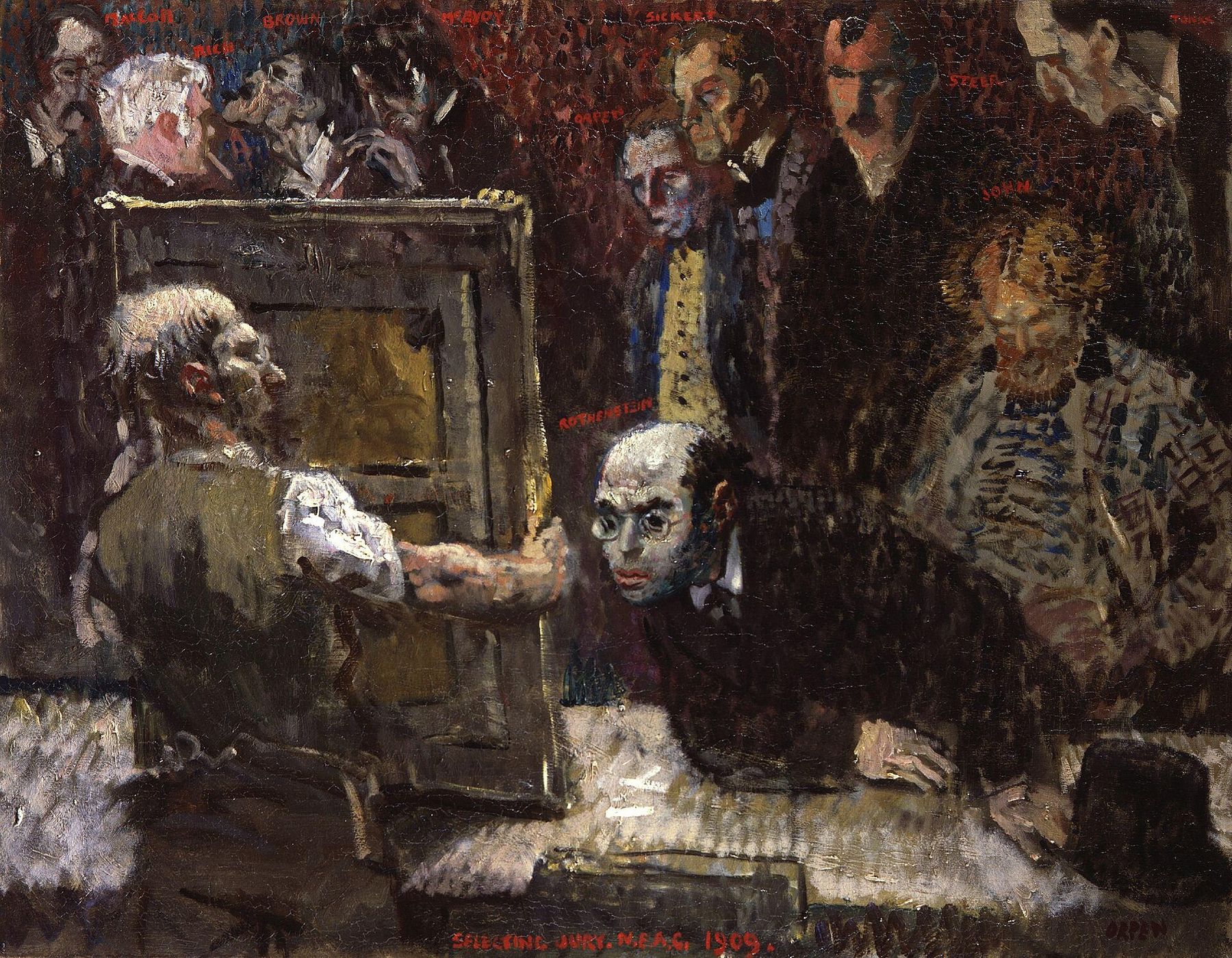
The Selecting Jury of the New English Art Club, 1909 by William Orpen.
Credit: William Orpen; public domain
Key takeaways
- • Plein air competitions require paintings made entirely on-site during a set painting window.
- • Find events via regional galleries, arts organisations, painting groups and social media; register early.
- • Prepare logistics: simple palette, spare boards, weather proofing and a clear plan for the painting window.
- • Judges look for confident, place specific responses to light, composition and observation rather than overworked finish.
- • Treat competitions as learning and community opportunities; start with local events and reflect on each experience.
If you've been thinking about how to enter a plein air painting competition, you're probably not short on questions. What do you actually do when you get there? How do the rules work? What are judges looking for? And, the one most painters don't say out loud, am I good enough to bother?
The honest answer to that last one is: almost certainly yes. Plein air competitions in the UK aren't elite gatekeeping events. Most are friendly, community-centred gatherings where painters of varying levels spend a day outdoors, work hard, and see what comes of it. The format rewards decisiveness and genuine observation far more than polished technique.
This guide covers everything you need: what competitions actually look like, where to find them, how to enter, what to expect on the day, and what happens afterwards. By the end, you'll have a clear enough picture to find a local event and actually sign up.
What Are Plein Air Painting Competitions?
A plein air competition is exactly what it sounds like. Artists gather at a specific location, paint on-site within a set time window, and submit finished work for judging. Everything is created on the day, in the open air, from observation. There's no bringing work from the studio and calling it plein air.
The format varies from small community events with a handful of participants to larger festivals attached to arts organisations with meaningful prize funds and follow-up exhibitions. What they share is the emphasis on place: the work is inseparable from where and when it was made.
How Are They Different from Studio Art Competitions?
In a studio competition, you submit finished work you've made whenever and however you like. In a plein air competition, the making is part of the event. Work is created entirely on the day, in public, under a deadline. That changes everything, both the experience and what judges are looking for.
This is not about producing a museum-quality finish in four hours. It's about responding to a place, a light condition, a moment. The best plein air work feels alive precisely because it was made quickly and with conviction.
What Do UK Competitions Typically Look Like?
| Element | Typical detail |
|---|---|
| Entry fee | £15–£30 for adults; reduced for under-18s |
| Painting window | 4 to 6 hours on-site |
| Accepted media | Usually oils or watercolour; check each event |
| Submission | One work per artist for judging; may create multiples |
| Prize range | £50–£1,000 depending on competition size |
| Exhibition | Winning or selected works often shown in follow-up exhibition |
Most UK competitions run between May and September, for obvious reasons. The weather is never guaranteed even then, but the days are longer, the light is better, and painting outdoors is at least a plausible prospect. A few hardy events run in spring or early autumn; outdoor painting in a British November is a niche pursuit.
Where to Find Plein Air Competitions in the UK
There's no single directory for this, and it's worth knowing that upfront. There's no central listings site, no national register, no one place where all UK plein air competitions appear. Finding events takes a bit of hunting, but once you know where to look, it becomes straightforward.
Regional Galleries and Arts Organisations
Many competitions are run by or in partnership with galleries. It's worth checking the websites of regional galleries you already like, particularly those with outdoor or landscape programming. Arts organisations and heritage venues (gardens, country estates, historic towns) also run events, often as part of broader arts festivals.
Some competitions that have run in recent years and can give you a flavour of what's out there include: Delamore Arts in Devon, the Painswick Rococo Garden competition in Gloucestershire, Paint Garstang in Lancashire, the Great Broadway Paint-Off in the Cotswolds, and events associated with Rye Art Gallery in East Sussex. These are illustrative examples only. Dates, formats, and entry details change every year, so check directly with each organiser for current information rather than relying on any third-party source. For a curated round-up to start your research, see our list of UK art competitions for plein air painters.
Painting Groups and Online Communities
UK plein air Facebook groups are genuinely useful here. Events get shared, discussed, and recommended by painters who've actually attended them. Instagram is worth following too, particularly accounts run by plein air artists based in your region. Event hashtags surface competition announcements during the spring season.
Local and regional art societies sometimes run their own outdoor competitions or are connected to organisations that do. If you're a member of a painting group, ask whether any members have entered competitions recently. If you're not yet plugged in, our guide to UK plein air artist groups is a good starting point.
A Note on Timing and Deadlines
Registration for plein air competitions often closes well before the event itself. Some close a week in advance; others close weeks ahead once a participant cap is reached. If you spot an event you want to enter, don't wait. Bookmark the organiser's page, sign up to their mailing list if possible, and check back regularly in late winter and early spring when summer event registrations typically open.
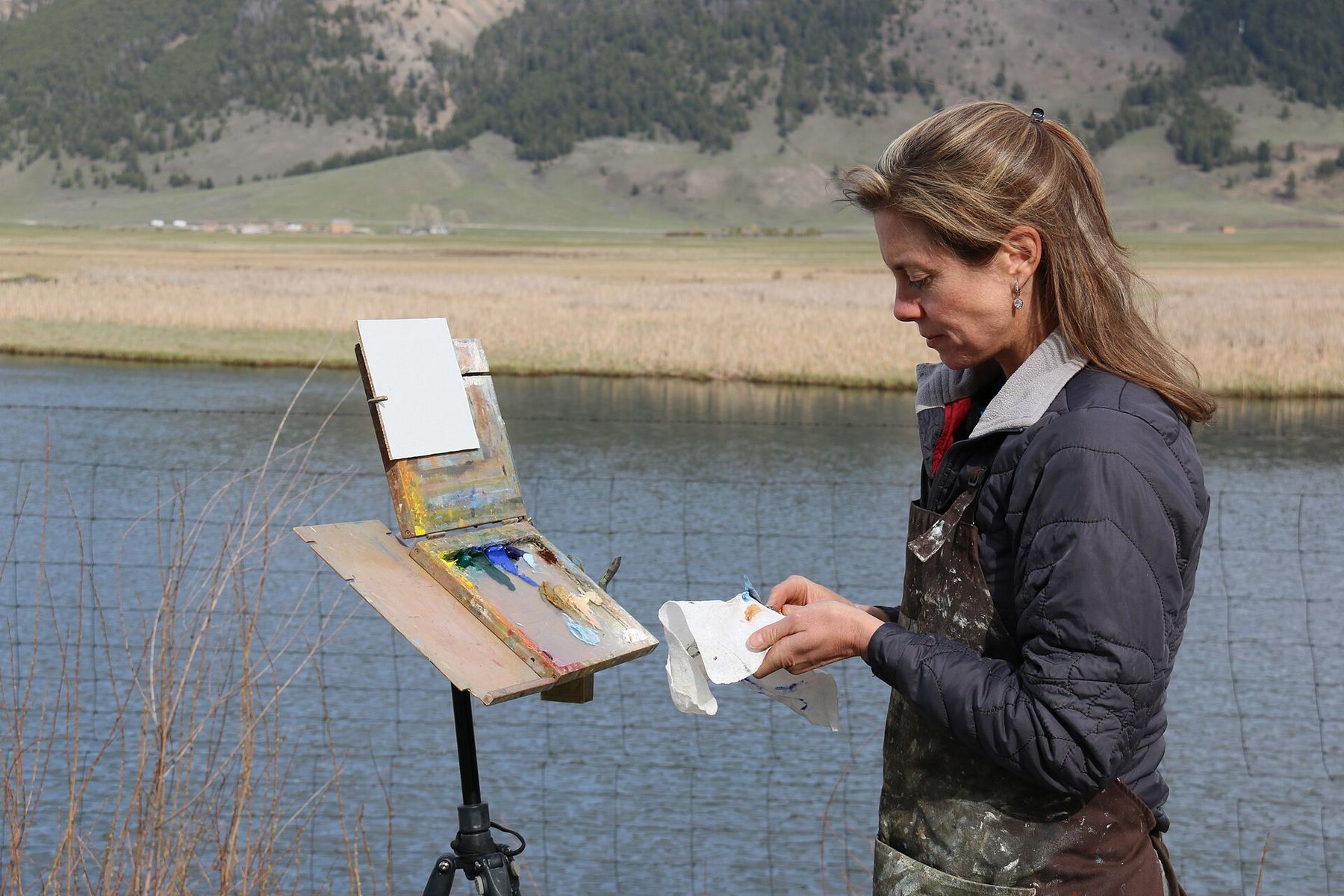
Photo by Lori Iverson / USFWS — public domain.
How to Enter a Plein Air Painting Competition: Step by Step
Read eligibility and permitted-media rules first. Distinguish an advance online application from on-the-day registration. Note support, size, stamping or validation, and framing requirements. Plan transport and wet-paint handling before you leave home. Confirm the painting window and the submission deadline as two different times.
How to enter a plein air painting competition
Find a suitable competition
Search regional gallery websites, painting groups, and social media for upcoming events. Check closing dates carefully.
Read the entry rules thoroughly
Look for media restrictions, size limits, eligibility criteria, and whether preparatory sketches are allowed.
Register early
Most competitions close registration before the event date. Pay the entry fee (typically £15 to £30) and confirm your place in writing.
Plan your logistics
Check the location, parking, and facilities in advance. Think about your kit and how much you can realistically carry to the site.
Prepare your materials
Bring everything you need for the day, including weather contingencies. Don't experiment with new materials on competition day.
Paint on the day
Work entirely on-site during the competition window. Create more than one piece if time allows, then choose your strongest for submission.
Submit your work
Follow the venue's instructions for presentation. Some competitions require pre-framed work delivered to a gallery after the event.
Prepare labels, contact details and a payment method that the organiser actually accepts. Photograph the finished work only after submission requirements are met, so the photo matches what you handed in. Keep proof of entry. Rules vary: a timed paint-out may stamp wet boards on the day, while a gallery open exhibition may need dry, framed work weeks earlier. Do not copy changing dates or prizes onto this evergreen page.
Live names and deadlines belong on the dated 2026 competitions page. Mall Galleries listings: check the organiser's current exhibitions and events page for live eligibility, dates and submission terms; do not copy changing deadlines into this evergreen guide. If a timed paint-out needs fast presentation, see framing work quickly.
What to Expect on Competition Day
Arrive before the official start time. Most experienced competition painters arrive early to walk the site, get a feel for the light conditions, and choose their motif before the clock starts. That twenty or thirty minutes of scouting is genuinely valuable.
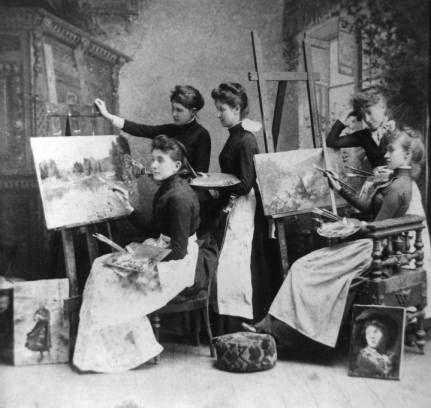
Art class taught by Adelia Armstrong Lutz — public domain.
The Painting Window
The painting window is typically four to six hours. That sounds generous until you're actually in it, at which point it tends to feel both endless and not quite long enough. Plan how you want to use the time: how long to spend finding and setting up, when you'll start painting, when you'll stop and assess.
Most competitions allow you to create more than one piece during the session. This is worth doing if you can. Having a second attempt often produces better work, and having two pieces to choose from at submission time is reassuring. You submit one work for judging. If you're new to working at speed, our guide to alla prima plein air covers how to resolve a painting in one sitting.
All work must be created entirely on-site during the competition window. Nothing from home, no preparatory paintings, no work you've developed beforehand. The integrity of the format depends on this, and competitions generally enforce it.
On the weather: this is the UK, so prepare for everything. Bring layers, a waterproof, and something to sit on that works in damp grass. In a good summer you may also need sun protection, which feels absurd to mention but is genuinely relevant. Pochade boxes help in windy conditions; a palette without a cover is a liability when the breeze picks up. Have a rough plan for what you'll do if conditions become genuinely unworkable. Most competitions don't reschedule for weather.
Submission and Judging
At the end of the painting window, work is submitted according to the organiser's instructions. Some competitions have you bring your piece to a designated table or tent on-site; others ask you to deliver to a gallery venue. At smaller events, judging may happen while you're still there and results announced the same afternoon. At larger events, results may follow by email or at a separate prize-giving.
The atmosphere at most UK plein air competitions is noticeably relaxed and collegial. Artists share tips, admire each other's work in progress, and talk about what they're finding difficult. It's genuinely not cut-throat. The competitive element exists, but it sits lightly alongside a strong sense of shared endeavour.
How Plein Air Competitions Are Judged
Judging arrangements vary. Some competitions appoint a single judge, typically an established plein air painter or curator. Others use a small panel. In either case, the criteria tend to cluster around similar qualities.
Judges are generally looking at how well the work captures and responds to the specific place: whether there's a genuine sense of light, atmosphere, and presence. Confident, decisive mark-making reads better than timid overworking. Originality in the choice of viewpoint or composition matters. So does the quality of observation: whether the painter has actually looked, rather than assembled a generic landscape.
What judges tend to look for
Most plein air competitions reward work that feels genuinely connected to the place it was painted. A confident, decisive response to the light and setting usually reads better than a technically polished piece that feels generic. Don't try to produce a finished studio painting. Paint like you're outside, because you are.
It's worth being honest with yourself: judging is subjective, and strong work doesn't always place. Judges bring their own aesthetic preferences, and a piece that connects powerfully with one judge might not with another. Enter with realistic expectations and treat the placing as secondary to the experience of having painted well under real conditions.
Practical Tips to Help You Compete Well
- Visit the location beforehand if you can. Knowing the site means you can spend your pre-competition time choosing a viewpoint rather than orienting yourself.
- Keep your palette simple. A competition day is not the moment to try an unfamiliar colour range or a new medium.
- Work at a size you can realistically complete in the time available. Smaller work is often wiser; a well-resolved small panel beats an unfinished large one every time.
- Commit to your motif early. Spend time choosing, then stop second-guessing. Indecision is one of the most common competition-day mistakes.
- Bring more materials than you think you need: extra boards, extra paper, more medium. Running out mid-session is unnecessarily stressful.
- Weather-proof your setup. Cover your palette between strokes, use a pochade box if conditions are windy, and have something to shelter your work from sudden drizzle.
- Photograph every piece you make during the session. Regardless of the competition outcome, those images are legitimate portfolio material — see our guide to photographing your plein air work for how to do it well.
- Talk to other artists. The community is one of the best parts of entering. You'll learn things, share things, and almost certainly enjoy the day more for it.
After the Competition: What Happens Next
After the show, check the organiser's current terms for collection, sales commission, unsold-work pickup and when results are normally communicated. Those details change. Treat them as a checklist against the current prospectus, not as facts stored on this page.
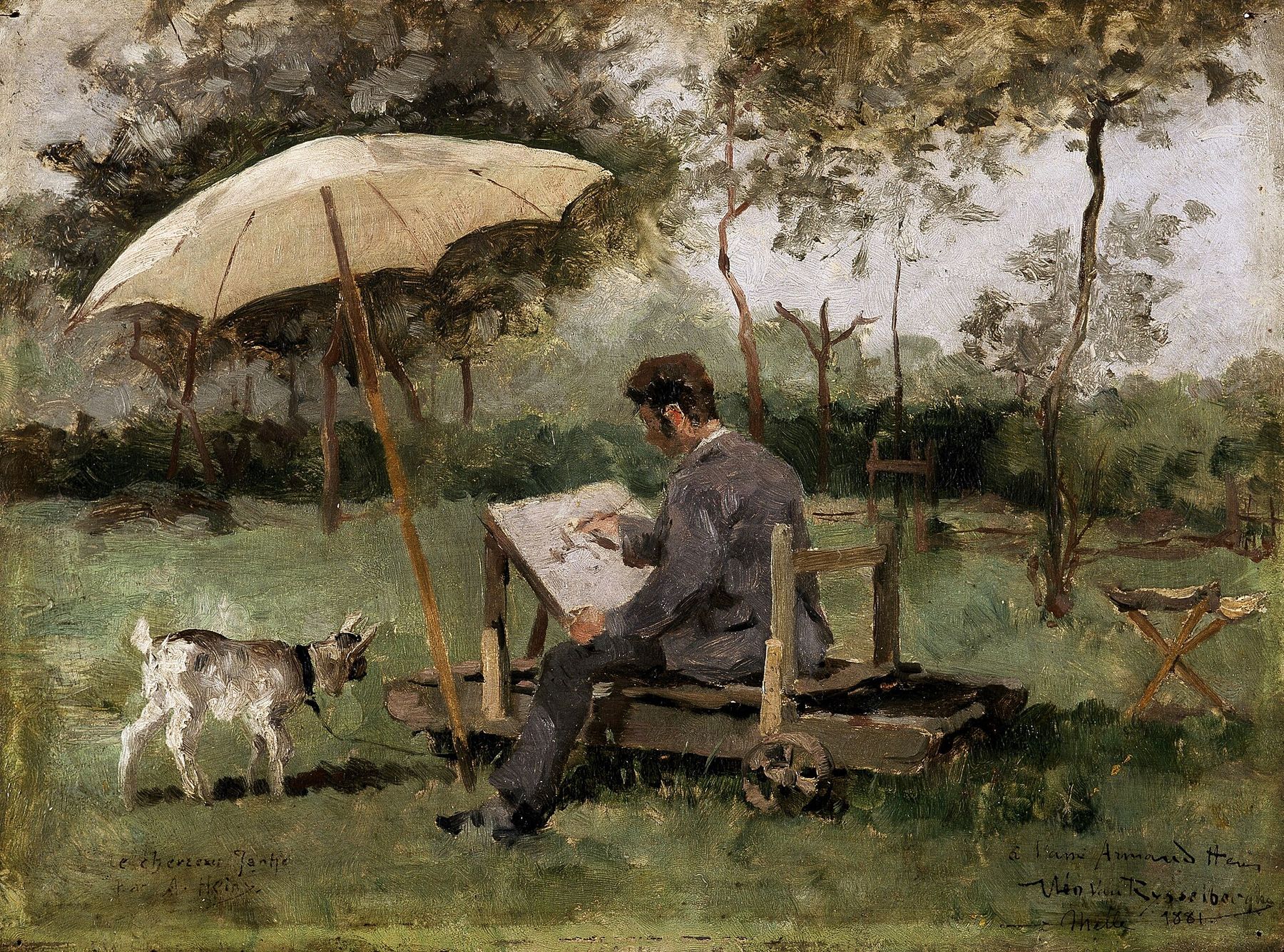
Armand Heins Painting Outdoors by Théo van Rysselberghe.
Results and prizes vary considerably depending on the event. Cash prizes typically range from around £50 at smaller local competitions to £1,000 or more at larger festival events. Many competitions also offer secondary prizes, category awards, or commendations. Don't enter expecting significant prize money; enter expecting a productive day with the possibility of recognition.
Many competitions include a follow-up exhibition of selected or winning works at the host venue. If you place or are selected, participation in the exhibition is often expected as part of the entry terms. Check this before you register, particularly if delivering or collecting framed work from a venue would be logistically complicated for you. Some venues allow artists to price their work for sale during the exhibition period, though commission terms vary and should be confirmed in advance.
A smaller number of competitions, usually larger or more established ones, offer residency opportunities to winners. This is worth knowing about if career development is part of why you're entering.
Whatever the result, the work you made counts. A painting created on-site during a competition has a specific context and credibility that studio work doesn't. It belongs in your portfolio and in how you describe your practice.
After the event, take a little time to reflect. What went well? What would you do differently with the time, the setup, or the approach? Each competition makes the next one easier.
Is Entering a Competition Worth It?
Competing: honest pros and cons
Pros
- + Gives you a real reason to commit to a painting session
- + Exposes you to other painters and a supportive community
- + Deadline pressure often produces your most decisive work
- + Prize money, exhibition opportunities, and residencies are real possibilities
- + Great for your portfolio even if you don't place
Cons
- - Entry fees add up if you enter several events a year
- - Weather in the UK is unpredictable and competitions rarely reschedule
- - Judging is subjective; strong work doesn't always win
- - Logistics (travel, framing, delivery) can be more involved than expected
Competitions aren't for everyone, and there's no obligation to enter one to be a serious outdoor painter. Some people find the structure helpful; others find it at odds with why they paint in the first place. Both responses are completely reasonable.
That said, for painters who want a genuine challenge, a social context for their practice, and a reason to commit fully to a single painting session, competitions tend to deliver. The deadline is clarifying. The community is real. And the first time you see your work hanging in a gallery alongside fifty other pieces painted in the same field on the same afternoon, that means something.
If you've never entered before, start small. Find a local event, something informal and regional rather than a large festival. Pay the entry fee, read the rules, show up early, and paint. The format will feel unfamiliar precisely once, and then it won't.
FAQ
Frequently Asked Questions
Do I need lots of experience to enter a plein air competition?
No. Most UK events welcome a range of abilities. Competitions reward decisive observation more than polished studio finish, so confident attempts often do well.
Where can I find plein air painting competitions?
Check regional galleries, arts organisations, local painting groups, and UK plein air social media groups. Sign up to organiser mailing lists and watch for spring registration dates.
What must the work be to qualify for judging?
Work must be created entirely on-site within the official painting window on the day. Preparatory studio pieces are not allowed. Some events permit reference photos taken that day, so check the rules.
What should I bring on the day?
Bring a simple palette, spare boards or paper, enough paint and materials, weather protection, seating, and a way to shelter your palette in wind. Photograph every finished piece for your portfolio.
Will I have to frame and deliver the painting after the event?
Possibly. Some competitions require framed work for a follow-up exhibition or for submission at the end of the day. Read entry terms in advance so you can plan framing and delivery.
Author

PleinAirPainting Editorial Team
PleinAirPainting.co.uk helps artists paint outdoors with confidence through UK-focused guides, equipment advice, resources and plein air inspiration.