Selling Prints From Plein Air Paintings: A Practical UK Guide
A practical UK guide to selling prints from plein air paintings, covering file capture, printing choices, editions, pricing, selling channels and basic legal and tax points.

Key takeaways
- • Start small: choose one appealing painting, get a proper file, and make a modest edition to learn the process.
- • File quality matters: shoot in soft light, use a tripod and aim for 300 dpi at print size or use a fine art scanner.
- • Choose printing route by purpose: local fine art printers for signed limited editions, POD for open editions or merchandise.
- • Use a clear three-tier pricing model and leverage the location in titles and descriptions for plein air work.
- • Keep detailed edition and sales records for provenance, tax, and potential ARR requirements.
If you've been thinking about selling prints from your plein air paintings, you're probably at a familiar crossroads. You've sold a few originals, collectors occasionally ask whether you do prints, and it feels like there might be something in it. But you're not quite sure where to start, what it actually involves, or whether it's worth the effort.
The appeal is real. Prints let people own a piece of your work at a price that's achievable for them, without asking you to part with the original. For plein air painters especially, where so much of the value is tied to a specific place, a well-made print can carry that sense of location beautifully. A collector who fell in love with your painting of the Jurassic Coast but couldn't stretch to the original might happily pay £80 for a signed giclée edition of it.
What follows is a practical walkthrough of the whole process: getting a file ready, choosing how to print, deciding on editions, setting prices, finding buyers, and understanding the basics of copyright and tax in a UK context. It's not a quick read, but it covers everything you'll need to make an informed start.
Is Selling Prints Right for You?
Not every painter needs prints, and it's worth being honest about that before you commit time and money to setting it up.
On the positive side, prints open your work to a wider audience. Someone who can't afford a £600 original might happily spend £75 on a signed limited edition. There's also a compounding benefit: once the files and listings are in place, the ongoing effort per sale is relatively low. And for plein air painters, the location-specific nature of the work is a genuine commercial asset. Prints of recognisable landscapes, coastlines, or named towns attract local collectors and visitors in a way that abstract or studio work simply can't replicate.
On the other side, prints require real upfront effort. Getting a print-quality file from a plein air painting takes more care than you might expect. Finding a good printer, proofing the output, writing listings, managing edition records and handling customer queries all takes time. The admin is real.
The key mindset shift is to think of prints as a complementary tier alongside your originals, not a replacement for them. Originals sit at the top of what you offer. Prints make your work more accessible without undermining that. Done well, they reinforce the value of the originals rather than competing with them.
Before you start
Prints work best when you already have an audience for your originals, even a small one. If collectors regularly ask "do you do prints?", that's your signal.
Getting a Print-Ready File From Your Painting
This is where many painters underestimate the work involved, and where poor decisions early on cause problems later. The file is the foundation of everything.
Photographing Your Plein Air Work
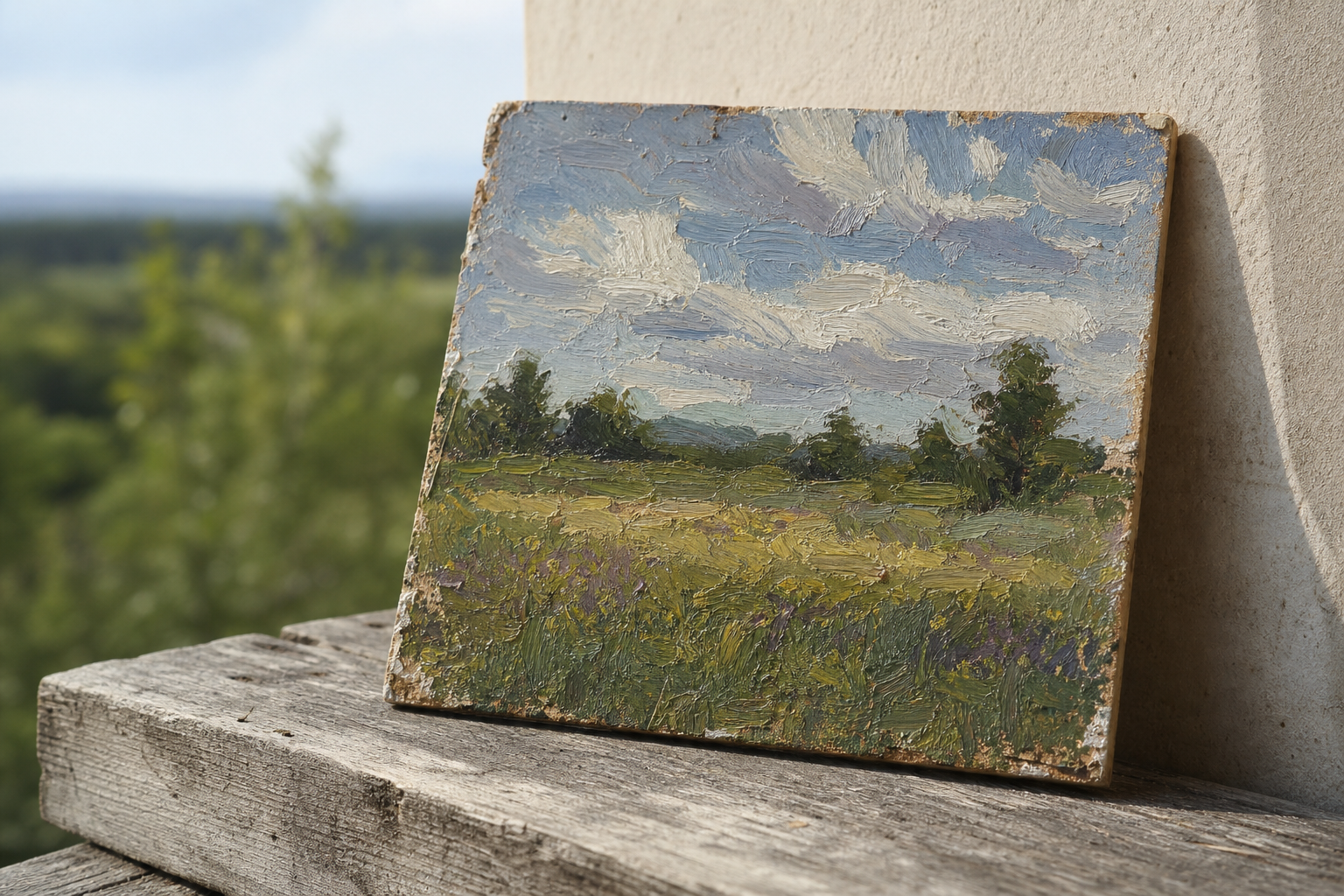
For most plein air paintings, photography is the practical route to a print-ready file. The goal is a clean, accurate image at sufficient resolution: at least 300 dpi at the intended final print size. A painting you want to reproduce at A3 (420 x 297 mm) needs a file that's around 4,960 x 3,508 pixels at 300 dpi. That's a proper camera, not a phone, for anything other than very small prints.
The basics: shoot in soft, even daylight, ideally open shade outside or near a large north-facing window. Avoid direct sunlight, which creates hotspots and uneven shadows. Mount the painting flat on a wall or prop it securely on a neutral, non-reflective surface. Set the camera perpendicular to the painting surface and use a tripod. Any tilt introduces distortion that's difficult to correct cleanly in post-processing.
Plein air work has specific challenges that studio paintings don't. Impasto passages catch light differently depending on angle, making it tricky to get even illumination across the whole surface. Varnish, if you've applied it, can create glare even in diffuse light; try polarising filters on the lens and lights to cut reflections. Wet paint is obviously a different problem: if you're capturing work fresh from the field, handle the panel with extreme care and shoot as quickly as you safely can.
Once you have the image, open it at 100% zoom on your screen. If it looks soft or slightly blurry at that magnification, it will print poorly. Reshoot before you proceed.
When to Use a Professional Scanner or Lab
For smaller, highly detailed work, especially watercolours with fine marks and washes, a flatbed fine art scanner often produces a better result than photography. Many independent camera shops and print labs offer this as a service, and it's worth the cost for paintings you intend to edition in any quantity.
For larger originals or any painting where you feel your own photography isn't quite hitting the mark, a professional fine art photographer or repro lab is the right call. The cost per image is modest relative to the printing and edition investment you'll make downstream, so it's not the place to cut corners.
Check your file before you order
Open your image at 100% zoom on screen. If it looks soft or pixelated at that size, it will print poorly. Aim for at least 300 dpi at the final print dimensions before you do anything else.
Choosing How to Print: Local Fine Art Printer vs Print-on-Demand
Once you have a good file, the next decision is how to produce the prints. There are two main routes, and they suit different situations.
| Factor | Local fine art printer | Print-on-demand (POD) |
|---|---|---|
| Upfront cost | Per batch; higher per print | None; pay per order |
| Quality control | High; proof in person | Variable; order samples first |
| Edition signing | Easy; you handle prints yourself | You sign before dispatch or not at all |
| Setup complexity | Low; just supply the file | Medium; integrate with your shop |
| Suitable for | Signed limited editions | Open editions, merchandise, volume |
| Stock required | Yes, batch print | No |
Working With a Local Fine Art Printer
For signed limited editions, a local fine art printer is almost always the better choice. You can proof the print in person, discuss paper options, and handle the physical prints yourself before they go anywhere near a buyer.
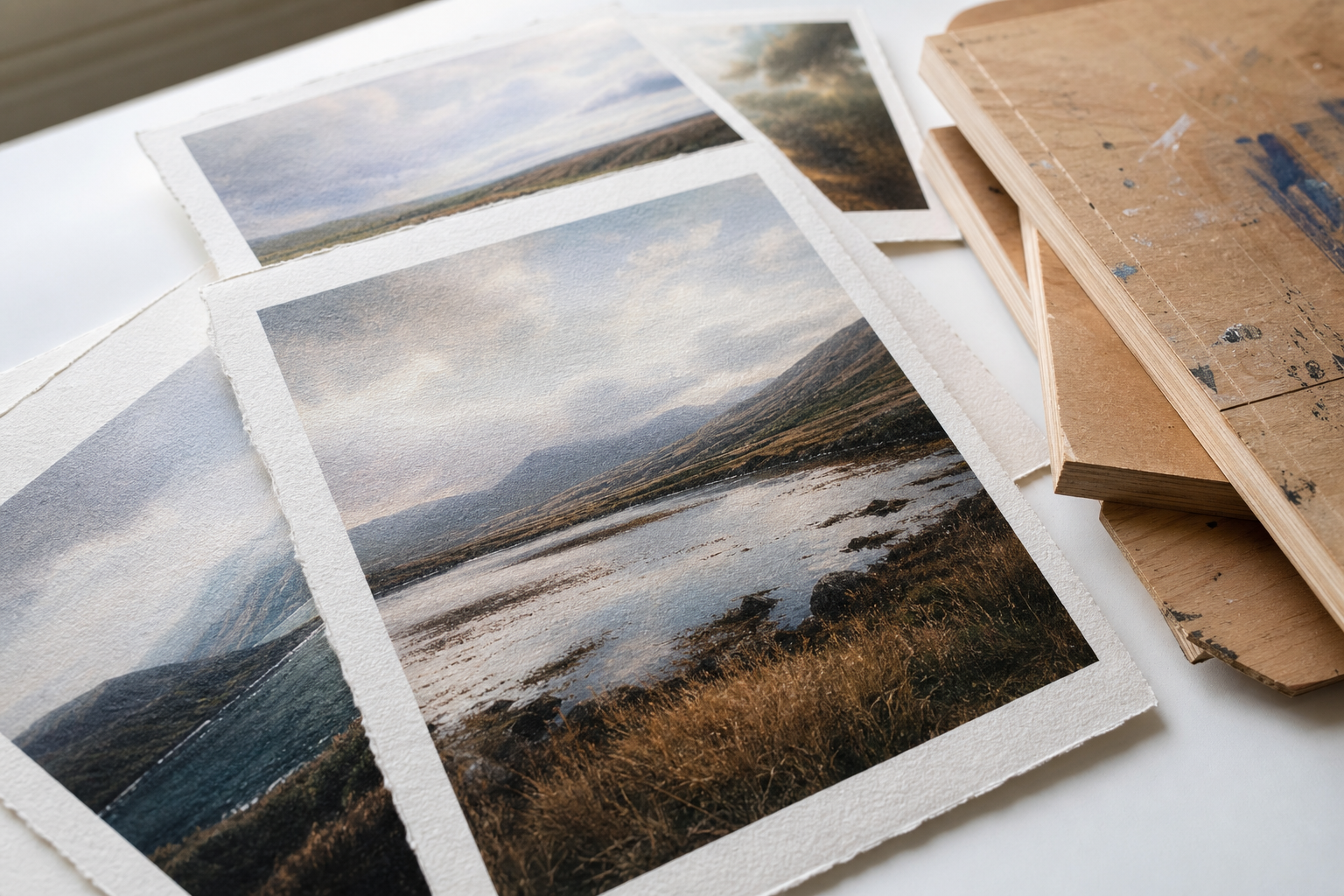
What to look for: pigment-based inks (not dye-based, which fade more quickly), acid-free archival paper rated for long-term colour stability, and a printer who works regularly with artists rather than just businesses. The giclée standard, broadly understood, means pigment inks on cotton rag or fine art paper, typically 300 gsm or heavier. That weight and texture is part of what makes a fine art print feel worth owning.
The proofing process matters. Order a single print before committing to a batch. Check colour accuracy against the original in good daylight, look at fine detail in the brush marks, and assess how the paper handles the image. Adjust colour profiles if needed, then run the batch. Once you're printing in quantity, you'll handle the signing and numbering yourself, in pencil, in the lower margin.
Print-on-Demand for UK Artists
Print-on-demand works differently: you upload your file, connect it to your shop, and orders are fulfilled automatically without you holding any stock. For open editions and lower-price-point products, it's a genuinely useful route.
UK-relevant services include Printful, which has fulfilment available in the UK and EU, and PrintDrop, a UK-based white-label drop-shipping service aimed at artists and photographers. Both integrate with Etsy, Shopify, and WooCommerce. The trade-off is less control over colour accuracy and paper quality, and signing editions before dispatch is impractical unless you're shipping to yourself first.
A hybrid approach is worth considering: use a local fine art printer for your signed limited editions and a POD service for open editions, gifts, or prints of less significant works. Many painters end up doing exactly this.
Order samples from any POD service before you go live with it. We've all had a print come back looking flat and muddy, and you don't want that discovered by a buyer rather than by you.
Limited Editions, Open Editions, and What You're Committing To
Limited Editions
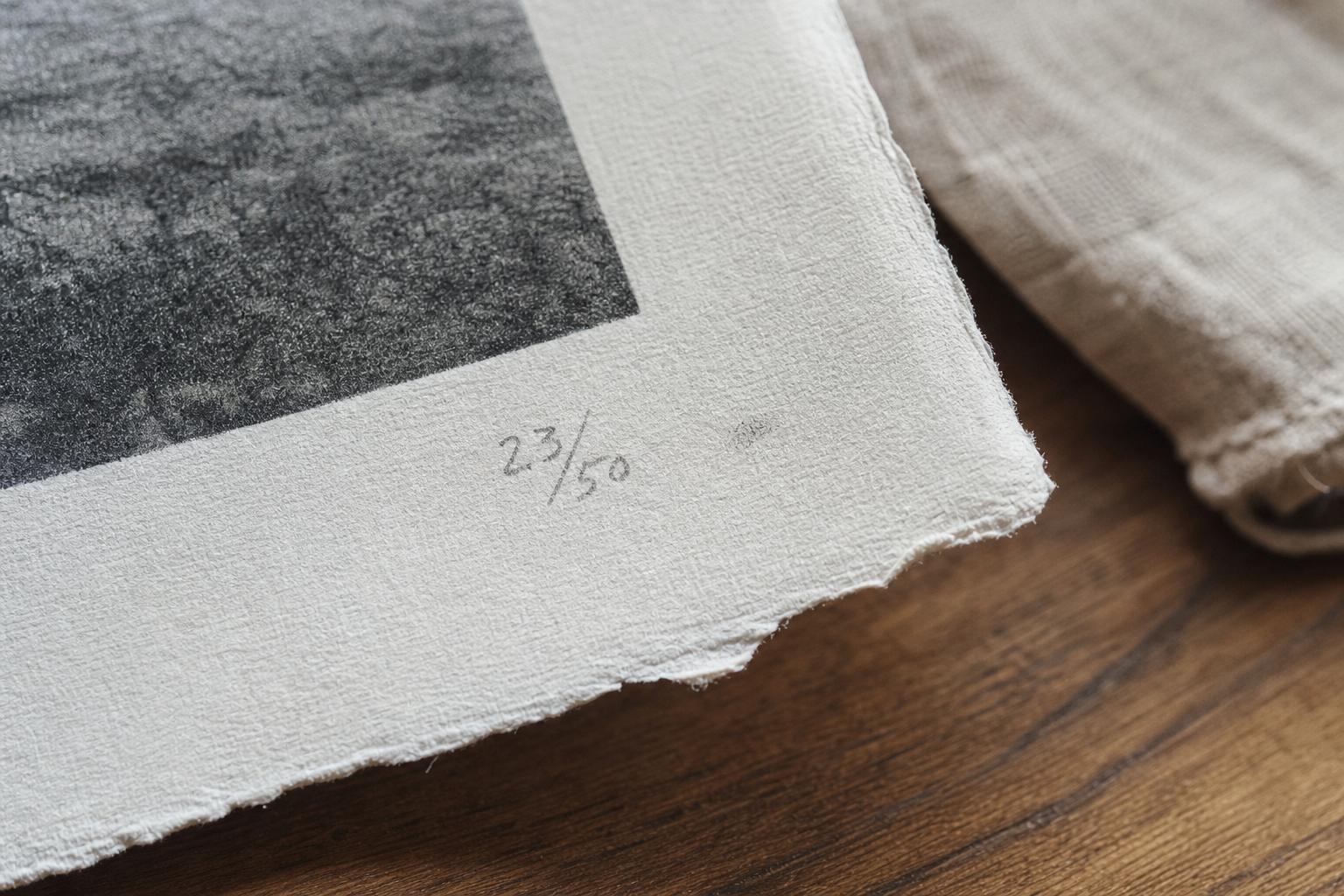
A limited edition means a fixed number of prints in a specific size and format, which you commit never to reprint in that same specification. If you declare an edition of 25 at A3, that's it: 25 prints, numbered 1/25 through 25/25, and no more at that size and spec.
For UK landscape painters working in a fine art context, edition sizes typically run from 25 to 100. Smaller editions carry more scarcity value and justify higher prices. Larger editions are better suited to popular images where you expect sustained demand.
Number prints in pencil in the lower margin, using the format "3/25" (print number three of twenty-five). Include a certificate of authenticity with each print: the title, the edition size, the individual number, your signature, the date, and a brief note about the paper and inks used.
The ethical commitment is real. Once you've declared an edition size, you cannot produce more prints in that specification. You can release a different size at a later date as a separate edition, but the original edition is closed. Collectors trust this, and breaking it damages that trust permanently.
UK law does not set a statutory edition size for giclée prints of paintings. The edition size is your decision, made on commercial and ethical grounds.
Open Editions
Open editions carry no cap on the number of prints produced. There's no scarcity value, so pricing should reflect that: open editions sit at the lower end of your print pricing. They're well suited to POD products, popular images with broad appeal, and situations where you want to maximise accessibility rather than exclusivity.
The admin is simpler: no edition records, no numbering, no certificates required. The trade-off is that open editions don't carry the same weight as signed limited editions with collectors who take provenance seriously.
Artist's Resale Right: A Brief Note
Artist's Resale Right (ARR) is worth understanding even if it doesn't affect you yet. It entitles artists to a royalty when qualifying original works or limited editions of prints are resold via an art-market professional (galleries, auction houses, dealers) at £1,000 or above. From April 2024, the ARR threshold and calculations operate in GBP rather than euros, following changes to align with post-Brexit UK law.
ARR doesn't apply to your initial sale, only to subsequent resales. For most plein air painters, it becomes relevant once originals or significant editions start appearing at auction or in galleries. The practical implication is simple: keep clear records of your editions and sales from the start, because that documentation matters if ARR ever becomes relevant to your work.
Keep an edition record from the start
A simple spreadsheet with the image title, edition size, each print number, buyer name, and date sold is all you need. You'll be glad you started it early.
Pricing Prints Alongside Your Originals
The Three-Tier Model
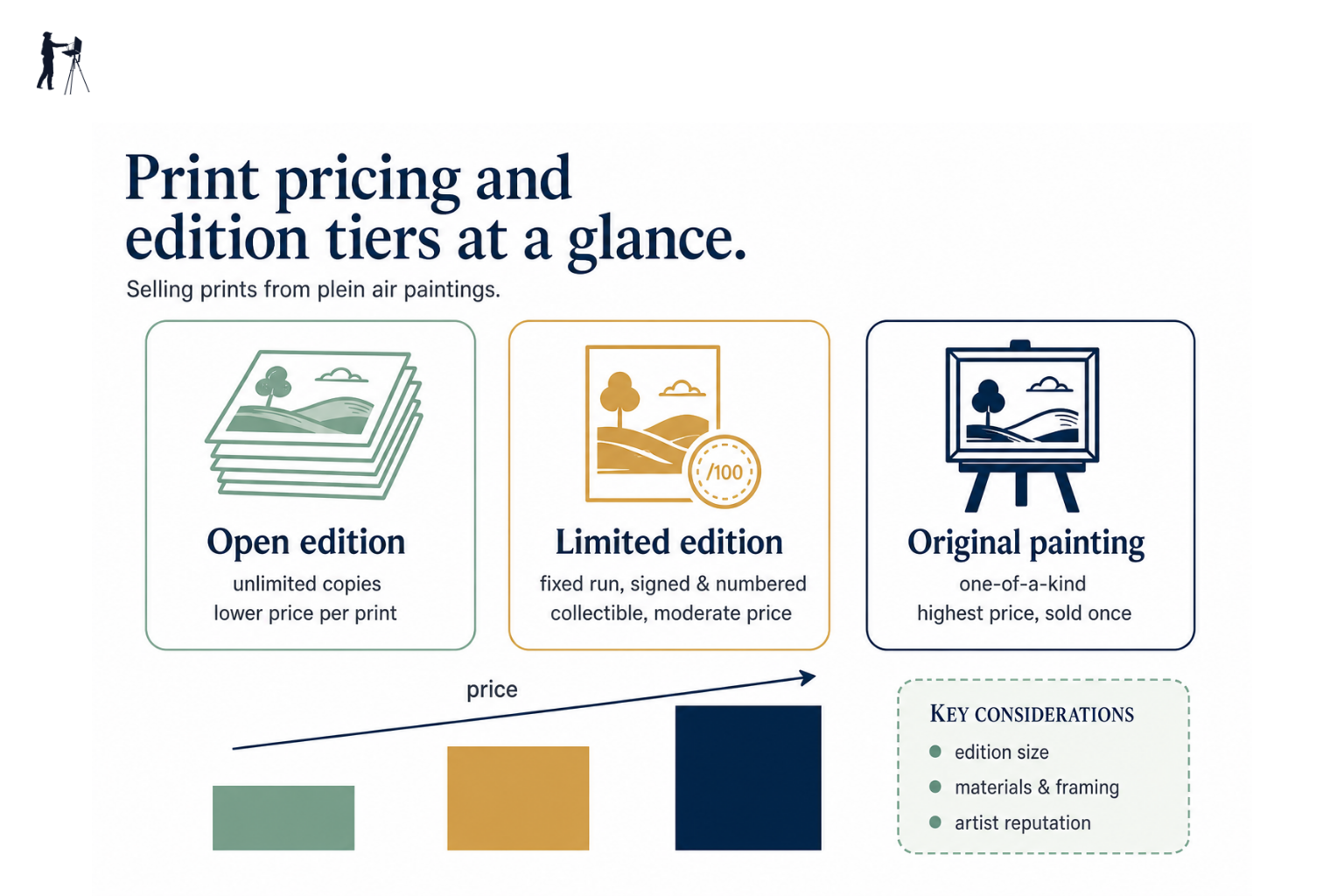
A coherent pricing structure has three levels: originals at the top, signed limited edition giclée prints in the middle, and open editions or POD products at the lower end. Each tier needs a clear reason to exist at its price point.
Originals are irreplaceable; their price reflects that. Signed limited editions offer authenticity and scarcity at a more accessible level. Open editions are for buyers who love the image but are buying primarily for the room rather than the investment. None of these undercuts the others as long as the logic is clear and the price differences are meaningful.
How to Set Print Prices in the UK
A size-based approach is a sensible starting point: multiply the print dimensions in centimetres by a rate per square centimetre, then add your production cost and a margin. This keeps pricing consistent across different sizes and gives you a method to explain to buyers if they ask.
Benchmark against comparable UK artists on Etsy UK, Folksy, and Saatchi Art before you finalise anything. As orientation only: small fine art limited editions (edition of around 25) tend to sell in the region of £65 in local gallery contexts; larger editions from established landscape painters with a following can reach around £200. These aren't rules, just reference points.
Price consistently across platforms. Avoid "contact for price" for print products; it's a friction point that kills conversions. And be careful not to underprice prints to the point where they undermine the logic of buying an original. If a £40 print looks nearly identical to a £400 original, you've made the original harder to sell, not easier.
UK print market orientation
- Small limited edition (edition of 25)
- Around £65
- Larger limited edition (edition of 650)
- Around £200
- Typical fine art giclée paper
- 300 gsm cotton rag
- Minimum file resolution
- 300 dpi at print size
Local gallery context
Established landscape painters
Acid-free archival standard
Below this, print quality suffers
Where to Sell Prints in the UK
Your Own Website
Your own website is the only platform fully under your control. No commission to a marketplace, no algorithm changes that affect your visibility overnight, and full freedom to tell the story behind each painting and location. That story matters: people buying prints of a specific place want to know about the day you painted it, the light, the weather, the view from the clifftop. That context is part of what they're buying.
Make the purchasing process frictionless. Clear pricing, a straightforward checkout (card and PayPal as a minimum), and no "email me for details" for standard products. If someone has to ask how to buy, many of them won't bother.
Etsy, Folksy, and Saatchi Art
Each of these platforms serves a slightly different market. Etsy has the largest volume and integrates well with POD services, making it practical for open editions with automatic fulfilment. The international reach is useful, though you'll be competing with a lot of other artists. Folksy is UK-focused and sits within a handmade and craft market; it's well suited to smaller editions and buyers who specifically want to support UK makers. Saatchi Art sits at a higher price point and is more appropriate for signed giclée editions aimed at collectors rather than gift buyers.
Start with one primary marketplace rather than all three simultaneously. Spreading effort across multiple platforms early on tends to result in mediocre presence everywhere rather than a strong presence somewhere.
Local Galleries and Consignment
Once you have some track record with print sales, local galleries are worth approaching for signed limited editions. They handle the marketing and presentation, which is genuinely valuable, but commission terms vary significantly. Understand exactly what percentage you'll retain before agreeing, and get the terms in writing.
Galleries are also the context in which ARR becomes relevant: if your work reaches resale at £1,000 or above via a gallery or auction house, the royalty mechanism kicks in.
Using Location to Your Advantage
This is worth stating plainly, because it's a real competitive advantage that plein air painters often undersell. Prints of specific, recognisable UK places attract buyers who have a personal connection to those places: locals, former residents, people who holidayed there, people who walked that coastal path. Prints of the South Downs, the Lake District, the Pembrokeshire coast, or a named Cornish fishing village carry an emotional resonance that abstract or generic landscape work can't replicate.
That specificity in your titles, descriptions, and even your platform names is doing commercial work for you. Use it deliberately.
A Few Legal and Tax Basics
This section covers the basics as general guidance only. For questions specific to your situation, consult an accountant or a solicitor with experience in art law.
Copyright stays with you as the artist unless you explicitly sign it away. You can reproduce your paintings as prints freely. The only time this becomes complicated is if you enter into a contract with a print publisher or licensing company; read those agreements carefully and understand exactly what rights you are granting before you sign anything.
Income from print sales is business income and should be declared on your self-assessment return. If you're already declaring income from selling originals, adding print income to that return is straightforward. As your income grows, keeping clear records of sales, costs, and margins makes the annual process much less painful.
VAT is worth keeping in mind as a future consideration. The registration threshold changes periodically, so check the current HMRC guidance or speak to an accountant as your turnover grows. If you are VAT-registered, VAT applies to print sales.
ARR, as covered in the editions section, is worth understanding now even if it won't apply to your work for some time. If your work does start appearing in gallery resales above £1,000, you'll need to register with a collecting society to receive the royalty.
A Simple Workflow to Get Started
From painting to print sale
Photograph or scan the work
Shoot in soft daylight at 300 dpi or higher. Check the file looks sharp at full size before proceeding.
Choose your production route
Local fine art printer for signed limited editions. Print-on-demand for open editions or merchandise.
Decide on edition type and size
Limited (25 to 100) for higher-value prints. Open edition for POD and ongoing income. Document your decision.
Set your price
Use a size-based formula, benchmark against comparable UK artists, and keep pricing consistent across platforms.
List and sell
Your own website first, then one primary marketplace. Tell the story of the location; that context is part of what people are buying.
Keep records
Log every print sold: number, buyer, date, price. You'll need this for edition management and, eventually, for ARR purposes.
The best way to start selling prints from your plein air paintings is to start small: choose one painting you know has appeal, get a proper file made, find a local printer you trust, and produce a modest edition. Learn the process on a small scale before you invest heavily in stock or platform setup. The sense of place that makes plein air work worth painting in the first place is exactly what draws print buyers to it. That's your advantage; use it.
FAQ
Frequently Asked Questions
How do I create a print-ready file from a plein air painting?
Photograph the painting in soft, even daylight on a tripod with the camera perpendicular to the surface. Aim for at least 300 dpi at the final print size. For small watercolours or highly detailed work use a fine art scanner or a repro lab. Always check the image at 100% on screen for sharpness before ordering prints.
Should I use a local fine art printer or print-on-demand?
Use a local fine art printer for signed limited editions because you can proof in person and choose archival papers and pigment inks. POD is good for open editions and no-stock sales but offers less colour control. A hybrid approach is common: local printers for limited runs and POD for open editions or merchandise.
What edition size should I choose and how do I manage editions?
Typical limited editions for UK landscape painters run from about 25 to 100. Smaller editions justify higher prices. Number prints in pencil (eg 3/25), include a certificate of authenticity, and keep a simple spreadsheet recording title, edition size, each print number, buyer and date.
How should I price prints without undermining originals?
Use a three tier model: originals at the top, signed limited editions in the middle, and open editions at the lower end. A size-based formula (price per square centimetre plus production cost and margin) keeps pricing consistent. Benchmark against comparable UK artists and avoid underpricing.
Do I need to worry about copyright, tax or Artist's Resale Right (ARR)?
Copyright stays with you unless you assign it. Print income is taxable and should be declared on your self-assessment. Check VAT rules as turnover grows. ARR applies only to qualifying resales via galleries or auction houses above £1,000, so keep clear records and register with a collecting society if needed.
Author

PleinAirPainting Editorial Team
PleinAirPainting.co.uk helps artists paint outdoors with confidence through UK-focused guides, equipment advice, resources and plein air inspiration.