How to Get Your Paintings Displayed in Cafes, Pubs and Local Venues
A practical guide to display paintings in cafes UK, pubs and community venues. Find suitable spaces, agree terms, price and insure your work, and use shows to grow local visibility.

Key takeaways
- • Cafes and pubs offer high footfall and suit landscape work but terms and sales are varied and unpredictable.
- • Most opportunities now come from direct local approaches rather than central schemes.
- • Visit venues first to check fit, prepare a coherent series of work and take good photos for your pitch.
- • Agree financial terms in writing, consider insurance, and price consistently across sales channels.
- • Use shows to build local visibility, collect contacts, host small events and document the exhibition for future promotion.
Those paintings on café walls didn't get there by themselves. Someone painted them, someone made a phone call or sent an email, and someone agreed to hang them. That someone could be you. The question of how to display paintings in cafes across the UK is one that many landscape artists quietly wonder about, often assuming it's more complicated than it is. It's an informal world without a single rulebook, and that's actually good news: the barrier to entry is lower than it looks. This article walks you through the whole picture, from finding the right venues to protecting yourself financially and making the most of the opportunity once you've got a show on the wall.
Why Cafes and Pubs Are Worth Your Time as a Landscape Painter
The honest case for this route isn't that it'll make you rich. It won't, at least not reliably. But what it offers is something galleries can't easily match: footfall from people who weren't looking for art and weren't expecting to find something they wanted to buy.
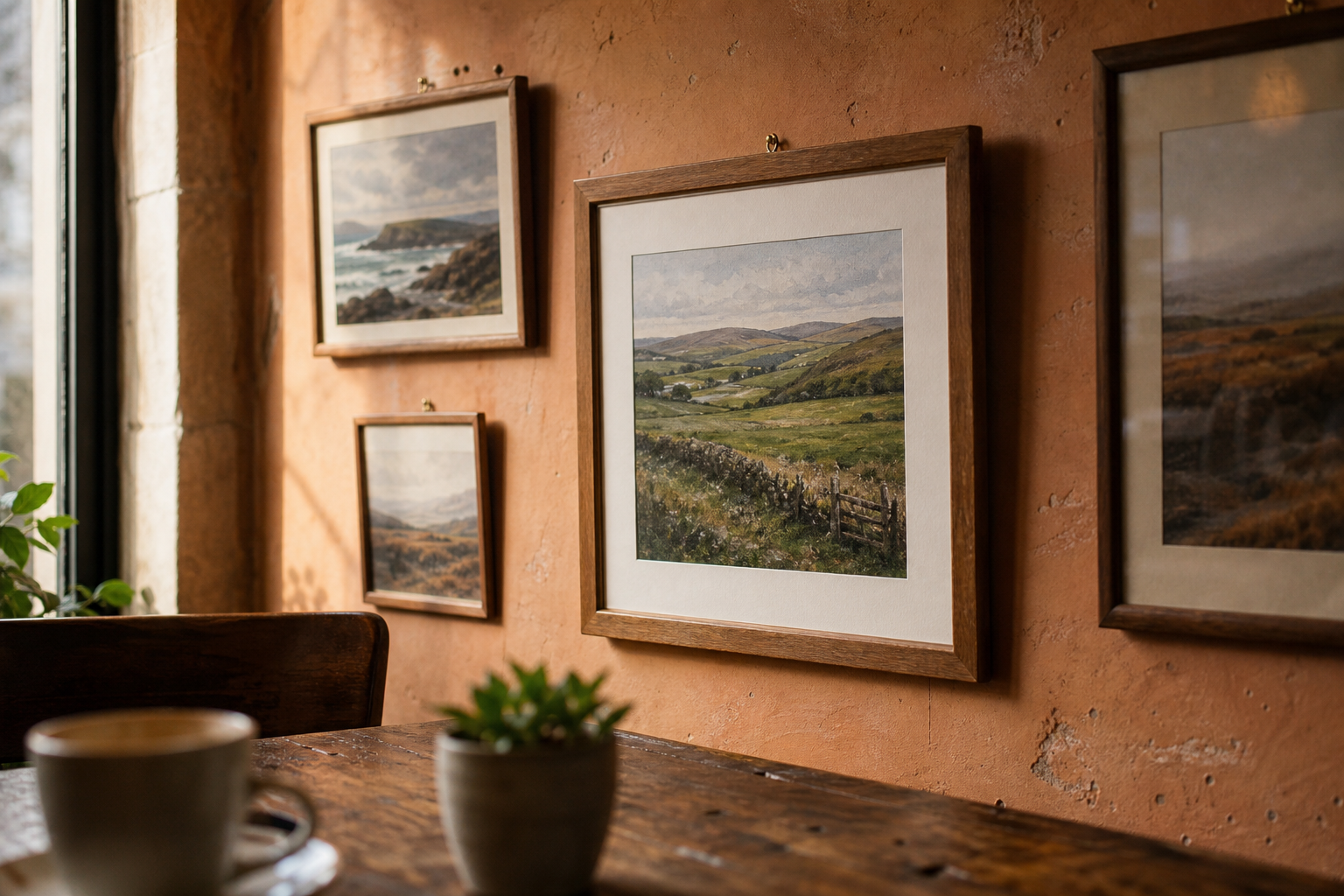
A café with eighty covers on a Saturday morning reaches more people than most local gallery opening nights reach in a month. A painting above a fireplace in a village pub sits in people's eyeline for an hour at a time. Landscape and plein air work suits these spaces particularly well. There's a natural affinity between a painting of the local hills and the walls of an inn that's been serving people from those same hills for two hundred years. That's not true of every genre, but it is true of yours.
The limitations deserve equal honesty. Terms vary wildly from one venue to the next. Sales can be slow and unpredictable. You'll be responsible for hanging, collecting, and very likely insuring the work yourself. And the quality of venues, in terms of the care they take with your work and the seriousness of their commitment, varies enormously. This is a route worth pursuing, but it works best as one part of a broader approach rather than a primary income strategy.
Displaying work in cafes and pubs: honest trade-offs
Pros
- + Low barrier to entry compared with formal galleries
- + High footfall from people who wouldn't visit an exhibition
- + Landscape and plein air work fits naturally into hospitality interiors
- + Builds local profile and grows your audience organically
Cons
- - No standard commission or fee structure — each venue is different
- - Sales can be slow and unpredictable
- - You're responsible for hanging, collection, and often insurance
- - Quality of venues varies enormously
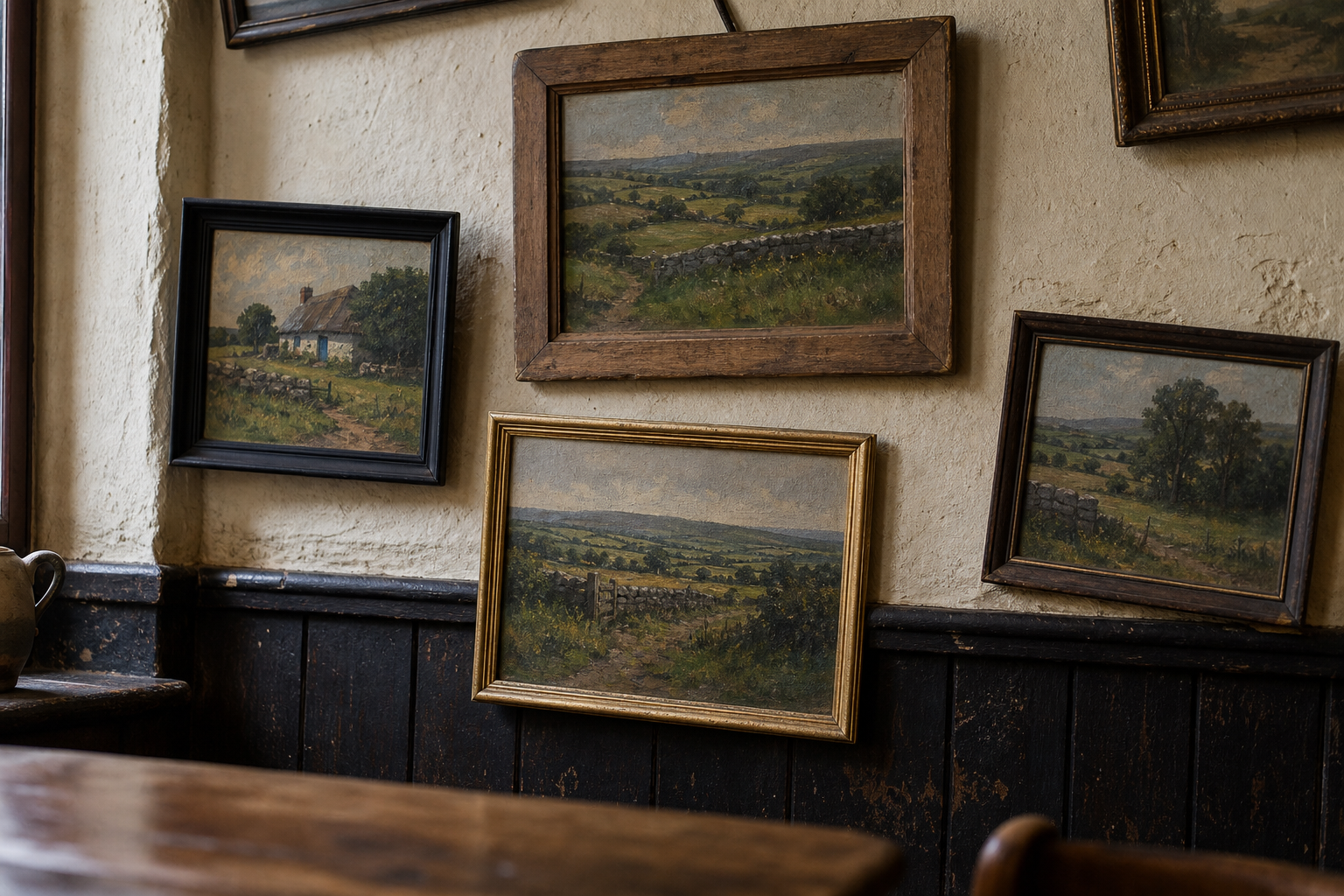
Understanding How the UK Café Display Market Actually Works in 2025
Before you start approaching venues, it's worth getting a clear picture of how this market actually functions, because it's changed considerably over the past few years and the landscape some artists expect to find no longer quite exists.
Organised programmes have largely wound down
Café Art ran an Art in Cafes placement programme from around 2012 that gave artists a structured route into venues across London and beyond. It was genuinely useful while it ran. Post-Covid, however, the organisation has shifted its focus significantly towards pop-up events and market stalls aimed at supporting artists experiencing homelessness or other hardships. The centralised placement scheme that semi-professional painters might have applied to is largely dormant. If you've been searching for an organised scheme to join, that explains why you haven't found one. It's not that you're missing something; it's that the landscape has changed.
The main route now is direct and local
The good news is that the absence of organised schemes doesn't leave you without options. Most opportunities now come through approaching individual venues directly, responding to open calls posted by community cafés on local noticeboards and social media, and word-of-mouth through artist networks. This feels more effortful than applying to a programme, but it also means there's no competition from a centralised waiting list. You're having a direct conversation with the person who actually decides what goes on the wall.
Three types of venue worth knowing about
Understanding the different types of venue before you approach them helps you pitch appropriately and set the right expectations for yourself.
| Venue type | How it typically works | Best suited to |
|---|---|---|
| Community café or arts café | Free wall space, optional profit share or donation to venue's cause | Artists wanting visibility without upfront cost |
| Hire-based café gallery | Pay a fee for the exhibition period, keep all sales revenue | Artists who want a structured show and full control of pricing |
| Informal pub or café arrangement | Ad hoc terms agreed with the owner — price labels, contact card, small commission | Artists testing the water locally with a small body of work |
Hybrid gallery-cafés, venues like Bonnington Café in London or Michaelhouse in Cambridge, occupy their own category: they operate more like small galleries in a café setting, with more structured application processes and a genuine curatorial interest in the work they show. Café 66 in various locations follows a similar model. These are worth knowing about, but they're the exception rather than the rule. The majority of opportunities sit at the informal end of the table above.
How to Find the Right Venues to Display Your Paintings in Cafes and Local Spaces
The most reliable signal that a venue is open to displaying art is simple: they're already doing it. Walk into a café and see paintings on the wall with price labels? That venue has already done the work of deciding they want art, and they're probably open to hearing from you.
Beyond looking for existing displays, check venue websites and social media for phrases like "local artists," "exhibitions," or anything that signals they think of themselves as a community space. Community forums and local Facebook groups for artists often share opportunities or name venues that have worked well for others. These informal networks are genuinely useful; ask the question and you'll usually get useful answers.
Before you make contact with any venue, visit in person. Sit down, have a coffee, look at the walls, watch the clientele. You're trying to answer a few practical questions: Is there usable wall space? What kind of people come here? Does the atmosphere suit your work? A painting of the Cumbrian fells will feel right in a stone-floored café near the Lakes; it might feel out of place in a minimalist urban espresso bar. Genre fit matters, and plein air landscape painters have a natural advantage in venues with scenic, rural, or regional identities.
Start close to home
The best first venue is usually one you already visit as a customer. You understand the atmosphere, you know the staff, and your work already fits the space in your mind. A warm introduction beats a cold pitch every time.
How to Approach a Café or Pub Without Feeling Awkward About It
This is the part most artists overthink. The conversation is not as fraught as it feels in anticipation.
What to prepare before you make contact
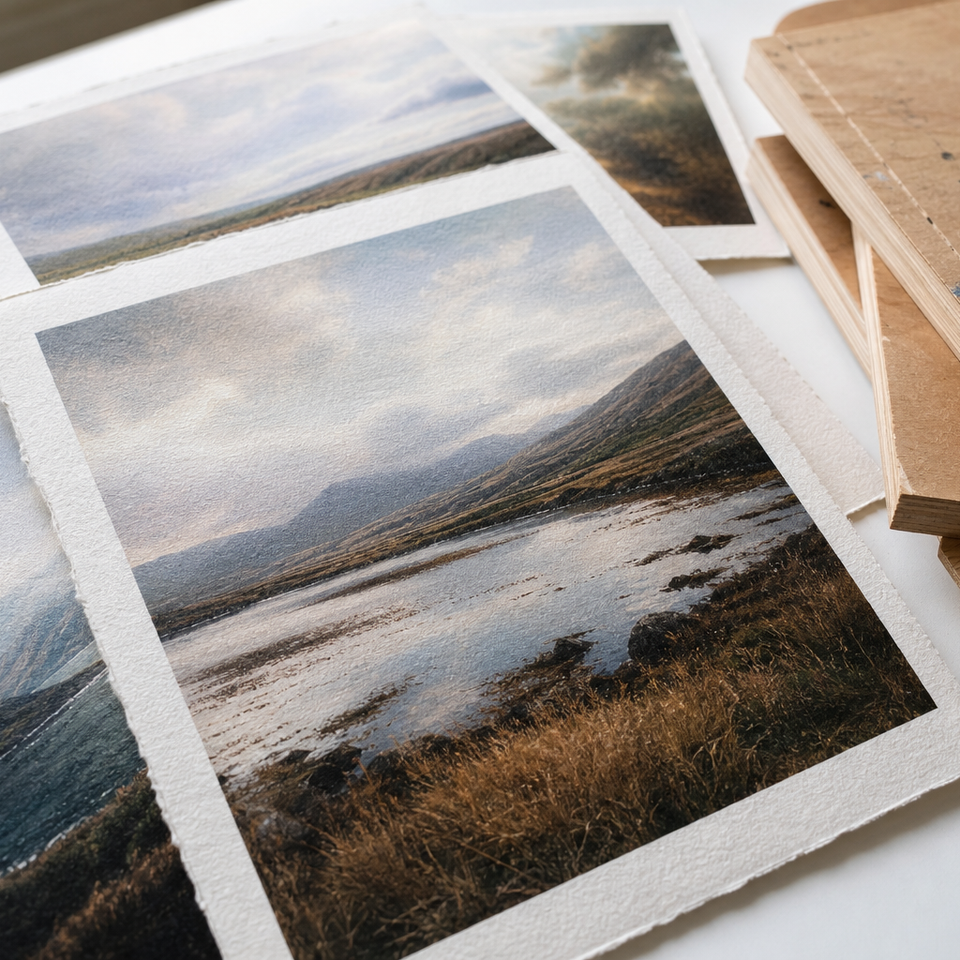
Gather a coherent body of work: ideally a series of local landscapes that make visual sense together. A themed series, views of the same valley, paintings from the same coastline, work from a single season, reads better on a café wall than a mixed bag of everything you've painted in the last two years.
Take good photographs of the work, ideally shown hanging on a wall rather than laid flat on the floor or propped against a fence. This helps the venue owner visualise how the paintings will look in their space.
Write a brief, friendly introduction email. Prepare some business cards or postcards to leave with the venue once you've made contact, so that customers who ask about the work have something to take away.
What to say (and what not to)
Lead with what your paintings do for the space, not with what the space does for you. Venue owners care about the atmosphere they're creating for their customers. They want to know that your work will look good, that it reflects the local area or suits the mood of the place, and that working with you will be straightforward. Frame your pitch around those things.
Keep the language simple. Art-world vocabulary ("my practice explores," "the liminal quality of the work") will make a pub landlord's eyes glaze over. Speak the way you'd speak to a friend.
Here's roughly what a realistic email might look like:
Subject: Local artwork for your walls
Hi [Name],
I'm a landscape painter based in [town] and I paint a lot of the local area, mostly in oils and mostly outdoors. I've been coming into [venue name] for a while and always thought my paintings would suit the space.
I have around twelve framed pieces I'd love to show there, mostly views of [local area]. I'd propose a run of about six to eight weeks, with price labels and contact details on each piece. Sales would go directly to me, and I'd be happy to discuss a commission on anything that sells.
I'd be glad to bring some images along if you'd like a look before deciding.
Best wishes, [Your name]
That's it. Short, specific, easy to say yes to.
Following up
Most café owners are busy and sometimes an email slips by. One polite follow-up after a week is perfectly reasonable. If there's still no response, move on. It's almost never about the quality of your work; it's about timing, wall space, or the fact that they already have something planned.
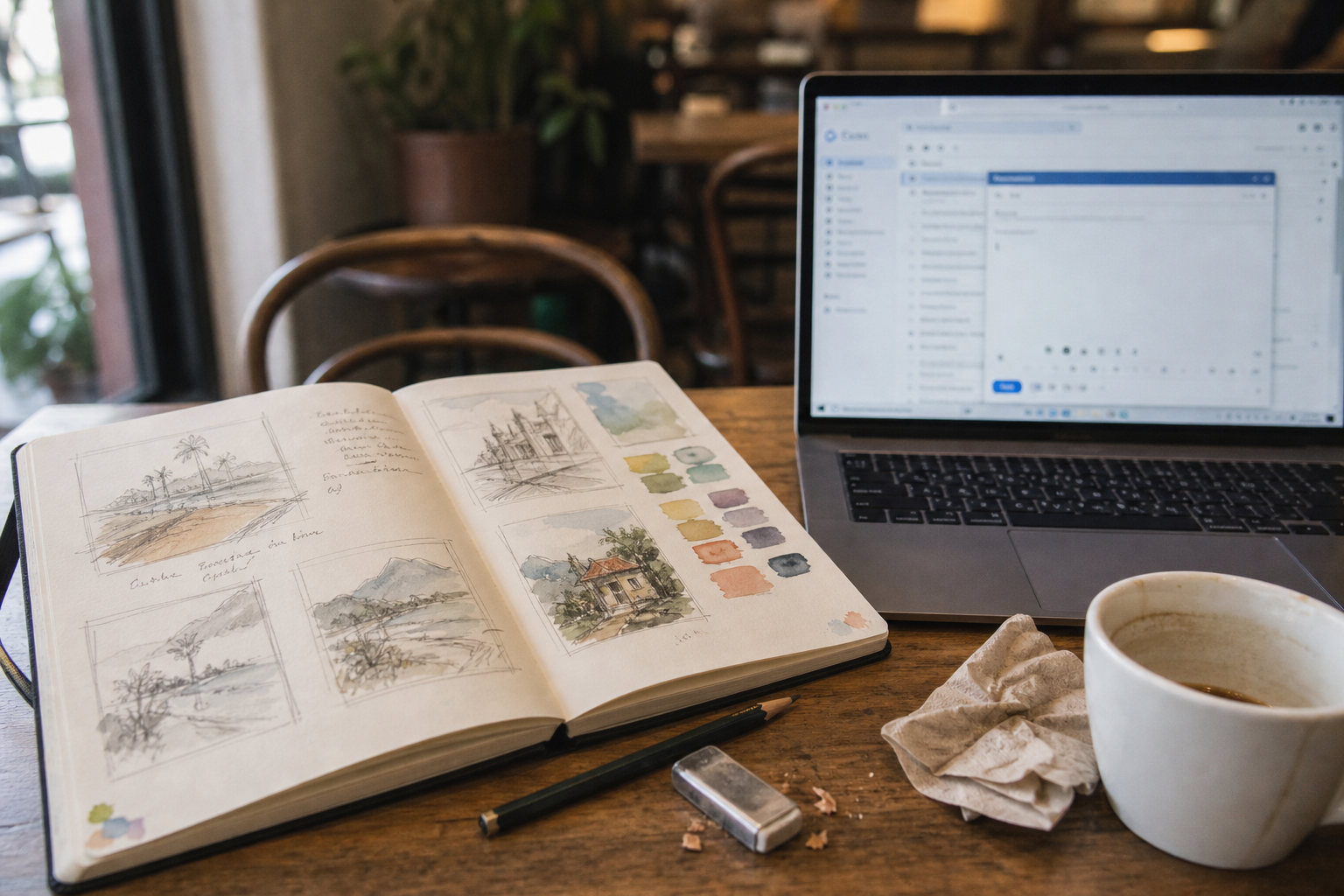
Fees, Commission and Financial Arrangements: What to Expect
There is no industry standard for café and pub displays. Every venue is its own negotiation, and walking in knowing the three main models puts you in a much stronger position.
| Model | How it works | Typical terms |
|---|---|---|
| Free wall space with optional donation | Venue provides space at no cost; artist may offer a small percentage of sales to venue or its cause | 10–20% of sales, or voluntary donation — no fixed rate |
| Hire-based gallery space | Artist pays a fee upfront for the exhibition period; keeps all sales revenue | Fees vary widely; ask for a quote and compare with expected sales |
| Commission on sales | Venue takes a cut when work sells, similar to a gallery model | Typically 20–40%; agree this in writing before hanging anything |
If a venue wants more than 40% commission, that's high for an informal café setting and worth pushing back on. If a venue asks you to pay a hire fee, weigh it against how much work you realistically expect to sell there and whether the visibility justifies the cost even if nothing sells.
Because there is no standard, never assume terms. Confirm everything explicitly before a single painting goes on the wall.
Protecting Yourself: Agreements, Insurance and Practicalities
This is the section that's easy to skip and later regret.
Written agreements: You don't need a solicitor-drafted contract for a café display, but you do need confirmation in writing. An email exchange that clearly states the commission rate or hire fee, the duration of the display, and what happens at the end of the run (unsold work collected by you, on a specific date) is enough. Keep that email.
Insurance: Most venues will not insure your work while it's on their walls. Check whether your home contents policy covers work displayed off-site; many don't. Specialist art insurance is available and worth considering if you're putting a significant body of work into a venue for several weeks. The cost is usually modest.
Damage and liability: Agree in writing who is responsible if a painting is damaged while it's on the premises. This rarely becomes an issue, but if it does, you'll be glad you had the conversation in advance.
HMRC and tax: Income from selling paintings is taxable in the usual way. If you're operating as a sole trader, record your sales and declare income through Self Assessment. There's nothing café-specific about this; it's the same obligation regardless of where you sell. If you're new to selling, it's worth a brief look at HMRC's guidance for self-employed individuals.
Copyright: Your work on display remains your copyright. If the venue wants to use images of your paintings in their own marketing, that requires your permission. It's worth stating this clearly if it comes up.
Even an email counts as a written agreement
You don't need a formal contract for a café display, but you do need something in writing. A simple email confirming commission rate, display dates, and what happens at the end of the run is enough to protect both parties.
Pricing Your Work for a Café or Pub Setting
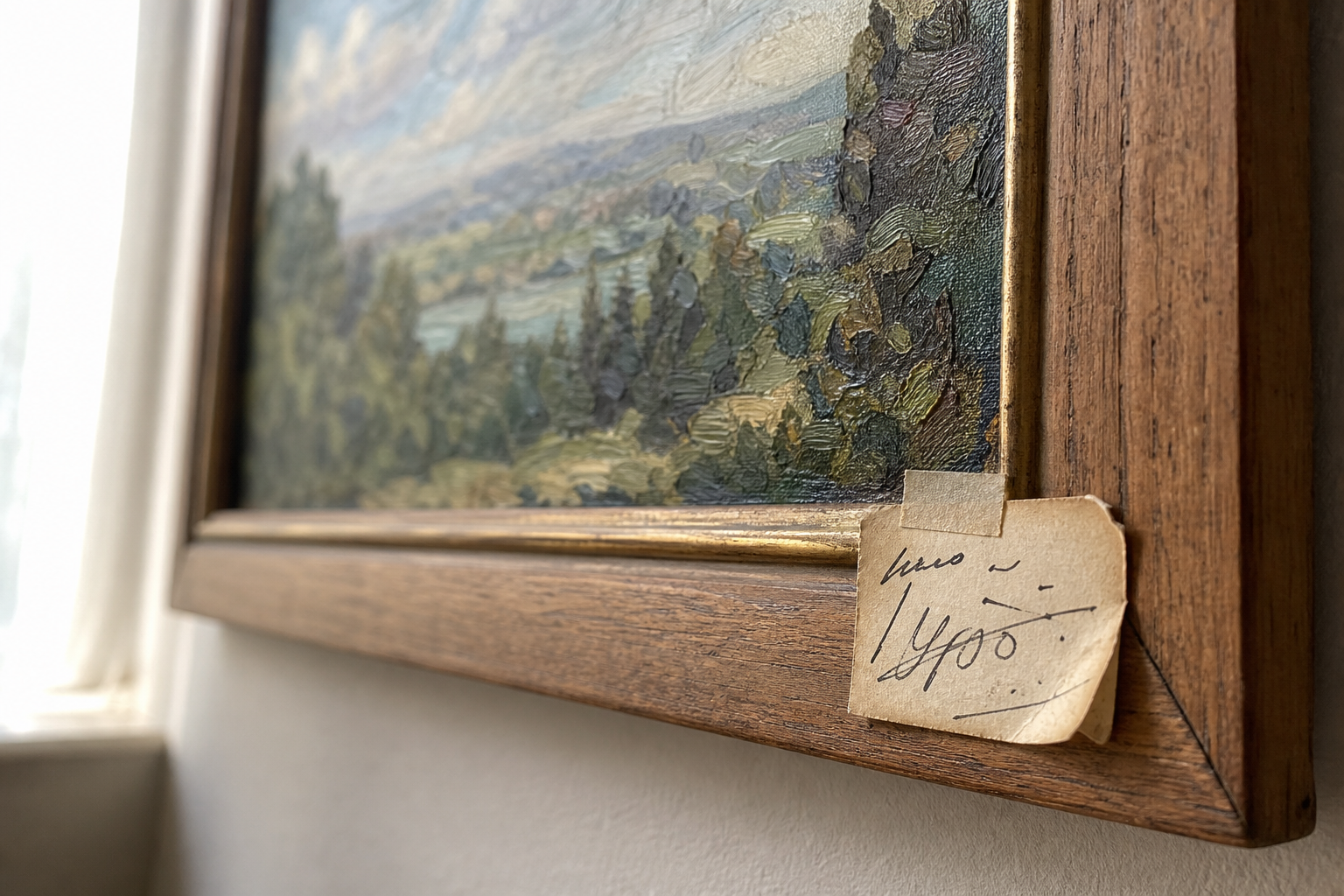
Café buyers are often impulse buyers. They're not researching the market or comparing prices; they saw something on a wall while drinking their coffee and they want it. Pricing that reflects this, without undercutting yourself, is one of the things that makes the difference between a display that sells and one that doesn't.
Offer a range. Small studies and intimate landscapes in the £80 to £200 bracket give people an accessible entry point. Larger, more considered pieces can sit at higher prices for the buyer who takes more time. This structure means almost anyone who falls in love with your work has a route to buying something.
Critically, price consistently with how you price your work elsewhere. If a painting is £250 at an open studio and £150 in a café, you're creating problems for yourself and confusing buyers who've seen your work in both places. Your pricing guide should be your pricing guide, wherever you sell.
Every price label should include your name, contact details, and website or social media handle. Even if a piece doesn't sell while it's on the wall, someone who photographs it and gets in touch six months later is still a sale, and still a connection.
Thinking Bigger: What Café Exhibitions Can Do for Your Career
Done well, a café display is more than a sales exercise. It's an opportunity to build the kind of local visibility that compounds over time.
Consider hosting a private view or a meet-the-artist evening at the venue, even an informal one. Put out a sign-up sheet for anyone who wants to hear about future shows. That mailing list is one of the most useful things you can build as an artist, and a café with sixty people in it on a Friday evening is a better place to build it than most.
Document the show properly. A few good photographs of your work on the walls, shared on social media, reach people who'll never walk through that door. Local newspapers and community websites often cover this kind of thing; a short press release sent to your local paper costs nothing and occasionally gets picked up.
A successful café run also gives you something concrete to point to when you approach galleries. Evidence that people engage with your work, that it sells in a public setting, that you're capable of hanging and managing a show: these things matter when a gallery curator is deciding whether to take a risk on someone new.
And if a venue works well, go back. A returning annual exhibition, timed to a season when your work is particularly relevant, whether that's summer landscapes in July or atmospheric winter paintings in December, creates a reliable moment in your calendar that both you and the venue can plan around. That kind of ongoing relationship is worth more than a single successful show.
The first step, though, is simply sending that email.
FAQ
Frequently Asked Questions
How do I find cafes and pubs that will display my paintings?
Look for venues already showing art, check local community groups and social media, and start with cafes you already visit. Visit first to check wall space and fit.
What financial arrangements should I expect?
Common models are free wall space with an optional donation, hire-based pay-to-exhibit, or a commission on sales. Typical commissions range 20 to 40 percent; always confirm terms in writing.
Do I need insurance or a written agreement?
Yes. Keep written confirmation of dates, commission or fees and collection arrangements. Check your home contents policy and consider specialist art insurance for significant bodies of work.
How should I price works for a café setting?
Offer a range: small studies at accessible prices (for example £80 to £200) and higher prices for larger pieces. Keep prices consistent with other sales channels and include contact details on every label.
How do I approach a venue without feeling awkward?
Send a short, friendly email that explains how your local landscape work will suit the space, offer images, and suggest a run of six to eight weeks. Follow up politely once if needed.
Author

PleinAirPainting Editorial Team
PleinAirPainting.co.uk helps artists paint outdoors with confidence through UK-focused guides, equipment advice, resources and plein air inspiration.