Email Newsletters for Landscape Artists: How to Build a List and Keep Collectors Engaged
Practical steps for building an email newsletter for landscape artists: collect consent correctly, send monthly stories and previews, and use first looks to engage collectors.

Key takeaways
- • An email newsletter is owned audience that builds warmer collector relationships than social media.
- • Follow PECR and UK GDPR: get clear consent, keep a simple record, include an unsubscribe option.
- • Content that works: location stories, process snapshots, first looks at new work, and exhibition notices.
- • Send a welcome email immediately, then a considered monthly newsletter; announce exhibitions 2 to 4 weeks ahead.
- • Start simple with one list and one monthly send, and use your newsletter to turn discovery into sales.
Your Instagram following can disappear overnight. An algorithm update, a platform pivot, a shift in user behaviour, and the reach you've spent years building quietly collapses. An email newsletter for landscape artists works differently: the list belongs to you, the relationship is direct, and no platform can take it away. If you paint outdoors in the British landscape, you already have more compelling material than you might realise. This article covers how to build a list the right way under UK law, what to actually put in a landscape painter's newsletter, how often to send it, and how it fits into a broader practice built around selling original work.
Why a Newsletter Beats Social Media for Landscape Painters
Social media is useful for discovery. A well-timed post of a Northumberland coast painting can find its way to someone who's never heard of you. But discovery is not the same as relationship, and reach on any social platform is borrowed rather than owned. When a platform changes its algorithm, reduces organic reach, or simply loses favour with users, your follower count becomes an unreliable proxy for actual audience.
Email is different. Everyone on your list has actively chosen to hear from you. They've typed in their address, hit confirm, and kept you in their inbox rather than filtering you out. That's a meaningfully warmer relationship than a follow, and it's one you control entirely.
For collectors in particular, email creates the kind of warm, personal connection that a broadcast social feed rarely can. A collector who bought a small oil from you at an open studio two years ago doesn't need a generic feed of content; they need to feel like they're still part of your practice, getting a first look at new work before anyone else. A newsletter does that. Social media generally doesn't.
Your list is yours
When an algorithm changes or a platform loses favour, your follower count can become meaningless overnight. A mailing list stays with you regardless of what any platform does.
UK Law First: What Landscape Painters Need to Know About GDPR and PECR
This section comes early because getting this right protects both you and the people on your list. The good news is that for a small art practice, compliance is entirely manageable. You don't need a solicitor or a compliance officer; you need to understand a few clear principles and act on them consistently.
The Basics of PECR and UK GDPR
Two pieces of law govern email marketing in the UK: the Privacy and Electronic Communications Regulations (PECR) and UK GDPR, which is the version of GDPR that remained in UK law after Brexit.
PECR sets the specific rules around sending marketing emails to individuals. UK GDPR governs how you collect, store, and use personal data more broadly, including the email addresses themselves. For most landscape painters sending a monthly newsletter, the practical overlap between the two is significant: both require you to have a lawful basis for contacting someone, and for email marketing to individuals, that basis is almost always consent.
As a general principle, the ICO (the UK's Information Commissioner's Office) has progressively tightened its guidance on consent between 2022 and 2026. Always check the ICO website for the most current position before setting up your list or changing how you collect addresses.
Consent: What It Actually Means for a Small Art Practice
Consent under UK law must be freely given, specific, informed, and unambiguous. In practical terms, this means:
- No pre-ticked boxes on sign-up forms
- No bundling into general terms and conditions
- A clear statement of what the person is agreeing to receive, from whom, and how often
- A genuine choice, with no penalty for saying no
If someone fills in a sign-up sheet at your open studio, the sheet needs to explain what they're signing up for. A form that just says "mailing list" isn't enough. Something like "I'd like to receive occasional updates about new paintings and exhibitions from [your name]" is clear and specific.
The Soft Opt-In Rule and When It Applies to Past Buyers
There is a provision in PECR called the soft opt-in, sometimes called the existing customer exemption. Under this rule, you may be able to email past buyers without obtaining fresh consent, provided that: you collected their contact details yourself during a sale, you gave them a clear opportunity to opt out at the time, and the content of your emails relates to similar products or services.
This is a narrow provision and should be applied carefully. It doesn't cover everyone you've ever chatted with at an exhibition, and it doesn't justify sending general marketing content to people who bought a single print three years ago without ever being told they'd receive emails. If you're in any doubt, seek fresh consent rather than relying on this exemption.
What Every Email Must Include
Every marketing email you send must include:
- Your name or trading name, clearly stated
- A valid physical address or, as a minimum, a clear and working unsubscribe mechanism
- No attempt to disguise or obscure who the email is from
Most email platforms handle the unsubscribe link automatically. Set this up from the start and never remove it.
Keep a simple consent record
You don't need complex systems. A spreadsheet logging when someone signed up, how they signed up, and what they consented to is enough for a small art practice. Update it whenever someone unsubscribes.
Building Your Art Collector Email List from Scratch
Where to Collect Emails (With the Right Wording)
For UK landscape painters, the natural collection points are in-person events: open studio trails, local exhibition private views, plein air demo days, art fair stands, and workshop bookings. Each of these is a legitimate opportunity to invite people onto your list, provided the wording is clear.
A simple sign-up sheet works well at events. Include a header that explains exactly what people are agreeing to: something like "Sign up to receive occasional updates about new paintings, upcoming exhibitions, and plein air events from [your name]. You can unsubscribe at any time." Leave space for name and email address. Don't ask for anything you don't need.
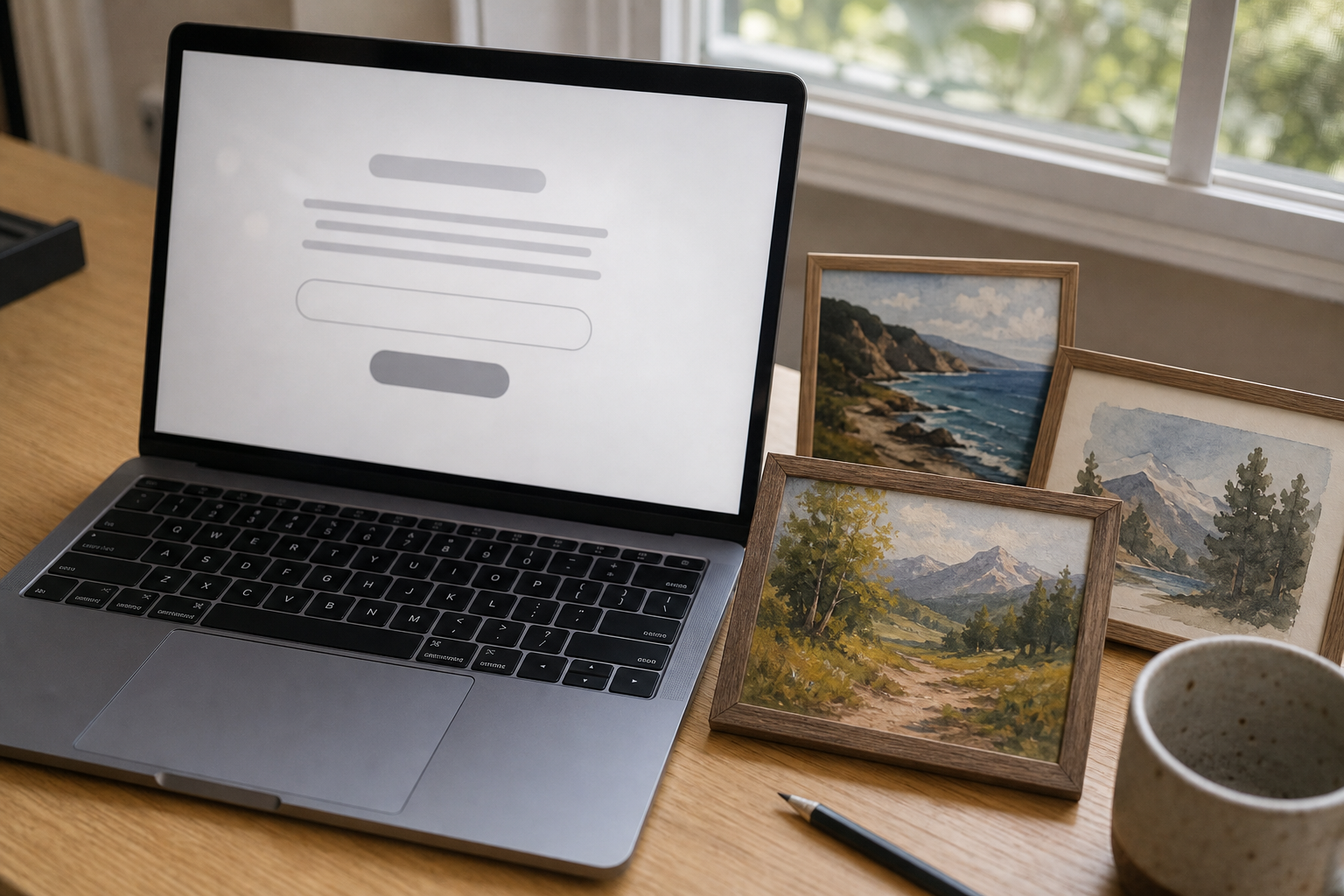
On your website, a sign-up form is essential. It should state clearly what subscribers will receive and sit somewhere visible, ideally on your homepage and your contact page.
Always use opt-in wording
Your sign-up form should state clearly what subscribers will receive. Something like: "I'd like to receive occasional updates about new paintings and exhibitions from [your name]. You can unsubscribe at any time." No pre-ticked boxes, no vague language.
Lead Magnets That Make Sense for Landscape Painters
A lead magnet is something you offer in exchange for an email address. For landscape painters, the most natural options are:
- A downloadable PDF of your favourite painting locations in your region, with brief notes on access, light, and what to expect
- Early access to a new series before it appears on your website or social media
- A short behind-the-scenes guide to your outdoor setup, kit choices, or colour palette
These work because they're genuinely useful and closely tied to what your subscribers will receive ongoing. Avoid anything that promises something your newsletter won't deliver.
Growing Slowly and Intentionally
A small, engaged list is worth far more than a large, indifferent one. One hundred people who open your emails, forward them to friends, and occasionally buy a painting will do more for your practice than a thousand addresses collected from a competition entry with no real interest in your work.
Grow at the pace your practice allows. Prioritise quality of sign-up over volume. Never purchase a list, and never add someone's address without their explicit consent, regardless of how well you know them.
What to Actually Put in a Landscape Painter's Newsletter
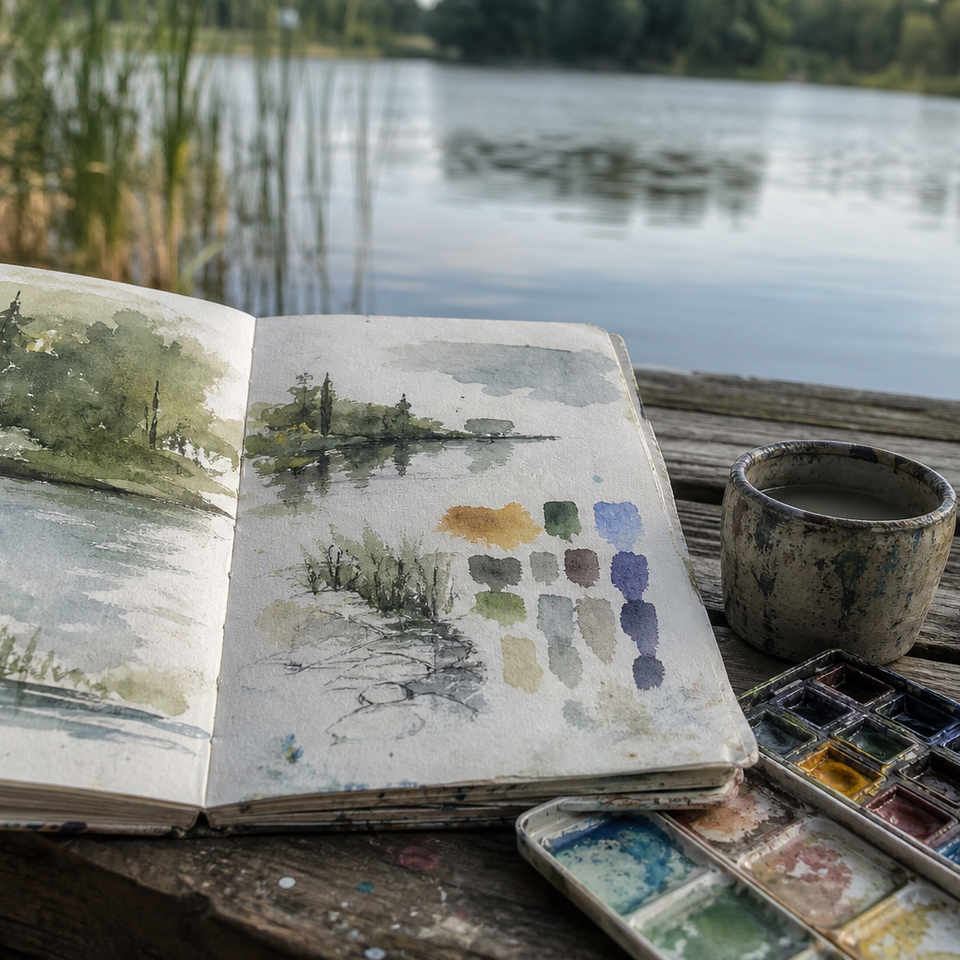
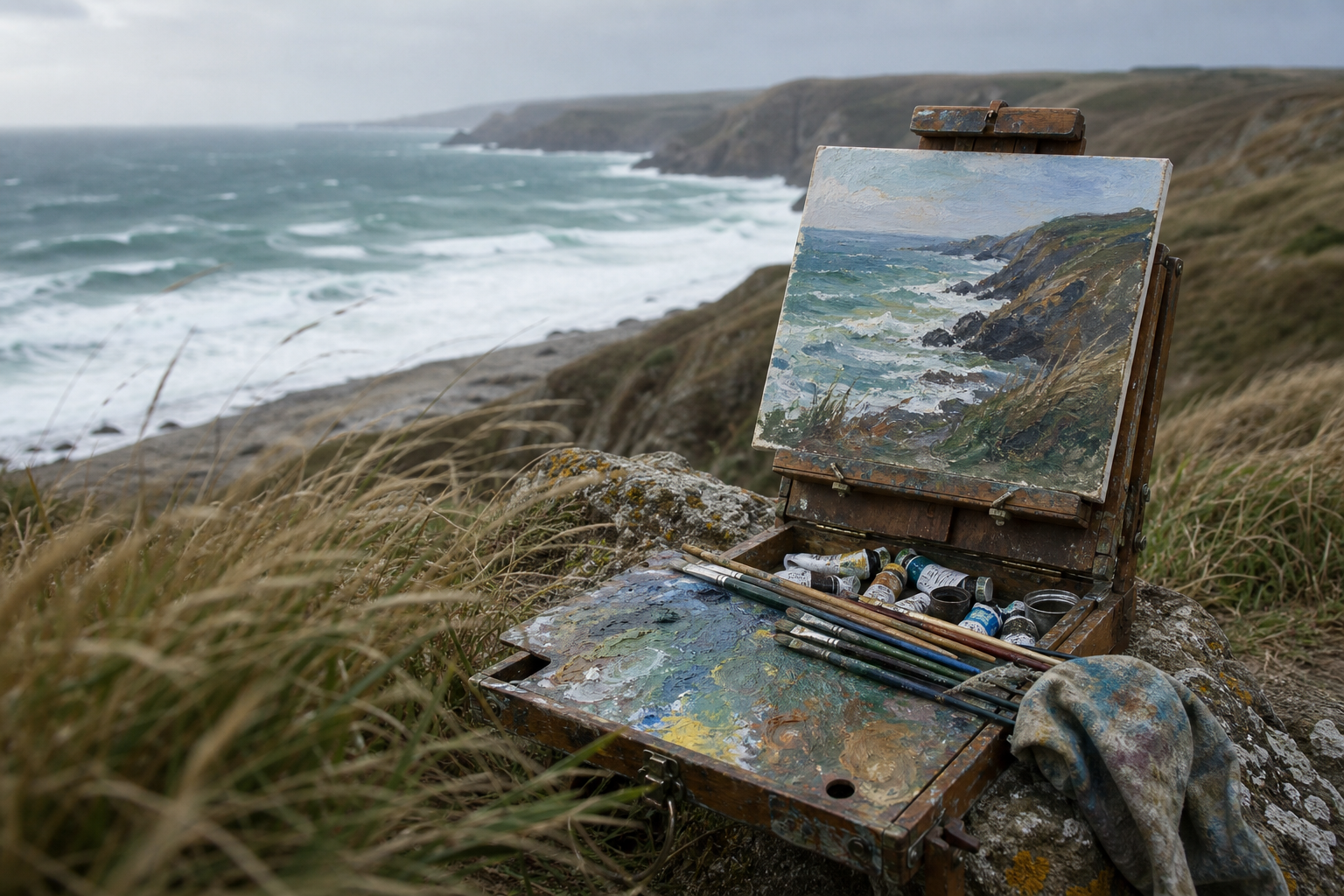
This is where most painters underestimate themselves. If you've spent a morning painting on the Dorset coast when the light shifted three times in an hour, or battled a headwind on the Pennines to finish a cloud study, you have a story worth telling. The detail of plein air practice, the physical reality of painting outdoors in Britain, is genuinely compelling material that most newsletter guides never tap into.
Making Your Location and Process the Story
A newsletter isn't a press release. It's closer to a letter from someone whose work you find interesting. Write about where you went, what drew you to the spot, what the weather was doing, and what you were trying to capture. A misty October morning on the Shropshire hills is specific and evocative in a way that "new landscape work" simply isn't.
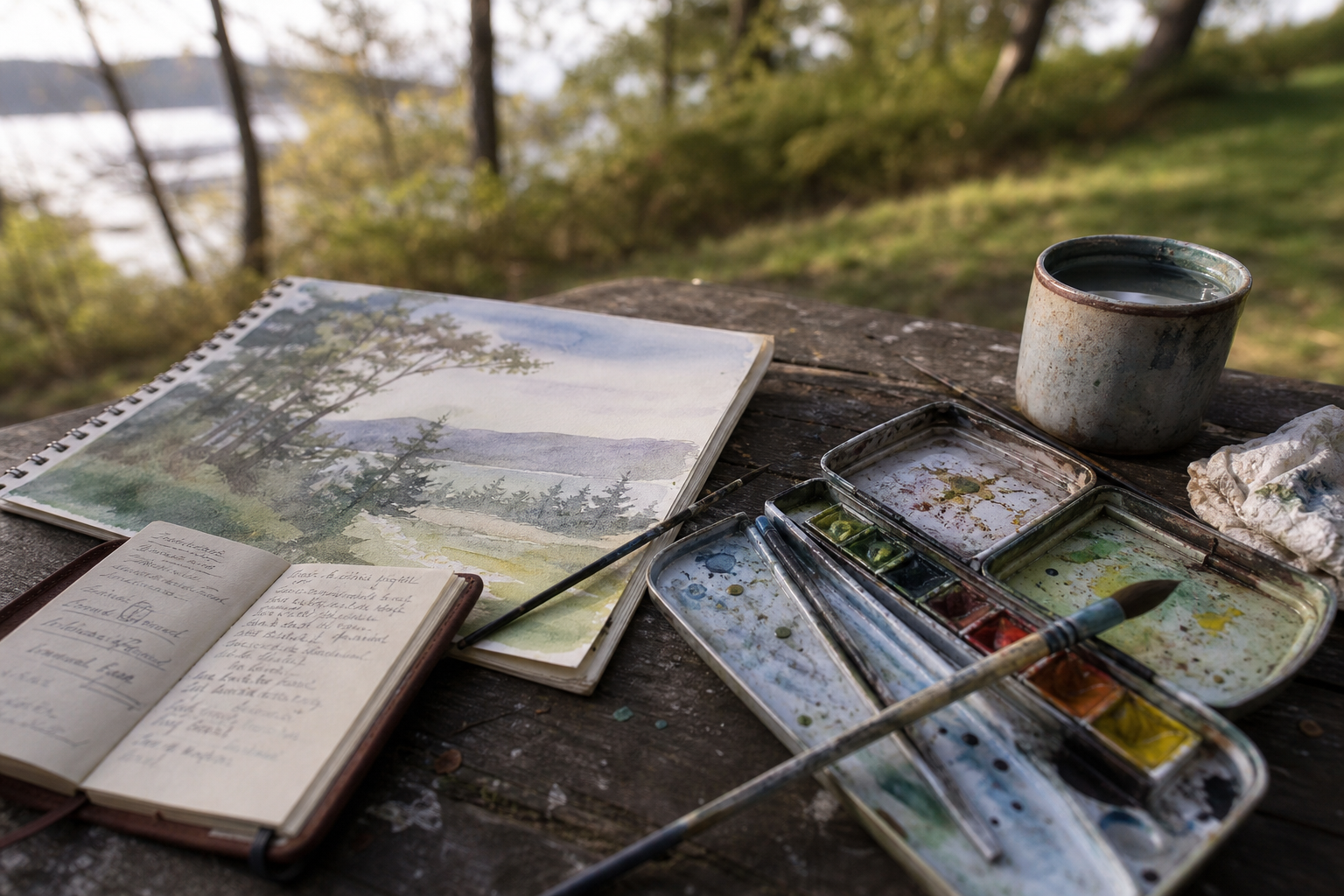
The physical reality of working outdoors is part of the story: the setup, the palette decisions made on location, the moment when the light changed and you had to abandon your original idea. These details are exactly what collectors want to know. They're what makes a painting feel like it belongs somewhere particular rather than nowhere in general.
Artwork Updates and Collector Previews
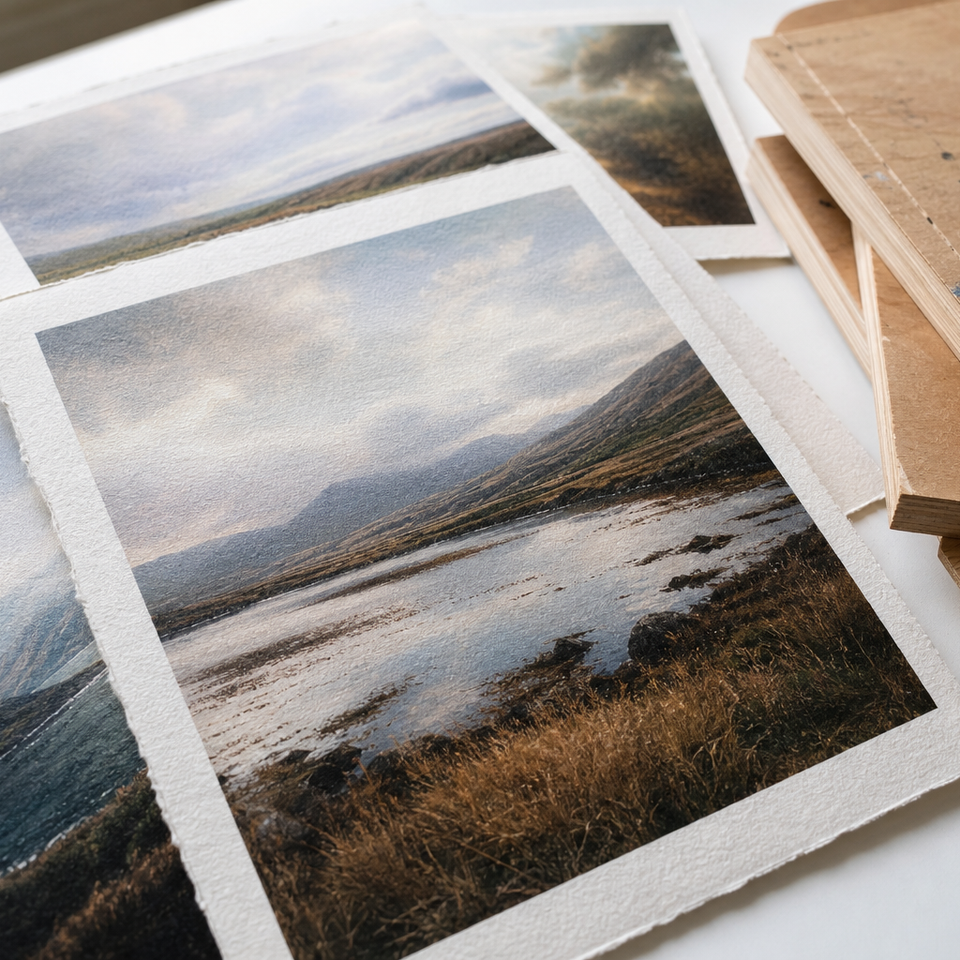
Give your subscribers a first look at finished work before it appears anywhere else. This is one of the most effective things a newsletter can do for collector relationships. It rewards loyalty, creates a sense of genuine access, and builds the kind of low-key urgency that leads to sales: someone who sees a piece first, in a context that feels personal, is more likely to act quickly.
Keep the image large and let it breathe. A single painting per email, or perhaps two or three if you're launching a new series, works better than a gallery-style overview.
Exhibitions, Events, and Open Studios
Collectors who live within reach of your open studio or a gallery show need to know about it with enough time to plan. A newsletter announcement two to four weeks before an event, followed by a reminder the week before, is a reliable way to convert email subscribers into exhibition visitors.
Include practical details: date, venue, postcode, whether there's private view access for newsletter subscribers. The latter is worth offering, since it creates a genuine reward for being on your list.
Mixing in Education, Inspiration, and Community
Not every issue needs to be a sales push. A brief note on a British landscape painter whose work connects to your own, a reflection on painting a particular quality of coastal light, or an honest account of a session that didn't work all add depth to the relationship without requiring a purchase. These are the sections that tend to get forwarded and shared.
| Content type | What to include | Why it works |
|---|---|---|
| Location story | Where you painted, the weather, what drew you there | Turns plein air practice into compelling narrative |
| Process snapshot | Setup photo, work in progress, decision you made on location | Makes subscribers feel part of your practice |
| New work preview | First look at a finished piece before it goes online | Rewards subscribers and creates collector urgency |
| Exhibition news | Upcoming shows, open studio dates, local art events | Moves online interest to offline attendance |
| Behind the scenes | What went wrong, a piece you're unsure about, honest reflections | Builds trust and genuine connection |
| UK landscape feature | A note on a location, a historic painting reference, a season | Adds value beyond the personal; positions you as knowledgeable |
Who's on Your List: And Should Everyone Get the Same Email?
In practice, the mailing list of a working landscape painter is rarely a single type of person. Collectors sit alongside former students, fellow painters, local supporters who followed you from an open studio years ago, and people who found you online and have never seen your work in person. This is normal, and it doesn't have to be complicated.
Simple Segmentation for a Small List
Most email platforms allow you to tag subscribers or create basic segments. As your list grows, you might use this to send new series launch emails only to people who've purchased before, or to invite workshop participants to teaching events without cluttering a collector's inbox. For a list under a few hundred people, though, this level of separation is rarely necessary.
Or: How to Write One Email That Serves Everyone
A well-structured email can serve collectors, students, and peers without feeling generic. The simplest approach is to lead with what's most valuable to collectors (a new work, an exhibition announcement, a first look) and follow with process or painting notes that interest a broader audience. Workshop or teaching news can sit at the end for those it's relevant to. Each reader takes what matters to them.
You don't need separate lists to serve different readers
A simple structure works well: a short collector update at the top, a process or painting note in the middle, and any workshop or teaching news at the end. Each reader takes what's relevant to them.
How Often to Send and What a Good Cadence Looks Like
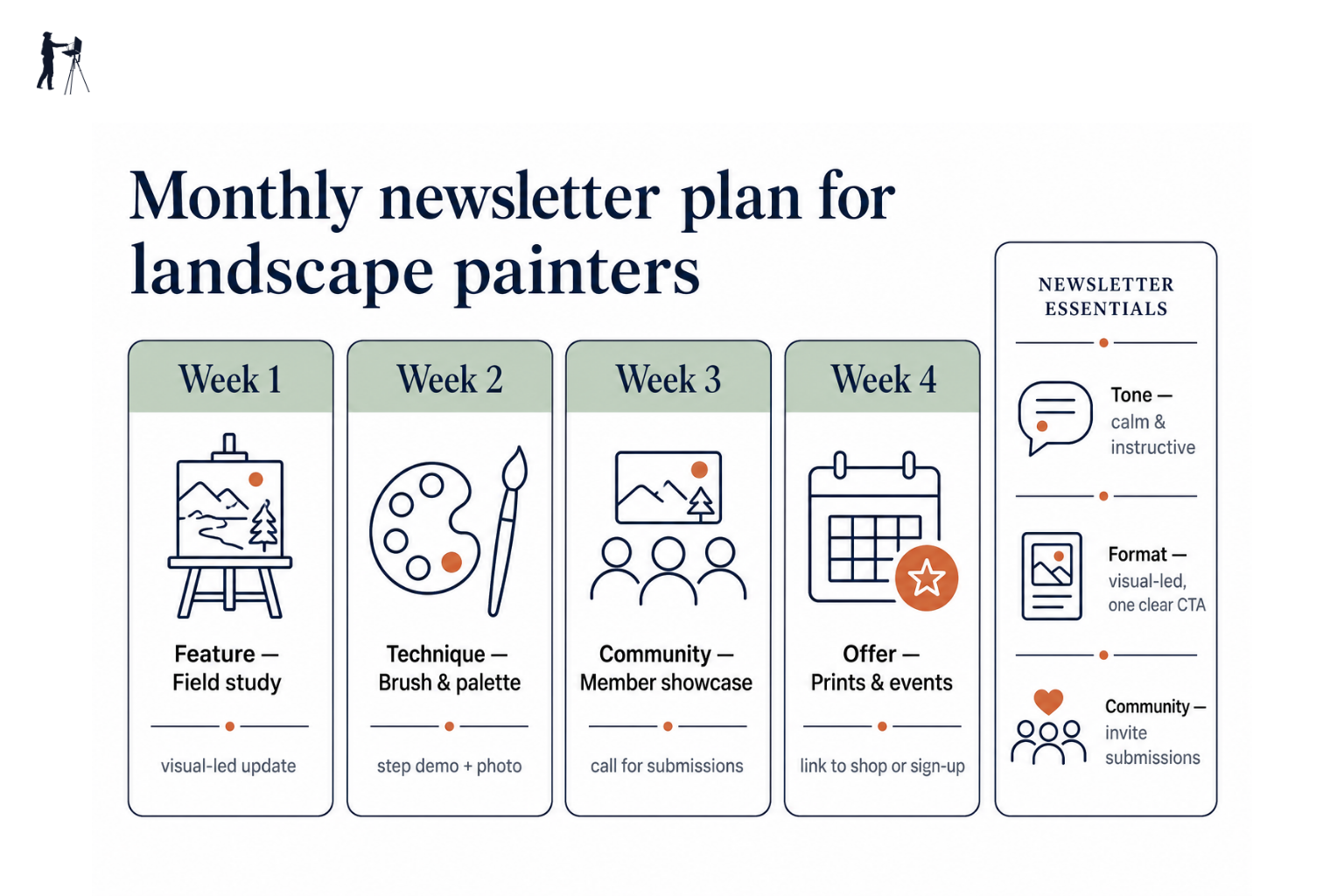
Monthly is the right default for most working landscape painters. It's frequent enough to maintain a relationship, infrequent enough that each issue feels considered rather than pressured. If your painting schedule slows in winter, a quieter, more reflective newsletter still works; a note on what you've been reading, thinking about, or planning for spring is perfectly valid content.
The most important single email you'll ever send is the welcome email, and most painters overlook it entirely. Set it up as an automated message that goes out the moment someone signs up. It should introduce you briefly, confirm what they'll receive and how often, and perhaps share something useful immediately, whether that's a painting from a location you love or a note on how you work.
A sustainable newsletter rhythm
- Welcome email
- Automated, sent immediately on sign-up
- Monthly newsletter
- Once per month
- Exhibition announcement
- As needed, 2–4 weeks before
- New series launch
- Once or twice per year
Sets expectations; essential first step
Sustainable for most working painters
Drives attendance and pre-sales
Highest collector engagement moment
Setting Up Without Overthinking It
The technology matters far less than the habit. Mailchimp and Mailerlite are both widely used by artists, both have free tiers that will cover most small lists, and both handle the legal requirements around unsubscribes and sender identification automatically. Pick one and start; you can always move later if your needs change.
Start as simply as possible: one list, one welcome email, one monthly send. Add a sign-up form to your website and link to it from your social profiles. Resist the temptation to spend weeks designing a template before you've sent a single issue. A plain, well-written email with a strong image of your work will outperform an elaborate layout every time.
Keep the design mobile-friendly. A large proportion of your subscribers will open your email on a phone. A single-column layout with one or two images and a clear call to action is more effective than a complex grid that breaks on a smaller screen.
Connecting Your Newsletter to the Rest of Your Practice
A newsletter works best as part of a broader practice rather than a standalone task you approach with reluctance once a month. Think of social media as the discovery layer: posts and stories that bring new people to your work for the first time. The newsletter is the depth layer: the place where people who already care about your work can follow it properly over time.
When you launch a new series, announce it first to your list, then to social media. When you have a piece that's available before it's listed on your website, offer it to subscribers first. When you're heading to a location you've written about before, refer back to that earlier newsletter issue. Over time, this creates a sense of continuity and investment that casual social media followers rarely develop.
For online sales, the newsletter is one of the most reliable drivers. A collector who's read five or six of your issues, knows where you like to paint, and has seen a series develop over several months is primed to buy in a way that a first-time website visitor simply isn't. A small, engaged list of a few hundred people can sustain a part-time landscape practice meaningfully; the size matters far less than the warmth of the relationship.
The material is already there in every painting session you do. The location, the weather, the decisions you made, the pieces you're proud of and the ones you're less sure about. All of it is worth sharing. Start with one email, and build from there.
FAQ
Frequently Asked Questions
Do I need consent to email collectors in the UK?
Yes. For marketing emails you must have clear consent under PECR and UK GDPR. Consent must be freely given, specific, informed and unambiguous. No pre-ticked boxes and keep a simple record of when and how consent was given.
How often should I send an email newsletter?
Monthly is the right default for most working landscape painters. Send an automated welcome email on sign-up, monthly issues for regular contact, and targeted announcements 2 to 4 weeks before exhibitions or launches.
What should I put in a newsletter for landscape artists?
Lead with collector value such as first looks at new work or exhibition news, then add location and process stories, work in progress images, behind the scenes notes, and any teaching or workshop updates.
Can I rely on the soft opt-in to email past buyers?
The soft opt-in is narrow. It may apply if you collected emails at the point of sale and gave an opt-out option, and the emails relate to similar products. If in doubt, ask for fresh consent rather than risk non compliance.
How should I grow an engaged collector list?
Collect emails at open studios, demos, fairs and via a clear website form. Use relevant lead magnets like location guides or early access to new series. Grow slowly, prioritise quality over volume and never buy lists.
Author

PleinAirPainting Editorial Team
PleinAirPainting.co.uk helps artists paint outdoors with confidence through UK-focused guides, equipment advice, resources and plein air inspiration.