How to Sell Plein Air Paintings: A Practical Guide for UK Artists
A clear, honest UK-focused guide to preparing, pricing and selling plein air paintings online and in person, with practical steps on photography, channels, pricing and audience building.

Key takeaways
- • Plein air work sells because it records specific places and moments, which creates strong connection for buyers.
- • Prepare a curated, consistent selection, present works neatly framed or clearly labelled as unframed, and photograph them in diffused natural light.
- • Use a practical pricing framework, for example size-based ranges, and keep prices consistent across all sales channels while building room for gallery commission.
- • Combine channels: own website for margin and control, marketplaces for discovery, Instagram for engagement and direct sales, and local in-person events for immediate buyer connection.
- • Treat selling as a long-term project. Track sales data, show consistent output and process, grow an email list, and raise prices gradually as demand builds.
If you've built up a body of outdoor work and are starting to wonder what to do with it, you're not alone. Many painters reach a point where canvases are stacking up in the studio and the question shifts from "how do I paint better?" to "how do I sell plein air paintings online and in person?" This guide is written for that moment. It covers the UK market honestly, looks at the main sales channels with their real trade-offs, and gives you a framework for pricing and presenting your work. There are no shortcuts here, but there is a clear path.
Why Plein Air Work Has Real Appeal to Buyers
The value of "painted on location"
Plein air paintings carry something that studio work often cannot replicate: the evidence of being there. The light was doing that specific thing, in that specific place, at that specific hour. A buyer who holds one of your small studies is holding a record of a real moment. That matters to people, even if they could not articulate exactly why.
"Painted on location" is not just a technique note; it is a genuine selling point. Many buyers who would walk past a studio landscape without a second thought will stop when they understand that a painting was made in front of the subject. The spontaneity, the directness, the occasional roughness of a plein air study all read as authenticity rather than imperfection. Frame it that way, because it is true.
What collectors and casual buyers are actually looking for
Your buyers will not all be the same. Some are serious collectors who care about medium, provenance, and your exhibition history. Others are people who simply love a place and want a painting of it on their wall. Both are worth understanding, because the way you talk about your work shifts depending on who you are talking to.
In the UK, location resonance is particularly strong. A painting of the Norfolk Broads, Blakeney Quay, the Pembrokeshire coast, or a stretch of the South Downs carries genuine emotional weight for people with ties to those places. This is an advantage plein air painters hold over studio artists: your work is rooted in specific, identifiable places, and that specificity creates connection with buyers who might not otherwise seek out original art.
Getting Your Work Ready to Sell
Deciding which pieces are ready
Not every study you produce is ready to sell, and it is worth being honest with yourself about this. Some pieces are learning exercises. Some are saleable studies. Some are more resolved paintings that belong in a show or at a higher price point. Curating what you put in front of buyers is not about self-deprecation; it is about presenting a coherent, confident body of work.
A good test: would you be comfortable if someone hung this on their wall and told people you painted it? If the answer is genuinely yes, it is probably ready. If there is hesitation, set it aside. Keeping your available work to a quality threshold makes everything else, including pricing and presentation, more straightforward.
Framing and presentation
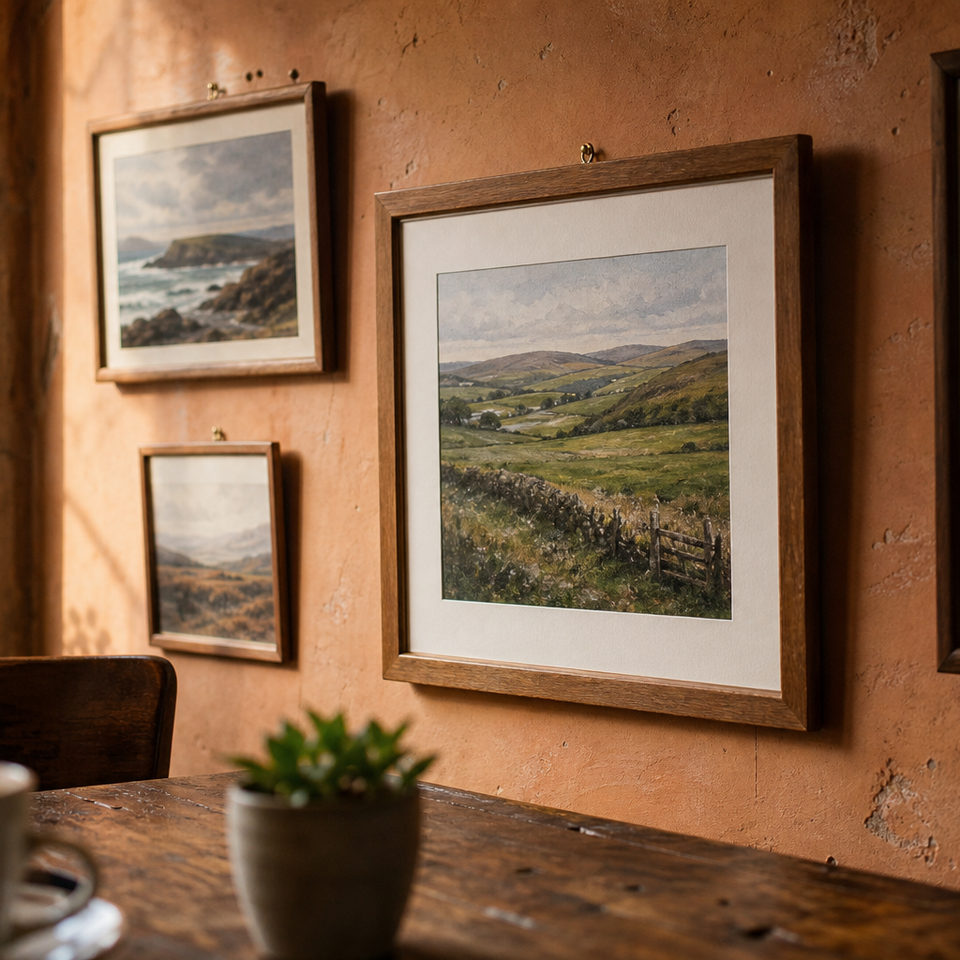
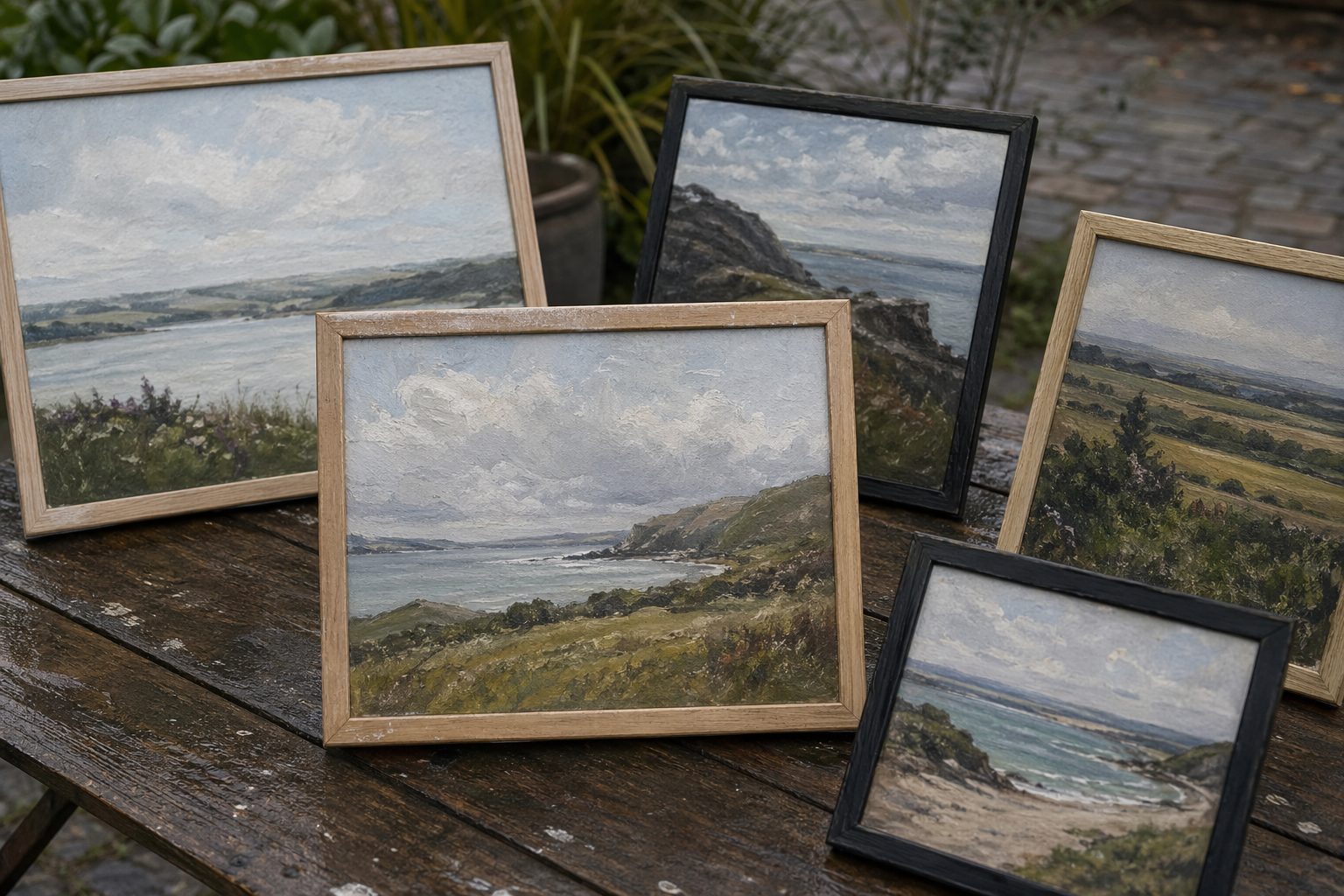
For in-person sales especially, framing matters more than most painters expect. The frame does not need to be expensive; it needs to be clean and appropriate to the scale of the work. Ornate or heavy frames on small studies look wrong and can actually put buyers off. Thin wood mouldings in natural or dark finishes, or simple clip frames for very small studies, keep costs manageable and let the painting do the work.
If you are pricing framed work, remember to factor the framing cost into your price. And if you sell both framed and unframed pieces, be clear about which is which in your listings and at fairs.
Photographing your paintings properly
For online sales, your photographs are your paintings. A poor photograph of a good painting will not sell. The basics are not complicated: natural daylight (ideally from a north-facing window), a straight-on angle, no surface glare, and a consistent neutral background. Shoot at the highest quality your camera or phone allows.
Oil paintings present specific challenges: wet or recently dried surfaces pick up glare easily, and small-format work can be fiddly to frame up consistently in a shot. A tripod helps enormously with this. Editing should correct colour temperature and straighten the crop, not alter the painting itself.
Photographing small studies
Small plein air studies can be tricky to photograph consistently. A neutral grey or white wall, diffused natural light from a north-facing window, and a tripod will do more than any editing software. Shoot each painting from the same distance and crop consistently so your work looks cohesive online.
How to Price Your Plein Air Paintings
Starting points for pricing
Pricing is where most painters stall, and the stalling is understandable. Price too high and nothing sells; price too low and you undermine your own work and set expectations that are genuinely difficult to reverse later. The goal is to find a starting point that is honest about where you are now, with room to move upward as your reputation builds.
There are a few approaches worth knowing about. Size-based pricing (a set rate per square inch or square centimetre) is consistent and easy to explain to buyers. Comparable pricing, looking at what similar-scale work by painters at a similar career stage sells for on platforms like Artfinder or Saatchi Art, gives you a market anchor. An hourly rate method works for some artists, though it can produce prices that feel arbitrary to buyers who do not know how long something took.
None of these is the only right answer. Many painters use a combination: a loose size-based framework, calibrated against what they see selling in their region and style.
Pricing studies versus more finished work
It is entirely reasonable to sell both small quick studies and more resolved paintings at very different price points, provided you are clear with buyers about what they are getting. A 6x8-inch study done in an hour is a different thing from a 12x16-inch painting that took several sessions to resolve. Price them accordingly and describe them honestly.
| Size | Type | Suggested starting range | Notes |
|---|---|---|---|
| Up to 6x8 inches | Quick study | £40–£80 | Unframed or clip-framed |
| 8x10 inches | Resolved study | £80–£150 | Clean simple frame |
| 10x12 to 12x16 | More finished painting | £150–£350 | Frame included in price |
| 16x20 and above | Exhibition piece | £350–£700+ | Depends on reputation and finish |
These are illustrative starting ranges, not instructions. Research comparable work on Artfinder and Saatchi Art to see what is actually selling at similar scale and quality in your area of practice. And revisit your prices regularly: as your work sells consistently and your reputation builds, your prices should rise to reflect that.
Adjusting as you sell
One important consistency note: your prices should be the same regardless of where you are selling. If a painting is listed at £180 on your website, it should be £180 at a fair and £180 if a gallery takes it on. Galleries typically take between 30 and 50 per cent commission, so the way to handle this is to build the gallery margin into your base price from the start, not to charge more at the gallery than elsewhere.
Where to Sell Plein Air Paintings Online
Your own website
A personal website gives you the highest margin and complete control over how your work is presented. Platforms like Squarespace, Cargo, and Format are well suited to artists and straightforward to set up without technical knowledge. You own the customer relationship, you keep the buyer's email address, and you are not competing for attention on a shared marketplace page.
The trade-off is traffic. A new site will not be found without effort. Search engine optimisation takes time to pay off, and you will need to drive visitors from social media or email while the site builds authority. This is worth the effort over the long term, but it is a realistic picture of what "your own website" actually means in the early stages.
Online marketplaces (Artfinder, Etsy, Saatchi Art)
Artfinder is probably the most relevant platform for UK painters selling original work. It is curated (not everyone is accepted), which maintains quality standards and means buyers are specifically looking for original art. It takes commission on sales, and competition exists, but the audience is pre-qualified in a way that general platforms are not.
Etsy has a vast audience and is easy to set up quickly. It works particularly well for smaller studies at more accessible price points. The platform carries lower prestige than dedicated art sites, and the fees add up (listing fees, transaction fees, payment processing), but the traffic is real and sales happen. Worth treating as one channel among several rather than your primary home.
Saatchi Art is a larger international platform with a significant commission rate (around 35 per cent). It can work well for more established artists with a stronger profile, but it is harder to gain traction on as a newer seller. Worth knowing about but not necessarily the first place to start.
To sell art online UK as a plein air painter, the honest approach is to treat marketplaces as a route to new buyers while building your own site as the long-term home for your practice.
Online marketplace vs. your own website
Pros
- + Marketplaces bring an existing audience without SEO work
- + Easy to list and start selling relatively quickly
- + Some platforms (Artfinder) actively promote artists to buyers
Cons
- - Commission fees reduce margin significantly
- - You do not own the customer relationship or email list
- - Your work sits alongside competitors on the same page
Both have a place. Many working artists use a marketplace to reach new buyers and a personal site to consolidate their reputation and retain margin. Starting with one and adding the other as confidence grows is a sensible approach.
Social media as a direct sales channel
Instagram is the most relevant platform for visual artists in the UK, and direct sales through it are genuinely common. Many painters sell via DMs or story posts without any formal storefront, using bank transfer or PayPal to close the transaction. The friction is low once an audience exists.
The caveat is that last phrase: "once an audience exists." Social media direct sales depend on relationships and visibility built over time. They are not a starting point for someone with a new account and fifty followers; they become a useful channel once you have posted consistently and built a following of people who are genuinely interested in your work.
Selling in Person: The UK Opportunities
Art fairs and outdoor markets
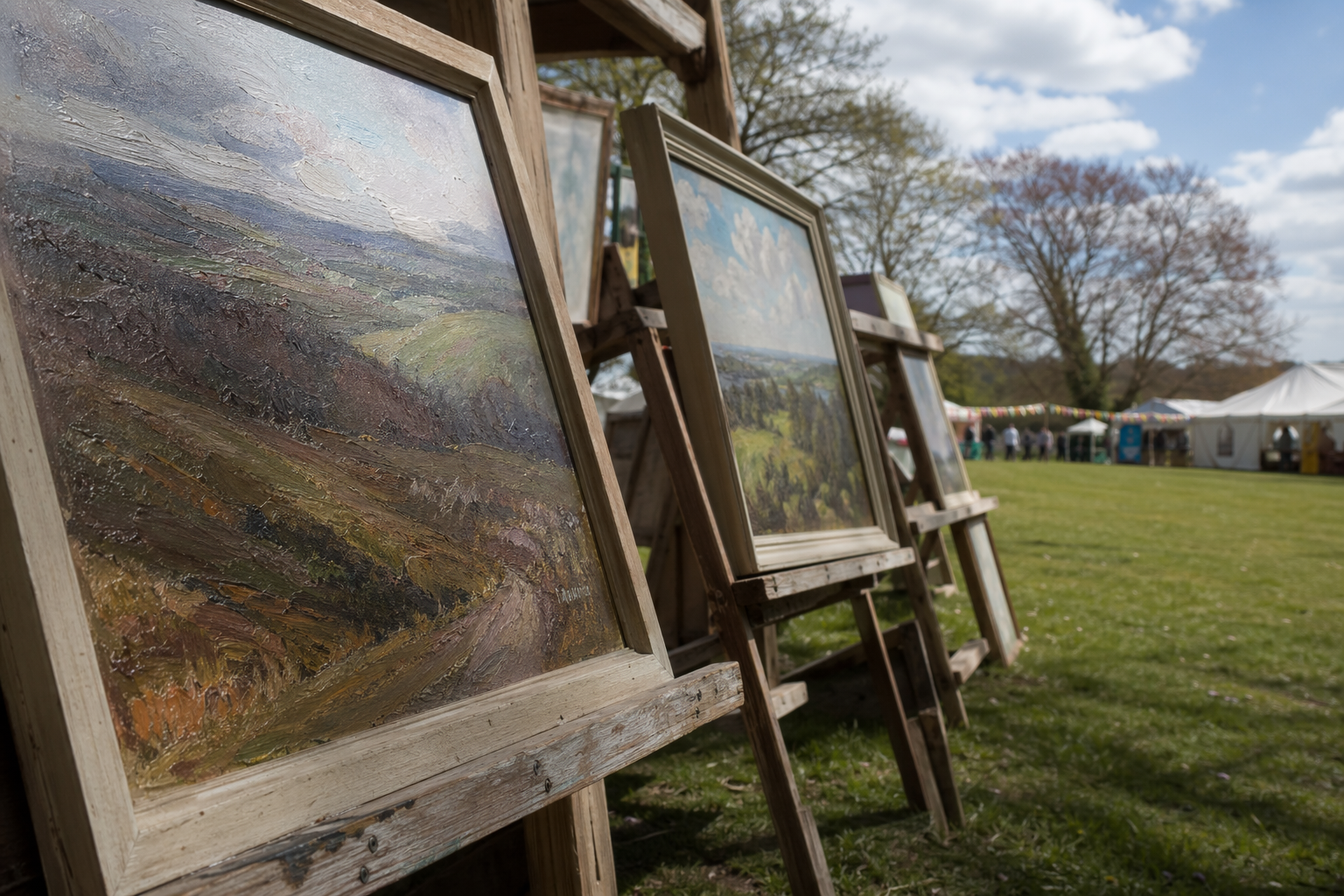
In-person selling is an underrated route, particularly for work at accessible price points. Local art fairs, country shows, and craft markets with an art section all provide opportunities for impulse purchases and direct connection with buyers. Pitch costs vary widely, from around £50 at a small local event to several hundred pounds at a more established fair. Plein air work often displays particularly well in outdoor settings, which suits the format.
The strength of in-person selling is the conversation. Buyers who might scroll past a listing online will stop and talk when they can see the actual painting. The story of where it was painted, and how, makes a genuine difference to how people engage with the work.
Open studio events
Open studio trails are organised across the UK by regional arts councils, local groups, and platforms like a-n. They are low cost to participate in, carry strong community buy-in, and attract buyers who are specifically interested in meeting artists. Selling to people in your area who feel a local connection to your subjects is one of the most natural routes a plein air painter has.
These events also build your mailing list and your local reputation in ways that online channels cannot replicate. If there is an open studio event near you, it is worth participating even if sales are modest in the first year.
Approaching local galleries and framing shops
Smaller regional galleries often work on a sale-or-return or consignment basis, which means lower risk for both parties. Approach with a coherent body of work rather than a random selection of pieces. A gallery looking at your portfolio needs to be able to imagine how your work would sit in their space and what kind of buyer it would appeal to.
Framing shops that show local artists are another avenue worth considering, particularly in towns with strong visitor trade. Galleries near national parks, coastal towns, and areas of outstanding natural beauty actively seek work that connects with the landscape: this is exactly where plein air painters have an advantage.
The Federation of British Artists and many regional art societies hold members’ exhibitions and selling shows. Membership is worth investigating if you want access to exhibition opportunities that are not open to non-members, and the showing history these provide can strengthen your profile over time.
Building an Audience as a Plein Air Painter
Documenting your sessions publicly
One of the most effective things a plein air painter can do on social media is show the process, not just the finished work. A short video clip from the field, a photo of the view with the painting in progress, a note about the weather or the light: these posts perform better than finished piece announcements for most painters, because they invite the viewer into the experience. People who follow your process develop a relationship with your work before they ever consider buying it.
Instagram and Facebook are both active channels for UK artists, and you do not need to be on both from the start. Pick one and use it consistently.
The power of place-specific work
Using location names in your titles, captions, and listings is a simple but significant act. "Evening light, Blakeney Quay" is a different proposition to "coastal study, oil on board." It creates specificity. It is searchable. And it connects with the people who know that place and care about it.
This is the social media for artists advice that most generic guidance misses: for plein air painters, place is part of the product. Lean into it. Use the actual names of the locations you paint. The Yorkshire Wolds painter, the Pembrokeshire coast painter, the Sheffield canal painter: these identities are more compelling than "landscape artist."
Building a mailing list
An email list is the most resilient audience a working artist can have, because it does not depend on an algorithm deciding to show your work to your own followers. A simple monthly or occasional email to people who have expressed interest in your work keeps you present without requiring daily posting.
Free tools like Mailchimp or Substack make this straightforward. You do not need many subscribers for it to be valuable: a list of two hundred people who have bought from you or expressed genuine interest is worth more than ten thousand Instagram followers who found you through a trending post.
Making It Sustainable Over Time
The most useful thing you can know about selling plein air paintings is that it is a long-term project. Most painters do not achieve meaningful, consistent sales income in their first year. That is not a failure of the work or the strategy; it is the nature of building a reputation and an audience.
Consistency of output matters more than any single sale. Painters who show up regularly in their practice and in their public presence, whether online, at fairs, or in local exhibitions, build recognition over time. This is not glamorous advice, but it is true.
Keep simple records of what sells, at what price, and through which channel. This is genuinely useful data. Over a year or two, patterns emerge: which subjects sell more reliably, which price points move, which channels bring real buyers. Those patterns should shape your decisions about what to paint, how to price it, and where to focus your sales energy.
Raise your prices gradually as demand grows. It is far easier to justify a price increase to an existing audience who has watched your practice develop than to start too high with no track record. And do not rely on a single channel: having both online and in-person routes, and more than one platform, provides resilience when one channel goes quiet.
Selling is learnable. It takes time, it takes honest reflection on what is working, and it requires a level of consistency that can feel uncomfortable at first. But it is not a gift reserved for a particular kind of artist. It is a skill, and like plein air painting itself, it gets better with practice.
FAQ
Frequently Asked Questions
How should I price my plein air studies and larger paintings?
Use a clear framework. Many artists start with a size-based rate calibrated against local comparables. Example ranges: quick studies up to 6x8 inches £40–£80, resolved studies 8x10 inches £80–£150, 10x12–12x16 £150–£350, larger exhibition pieces £350+. Keep prices consistent across channels and build gallery commission into the base price.
What are the essentials for photographing paintings to sell online?
Photograph in diffused natural light, ideally from a north-facing window, shoot straight on with a tripod, use a neutral background, and correct colour temperature and alignment in editing without altering the artwork. For small studies keep distance and crop consistent so listings look cohesive.
Which online channels should I use to sell plein air paintings online?
Use a combination. Your own website gives the best margin and control but needs traffic and SEO. Marketplaces like Artfinder, Etsy and Saatchi Art bring buyers quickly but take commission. Treat marketplaces as discovery channels while you build your site and email list.
Do I need to frame my work before selling and how should I present it?
Framing helps, especially in person, but it does not need to be expensive. Choose simple, proportionate frames such as thin wood mouldings or clip frames for very small studies. Be clear in listings whether work is sold framed or unframed and factor framing costs into your price if included.
How do I build an audience that will actually buy my work?
Show process not just finished pieces: field photos, short videos and location names perform well. Focus on one social platform consistently, use place names in titles, and build an email list. A modest list of genuinely interested people is worth more than large follower counts with low engagement.
Author

PleinAirPainting Editorial Team
PleinAirPainting.co.uk helps artists paint outdoors with confidence through UK-focused guides, equipment advice, resources and plein air inspiration.