How to Frame Your Plein Air Paintings: A Practical UK Guide
A practical UK guide to choosing and fitting oil painting frames for plein air boards and stretched canvas. Covers rebate depth, fixings, suppliers and finishing steps.

Key takeaways
- • Check your support thickness first and match it to the frame rebate depth.
- • For boards use Velcro fixings for a reversible mount; for stretched canvas use Z-clips.
- • Choose simple natural wood or floating frames for plein air work; avoid heavy ornate profiles on small pieces.
- • Buy ready-made deep rebate frames in standard sizes when possible; use custom framing for odd sizes or exhibition work.
- • Label the back, allow full drying time and fit appropriate hanging hardware before display.
You've done the outdoor work. Now comes the part that gets overlooked: presenting it properly. Choosing the right oil painting frames for plein air work is a different challenge from framing prints or watercolours, and this guide covers everything from rebate depth to fixing methods, with UK suppliers and sizing throughout.
Why Oil Paintings Need Specialist Frames
Standard picture frames, the kind designed for photographs, prints, or glass-mounted artwork, have a shallow rebate. The rebate is the channel on the inside of the frame that holds the artwork in place. On a typical photo frame, that channel might be 5 to 8mm deep.
An oil painting on a board or panel is a completely different proposition. The support itself has thickness, and the paint surface sits proud of it. If you fit an oil painting board into a shallow frame, it will either not fit at all, or it will sit proud of the frame face, which looks wrong and risks damage to the paint surface.
This is not a minor inconvenience. It is the most common framing mistake plein air painters make when buying frames for the first time. Deep rebate frames exist specifically to solve this, and once you know to look for them, they are not hard to find.
Understanding Your Support: Boards, Canvas, and Panels
Painting Boards and Oil Painting Panels
Most plein air painters in the UK work on rigid supports: oil painting boards (typically canvas-covered MDF), gesso panels, or aluminium composite panels. These are practical outdoors because they do not flex, they travel well in a pochade box, and they are relatively inexpensive.
Rigid boards are typically 3 to 5mm thick. Some aluminium panels are thinner, around 2mm, and some heavier gesso boards can be closer to 6mm. Knowing your board thickness is the first thing to check before buying any frame.
The rigidity of these supports is an advantage when framing. A board sits flat, does not bow, and can be held securely with Velcro fixings. More on that shortly.
Stretched Canvas
Some plein air painters work on stretched canvas, where the canvas is pulled over a wooden stretcher bar frame. Stretched canvases are deeper than boards, typically 18mm to 38mm depending on the stretcher bar depth, and they cannot be Velcroed into a frame in the same way.
For stretched canvas, the appropriate fixing method is Z-clips (also called canvas offset clips), which hook over the back edge of the stretcher bar and screw into the rear of the frame. This section covers that briefly, but since the majority of plein air painters in the UK work on boards, boards are the primary focus here.
Choosing the Right Frame for a Plein Air Oil Painting
Rebate Depth: The Number You Need to Know
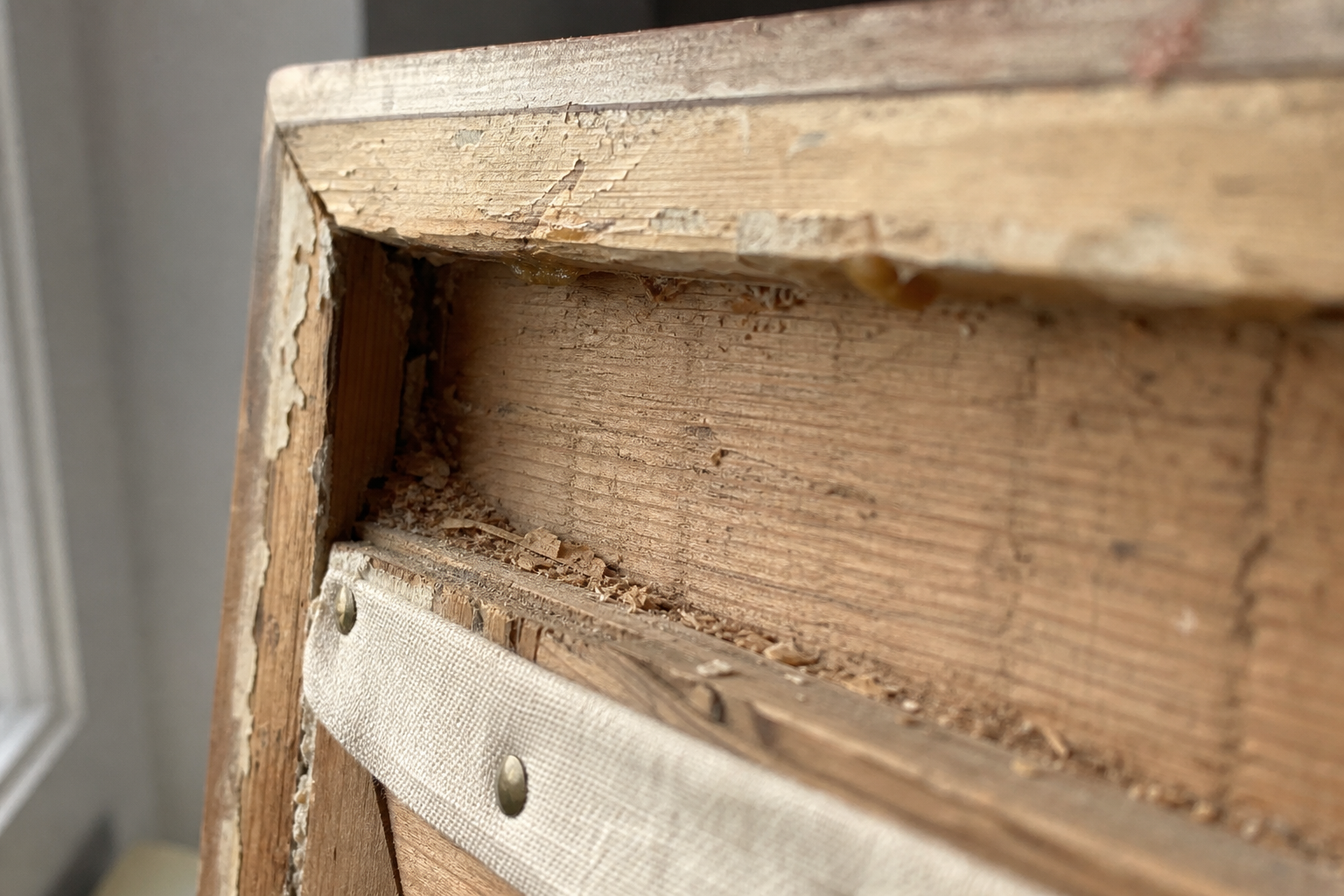
Rebate depth is the measurement of how deep the channel inside the frame is. It determines whether your painting fits correctly, whether it sits flush with the frame face, and whether there is room to fit fixing hardware without the board pushing forward.
For a board that is 3 to 5mm thick, you need a rebate depth of at least 10 to 12mm. This gives room for the board itself, any shimming if needed, and the fixing strips. Frames described as "deep rebate" by UK suppliers typically have outside frame depths of around 29mm or 47mm, which translates to a usable rebate of 15mm or more. These are rough reference points rather than universal standards, and it is worth checking the specific measurements on any frame you are considering.
When browsing online, look for frames specifically described as suitable for oil paintings, panels, or boards. If the product listing only mentions prints and photographs, the rebate will almost certainly be too shallow.
Frame Style: What Works for Plein Air Work
Plein air paintings tend to be small, direct, and honest. They do not need heavy ornate gilt frames that would dwarf the work. They generally suit something that lets the painting speak for itself.
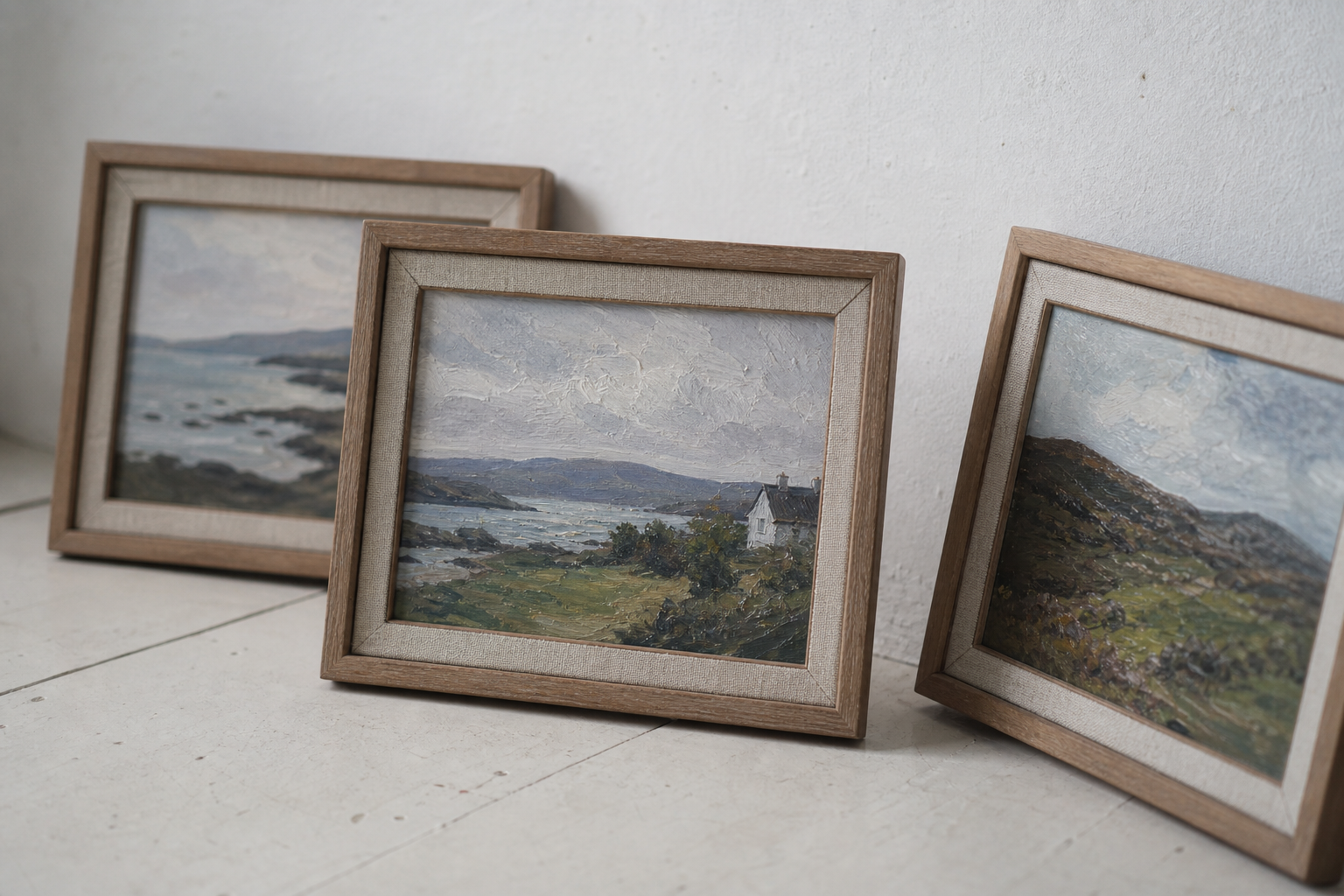
Natural wood frames in oak, ash, or walnut are a popular choice and work well with the earthy, outdoor subject matter common in plein air work. Simple flat or slightly stepped profiles in a natural or lightly stained finish are versatile and pair well with most subjects.
Floating frames are worth considering if you work on panels or boards with clean, painted edges. In a floating frame, the painting sits inside the frame with a small visible gap around it, so the edges of the painting remain visible. This gives a contemporary feel and can work well for painters who finish their edges deliberately.
Traditional gilt or warm gold frames can suit more formal pieces, particularly if you are preparing work for a mixed exhibition where your paintings will hang alongside more conventionally presented work. Use these selectively rather than as a default.
What to avoid: frames that are too deep or too elaborate for the scale of the work. A small 8x10 landscape on a board can be swamped by the wrong profile.
Sizing Your Frame
Frame sizes in the UK follow both imperial and metric conventions. Standard frame sizes are widely available in inches (5x7, 8x10, 10x12, and so on) and their metric equivalents. If you paint to standard sizes, sourcing ready-made frames becomes much simpler.
The awkward one is 6x8 inches, which is a favourite plein air format for good reason. It is compact, fits neatly in a pochade box, and produces a painting that feels complete rather than fragmentary. But 6x8 is not a standard UK frame size. If you work primarily at 6x8, you will need either custom framing or to accept that you are building in a sourcing challenge every time you finish a painting.
Painting to 8x10 instead solves this immediately. If you are just starting to think about framing, it is worth considering whether adjusting your standard panel size would save you significant time and money in the long run.
| Panel Size | Nearest UK Frame Size | Notes |
|---|---|---|
| 5x7 inches | 5x7 or 13x18cm | Widely available ready-made |
| 6x8 inches | Not a standard UK size | Custom or mount to fit |
| 8x10 inches | 8x10 or 20x25cm | Common and easy to source |
| 10x12 inches | 10x12 or 25x30cm | May need custom framing |
| 11x14 inches | 11x14 or 28x35cm | Available from specialist suppliers |
How to Fit and Secure a Painting in a Frame
Fitting Oil Painting Boards
The reversibility of framing matters more than many painters realise. Conservation practice, as set out by the Fine Art Trade Guild, favours methods that allow a painting to be removed from its frame without any damage to the artwork. This matters if you ever exhibit or sell work: a professional framer or gallery will expect it, and it protects the painting if the frame is damaged or needs replacing.
Velcro is the standard solution for fitting rigid boards, and it does the job well. It holds the board firmly, does not require any tools to remove, and causes no damage to the painting surface or the frame.
How to fit an oil painting board into a frame
Check the rebate depth
Measure your board thickness and confirm the frame's rebate is deep enough to accommodate it without the surface sitting proud of the frame edge.
Test the fit dry
Place the board in the frame without fixing it. Check it sits flat, does not rock, and the edges are even. Adjust with thin card shims if needed.
Apply Velcro fixings
Attach self-adhesive Velcro strips to the back of the board and the inside of the frame rebate. This holds the board securely while remaining fully reversible.
Check from the front
Flip the frame over carefully and check the painting is sitting correctly. No light gaps at the edges, surface level with or very slightly below the frame lip.
Fit hanging hardware
Attach D-rings or a mirror plate to the back of the frame, aligned with the centre of gravity. Use appropriate fixings for the frame depth.
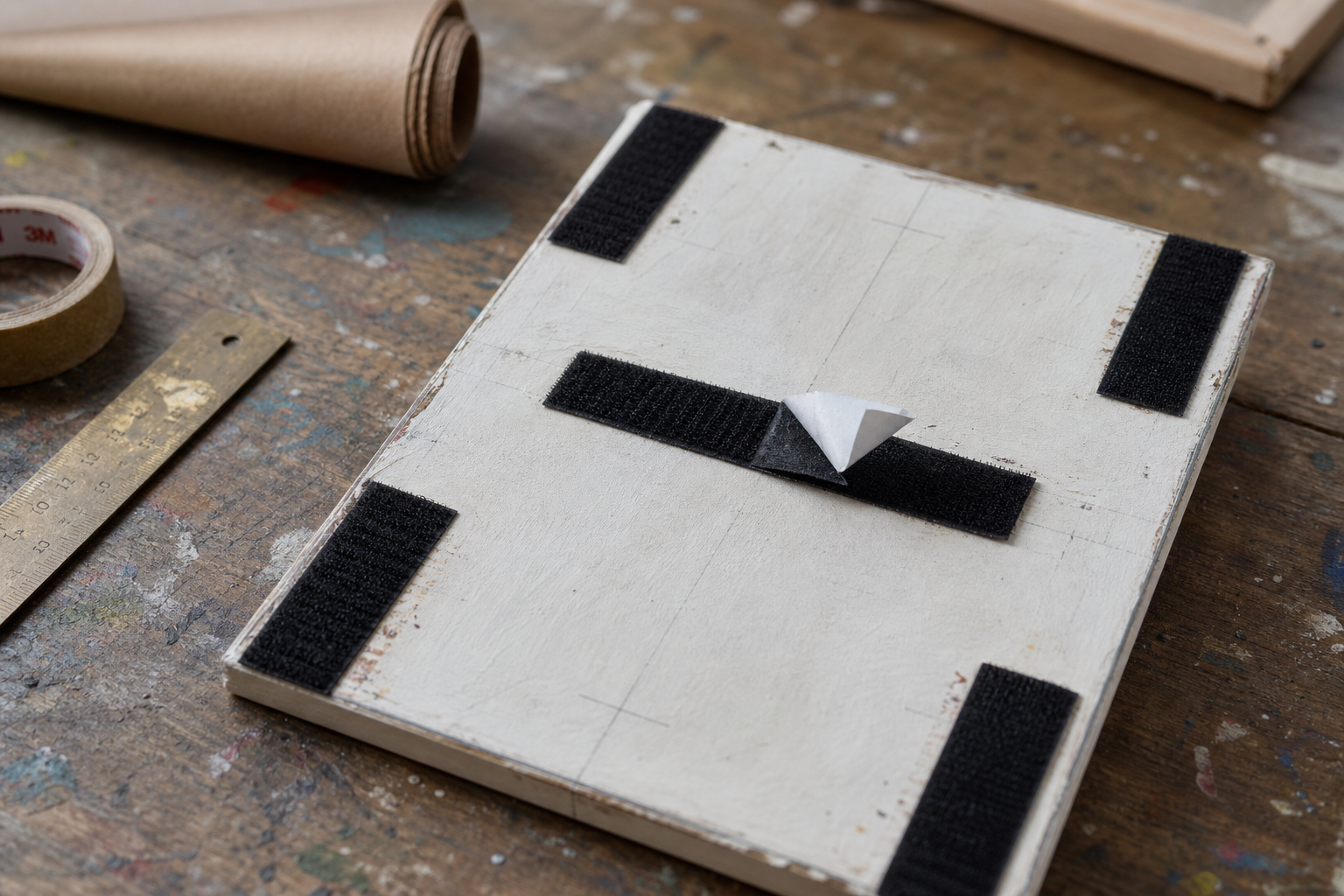
A note on shimming: if your board is slightly smaller than the frame opening, thin strips of mount board cut to length and placed along the inside edges of the rebate will take up the slack and stop the painting shifting. This is far preferable to a loose fit that allows the painting to rattle.
Fitting Stretched Canvas
For stretched canvas, Velcro is not appropriate because the canvas does not sit flat against the rebate in the same way. Instead, use Z-clips (canvas offset clips), which are small metal fixings that hook over the back edge of the stretcher bar and screw into the frame behind. They hold the canvas at the correct depth and can be adjusted to account for different stretcher bar thicknesses.
Z-clips are available from most UK art suppliers. They are straightforward to fit with a small screwdriver and are widely used by professional framers.
Ready-Made, Custom, and DIY: Which Route Should You Take?
Ready-Made Frames
Ready-made frames are the right starting point for most plein air painters. They are cheaper than custom framing, available quickly, and perfectly adequate for studies, home display, and many exhibition contexts.
The limitations are real but manageable. The range of deep rebate ready-made frames in standard UK sizes is narrower than standard frames, and you will not find the full range on the high street. Online specialist suppliers carry a much better selection. If you paint to standard sizes (8x10, 10x12, and similar), ready-made frames will cover almost everything you need.
Starting with ready-made frames
If you are framing plein air studies for the first time, start with ready-made frames in standard sizes. Painting to a consistent panel size (such as 8x10 or 10x12) means you can buy frames in bulk and keep costs manageable.
Custom Framing
Custom framing gives you full control over moulding profile, size, and finish. A professional framer can frame any panel size including the awkward ones, advise on which profile suits the work, and produce a result that is difficult to achieve at home.
It is considerably more expensive than ready-made, but for work you intend to sell, exhibit formally, or give as a serious gift, the investment is worth it. A well-framed painting presents far better than the same work in an ill-fitting ready-made frame.
When looking for a framer, seek out a member of the Fine Art Trade Guild. Guild members follow best-practice standards including reversibility, and you can find registered framers through the Guild's directory at finearttradesguild.co.uk.
When speaking to a framer, tell them the painting is an oil on board or panel, give them the exact dimensions and board thickness, and mention that you want the fixing to be reversible. A good framer will know exactly what to do with that information.
DIY Framing
DIY framing is a realistic option if you are practical, have basic woodworking skills, and are prepared for a learning curve. The results from early attempts will often not match professional work, and that is normal.
To make your own frames from timber moulding you will need a mitre saw or a reliable mitre block and fine-tooth saw, along with corner clamps, wood glue, and pins or V-nails to hold the corners. Timber moulding suitable for picture frames is available from specialist framers who sell to the public, and from some online suppliers.
The honest assessment: DIY framing is worth pursuing if you produce a lot of work and want to keep costs down over time. It is not a quick shortcut. The corner joins in particular take practice to get tight and square. If you are preparing a specific body of work for an exhibition, this is probably not the right time to start learning.
Where to Buy Oil Painting Frames in the UK
Jackson's Art is the most useful starting point for plein air painters looking for ready-made oil painting frames. Their range includes deep rebate options specifically suited to panels and boards, and the product listings generally include clear measurements. Ordering online is straightforward and delivery is reliable.
Ken Bromley carries a good selection of frames alongside their broader art supplies range, and it is worth checking their current stock if Jackson's does not have what you need. The two suppliers between them cover most standard UK frame sizes.
Cass Art is the most accessible high street option if you want to see frames in person before buying. Their range is more limited than the specialist online suppliers, particularly for deep rebate frames, but for standard sizes it is worth a visit if there is a branch near you.
For custom framing, use the Fine Art Trade Guild directory to find a registered framer. Brampton Framing is one Fine Art Trade Guild member with a good reputation among artists, and there will be others local to you. A local framer who can see the actual work in front of them is often the best choice for anything beyond a straightforward standard-size panel.
A Few Finishing Touches Before You Hang
Label your work before you frame it
Write the title, date, medium, and your name on the back of the panel before fitting it into the frame. Once framed, the back of the painting is harder to access, and this information matters if you ever exhibit or sell the work.
Make sure the painting is fully dry. Oil paint dries slowly, and depending on how thickly you paint and what medium you use, a plein air study might feel touch-dry within days but not be fully cured for weeks or months. Framing a painting before it is properly dry risks trapping solvent vapour and, in the worst case, damaging the paint surface if it comes into contact with the frame rebate. If in doubt, give it more time.
Varnishing is a separate decision that some painters make before framing and others leave until later. There are good arguments on both sides, and the right approach depends on your medium and how the work is going to be displayed. If you are planning to varnish, it is generally easier to do so before fitting the painting into the frame.
Labelling the back should happen before the painting goes into the frame. Use a permanent marker or a printed label. Include the title, the date of the painting, the medium (oil on board, or whatever is accurate), your name, and a contact email if the work is going to an exhibition or sale. Once the painting is framed, the back is much harder to access, and this information can genuinely matter.
Hanging hardware: D-rings with picture cord are standard for lighter works. For heavier frames, mirror plates or strap hangers give a more secure fixing. Fit the hardware before hanging, check it is centred on the frame, and use appropriate wall fixings for your wall type. If you are preparing work for an art fair or open exhibition, check the hanging requirements in advance as some venues specify particular hardware or cord types.
FAQ
Frequently Asked Questions
What rebate depth do oil painting frames need for panels and boards?
For rigid boards 3 to 5mm thick, aim for a rebate depth of at least 10 to 12mm. Deep rebate frames with an outside depth of around 29mm or 47mm typically give a usable rebate of 15mm or more.
Can I use ready-made frames for plein air oil paintings?
Yes. Ready-made deep rebate frames in standard sizes like 8x10 and 10x12 are a cost effective start. For nonstandard sizes such as 6x8 you may need custom framing or to mount the panel to a standard frame.
How should I secure an oil painting board inside a frame?
Use self-adhesive Velcro strips on the back of the board and inside the rebate. This holds the painting firmly, is reversible and causes no damage to the paint surface.
How do I fit a stretched canvas into a frame?
Use Z-clips or canvas offset clips that hook over the stretcher bar and screw into the rear of the frame. Z-clips hold the canvas at the correct depth and are widely available from UK art suppliers.
When should I label, varnish and hang my framed work?
Label the back with title, date, medium and contact details before framing. Ensure oil paint is fully dry before framing, and decide if you will varnish before or after framing depending on display plans.
Author

PleinAirPainting Editorial Team
PleinAirPainting.co.uk helps artists paint outdoors with confidence through UK-focused guides, equipment advice, resources and plein air inspiration.