Getting Exhibited: How UK Plein Air Artists Can Show Their Work
A practical roadmap for UK plein air painters to get exhibited. Covers BPAP, open societies, Jackson's events, regional routes and how to prepare an exhibition-ready portfolio.

Key takeaways
- • Plein air exhibitions UK range from selective BPAP shows to open society calls and regional or self‑organised shows.
- • Start with accessible routes: open exhibitions, Jackson's events and regional societies while building a consistent portfolio.
- • Aim for 10–20 cohesive works with consistent presentation and professional photographs before submitting.
- • Match your work to the right society by medium and subject to improve selection chances.
- • Consider small group shows to gain exhibition history and local exposure while you work toward larger opportunities.
There's a particular shift that happens somewhere in your second or third year of painting outdoors. The work is getting stronger, the sessions are more consistent, and you start to wonder whether it deserves to be seen somewhere beyond your studio wall or your Instagram grid. That feeling is worth paying attention to. Wanting to exhibit isn't vanity; it's a sign that your practice has reached a new level of seriousness.
The good news is that plein air exhibitions UK do exist, and there are more routes into them than most outdoor painters realise. The honest news is that the UK plein air exhibition scene is more concentrated than in some other countries, and knowing where to look makes all the difference. A handful of dedicated organisations sit at the centre of things, surrounded by a wider landscape of open exhibitions, regional societies, and self-organised opportunities that are genuinely accessible to painters at an intermediate level.
This article maps every credible route, from the most selective to the most open, so you can work out which ones suit where you are right now and what steps to take next.
Why Exhibition Matters for Plein Air Artists
Showing your work in a gallery context does something that social media simply can't replicate. It forces you to edit honestly: you can't hide behind a good crop or flattering light when a painting is hanging on a wall in front of strangers. That editorial pressure alone tends to improve a practice.
There are practical benefits too. Exhibition history carries weight on an artist statement and bio in a way that follower counts don't. It can open conversations that lead to sales, commissions, and invitations to teach or lead workshops. And there's a community dimension: exhibiting alongside other painters, attending openings, and having your work seen by gallery visitors connects you to a wider world of artists in a way that working outdoors in isolation doesn't.
Perhaps most importantly, committing to a show creates accountability. It gives your painting seasons a purpose and a deadline, and that structure tends to sharpen the work.
The British Plein Air Painters: The UK's Dedicated Home for Outdoor Work
The British Plein Air Painters (BPAP) is the primary dedicated organisation for outdoor painting exhibition in the UK. If you've spent any time looking into plein air exhibitions in this country, you've almost certainly encountered their work. They represent serious, committed outdoor painters and provide the closest thing the UK has to a dedicated plein air gallery programme.
What BPAP Exhibitions Look Like
Past British Plein Air Painters exhibitions have included large London shows at the RWS Gallery, with more than 200 works covering UK landscapes, coast and countryside. That history makes BPAP a useful reference point for painters building an exhibition record. However, the official sources checked in August 2026 do not publish a dated BPAP exhibition schedule for 2026. Treat earlier shows as examples, and verify current dates and venues through BPAP's own website and channels before planning a visit.
How to Work Towards BPAP Membership
BPAP currently says its membership is capped at just under 30 artists and that it is not looking for new members. Membership is therefore a long-term possibility rather than a live application route, even for painters with a strong body of outdoor work.
For now, build experience through the open calls, regional societies and other routes below. Study the work BPAP shows and develop a consistent exhibition record without treating membership as an immediate next step. Recheck britishpleinairpainters.co.uk before acting, because the membership position and any future opportunities may change.
Open Exhibitions and Art Society Calls
For most intermediate painters, open exhibition calls are the most accessible and realistic entry point into the formal exhibition world. These are competitions and open submissions run by established art societies, where any artist can submit work for consideration by a jury. Selection is not guaranteed, but neither is it out of reach for a painter with a developing body of work.
Several major UK societies hold annual open exhibitions that are genuinely welcoming to plein air work:
- Royal Institute of Oil Painters (ROI): Covers exactly the medium most plein air painters work in. Annual open exhibition at the Mall Galleries in London.
- Royal Watercolour Society (RWS): If watercolour is your medium, this is one of the most respected open calls in the country.
- Royal Society of Marine Artists (RSMA): Particularly relevant if your work focuses on coastal and maritime subjects, a natural fit for many plein air painters.
- Society of Wildlife Artists (SWLA): Worth exploring if your outdoor work leans towards natural history subjects.
- Royal Birmingham Society of Artists (RBSA): A strong regional option with national reach, worth investigating if you're based in the Midlands or want to look beyond London.
The submission process is broadly similar across these societies: submit digital images of your work, pay an entry fee (amounts vary; check each society's current guidelines), and wait for a selection notification. Rejection is common and entirely normal. Persistence across multiple years of submissions is how most painters eventually get in.
Finding the Right Call for Your Work
The key is matching your medium, subject matter, and style to the right society. A marine painter should be targeting the RSMA. A watercolourist with a strong landscape practice should look at the RWS. An oil painter with versatile subject matter should start with the ROI. Sending work to the wrong call wastes entry fees and misses the point.
Jackson's Art newsletter is one of the most reliable ways to stay on top of open call notifications in the UK. Sign up and check it regularly; open submission windows often last only a few weeks.
Current Open Calls and Recent Plein Air Event Routes
Jackson's Art has used locations such as Sculpture by the Lakes in Dorset and Scotney Castle in Kent for Plein Air Days. These are examples associated with its 22 October 2024 inaugural announcement, not confirmation that those locations are bookable in 2026. The checked Jackson's information invites artists to follow or register interest in future days, but it does not establish a dated 2026 programme. For live 2026 submission opportunities, use the Mall Galleries open-calls page linked above, which lists current ROI, SWLA and other open or closed calls.
Plein Air Days and paint-outs are primarily shared painting events, not formal gallery exhibitions. They can still be valuable for meeting other painters, comparing approaches and becoming part of the UK plein air community. Keep that benefit separate from the juried exhibition routes elsewhere in this guide, which involve submitting finished work for selection.
A well-run paint-out may also provide access to an interesting location and useful peer contact. The named Jackson's venues are historical examples here, not current booking recommendations.
A useful first step
Jackson's Plein Air Days are open to painters at every level and take place at sites like Sculpture by the Lakes in Dorset and Scotney Castle in Kent. They're worth attending not just for the painting, but for meeting other artists and seeing how your work sits alongside others.
Before travelling, paying an entry fee or arranging accommodation, find a dated event page and confirm the venue, organiser, booking status and terms. Do not rely on an undated schedule or an older announcement as evidence that a day is still running.
Regional Art Societies and Local Gallery Routes
The regional route is consistently underestimated by plein air painters who focus their attention on London-based exhibitions. It shouldn't be. Most regions of the UK have at least one active art society that holds annual open or member exhibitions, and many of these societies are actively welcoming to landscape and outdoor work.
Local authority galleries and arts centres are another underused route. Many run annual open submission shows that accept painting across all subjects and media, with relatively low barriers to entry compared to the major London societies. These shows won't carry the same prestige as the ROI or RWS, but they provide legitimate exhibition credits and, importantly, they put your work in front of a local audience that may be genuinely interested in buying paintings of familiar landscapes.
National Trust and heritage properties are an emerging thread worth watching. Events such as the collaboration between Warwickshire Open Studios and Charlecote Park in 2024 demonstrate that heritage organisations are increasingly interested in plein air painting as both a practical activity and an exhibition opportunity. These kinds of partnerships can offer unusual and atmospheric settings for showing outdoor work, and they're worth researching in your own region.
How to Find Regional Opportunities Near You
Start with Arts Council England's listings (artscouncil.org.uk) or the equivalent body for your nation: Creative Scotland (creativescotland.com) or Arts Council of Wales. Search for "open exhibition" combined with your county or region. Look for regional art societies by name; most have active websites with submission calendars. If you find a society that seems relevant, contact them directly to ask about open submission windows. Most are run by artists and are far more approachable than their formal names might suggest.
Organising Your Own Exhibition or Paint-Out
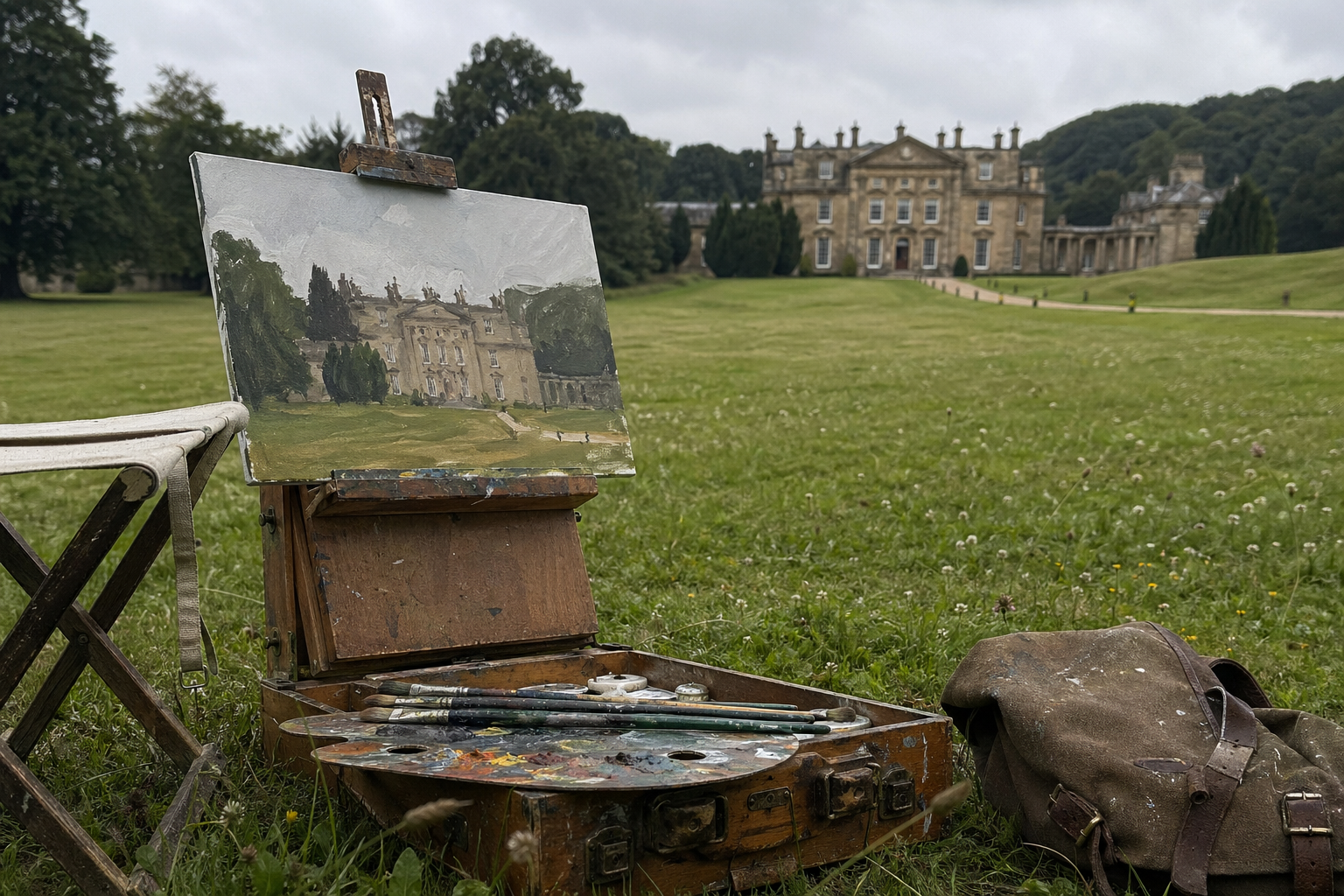
Self-organised shows are a legitimate and well-trodden route that many established painters used early in their careers. A small group exhibition, properly planned and presented, can generate serious attention and provides genuine exhibition history for your CV.
The model is straightforward: gather three to six plein air painters whose work you respect, find a local venue willing to host a show (cafes, community arts centres, independent galleries, and working studios are all worth approaching), and organise the logistics between you. That means venue hire, a shared hanging system, invitations, publicity, and clear pricing for any work for sale.
The effort involved is real and shouldn't be understated. A well-run group show requires planning time, some upfront cost, and good communication between participants. But the benefits are proportionate: you control the timing, the context, and the narrative around the work. A plein air-focused group show in the right venue, well publicised locally, can attract collectors, local press attention, and invitations to future opportunities.
Don't underestimate a well-run group show
A small group exhibition in a local gallery or café, organised properly with good presentation and a clear plein air focus, can attract serious attention. Several well-known UK plein air painters started with exactly this kind of show before moving into larger venues.
Building an Exhibition-Ready Portfolio
Before submitting to any exhibition, it's worth honestly assessing what you have to show. "Exhibition-ready" means more than having a few strong paintings; it means having a coherent body of work that tells a consistent story about your practice.
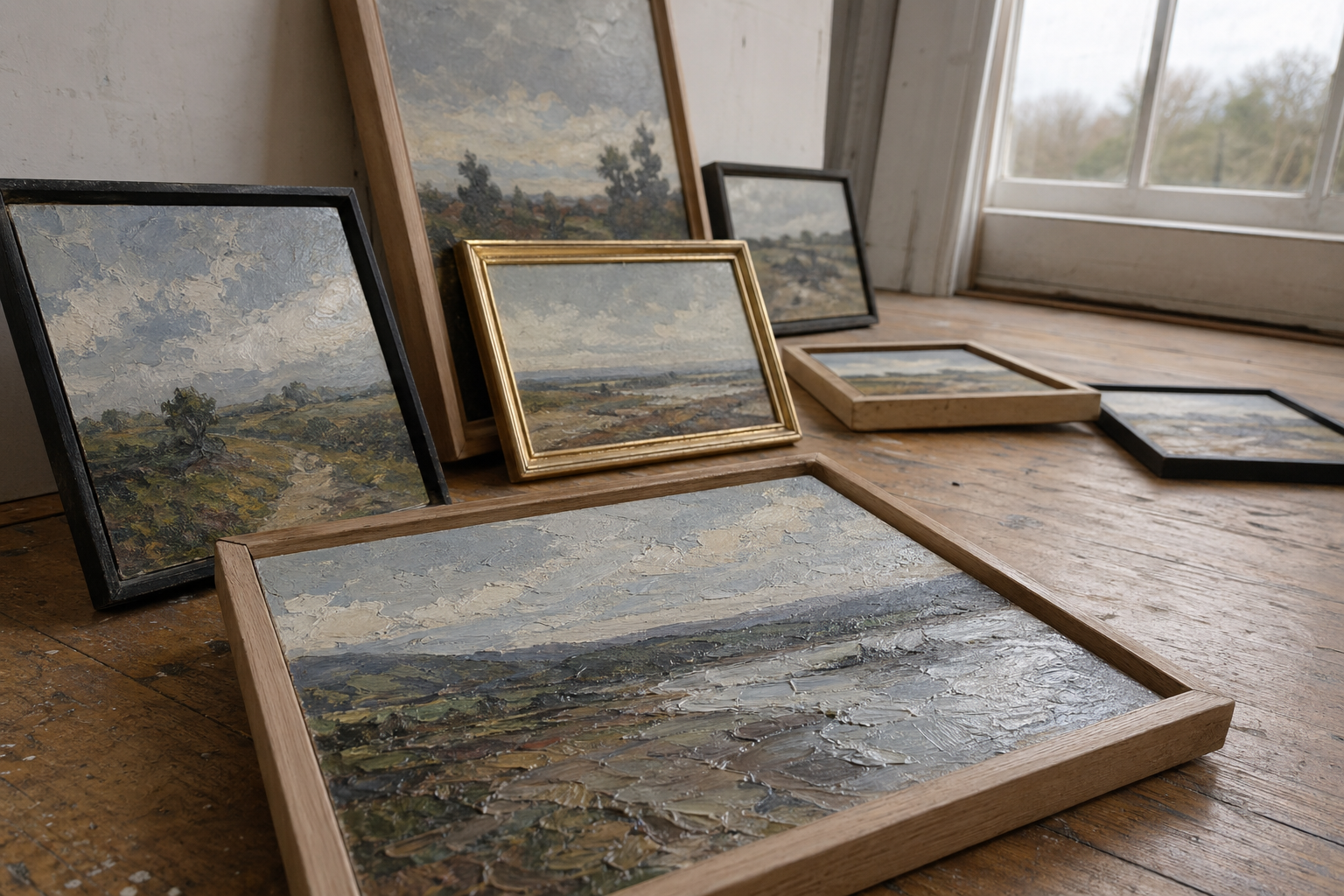
Aim for ten to twenty works that feel connected: painted in similar conditions, exploring a related set of subjects or locations, or sharing a consistent approach to light and mark-making. Individual standout pieces matter less than a sustained body of work that demonstrates you paint regularly and with intention.
Presentation counts. Consistent framing across a body of work makes it look considered and professional. Unframed, inconsistently presented work, however strong the painting underneath, tends to underperform in jury submissions. Photographing your work properly before any submission is essential; poor photographs will undermine good paintings, full stop.
You'll also need a short artist statement for most submissions. Three to five sentences that describe your outdoor practice clearly, why you paint on location, and what subjects or landscapes draw you. Keep it direct and specific; avoid vague language about light and atmosphere that could apply to any painter.
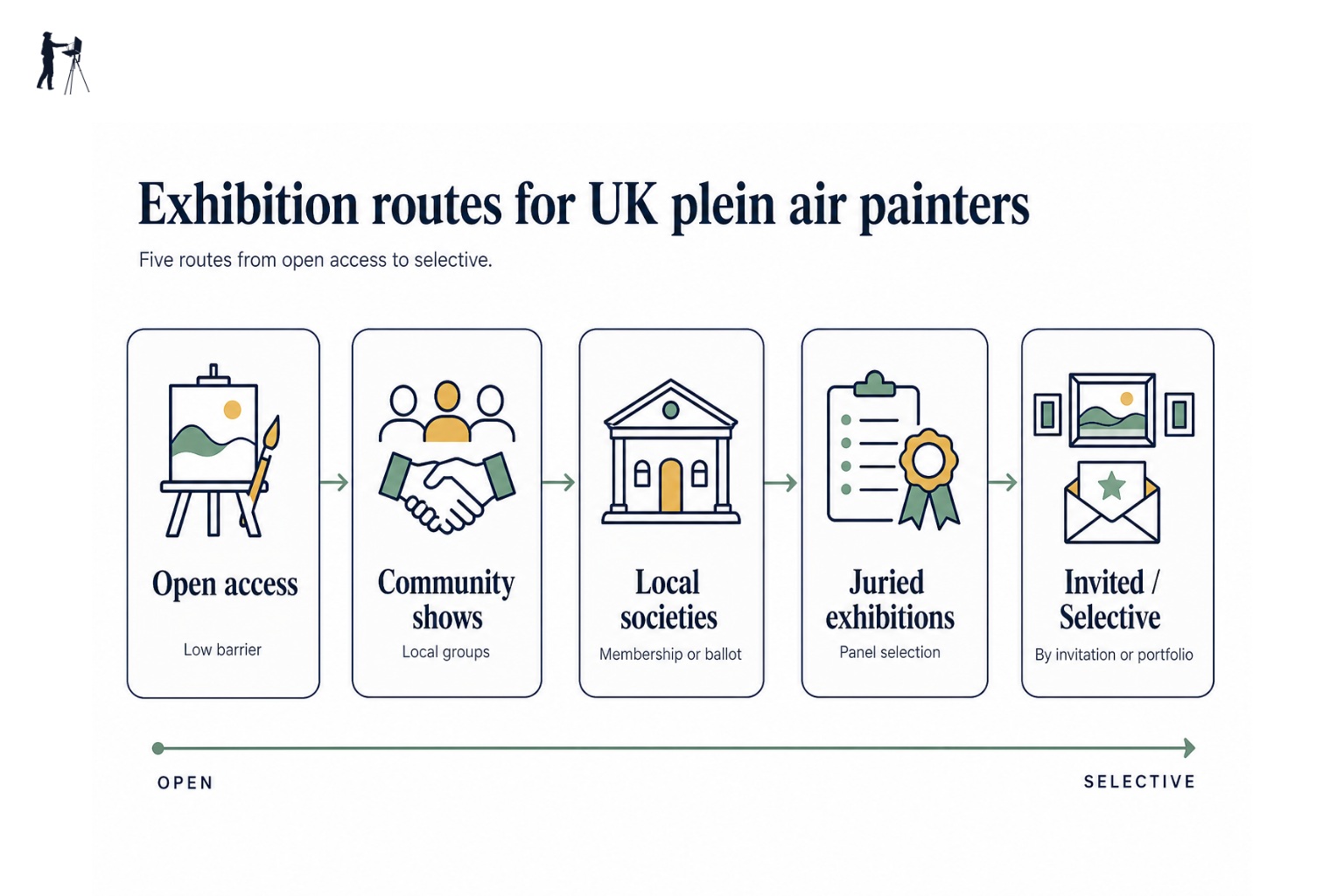
| Route | Accessibility | What it requires | Best suited to |
|---|---|---|---|
| BPAP membership | Selective | Strong existing exhibition history | Experienced painters |
| Open society exhibitions | Moderate | Entry fee, jury selection | Intermediate to advanced |
| Jackson's Plein Air Days | Open | Any skill level, just turn up | All levels |
| Regional art societies | Accessible | Membership or open submission | Beginners to intermediate |
| Self-organised shows | Fully self-directed | Venue, group, planning | Any level, confident artists |
Practical Steps to Take Today
Getting exhibited doesn't happen in a single leap. It happens through a series of small, consistent actions taken over months and years. Here's where to start:
- Follow BPAP on social media and spend time studying the work they show. Note the quality, the consistency, the range of subjects. Let it give you an honest picture of the standard you're working towards.
- Visit the websites of two or three open societies, such as the ROI, RWS, and RSMA, and read their submission guidelines. Note submission windows and entry requirements so they don't catch you off-guard.
- Sign up to the Jackson's Art newsletter for regular open call notifications. This is one of the most practical single steps you can take towards staying informed about exhibition opportunities in the UK.
- Search for your regional art society and find out when their next open submission window opens. If you can't find one easily, contact your local arts council for recommendations.
- Audit your current portfolio. Do you have ten or more strong, cohesive plein air works that feel connected to each other? If not, set that as a target for your next painting season.
- Photograph your best six to ten pieces properly if you haven't already. You can't submit digital images to any open call until you have good photographs of the work.
- Draft a short artist statement of three to five sentences describing your plein air practice. What draws you outdoors? What landscapes do you paint? Why on location? Having this written and ready saves time when submission windows open.
- Consider approaching one or two fellow plein air painters about a small joint show. Even a preliminary conversation can be the first step towards making it happen.
Where to Look for Calls and Upcoming Events
Staying on top of exhibition opportunities requires a few reliable information sources checked regularly:
- britishpleinairpainters.co.uk for BPAP news, exhibition announcements, and membership information
- jacksonsart.com and the Jackson's Art newsletter for plein air event listings and open call notifications
- artscouncil.org.uk (England), creativescotland.com, or the Arts Council of Wales for searchable listings of open exhibitions and funded arts events
- Your regional art society's website, whatever that is in your area; most post submission dates on their homepage or in a dedicated members section
- Instagram hashtags including #pleinairpainting, #ukpleinair, and #pleinairuk for community news, event sharing, and seeing what other painters in the UK are working towards
The landscape of plein air exhibitions in the UK is genuinely navigable once you know the key organisations and how they work. There's no single perfect path, but there are real, accessible steps you can take starting this week. The paintings are already there; the task now is finding them the right wall.
FAQ
Frequently Asked Questions
How do I begin applying to plein air exhibitions UK?
Start with open calls and regional societies, attend events like Jackson's Plein Air Days, build a cohesive portfolio of 10–20 works, photograph them well and have a short artist statement ready.
What is the British Plein Air Painters and how do I approach membership?
BPAP is the UK's primary organisation for outdoor painting. It is selective. Follow their exhibitions, study the work shown, build exhibition credits and check britishpleinairpainters.co.uk for current membership criteria.
Which societies are best for plein air work?
Match subject and medium: ROI for oils, RWS for watercolour, RSMA for marine work, SWLA for wildlife and RBSA for regional reach. Target the society that best fits your practice.
What makes a portfolio exhibition ready?
Aim for a coherent body of 10–20 related works, consistent framing or presentation, high quality photographs and a clear 3–5 sentence artist statement describing your plein air practice.
Can I organise my own plein air exhibition?
Yes. Small group shows in cafes, community galleries or studios are effective. Plan the venue, hanging, publicity and pricing. A well run self‑organised show can lead to sales and future invitations.
Author

PleinAirPainting Editorial Team
PleinAirPainting.co.uk helps artists paint outdoors with confidence through UK-focused guides, equipment advice, resources and plein air inspiration.