UK Plein Air Painting Competitions in 2026: Events Worth Entering
A practical guide to plein air painting competitions UK in 2026: events to enter, what to expect, kit and practice tips, and how to prepare for timed outdoor painting.

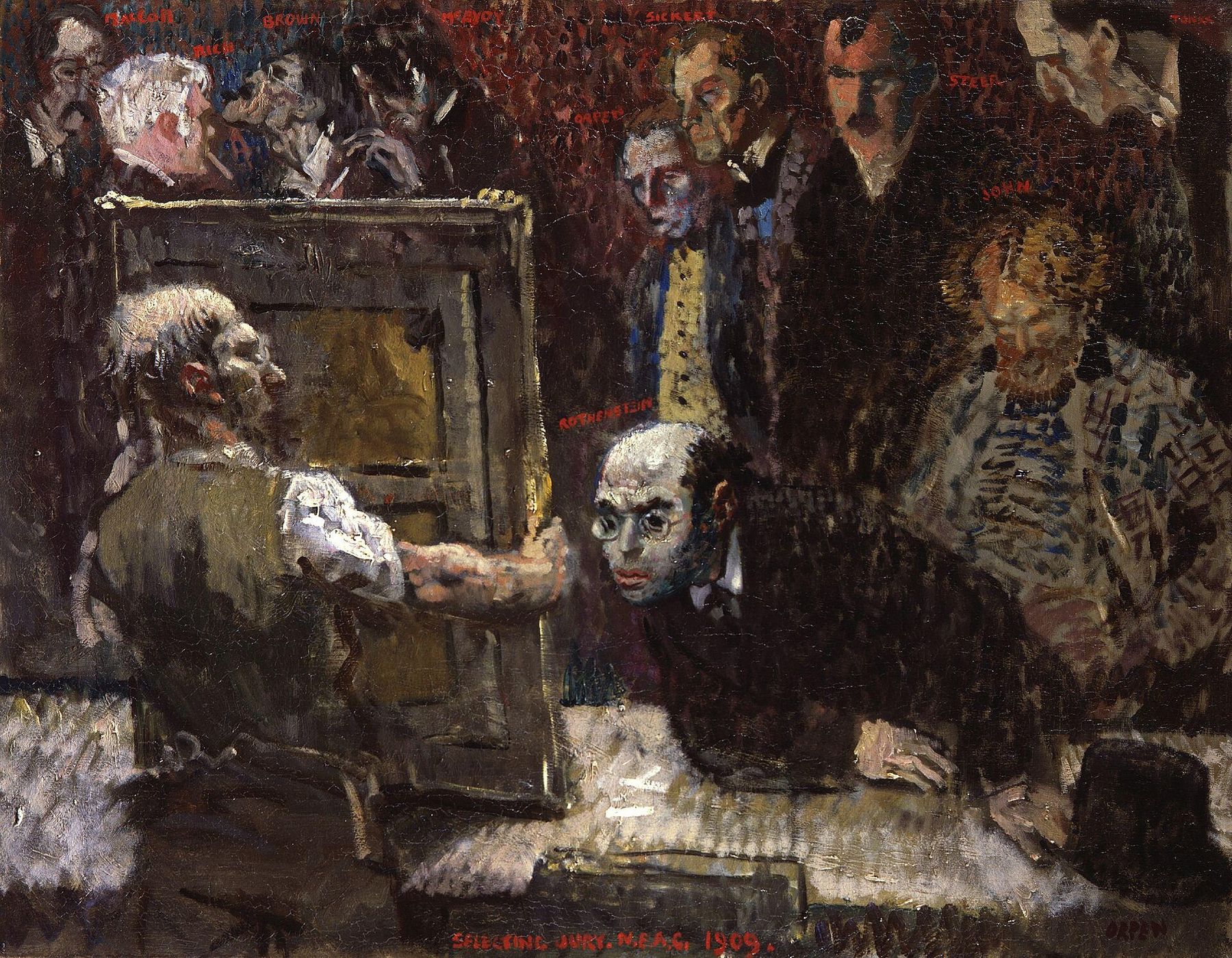
The Selecting Jury of the New English Art Club, 1909 by William Orpen.
Credit: William Orpen; public domain
Key takeaways
- • UK plein air painting competitions are open and welcoming to all levels, with a friendly, social atmosphere.
- • Most events follow a simple format: register, paint within a set area and time, then display works for judging or exhibition.
- • Entry fees are generally modest and prizes focus on recognition, materials and exhibition opportunities.
- • Prepare by simplifying your kit, practising timed studies and arriving early to scout locations and light.
- • The main benefits are artistic discipline, community contact and the experience of finishing a painting on location.
There is something clarifying about painting to a clock. No endless sessions of second-guessing, no retreating to the studio to rework things in comfort. At a plein air painting competition, you arrive, find your spot, and paint. When time is called, the work is done. For many artists, that pressure turns out to be exactly what their practice needed.
UK plein air painting competitions are more accessible than they might sound. Most are not juried entry events requiring a portfolio or professional credentials. They are open to hobbyists, enthusiastic amateurs, and experienced painters alike, and the atmosphere at most events is closer to a friendly gathering than a high-stakes contest. If you have been painting outdoors for a while and feel ready to take the next step, entering a competition is one of the most useful things you can do.
This guide covers UK plein air painting competitions and outdoor painting events worth knowing about in 2026, but event pages move quickly. This July 2026 refresh checks the named events against organiser pages and separates confirmed dates from past events, closed entry windows, and listings that are not currently open to the public. Before you travel, pay a fee, or plan work around an event, use the organiser link and check the current entry terms.
Why Enter a Plein Air Painting Competition?
The appeal of painting to a deadline
A time limit does something to your painting that hours of unhurried practice rarely achieves. You stop fussing. You commit to a composition rather than dithering over it. You mix a colour and put it down because there is no time to second-guess it. Many artists find they make bolder, more decisive marks under competition conditions than they ever do when painting alone.
There is also the matter of the light. Outdoors, the light moves constantly, and a two-to-four-hour window forces you to make choices early and stick with them. That discipline carries back into your everyday practice in ways that are hard to replicate.
What you actually get from entering
Winning is not the main point, and most participants would tell you that honestly. What you get from entering a UK plein air competition includes: the experience of showing your work to an audience outside your immediate circle, the energy of painting alongside other artists, and a finished piece completed under real conditions. Many participants describe the social atmosphere as the highlight of the day, more supportive than competitive, with artists sharing tips and encouragement across the field.
Even a single entry builds confidence in a way that private practice cannot. You learn how you actually perform under a time constraint, and that knowledge is genuinely useful.
What to Expect at a UK Plein Air Competition
How most events work
The format varies slightly between events, but the broad shape is consistent. You arrive at a set location, register, then go out and paint within a defined area and time window, typically two to four hours. At the end of the session, completed works are brought together, displayed, and judged or exhibited. Some events are single-day; others span a weekend with additional talks or informal sessions.
A few events allow preparatory sketches made beforehand, but the finished painting must be completed on location, on the day. Studio reworking after the event is not permitted at most UK plein air competitions.
Entry fees and what they cover
Entry fees for UK outdoor painting events are generally modest. Many fall in the range of free to around £20 to £35, though some larger or more established events may charge slightly more. Fees sometimes include light refreshments, access to a private garden or estate, or a welcome briefing from an organiser or invited artist. Check individual event pages for what is included.
Judging and prizes
Judging criteria vary between events. Some use a panel of professional artists or gallery curators; others use a popular vote from attendees or visitors to a subsequent exhibition. Across most events, judges are looking for a strong sense of light and atmosphere, confident composition, and the ability to capture a place in a limited time. Technical finish matters less than many new entrants expect.
Prizes tend to be a mix of cash awards (often modest), art materials, and exhibition opportunities. The value is in the recognition and the experience, not the prize money.
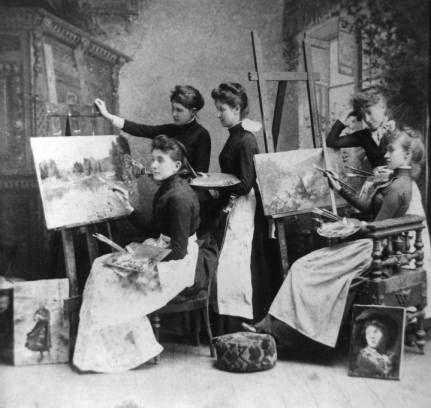
Art class taught by Adelia Armstrong Lutz — public domain.
Wet paint rules matter
Most UK plein air competitions require work to be completed on the day, on location. Check the rules carefully before entering: some allow preparatory sketches, but studio reworking after the event is usually not permitted.
UK Plein Air Painting Competitions to Know in 2026
Plein Air at Delamore, Devon
Held at Delamore Arts in Cornwood on the southern edge of Dartmoor, this is one of the better-established plein air competitions in the UK. The official 2026 listing gave Monday 4 May 2026 as competition day, with a maximum four-hour painting window and advance booking fees for participating artists. That date has now passed, so treat Delamore as a future-year watch item unless the organiser announces another 2026 opportunity. Visit the Delamore Arts listing for updates before planning around the next edition.
Art In The Open, Wexford (Not a UK Competition)
Art In The Open is the major Wexford, Ireland plein air festival, not a UK competition. It appears in searches for plein air events, so it is worth naming clearly rather than treating it as a regional UK option. The official Art In The Open site says the 2026 reception and orientation evening is on 25 July, the first painting day is Sunday 26 July, and artist registration is now closed because the quota has been reached. If you are based in the UK, treat it as a travel event rather than an open UK entry route for 2026.
Rye Art Gallery En Plein Air, East Sussex
This summer event, based in and around the historic town of Rye, is organised by Rye Art Gallery and draws painters to one of East Sussex's most paintable locations. Rye's 2026 En Plein Air open call ran from 10 June to 17 July 2026, and the gallery lists an En Plein Air exhibition preview for Saturday 8 August 2026. If you are reading after the open-call deadline, check the Rye Art Gallery pages for visitor, exhibition, sales, or later submission details rather than assuming entries are still open.
Paint Garstang, Lancashire
Paint Garstang is confirmed for Saturday 5 September 2026, centred on Garstang Arts Centre and the market town around it. The official Paint Garstang page says artists sign in from 9am, have a blank canvas or other non-photographic medium stamped, paint in their chosen location, and return work no later than 4pm for judging and prizes later that afternoon. The entry deadline is Friday 7 August 2026, with a £10 entry fee, and the organisers say entries cannot be accepted on the day.
The Great Broadway Paint-Off, Worcestershire
Broadway, in the Cotswolds, is about as picturesque a setting as UK plein air competitions get: honey-coloured stone, broad greens, and a light that watercolourists and oil painters have been chasing for well over a century. The official Great Broadway Paint-Off 2026 page lists the event for Sunday 7 June 2026 and now marks it as passed and sold out. It ran as a stamped-surface, one-day competition, with artists checking in on the village green and returning work to Lifford Hall by 3:30pm for judging and exhibition. Keep it on your future watchlist, but do not treat it as an enterable 2026 opportunity.
Painswick Rococo Garden Painting Event, Gloucestershire
Painswick Rococo Garden remains a beautiful painting venue, but the 2026 entry status needs careful handling. WTS Collective's current Plein Air Competitions page lists Painswick Rococo Garden for 16 May 2026, 10am to 6pm, with registration now closed and 2026 winners already named. Rococo Garden's earlier announcement also explains that winners from the 2025 competition would be invited to paint seasonally through 2026 as an Artist in Residence programme. Treat Painswick as a completed 2026 competition and a future-year watch item, not an open entry opportunity for the rest of 2026.
| Event | Location | 2026 timing | Current status |
|---|---|---|---|
| Plein Air at Delamore | Devon | 4 May 2026 | Completed; watch organiser for future dates |
| Art In The Open | Wexford, Ireland | 25-26 July 2026 start | Not UK; artist registration closed |
| Rye Art Gallery En Plein Air | East Sussex | 10 June to 17 July open call; 8 August preview | 2026 activity confirmed; entry window passed |
| Paint Garstang | Lancashire | 5 September 2026 | Confirmed; entry deadline 7 August |
| The Great Broadway Paint-Off | Worcestershire | 7 June 2026 | Completed and sold out |
| Painswick Rococo Garden | Gloucestershire | 16 May 2026 | Completed; registration closed |
How to Prepare for Your First Plein Air Competition
Kit and logistics
The single most useful thing you can do before a competition is simplify your kit. If you need fifteen minutes to set up, you are already behind. Work out a streamlined setup you can get ready in under five minutes: a pochade box or small easel, a limited palette, and panels or paper you have already prepared. Arrive early so you have time to scout the site before the clock starts. The light will change; knowing where you want to paint before judging begins makes a real difference.
Pack a lightweight waterproof layer regardless of the forecast. Most UK plein air events proceed in light rain, and being caught underprepared is miserable and distracting.
Practice in time-limited conditions
If you have never painted to a timer, the competition deadline will feel more abrupt than you expect. The solution is to practise the same conditions beforehand. Set a 90-minute window, go outside, and paint a complete study from start to finish without stopping to fiddle or reassess. Do this several times in the weeks leading up to an event and the time pressure on the day becomes much more manageable.
Train for the clock
Set a 90-minute timer and paint a complete study from start to finish without stopping to assess. Do this regularly in the weeks before an event and you will find the competition deadline far less daunting on the day.
What judges typically look for
Most plein air competition judges are not looking for photographic accuracy. They are looking for a painting that captures something true about the light, the atmosphere, and the place. Bold, decisive work that commits to an interpretation of the scene tends to read better than something carefully rendered but lacking energy.
Work the large shapes and key tonal relationships first. If your overall structure and light reading are strong, the detail is secondary. Many new entrants spend the first third of their time fussing over a detail that a judge will barely notice; experienced competitors block in the whole composition early and refine only if time allows.
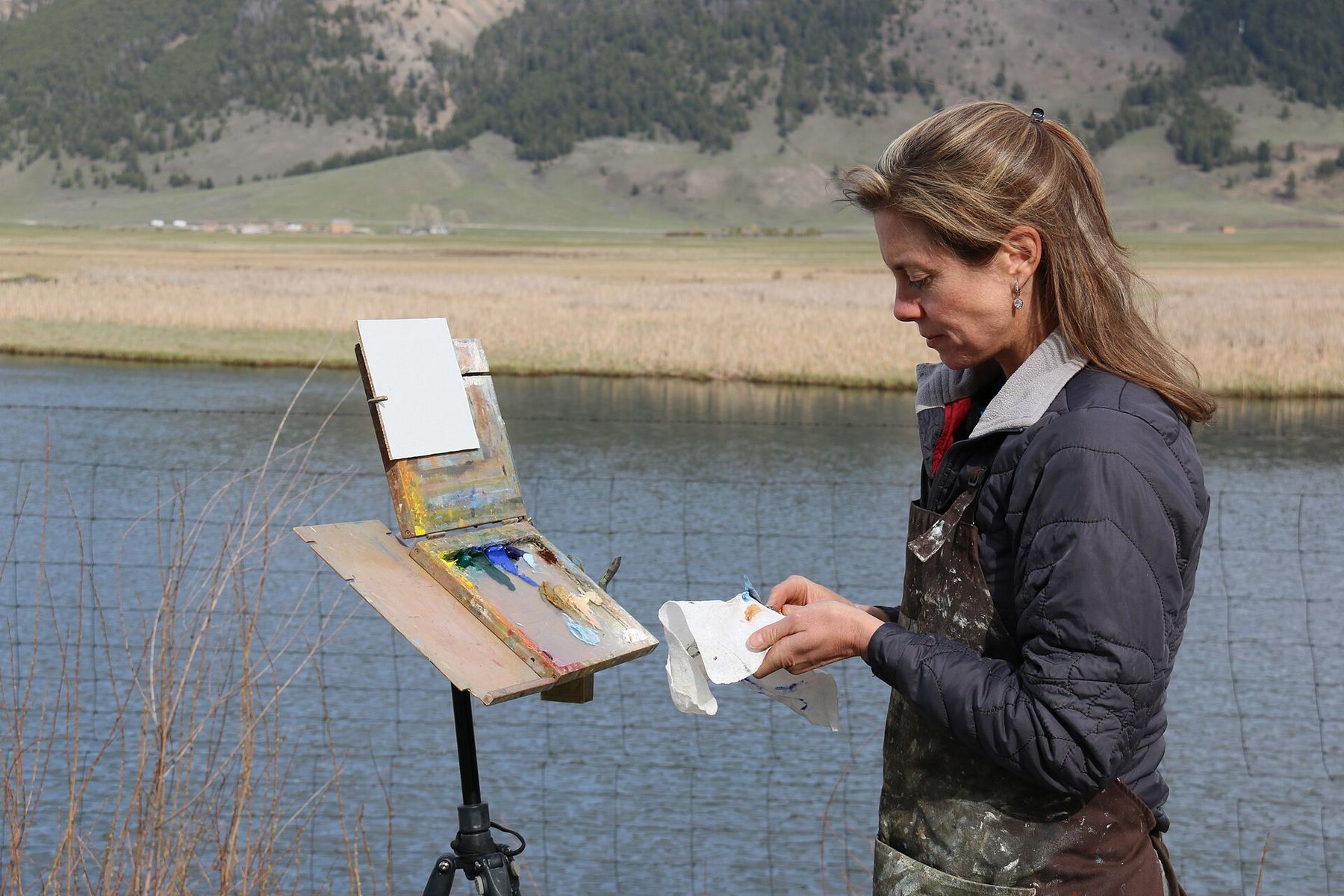
Plein-air painter beside Flat Creek. Photo by Lori Iverson / USFWS — public domain.
Finding More Plein Air Events Near You
The UK plein air scene is smaller than its US equivalent, and many events are organised by galleries, arts centres, gardens, festivals, or local art societies rather than a single national body. That makes this kind of guide useful, but it also means dates can change, entry windows can close, and small events can sell out quietly. Start with the organiser page, then check the organiser's latest social posts or booking platform before paying an entry fee or arranging travel.
The Society of All Artists (SAA) is a useful starting point, with event listings and a broad UK membership. Local art societies, particularly in areas with strong landscape painting traditions (Cornwall, Yorkshire, the Lake District, the Cotswolds), often organise their own outdoor painting days that carry the spirit of a competition even when they are not formally structured as one. County-level open exhibitions frequently include a landscape or outdoor painting category.
Facebook groups for UK plein air painters are worth joining; event announcements often appear there before they make it onto any official listing. Regional galleries, particularly those with a programme tied to local landscape, tend to post outdoor painting events on their social media accounts. If you are new to the community, attending a plein air painting workshop that ends with an informal timed session is a low-pressure way to experience competition conditions before committing to a formal entry.
Plein air painting competitions are not the exclusive territory of professional artists. The UK events in this guide welcome painters at every level, and the experience of entering, finishing a piece on location, and seeing it displayed alongside others' work is genuinely valuable regardless of whether you place. The real gain is the discipline, the community, and the proof to yourself that you can paint under pressure. That is worth far more than any prize.
References and Further Reading
FAQ
Frequently Asked Questions
Do I need to be a professional to enter plein air painting competitions UK?
No. Most UK events welcome hobbyists, enthusiastic amateurs and experienced painters. Check each event's entry rules for any specific eligibility requirements.
Can I finish or rework my painting in the studio after the event?
Usually not. Most competitions require the work to be completed on location on the day. Some allow preparatory sketches but studio reworking is generally prohibited.
What kit should I bring to a timed outdoor competition?
Keep kit simple: a pochade box or small easel, a limited palette, prepared panels or paper, a few brushes, and a lightweight waterproof layer. Aim for a setup you can get ready in under five minutes.
How long are the painting time limits and how should I practise?
Typical windows run two to four hours, though shorter 90-minute studies are useful practice. Regular timed exercises help you learn to block in shapes quickly and commit to decisions.
What do judges look for in plein air competitions?
Judges prioritise sense of light, atmosphere, confident composition and decisive mark making. Technical finish is less important than capturing the place and the moment.
Author

PleinAirPainting Editorial Team
PleinAirPainting.co.uk helps artists paint outdoors with confidence through UK-focused guides, equipment advice, resources and plein air inspiration.