John Constable: The Father of British Plein Air Painting
A guide to Constable's disciplined plein air practice showing how his sky studies and annotated field sketches shaped his studio masterpieces and inform contemporary outdoor painting.

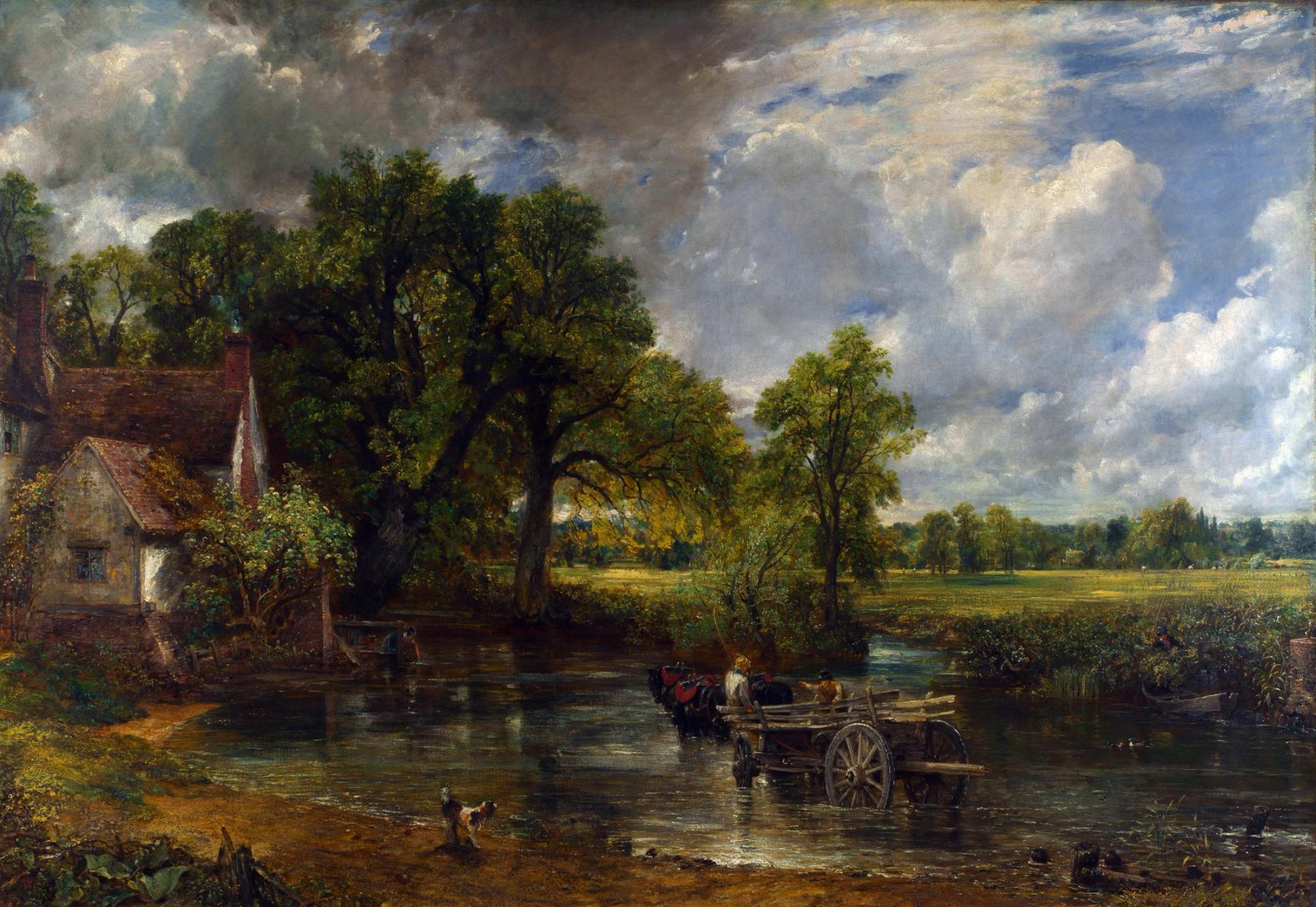
The Hay Wain (1821) by John Constable.
Credit: John Constable; National Gallery, London; Public domain
Key takeaways
- • Constable made systematic outdoor oil studies to record light weather and clouds.
- • He developed skying a focused practice of painting clouds as the primary source of light.
- • Field notes and annotations turned sketches into a usable meteorological reference library.
- • Outdoor studies served as raw material for carefully constructed studio paintings.
- • Modern painters can copy his habits: work small and fast, repeat locations, annotate, and separate study from finished work.
More Than Just The Hay Wain
Most people's first encounter with John Constable is a reproduction. The Hay Wain, printed on a tea towel or framed behind glass in a hotel lobby, a tranquil scene so familiar it has almost stopped being seen. That image, finished, composed, and painted largely in the studio, tells only part of the story.
The fuller picture is of a man sitting in a Suffolk field with a paint box, his hat pulled against the wind, working quickly to catch a specific quality of light before it changed. Or crouching on Hampstead Heath in the early morning, a small canvas propped on his knees, watching cloud formations build and shift over north London. What made John Constable's plein air practice so distinctive was not just its ambition but its discipline. He was not sketching for pleasure. He was conducting systematic research into the behaviour of light, weather, and atmosphere, and he kept at it, season after season, across the better part of three decades.
Getting Outside: John Constable's Plein Air Practice
The Stour Valley: Learning to See
Constable was born in East Bergholt, Suffolk, in 1776, and the landscape of the Stour Valley formed the bedrock of everything he would later do outdoors. He grew up watching the same fields, mills, and stretches of water from childhood, and that intimacy informed his eye before he had any formal training to go with it.
When he returned to the area as a working painter, he was not sightseeing. He made working studies of the water meadows around Flatford, the millponds, the barge-filled river, the specific light that falls across flat Suffolk farmland on a summer morning or a grey October afternoon. These were serious field studies made in oil, sometimes on paper, sometimes on small canvas, carried rolled or flat in a portable box. The materials were chosen for practicality as much as anything else: oil on paper dried reasonably well in the field, could be stored without too much care, and allowed him to work quickly without fussing over permanence.
He returned to the Stour Valley repeatedly across his career. The depth of his understanding of that landscape came directly from painting it in different lights and different seasons, not from memory or imagination, but from sitting in front of it and looking hard.
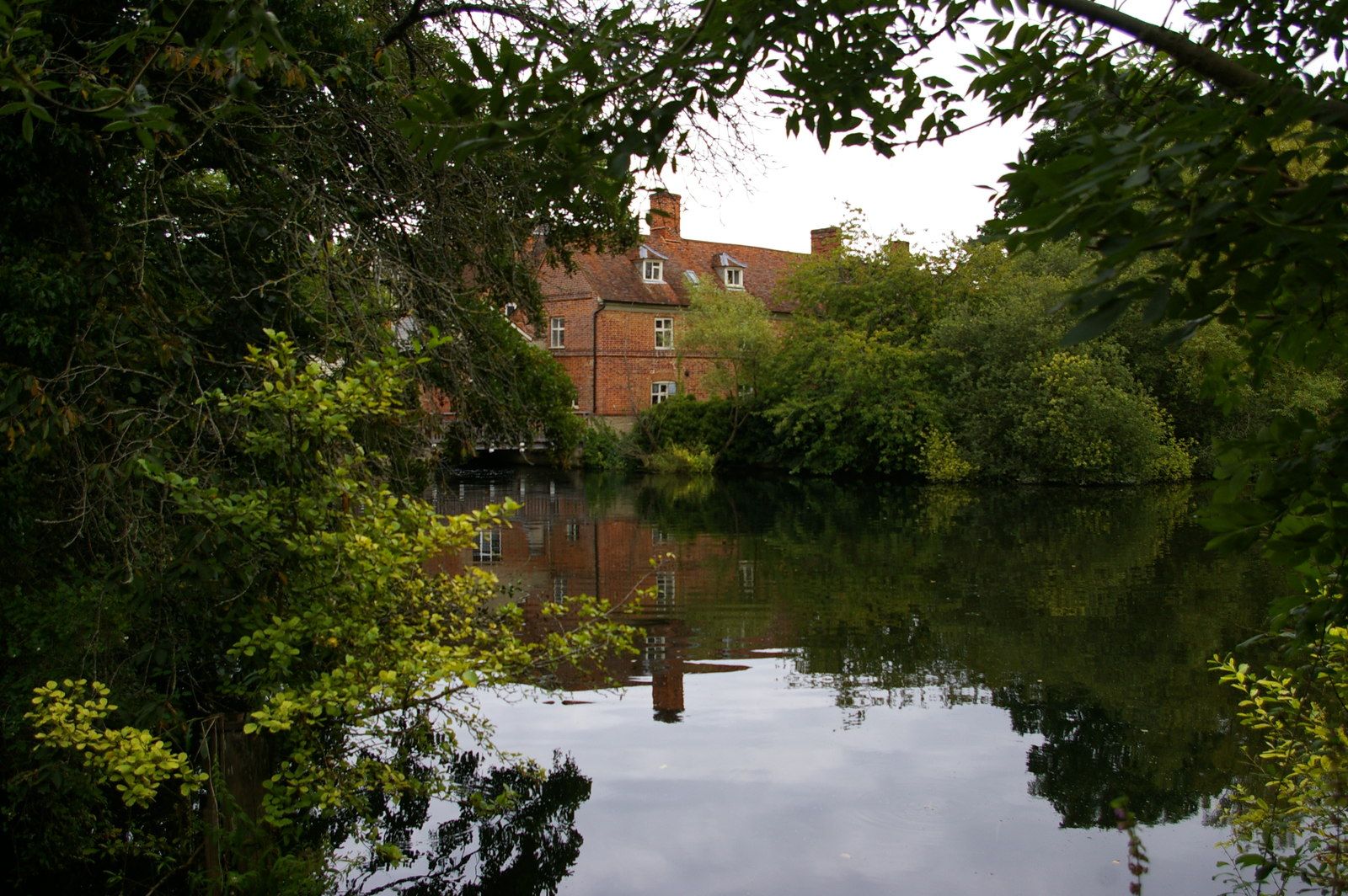
Flatford Mill viewed across the River Stour.
Credit: Christopher Hilton / Geograph Britain and Ireland; CC BY-SA 2.0
Hampstead Heath: A Studio Without Walls
From around 1819, Constable began renting properties in Hampstead, initially for the health of his wife Maria, who suffered from tuberculosis. Hampstead turned out to offer something the Suffolk countryside could not: proximity to London and, more importantly, an elevated open landscape with wide unobstructed sky.
He used the Heath as an outdoor studio throughout the early 1820s, working on it in all weathers, at different times of day, across different seasons. Many of his Hampstead studies are small, rapid, and intensely focused. He was not trying to make paintings that would hang in exhibitions. He was after something specific: a particular cloud formation, a particular quality of light on the ponds, the way the sky looked at ten in the morning with a west wind running.
He often worked seated directly on the ground, his paint box balanced on his knees. The studies he produced this way are some of the freshest, most immediate works he ever made. They were also, in his own lifetime, entirely private. They were not for sale. They were not for showing. They were for looking, learning, and using.
Skying: Constable's Cloud Studies
The word "skying" is Constable's own. He used it to describe his dedicated practice of going out with the sole intention of painting the sky, nothing else, no landscape beneath, no trees to anchor the composition, just clouds, light, and atmosphere.
Between 1821 and 1822, working primarily on Hampstead Heath, he produced more than a hundred known sky studies. These were not casual warm-ups. They were systematic investigations into specific meteorological conditions: the rapid movement of cumulus clouds on a breezy morning, the diffuse grey light of an overcast day, the strange yellow quality of sky before a summer storm, the soft pink of evening breaking through cloud cover.
Constable understood something that painters working purely from imagination could not easily access: that the sky is not background. It is the primary source of light for everything below it. He called it "the chief organ of sentiment" in a landscape. Get the sky wrong, and the landscape below it will feel false regardless of how carefully the rest is painted. Get it right, and everything else falls into place.
His sky studies show an artist working at serious speed. These effects lasted minutes, not hours. A cloud formation that interested him might be entirely different by the time he had mixed his first colour. He had to look, decide fast, and commit to the canvas without second-guessing. That discipline, refined across dozens and dozens of sessions, is what gave his later, larger skies their conviction.
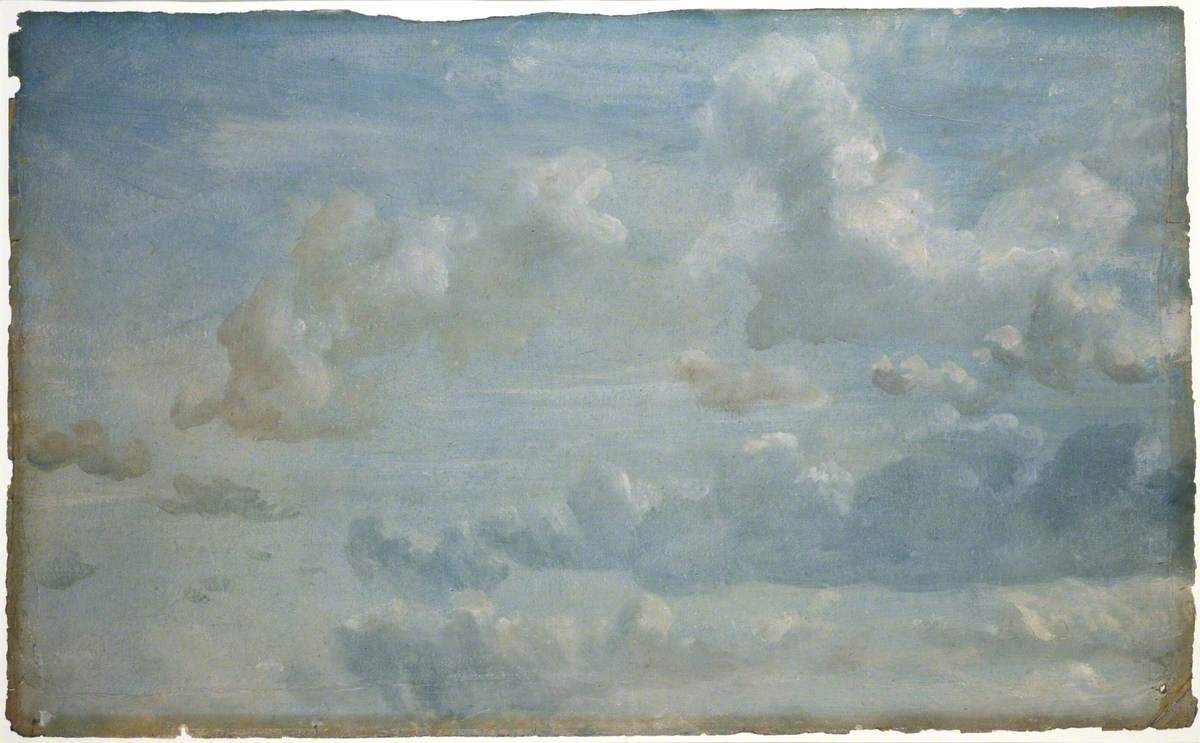
Cloud Study (1822) by John Constable, Courtauld Gallery.
Credit: John Constable / Art UK; Public domain
Try this yourself
On your next outdoor session, paint nothing but the sky for the first fifteen minutes. Work quickly. Don't worry about finishing it. Constable filled hundreds of canvases this way, and the practice sharpened his eye for light and atmosphere more than anything else he did.
Annotating the Weather: His Habit of Recording Conditions
Turn over many of Constable's outdoor studies and you will find writing. Not a title or a date scratched in as an afterthought, but a genuine field note, recording the conditions at the moment the painting was made.
One reads: "5th of September 1822. 10 o'clock, morning, looking south-east, brisk wind at west. Very bright and fresh grey clouds running fast over a yellow bed about half-way in the sky."
That sentence tells you exactly what he was painting and why it interested him. It is also a scientific record: time, location, direction of observation, wind direction, description of the specific cloud formation. Written on the back of a small oil study, it transformed that piece from a sketch into a data point in a larger, ongoing research project.
This was not unusual for him. Many of his Hampstead sky studies carry similar notes. He was building a reference library of atmospheric conditions, a record he could consult when working in the studio on a larger painting and needed to reconstruct not just the visual memory of a particular sky but the meteorological logic behind it.
For anyone painting outdoors in Britain, this habit makes immediate practical sense. Our weather changes so fast and so completely that a sky you painted last Tuesday may be genuinely difficult to recall in any useful detail by the following weekend. A note on the back costs nothing and creates a record that becomes more valuable the longer you keep the practice up.
How Constable recorded his outdoor work
- Date and location
- Written on the back of sketches
- Time of day
- Noted on many cloud studies
- Wind direction and weather
- Recorded on Hampstead Heath sketches
- Session length
- Many studies completed in under an hour
Allowed him to cross-reference studies later
Critical for understanding light direction
Part of his systematic study of skies
Matched the pace of changing conditions
How He Used His Outdoor Sketches
Constable did not show his outdoor studies in public during his lifetime. They were working documents: rough, rapid, and entirely functional. To exhibit them would have been, in his mind, like a writer submitting their notebook for publication.
What he showed were the finished paintings: large, composed, technically refined works made in the studio. His so-called six-footers, the monumental exhibition canvases that included The Hay Wain and The Leaping Horse, were constructed over long periods from many sources. Small outdoor studies provided colour references and atmospheric notes. Compositional sketches worked out the arrangement of forms. And then, unusually, Constable also made full-size oil sketches of several of these major paintings before committing to the final version, a way of testing the whole composition at scale before locking it in.
The small outdoor studies sat at the beginning of that chain. They were observations collected in the field, notes in paint, the raw material from which larger truths were constructed.
The interesting reversal, one that Constable could not have predicted, is that these private working sketches are now among the most admired things he ever made. A modern viewer standing in front of a small Hampstead oil study often feels something more immediate and alive than the same viewer feels in front of one of the grand exhibition pieces. The freshness of direct observation, the mark of a painter working quickly in response to something real in front of them, reads across two hundred years without losing anything.
That quality is not accidental. It is what happens when an artist looks hard at something real and responds to it without flinching.
What Modern Plein Air Painters Can Take From Constable
Constable's methods were not mystical. They were practical, systematic, and learnable. The gap between what he did on Hampstead Heath in 1822 and what a painter does on the same heath today is smaller than it might seem.
A few things stand out as genuinely applicable to a contemporary outdoor practice.
He worked in the same places repeatedly, across seasons and years. His understanding of the Stour Valley and of Hampstead came from accumulated observation, not from a single inspired visit. Returning to the same location in different conditions is not a failure of imagination. It is how genuine knowledge of a landscape is built.
He separated his outdoor work from his finished work. The sketches were sketches. They served a purpose, and that purpose was not to be perfect. Releasing the pressure to finish a piece on location is something many painters struggle with, and Constable's practice is useful evidence that the most rigorous observers can also be the most relaxed about the status of an outdoor study.
And he annotated everything. Date, time, weather, direction. That discipline is available to any painter right now, costs nothing to adopt, and compounds in value over time.
Constable's approach, applied today
Work small and fast
Start with studies no larger than 8x10. Constable regularly worked on postcard-sized pieces. Small formats force decisions and keep pace with changing light.
Annotate your work
Write the date, time, location, and weather conditions on the back of every study. It sounds simple, but it builds a reference library of light and atmosphere over time.
Dedicate sessions to skies
Go out with the sole intention of painting the sky. No landscape, no buildings. Just clouds, light, and atmosphere. Constable called this skying, and he treated it as serious study.
Separate observation from finished work
Let your outdoor sketches be sketches. Use them as colour notes and compositional references, not as pieces you feel pressure to finish on location.
Where to Paint in Constable's Footsteps
Constable's key outdoor locations are all accessible to painters today, and each one still offers something worth painting.
Dedham Vale, straddling the Suffolk and Essex border, is designated an Area of Outstanding Natural Beauty. The footpath network through the Stour Valley is well maintained and opens up views across the river meadows and farmland that Constable returned to throughout his career. This is working agricultural landscape, quieter and less manicured than a garden or park, with the kind of light that rewards patience.
Flatford itself is managed by the National Trust and is open to visitors. The mill, the river, the lock: the physical structures Constable painted are still there, recognisable if you stand in the right place with his paintings in mind. It is worth visiting early on a weekday if you want painting time without crowds.
Hampstead Heath is free to access, managed by the City of London Corporation, and remains one of the best places in London to study moving skies. Its elevated position gives wide, open sightlines in several directions, and the weather over the heath can be dramatically changeable over the course of a morning, exactly the conditions Constable found so productive. For London-based painters, it is an ideal location for dedicated sky sessions.
Brighton beach, where Constable made marine studies during the 1820s, offers a different quality of light entirely: low, flat, and wide, with the particular luminosity that comes from a large expanse of water and an unobstructed horizon.
| Location | County | What draws painters there |
|---|---|---|
| Dedham Vale | Suffolk/Essex border | The original Constable Country, Stour Valley views |
| Flatford | Suffolk | Flatford Mill, the scene of The Hay Wain study |
| Hampstead Heath | North London | Open skies, varied weather, accessible for London-based painters |
| Brighton beach | East Sussex | Constable made marine studies here in the 1820s |
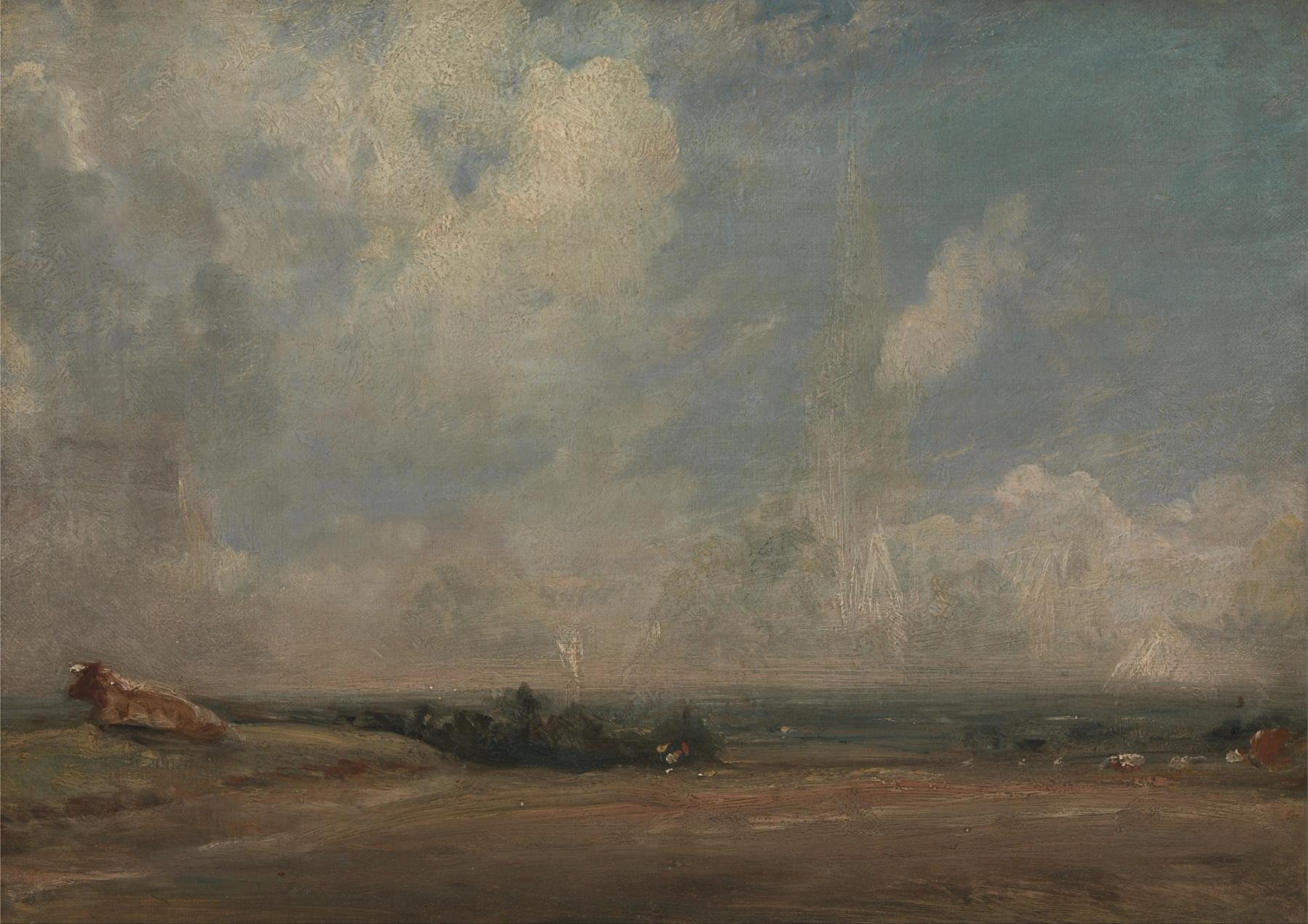
A View from Hampstead Heath (c. 1825) by John Constable.
Credit: John Constable; Google Cultural Institute; Public domain
A Tradition Worth Painting Into
It would be easy to mythologise Constable, to treat him as a genius operating in a category apart from the rest of us. But the detail of how he actually worked resists that framing. He sat on the ground in the wind and rain. He worked small and fast because changing light gave him no other option. He wrote notes on the backs of his sketches because he knew his memory was fallible. He went back to the same places again and again because that is how you learn a landscape rather than just visiting it.
It is worth acknowledging, honestly, that the line between his outdoor work and his studio work was not always fixed. Some of what we call his oil sketches may have been refined or revisited indoors. The Constable oil sketches we admire for their spontaneity did not all emerge in a single unbroken session outdoors. But his commitment to direct observation as the foundation of his practice was genuine and central. Without the field work, the studio paintings would not exist in the form they do.
He was not working alone in this either. The Barbizon painters in France were developing related approaches, and when Constable exhibited at the Paris Salon in 1824, his work made a strong impression on painters there. The development of outdoor painting in the nineteenth century was a broad movement, not a solo invention. What Constable contributed to it, particularly through his systematic study of skies and his insistence on observation over convention, was distinctive and substantial.
But the most useful thing about him, for a painter sitting on Hampstead Heath today with a small canvas and a paint box, is simpler than any of that. He was there first. He sat in the same wind, watched the same clouds build and shift across the same open sky, and made something of it. When you set up on the heath and start to paint, you are doing something he did, in the same place, for the same reasons. That continuity is not a small thing. It is a tradition, and it runs directly from his paint box to yours.
Get outside. The sky is not the same as it was an hour ago.
FAQ
Frequently Asked Questions
What does John Constable plein air mean?
It refers to Constable's disciplined practice of painting outdoors in places like the Stour Valley and Hampstead Heath to record light, weather, and atmosphere directly in oil studies.
What is "skying" and why did Constable do it?
Skying was Constable's term for painting the sky alone as a focused study. He treated clouds and atmosphere as the primary source of light and made rapid studies to capture fleeting conditions.
How did Constable use his outdoor sketches in finished paintings?
He used small field studies as colour and atmospheric references, combined them with compositional sketches and full scale oil trials in the studio to build his large exhibition canvases.
What practical habits from Constable can modern plein air painters adopt?
Work small and fast, return to the same locations across seasons, dedicate sessions to the sky, annotate date time and weather on studies, and treat outdoor work as research rather than finished pieces.
Where can I paint in Constable's footsteps today?
Key sites are Dedham Vale and Flatford in Suffolk, Hampstead Heath in London for sky studies, and Brighton beach for marine light.
Author

PleinAirPainting Editorial Team
PleinAirPainting.co.uk helps artists paint outdoors with confidence through UK-focused guides, equipment advice, resources and plein air inspiration.