How the Impressionists Changed Outdoor Painting Forever
The Impressionists made plein air painting central to modern art by taking paint into the landscape, using new materials and fast techniques to record specific moments of light.

Key takeaways
- • Painting outdoors was once impractical until portable paint tubes and lighter field easels arrived in the mid 1800s.
- • British precursors like Constable and Turner and the Barbizon painters helped prepare the ground for French Impressionists.
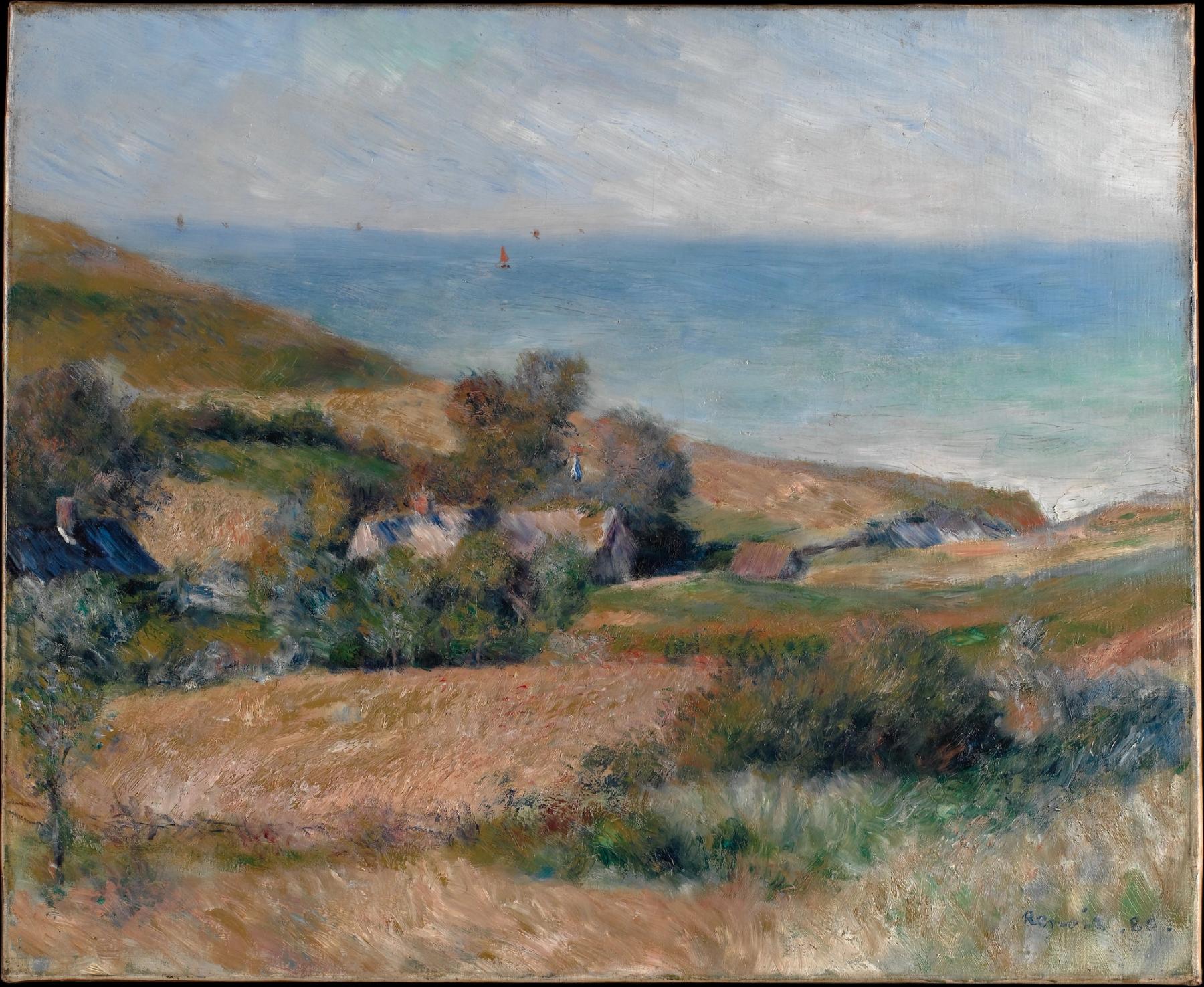
- • Monet, Renoir, Sisley and Bazille took plein air seriously, developing fast, alla prima methods to catch fleeting light.
- • New pigments and a focus on coloured shadows and broken brushwork created the luminous Impressionist palette.
- • The plein air impulse endures as a commitment to direct observation and recording a precise moment of light.
Picture four young men leaving Paris on an early morning in the 1860s, easels under their arms, paint boxes banging against their hips, squinting into a light that no studio lamp could ever replicate. They are heading for the forest. They are going to paint what they actually see. The story of the Impressionists and plein air painting is, at its heart, a story about that impulse: the refusal to accept a secondhand version of the world when the real one is right there, shimmering and shifting and impossible to fake. What happened when these painters stepped outside did not just change their own work. It changed what painting could be, and it set in motion a tradition that reaches forward, unbroken, to every artist setting up an easel outdoors today.
Before the Impressionists: Painting Outdoors Was Almost Impossible
It is easy to look back at Impressionism and assume that painting outdoors was simply a natural thing that artists eventually got around to. It was not. For most of the history of oil painting, working outside in any sustained way was practically out of the question. The equipment was too heavy, too fragile, and too demanding to prepare for a field or riverbank to be a viable studio.
The academic tradition reinforced this. The Académie des Beaux-Arts, the institution that dominated French art for centuries, placed landscape painting near the bottom of a strict hierarchy of subject matter. History painting, religious scenes, mythological subjects: these were the serious genres. Landscape was something you filled in around the edges. The idea that an artist might set up permanently outdoors to paint the sky over a hayfield, and call that finished work, would have seemed not just unconventional but almost incoherent.
So when painters did work outside, it was in a limited and preparatory way. They made pencil sketches, watercolour notes, rapid compositional drawings. These were reference material for the real work, which was completed in the studio under controlled light, over days or weeks, with the benefit of ground pigments mixed carefully by hand. The outdoors was a source of raw material, not a place to make art.
The Problem with Paint
The practical barrier was paint itself. Before the 1840s, oil paint was not something you bought in a shop and opened. It was something you made. Pigments arrived as dry powders and had to be ground and mixed with linseed oil by hand, using a muller and glass slab, until you had a smooth, workable paste. This process was skilled, time-consuming, and messy. It was done in the studio, at a workbench, as a preparation for painting, not as part of the act of painting itself.
You could not grind pigments in a field. Even if you could, the mixed paint needed to be stored in something; typically an animal bladder tied shut at the top, which you punctured with a pin to squeeze out paint and then resealed. These bladders dried out, split, leaked, and degraded. Carrying a working palette of colours to an outdoor location was a serious undertaking with a high likelihood of practical failure. The medium simply was not portable.
Enter the Paint Tube
In 1841, an American portrait painter named John Goffe Rand changed everything with an invention that sounds almost comically mundane: the collapsible tin paint tube. His idea was straightforward. Pre-mix the paint, seal it in a small metal tube with a crimped end, and you have a portable, reliable supply of colour that stays fresh until you open it, and can be resealed afterwards.
The significance of this was enormous. Suddenly a painter could carry a complete palette into any landscape, in any weather, and have paint ready to use the moment they arrived. No grinding. No bladders. No lengthy preparation. Just open the tube, squeeze, and paint.
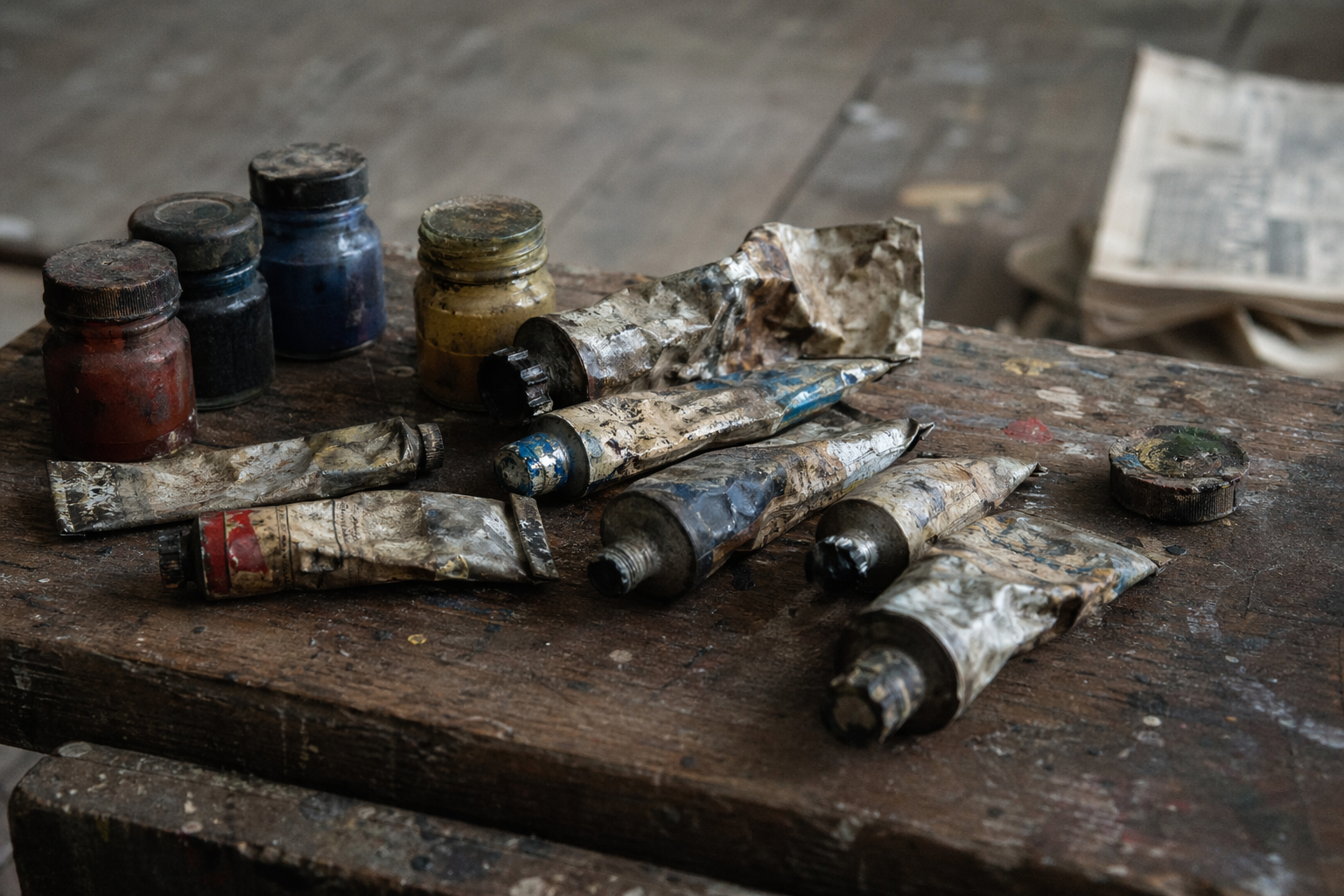
The quote most often associated with this moment is attributed to Pierre-Auguste Renoir, who reportedly said that without paints in tubes there would have been no Impressionism, no Cézanne, no Picasso, no modern art as we know it. The precise provenance of that quote is debated, and it may have been simplified or paraphrased over time, but the underlying point is widely accepted: the tube was the enabling technology without which the Impressionist experiment outdoors could not have happened. Around the same time, lightweight portable field easels were becoming more widely available, completing the basic kit that made sustained outdoor painting a realistic proposition for the first time.
The British Thread: Constable, Turner, and the Seeds of Change
The story of Impressionism is usually told as a French story, and it is predominantly that. But British readers have a genuine and specific stake in it, because the painters who most directly prepared the ground for what happened in France were working in Suffolk and on the Thames decades before Monet and his friends ever picked up a paint tube.
John Constable was doing something genuinely unusual in the early 1810s. He was making oil sketches outdoors, small studies on board or canvas, painted directly in front of the landscape he was looking at. These were not finished exhibition pictures; he still completed his large canvases in the studio. But the outdoor oil sketches were among the earliest sustained examples of that medium being used with any seriousness in the open air, and they show an attention to transient light, to cloud shadows moving across fields, to the wetness of the air after rain, that was simply not present in the academic tradition.
Constable was also very clear about what he was doing and why. He believed painting should come from direct observation, not from inherited rules about how landscapes ought to look. He studied the sky systematically, made notes on the back of his cloud studies about wind direction and weather conditions, and argued that landscape painting deserved the same seriousness of attention as any other subject.
The French painters encountered this at the 1824 Paris Salon, where The Hay Wain and several other Constable works were shown and won a gold medal. The story goes that Eugène Delacroix, seeing Constable's work, went back to repaint sections of his own Massacre at Chios before the Salon closed, reworking the colour to match the freshness he saw in the English pictures. The impact on the Barbizon School painters, particularly Camille Corot and Théodore Rousseau, was more gradual but equally significant. From the 1830s onwards they were working regularly in the Fontainebleau Forest southeast of Paris, painting directly from nature with a seriousness of intent that Constable had helped legitimise. They became the direct bridge between his practice and the painters who would follow them into the same forest twenty years later.
Turner’s influence on French painting is harder to pin down precisely. His atmospheric looseness and his willingness to dissolve solid form in light and weather were noticed, and Monet later claimed to have studied him carefully during visits to London. But Turner’s route to those effects ran partly through imagination and studio work, which makes the connection less direct. His importance is more atmospheric than technical, a permission to dissolve rather than a method for doing so.
The point is not to claim that Britain invented Impressionism. The point is that the revolution did not appear from nowhere. It was built on foundations that owed a significant and often underappreciated debt to English artists who had already started asking the same questions, even if they had not yet found all the answers.
Four Friends, a Paris Studio, and a Walk into the Forest
In 1862, four young painters found themselves sharing a studio in Paris under the instruction of the Swiss academic painter Charles Gleyre. Their names were Claude Monet, Pierre-Auguste Renoir, Alfred Sisley, and Frédéric Bazille. Gleyre was a competent and well-regarded teacher, but his approach was rooted firmly in the conventions the four friends found increasingly stifling: idealised forms, mythological subjects, the patient accumulation of finish. Renoir later recalled Gleyre looking at one of his studies and commenting that a painter should work for glory, not for personal amusement. It was not the kind of thing that made Renoir want to stay.
The four left together and headed for Fontainebleau Forest, following the trail the Barbizon painters had already worn. There they painted with a freedom and directness that their academic training had no room for. They worked fast, responded to what was actually in front of them, and began developing both a shared sensibility and the individual voices that would later distinguish them from one another.
Bazille is the least remembered of the group today, largely because he died before Impressionism had properly coalesced. A tall, generous Montpellier-born painter from a wealthy family, he was in many ways the financial and emotional anchor of the group in those early years, supporting Monet in particular during periods of serious poverty. His own painting showed enormous promise; loose, light-filled, modern in its subjects and its approach to outdoor space. In November 1870, during the Franco-Prussian War, he was killed in action near Beaune-la-Rolande. He was twenty-eight years old. The exhibition that would define Impressionism for history was still four years away, and he never saw it.
Berthe Morisot, who joined the circle through her friendship with Édouard Manet in the late 1860s, is another figure whose contribution popular accounts tend to understate. She was a committed outdoor painter, technically sophisticated and artistically courageous, and one of only a handful of women who exhibited in all but one of the Impressionist exhibitions. Her paintings of domestic gardens, parks, and coastal light are among the most genuinely plein air works the movement produced.
What They Saw That No One Had Painted Before
What captivated these painters outdoors was not simply the landscape itself but the quality of light falling on it, and how that quality changed from moment to moment. Light outdoors is fundamentally unlike light in a studio. It is brighter, for one thing, often far brighter than any artificial source could manage. But more interesting to the Impressionists was its instability.
A cloud crosses the sun and the colour of a stone wall shifts. The shadow of a tree on a path is not simply a darker version of the path; it is a different colour altogether, often carrying blue or violet where the lit areas read as warm gold or cream. Water catches light from every surface around it and multiplies it, breaking it into fragments. The sky at ten o'clock is not the sky at noon, and neither is the same sky as the one at four.
These were not things you could observe in a studio and then paint from memory. They required being there, in the light, looking directly at what was happening, and working fast enough to catch it before it changed. Academic painting, with its emphasis on cumulative finish over many sessions, was structurally incapable of producing this. Plein air painting was not just a preference. For what these painters were trying to do, it was a necessity.
The Risk They Were Taking
None of this came easily or cheaply. The Académie's Salon was the primary mechanism by which French painters established reputations, found buyers, and made a living. Rejection from the Salon, or acceptance only on unfavourable terms, could mean financial ruin. The Impressionists were rejected regularly, and when they exhibited, the critical response was frequently savage.
The breaking point came in 1874. Unable to get their work shown at the Salon on acceptable terms, a group of them hired the studio of the photographer Nadar on the Boulevard des Capucines and held their own independent exhibition. Monet showed a loosely painted harbour scene titled Impression, Sunrise, dated 1872, a work of misty colour and rapid notation in which the sun's reflection on the water is recorded in a handful of orange brushstrokes.
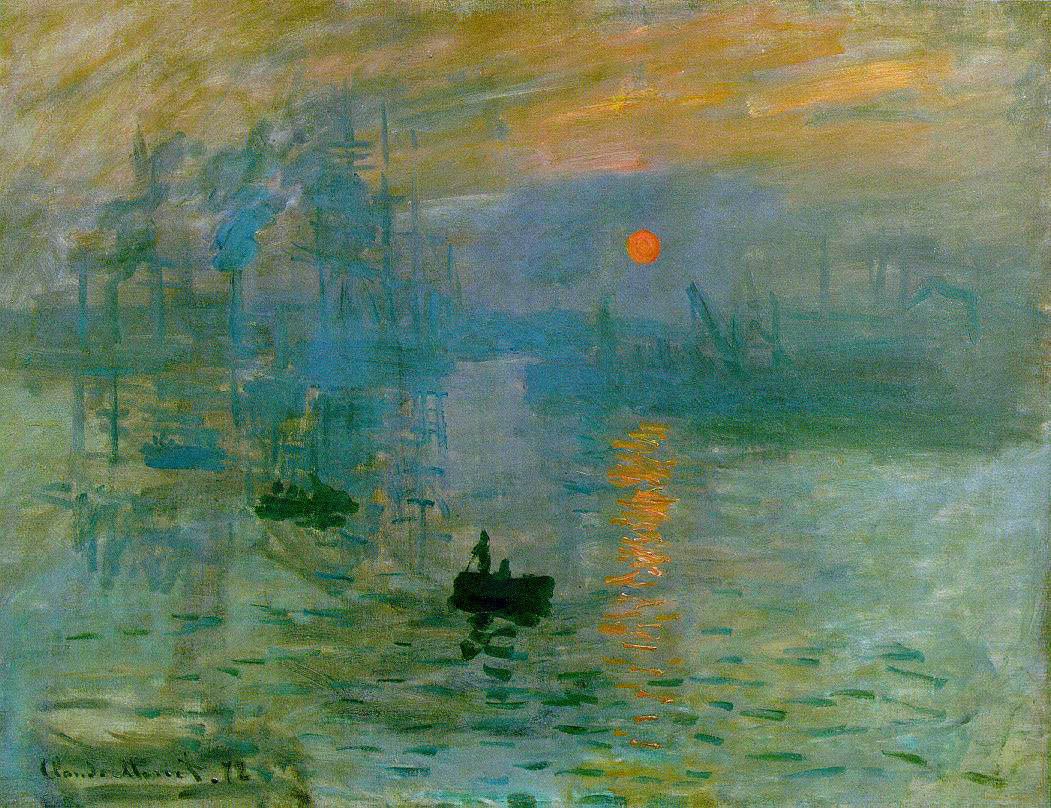
Claude Monet, Impression, soleil levant, 1872. by Claude Monet — Wikimedia Commons; Public domain.
The critic Louis Leroy, writing in the satirical magazine Le Charivari, used the title mockingly. These painters, he wrote, were not artists but mere impressionists, making sketches and calling them finished pictures. The name stuck, and the painters eventually accepted it. But the commercial and critical reception at that first exhibition was largely hostile, and genuine mainstream success did not come until the 1880s, when the group had already been working for nearly two decades. What they did in those years took real nerve.
Why Sunlight Changed Everything About How They Painted
The practical consequences of working in real outdoor light shaped Impressionist painting technique in ways that were often misunderstood at the time, and are still sometimes described as purely stylistic choices. They were not. They were logical responses to what outdoor light actually does and what working quickly under it actually demands.
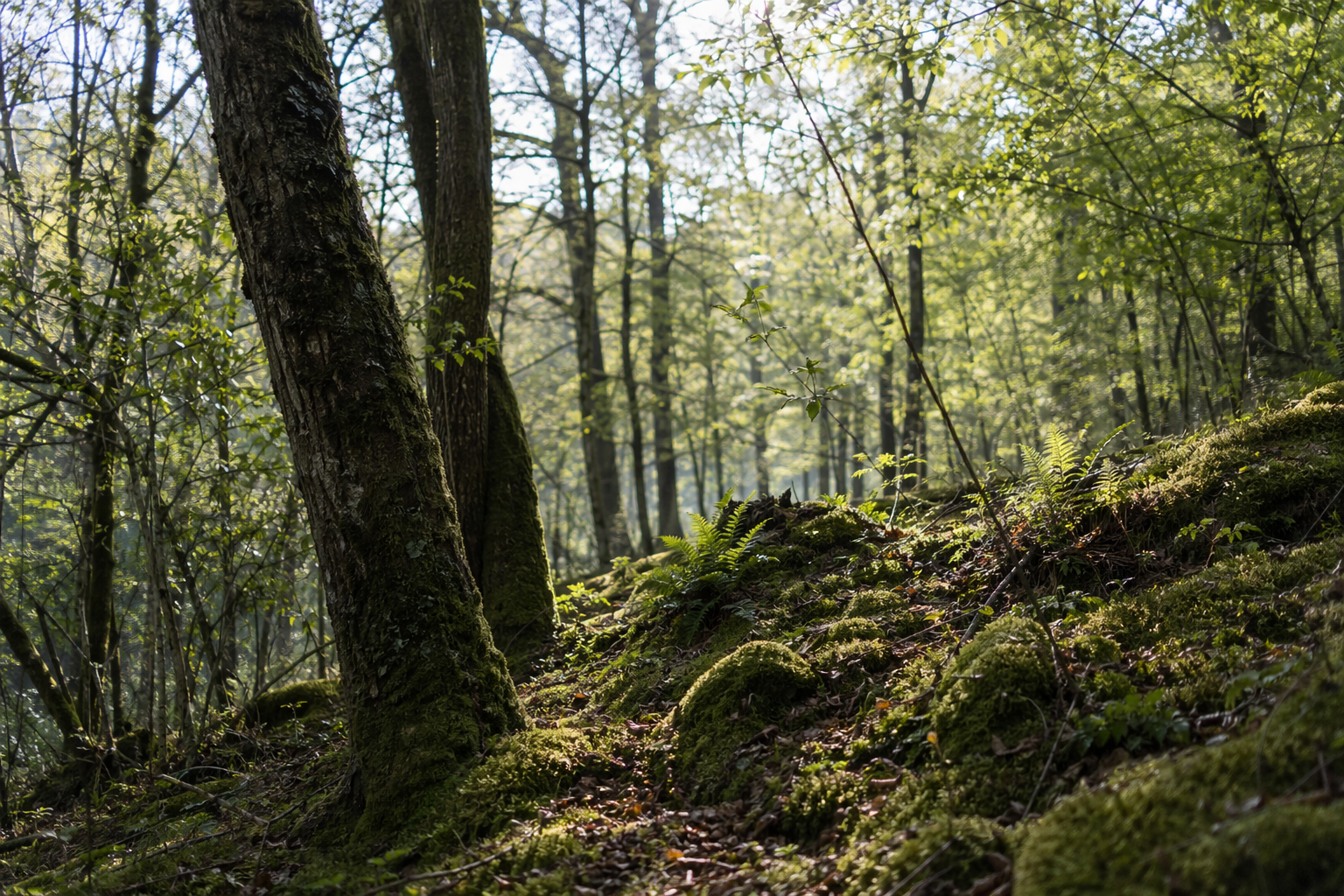
Shadows carry colour. This sounds simple but it contradicts centuries of studio convention, in which shadows were produced by mixing a darker version of the local colour, usually adding black or brown. Outdoors, particularly in bright sunlight, the shadow side of an object is lit by reflected blue sky, while the lit side is warmed by direct sunlight. The result is a temperature contrast that gives Impressionist paintings their characteristic vibrancy, what looks at first like exaggeration is actually closer to observation.
Light moves. If you are painting a specific moment of light, a low sun on a river, the shadow of a cloud crossing a hill, the pink tinge of morning on a white wall, you have perhaps an hour, possibly less, before the conditions have changed enough to invalidate what you are doing. This enforces speed, and speed produces visible brushwork. The broken, energetic surface of an Impressionist canvas is not a stylistic affectation. It is the trace of someone working as fast as they could to catch something that was already leaving.
Working wet-into-wet, completing a canvas in a single session rather than building up layers over days, was the natural response to these demands. The alla prima approach, as this method is called, became the dominant mode for serious plein air work in the Impressionist tradition and remains so today.
The practical response to all of this was a new kind of mark, and a new understanding of what a finished painting could look like. Academic critics looked at the Impressionists' canvases and saw incompleteness, sketches presented as pictures. What they were actually looking at was a different definition of finished: not the smooth, accumulated surface of studio work, but the honest record of a direct encounter with a specific moment of light.
New Pigments, New Possibilities
The paint tube solved the portability problem, but the 19th century also transformed what paint could do in terms of colour. A wave of new synthetic pigments made available in the early and mid 1800s gave painters access to chromatic intensities that simply had not existed before.
Cobalt blue, available from 1802, was cleaner and more stable than earlier blue pigments such as smalt or natural ultramarine, which was ground from lapis lazuli and prohibitively expensive. Chrome yellow arrived in the early 1800s, offering a sharp, intense yellow, though it was prone to darkening over time. Cadmium yellow gradually replaced it from the 1840s and proved more permanent. Viridian, a transparent cool green based on hydrated chromium oxide, became available from the 1850s and gave painters a green that could be used in thin glazes or mixed with confidence. Cerulean blue, introduced in the 1860s, was ideal for clear summer skies.
Together, these pigments made the Impressionist palette not just portable but genuinely more powerful than anything available to painters a generation earlier. The range, the intensity, and the optical behaviour of these colours, particularly when placed next to one another on the canvas rather than blended smoothly, gave Impressionist paintings their characteristic luminosity. This was not magic or genius alone. It was also chemistry, and the right moment in the history of materials.
Impressionist Plein Air Painting Techniques
Stripped of the art historical narrative, what the Impressionists actually did outdoors was fairly systematic. Monet in particular became almost scientific about it. His series paintings, the haystacks, the poplars, the Rouen Cathedral facade, the water lilies, were produced by returning to the same spot at the same time of day, often working on several canvases simultaneously and rotating between them as the light shifted. This was a way of managing what plein air painting cannot control: time.
For most sessions, the method was simpler. Arrive at the motif, establish a rapid tonal structure, then work as directly and decisively as possible, building up colour notes in response to what was observed. The instinct was not to perfect but to capture: to get down the essential character of the light while that character still existed.
The subjects they chose rewarded this approach. Water, which reflects and fragments light rather than simply receiving it. Haystacks, which change colour with the angle of the sun. Poplars, which shimmer and blur in any breeze. Cathedral stone, which in different lights reads as gold, silver, blue, or violet. These were not arbitrary choices. They were subjects that justified the outdoor approach by doing things that no studio arrangement could imitate.
What you share with Monet
Every time you set up outside and work quickly to catch the light before it shifts, you are doing exactly what the Impressionists were doing. The impulse to capture a specific moment of light is at the heart of plein air painting, and it is as alive now as it was in 1870.
The British Response: From Cornwall to the New English Art Club
Impressionist ideas did not arrive in Britain all at once or through a single door. They filtered through in the 1870s and 1880s as British painters visited Paris, saw the work in progress, and brought something of it back with them.
The New English Art Club, founded in 1886, was a direct institutional response. Formed by painters who felt the Royal Academy had grown too conservative and too closed, the club explicitly looked to French plein air practice as an alternative model. Among its founders and early exhibitors were artists who had studied in Paris and returned convinced that direct observation outdoors was the future.
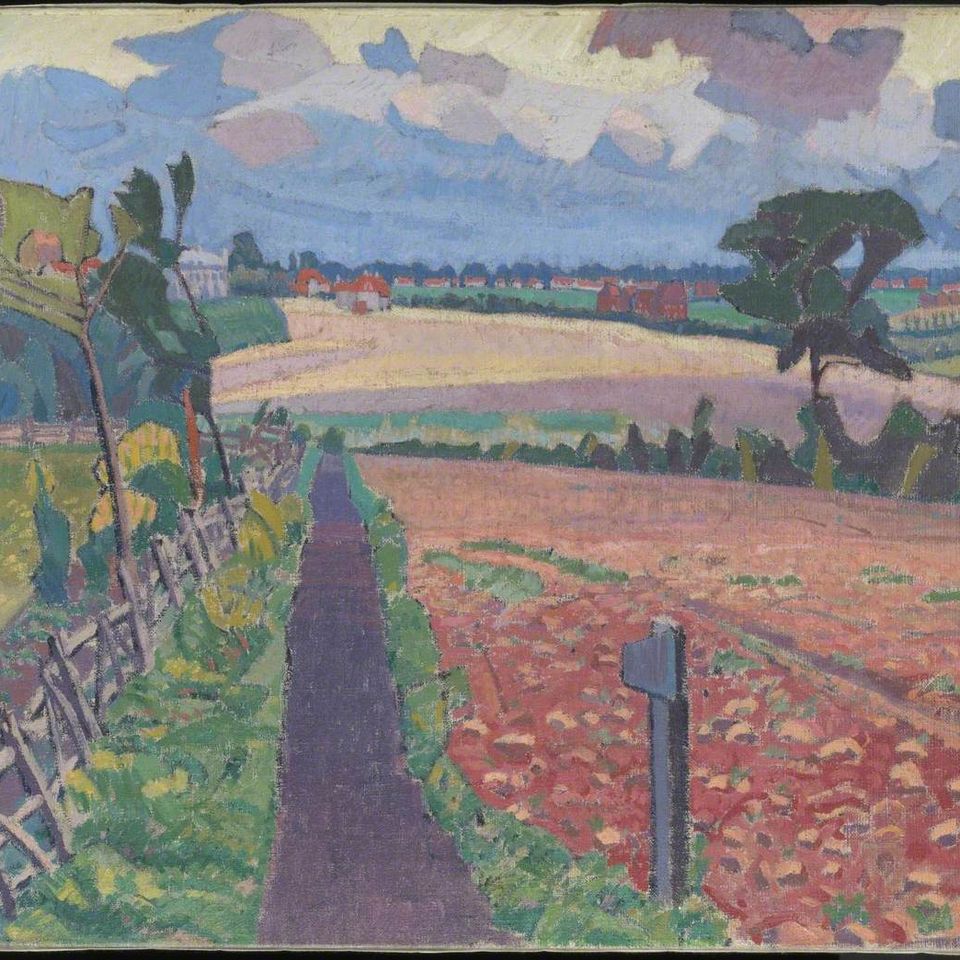
Philip Wilson Steer is the painter most often placed at the centre of British Impressionism. His beach scenes from Walberswick and Southwold in the late 1880s and early 1890s are among the most overtly Impressionist works in British art: loose, light-filled, painted quickly in front of the subject, with a confidence in broken colour and visible brushwork that aligned him clearly with the French painters he admired.
In Cornwall, the Newlyn School took outdoor painting in a somewhat different direction. Stanhope Forbes, Walter Langley, and their contemporaries were committed plein air painters, working directly from observed life in the fishing villages around Penzance. Their concern was less with chromatic intensity and broken colour than with authentic observation, getting the light and the life right without idealising or sentimentalising either. George Clausen, who had studied in Paris and knew the French work closely, brought a more directly Impressionist sensibility to rural British subjects, painting farmworkers and country landscapes with a lightness of touch and a freshness of colour that owed an obvious debt to what had happened across the Channel.
These painters matter to the story because they show that Impressionism was not something British artists merely watched from a distance. They absorbed it, argued with it, and reshaped it in response to their own landscapes and concerns. The plein air tradition in Britain today runs through them as much as it runs through Monet and Sisley.
What Impressionist Plein Air Painting Means for Artists Today
The Impressionists' decision to paint outdoors was not simply about where they stood with their easels. It was a commitment to a particular kind of truth: the truth of direct observation over received convention, of what they actually saw over what they were supposed to see. That commitment is what connects them, across a hundred and fifty years, to anyone painting outside today.
It is worth being specific about what this means in practice. When the Impressionists rejected the studio model, they were not just rejecting a location; they were rejecting the idea that art should be assembled from generalised knowledge and inherited formulas. They insisted on the particular: this light, at this time of day, on this specific surface. That insistence is the engine of plein air painting in any era.
The tradition that runs from Constable's cloud studies through the Barbizon painters to the four friends from Gleyre's studio, then forward through Wilson Steer and the Newlyn painters to the present, is a tradition built on exactly that commitment. Direct observation as a discipline and a philosophy, not just a technique.
Understanding where this practice comes from can genuinely change how you approach your own painting outdoors. Not because you should paint like Monet, imitate his palette or his brushwork as a style to adopt, but because knowing why he painted the way he did gives you a clearer sense of what you are actually trying to do when you set up outside. You are not just making a picture of a landscape. You are attempting something precise and difficult: to record a specific quality of light at a specific moment, honestly, from observation. The Impressionists were the painters who established that this was worth doing and showed, through years of rejection and poverty and the occasional brilliant canvas, that it was possible.
That is the tradition you are part of every time you open your paint box and look up at the sky.
FAQ
Frequently Asked Questions
What does 'Impressionists plein air painting' mean?
It refers to the practice of painting outdoors adopted by Impressionist artists to record the changing effects of natural light and colour directly from observation.
Why were paint tubes so important to plein air painting?
Collapsible tin paint tubes, invented in 1841, made pre mixed oil colour portable and reliable. They removed the need to grind pigments in the field and enabled sustained outdoor sessions.
Which artists and movements led to Impressionist plein air work?
Key figures include Monet, Renoir, Sisley, Bazille and Morisot in France, with important precursors like Constable and Turner in Britain and the Barbizon painters around Fontainebleau.
How did painting outside change the artists' techniques?
Working outdoors forced speed and working wet into wet, visible brushwork, and the use of broken colour to capture shifting light and coloured shadows rather than studio mixtures.
Why does plein air practice still matter for artists today?
It is a discipline of direct observation that trains painters to see and record a specific moment of light. The approach remains central to capturing atmosphere and colour honestly.
Author

PleinAirPainting Editorial Team
PleinAirPainting.co.uk helps artists paint outdoors with confidence through UK-focused guides, equipment advice, resources and plein air inspiration.