Gouache Plein Air Painting: A Practical Guide for Outdoor Work
Practical tips for gouache plein air painting in the UK. Learn kit selection, drying and layering habits, paper choices, and safe storage for studies.

Key takeaways
- • Gouache is ideal outdoors for its portability, opacity for corrections, and matte surface that suits overcast UK light.
- • Use a small palette of four to five colours plus titanium white and 300 gsm cold pressed paper or a bound sketchbook.
- • Let layers dry fully to avoid lifting and mix darks slightly richer because gouache dries lighter and duller.
- • Follow a short repeatable process: thumbnail, block in midtones, lock key values, refine selectively, and add accents last.
- • Store studies flat, interleave with glassine, and frame behind glass; test any fixative on a sample first.
Gouache plein air painting has become one of the most popular choices for UK artists heading outside with a sketchbook, and it's not hard to see why. The medium sits in a genuinely useful position: more forgiving than watercolour when the light shifts unexpectedly, less cumbersome than oils when you're hauling kit up a coastal path or setting up quietly in a city square. If you've already spent time painting outdoors and you're wondering whether gouache might suit your practice, or if you've tried it and found the results frustrating, this guide is aimed squarely at you.
What follows is a practical treatment of how gouache actually behaves in outdoor conditions, how to set up a compact and workable kit, and how to build a repeatable painting process that holds up on a grey Tuesday in October as well as a clear summer morning.
Why Gouache Works So Well Outdoors
Compared with the other portable plein air mediums, gouache occupies a distinctive position. Watercolour gives you beautiful atmospheric effects but limits your ability to correct: once a passage has dried, your options narrow sharply. Oils allow rich, fully editable surfaces but bring heavier kit and slower drying. Gouache sits between them, offering real opacity for corrections alongside a setup that fits in a small bag.
There's also something specific about British painting conditions that suits gouache particularly well. Its matte, non-reflective surface makes value judgements easier on overcast days, which are, of course, the norm rather than the exception across most of the UK. Glare on a varnished oil panel or a glossy acrylic surface can throw your eye off; gouache gives you a clean, consistent reading of your values even in changeable light.
It also works with water only. No solvents, no fumes, no complex cleanup at the end of a session. That simplicity matters when you're packing up in a coastal car park in November.
| Medium | Portability | Editability | UK weather suitability | Best for outdoors |
|---|---|---|---|---|
| Gouache | Very compact; water only | High; opaque layers | Good; matte surface helps in grey light | Studies, urban scenes, value planning |
| Watercolour | Very compact; pans ideal | Low; corrections limited | Good; buckling on light paper in damp | Sketchbook work, subtle atmosphere |
| Acrylic / acryla gouache | Compact; fast-dry | High; permanent once dry | Moderate; dries very fast in wind | Graphic, bold studies |
| Oil / water-mixable oil | Heavier kit | Very high | Moderate; cold slows drying | Longer sessions, finished work |
Understanding How Gouache Behaves (and How to Use That to Your Advantage)
If you've had frustrating results with gouache outdoors, the medium's behaviour is almost certainly the reason. Gouache has a handful of specific characteristics that catch painters off guard, particularly those coming from watercolour or oils. Understanding them clearly means you can work with them rather than against them.
Opacity, layering, and the re-wetting problem
Gouache's opacity is its most useful characteristic outdoors. You can correct a passage, knock back an area that has dried too light, or drop a lighter colour over a darker one without the fight that watercolour requires. That's the good news.
The complication is that gouache remains re-wettable once dry. A fresh brushstroke loaded with water can dissolve and lift the dry layer underneath, especially if you scrub or work back into an area too soon. The result is muddied colour and damaged paint film.
The fix is straightforward but takes discipline: let each layer dry fully before working over it, and use a gentle, confident stroke rather than a back-and-forth scrubbing motion. Outdoors, this is slightly easier in summer when the breeze helps drying, and more demanding on cool, damp autumn days when nothing dries quickly. Working small (A5 to A4) helps, because you can complete a passage and move to another area while the first dries.
The drying shift — why your colours look different when dry
Gouache dries slightly lighter and duller than it appears when wet. This is consistent enough that you can plan for it, but it catches painters out repeatedly until the habit is established. Dark tones and high-chroma mixes are particularly affected: a rich dark that looks convincingly deep while wet can dry to something noticeably weaker.
Mix your darks a touch richer than you think you need
Gouache dries slightly lighter and duller than it looks wet, especially in strong chroma colours and dark tones. Get into the habit of pushing darks a little richer at the mixing stage. Check your values from arm's length before you call a painting finished.
Why the matte surface is actually a gift in British light
Most of the time, artists think of gouache's matte finish as a limitation. In the context of outdoor painting in the UK, it's an advantage. Under the soft, diffuse light of an overcast sky, a matte surface gives you a consistent and honest reading of your values. There's no glare shifting your perception, no sheen making a shadow look lighter than it is.
This matters more than it might seem. When you're working quickly outdoors and making fast value decisions, you want to trust what you're seeing. Gouache lets you do that.
Building Your Gouache Plein Air Kit
The objective is a kit small enough to carry without thinking about it, but complete enough to paint with confidence. Most experienced plein air painters with gouache carry less than you'd expect.
Palette and colours — keeping it small
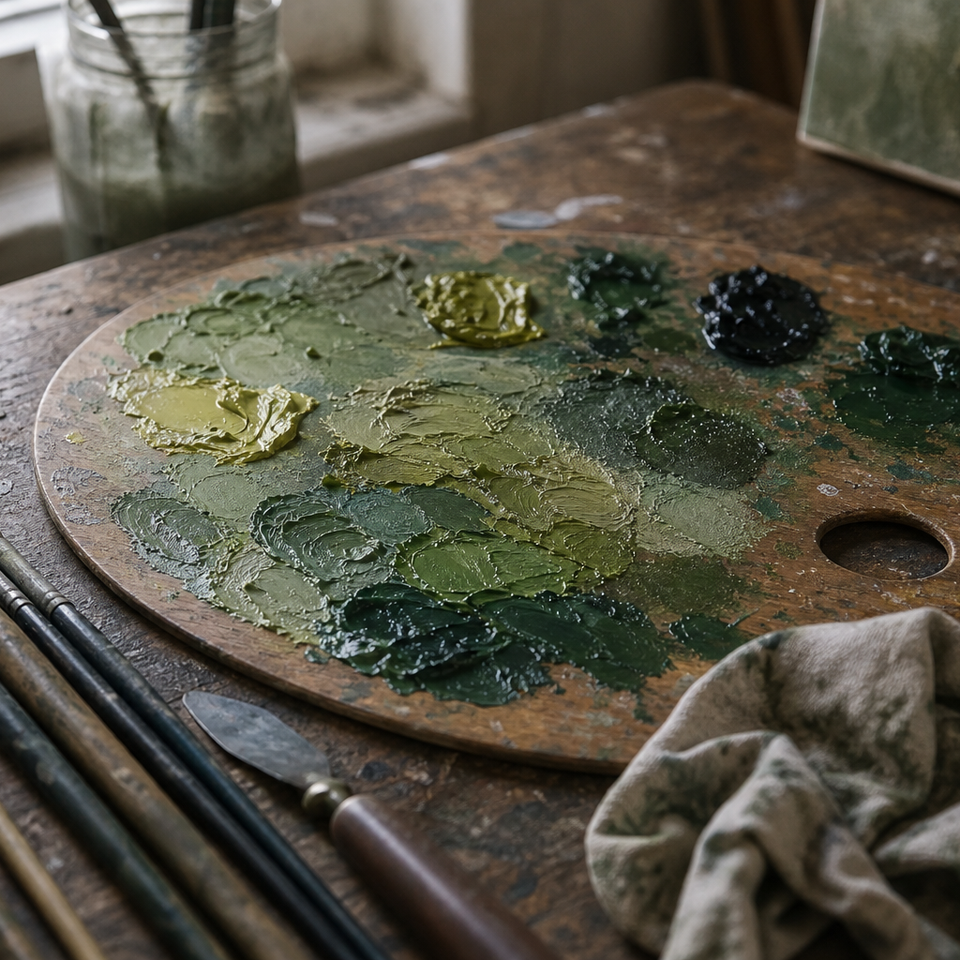
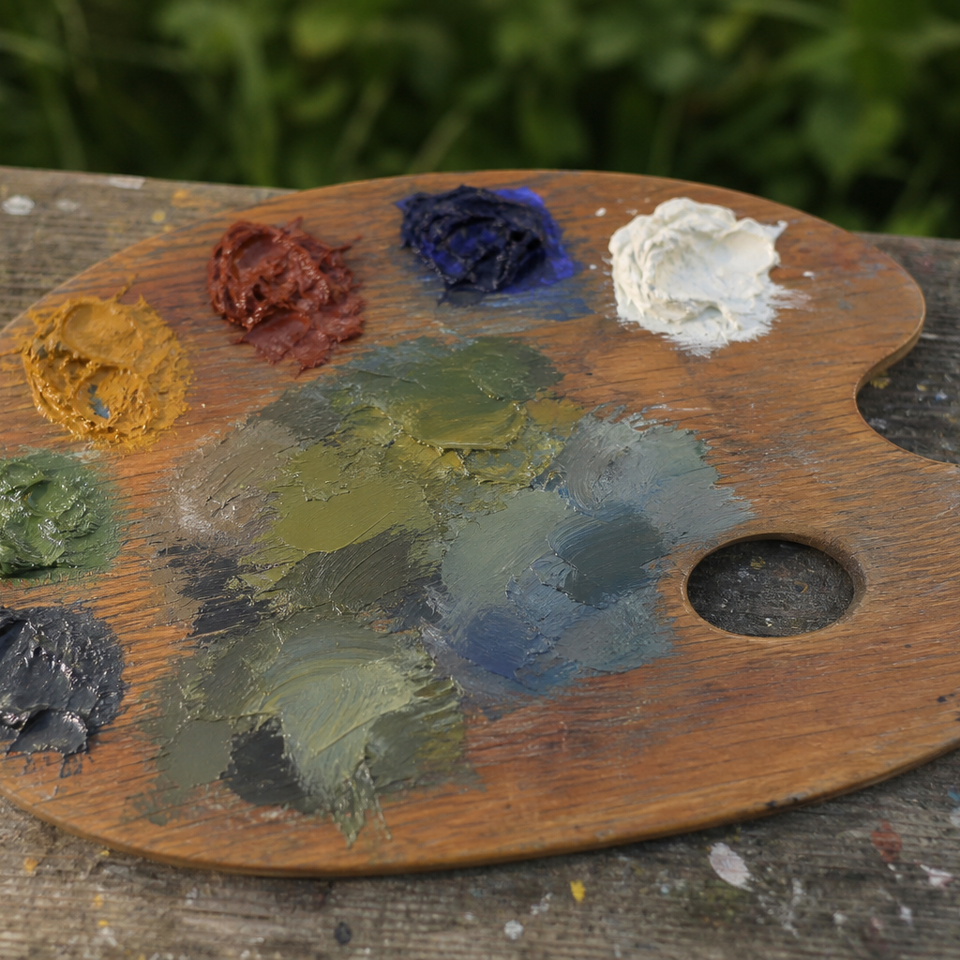
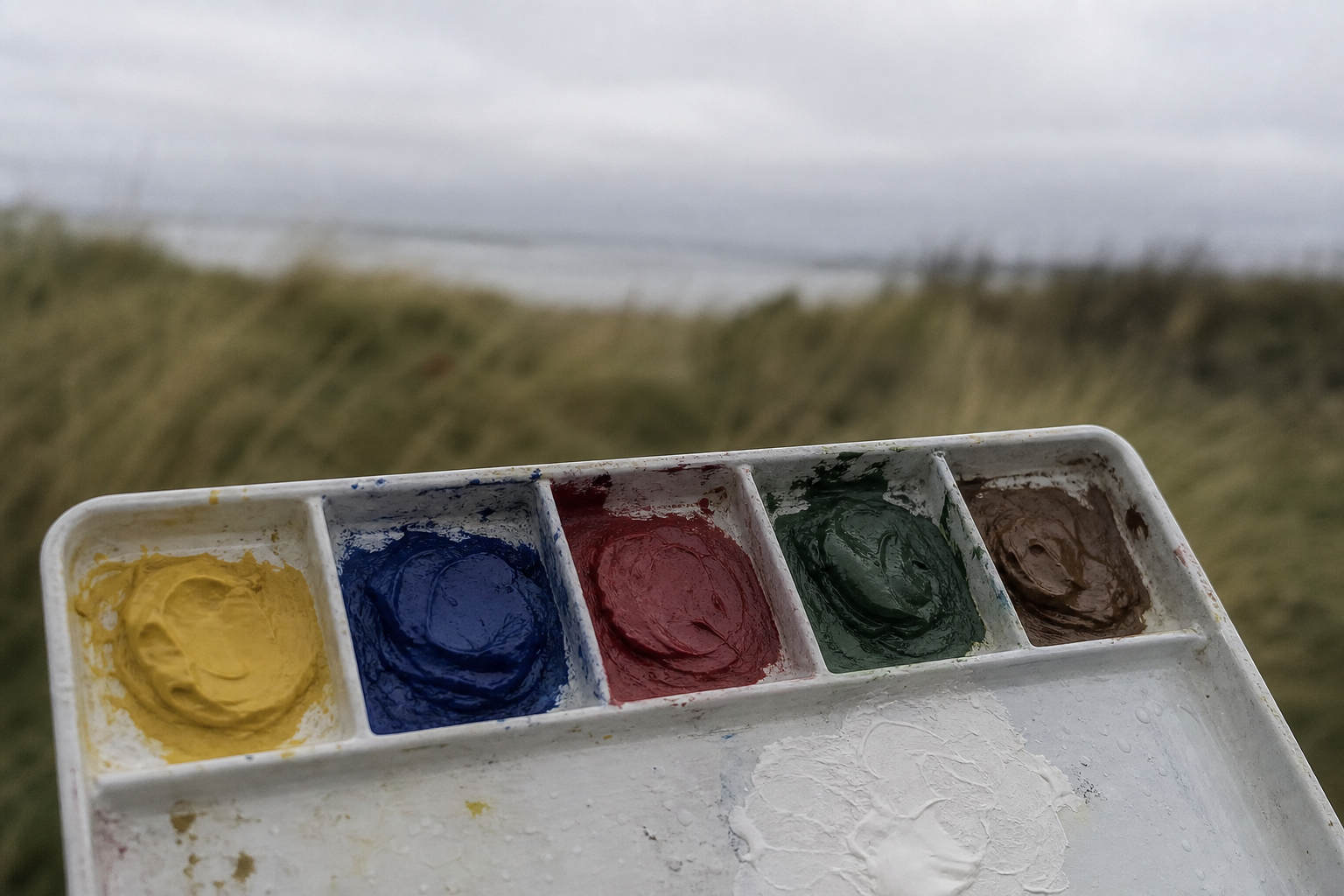
A limited palette of four to five colours plus titanium white is the consistent recommendation from painters who have worked through the alternatives. A typical configuration for UK conditions might include a warm and cool version of the primaries (or a selection that lets you mix efficiently across the range), one or two earth colours for the greens and greys that dominate British landscapes, and a generous tube of titanium white.
Titanium white is used heavily in gouache compared with how you'd use it in oils. You'll add it to nearly every mixture to build opacity and control value. Buy it in the largest tube available and don't ration it.
For artist-grade paints, Winsor & Newton Designers Gouache, Holbein, and Schmincke are all widely available from UK suppliers and represent the standard options. Artist-grade paints carry higher pigment loads and better lightfastness ratings than student-grade alternatives, which matters if you want your work to last or plan to sell it. Student-grade gouache is fine for practice sessions where longevity isn't the priority, but the weaker pigment load and reduced lightfastness are real trade-offs worth knowing about.
All of the brands above are stocked by Jackson's Art, Cass Art, Ken Bromley, and Great Art. Ordering online from any of these is straightforward, and most offer reasonable postage for UK addresses.
Rough UK budget guide (prices as of 2024–2025; confirm with retailers)
- Artist-grade gouache tube (14–20 ml)
- £6–£12 per tube
- Student-grade tube
- £2–£5 per tube
- Starter kit (4–5 colours + white + basics)
- £80–£150
- 300 gsm watercolour paper (A4 pad)
- £8–£18
Winsor & Newton, Holbein widely available
Adequate for practice; limited lightfastness
Depends on what you already own
Cold-pressed recommended for outdoor use
Paper and surfaces
The minimum for outdoor gouache work is 300 gsm cold-pressed watercolour paper. Lighter paper buckles under the wet applications and becomes unworkable quickly, particularly on damp days. Cold-pressed gives a gentle texture that works well with gouache's consistency without fighting the brush.
A bound watercolour sketchbook at this weight is one of the most practical setups outdoors: it stays flat, the cover provides a rigid support, and there's no need for clips or a separate board unless conditions are particularly breezy. On exposed coastal or upland sites, taping the edges to a board adds security.
Toned paper (a warm mid-grey or buff) is worth trying if you haven't already. It speeds up value decisions by giving you a middle ground to work from, which suits the quick, decisive approach that plein air painting often demands.
Brushes and ancillary kit
Synthetic watercolour brushes handle gouache well. A mid-sized flat (around a size 8 to 12) covers the blocking-in stages efficiently, and a round in a smaller size handles edges and detail. That's the core. Anything beyond those two is a bonus.
For the rest of your kit: a leak-proof water jar, a spritzer bottle with clean water, paper towels, clips or masking tape, and a compact palette or tray. Some painters prefer squeezing fresh paint from tubes at the start of each session rather than using a palette that's been left to dry between outings, which avoids the cracking and reactivation issues that can affect pre-loaded palettes.
Personal comfort matters more than it's sometimes given credit for. A portable stool makes a real difference over a long session. Extra layers in autumn and winter aren't optional if you want to concentrate on the painting rather than the cold.
A Repeatable Painting Process for Outdoor Sessions
The process below is designed for sessions of 45 to 90 minutes, working A5 to A4. It's not rigid, but having a clear sequence means you're making decisions about painting rather than about what to do next.
A working process for gouache plein air sessions
Do a quick thumbnail first
Sketch two or three value groups in a small thumbnail. You're looking for a clear light/shadow pattern before you touch the paper.
Draw in your major shapes
Use a light pencil line or very diluted paint to place the big forms. Don't aim for accuracy yet — aim for placement.
Block in the large masses
Start with mid-tones and large planes. Ignore detail entirely at this stage. Big, flat, confident strokes.
Establish your key value relationships
Lock in your lightest light and darkest dark early. Everything else is relative to those two anchors.
Refine colour and edges selectively
Work back into the painting carefully. Use a light touch to avoid lifting dry layers. Sharpen edges only at your focal point.
Add accents last
Windows, highlights, small branches — these go in at the very end and only where they support the overall design. Resist filling everything in.
The thumbnail at the start is probably the step that gets skipped most often and matters most. Two minutes spent working out your value pattern before you begin saves considerable time later when you're wondering why the painting isn't reading clearly.
Painting Gouache in UK Conditions
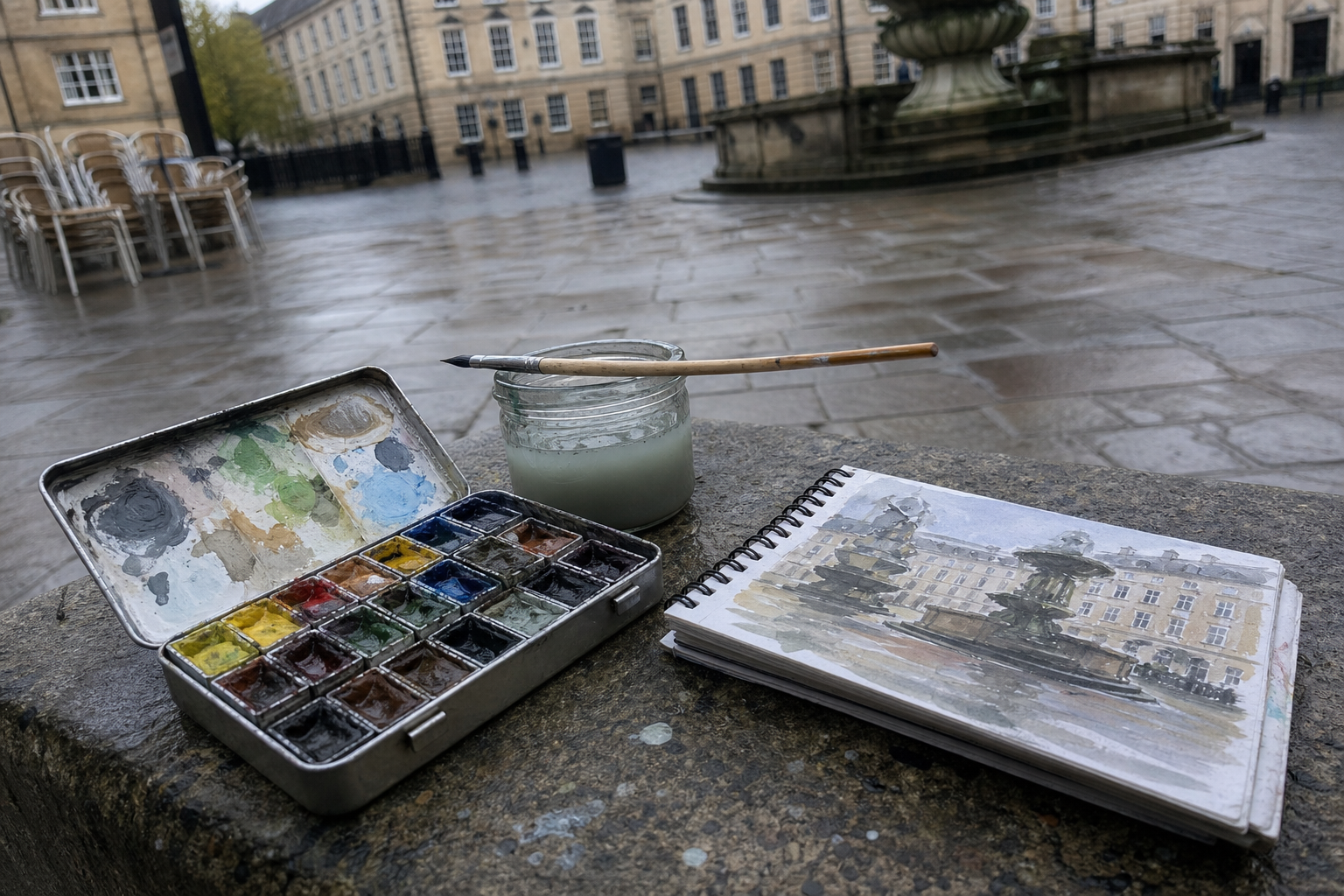
Damp, overcast days
Overcast light gets a bad reputation among outdoor painters, but for gouache work it's genuinely useful. The light changes slowly and evenly rather than shifting dramatically as clouds cross the sun, which gives you more stable conditions for longer. Shadows are softer and colour is subtler, which suits gouache's naturally matte palette well.
The challenge on damp days is drying time. Cool, humid air extends the time between workable layers significantly. Work small and don't rush the process: move between areas of the painting while earlier passages dry, rather than working back into them too soon. If you're finding that layers simply won't dry, a small battery-powered fan can help on particularly stubborn days, though most painters manage without one.
Paper is more vulnerable to buckling in damp conditions. If you're working from a bound sketchbook, keep it closed until you're actively painting. On particularly wet days, taping edges to a board is a sensible precaution.
Wind, coastal sites, and short winter light
Wind is the more demanding challenge. On exposed coastal or upland sites, it dries your palette faster than you can mix, physically moves lightweight paper, and makes precise brushwork difficult. Set up with your back to the wind where possible. A low stool with your board resting on your knees is more stable than a tall easel in these conditions. Clip or tape your paper securely before you start.
Short winter daylight is a practical constraint that shapes the whole session. In December across most of the UK, you might have four to five hours of useful painting light on a clear day and considerably less on an overcast one. Time-box your sessions accordingly: 45 to 60 minutes is a realistic target for a complete study, and small formats (A5) make that achievable.
Urban painting in parks, public squares, and on pavements is generally untroubled by formal restrictions for individuals working at sketchbook scale. A low-profile, compact setup draws less attention and causes fewer issues. On managed heritage sites or privately owned land, it's worth checking in advance if you're planning a group session or using a larger easel.
Keep a spritzer bottle in your kit
On dry or breezy days, gouache on a palette can skin over within minutes. A small plant mister with clean water is one of the most useful things you can carry. A light mist over the palette every 20 minutes keeps your colours workable without flooding them.
Troubleshooting Common Problems in the Field
Layers lifting or going muddy. This is almost always caused by working back into paint that hasn't fully dried, or by scrubbing with the brush rather than laying a clean stroke. Let each layer dry completely before returning to it. When you do work over a dry layer, use a single, confident stroke with a well-loaded brush rather than working back and forth.
Paint drying too fast on the palette. Work in shade wherever possible: direct sun accelerates drying dramatically. A light mist from your spritzer bottle every 15 to 20 minutes keeps the surface workable. If you're in consistently dry or windy conditions, a sealed palette with a damp inner layer (the kind used for watercolour travel palettes) can help considerably.
Colours drying chalky or flat. The most common cause is over-use of white: when titanium white is added excessively to every mixture, the result is a chalky, chalky-grey uniformity across the painting. Use white purposefully for value control rather than automatically. Overworking into damp layers also contributes to this; the more you disturb a drying surface, the more the pigment breaks down.
Paper buckling. Upgrade to 300 gsm minimum if you haven't already, and tape the edges of your paper to a board before starting. A bound sketchbook at the right weight handles this more reliably than loose sheets outdoors.
Transporting wet or damp paintings home. Allow as much drying time as possible before packing up. A hard-cover sketchbook where the cover doesn't contact the painted surface is the simplest solution. For loose sheets or panels, a purpose-made panel carrier or interleaving with glassine paper is safer than improvising.
Storing and Finishing Your Gouache Studies
Gouache is not waterproof when dry, which affects both storage and display. Finished pieces should be kept flat and away from moisture. If you're stacking multiple studies, interleave them with glassine paper rather than allowing painted surfaces to touch each other.
For framing, gouache needs to be behind glass. Unlike oils or acrylics, it has no protective surface of its own and is vulnerable to moisture and physical contact. Standard conservation glass or UV-filtering glass is a sensible choice for work you want to keep long-term.
Some painters apply a light spray fixative to finished gouache studies to reduce susceptibility to re-wetting and smudging. This can be useful for work that needs to be handled or transported frequently, but it's worth knowing the trade-offs: fixative alters the matte surface quality that is one of gouache's defining characteristics, and the results vary depending on the product used. It's a genuine option rather than a standard recommendation; try it on a test piece before applying it to finished work you care about.
Lightfastness is worth thinking about for any work intended to last, be exhibited, or be sold. Artist-grade paints are formulated with more stable pigments and carry lightfastness ratings on the tube. Student-grade gouache uses cheaper pigments that may fade noticeably over time. If you're painting studies purely for your own reference or practice, this matters less; if you're building a body of work or selling paintings, the difference between grades is worth the extra cost per tube.
FAQ
Frequently Asked Questions
Why choose gouache for plein air painting?
Gouache balances portability and editability. It is more forgiving than watercolour and lighter than oils, with a matte surface that helps make reliable value judgements in UK light.
How do I stop gouache layers lifting or going muddy outdoors?
Let each layer dry fully before working over it and use single, confident strokes rather than scrubbing. Work small so you can move between areas while others dry.
What paper and surface should I use for outdoor gouache?
Use 300 gsm cold pressed watercolour paper or a bound 300 gsm sketchbook. Tape edges to a board in windy or damp conditions and try toned paper for faster value decisions.
What should I include in a compact plein air gouache palette?
Carry a limited palette of four to five colours plus a large tube of titanium white. Include warm and cool primaries and one or two earths to mix UK greens and greys efficiently.
How should I store or frame finished gouache studies?
Keep works flat and dry, interleave with glassine if stacking, and frame behind glass. A light fixative is optional but test it first because it will alter the matte finish.
Author

PleinAirPainting Editorial Team
PleinAirPainting.co.uk helps artists paint outdoors with confidence through UK-focused guides, equipment advice, resources and plein air inspiration.