Plein Air Painting on Dartmoor: A Practical Location Guide
A practical guide to plein air painting Dartmoor with top spots, weather and packing advice, safety rules, and a simple flexible day plan to get you painting across tors, valleys and ancient sites.

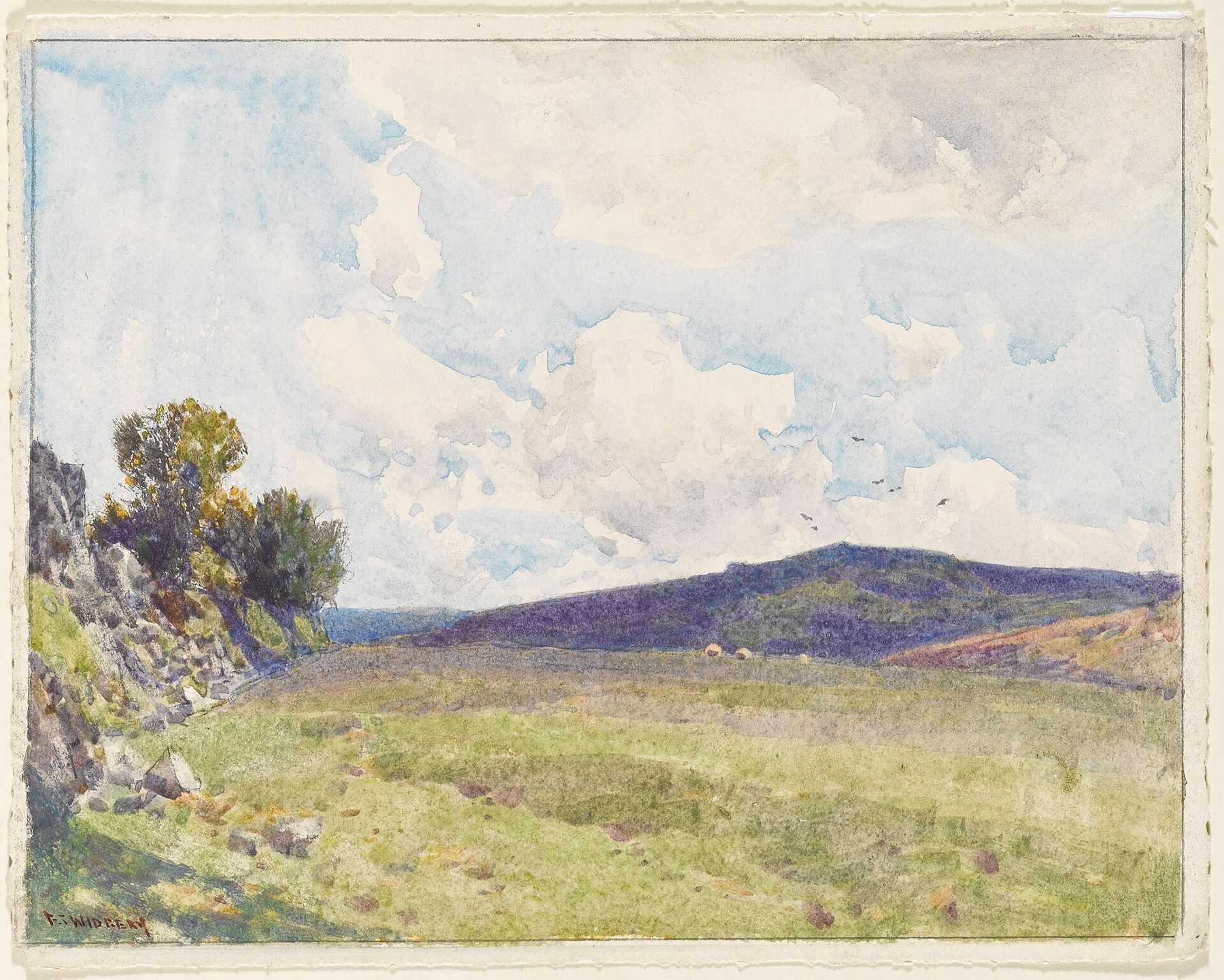
Dartmoor Scene by Frederick John Widgery.
Credit: Frederick John Widgery; Royal Albert Memorial Museum; public domain/CC0
Key takeaways
- • Dartmoor offers a wide range of subjects within a short distance: high tors, river valleys, ancient monuments and villages.
- • Check the MWIS mountain forecast, favour sheltered valleys if wind exceeds 25 mph, and build two or three alternative spots into your plan.
- • Pack Dartmoor-specific kit: full waterproofs, windproof layers, a ground sheet, board clips, a low stable support and light overall weight.
- • Key locations: Haytor and Hound Tor for tors, Fingle Bridge and Spitchwick for rivers, Wistman’s Wood and stone rows for atmosphere and prehistoric interest.
- • Follow access rules, avoid touching monuments, respect livestock, carry navigation tools, and keep sessions short on exposed ground.
Dartmoor is one of those landscapes that gets under a painter's skin. The granite tors, the vast moorland skies, the ancient stone rows stretching toward the horizon: plein air painting on Dartmoor offers a quality of subject matter that is genuinely hard to find elsewhere in England. As a National Park sitting in the heart of Devon, it is accessible from Exeter or Plymouth within half an hour, yet once you are on the high moor, you feel genuinely remote. That contrast is part of the appeal.
It also demands preparation. Dartmoor's weather is not a minor footnote; it is a central fact of painting there. Conditions change quickly, the wind on the high tors can be ferocious, and a clear morning forecast is no guarantee of what greets you at lunchtime. None of that should put you off. A prepared painter who arrives with a plan and a flexible mindset will find Dartmoor endlessly rewarding.
This guide covers specific named locations with practical access notes, honest seasonal advice, the access rules and safety considerations worth knowing before you go, and a simple framework for structuring your first painting day on the moor.
What Makes Dartmoor Exceptional for Outdoor Painting
Dartmoor's variety is frequently underestimated. The iconic image is a granite tor rising from open moorland under a dramatic sky, and those compositions are genuinely spectacular. But within a short drive of any tor, you will find wooded river valleys with dappled light on moss-covered stone, ancient prehistoric monuments offering unusual foreground elements, working villages with clapper bridges and Norman churches, and river pools ringed by boulders. It is one of the best plein air locations in the UK precisely because the range of subjects within a single day's reach is so broad.
That variety also makes Dartmoor flexible across media and styles. Watercolourists tend to gravitate toward the river valleys and bridges where reflections and wet stone offer constantly shifting motifs. Oil painters often thrive on the high moor where the tonal drama of cloud and granite rewards a more direct, confident approach. Sketchers and mixed-media artists find the prehistoric sites and village streetscapes endlessly productive.
The cultural and historical layers add further interest. Dartmoor has some of the highest concentrations of Bronze Age monuments in Europe: stone rows, stone circles, and hut circles that have sat in this landscape for four thousand years. Princetown holds the famous prison whose austere granite profile reads very differently from the scenic prettiness of a village like Widecombe. Military activity, moorland farming, and active rewilding efforts all leave visible marks on the landscape. These are not just historical footnotes; they are compositional material.
One moor, many subjects
Dartmoor is far more varied than it first appears. If the high moor feels too exposed, drop into a wooded valley. If a village feels too busy, head for a river pool. Build a loose plan with two or three alternative spots so you can respond to the weather on the day.
Planning Your Dartmoor Painting Day
Getting There and Parking
Dartmoor sits roughly 20 to 40 minutes from Exeter and 20 to 30 minutes from Plymouth, depending on your destination on the moor. Access from both cities is straightforward on the A38 or A30, but once you leave the main roads, you are on B roads and narrow Devon lanes where passing places are frequent and speeds are low. Allow extra time if you are heading to a remote spot.
Most painting locations are reached on foot from roadside layby parking or National Park car parks. The main car parks at popular spots like Haytor, Postbridge and Fingle Bridge are pay-and-display, typically costing between £2 and £5 for a full day. Some roadside laybys are free but limited in space, and they fill quickly on summer weekends. Arriving before 9am gives you the best chance of a quiet start and better light.
Reading the Weather Before You Go
A standard town forecast for Exeter or Plymouth is essentially useless for planning a painting day on the high moor. The Met Office provides a dedicated Dartmoor mountain forecast, accessible via the Mountain Weather Information Service (MWIS), which gives you wind speed and direction, cloud base height, visibility, and precipitation probability at altitude. Check this the evening before and again on the morning of your visit.
The practical reading: a wind speed above 25 mph on the high moor makes easel work very difficult. A cloud base below 300 metres means the tors will be in mist. A precipitation probability above 50% means your session may be shortened significantly. None of these need cancel your day, but they should push you toward a sheltered valley location rather than an exposed ridge.
One honest note: even a yellow weather warning day can produce extraordinary light between showers. And a seemingly benign forecast can deteriorate in under an hour at altitude. Build flexibility into your plan rather than betting everything on a fixed location.
Dartmoor at a glance
- Distance from Exeter
- 20–40 mins drive
- Distance from Plymouth
- 20–30 mins drive
- Typical parking cost
- £2–£5 per day
- Average session length advised
- 20–60 minutes
- Workshop cost (small group)
- ~£285 for 3 days
Depends on destination
Western moor is closest
Pay-and-display at most sites
Shorter on exposed high moor
E.g. Wildwood Arts, Horrabridge
What to Pack for Dartmoor
Dartmoor-specific packing is about the weight-versus-exposure trade-off. The terrain is uneven, often boggy, and every extra kilo in your bag is a kilo you will feel on the walk out. Travel light, but do not underprepare.
The key Dartmoor additions to your standard kit: full waterproofs, including trousers, regardless of the morning forecast; wind-proof insulating layer (the issue is wind-chill, not air temperature, which can feel ten degrees colder in a strong breeze); a lightweight ground sheet or polythene sheet for kneeling on boggy ground; board clips or pegs for securing paper or panels before you start; a compact umbrella or pochade-mounted panel holder that can be angled away from wind. Keep your support as low and stable as possible on exposed ground.
Key Locations for Plein Air Painting on Dartmoor
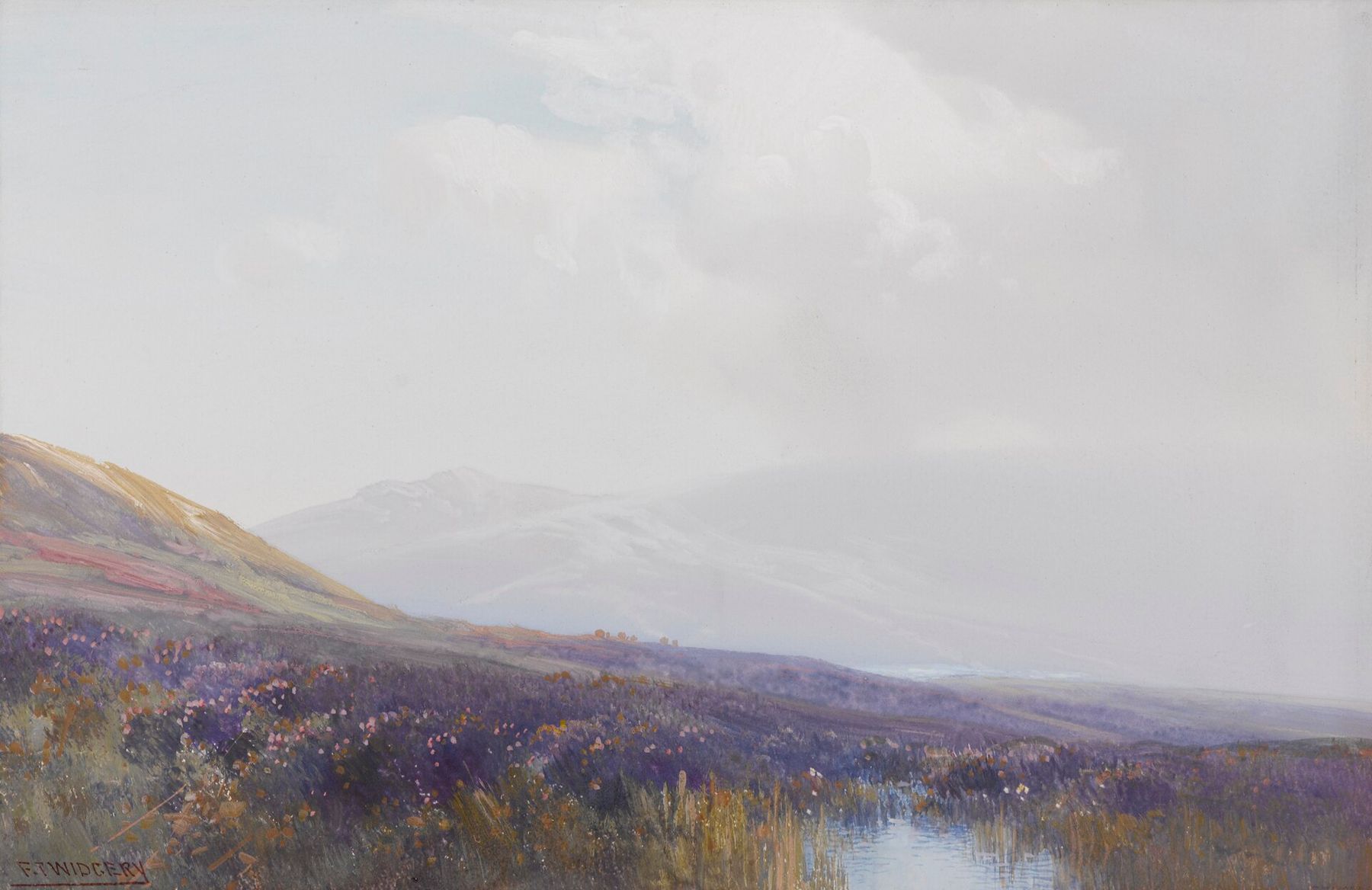
Taw Marsh, Dartmoor by Frederick John Widgery.
High Tors and Open Moorland
Haytor is the most visited spot on Dartmoor and for good reason: the views from the top on a clear day extend south to the coast, and the granite itself offers extraordinary tonal and textural interest at any time of day. Access is easy from the large National Park car park on the B3387 near Bovey Tracey. The drawback is popularity: summer weekends bring significant foot traffic that disrupts composition and makes a quiet session difficult. Shoulder season visits (late September through November, or March to early May) or early-morning arrivals (before 9am) transform the experience.
Hound Tor offers more compositional variety than Haytor. The cluster of weathered rock stacks has a ruined medieval village just below it, which adds a layer of historical interest to the foreground. The car park on Swallerton Gate is small but usually manageable outside peak season. The tor formation provides slightly more natural shelter than Haytor's open ridge.
Great Mis Tor and Cox Tor on the western moor are less visited and more exposed. Both require a walk of fifteen to forty minutes from roadside parking near Merrivale. The views west toward Plymouth Sound and south across the moor are exceptional, but these are genuinely remote positions in poor weather. Reserve them for days with stable, low-wind forecasts.
Working on the high moor
Set up on the leeward side of a tor rather than on the open skyline. Even a few metres of granite behind you makes a real difference to wind and cold. Secure your board or paper before you do anything else.
Wooded Valleys and Rivers
Fingle Bridge and the Teign Gorge are among the finest painting locations in Devon. The medieval bridge itself is a classic watercolour subject: stone arches, moving water, reflections, and the deep green of the gorge woods behind. The car park at Drogo is managed by the National Trust and the walk to the bridge takes about fifteen minutes. This location works in almost any weather because the tree cover provides shelter and the overcast light that sends painters retreating elsewhere actually suits the cool tones of the valley water.
Spitchwick on the River Dart near Poundsgate is one of Dartmoor's most popular summer swimming spots, which is both its appeal and its limitation. The river pools, granite boulders and overhanging oaks are genuinely beautiful, and the spot is easily accessible from a small car park off the B3357. Avoid summer weekends when families arrive early and stay late. A weekday morning in September or October gives you the light, the colour, and the quiet.
Lustleigh Cleave and the Dunsford area offer a gentler, more intimate version of the wooded valley experience. The Cleave above Lustleigh is a long wooded hillside above the Bovey river with good paths and sheltered working positions. The Dunsford Wood nature reserve along the Teign is particularly good in spring, when the woodland floor is covered in bluebells and wild garlic. Both areas suit painters who want a relatively easy walk and a prolonged session in shelter.
Ancient Sites and Stone Rows
Dartmoor holds an extraordinary concentration of prehistoric monuments: the Merrivale stone rows, the Scorhill stone circle, the Grey Wethers double circle above Fernworthy, and hundreds of hut circles and enclosures scattered across the moor. These structures offer something genuinely unusual as painting subjects: ancient human marks in a vast, apparently timeless landscape. The contrast between the small, weathered stones and the enormous sky above them is a compositional gift.
A clear practical rule applies here: do not place easels, tripods, folding stools, or any gear directly on or against scheduled ancient monuments. These structures are protected under the Ancient Monuments and Archaeological Areas Act and the surfaces of the stones are often fragile. Work from paths and open ground nearby, keeping your equipment well clear of the stones themselves.
Wistman's Wood deserves separate mention. This stunted, moss-covered oak woodland growing among boulder fields above the West Dart is one of the most atmospherically distinctive places on Dartmoor, and many painters find it irresistible. The atmosphere is genuinely remarkable: gnarled oaks draped in lichens and ferns, grey granite boulders disappearing beneath moss, a quality of light that feels filtered and ancient. Access is straightforward from the Two Bridges car park on the B3212, with a two-mile return walk along the valley.
The ecological sensitivity note here is not optional. Wistman's Wood is a Site of Special Scientific Interest and an internationally rare upland oak wood. Stay on the paths. Do not enter the boulder fields. Do not lean against or touch the trees. Work from the path with a longer view into the wood rather than attempting to position yourself among the boulders. The atmosphere reads just as powerfully from a respectful distance.
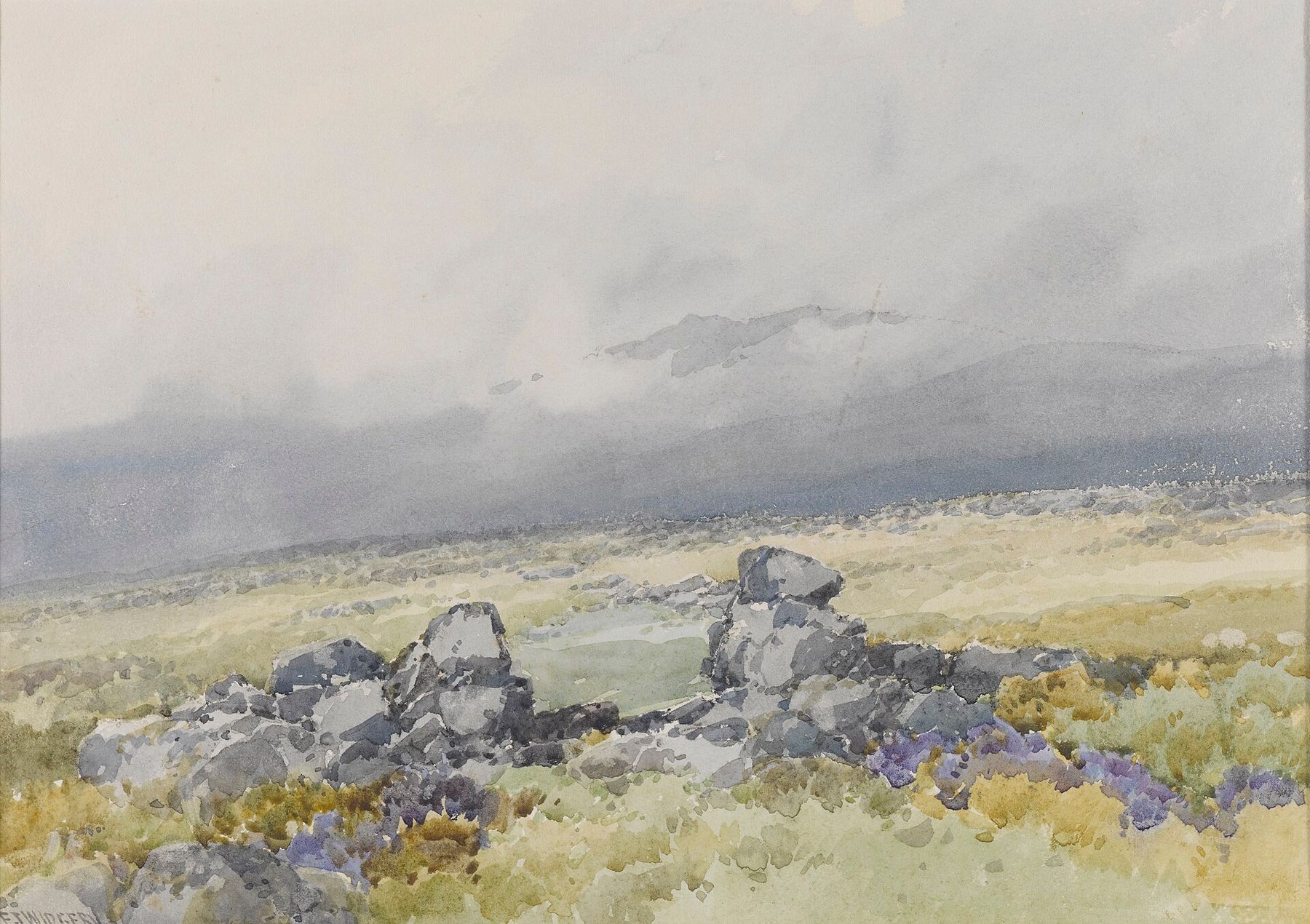
Grimspound, Dartmoor by Frederick John Widgery.
Villages, Bridges and Built Heritage
Postbridge on the B3212 is one of the easiest and most rewarding Devon painting spots for painters who want a defined focal point. The clapper bridge, a medieval structure of huge flat granite slabs resting on upright stone piers, spans the East Dart river and is visible from the car park. It is a classic watercolour subject: strong horizontal structure, water reflections, moorland backdrop. The village also has a café, which makes Postbridge a practical base for a day combining a village session in the morning with a short drive to an open moor location later.
Widecombe-in-the-Moor is a photogenic moorland village centred on the tall-towered Church of St Pancras, known as the "Cathedral of the Moor." The village green, the church, and the surrounding tors make for a layered composition. It can be very busy in summer; the same early-morning or shoulder-season principle applies.
Princetown is a very different proposition. The town sits at over 400 metres on the high moor and is dominated by the Victorian prison, which gives the whole settlement a particular character: functional, austere, and historically dense. It is not conventionally scenic, but painters drawn to working landscapes and the character of built form in extreme environments will find it genuinely interesting. It also serves as a practical fallback location on wet or foggy days when higher ground is inaccessible.
| Location | Type | Shelter | Best for | Notes |
|---|---|---|---|---|
| Haytor | High tor | Low | Big skies, sea views | Busy in summer; go early |
| Hound Tor | High tor | Low–Medium | Dramatic rock forms | More shelter than Haytor |
| Great Mis Tor / Cox Tor | Open moorland | Low | Sweeping moorland | Requires short walk; very exposed |
| Fingle Bridge / Teign Gorge | Wooded valley | High | Water, trees, stone | Excellent for watercolour |
| Spitchwick | River pool | Medium | River scenes, boulders | Avoid summer weekends |
| Lustleigh Cleave / Dunsford | Wooded valley | High | Woodland, river curves | Good spring blossom |
| Wistman's Wood | Ancient woodland | Medium | Atmosphere, texture | Stay on paths; ecologically sensitive |
| Stone rows and circles | Open moorland | Low | Prehistoric foregrounds | Keep gear off monuments |
| Postbridge | Village / bridge | Medium | Clapper bridge focal point | Classic watercolour subject |
| Widecombe / Princetown | Village | Medium–High | Church, moorland backdrop | Good wet-weather backup |
Painting in Dartmoor's Weather
The Reality of the Moor in Summer
Summer on Dartmoor is not a reliable proposition. July and August bring the most visitors and, on good days, long warm light and spectacular skies. But cloud can roll in from the west in under twenty minutes, and a morning that begins in sunshine can close down to grey drizzle by midday. The practical approach: keep sessions on the high moor to under an hour, have a sheltered valley alternative in your plan, and carry full waterproofs in your bag every single time, even on the clearest July morning. The afternoon on Dartmoor is statistically the most unstable period; plan your high moor session for the morning.
Autumn and Winter on Dartmoor
Autumn is, for many painters, the most rewarding season on Dartmoor. The heather shifts from purple to a deep rust-brown, bracken turns copper and gold, the valley trees catch their autumn colour, and the mist sits in the river valleys in the early morning in a way that is extraordinary to paint. The light is lower and warmer from September onward, the crowds have gone, and the moor has a particular quality of silence.
Winter is genuinely feasible but requires honest preparation. The wind-chill on the high moor in November through February can be severe, pushing apparent temperatures well below freezing even on bright days. Sessions should be short (thirty minutes maximum on exposed ground), layering is essential, and hand warmers are not an affectation but a practical necessity for maintaining fine motor control with a brush. The winter palette is muted and beautiful: pale ochres, blue-greys, and the deep green of the valley mosses.
Seasonal Colour on the Moor
Dartmoor's palette shifts considerably across the year. Spring brings acid-green bracken shoots and the brilliant yellow of gorse, which flowers from February onward. Summer offers the blue-grey-green of moorland grasses and the purple of heather at its peak in late July and August. Autumn turns the bracken to copper and the heather to brown, with warm russets and the cooler ochres of dried grasses. Winter strips the palette back to muted greys, the pale straw of dead bracken, and the ochres and slate of granite in rain.
Mixing Dartmoor greens
Dartmoor's vegetation is rarely the saturated green you get from a tube. Try mixing raw sienna or yellow ochre into your greens, or add a touch of violet or burnt umber to knock back the chroma. The moor rewards restraint with colour.
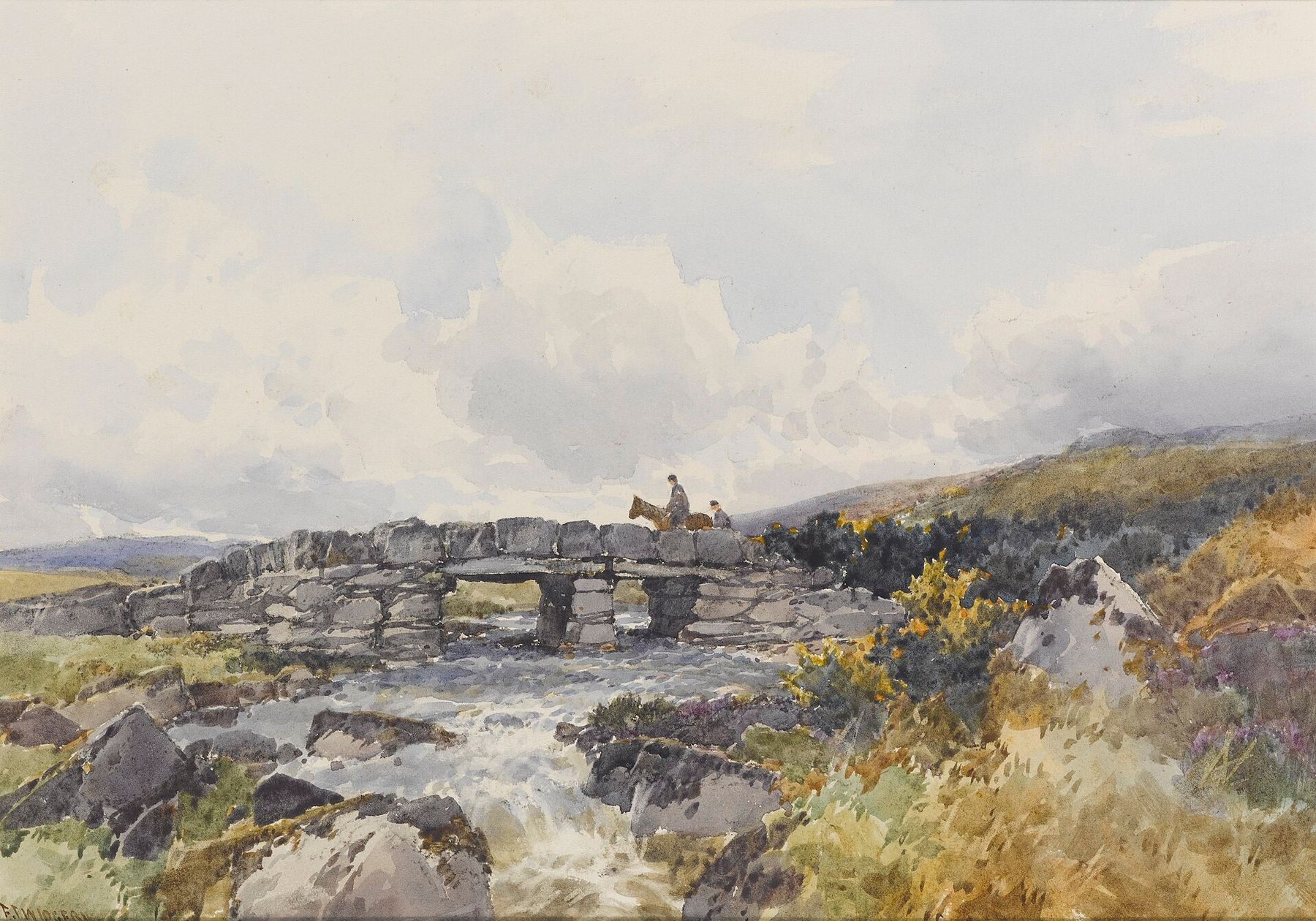
Leather Tor Bridge by Frederick John Widgery.
Access, Safety and Responsible Painting on Dartmoor
Rights of Access and the National Park
Dartmoor is open access land under the Countryside and Rights of Way Act 2000, which means that walkers and painters can move freely over most of the moorland without needing to stick to designated paths. This is a genuine legal right and it makes Dartmoor unusually flexible as a painting destination: you can set up almost anywhere on the open moor, not just at designated viewpoints.
The key restrictions to know: keep away from the military firing ranges on the northern moor (Okehampton Range, Merrivale Range and Ringmoor Range) when red flags are flying at the range boundaries. Before visiting the northern or western moor, check the Dartmoor Ranges firing programme, which is published online by the Ministry of Defence and updated regularly. When red flags are up, access to those areas is prohibited. When they are down, the ranges are open and the tracks and moorland within them can be walked and painted freely.
Do not disturb livestock. Dartmoor's cattle and ponies are working farm animals, not wildlife, and some are protective of calves in spring. Give them space and do not position your easel between a cow and her calf.
For organised painting groups, the National Park's guidance on events and organised activities applies for larger gatherings. Small informal groups of friends are unlikely to require formal consent, but group leaders should keep their group compact in ecologically sensitive or busy areas and should not park a convoy of vehicles at spots where space is limited.
Safety on the High Moor
Fog on Dartmoor is a genuine hazard, not a scenic backdrop. It can descend onto the high moor in minutes and reduce visibility to a few metres. If you are working on the open moor away from a clear path, carry a map and compass and know how to use them, or carry your phone loaded with an offline OS map (the OS Maps app works without signal if downloaded in advance). Do not rely on mobile signal for navigation; it is unreliable across much of the moor.
Boggy ground is another practical hazard. Avoid obvious wet ground marked by bright green sphagnum moss, and step carefully when crossing moorland you do not know well. Wet gear on a cold moor accelerates the cold considerably.
One rule that applies on any exposed moorland: never set up an easel or panel holder on a clifftop, crag edge, or exposed narrow ridge in high wind. Wind can catch a board like a sail and the consequences are serious. Always position on the leeward side of any elevated feature, with your back to the sheltering rock.
Let someone know where you are going and when you expect to be back, particularly if you are painting alone in a remote area.
Leave No Trace
Take all waste home including paint rags, paper towels, and any water contaminated with solvent or oil paint. Do not pour solvents onto moorland soil. Dartmoor's peat and bog ecosystems are fragile and its rivers are monitored for water quality. The National Park takes conservation seriously and it is a straightforward responsibility for painters to honour.
High moor vs valley locations
Pros
- + Dramatic light and cloud formations on the high moor
- + Uninterrupted views and big compositional skies
- + Ancient sites as unusual foreground elements
- + Valley spots offer shelter and varied, intimate subjects
- + River scenes are forgiving in overcast conditions
Cons
- - High moor is cold, windy and exposed even in summer
- - Tors and ridges attract crowds at peak times
- - Valley spots can be busy with walkers and swimmers
- - Limited parking near some wooded valley sites
Workshops and the Dartmoor Painting Community
Wildwood Arts in Horrabridge, on the western edge of the moor, is one of the most active hubs for plein air tuition in the Dartmoor area. They run small-group painting workshops that typically combine time in the gallery space with location sessions on the moor and in the surrounding valleys. The cost runs to approximately £285 for a three-day course, and group sizes are kept small enough to allow for genuine individual attention. It is a good option if you want a structured introduction to painting in this landscape rather than going solo on your first visit.
RAMM (the Royal Albert Memorial Museum) in Exeter has a strong ongoing engagement with Dartmoor as a subject of landscape painting and holds significant collections of Devon landscape work in its archives. Its programme occasionally includes events and exhibitions connected to painting the moor. Worth checking their calendar if you are based in Exeter or spending time in the city before or after your painting days.
The broader community of plein air painters working around Dartmoor is active and growing, with small-group, location-based workshops becoming an increasingly popular alternative to studio-based tuition. Painting days organised through local art societies, walking groups and independent tutors offer another route in if you prefer a structured first experience.
Your First Dartmoor Painting Day: A Simple Plan
Keep it simple and keep it flexible. That is the one rule that makes a first Dartmoor painting day genuinely enjoyable rather than stressful.
Arrive at a valley location first. Fingle Bridge or Spitchwick (on a quiet weekday) are both good choices. The shelter is real, the motifs are clear, and the lower stakes of a wooded valley give you space to settle into painting without fighting the wind. Spend two to three hours there. Do not rush to move on.
If the morning forecast looks stable and the wind is manageable, drive to a tor for a late-morning session. Haytor or Hound Tor are the easiest access. Set up on the leeward side, keep your session to forty-five minutes or an hour, and watch the sky. If cloud starts to build from the west, pack up before it arrives rather than after.
Keep a village location in reserve as your afternoon fallback. Postbridge is ideal: easy parking, a defined subject in the clapper bridge, and a café within walking distance. If the weather closes in, you have a sheltered and rewarding alternative that will make a perfectly good afternoon painting.
Dartmoor rewards painters who go prepared and stay responsive. It does not ask for perfect conditions or perfect paintings. The light shifts, the sky does things you did not expect, the subject reveals itself differently from how it looked in the photograph you had in mind. That is exactly what makes it worth going.
Go, set up, and see what happens.
References and Further Reading
FAQ
Frequently Asked Questions
When is the best time to go plein air painting on Dartmoor?
Autumn and shoulder seasons (Sept–Nov, March–May) are ideal for light and fewer crowds. Summer works for morning sessions. Winter is possible but requires short sessions, strong layering, and hand warmers.
How should I check the weather before heading out?
Use the Dartmoor mountain forecast via MWIS for wind, cloud base, visibility and rain. Avoid exposed tors if wind is above 25 mph or cloud base is below 300 metres. Have a sheltered valley alternative ready.
What essential kit should I pack for Dartmoor?
Full waterproofs including trousers, a windproof insulating layer, a lightweight ground sheet, board clips or pegs, a low stable support or pochade, and minimal weight to ease the walk out. Hand warmers in cold months.
Are there access restrictions or protected areas I should know about?
Most of the moor is open access under the Countryside and Rights of Way Act, but avoid military ranges when red flags are flying, keep away from scheduled ancient monuments, and do not disturb livestock.
How can I stay safe when painting on the high moor?
Carry a map and compass or offline OS map, avoid exposed ridges in high wind, watch for boggy ground, tell someone your plan, and work on the leeward side of tors for shelter.
Author

PleinAirPainting Editorial Team
PleinAirPainting.co.uk helps artists paint outdoors with confidence through UK-focused guides, equipment advice, resources and plein air inspiration.