Summer Plein Air Painting: How to Handle Bright Light and Heat in the UK
Key summer plein air painting tips for the UK: choose morning or evening light, shade canvas and palette, keep mixes moist, adjust media and stay hydrated.

Key takeaways
- • Paint in the morning or evening for the best UK summer light.
- • Shade your canvas and palette with a parasol and use a mid-tone ground.
- • Keep palettes moist: mist bottles, covered palettes, or sealable pochade boxes help.
- • Adjust mediums and mix quantities for heat: less medium for oils, retarders for acrylics.
- • Look after yourself: hydrate, use SPF, rest, and keep sessions focused and shorter.
Summer is the season most outdoor painters look forward to, and with good reason. Longer days, warmer temperatures, and accessible locations all conspire to make it feel like the ideal time to get outside with a canvas. But summer plein air painting in the UK brings its own set of genuine challenges, and if you've ever come home from a July session with a bleached-out painting, a skinned-over palette, and a mild headache, you'll know exactly what this article is for.
The aim here isn't to put you off painting in summer. It's to help you work with the conditions rather than against them, with practical adjustments to your timing, your setup, and your materials that are specific to the kind of summer we actually get in Britain.
What Makes Summer Different for Outdoor Painters
The quality of summer light in the UK
British summer light is not simply "more of the same." It has its own distinct character, and understanding that character is the first step to working with it effectively.
On clear days, particularly in the morning and evening, the light can be genuinely beautiful: warm, directional, and full of tonal contrast. But those conditions represent only a portion of a typical UK summer day. Much of the time, you're dealing with something harder to read: a bright overcast that creates strong glare without casting any useful shadows at all. This flat, high-key light is distinctly British, and it can flatten a landscape into near-featureless tones that make tonal composition extremely difficult.
Cloud cover in summer also moves fast. Shadows that were defining your composition can vanish within minutes as a cloud passes, then return in a different position altogether. This is less predictable than the slow, steady seasonal shift of winter light; it requires a different mental approach, one that commits quickly to an arrangement rather than waiting for the perfect moment.
There's also the matter of daylight hours. In high summer across the UK, you might have usable painting light from before 5am to past 9pm. That's genuinely tempting, but it can lead painters to overextend sessions and lose the focused, productive rhythm that tends to produce the best work outdoors.
Why heat affects your paints (and you)
The UK rarely produces the kind of sustained heat that painters in southern Europe or North America deal with regularly. But 22 to 26 degrees Celsius on a still, sunny afternoon, with direct sun falling on your easel, is more than enough to cause real problems.
Oil mediums thin and become runnier in the heat. Watercolour dries on the palette before you've had a chance to pick it up. Your own concentration begins to slip earlier than you'd expect, particularly if you're standing in direct sun. These are not catastrophic problems, but they're worth anticipating rather than discovering mid-session when it's too late to adapt.
Timing Your Session to Work With the Light
Early morning and evening: the golden hours
If you take one practical change from this article, make it this: time your summer painting sessions to avoid the middle of the day.
Early morning in a UK summer is a genuinely special thing. The sun is low and angled, shadows are long and clearly defined, and there's a quality of light that gives landscapes a warmth and drama that the same scene simply won't have at noon. Practically speaking, popular locations are also much quieter before 9am, which matters if you're painting in a coastal village, a National Trust garden, or a busy stretch of countryside.
Evening light is, if anything, even more rewarding. From around 5pm onwards through to 8pm or later in high summer, the light mellows and warms in a way that can make even an unremarkable piece of countryside look extraordinary. The air cools, the day's activity begins to quiet, and the long shadows return. The only catch is that this light changes quickly; you need to work with energy and commitment rather than deliberating over every decision.
The summer painter's window
In the UK, the best light for outdoor painting tends to fall between 7am and 10am, and again from 5pm to 8pm in high summer. Midday light is flat, harsh, and shifts less predictably than it might appear at first.
Why midday is the hardest time to paint outdoors
Painting at midday in summer isn't impossible, but it's genuinely the hardest time to produce a painting with tonal structure and drama. The sun is high, shadows are short and fall directly downward, and vertical surfaces in particular can become almost impossible to read, all coming out at a similar value with no clear light and shadow side. The eye struggles to find the contrast that makes a composition work.
Many experienced painters use midday for other purposes entirely: scouting a new location, making quick gestural sketches for reference, sitting and observing where the light falls and how a scene might work in morning or evening conditions. This is not a failure of ambition; it's a smart use of time that sets up a better session later.
Managing Glare and Bright Conditions
Shading your canvas and palette
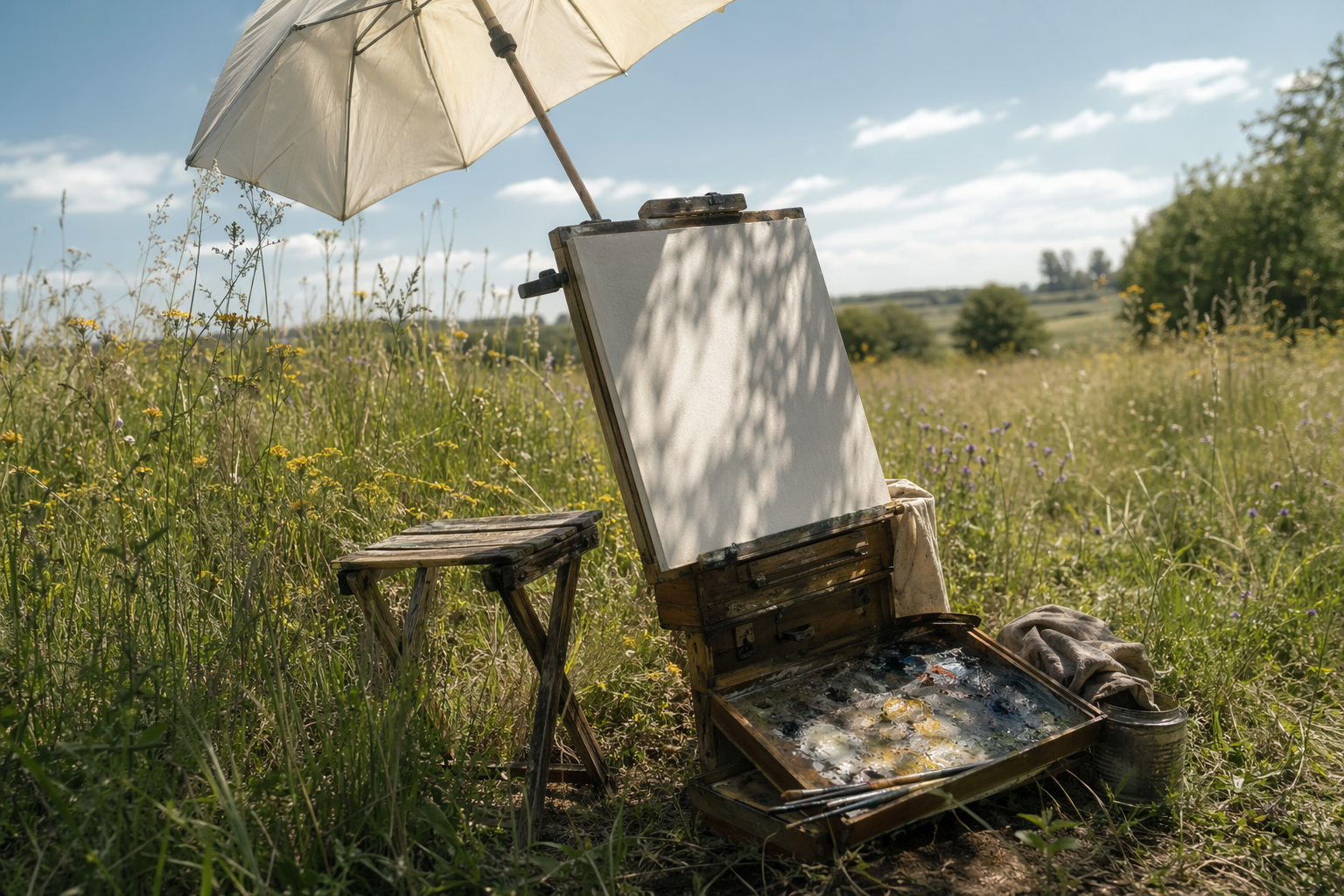
A parasol is not an optional luxury for summer plein air painting; it's a practical necessity if you're working in direct sun. The reason is straightforward: a canvas in direct sunlight reads artificially bright while you're working on it. Every value judgement you make is calibrated to that lit surface, and when you bring the painting indoors, everything looks too dark. The painting you thought was working outdoors simply doesn't hold up.
A dedicated artist's parasol with an easel clamp fitting is worth having over a standard garden umbrella. The clamp attachment keeps it positioned precisely over the canvas regardless of where you move, and the right size tends to shade both your work and your palette at once. Look for one with a neutral white or light grey underside rather than a coloured canopy; a bright green or blue underside will throw a colour cast onto your work that you won't notice until you're home.
The goal is to have your canvas in shade even if you yourself are standing in sun. Many painters also angle the lid of a pochade box to create shade over the mixing area, which is a simple and effective trick.
Choosing the right viewing and working position
Your physical position relative to the sun matters as much as the parasol. Ideally, position yourself so that neither the canvas nor your palette is receiving direct glare, and so that you're not squinting directly into a bright sky when you look up from your work to assess the scene.
Sunglasses might seem like an obvious solution, but they're worth treating with caution when painting. Polarised lenses, in particular, can subtly distort colour perception. Tinted lenses affect your read of colour temperature, which becomes a real problem when you're trying to judge the warmth of a shadow or the coolness of a highlight. A wide-brimmed hat that shades your eyes without altering your colour perception is genuinely more useful. It cuts the glare between your palette and canvas without changing what you see.
Adjusting your values for bright light
In strong summer light, the full tonal range of a scene can feel compressed and difficult to read. One practical adjustment that helps is to work on a pre-toned surface rather than starting on white. A mid-tone ground, whether a warm grey or a neutral earth tone, means you're calibrating up and down from a mid-point rather than from a glaring white that reads very differently in shade versus sun. It's easier on the eye and tends to produce more coherent tonal relationships.
Squinting is even more important than usual in bright conditions. It collapses the midtones and lets you read the true range from light to dark, stripping away the distracting detail that makes tonal assessment difficult. If you've been taught to squint while assessing a scene, summer is the time to make it a genuine habit.
How Summer Heat Affects Your Materials
| Medium | Main challenge | Practical fix |
|---|---|---|
| Oil (with linseed or alkyd) | Dries faster, medium thins too quickly | Use less medium; switch to a slow-drying medium if needed |
| Watercolour | Dries on the palette before you can use it | Keep a fine mist spray bottle to hand; use a covered palette |
| Gouache | Skins over rapidly; can crack if applied too thick | Work in smaller mixes; keep palette covered between strokes |
| Acrylic | Dries almost immediately; edges hard to blend | Add a retarder medium; avoid direct sun on the palette |
Oil painting in the heat
Heat thins most oil mediums, linseed included. On a warm afternoon, what would normally be a well-behaved consistency becomes noticeably runnier, which affects how the paint handles and can lead to colours that slide around rather than sitting where you put them. Drying times also accelerate, meaning that colours may begin to skin over sooner than you'd expect, making blending and correction harder as the session goes on.
The practical response is to use slightly less medium than you normally would, or to switch to a slower-drying formulation on particularly warm days. Gamblin's Galkyd Slow Dry is one option that plein air oil painters often reach for in summer; it extends working time without dramatically changing the handling of the paint. Keep your pigments in shade wherever possible, as direct sun on a squeezed-out palette accelerates skinning further.
One positive note: finished oil paintings will dry noticeably faster in warm summer temperatures, which is useful if you're transporting work. Just be careful about stacking paintings before they're fully dry.
Watercolour in summer conditions
Summer is the season that watercolour painters either love or quietly dread. Wet-in-wet techniques, which depend on paint staying workable for a minute or more, can become genuinely difficult to execute in direct sun and heat. Paint dries on the pan before you pick it up, and mixes dry in the wells almost as quickly as you lay them out.
A small fine mist spray bottle is the single most useful adaptation here. A quick mist over the palette before you pick up your brush keeps the colours workable and saves enormous frustration. A covered or travel palette, with a sealable lid that keeps the paints moist between mixes, makes a meaningful difference over a two-hour session.
The broader adjustment is to accept that summer watercolour often asks for a more direct, faster approach. Work confidently rather than fussing; the conditions reward decisiveness.
Keeping your palette usable
For both oil and watercolour painters, working in shade wherever possible is the single most effective way to keep the palette workable. If you're using oil, some painters clip a piece of card to the side of the box or lid to create shadow over the mixing area when a full parasol isn't covering it. A purpose-made plein air palette with a sealable lid is worth having for summer work; being able to seal it between periods of work and while you step back to assess the scene makes a noticeable difference to how long your mixes stay fresh.
Looking After Yourself on a Summer Painting Session
It's worth being straightforward about this rather than treating it as a footnote. Painting outdoors is physical work; you're standing, concentrating, and often carrying equipment, and in summer you're doing all of that in the sun.
Bring more water than you think you need. Dehydration affects concentration sooner than most people expect, and a 90-minute session in direct sun can leave you genuinely parched. A small insulated bottle keeps water cool for longer.
Don't underestimate the UK sun
Even on overcast summer days in Britain, UV levels can be high enough to burn. Factor SPF into your kit list alongside brushes and mediums. A wide-brimmed hat also cuts glare on your canvas significantly.
Heat exhaustion is a real consideration in the UK, even though we rarely associate it with British weather. If you feel dizzy, unusually tired, or develop a headache mid-session, stop, find shade, and drink water. It's not dramatic; it's just sensible.
A lightweight portable chair also earns its place in a summer kit bag. Standing for two hours in the sun is significantly more draining than standing in cool autumn air, and having the option to sit, even for a few minutes between stages of a painting, helps maintain focus.
One final note for painters heading to Scotland, northern England, or anywhere near still water in summer: midges are a genuine consideration in calm, warm conditions. A light application of repellent before you set up is worth the ten seconds it takes.
Planning a Summer Plein Air Session in the UK
Good summer sessions tend to be planned rather than improvised, at least until you have a clear feel for how the conditions affect your work.
Scouting a location in advance, or arriving early to assess light direction before committing to a spot, makes a significant difference. Note where the sun will be during your intended painting window and position yourself accordingly. If you have no choice but to paint around midday, look for north-facing subjects: the shaded side of a hedgerow, a building's north facade, or a tree canopy from below. These offer more stable, consistent light when directional shadow work simply isn't available.
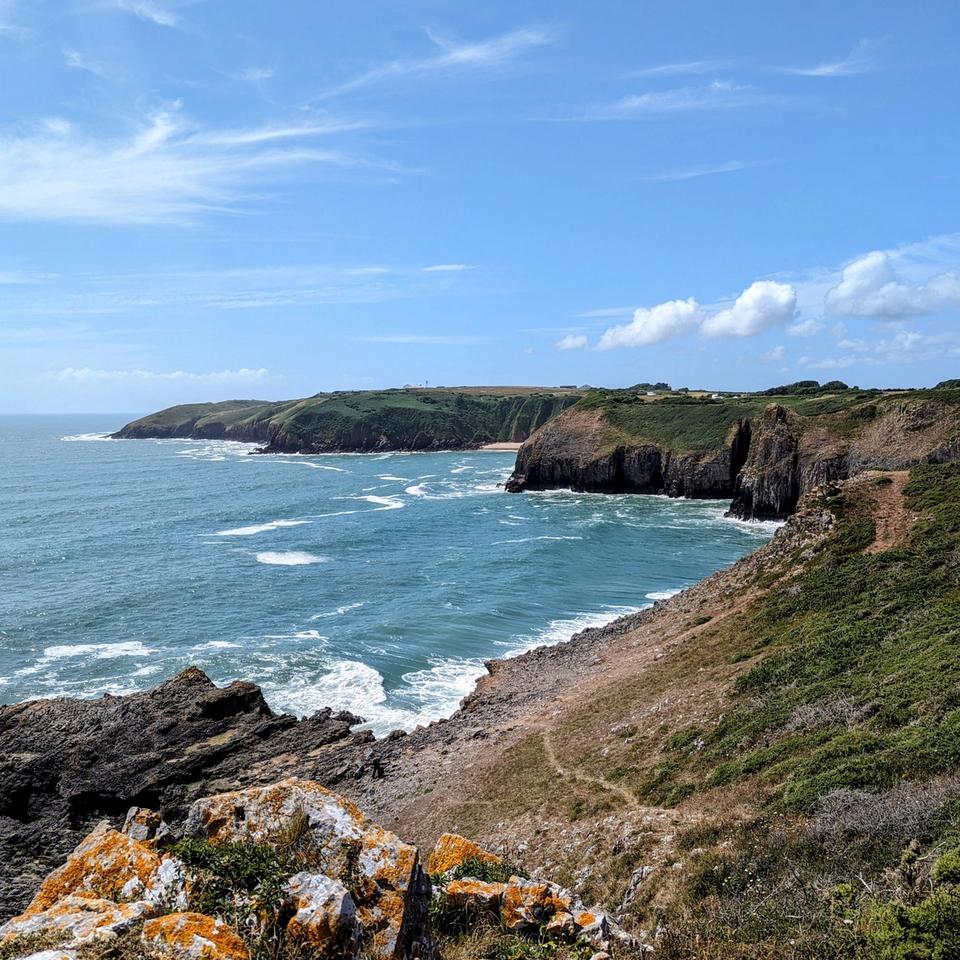
Coastal locations are a summer favourite, and rightly so, but sea glare is intense and should not be underestimated. Painting directly toward open water in bright conditions is genuinely difficult. Cliffs, rock pools in shade, and harbour walls with their own shadow structures often give you something more manageable. UK coastal weather also shifts faster than inland conditions, so bring both a parasol and a windbreak.
UK summers are also prime time for accessible gardens, National Trust properties, and managed countryside. These often come with practical advantages: shade structures, seating, accessible facilities, and a consistent environment that makes a painting session more comfortable and focused.
Summer painting session at a glance
- Best session window
- 7–10am or 5–8pm
- Comfortable working temperature
- Below 25°C
- Canvas exposure risk
- High in direct sun
- Paint drying acceleration (oil)
- Roughly 30–50% faster
Light is lower, shadows more defined
Above this, materials and concentration both suffer
Use a parasol or position in open shade
Adjust consistency and medium use accordingly
Finally, consider keeping summer sessions shorter and more focused than you might in spring or autumn. Sixty to ninety minutes of concentrated painting in good morning or evening light will almost always produce better results than three hours that drift into the difficult midday period. It's not a compromise; it's a well-matched response to what the season actually offers.
Summer plein air painting in the UK is genuinely rewarding when you work with its particular rhythms rather than fighting them. Get the timing right, shade your canvas, keep your palette moist, and go home before the light gets hard. You'll paint better for it.
FAQ
Frequently Asked Questions
When is the best time for summer plein air painting in the UK?
Aim for early morning (7–10am) or evening (5–8pm) light. These windows give warmer, directional light and clearer shadows. Use midday for scouting or quick studies rather than full paintings.
How do I prevent a painting from looking too dark after working in bright sun?
Keep the canvas shaded with a parasol or position it in open shade. Work on a mid-tone ground rather than white so you calibrate values from a middle point rather than a glaring surface.
How can I stop watercolour or gouache drying on the palette in summer?
Use a fine mist spray bottle, a covered travel palette, or a sealable pochade box. Work in smaller mixes and reseal the palette between strokes to keep paints workable.
What adjustments should oil painters make in hot conditions?
Use less medium, switch to a slower drying medium when needed, and keep squeezed-out paint in shade. Expect faster skinning and drying and avoid stacking wet panels.
What basic health precautions should I take on a summer session?
Bring ample water, wear SPF and a wide brim hat to cut glare, take short seated breaks, and stop if you feel dizzy or unusually tired. Insect repellent helps in some locations.
Author

PleinAirPainting Editorial Team
PleinAirPainting.co.uk helps artists paint outdoors with confidence through UK-focused guides, equipment advice, resources and plein air inspiration.