Using a Tripod for Plein Air Painting: What to Look For and Whether It's Right for You
Practical guide to using a camera-style tripod for plein air painting. Learn material and head choices, load and stability tips, umbrella advice and UK options for different budgets.

Key takeaways
- • Tripod plus pochade box is compact, travel friendly and faster to adjust than many field easels.
- • Choose material and load capacity to match how far you carry kit and how big your painted panels are.
- • The head matters: a solid ball head and quick release speed setup; check 1/4 or 3/8 thread compatibility.
- • Set up low, spread the legs wide, hang ballast and plant one leg under the painting to resist wind and brush pressure.
- • Umbrellas help control glare on calm days but avoid them in strong wind and choose a neutral interior and vented canopy.
The traditional easel isn't the only way to paint outdoors, and for many UK painters it's no longer even the first choice. A camera-style tripod paired with a pochade box or panel holder has quietly become one of the most practical setups for painting outside, particularly for anyone travelling on foot or by public transport. This article walks you through how to choose a tripod for plein air painting, what to look for in the head and legs, how umbrellas fit into the picture, and which specific products are worth considering from UK suppliers.
Why Painters Are Switching to Tripod-Based Setups
For years, the French easel was the default for outdoor painters. It holds a canvas, stores your kit, and looks the part. It also weighs a fair amount, takes up real space on a train, and can be a genuine struggle on uneven ground in the wind.
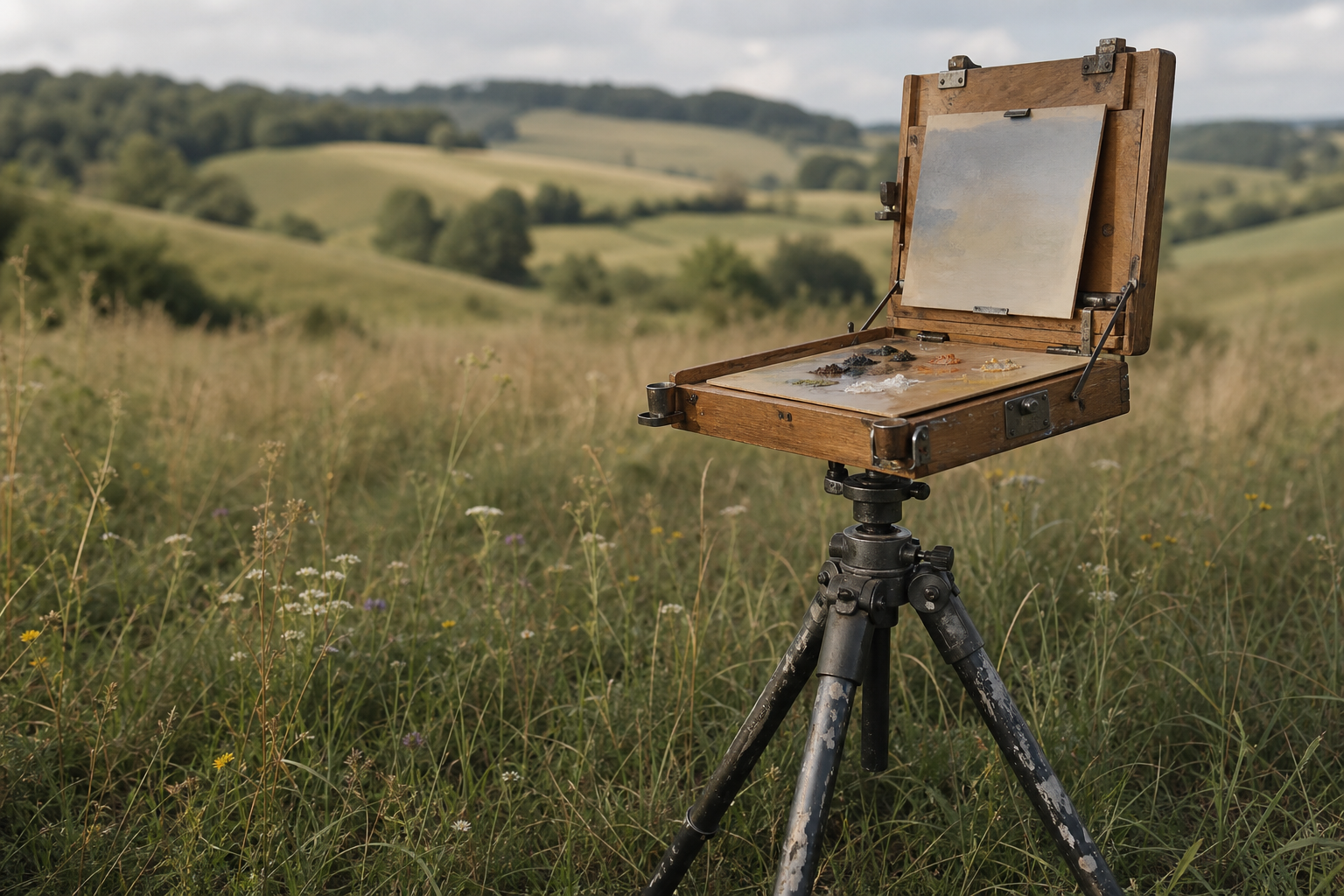
The shift toward tripod-and-pochade-box combinations has been driven by a straightforward calculation: lighter, more compact, and more adjustable. A tripod folds down to roughly the size of a walking pole. A pochade box clips onto the head via a standard screw thread. The whole system fits inside or alongside a rucksack, which matters enormously if you're getting to your painting spot on foot, by bus, or by train.
It's a slightly more technical setup than a traditional easel, in that there are a few more components to understand and connect. But most painters find they've got it sorted within a session or two, and after that the speed and convenience make it hard to go back.
| Aspect | Tripod + pochade box | French / field easel |
|---|---|---|
| Weight | Usually lighter, especially with a compact box | Heavier, especially full French easels |
| Stability | Very good if set up correctly | Can wobble in wind or on uneven ground |
| Height and angle control | Precise; ball head allows fast changes | More limited by easel design |
| Packed size | Compact; fits in a rucksack or carry-on bag | Bulkier; awkward on public transport |
| Setup speed | Quick once familiar | Reasonable, but more parts to unlock |
| Medium suitability | Excellent for panels and small boards | Better for large canvases |
What to Look For in a Tripod for Plein Air Painting
Not all tripods are created equal, and the features that matter for a photographer don't always overlap with what a painter needs. Here's what to think about before you buy.
Material: Aluminium or Carbon Fibre?
Tripods are made from two main materials: aluminium and carbon fibre. Aluminium is heavier but significantly more affordable. Carbon fibre is noticeably lighter and better at dampening vibration, but you'll typically pay two to three times as much for a comparable model.
For most painters starting out with a tripod-based setup, a mid-weight aluminium tripod is a perfectly sensible choice. The weight difference is real but rarely makes or breaks a session unless you're covering serious distances on foot. Carbon fibre becomes worth considering if you're already painting regularly and know that pack weight is a genuine constraint for you.
One firm warning: avoid ultra-cheap tripods priced under around £30. They flex under load, the leg locks slip, and they're prone to toppling in a breeze. A collapsing tripod in a public space, with solvent pots attached, is a real hazard. Treating tripod quality as sensible risk management isn't overcaution; it's just good practice.
Load Capacity
Every tripod has a stated maximum load capacity. For painting use, choose a tripod rated for at least double the combined weight of everything you'll mount on it: your pochade box, any panels stored in it, your palette, and accessories. A typical compact pochade box setup might weigh 1.5 to 2.5 kg when loaded. A tripod rated to 5 kg or above gives you a comfortable margin.
Leg Locks: Twist or Lever?
Tripod legs extend and lock in one of two ways. Twist locks require you to rotate a collar to release and tighten each section. Lever locks use a flip clasp that snaps open and shut. Both work well; the difference is mostly personal preference. Lever locks are often easier for painters who find fine grip a challenge, since they require less twisting force to operate.
Whichever type you choose, look for a centre column with a hook at the bottom. This lets you hang your bag from the column when you're set up, adding ballast against the wind. In UK conditions, this feature earns its keep repeatedly.
The Head Matters as Much as the Legs
The head is the part that connects your pochade box to the tripod legs, and it has a bigger effect on your painting experience than most guides acknowledge.
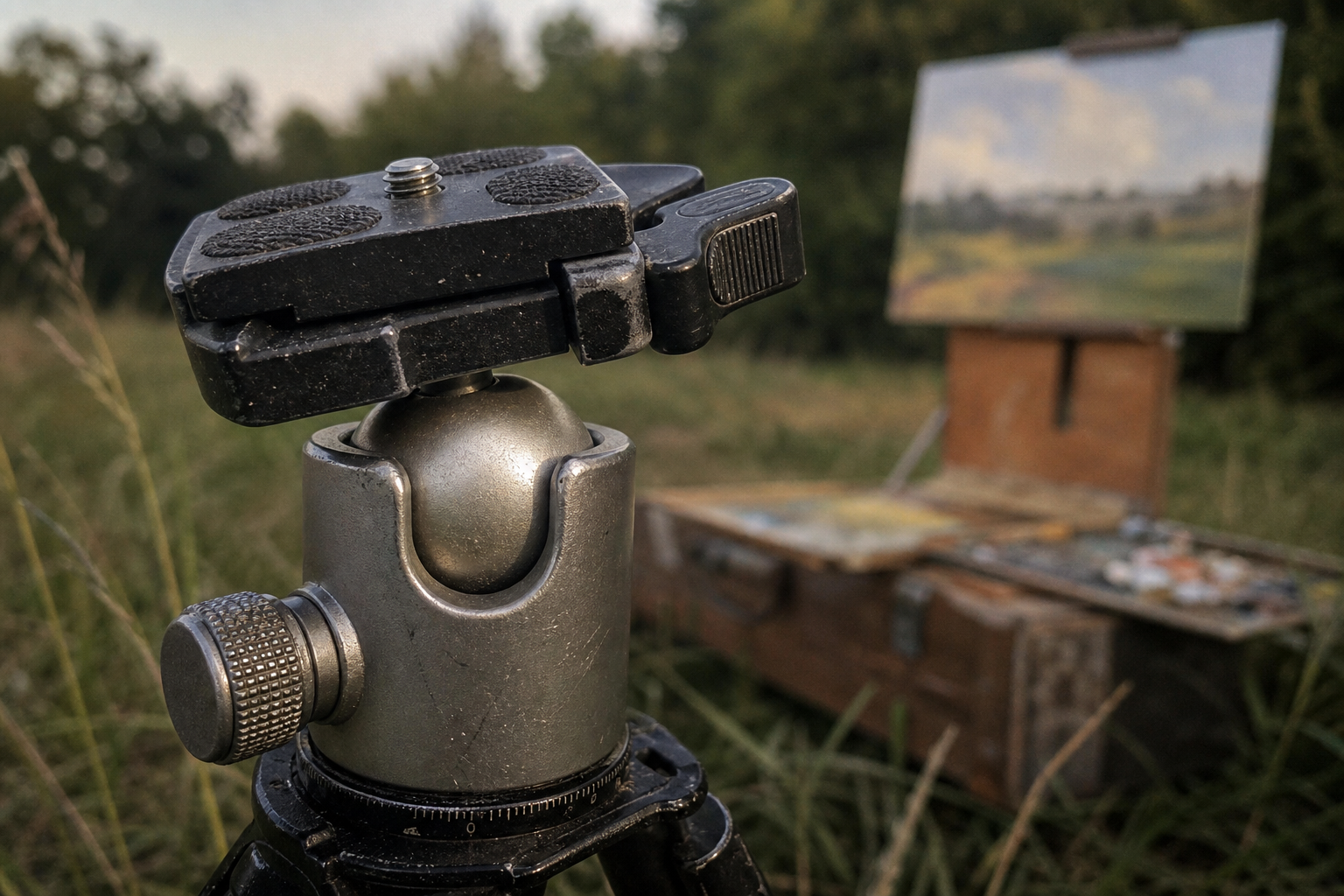
A ball head is the standard recommendation for painting use. It lets you tilt and rotate the mounted box quickly and freely, then lock it down firmly in one movement. When it's locked, it should stay locked; a head that drifts under the weight of a loaded box is a real problem.
Some painters working with larger boards prefer a fluid video head, which allows smoother, more controlled tilt adjustments. For most painters working on panels up to A3 in size, a good ball head is the better choice: faster to adjust and more compact.
Avoid three-way pan-tilt heads if you can. These have separate locks for each axis of movement, which makes fine angle adjustments slower and fiddlier. They're also more likely to drift over time.
Thread Size and Quick-Release Plates
This is the detail that catches people out most often. Tripod heads use either a 1/4-inch or 3/8-inch screw thread to attach accessories. Most pochade boxes have a standard threaded socket underneath, but not all use the same size. Check your specific box before buying a tripod or head.
A quick-release plate system, where a small plate stays attached to the box and clips in and out of the head in seconds, makes setup and pack-down significantly faster. It's worth having. If your head doesn't include one, they're available separately and inexpensive.
Test before your first session
Set the whole rig up in your garden before taking it out. Press firmly on the top edge of the mounted panel to check for wobble. Try adjusting the angle a few times to see if the head drifts after locking. A few minutes of testing at home will save you real frustration in the field.
Tripods Worth Considering: From Art-Specific to Camera Options
UK painters broadly have two routes when buying a painting tripod. The first is an art-specific tripod designed with painting use in mind, which removes most of the compatibility guesswork. The second is a general camera tripod from a photography retailer, paired with a suitable mounting system. Both approaches work well; the art-specific route is simpler, while the camera route can offer more choice at a given price point.
We earn a small commission if you buy through our links, at no extra cost to you.
Jackson's
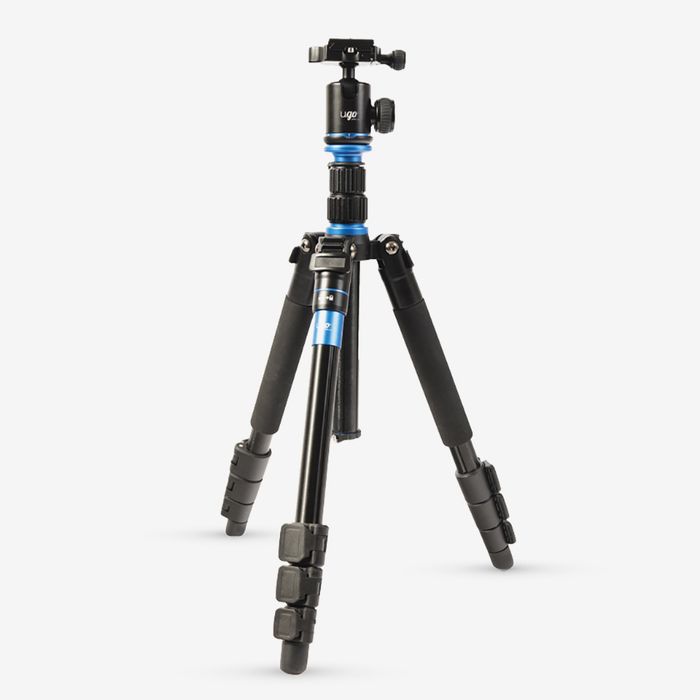
New Wave : U.GO : Plein Air : Tripod LCS1
The U.go Tripod LCS1 Has Been Designed By New Wave Specifically For The Plein Air Painter. The LCS1 Is A Practical Tripod That Ticks All The Boxes For Studio Use Or Outdoor Painting - It Is Lightweight, Compact, Sturdy, And Affordable. Specifications: * Lightweight | 2.9 Lbs (1.3
For painters who'd rather use a general camera tripod, the principle is the same: look for a mid-weight aluminium or entry-level carbon model with a decent ball head, rated to at least 5 kg. Photography retailers such as Wex or London Camera Exchange carry a wide range, and Jackson's and Cass Art stock some options too. The key additional purchase you'll need is a proper mounting bracket to connect your box or panel holder to the head.
Jackson's
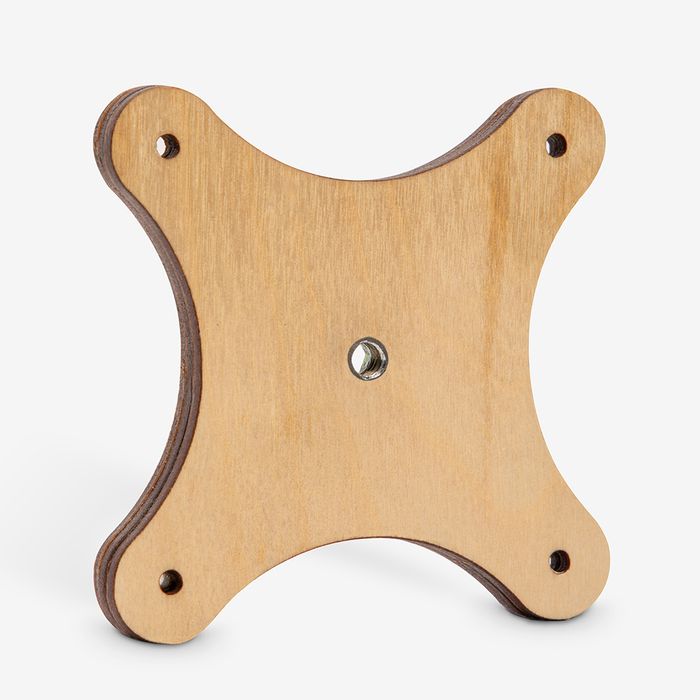
Studio Essentials : Tripod Mounting Bracket
The Tripod Mounting Bracket Allows You To Convert Your Camera Tripod Into An Easel. The Bracket Can Be Fixed To The Centre Of Your Drawing Board Or Pochade Box, And By Using The Standard Tripod 1/4" Thread In The Centre Of The Adaptor, Can Then Be Fixed To Your Camera Tripod.Boar
Jackson's
Mabef : MA30 Tripod for Pochade Box
Each Mabef Easel Is Made In Italy From Good Quality Beech Wood. Amongst Professional And Amateur Artists, Mabef Easels Have Been The Popular Choice For Over 50 Years. The Mabef M104 And M105 Pochade Boxes Can Either Be Mounted On A Standard Camera Tripod Or On This Elegant Foldin
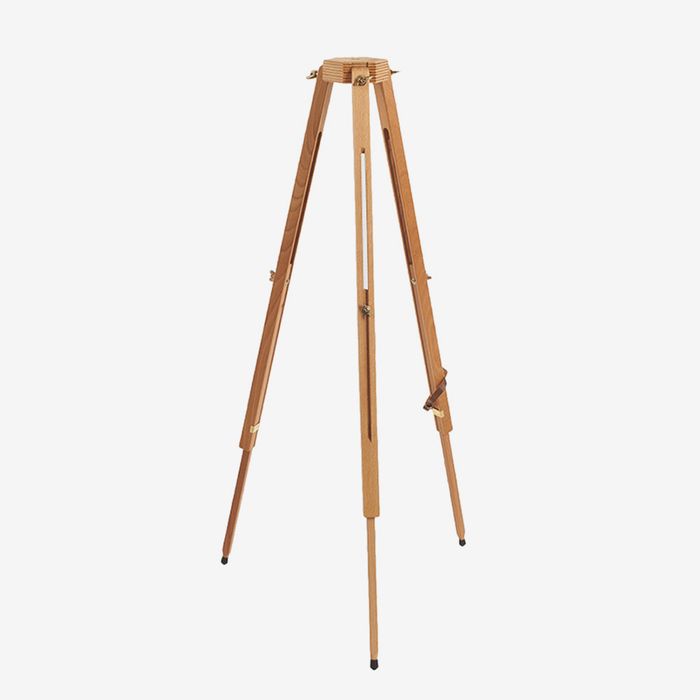
The Mabef MA30 (around £67) is a practical, budget-conscious art-specific option. It won't win awards for lightness, but it's a reliable starting point for painters who want an art-focused tripod without the outlay of the New Wave. The Studio Essentials Tripod Mounting Bracket (around £8) is a neat solution if you already own a camera tripod and simply want a way to mount a panel or box without committing to an entirely new system.
Keeping Your Tripod Stable in British Conditions
Wind is a more persistent reality for UK painters than a lot of outdoor painting guides acknowledge. Whether you're on a coastal path in Cornwall, a moorland track in the Peaks, or a riverbank in the Thames Valley, there will be days when the wind is the main challenge you're managing. A tripod setup handles wind well when it's set up thoughtfully, and poorly when it isn't.
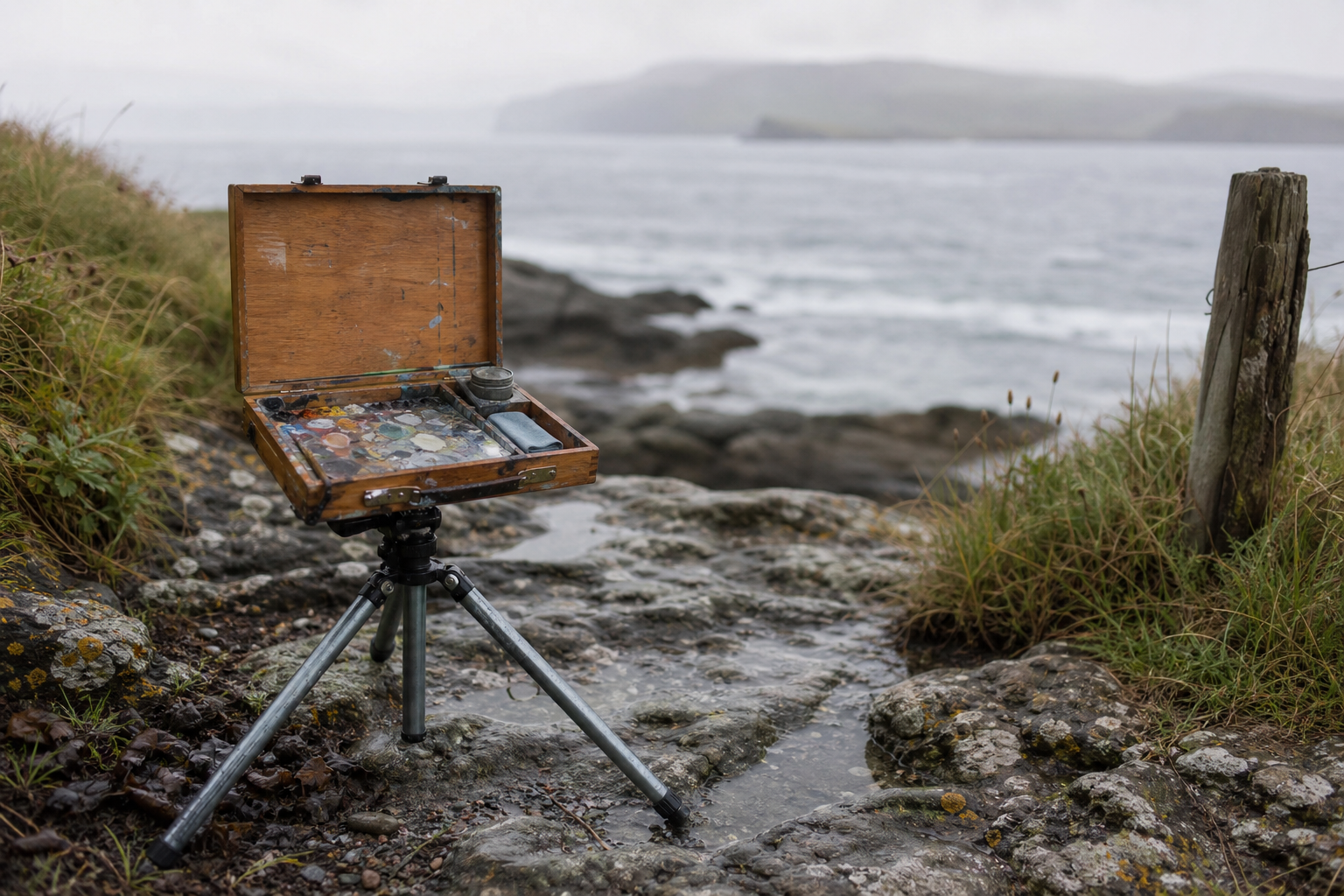
Setting up for wind
Start low
Keep the centre column fully or mostly retracted. Height comes from leg length, not the column.
Spread wide
Open the legs to their widest stable angle. Plant them firmly on any available solid ground.
Use only the thicker leg sections
Only extend the thinnest leg sections if you genuinely need the extra height.
Orient one leg forward
Position one tripod leg directly beneath your painting surface to resist brush pressure.
Add ballast
Hang your bag, or a water bottle, from the centre column hook. Even a kilogram of weight makes a real difference.
Check and lock everything
Give the mounted box a gentle press from the side before you start painting. If it moves, tighten up.
A few additional points worth knowing: in genuinely gusty conditions, consider going smaller on panel size. A larger panel acts like a sail, increasing the force the wind can apply to the whole setup. Angling the board very slightly downward, rather than perfectly vertical, also reduces the surface area catching the wind directly.
On rough or uneven ground, take a moment to find the most solid footing for each leg rather than simply opening them out on the spot. A tripod with two legs on soft ground and one on a rock will always be less stable than one planted thoughtfully across a firm surface.
Umbrellas for Plein Air Painting: Useful Tool or Wind Hazard?
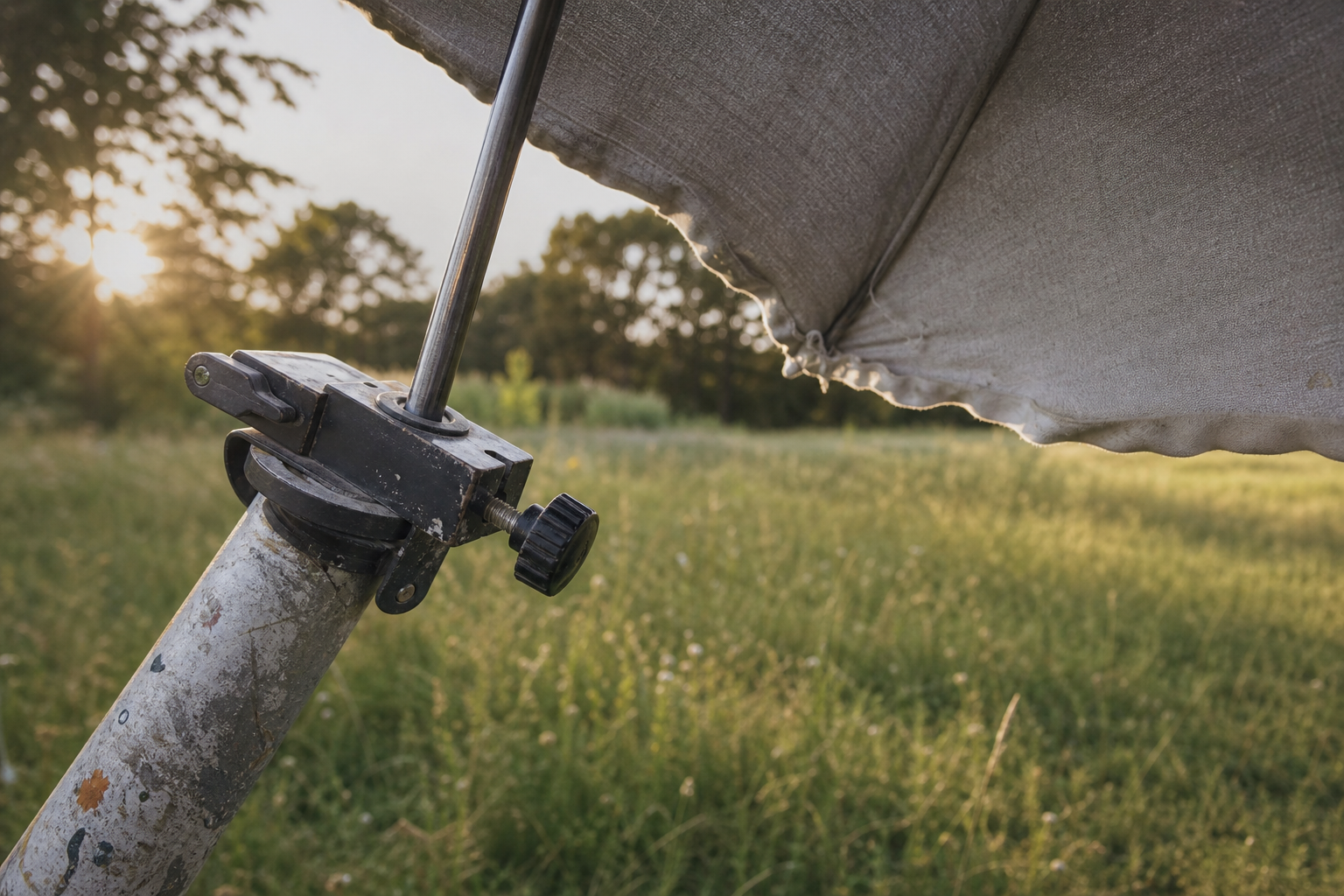
The umbrella for plein air painting is one of those pieces of kit that looks immediately useful when you first see it on someone's setup, and then becomes more complicated the more you think about using it in actual UK conditions. Here's an honest breakdown.
What a Plein Air Umbrella Actually Does
The primary purpose of a painting umbrella isn't to keep you dry; it's to control the light falling on your palette and painting surface. Direct sunlight causes glare, bleaches out your colour perception, and makes it difficult to mix accurately. A painting umbrella creates consistent, diffused shade across your working area, which means the colours you mix on your palette are closer to what you'll see on a wall indoors.
This is genuinely valuable on bright, sunny days, and it's the reason dedicated painting umbrellas have a neutral grey or silver interior rather than a coloured one. A coloured canopy casts a tint across everything beneath it, which you really don't want when you're trying to judge subtle tonal differences.
What to Look For
When choosing an umbrella for plein air painting, the features that matter most are:
- A wind-vented canopy, which allows air to pass through rather than building up pressure underneath and flipping the umbrella
- A strong clamp arm that grips the tripod leg firmly without slipping under load
- Enough reach to cover both the palette and the painting surface simultaneously
- A neutral grey or silver lining, not white or a colour
- A price point: dedicated plein air painting umbrellas from UK art suppliers typically range from around £30 to £100
Before buying, check that the clamp is compatible with your tripod leg diameter. Leg diameters vary between models, and a clamp that doesn't seat properly is worse than no clamp at all. Jackson's Art, Ken Bromley, and Cass Art all carry umbrella options worth looking at; check current stock and confirm compatibility before ordering.
When to Leave It at Home
In sustained wind, a painting umbrella becomes a liability rather than an asset. It catches the wind like a sail, transmits that force directly into the tripod, and destabilises the whole setup. It also requires constant attention: tightening the clamp, adjusting the angle, rescuing it when it flips. That's energy and focus you'd rather be putting into the painting.
For sessions on exposed coastal sites, hilltops, or moorland, a wide-brimmed hat or cap with a decent peak is a far more practical solution. Positioning yourself with your back to the sun, or finding a natural windbreak, does more for your setup's stability than any umbrella will.
The umbrella earns its place on calm, bright days when glare is your primary enemy. On those days, it genuinely improves the painting experience. But don't feel obliged to use it in every session. Plenty of excellent plein air painters in this country leave it in the bag more often than not.
The neutral interior rule
If your umbrella has a brightly coloured interior, it will cast a colour tint across your palette and painting. Choose an umbrella with a neutral grey or silver lining — it won't interfere with how you see your colours.
Is a Tripod Right for You? A Simple Decision Guide
There's no single correct setup for plein air painting, and the right answer depends on how you work and where. Here's a straightforward way to think it through.
A tripod-based setup is likely a good fit if:
- You paint regularly outside the studio: in parks, on the coast, in towns and villages
- You work on panels or boards up to roughly A3 in size
- You travel to painting spots on foot, by bike, or by public transport
- You want precise, fast control over the angle and height of your working surface
- You're comfortable learning a slightly more technical setup; most painters find their rhythm within a couple of sessions
You might prefer a traditional easel if:
- You're regularly painting large canvases, over roughly 50 to 60 cm on the long side, where a tripod setup becomes less practical
- You drive to your painting locations and don't need to carry your kit far
- Fine motor controls such as small knobs and locking mechanisms are a genuine challenge for you; a straightforward one-piece field easel may suit your needs better
Neither answer is wrong. Some painters use both setups depending on the day and the location. The goal is to spend more time painting and less time wrestling with your equipment.
UK Availability and Pricing at a Glance
| Option | Approximate UK price | Best for |
|---|---|---|
| New Wave U.GO Tripod LCS1 | £150 | Painters who want a ready-to-go art-specific system |
| Mabef MA30 Tripod for Pochade Box | £67 | Budget-conscious painters with a compatible box |
| Studio Essentials Tripod Mounting Bracket | £8 | Painters who already own a camera tripod |
| Entry-level aluminium camera tripod (photo retailer) | £40–£80 | Painters willing to source their own head and bracket |
| Mid-range aluminium / basic carbon tripod (photo retailer) | £80–£200 | Painters prioritising weight or stability upgrades |
| Plein air umbrella (art supplier) | £30–£100 | Bright, calm days; glare control |
A tripod setup genuinely opens up more flexibility outdoors. It's lighter to carry than most traditional easels, faster to adjust once you're familiar with it, and steadier when it's set up with a bit of care. The learning curve is real, but it's short. If you're curious about making the switch, the best approach is to try the whole rig in your garden or a local park first, somewhere familiar and low-pressure, before committing to a full day out. A session or two of experimenting at home is usually all it takes to feel confident, and after that the setup tends to get out of the way and let you focus on the painting.
FAQ
Frequently Asked Questions
Is a tripod better than a traditional French easel for plein air painting?
A tripod with a pochade box is lighter, more compact, and faster to adjust, making it ideal for travel and panels up to about A3. A French easel still suits larger canvases and studio style comfort.
Aluminium or carbon fibre tripod which should I pick?
Aluminium is cheaper and reasonably stable for most painters. Carbon fibre is lighter and damps vibration better but costs two to three times more. Choose carbon if pack weight is a real constraint.
What load capacity do I need for a painting tripod?
Pick a tripod rated for at least double the combined weight of your loaded pochade box, panels, palette and accessories. A 5 kg rating or above gives a comfortable margin for most setups.
Which tripod head works best for painting?
A good ball head is the usual choice because it allows fast tilt and angle changes and locks firmly. Fluid video heads suit larger boards. Avoid three-way heads as they are slower and more likely to drift.
Should I use a plein air umbrella with my tripod?
Use an umbrella on calm, bright days to reduce glare but choose one with a neutral grey or silver interior, a vented canopy and a strong clamp. Leave it at home in gusty conditions because it can destabilise the rig.
Author

PleinAirPainting Editorial Team
PleinAirPainting.co.uk helps artists paint outdoors with confidence through UK-focused guides, equipment advice, resources and plein air inspiration.