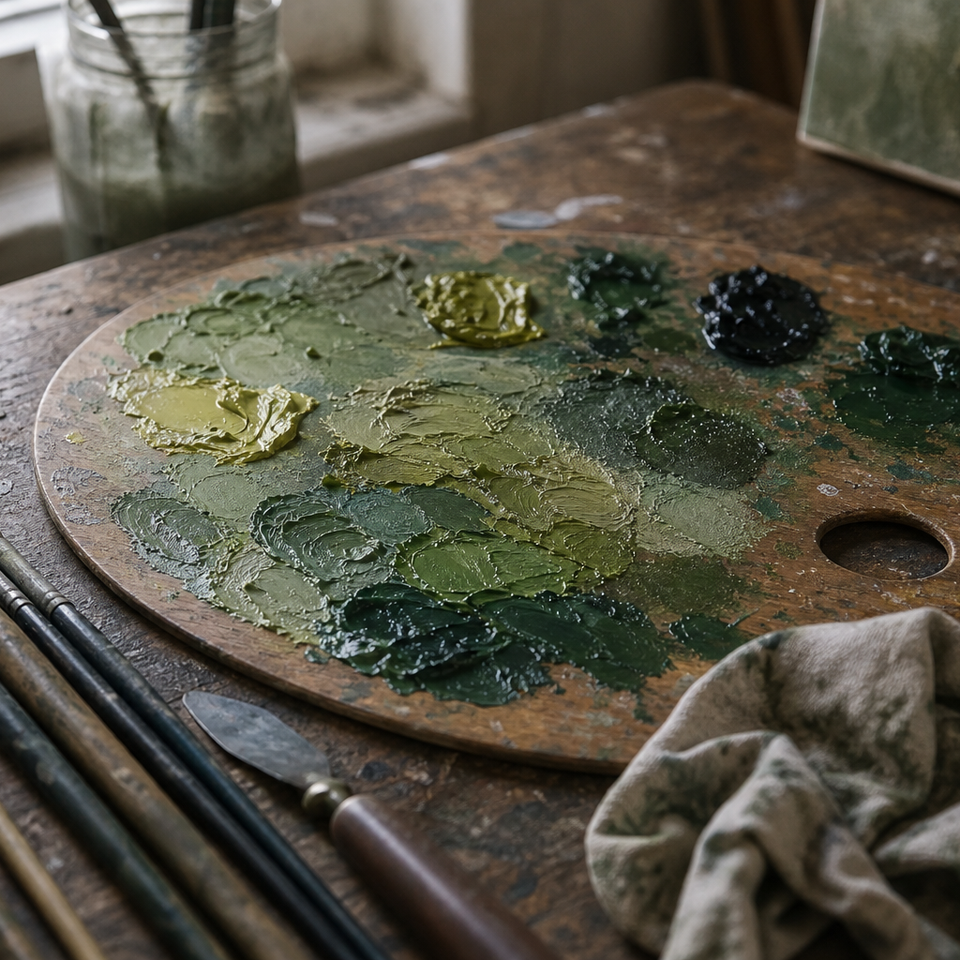
15 Best Plein Air Painting Spots in London Parks (And Where to Set Up)
15 transport-friendly park locations across London for painting outdoors. What to paint, best times, nearest stations, crowd tips, and compact kit recommendations.

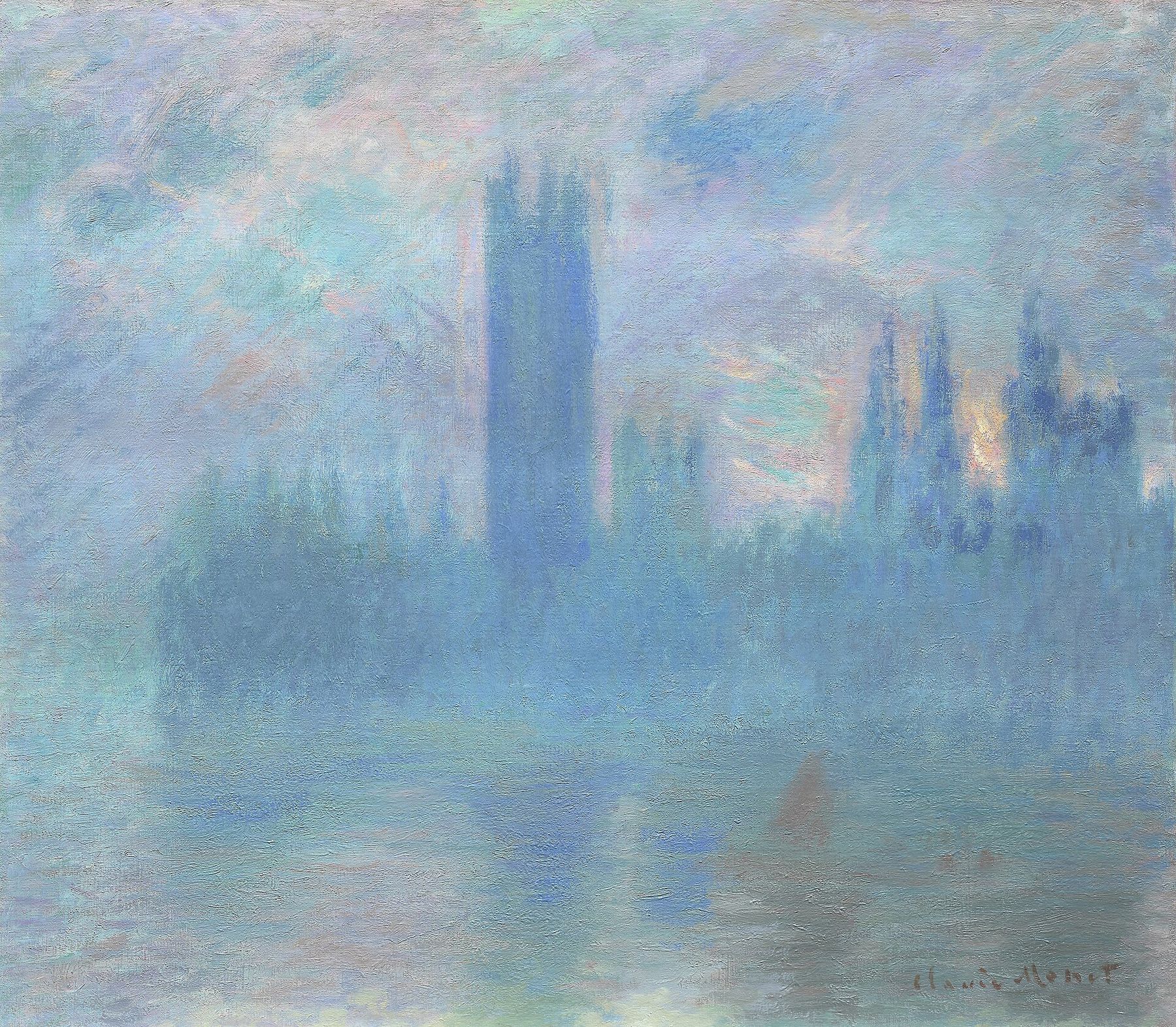
Houses of Parliament, London by Claude Monet.
Credit: Claude Monet; Art Institute of Chicago; CC0
Key takeaways
- • London offers a dense variety of paintable subjects within easy public transport reach.
- • Early morning and late afternoon provide the best light and fewer crowds for plein air painting.
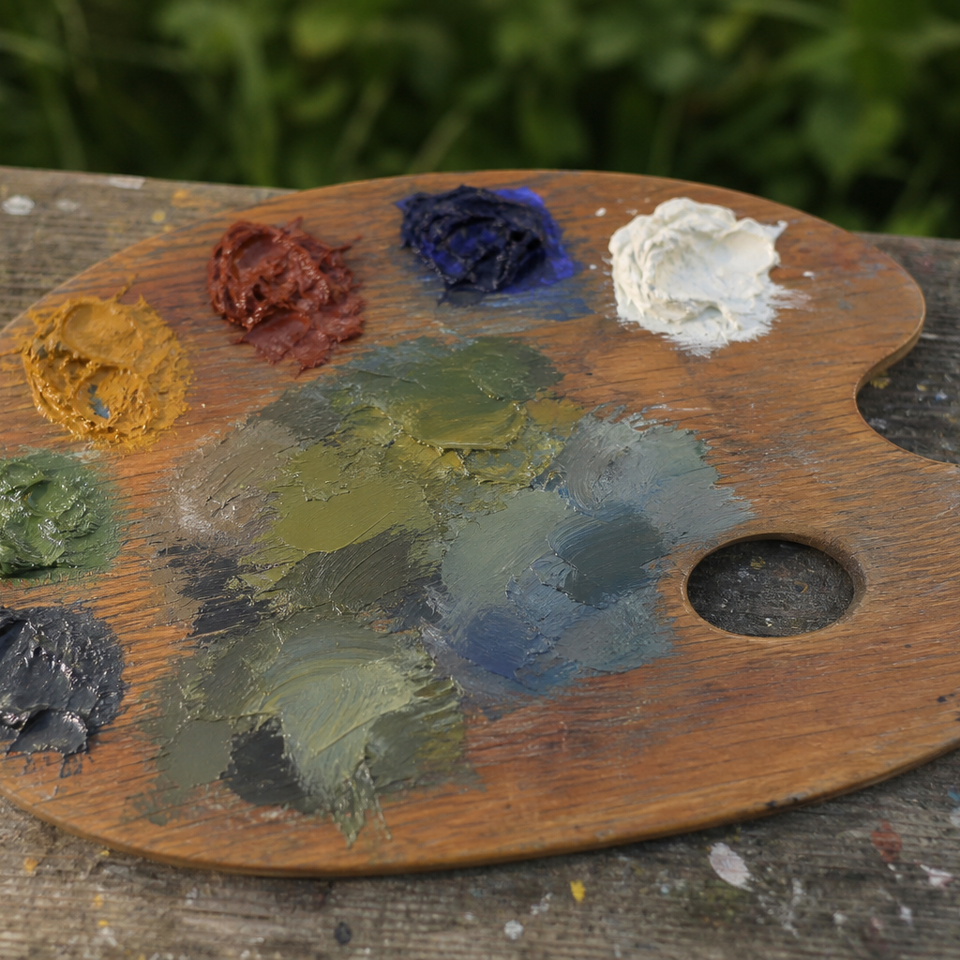
- • Pack compact kit: a pochade box, small panels, limited palette, folding stool, and a waterproof layer.
- • Fifteen recommended spots include Royal Parks, Hampstead Heath, Richmond Hill, Little Venice, Wapping, and the Barbican.
- • Join the London Plein Air Group or local sketching communities for organised sessions and local knowledge.
London is one of the best cities in the UK for painting outdoors. Within a few tube stops of almost anywhere, you'll find open water, formal gardens, broad skies, centuries of architecture, and canal towpaths that feel a world away from the streets above them. If you're looking for plein air painting spots in London, the city rewards the painter who comes prepared. This guide cuts straight to the locations: fifteen specific spots, what you'll find at each one, when to go, and how to get there without a car. The scale of London can feel overwhelming at first. It isn't, once you know where to look.
What Makes London Such a Good Place to Paint Outdoors?
London packs an unusual density of paintable subjects into a city that's also genuinely easy to move around. You can be standing in front of a broad lake in Hyde Park, a working canal in Little Venice, or a panoramic Thames view at Richmond Hill, all within an hour of central London by public transport, and often much less. That matters when you're carrying kit.
The variety is what keeps London painters coming back. Water, sky, architecture, formal planting, wild heathland, industrial riverside: you won't run out of subjects. Seasonal change is real here too, spring blossom in St James's Park, autumn colour on Hampstead Heath, low winter light catching the Thames at Wapping.
London also has an active plein air community. The London Plein Air Group and the long-established Wapping Group of Artists both operate from the city, which means you're joining a place with a genuine painting culture, not just a postcard backdrop.
A Quick Word on Access and Regulations
The most common anxiety for painters new to London's parks is a simple one: am I actually allowed to set up here? The reassuring answer, for most locations, is yes.
Individual painting for personal use is treated as normal recreational activity in London's Royal Parks (Hyde Park, Regent's Park, Richmond Park, Greenwich Park, St James's Park, and Kensington Gardens). You don't need to apply for permission, carry documentation, or notify anyone. Set up, paint, and enjoy it.
Regulations in the Royal Parks are aimed at organised commercial events, paid workshops with groups, and activities that involve erecting structures or obstructing paths. A painter with a pochade box and a folding stool is not in that category.
A few practical points worth keeping in mind across all locations: don't block footpaths with your easel, stay off sensitive planting, and avoid attaching anything to park infrastructure. The Barbican is a residential and commercial estate rather than a public park; painting in its open public areas is generally fine, but it's worth being aware of that different context. Wapping and some Thames-side locations involve a mix of public and privately managed riverside access, so it's worth checking specific routes before you visit.
Painting in Royal Parks
Individual painting for personal use is treated as normal park use in London's Royal Parks. You don't need a permit to set up and paint. Problems only tend to arise if you're running a paid workshop, obstructing paths, or your setup becomes a commercial event. Keep your kit compact, stay courteous, and you'll very rarely have any issues.
The 15 Best Plein Air Painting Spots in London
The spots below are grouped loosely by area and character rather than ranked. Each entry covers what you'll find there, what makes it worth painting, the best time of day to visit, and the nearest station. Use the quick-reference table at the end of this section to scan the full list at a glance.
The Royal Parks and Central Green Spaces
1. St James's Park
St James's Park offers a concentrated mix of subject matter in a compact, central location. The lake is the obvious draw: reflections, wildfowl, overhanging trees, and the pelicans that have lived here since the seventeenth century. From the bridge over the lake you get one of London's most satisfying compositions, the Horse Guards buildings and the Foreign Office skyline framed by trees above calm water. Spring blossom and autumn colour are both excellent here. It fills up quickly on warm days, so arrive early if you want space to set up without a stream of tourists walking through your sightline. Nearest tube: St James's Park or Westminster.
2. Hyde Park and Kensington Gardens
Larger and more open than St James's, Hyde Park gives you room to breathe and a greater variety of subjects across a single session. The Serpentine lake is the main draw: the north bank, near the Italian Garden, gives you water, sky, and the geometric stone vases all in one view, and it's quiet enough on a Tuesday morning to work without too many interruptions. Long grass areas in summer add foreground texture. Kensington Gardens, which adjoins Hyde Park to the west, has a slightly more formal character; the Round Pond and the Broad Walk are both worth exploring. Nearest tube: Hyde Park Corner, Lancaster Gate, or Queensway.
3. Regent's Park
Queen Mary's Gardens in June, when the formal rose beds are in full colour, is one of the finest subjects for colour studies in London. The warm pinks, reds, and yellows against a green backdrop and blue sky make for sessions that feel almost impossibly rich. Outside the rose season, the boating lake offers water and reflections in a quieter, more natural setting than the Serpentine. The open parkland in the north of the park gives generous sky. Regent's Park tends to be slightly less crowded than Hyde Park mid-week, which makes it easier to find a settled viewpoint. Nearest tube: Baker Street or Regent's Park.
Elevated Views and Open Skies
4. Hampstead Heath
Parliament Hill is the headline view: a panoramic sweep of the London skyline rising above the Heath's foreground, with enough sky above to make it a proper landscape composition rather than just a cityscape. It works brilliantly in early morning when the light comes from the east and the city sits in atmospheric haze. The ponds lower down the Heath offer intimate water scenes with a much quieter, wilder feel than the Royal Parks lakes. The wooded paths through the interior give dappled light and complex natural subjects that suit painters who want something less structured. Arrive early; Hampstead Heath fills with dog walkers and runners from around 8am onwards. Nearest station: Hampstead (Overground).
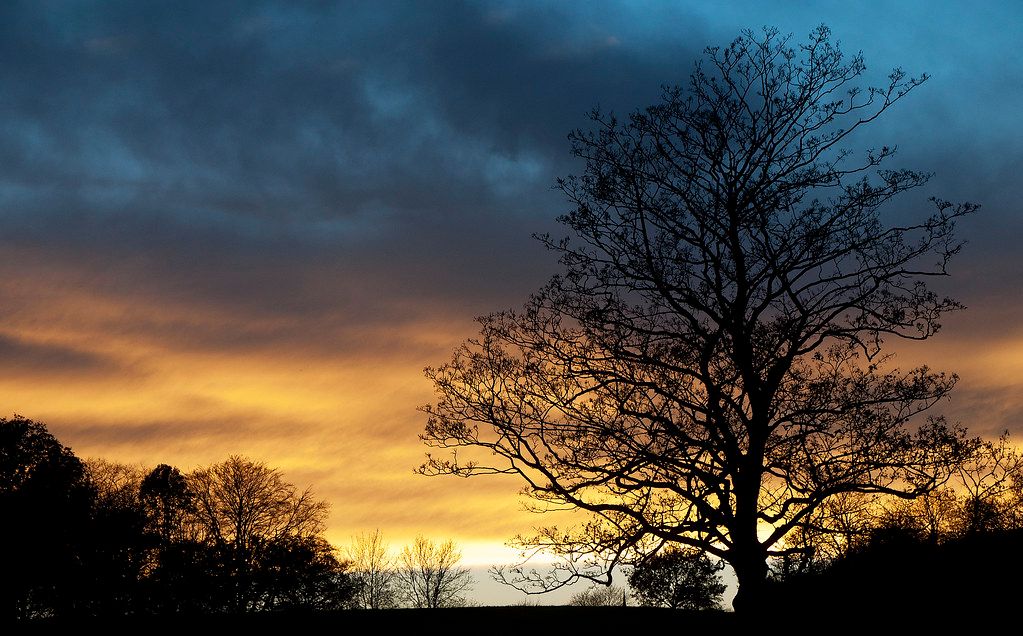
Dramatic cloudy sky over Hampstead Heath. by www.davidrosenphotography.com (Flickr) — CC BY 2.0
5. Richmond Hill
The view from the top of Richmond Hill looking south-west across the broad bend of the Thames is one of a very small number of protected views in England, protected by an Act of Parliament since 1902. That protection tells you something about how good it is. The river curves through a wide, layered landscape of meadow, woodland, and parkland, with almost no intrusive development visible from this angle. Late afternoon light coming from the west across the water is the classic condition for this view. It's worth combining a session here with time in Richmond Park below, where the deer herds and ancient oaks offer a completely different character. Nearest station: Richmond (District line or Overground).
6. Greenwich Park
The hill above the Royal Observatory gives you one of London's most unusual panoramic compositions: formal parkland with long avenues of horse chestnuts in the foreground, the Queen's House and the classical architecture of the Old Royal Naval College below, and the towers of Canary Wharf and the City skyline beyond. The combination of green formality and urban density in a single view is genuinely distinctive. Morning is the best time, with the light coming in from the east behind you and picking out the buildings ahead. The park's long avenues are also excellent subjects in their own right, particularly in autumn. Nearest station: Cutty Sark (Elizabeth line).
Riverside and Thames Scenes
7. Victoria Tower Gardens
This narrow riverside park immediately south of the Houses of Parliament is one of the most directly compelling plein air subjects in London. The Palace of Westminster sits across the water at close range, its Gothic detail readable and dramatic in the right light. Early morning before the tourist crowds arrive is strongly recommended: by mid-morning the area around Westminster is busy and the quieter painting conditions have gone. The riverside position also means the light changes quickly as the sun moves, so commit to one lighting condition and stay with it. Nearest tube: Westminster.
8. South Bank and Waterloo
The riverside walkway between Waterloo Bridge and Blackfriars Bridge offers strong city views looking north, with St Paul's Cathedral prominent above the river. The Thames here is wide, and on overcast days it flattens into a beautiful tonal study of greys and silvers that suits watercolour particularly well. This is an urban environment rather than a park, but the access is entirely open and the subjects are excellent. The Oxo Tower and the surrounding buildings add interest to the east. Works well on grey or lightly overcast days when the light is diffuse and even. Nearest tube: Waterloo or Southwark.
9. Wapping and the East Thames
The Wapping Group of Artists have been painting this stretch of the Thames since 1946, which tells you that the subject matter here has real depth. Wapping Old Stairs, the historic alleyways down to the river, and the character of the working and post-industrial riverside give a very different atmosphere from central London. There's a gritty historical quality to Wapping that rewards painters who want something beyond picturesque. Parts of the riverbank are privately managed, so it's worth researching specific access points via the Thames Path before your visit. Nearest station: Wapping (Overground).
Canal and Waterway Scenes
10. Little Venice (Paddington)
Where the Grand Union Canal meets the Regent's Canal at Paddington, the waterway opens into a wide, almost lake-like basin with moored narrowboats, overhanging willows, and painted bridge ironwork reflected in calm water. It's one of London's most immediately paintable spots: strong verticals from the boats and bridges, soft reflections below, and enough variety in the narrowboat colours to keep the palette interesting. Work from the towpath at water level or from the Westbourne Terrace Road bridge for an elevated composition looking along the basin. It's accessible in any light condition and doesn't require an early start. Nearest tube: Warwick Avenue.
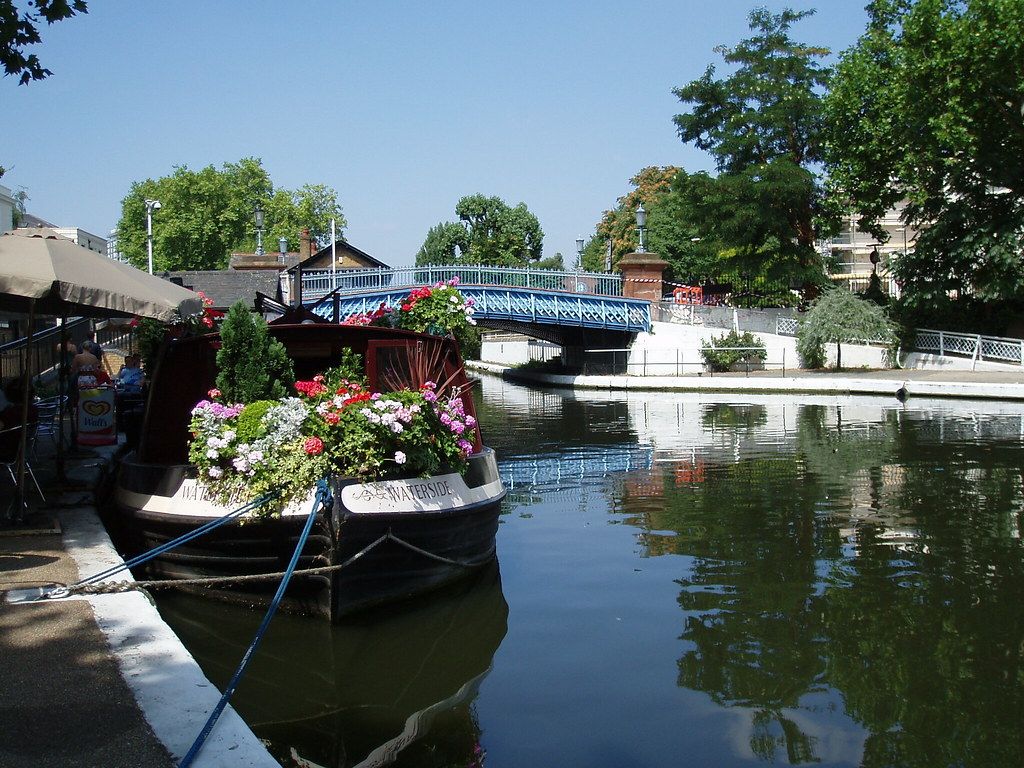
A narrowboat on the Grand Union Canal in Little Venice, London, with reflections on the water. by amandabhslater / Flickr — CC BY-SA 2.0
11. Regent's Canal (Islington to Victoria Park)
The Regent's Canal towpath from Angel to Victoria Park passes through Islington, Hackney, and Mile End, each stretch with its own distinct character. The section near Broadway Market and London Fields is particularly popular with urban sketchers for its mix of painted narrowboats, ironwork bridges, and street life alongside the water. It's a location that rewards a slow walk with a sketchbook as much as a settled session: you can move along until a particular angle or boat configuration catches your eye, then stop. Multiple tube and Overground stations give easy access at different points along the route.
Urban and Architectural Subjects
12. The Barbican
The Barbican estate is unlike anywhere else in London as a painting subject. The layered brutalist concrete, the residential towers rising above the lakeside arts centre, the walkways and undercrofts create a dense, geometric complexity that is demanding to paint and rewarding when it works. The estate lake and the planted terraces give some natural softness within the geometry. It suits painters who are drawn to structure, tone, and form rather than colour and atmosphere. The Barbican is a residential and commercial estate rather than a public park, but painting in its open public areas is generally accepted without issue. Weekday mornings are quietest. Nearest tube: Barbican.
13. South Kensington
The pedestrianised streets and public spaces around the museum quarter in South Kensington offer strong Victorian architecture at a human scale, with the Natural History Museum frontage as the standout subject. The elaborately decorated terracotta facade, with its carved animals and foliage, is a richly detailed painting subject in itself. Crowds are manageable in the mornings before school parties and tourists arrive in force, and the area has enough cafés and benches nearby to make an extended session comfortable. Nearest tube: South Kensington.
14. Bank and the City
The area around the Bank of England, the Royal Exchange, and the surrounding streets in the City of London is one of the most architecturally layered urban environments in Europe. Classic Georgian and Victorian buildings sit beside and beneath glass towers, creating unusual juxtapositions of scale and material. The London Plein Air Group meets here regularly, which speaks to its appeal to working painters. Weekday mornings bring professional foot traffic and urban energy; weekends are quieter but you lose some of that sense of the city in motion. Either can work depending on what you're after. Nearest tube: Bank.
Parks with a Quieter Character
15. Holland Park and the Kyoto Garden
Holland Park is one of London's least-known plein air locations, which is part of its appeal. The Kyoto Garden, a Japanese-style garden gifted to the city in 1991, sits within the park as a quietly extraordinary subject: a koi pond with stone lanterns, carefully shaped planting, a small waterfall, and the kind of considered composition that already feels like a painting. Even on busier days the garden feels intimate rather than overwhelming. Peacocks roam the wider park, and the wooded sections offer dappled light and woodland paths. It's a calmer, less trafficked alternative to the central Royal Parks when you want space to think. Nearest tube: Holland Park.
| Location | Best for | Best time of day | Nearest tube |
|---|---|---|---|
| St James's Park | Water, trees, landmark views | Morning | St James's Park, Westminster |
| Hyde Park / Kensington Gardens | Open parkland, the Serpentine | Any | Hyde Park Corner, Lancaster Gate |
| Regent's Park | Formal gardens, boating lake | Morning to midday | Baker Street, Regent's Park |
| Hampstead Heath | Open sky, ponds, wooded paths | Early morning | Hampstead (Overground) |
| Richmond Hill | Panoramic Thames view | Late afternoon | Richmond (District/Overground) |
| Greenwich Park | Skyline panorama, formal avenues | Morning | Cutty Sark (Elizabeth line) |
| Victoria Tower Gardens | Houses of Parliament views | Early morning | Westminster |
| South Bank / Waterloo | City skyline, river | Overcast days | Waterloo, Southwark |
| Wapping | Historic riverside, industrial character | Morning | Wapping (Overground) |
| Little Venice | Narrowboats, reflections | Any | Warwick Avenue |
| Regent's Canal | Canal scenes, urban mix | Afternoon | Various |
| The Barbican | Brutalist architecture, estate lake | Weekday morning | Barbican |
| South Kensington | Victorian architecture, street life | Morning | South Kensington |
| Bank / City | Complex facades, strong perspective | Weekend morning | Bank |
| Holland Park / Kyoto Garden | Japanese garden, intimate scenes | Midday | Holland Park |
Planning Your London Plein Air Session
Light and Timing
The most consistently useful advice for London painting is simple: go early. Early morning light in London is exceptional, low, directional, and warm in a way that mid-morning sun rarely is once it rises above the buildings and trees. Most central locations see foot traffic increase significantly from around 9am onwards; earlier than that, you'll often have the best viewpoints entirely to yourself.
That said, late afternoon into evening is equally rewarding, particularly in summer when golden hour extends well past 8pm. The light coming west across the Thames at Richmond, or dropping low behind the buildings around St James's, is some of the best painting light London offers.
Midday is the least useful window at most locations: the light tends to be flat and overhead, shadows are short and harsh, and the parks are at their busiest. If midday is your only option, work in shaded spots or on subjects where tonal contrast matters less.
Whatever time you go, aim to commit to one consistent lighting condition and stay with it. A forty to ninety minute focused session in good light will almost always produce better work than three hours of chasing changing conditions.
What to Bring
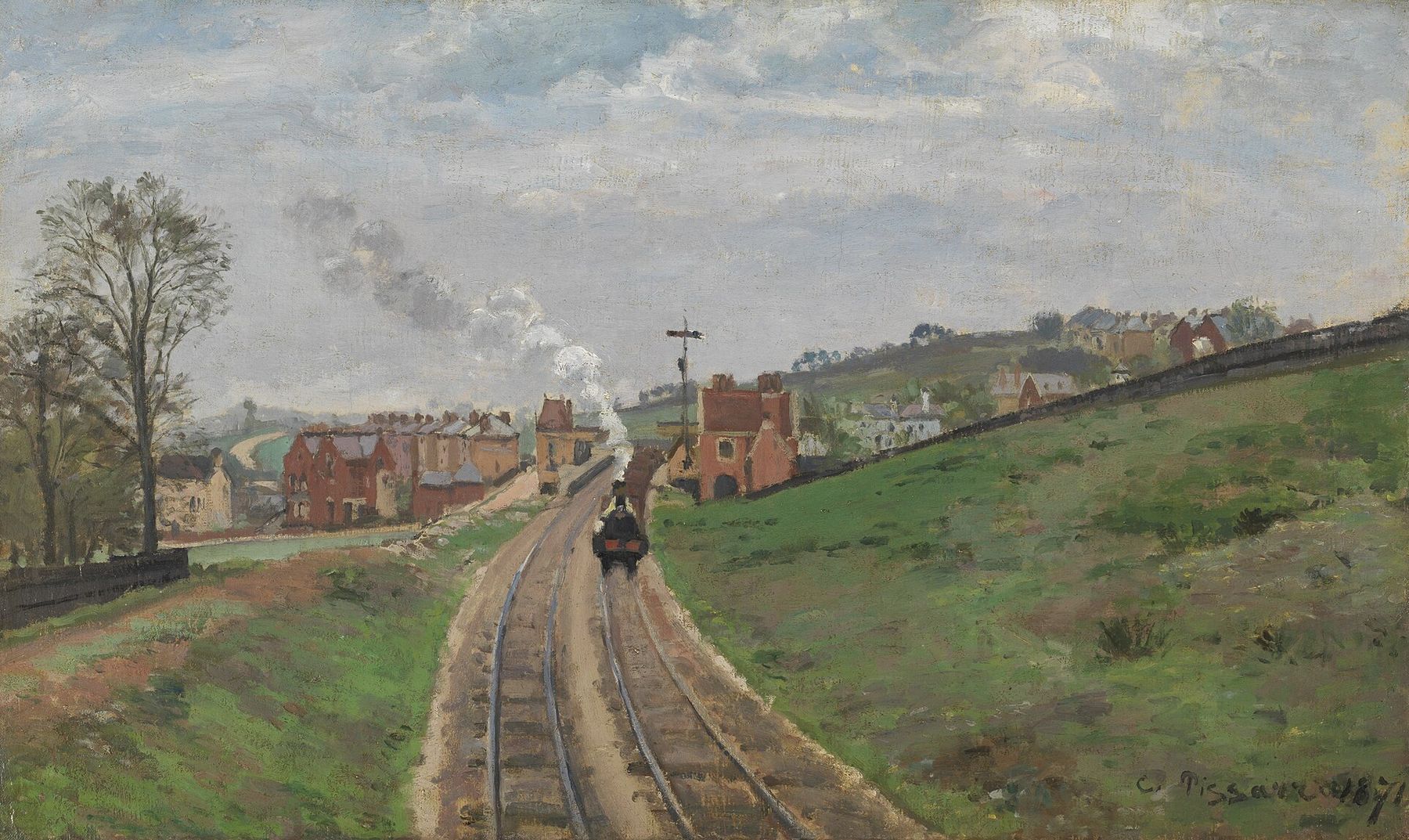
Lordship Lane Station, Dulwich (1871) by Camille Pissarro.
London is a city environment, and your kit choices should reflect that. You'll be travelling by tube or bus in most cases, which means anything you carry also has to be manageable on public transport. A pochade box that clips to a camera tripod is the most practical setup for most London locations: compact, stable on uneven ground, and easy to move quickly if you need to reposition.
Small panels and boards suit city painting well. Formats in the A5 to A4 range (roughly 6x8 to 9x12 inches) allow you to complete a focused study in a single light window without the pressure of filling a large canvas in a short session.
A waterproof layer is non-negotiable. London weather will, at some point, change on you mid-session. Packing a light jacket in the bottom of your bag takes up almost no space and has saved many a painting day.
Kit for London parks
In London parks you'll often be painting near other people, on benches or grassy verges with limited space. A pochade box that clips to a tripod, or a lap-held sketching setup, is much more practical than a full-size French easel. Keep your footprint small, and you'll find most locations work well for you.
Dealing with Crowds and Interruptions
Curious passers-by are simply part of painting in London, and most interactions are warm and brief. A cheerful acknowledgement and a short answer ("just doing a quick painting of the view") usually satisfies curiosity and sends people happily on their way. Very few people will linger long if you're clearly focused and working.
The practical strategies that help most: arrive early at the central spots, particularly Victoria Tower Gardens and St James's Park where tourist density builds quickly. Choose viewpoints that are slightly off the main footpaths rather than on them. Working small means you take up less space and draw less attention from people trying to get past.
If you find a viewpoint being walked through repeatedly, it's worth moving a few metres rather than trying to paint around it. In a city this size, there's almost always another angle within sight.
Finding Other Plein Air Painters in London
If you're searching for plein air painting near you in London, the city has an active community that's genuinely welcoming to painters at all levels.
The London Plein Air Group meets on the first Saturday of most months at varied locations across central London. Sessions are open to all levels, free or low cost, and the locations rotate to cover different areas of the city over the course of the year. It's one of the easiest ways to try a new location with company rather than going alone.
The Wapping Group of Artists has been painting the Thames since 1946 and holds an annual outdoor exhibition on the riverside at Wapping in the summer months. Their focus is specifically the Thames and its surroundings, and the group has a long history of serious outdoor work that makes them worth following even if you don't join formally.
Beyond these established groups, Facebook groups and WhatsApp communities for London-based painters are the most active way to find informal sessions and impromptu meet-ups. Urban sketching groups, which tend to overlap with plein air painters in approach if not always in medium, also run regular events across the city. Checking Meetup for current listings is worth doing before your first session.
Local art societies across London's boroughs are another route in, particularly if you're based in a specific part of the city and want something more regular and nearby.
A Few Words on London's Weather
London's weather is mild by UK standards but genuinely unpredictable, and it's worth making peace with that rather than waiting for perfect conditions that may not arrive on the day you've set aside for painting.
Overcast days are often better for painting than bright sunshine: diffuse cloud cover gives even, shadowless light that's much easier to work with than harsh direct sun, which flattens tonal ranges and makes colours look bleached. Some of London's most interesting light happens on grey or partly overcast days when the sky becomes a subject in itself.
Wind is a more practical concern than rain for most painters, particularly if you're using a tripod or a light easel. Check the forecast before you go and factor in whether your setup can handle a breeze at an exposed location like Parliament Hill or Richmond Hill.
Spring and autumn consistently offer the best quality of light for London painting: low sun angles, cleaner air, and strong seasonal colour in the parks. Summer is excellent for long evening sessions. Winter painting is entirely possible in London given the mild temperatures, but dress in proper layers rather than relying on the city to feel warm.
London has more paintable locations than any painter will exhaust in a lifetime. The fifteen spots in this guide are a starting point, not a ceiling. Pick one that interests you, plan an early morning session, and go. The city has a way of rewarding painters who simply show up.
FAQ
Frequently Asked Questions
Do I need a permit to paint in London parks?
For personal plein air painting in the Royal Parks you do not need a permit. Permits are only needed for organised commercial events, paid workshops, or activities that obstruct paths.
When is the best time of day to paint outdoors in London?
Early morning and late afternoon are best. Early light gives low directional warmth and fewer crowds. Late afternoon offers golden hour warmth, especially in summer.
What compact kit should I bring for city painting sessions?
Bring a pochade box or lap board, small panels (A5 to A4), a limited palette, a folding stool, and a waterproof layer. Pack light for easy travel on public transport.
How can I avoid crowds and interruptions while painting?
Arrive early, choose viewpoints slightly off main paths, work small, and move a few metres if people keep walking through your sightline. A friendly one sentence answer usually discourages long conversations.
Where can I meet other plein air painters in London?
Look for the London Plein Air Group, the Wapping Group of Artists, urban sketching meetups, and local Facebook or Meetup groups. These communities run regular and informal sessions.
Author

PleinAirPainting Editorial Team
PleinAirPainting.co.uk helps artists paint outdoors with confidence through UK-focused guides, equipment advice, resources and plein air inspiration.