Plein Air Painting in Fog: How to Capture Britain's Misty Atmosphere
Practical guide to plein air painting in fog. Learn to see compressed values, use temperature shifts for depth, work fast with small panels, and stay safe while capturing Britain’s misty scenes.

Key takeaways
- • Fog simplifies composition by reducing detail and emphasising masses and values.
- • Value compression is key: lift darks, darken lights and read three or four tonal zones.
- • Work quickly on small panels, pre tone surfaces and use a limited palette with subtle temperature shifts.
- • Choose oils for wet blending or watercolour for natural soft edges; use retarders for acrylic and board backing for watercolour.
- • Prioritise safety: hi vis near roads, let someone know remote plans, and dress for cold and damp conditions.
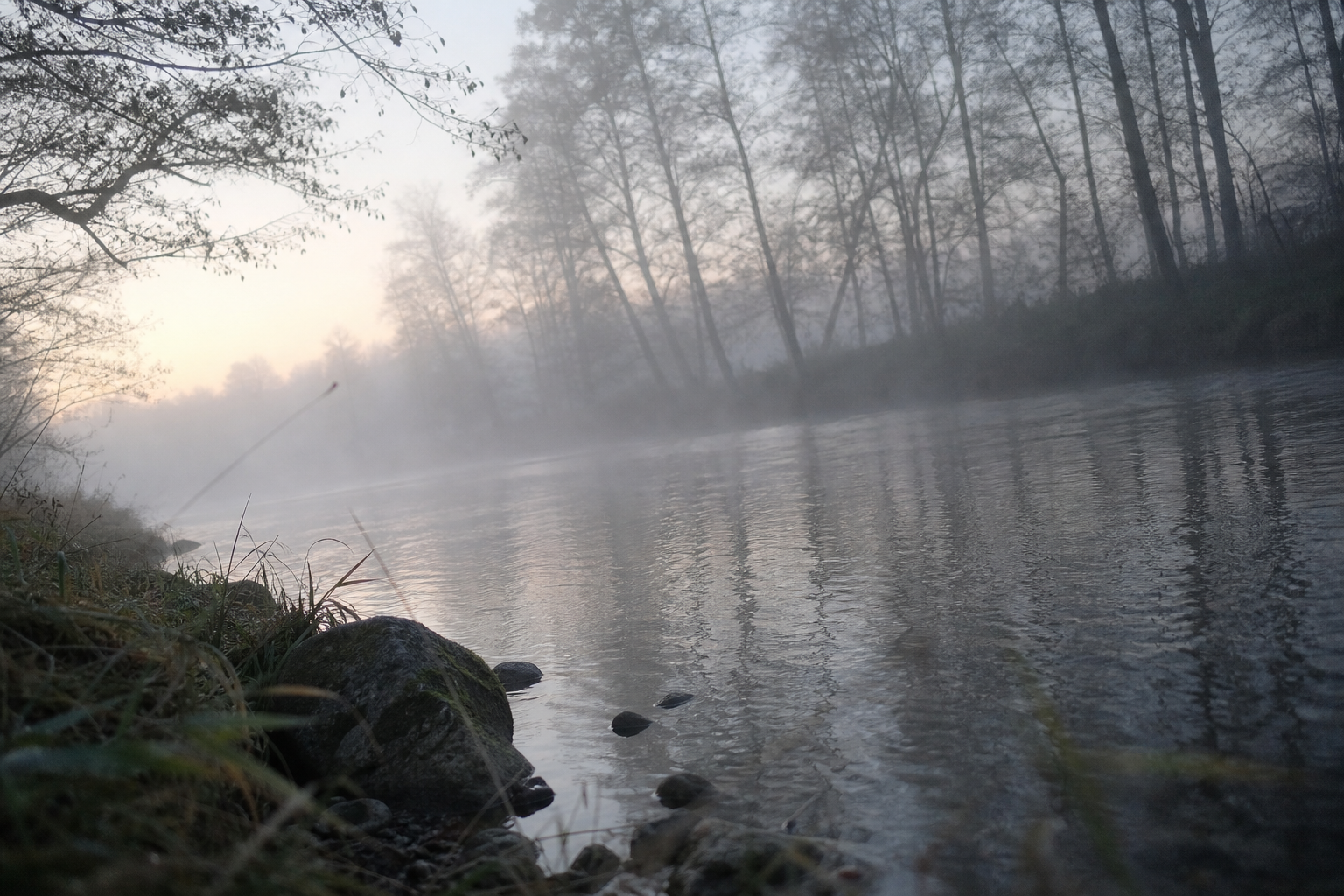
Step outside on a foggy morning and the world has changed. Familiar fields, rivers and rooftops dissolve into pale grey. Edges soften. Distances collapse. The light is even and quiet, without shadow or glare. Plein air painting in fog gives you one of the most atmospheric subjects in the British landscape, and yet most painters pack up and head home before they've even set up. That's a shame, because fog is genuinely one of the most paintable conditions you'll encounter outdoors. The key is knowing what to look for and how to respond to it.
Why Fog Is Worth Painting (Not Avoiding)
Fog does compositional work for you. It removes clutter, silences colour, and strips a scene back to its essential shapes. The fussy detail that can overwhelm a painting on a clear day simply disappears. What remains is a sequence of soft, receding masses, and that's often exactly the kind of simple, readable structure that makes a strong painting.
There's a long tradition of British painters finding fog irresistible. Turner made whole careers out of murk and vapour. Monet visited London specifically to paint the Thames in fog, producing dozens of studies of Waterloo Bridge and the Houses of Parliament dissolving in grey haze. He wasn't fighting the conditions. He was there because of them.
Fog also rewards painters who think in values and masses rather than detail. If you've been told to squint at a scene, fog has already done that for you. It's not an obstacle to painting well outdoors; it's a ready-made lesson in tonal structure.
How Fog Changes What You See
Before you pick up a brush, it's worth understanding exactly what fog does to a scene. Once you can see it clearly, you can paint it deliberately.
Compressed Values
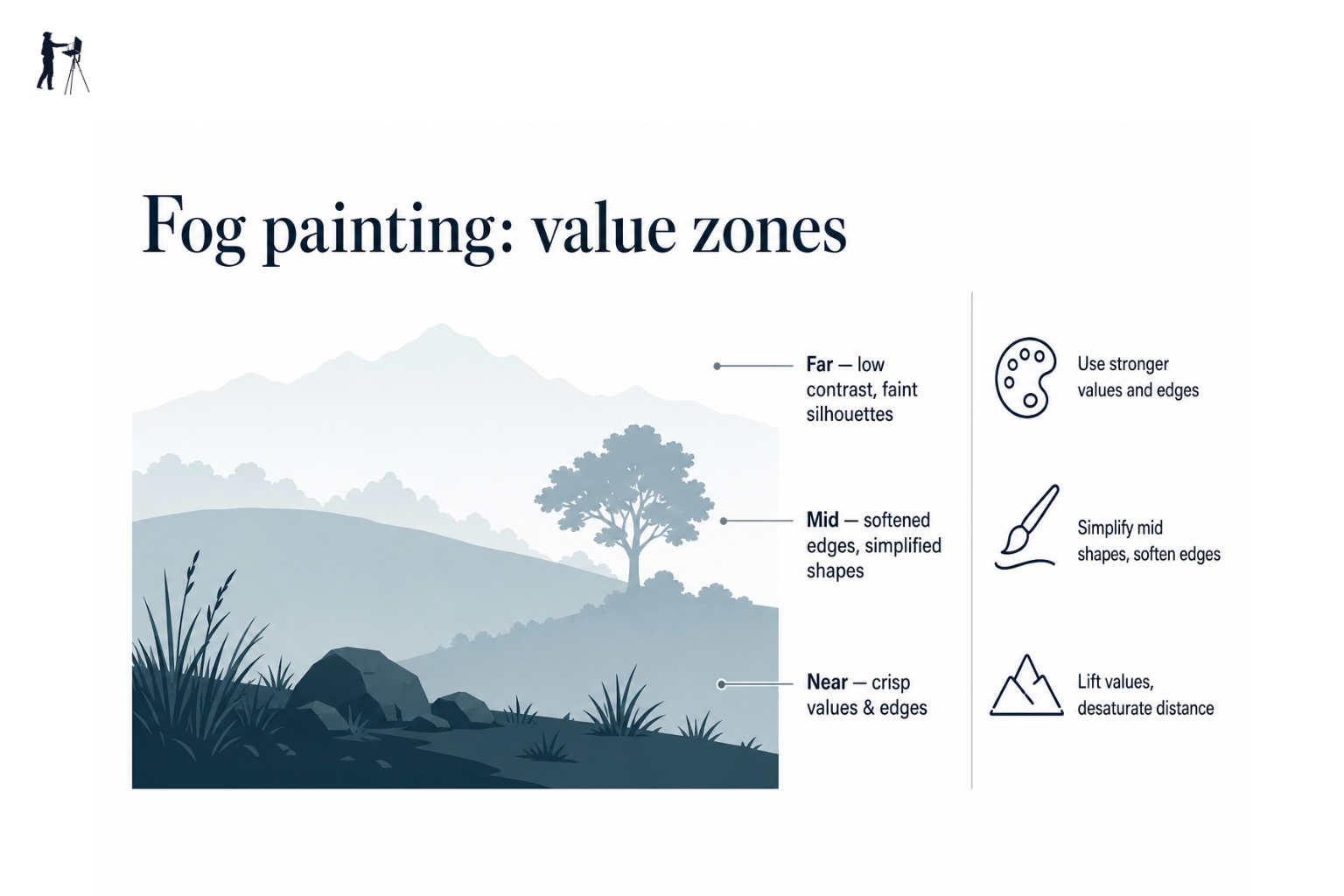
On a clear day, your tonal range runs from near-black shadows to bright white highlights. In fog, that range narrows dramatically. Darks lift toward a lighter grey. Lights darken and lose their brightness. Everything tends toward a middle-grey band. This is called value compression, and it's the defining characteristic of fog as a painting subject.
The value squeeze
On a clear day, your tonal range might run from near-black to pure white. In fog, that range compresses dramatically. Darks are lighter than you expect, and lights are darker. If your foggy painting looks flat, you've probably made the darks too dark and the sky too white.
Atmospheric Perspective in Action
Atmospheric perspective is the way objects lose contrast, saturation and edge clarity as they recede into the distance. On a clear day it's subtle. In fog, it becomes impossible to ignore. A tree fifty metres away is a soft grey shape. A treeline five hundred metres away is barely a suggestion. The further something is, the lighter, cooler and more dissolved it becomes.
This is your primary tool for creating depth in a fog painting. Identify your near, mid and far zones before you start, and assign each a distinct value and temperature. Keep those treatments consistent as you work. The depth in a fog painting comes almost entirely from how faithfully you observe this progression.
Colour: Neutrals and Temperature Shifts
Fog strips out saturation. Vivid greens, warm ochres and bright blues all flatten toward grey. This doesn't mean your palette should be monotonous; it means that colour temperature carries the weight that chroma usually bears.
Cool blue-greys describe distance. Slightly warmer, earthier neutrals sit in the near ground and foreground. The difference doesn't need to be dramatic. A gentle shift from a cool grey in the far distance to a slightly warmer, more muted tone in the foreground is enough to create convincing depth. A limited palette is not a compromise here; it's the right tool for the subject.
Planning a Fog Painting Session in the UK
Types of Fog to Know
Not all fog is the same, and the type you're working in shapes everything from your timing to your colour temperature.
Radiation fog forms on still, clear nights in autumn and winter, particularly in lowland England, river valleys and farmland. It often sits low, burning off by mid-morning as the temperature rises. This gives you a predictable window, usually one to two hours around dawn and early morning, where conditions are at their most atmospheric. Get there early.
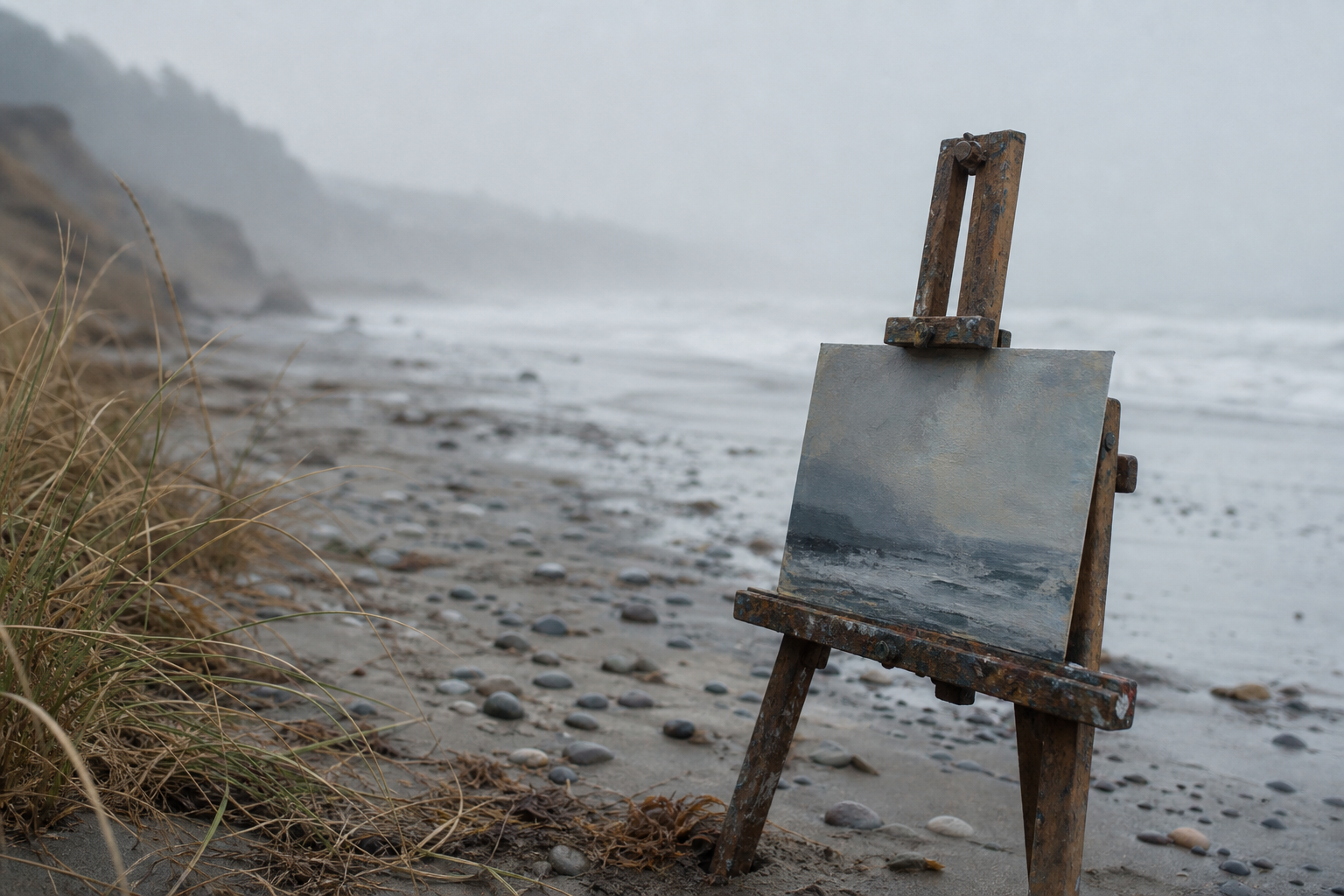
Sea-haar is the cold, grey mist that rolls in off the North Sea, particularly along the east coasts of Scotland and Yorkshire. It can persist all day and sometimes all week. The quality of light is cooler and flatter than radiation fog, and the palette shifts bluer. It's less predictable in terms of when (or whether) it will clear.
Hill fog is low cloud sitting on upland ground. You'll encounter it in national parks, moorland and mountain areas throughout Wales, northern England and Scotland. It can descend quickly and dramatically, turning a manageable murk into near-zero visibility within minutes. It's among the most visually spectacular conditions to paint in, but it requires the most caution.
Urban and river fog along the Thames, Severn, city parks and canal networks tends to be hazy rather than dense. It softens the landscape without eliminating it, and often has a warmer, slightly yellower quality due to reflected artificial light. Atmospheric and accessible; often the easiest type to work in safely.
Timing and Working Fast
Fog conditions can shift without warning. Radiation fog can clear within half an hour once the sun gets going. Hill fog can thicken just as fast. Plan for a realistic working window of sixty to ninety minutes, and don't start a painting you can't finish in that time.
Work small. A 6×8 or 8×10 panel suits a fog session well. You can block in the essential masses quickly, which is what matters. Larger formats invite more detail, and fog doesn't reward detail.
Consider doing a quick monochrome value study first, five minutes with a single neutral mix, to lock in your tonal zones before you commit to colour. It's time well spent when conditions are changing.
| Panel size | Best for | Notes |
|---|---|---|
| 6×8 | Quick value studies | Finish before conditions change |
| 8×10 | Main fog study | Good balance of coverage and speed |
| 11×14 | Extended sessions only | Only if fog is stable and persistent |
Kit Considerations for Damp UK Conditions
Pre-tone your boards before you leave home. A mid-grey or warm neutral ground means you're not fighting a white panel against a pale foggy sky from the start, and it gives you a built-in reference value for your mid-tones. Titanium white mixed with a touch of raw umber or Payne's grey does the job well.
Use a sturdy tripod-based field easel. Riverbanks, coastal paths and wet moorland are uneven and soft underfoot. A box easel on soft ground in damp conditions is an accident waiting to happen.
Keep your palette limited. Two warm colours, two cool, white, and one stronger accent colour for your darkest marks is plenty. The scene doesn't offer you more variety than that, and a crowded palette will push you toward colour decisions the fog isn't making.
Watercolour painters should use stretched paper or a board-backed block. High humidity is the enemy of unsupported sheets; they'll cockle badly and your wet-in-wet edges will go where they want rather than where you want.
Keep solvents and water in lidded containers. Damp ground, uncertain footing and cold hands make spills likely and messy.
Painting Fog Step by Step
A simple approach to painting fog
Choose your motif carefully
Look for a strong silhouette: a tree, boat, building, or bridge. You need at least one dark anchor shape that reads clearly against the pale fog. Avoid scenes that rely on detail or colour contrast to work.
Decide on your value zones
Squint at the scene and identify three or four horizontal bands of tone: near ground, midground, far distance, sky. Fog usually creates a clear progression from slightly darker near tones to very light far tones. Lock this in mentally before you touch paint.
Tone the surface
If you haven't pre-toned at home, quickly lay a thin mid-grey wash or mix across the panel. This prevents you from misjudging pale fog values against a white ground.
Block in the largest masses first
Start with the biggest, softest shapes. Keep edges loose. In watercolour, work into a damp wash; in oils, use thinned paint and a large brush. No detail at this stage.
Build depth with temperature and value
Work zone by zone. Distance: lighter, cooler, softer edges. Foreground: slightly darker, warmer, a little more texture. This is where atmospheric perspective does its work.
Place your accents last
One or two crisp, darker marks: a post, a roofline, a tree trunk will anchor the whole painting and stop it looking blank. Keep them small and deliberate. This is what separates a fog study from an unfinished mess.
Medium-Specific Tips for Fog
Oils in Fog
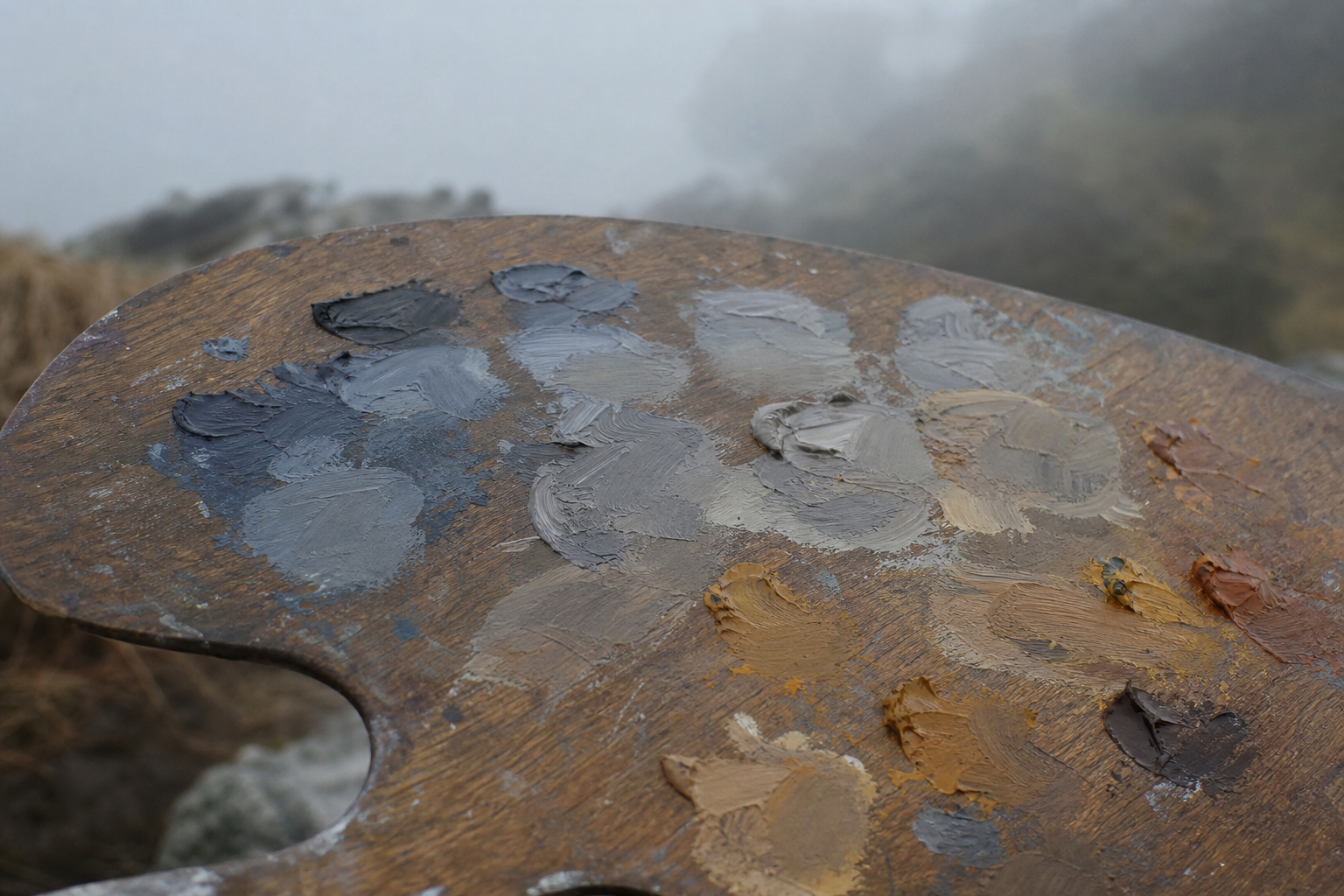
Wet-into-wet blending is exactly what fog asks for, and oil paint delivers it naturally. Your early layers can be worked and softened while still wet, which makes those dissolving, gradated edges far easier to achieve than in a medium that dries quickly.
Keep early layers lean. Cold, damp air slows oil paint drying considerably, and if your underlayers are thick and oily, they'll stay tacky and pull when you work back into them. Thin your early mixes with a little solvent; save any richer paint for final marks.
A soft filbert or fan brush handles misty transitions well. Keep one firmer, smaller brush in reserve for the final accent marks. Those marks need to be decisive, and a soft brush won't give you the edge you need.
Pre-toned panels are particularly useful in oils. A mid-grey or warm brown ground painted out at home and left to dry overnight sets you up immediately without the delay of toning on location.
Watercolour in Fog
Watercolour and fog are a natural match. Wet-in-wet washes produce soft, blooming edges almost by accident, which is exactly the quality fog has in reality. Let distant washes bleed into a damp surface and they'll do most of the atmospheric work for you.
For structural marks, like tree trunks, fence posts, boat hulls, time them into paper that's still slightly damp rather than fully wet. The marks will soften slightly at their edges, which keeps them in the fog rather than sitting on top of it.
Be aware that high humidity extends your working window for wet-in-wet but also keeps the paper wetter for longer than you might expect. If you add a wash too early into a very wet surface, you can get blooms and hard edges in places you didn't intend. Work patiently, check the sheen on the paper surface before each addition, and don't rush the process.
Use a board-backed block or pre-stretched paper. The combination of wet washes and ambient moisture will cockle an unsupported sheet badly, which makes it almost impossible to control your edges.
Acrylic and Gouache
Both are viable for fog painting outdoors, though less commonly used for plein air in the UK than oils or watercolour.
With acrylics, the main challenge is fast drying, which works against the soft, blended edges fog requires. A retarder medium helps significantly, as does a stay-wet palette. Fog is forgiving of acrylic's slightly chalky colour quality when dry; in this context it actually works in your favour.
Gouache suits fog well conceptually. Build atmosphere with thin, semi-opaque layers, and use small opaque highlights in the near ground to define form. It dries quickly, so work in small sections and have your mixes pre-prepared.
Staying Safe and Comfortable in Low Visibility
This is worth taking seriously, but there's no need to make it complicated. A few straightforward precautions make a fog session both safer and more enjoyable.
Near roads and rivers: If you're setting up near a road, car park, or busy waterfront path, wear a high-visibility layer or at least a brightly coloured outer jacket. Drivers and cyclists have reduced visibility in fog, and a painter absorbed in their work can be hard to see until someone is very close. An inexpensive hi-vis armband from a running or cycling shop weighs nothing and takes up no space.
Upland and coastal sites: Hill fog can descend quickly and change a familiar landscape into genuinely disorienting terrain. Use a mapping app with your location saved, note where you've parked, and stick to paths you know well if visibility is likely to worsen.
Navigation: Don't rely on visual landmarks alone in open countryside when fog is thick. Even familiar ground looks different when you can't see more than thirty metres in any direction.
Cold and damp: Fog is almost always cold, and it's wet in a way that creeps in rather than soaking you suddenly. Layer properly, including a waterproof outer layer, and protect your hands. Cold fingers lose fine motor control quickly, which makes brushwork frustrating and detail work impossible. A hand warmer in a coat pocket is worth carrying from October to March.
Light levels: Foggy sessions in autumn and winter can darken faster than you expect, especially if the fog thickens through the afternoon. A small clip-on light is useful for packing up safely if you misjudge the timing.
Tell someone where you're going
If you're heading to an upland, coastal or remote site in fog, let someone know your location and expected return time. Hill fog in particular can descend and disorient quickly, especially on unfamiliar ground.
Common Problems and How to Fix Them
The painting looks flat and dull. Value hierarchy is the answer. Even in fog, one zone must read as the darkest and one as the lightest. Add a small temperature contrast: warm grey against cool grey, even at very low chroma. Two or three small, darker accent marks will do more to rescue a flat fog study than any amount of colour adjustment.
The fog burned off before I finished. Make a decision at the start: commit to painting the fog as it is right now, not as you hope it stays. Work from your first observation and don't keep adjusting as conditions shift. If the fog clears significantly before you're done, either stop where you are or make written notes and a quick photographic reference and develop the painting back in the studio.
Everything blurs together with no sense of depth. You haven't assigned distinct value and temperature treatments to your zones. Near ground should be slightly darker and warmer. Far distance should be lighter, cooler and softer-edged. Even a subtle shift across three zones creates readable depth. Go back and look at the scene with fresh eyes, squinting hard, and check whether your zones actually match what you're seeing.
The next foggy morning, instead of waiting for it to clear, consider setting up. Your first study might feel tentative, and that's fine. Fog is a demanding subject precisely because it removes the usual crutches of colour and detail, and forces you to think in values and masses. That discipline, once learned, improves everything you paint outdoors, in any weather.
FAQ
Frequently Asked Questions
What makes plein air painting in fog different from clear conditions?
Fog compresses values and mutes colour, creating broad soft masses. You must work in tonal zones, use temperature shifts for depth, and focus on simple shapes rather than detail.
What panel size is best for a fog session?
Work small. 6×8 or 8×10 panels are ideal for a 60 to 90 minute fog window. Use 11×14 only if the fog is stable and you have more time.
How do I create depth when everything looks grey?
Assign distinct value and temperature to near, mid and far zones. Make distant forms lighter, cooler and softer edged; keep the foreground slightly darker and warmer. Add one or two small dark accents to anchor the scene.
Which medium works best for fog?
Oils and watercolour suit fog well. Oils allow wet-into-wet blending; watercolour makes soft washes easily. Acrylic and gouache can work with retarders, pre mixes and board backing.
What safety and kit tips should I follow in low visibility?
Wear a hi vis layer near roads, tell someone your location for upland sites, use a mapping app, layer for cold and damp, protect paper or panels, and carry a small light for packing up.
Author

PleinAirPainting Editorial Team
PleinAirPainting.co.uk helps artists paint outdoors with confidence through UK-focused guides, equipment advice, resources and plein air inspiration.