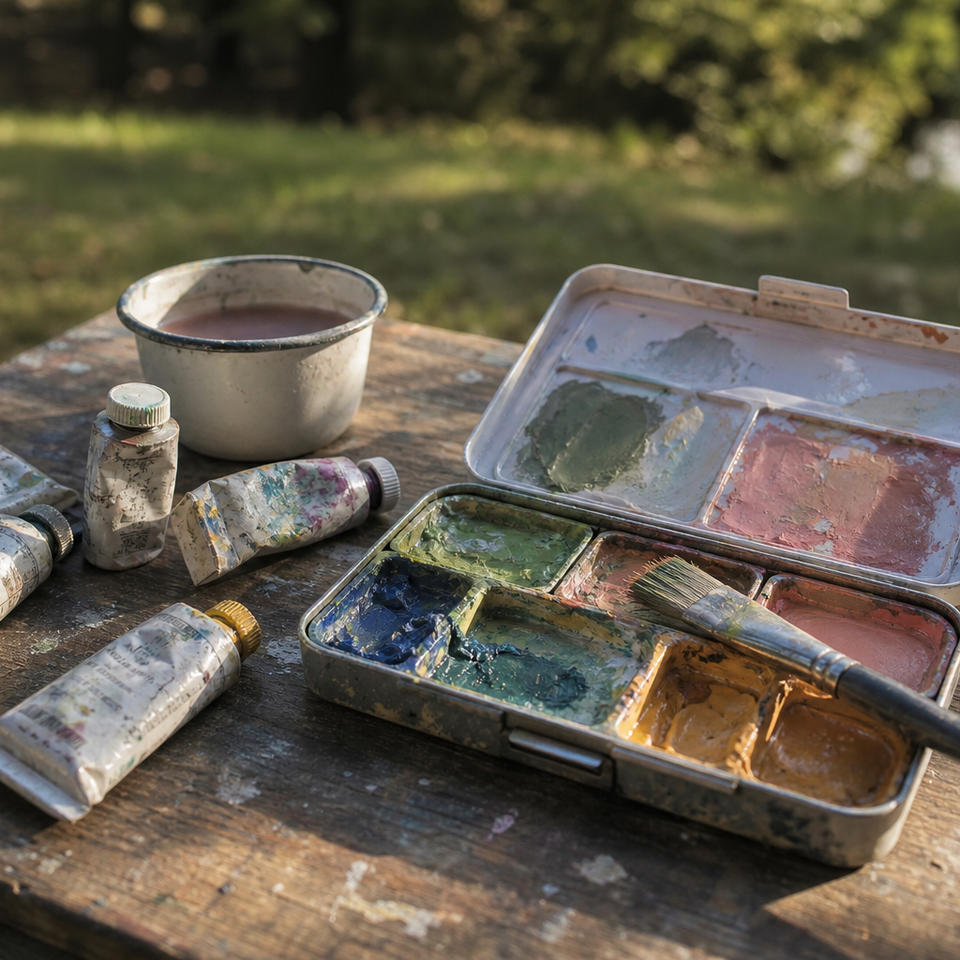
The Best Brush Washer for Oil Painting Outdoors
Practical guide to choosing the best brush washer for oil painting outdoors. Recommends a 300 ml steel washer for most plein air painters and covers lid, solvent and cleaning routine.

Key takeaways
- • Best all-round pick is a 300 ml stainless steel washer for most plein air oil painters.
- • Choose a gasketed lid if you carry solvents in a pack; upright carry reduces risk for non-gasketed lids.
- • Internal inserts or coils keep brushes in cleaner solvent and extend solvent life.
- • Collapsible and plastic washers are fine for water-mixable oils or final soap rinses but not for turpentine or OMS.
- • Carry a small travel bottle of eco-solvent or OMS and follow a wipe, swirl, oil pre-clean and soap finish routine.
You're three hours into a session, the light is doing something extraordinary, and your brush is completely clogged with burnt sienna. You need to clean it now, not in thirty seconds but right now, without tipping solvent across your pochade box or fumbling with a jam jar that's been rattling around in your bag since Tuesday. A jam jar does work, technically. But it has no lid, no insert, and a remarkable talent for rolling off surfaces at the worst possible moment. This article compares the practical brush washer options available from UK art suppliers, explains what actually matters when you're choosing one for outdoor use, and gives you a clear recommendation based on how most plein air painters actually work.
What to Look for in a Plein Air Brush Washer
Before you look at specific products, it's worth knowing which features make a meaningful difference in the field. Not all of these matter equally, and your priorities will shift depending on whether you're walking to your painting spot or driving to it.
Material: steel or plastic?
If you use traditional solvents, such as turpentine, white spirit, or odourless mineral spirits (OMS), you need a steel washer. Stainless steel won't corrode, crack, or absorb pigment over time. Solvent-resistant plastic can handle mild cleaning solutions and is adequate for a while, but strong solvents will degrade it eventually. Collapsible silicone or soft-plastic containers are fine for water only; they have no place near turpentine.
If you paint with water-mixable oils or use a solvent-free cleaning approach (baby oil plus soap, for example), good-quality plastic or collapsible options are entirely appropriate.
Lid security
This is probably the feature that matters most for plein air use and gets the least attention in most buyer's guides. A push-fit lid is fine on a studio shelf. In a rucksack, a pochade box, or a bag swinging from an easel on a wet hillside in November, it's a potential disaster. Look for a gasketed, clip-sealed, or screw-top lid if you're carrying solvent in a bag. A lid that fits snugly but isn't sealed is better than no lid at all, but it's worth being honest with yourself about how you carry your kit.
Size and capacity
For most plein air sessions, 300 to 500 ml is the right range. That's enough solvent to clean a full day's brushes without unnecessary weight. Larger washers (900 ml and above) are excellent for the studio but add real weight and rarely fit neatly into a painting bag or pochade box. If you're a car-boot painter who sets up beside the vehicle, you have more flexibility.
Internal insert or coil
A coil, grid, or strainer insert inside the washer lets pigment settle below the working surface. You're always cleaning your brushes in the relatively cleaner solvent above the sludge rather than stirring it all back up. This extends how long your solvent stays useful and reduces bristle damage from scrubbing against a bare metal base. It's worth paying a little more for.
Weight and form factor
Will it fit in your pochade box tray or a side pocket of your bag? Can you hang it from an easel leg? Think about where it sits in your full kit, not just what it looks like on a product page.
The Best Brush Washers for Oil Painting: Our UK Picks
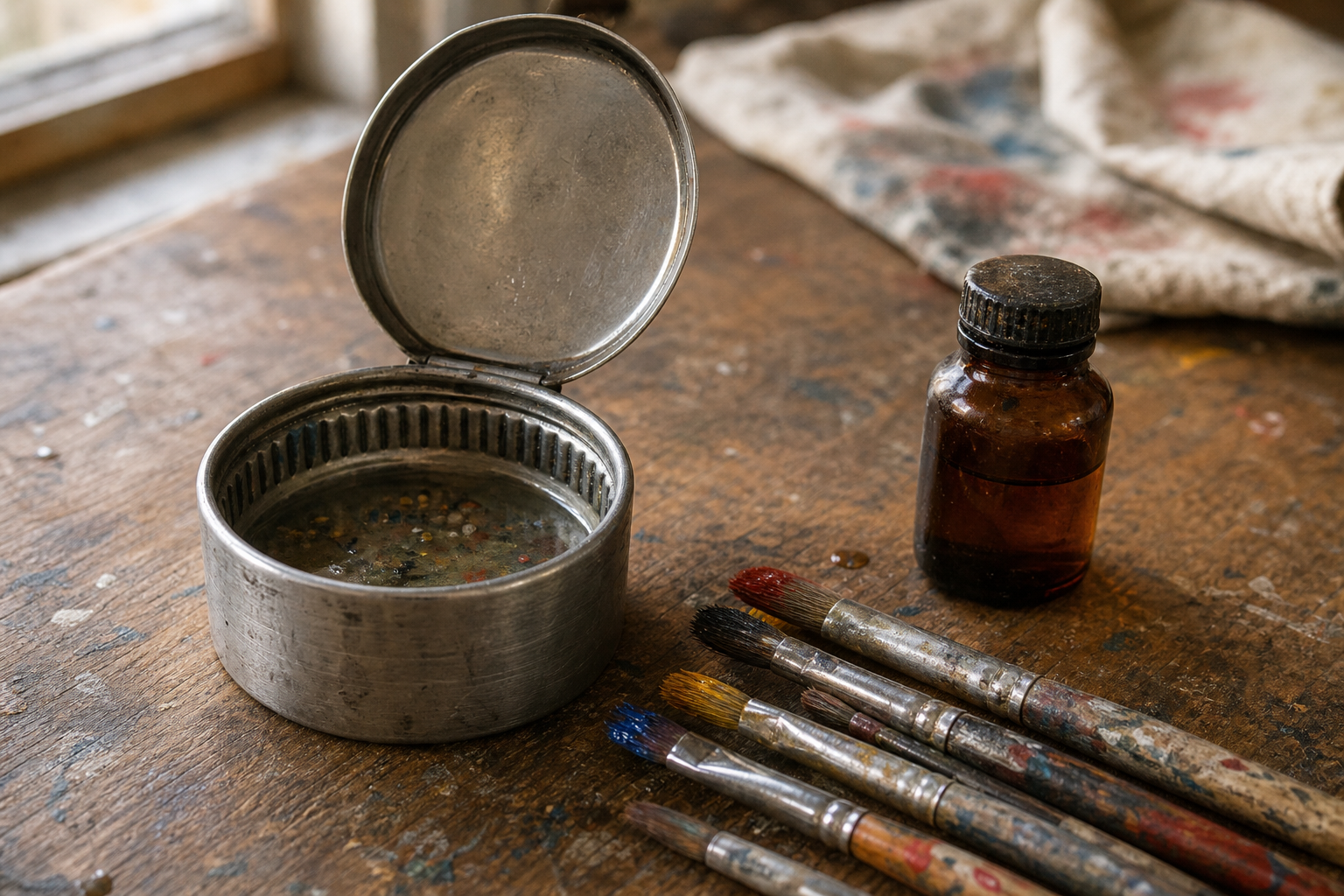
The options below range from compact steel washers suited to a day's plein air session through to plastic and collapsible alternatives for solvent-free painters. There's a clear top pick for most people, but the right choice depends on how you work and what you carry. All of the products listed here are available from UK art suppliers with domestic delivery.
Best overall for plein air: Studio Essentials Steel Brush Washer, 300 ml (Jackson's)
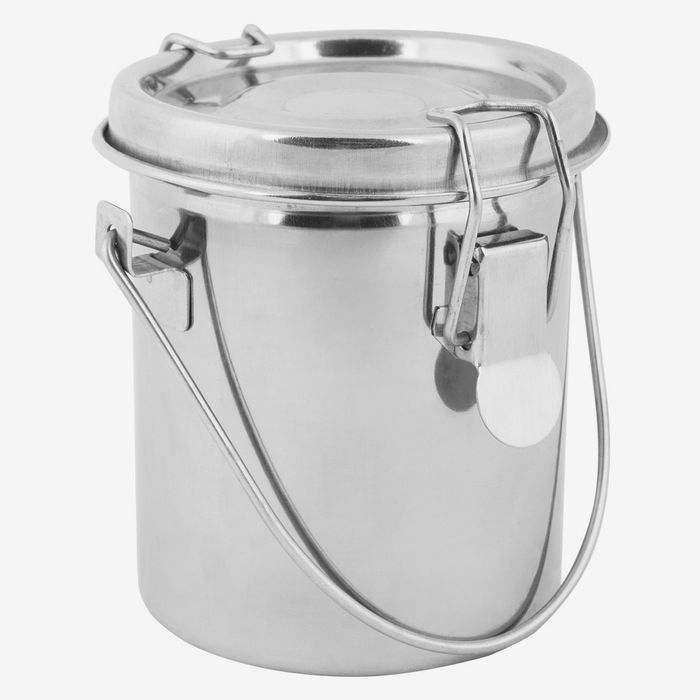
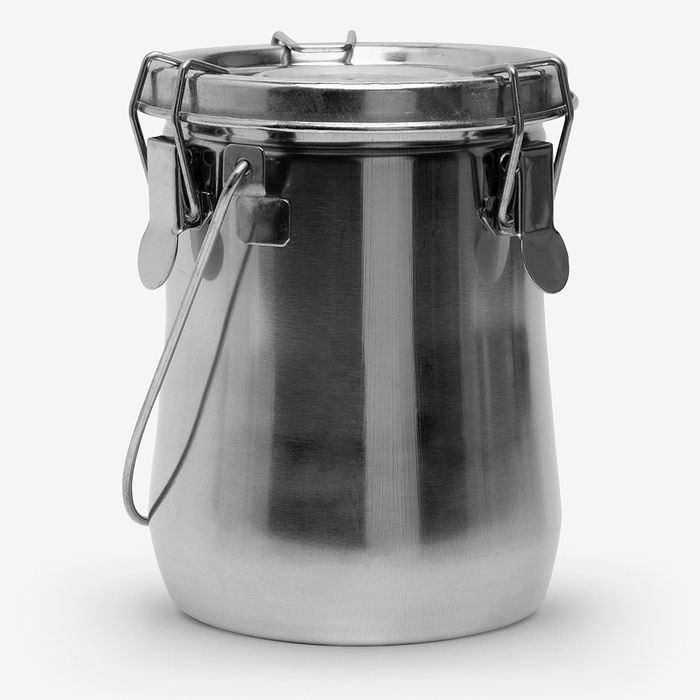
This is the pick for most UK plein air oil painters. At 8.3 by 7.3 cm, it fits into a pochade box side tray or a day bag without taking over, and the 300 ml capacity is enough for a solid session. Steel construction means it's compatible with turpentine, OMS, and eco-solvents without any long-term degradation. The internal metal insert keeps your bristles working in cleaner solvent rather than stirring up the pigment sludge at the bottom.
One honest caveat: the Studio Essentials 300 ml washer is not marketed as fully gasketed or airtight. The lid fits securely enough for upright carry, but if you're packing it on its side in a rucksack with solvent inside, that's a risk. Keep it upright, or decant your solvent out before travel. At around £18.30, it's a sensible price for what it offers.
Jackson's
Studio Essentials : Steel Brush Washer : 8.3x7.3cm : Holds 300ml
The Studio Essentials Steel Brush Washer Includes A Lid That Prevents Fumes From Escaping Into Your Working Environment When The Washer Is Not Being Used And Is Secured In Place With Two Spring Clips And A Rubber Seal. The Sediment Accumulated From Washing Brushes Sinks Through T
A step up: Studio Essentials Steel Brush Washer, 9 cm diameter (Jackson's)
For painters who use larger brushes, do longer sessions, or simply want more working room, the 9 cm steel washer offers the same solvent-compatible construction in a slightly larger format. It's better suited to painters who drive to their spots and set up from the car rather than those walking in with a full pack, since the additional size and weight start to feel noticeable across a longer carry.
It's priced at around £25.00 and shares the same quality of construction as the smaller model. A solid step-up choice if you find 300 ml runs out before a session ends.
Jackson's
Studio Essentials : Brush Washer : Steel : 9cm Diameter
The Lid Of The Ultimate Steel Brush Washer Prevents Fumes From Escaping Into Your Working Environment When The Washer Is Not Being Used, And Is Secured In Place With 3 Spring Clips. The Sediment Accumulated From Washing Brushes Sinks Through The Holes To The Bottom Of The Washer
For heavier studio use: Studio Essentials Large Metal Brush Washer Deluxe, 15 cm (Jackson's)
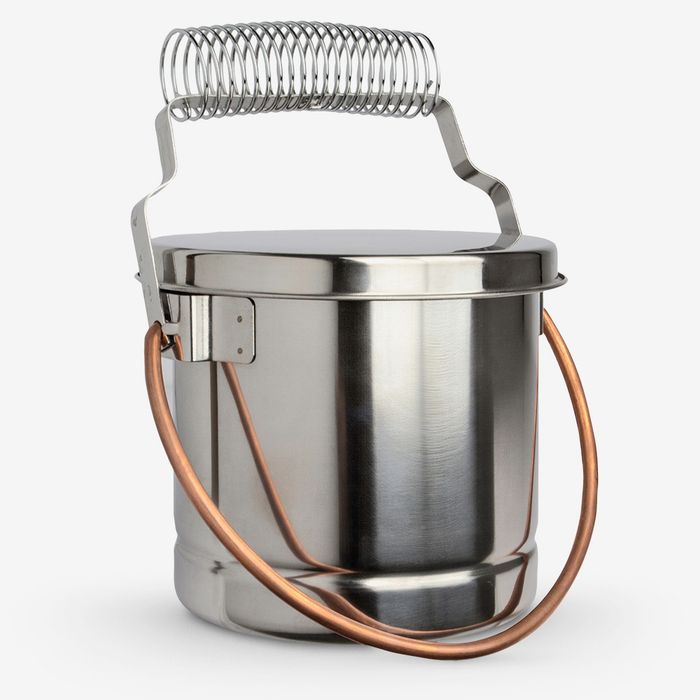
This one's included because many plein air painters also work in the studio and want a washer that handles both. At 15 cm diameter, it's a genuinely comfortable studio tool for larger brush sets and longer working sessions. It comes with a loose lid rather than a sealed one, so it's not designed for carrying solvent in transit. Take it to your painting spot outdoors if you're driving and setting up a full studio-style kit, but don't pack it into a rucksack.
At around £36.00, it's good value for what it is: a robust, spacious steel washer for the studio or dedicated plein air base camp. Just be clear-eyed that it's not a walking-to-the-location product.
Jackson's
Studio Essentials : Large Brush Washer Metal Deluxe : 15cm Diameter (Loose Lid)
Brushes Are Held In Place By Sliding Through The Slots In Between The 'spring' At The Top Of The Brush Washer, Which Allows You To Suspend The Brush In Your Solvent Or Water, Avoiding Damage To The Brush Hairs If The Brush Is Immersed In The Washer For A Considerable Amount Of Ti
For solvent-free and water-mixable oil painters: Studio Essentials Foldable Bucket Brush Washer (Jackson's)
This collapsible bucket is for water-based cleaning only. That's worth repeating clearly: it is not suitable for turpentine, OMS, or traditional solvents. If you fill it with mineral spirits, the material won't hold up, and you'll have a bigger mess than the one you started with.
What it is genuinely good for is painters working with water-mixable oils, those using a soap-and-water final wash, or anyone who wants a lightweight container for the last stage of a multi-step cleaning routine. It collapses essentially flat, takes almost no space in a bag, and costs around £10.30. If you're moving away from solvents or want a companion to a steel washer for the rinse stage, this does the job well.
Studio Essentials Foldable Bucket Brush Washer
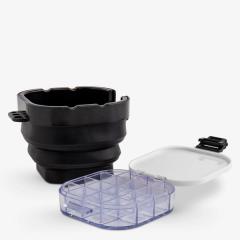
Studio Essentials : Foldable Bucket Brush Washer : Black
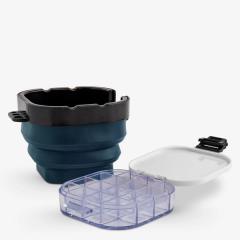
Studio Essentials : Foldable Bucket Brush Washer : Dark Blue
Budget plastic option: Studio Essentials Plastic Brush Washers (Jackson's)
At around £1.80, this is the entry-level option. It's fine for occasional use, for watercolour painters, or for water-mixable oil painters who want something basic and disposable. It won't stand up to regular use with strong solvents, and it doesn't have the insert or build quality of the steel options. If you're just starting out and want something while you figure out your practice, it works. For regular plein air oil painting with traditional solvents, you'll want to move on from it fairly quickly.
Jackson's
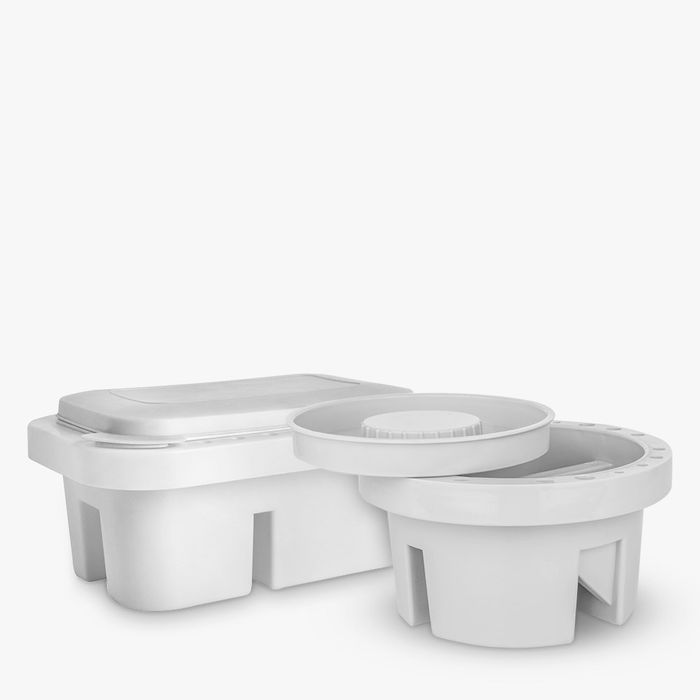
Studio Essentials : Plastic Brush Washers
Studio Essentials Brush Cleaners, Brush Holders And Water Pots Are Designed For Use With Water-based Paints And Are An Invaluable Part Of A Watercolourist's Studio Set-up. Collapsible Lantern Pots Are Useful For Those Who Only Have A Small Space In Which To Work, And Can Also Be
A note on gasketed alternatives: If a fully leak-proof, airtight seal is your absolute priority and you're happy to shop via Etsy UK, the Whiskey Painters stainless travel washer is worth considering. It's compact, gasketed, and designed explicitly for solvents. It's not in our product database so we can't link to it directly, but searching "Whiskey Painters brush washer" on Etsy UK will find it. It's a genuinely good option for painters who carry their kit on rough ground or in tight bags where an unsealed lid would be a problem.
What Goes In It: Choosing Your Cleaning Solvent
The washer is only part of the picture. What you put in it matters too, both for cleaning performance and for which washer type you actually need.
OMS (odourless mineral spirits) is the most practical choice for most plein air painters. It's lower in fumes than turpentine, works well outdoors where there's natural ventilation, and is compatible with all steel washers. It's widely available from UK art suppliers.
Turpentine cuts through paint quickly and is effective, but the fumes are strong. It's better suited to well-ventilated outdoor spots than enclosed or sheltered locations, and it still requires a steel washer.
Eco-solvents such as Jackson's Pure-Sol or Zest-it are increasingly popular, particularly among painters who work in more enclosed outdoor spaces (a sheltered courtyard, a covered market, beside a car on a cold day). They're lower in hazard, lower in odour, and compatible with both steel and good-quality plastic washers. For many UK painters doing shorter outdoor sessions, they're now the default choice.
Baby oil, vegetable oil, or soap and water works well for water-mixable oil painters, or as the final stage of a multi-step clean on traditional oils. Any container works for this stage, including collapsible plastic options.
Whatever solvent you use, a little goes a long way in the field. A 100 ml travel bottle of eco-solvent and a 300 ml steel washer is enough for most day sessions, and it keeps your kit light.
Worth packing alongside your washer
A small travel bottle makes a real difference outdoors. Jackson's Pure-Sol is a low-odour solvent and brush cleaner that works well in compact steel washers. The 100 ml size fits neatly into a pochade box or painting bag.
Jackson's Pure-Sol Oil Paint Solvent and Brush Cleaner
Jackson's : Pure-Sol : Oil Paint Solvent and Brush Cleaner : 100ml
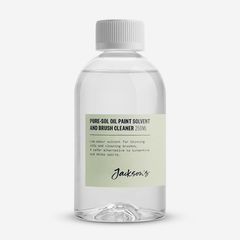
Jackson's : Pure-Sol : Oil Paint Solvent and Brush Cleaner : 250ml
How to Clean Your Brushes Outdoors: A Simple Field Routine
You don't need a complicated process. A four-stage approach covers most situations and keeps both your brushes and your solvent in better condition across a session.
A simple field cleaning routine for oil brushes
Wipe off excess paint
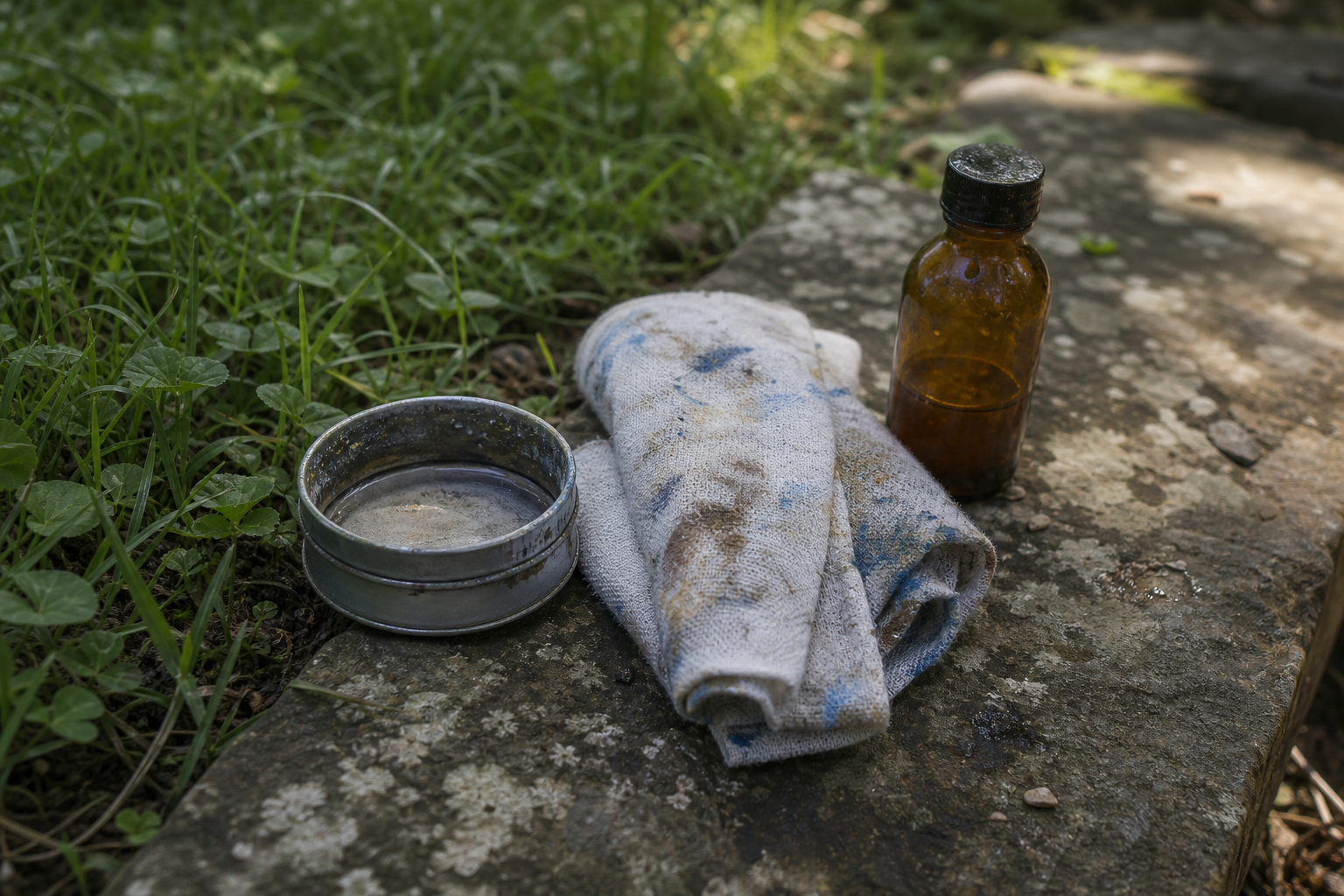
Before touching your washer, wipe as much paint as possible from the bristles onto a rag or folded paper towel. Work from ferrule to tip. This single step extends how long your solvent stays clean and is the most commonly skipped part of the process.
Swirl in solvent
Swirl the brush through the solvent in your washer, using the internal coil or grid to work paint out of the bristles. Wipe again on your rag. Repeat until little colour transfers. Resist the urge to scrub hard against the base; gentle swirling does the work.
Oil pre-clean (optional but recommended)
At the end of a session, or for stubborn pigment, work a small amount of vegetable or baby oil into the bristles to lift residual paint. Wipe thoroughly on a rag. This stage is especially useful for stiff hog bristle brushes after a long day.
Soap and water finish
Wash with brush soap or bar soap and warm water. Work the soap into the bristles gently, rinse until the water runs clear, reshape the bristles by hand, and dry flat or bristle-up. Never store brushes bristle-down in a container.
During a session, when you're switching colours rather than finishing up, you can simplify to steps one and two: wipe and swirl. Steps three and four are for end-of-day use. Skipping the final soap wash occasionally won't ruin your brushes, but doing it consistently will. Dried paint in the ferrule is the main cause of brush deterioration over time, and it builds up without much visible warning until the bristles start splaying permanently.
The multi-stage approach also means you carry less solvent in the field. If you're doing the main solvent work outdoors and finishing with soap and water at home, a 100 ml bottle of OMS or eco-solvent is often sufficient for a full session.
Solvent Safety and Disposal in the UK
This is the part most buying guides skip entirely, which isn't especially helpful given that UK painters are left genuinely unsure what to do with used solvent and paint waste. Here's the practical version.
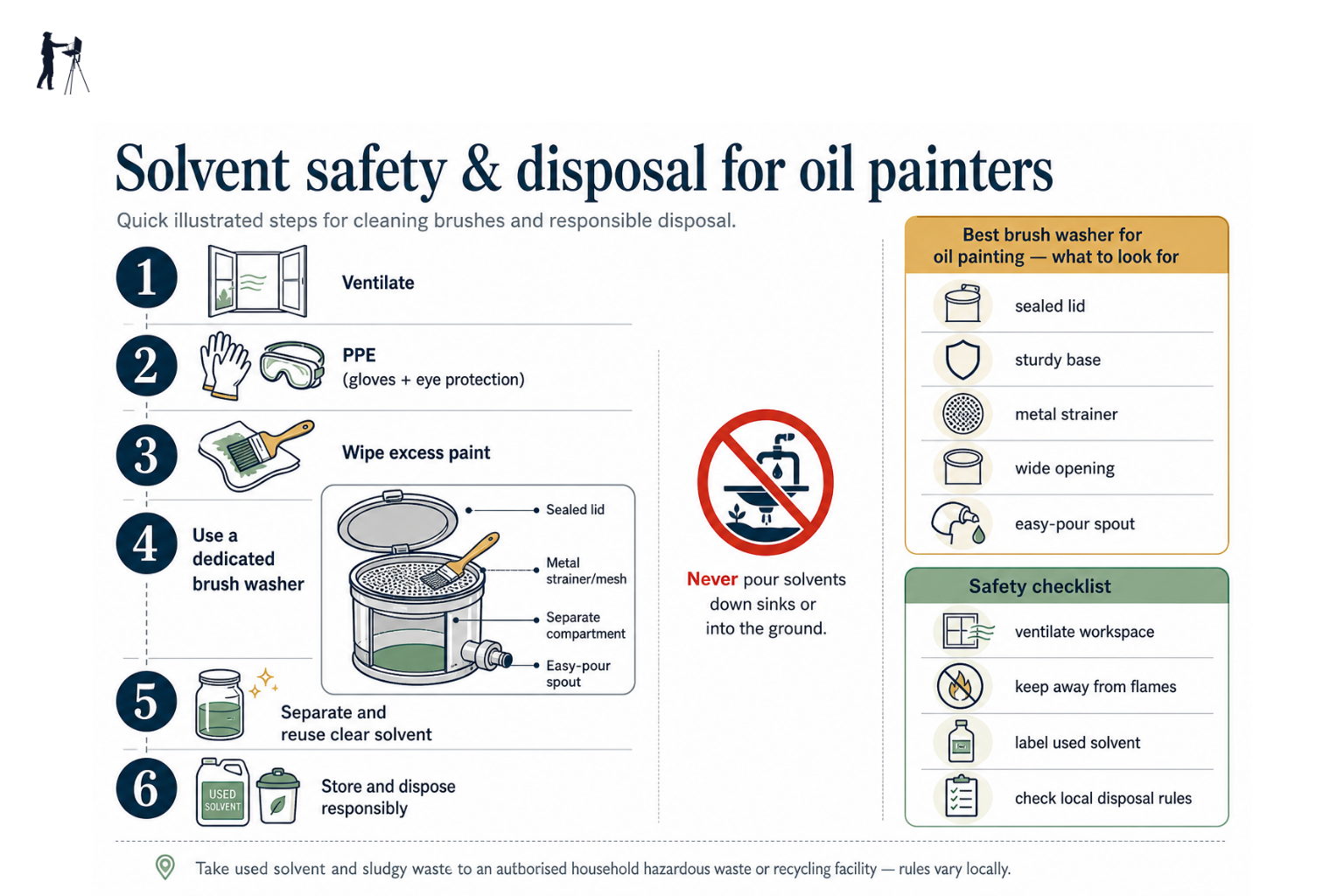
Don't pour solvent or paint sludge down the sink. Oil paint contains pigments, some of which include heavy metals, and the solvents themselves are harmful to water systems. This applies to turpentine, OMS, and eco-solvents. All of them.
Reuse your solvent. After a session, leave the washer to sit undisturbed for a day or two. The pigment sinks to the bottom and the solvent above clarifies. Carefully decant the cleaner solvent back into a storage bottle for reuse at the next session. This is standard practice in most studios, and it means a bottle of solvent lasts considerably longer than you'd expect.
Collect your sludge. When the settled residue at the bottom builds up, scrape it onto newspaper and let it dry thoroughly. Dried paint residue is significantly less hazardous than liquid waste. Once fully dry, it can go into general waste. Check your local council's guidance if you're unsure.
Take spent solvent to a hazardous waste facility. Most UK councils operate household hazardous waste collection points, or run occasional collection events, for paint and solvent waste. Search your council's website for "household hazardous waste" or "paint disposal" to find your nearest option.
In the field, bring a small sealed container or resealable bag for solvent-contaminated rags. Don't leave them in hedgerows, on stone walls, or in the countryside.
UK solvent disposal
Most UK councils provide hazardous waste collection points for paint and solvent waste. Search your local council website for "household hazardous waste" or "paint disposal" to find your nearest drop-off. Never pour oil paint solvents down a sink or drain.
One additional note: if you're travelling by air to paint, don't fly with a filled washer. Solvents are classed as flammable and hazardous under airline regulations. Carry an empty washer and buy solvent at your destination.
Quick Comparison: Which Washer for Which Painter?
If you want the short version, here's how the options stack up.
| Washer | Best for | Solvent compatible | Plein air portability |
|---|---|---|---|
| Studio Essentials Steel 300 ml (Jackson's) | Best all-round plein air pick | Yes: OMS, turps, eco-solvents | High |
| Studio Essentials Steel 9 cm (Jackson's) | Larger brushes, car-boot painters | Yes | Medium |
| Studio Essentials Large Metal Deluxe (Jackson's) | Studio and workshop use | Yes | Low |
| Studio Essentials Foldable Bucket (Jackson's) | Water-mixable oils, soap-clean stage | Water and mild solutions only | Very high |
| Studio Essentials Plastic Washers (Jackson's) | Budget or occasional use | Mild solvents only | High |
| Whiskey Painters travel washer (Etsy UK) | Maximum leak-proofing in the field | Yes: gasketed for solvents | Very high |
For most UK plein air oil painters, the Studio Essentials 300 ml steel washer from Jackson's is the right starting point. It's compact enough to pack, robust enough to last, and compatible with the solvents most painters actually use. Its one honest limitation is the lid, which is secure upright but not gasketed for rough transport. Keep that in mind and carry it accordingly, or look at the Whiskey Painters option if a sealed lid matters more to you than anything else.
The rest of the lineup serves specific situations well: the larger steel washer for those with bigger brushes or longer sessions, the foldable bucket for anyone moving away from solvents, and the plastic washer as a no-commitment starting point. None of them are a single answer for every painter. But any of them is a better field companion than a jam jar with no lid.
FAQ
Frequently Asked Questions
Do I need a steel washer or is plastic OK?
Use steel if you clean with turpentine, OMS or eco-solvents. Good plastic or silicone is fine for water, soap or water-mixable oils but will degrade with strong solvents.
How much solvent should I carry for a plein air session?
A 100 ml travel bottle of solvent plus a 300 ml washer is enough for most day sessions. It keeps weight down and lets you finish with soap and water at home.
Is a gasketed lid necessary for outdoor painting?
If you carry solvent in a rucksack or a bag that may tip, yes. A gasketed or clip-sealed lid prevents leaks. If you keep the washer upright in a tray, a snug-fitting lid can be acceptable.
Can I use a collapsible washer with traditional solvents?
No. Collapsible silicone or soft-plastic washers are only for water and mild cleaning solutions. Strong solvents will damage them. Use a stainless steel washer with turpentine or OMS.
How should I dispose of used solvent and paint sludge in the UK?
Let pigment settle, decant clear solvent for reuse, dry scraped sludge on newspaper then dispose as general waste once dry, and take spent solvent to a household hazardous waste facility per your local council guidance.
Author

PleinAirPainting Editorial Team
PleinAirPainting.co.uk helps artists paint outdoors with confidence through UK-focused guides, equipment advice, resources and plein air inspiration.