Water-Mixable Oils for Plein Air Painting: Are They Worth It?
An honest, practical guide to water mixable oils for plein air in the UK. Learn brands, field workflow, mixing limits with traditional oils, and responsible rinse disposal.


Key takeaways
- • Water-mixable oils are real oil paints with modified drying oil binders that mix with water for thinning and cleaning.
- • They remove the need to carry solvents in the field but produce paint-contaminated rinse water that must be disposed of responsibly.
- • Use water only for lean initial layers and cleaning; switch to a water-mixable oil medium for main painting to preserve handling and durability.
- • Top UK ranges: Winsor & Newton Artisan (starter), Royal Talens Cobra (professional), Lukas Berlin (value) and Holbein Duo Aqua (premium).
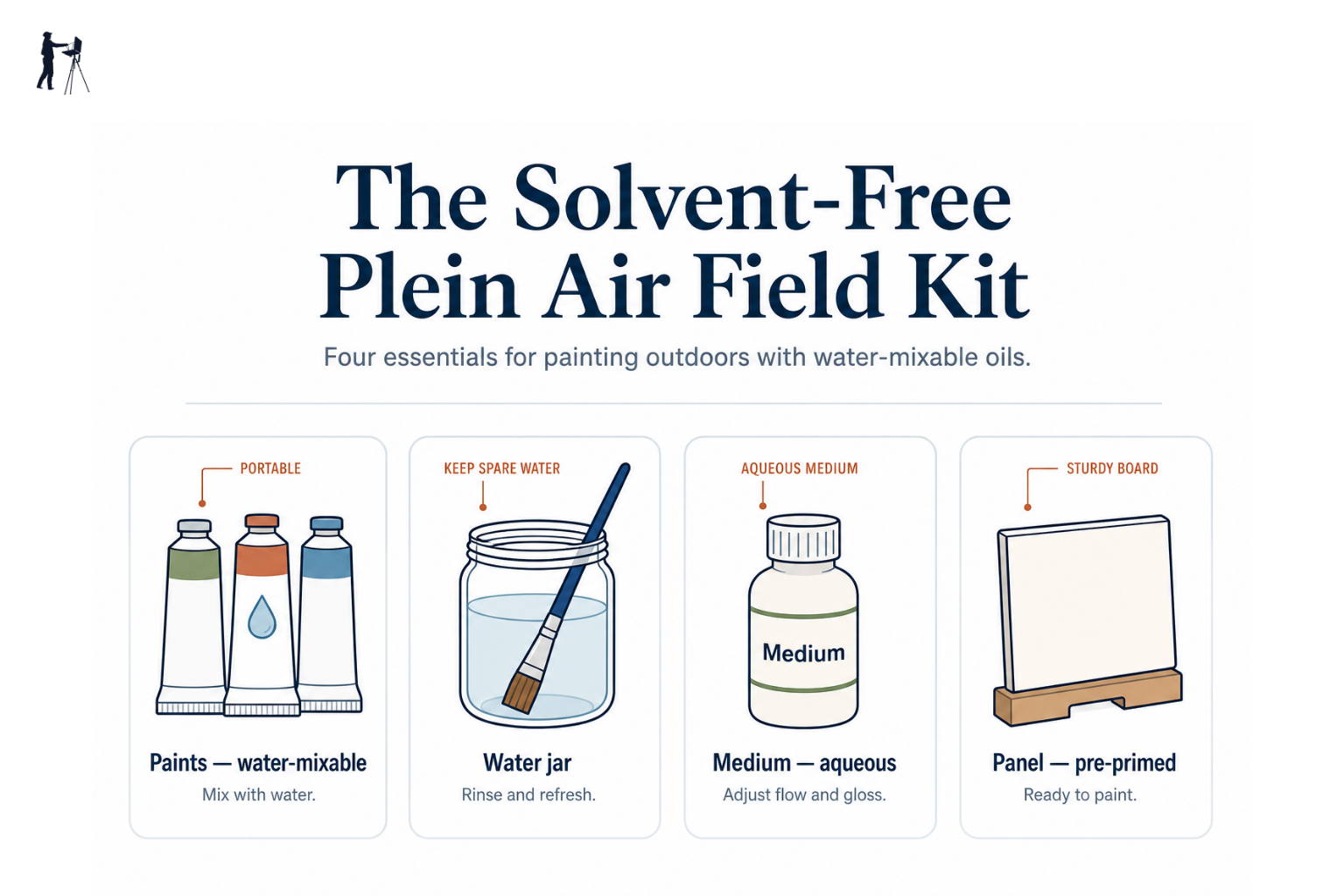
- • Simple field setup: two containers (water and water-mixable oil medium), acrylic-gessoed panels, and a wet panel carrier for transport.
You're standing in a nature reserve, easel up, palette ready, and then you remember: the turps is in the car, the car is half a mile away, and you're fairly sure you shouldn't be pouring solvent into the soil anyway. If that scenario sounds familiar, water-mixable oils for plein air painting are probably worth your attention. This is an honest look at whether these paints actually deliver outdoors, which brands are worth buying in the UK, and what you need to know before your first solvent-free session.
What Are Water-Mixable Oils? (And How Are They Different?)
The name raises a reasonable question: are these actually oil paints, or just acrylics with better marketing? The answer is that they are genuine oil paints. The binder is a modified drying oil, linseed or safflower, that has been treated to emulsify with water. The pigments are the same, the film-forming process is the same, and the finished painting behaves like an oil painting because it is one.
What changes is practical rather than fundamental. You can thin these paints with water in early stages, and you can clean your brushes with water instead of turpentine or white spirit. The odour is substantially reduced, and you don't need to carry solvent into the field.
Everything you know about oil painting technique still applies. Fat over lean, glazing, impasto, scumbling: all of it works. The learning curve is less about adjusting to a new medium and more about understanding where water fits in the workflow (which we'll cover properly in the technique section below).
These are real oil paints
Water-mixable oils are not a hybrid medium or a step towards acrylics. They use the same drying oil binders as conventional oils, just modified to mix with water. All the same techniques apply.
Why They Make Sense for Painting Outdoors in the UK
For UK painters specifically, the practical case for water-mixable oils is strong. The most obvious benefit is not having to carry, use, or dispose of solvent in the field. That matters more here than in many other contexts.
Painting on National Trust land, in a nature reserve, beside a river, or on a coastal path puts you near ecosystems where solvent disposal is genuinely problematic. Even pouring small amounts of solvent-contaminated diluent onto soil or into a hedge is not ideal, and on protected land it's a legitimate concern. Water-mixable paints remove that worry entirely from the equation.
The reduced odour is equally relevant to the realities of painting in Britain. Many UK plein air painters travel to their locations by car, mixing painting with parking somewhere scenic and working from the boot or a folding setup nearby. Solvent fumes in an enclosed vehicle are unpleasant at best and a real problem for smell-sensitive painters or those with respiratory sensitivities. Water-mixable oils make the car a viable studio between sessions without the lingering smell.
For anyone who paints near water: rivers, reservoirs, canals, coastal edges, the peace of mind that comes with not having solvent on the kit is real.
One honest caveat worth stating clearly: water-mixable oils do not produce zero waste. The water you use for thinning and brush cleaning becomes paint-contaminated rinse water. This is considerably less harmful than solvent waste, but it still shouldn't go straight into a stream or a ditch. Pour it into soil well away from watercourses, or carry it home. That's a straightforward thing to manage, but it's worth knowing upfront rather than discovering it when you're standing next to a chalk stream in Hampshire.
The Main Brands Available in the UK
Four ranges cover the UK market well, at meaningfully different price points and quality levels. Here's what you actually need to know about each of them.
Winsor & Newton Artisan
Artisan is the natural starting point for most UK painters. It's widely stocked in high-street art shops, available online from all the major UK retailers, and the range is large enough to build a solid limited outdoor palette without compromise. There are 40 colours in 37 ml tubes, using linseed and safflower binders, and at approximately £6.17 per tube at time of writing, it sits comfortably in the mid-range.
The handling is good, if not exceptional. Artisan won't satisfy painters who are used to the buttery consistency of premium professional oils, but it's entirely capable paint that behaves honestly and rewards good technique. The medium ecosystem, covering Artisan painting medium, safflower oil, and a dedicated water-mixable thinner, is readily available and straightforward to use.
If you're testing the medium before committing to it, or building your first oil kit for outdoor use, Artisan is where to start.
Royal Talens Cobra
Cobra is a step up in almost every respect. It's a professional-grade range with 70 colours in 40 ml tubes, a claimed 100-year lightfastness under museum conditions, and a handling quality that experienced painters consistently rate more highly than Artisan. The paint has a richer, more responsive feel, and the medium ecosystem is excellent: Cobra produces a quick-drying medium, a slow-drying medium, and several painting mediums, all specifically formulated for water-mixable use.
One useful flexibility: you can mix traditional oil paint into Cobra at a ratio of roughly one part conventional paint to four parts Cobra while retaining water clean-up. Beyond that ratio, treat the mixture as conventional oil and clean up accordingly.
If you're planning to use water-mixable oils as your long-term outdoor medium rather than just trying them out, Cobra is the range to buy into.
Lukas Berlin
Lukas Berlin deserves more attention than it gets in UK buying guides. Available through Jackson's Art at approximately £4.40 per 37 ml tube at time of writing, it's one of the most affordable artist-grade water-mixable options in the UK market. The pigment quality is solid for the price, and it's a genuinely sensible choice for painters who work in high volume, run workshops, or want to paint freely outdoors without worrying about burning through expensive paint quickly.
It doesn't appear in enough UK buyer recommendations given its value. Worth knowing about.
Holbein Duo Aqua
Holbein's Duo Aqua range is the premium option. It's available through Jackson's and specialist retailers, and it comes with one particularly useful property for painters who already have an existing oil palette: it remains water-mixable with up to approximately 20% conventional oil paint mixed in. That gives experienced painters genuine flexibility to integrate stock they already own rather than replacing everything at once.
If you want the best water-mixable oil paint available and are happy to pay for it, Duo Aqua is the answer.
Water-mixable oil paints available in the UK
Winsor & Newton : Artisan : Watermixable Oil Paint Sets
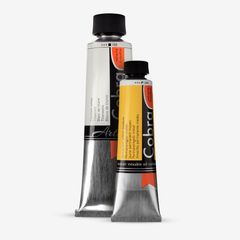
Cobra : Artist Watermixable Oil Paint
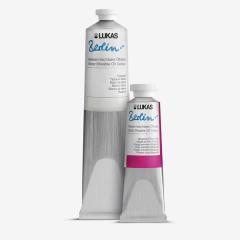
Lukas : Berlin : Water-Mixable Oil Paint
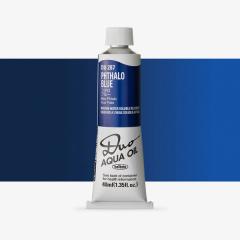
Holbein : Duo Aqua : Watermixable Oil Paint : 40ml : Phthalo Blue
How to Use Water-Mixable Oils Outdoors: What Actually Works
Getting the technique right matters more with water-mixable oils than with conventional oils, because the most common beginner mistake, using water freely throughout the painting, produces genuinely poor results. Here's what actually works.
Don't Use Water as Your Main Medium
Water is useful at the beginning of a session and for cleaning brushes between colours. It's not a substitute for oil medium throughout the painting.
When you add too much water to oil paint, you break down the binder. Late-stage passages mixed with water rather than oil medium come out chalky, poorly bound, and sometimes prone to cracking over time. This isn't a theoretical risk; it's something painters run into when they treat water-mixable oils like watercolours.
The correct approach is to use a dedicated water-mixable oil medium as your primary working medium from the block-in stage onwards. These mediums, water-soluble linseed oil, safflower oil, or a quick-dry formulation, enrich the paint properly and keep fat-over-lean working as it should.
A touch of water to tone the surface and draw in your initial composition is fine. From there, switch to oil medium.
Use water sparingly
Think of water the same way you'd think of turpentine in a traditional setup: useful for thinning the very first lean layers and cleaning your brushes, but not something to be adding freely throughout the painting.
The Two-Container Setup
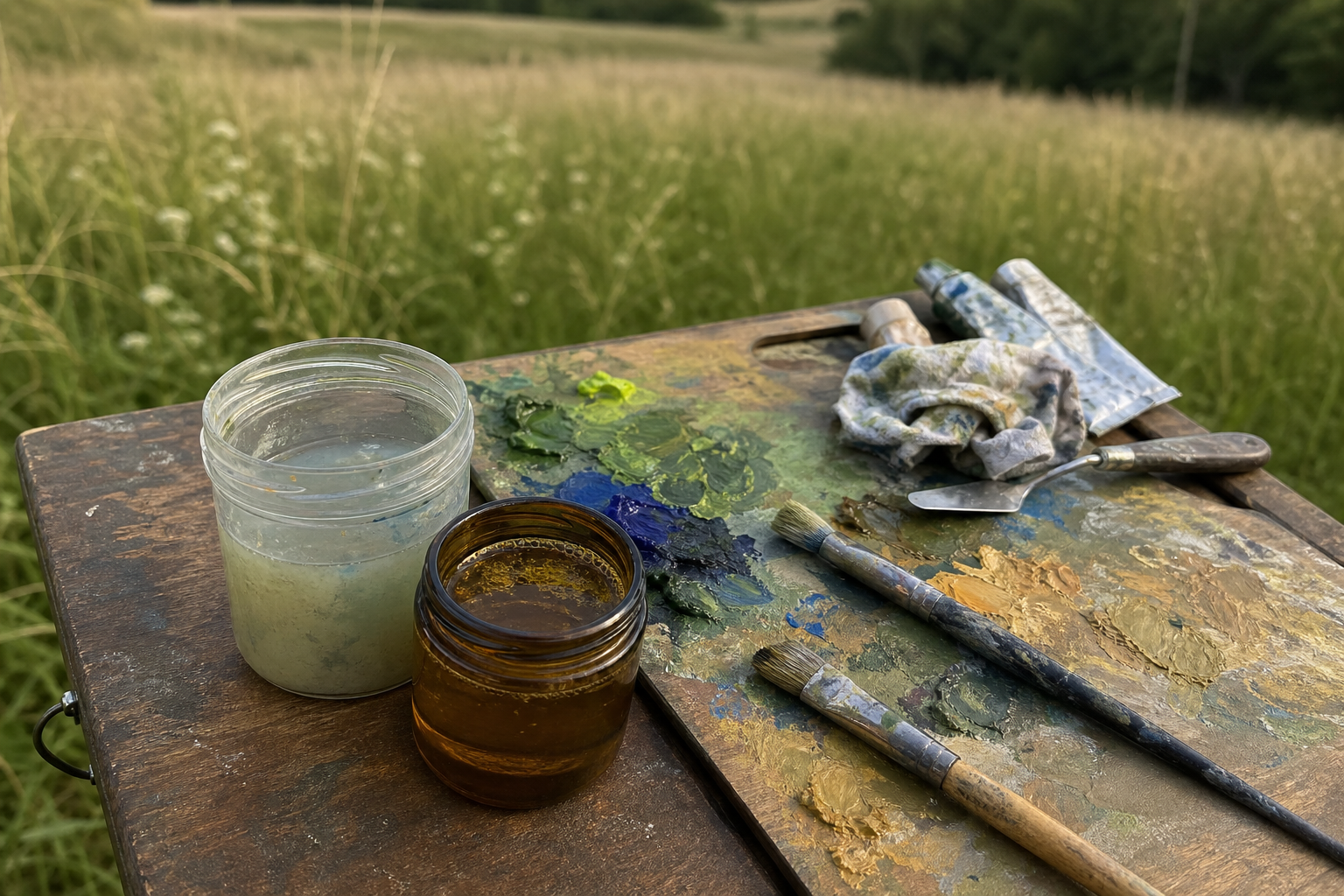
The field setup for water-mixable oils mirrors the classic dual-container arrangement of traditional oils, just with water replacing solvent.
You need two small containers: one with clean water for early thinning and brush rinsing, and one with water-mixable linseed or safflower oil for your main painting medium. A third container with fresh water for final brush cleaning is optional but useful on longer sessions.
That's it. It's a lighter, simpler setup than the traditional solvent-and-oil arrangement, which is part of the appeal.
Water-mixable oil workflow for a plein air session
Tone the surface
Mix a transparent earth (Burnt Sienna works well) with a touch of water. Lightly cover the panel to knock back the white.
Draw in main shapes
Use the same dilute mixture and a fine brush to map out your composition. Keep it lean and light.
Block in big masses
Work with paint straight from the tube, adding only a tiny amount of water if needed. Establish your main value and colour masses.
Switch to oil medium
From here, add water-mixable linseed or safflower oil to enrich colour, improve flow, and keep fat-over-lean working correctly.
Build and refine
Develop mid-stage and final layers with more medium-rich paint. Thicker, richer strokes for highlights and foreground texture.
Clean brushes in water
Use the water container for periodic cleaning between colours. Wipe brushes on a rag before picking up fresh paint.
Surfaces: Use Acrylic-Gessoed Panels
This one gets skipped surprisingly often. When you're using water in the early stages of a painting, you need a surface primed with acrylic gesso, not an oil-primed ground.
Acrylic gesso handles both the water and oil phases without adhesion problems. Oil-primed grounds work well only if you're avoiding water entirely in those initial stages, which is possible but requires more care. For most painters, universally primed panels or canvas are the practical default and they work perfectly with water-mixable oils at every stage.
Standard painting panels, stretched canvas, and linen boards primed with acrylic gesso all perform well outdoors.
Drying Behaviour in UK Conditions
This is worth being honest about: there's no reliable published data on drying times for water-mixable oils in cool, changeable British outdoor conditions. Anyone claiming precise tack-free times for an October session on the Yorkshire Moors is guessing.
What's broadly true is that water-thinned underlayers dry faster than you might expect, because the water evaporates quickly and leaves a thin, lean oil film. That's useful in the field. Thicker, medium-rich passages dry at roughly the same rate as conventional oils, which means they'll still be wet at the end of a session.
In cold, damp conditions, drying slows down. A quick-dry medium, Cobra's is the most widely available and well-regarded, is strongly recommended for plein air use. It helps the painting reach a safer state before transport, though you'll still want a wet panel carrier regardless.
Recommended mediums for water-mixable oils
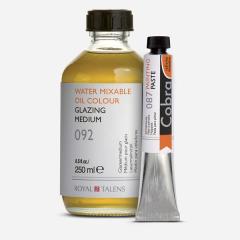
Cobra : Watermixable Oil Mediums
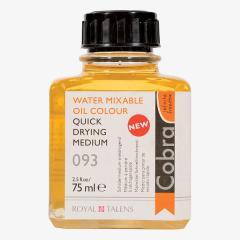
Royal Talens : Cobra Water Mixable Oil : Quick Drying Medium : 75ml
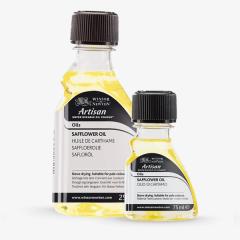
Winsor & Newton Artisan : Safflower Oil
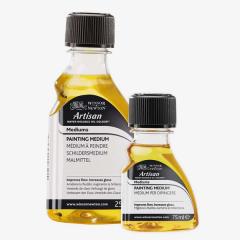
Winsor & Newton Artisan : Painting Medium
Mixing Water-Mixable Oils with Traditional Oils
If you already have conventional oil tubes and don't want to replace everything at once, you can mix them into water-mixable paints, but the limits matter.
With Cobra, you can add roughly one part conventional oil paint to four parts Cobra and retain water clean-up. Go beyond that ratio and you should treat the mixture as conventional oil and clean up with solvent accordingly. Holbein Duo Aqua remains water-mixable with up to approximately 20% conventional oil in the mixture, giving experienced painters slightly more room to work with existing stock.
The practical implication is that you can run down existing tubes of conventional oil paint by mixing them gradually into a largely water-mixable palette. It works well enough as a transitional approach.
One thing not to do: don't add conventional oil mediums, standard linseed oil, stand oil, or similar, to water-mixable paint if you want to retain water clean-up. These break the emulsification that makes the paint water-friendly. Use the dedicated water-mixable oil mediums instead.
Are Water-Mixable Oils Worth It for Plein Air Painting?
For most UK plein air painters, especially at the beginner to intermediate level, yes. The advantages are genuine and the trade-offs are manageable.
For beginners setting up their first outdoor kit, water-mixable oils simplify the setup meaningfully. No solvent to buy, carry, or store. No disposal problem. Lighter kit. Easier brush care in the field. They're a lower barrier to getting started, and that matters when the goal is to get outside and paint more.
For painters with sensitivities to smell or who are working in situations where solvents feel inappropriate, these paints remove a real obstacle rather than a theoretical one. Painting in a shared car, on a nature reserve, near a river, or in an urban park where solvent waste feels uncomfortable: water-mixable oils handle all of those situations without compromise.
For experienced painters who have their solvent setup dialled in and love it, these are an alternative worth knowing about rather than an immediate necessity. Some find the handling difference minimal enough to switch entirely; others keep both options available for different contexts.
The honest limitations: the no-solvent claim requires some nuance. Some proprietary mediums contain mild resins or processing agents, so check data sheets if this matters to you. Paint-contaminated rinse water still needs responsible disposal. And there is a learning curve around not over-using water, which catches some painters out in early sessions.
Water-mixable oils for plein air: the honest trade-off
Pros
- + No need to carry or dispose of solvents in the field
- + Significantly reduced odour, useful in cars, shared spaces, or on protected land
- + True oil paint handling: glazing, impasto, fat-over-lean all work normally
- + Water clean-up makes field brush care genuinely simpler
- + Growing medium ecosystem gives good drying control outdoors
- + Good availability from UK retailers at a range of price points
Cons
- - Using too much water (instead of oil medium) causes handling problems; there's a learning curve
- - Acrylic-gessoed surfaces required if using water in early layers
- - Paint-contaminated rinse water still needs responsible disposal
- - Drying in cool, damp UK conditions may be slower than expected
- - Mixing with conventional oils reduces water-clean-up properties past certain ratios
Where to Buy Water-Mixable Oils in the UK
Jackson's Art is the most comprehensive UK source, stocking all four ranges covered here alongside compatible mediums. Prices are competitive and delivery is reliable, making it the default recommendation for most buyers.
Cass Art stocks Artisan in most branches and sometimes Cobra, which is useful if you want to see the tubes in person before committing. Ken Bromley is a solid postal option with good customer service and a well-curated materials range.
Artisan is also the range you're most likely to find in larger high-street art shops across the UK, and it occasionally turns up in The Works and similar retailers in starter-set form. Worth checking if you're not near a specialist shop.
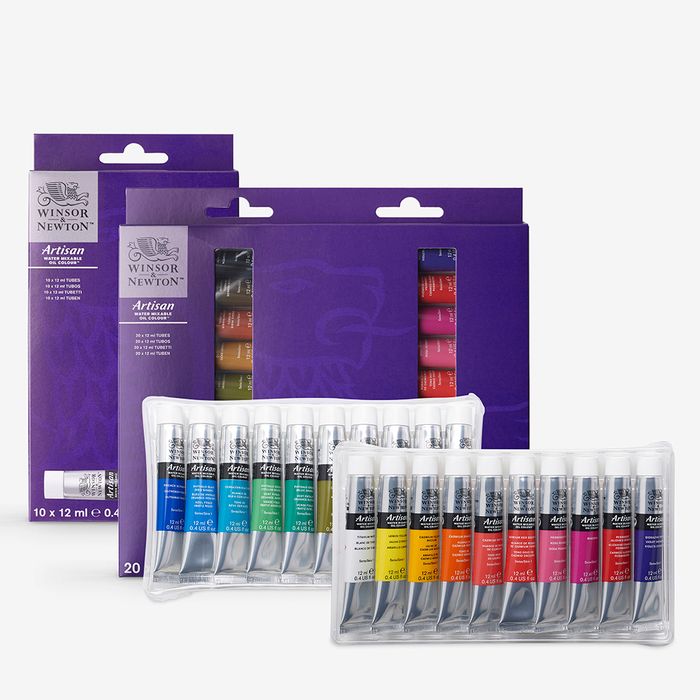
For beginners, an Artisan starter set is the most sensible entry point. It gives you a curated colour range without having to think too hard about palette building before you've had a chance to try the medium.
Jackson's
Winsor & Newton : Artisan : Watermixable Oil Paint Sets
Winsor & Newton Artisan Watermixable Oil Paint Sets Contain Paints Developed To Look And Handle Like Conventional Oil Colour. Their Key Difference Is That They Can Be Thinned And Cleaned Up With Water, Removing The Need For Hazardous Solvents. This Makes Them Suitable For Artists
If you're ready to commit to the medium properly, go straight to Cobra. If budget is the priority, Lukas Berlin from Jackson's is the choice that experienced painters quietly rate above its price point.
Water-mixable oils make a genuinely good entry point to oil painting outdoors. The setup is lighter, the field management is simpler, and the results, when you use them correctly, are proper oil paintings. If you've been putting off oil painting outdoors because the solvent question felt like too much faff, this is the version of the medium that removes that excuse. Pick up a small set, a bottle of water-mixable linseed oil, and a gessoed panel, and go and paint something.
For more on working with oils outside, the oil techniques guide covers everything from colour mixing to fat-over-lean in more depth. And if you're still finding your feet with plein air painting generally, the beginner's guide to getting started covers the full picture from kit to location to that first session outdoors.
FAQ
Frequently Asked Questions
Are water-mixable oils true oil paints or just acrylics?
They are genuine oil paints. The binder is a modified drying oil that emulsifies with water. Pigments and film-forming behaviour are the same as conventional oils.
Can I clean brushes with water and dispose of the rinse outdoors?
You can clean brushes with water, but the rinse becomes paint-contaminated. Do not pour it into streams or ditches. Carry it home or dispose of it on soil well away from watercourses.
Can I mix water-mixable oils with traditional oil paints?
Yes, but only to limits. Cobra accepts roughly one part conventional paint to four parts Cobra while keeping water clean-up. Holbein Duo Aqua tolerates about 20 percent conventional oil. Beyond those ratios treat the mix as conventional oil and use solvents.
How should I use water when painting outdoors with these paints?
Use water sparingly for initial lean layers and brush rinsing. Switch to a dedicated water-mixable oil medium for main work to maintain fat-over-lean and avoid chalky, poorly bound late layers. A two-container setup (water and water-mixable oil medium) works well.
Which water-mixable brands and retailers are best in the UK?
Winsor & Newton Artisan is a sensible starter range, Royal Talens Cobra is the professional choice, Lukas Berlin offers strong value, and Holbein Duo Aqua is the premium option. Jackson's Art, Cass Art and Ken Bromley are reliable UK sources.
Author

PleinAirPainting Editorial Team
PleinAirPainting.co.uk helps artists paint outdoors with confidence through UK-focused guides, equipment advice, resources and plein air inspiration.