Pembrokeshire Plein Air Painting: A Practical Guide to Painting the Welsh Coast
A practical guide to Pembrokeshire plein air painting: choose the best spots, plan for tides and wind, pick the right medium, and allow two or more days to get the most from the coast.

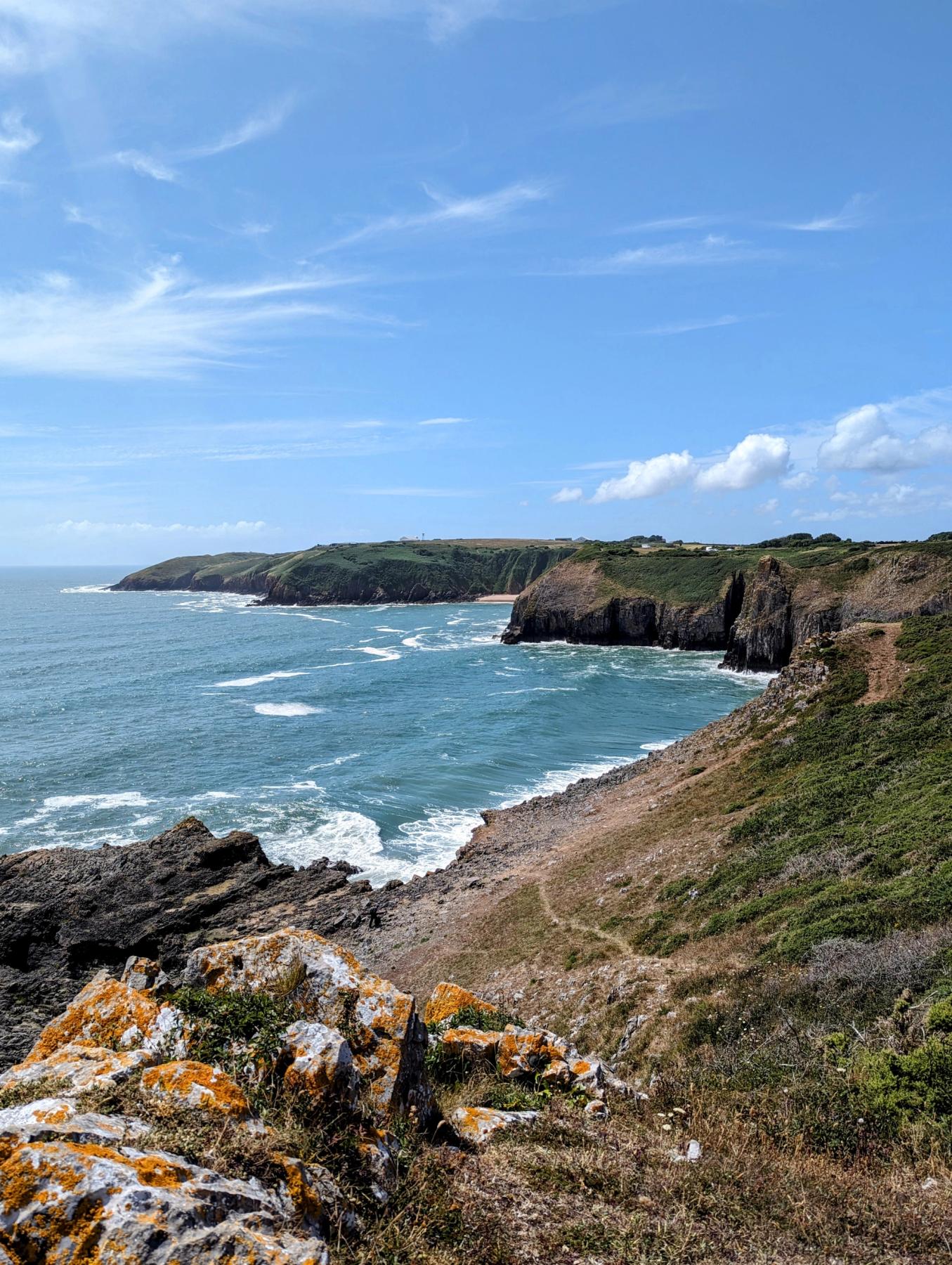
View of the Pembrokeshire coastline from the photograph titled "Pembrokeshire Coastline II".
Credit: Lfrancescp / Wikimedia / CC BY-SA 4.0
Key takeaways
- • Pembrokeshire offers a wide range of coastal and inland subjects within a compact area, rewarding repeat visits.
- • Plan by location and time of day: east-facing harbours for morning light and west-facing beaches for late afternoon.
- • Check wind and tide forecasts; weight easels on exposed headlands and prefer gouache or smaller panels in gusty conditions.
- • Allow at least two days to make travel worthwhile, and carry alternatives for bad weather like inland Preseli sites or sheltered harbours.
- • Respect National Park rules: use paths, avoid nesting cliffs, check the Castlemartin range, and dispose of solvent waste responsibly.
Pembrokeshire plein air painting offers something that is genuinely hard to find elsewhere in Britain: an Atlantic coastline where the light shifts every twenty minutes, the subject matter changes from working harbour to sea arch to flooded quarry within a few miles, and the National Park status means much of it has stayed visually coherent and largely undeveloped. The quality of the light here is particular. The Atlantic exposure brings fast-moving cloud, frequent breaks of intense brightness, and a luminosity to the water that rewards painters who stay alert and work quickly.
The difficulty, especially on a first visit, is knowing where to go. The Pembrokeshire coast runs for over 186 miles, and the surrounding countryside adds a different palette again. Faced with that much choice, it is easy to spend a morning driving between car parks and end up painting nothing. This guide is here to solve that problem. It names specific locations, tells you what each one is like to paint from, how long it takes to reach, what the conditions are likely to be, and what medium will suit you best. Treat it as a planning tool, not a highlights reel.
Why Pembrokeshire Works So Well for Plein Air Painting
The range of subject matter is the first thing painters notice. Within a short drive of St Davids alone, you can find a sheltered working harbour with lime kilns and moored boats, a clifftop headland with panoramic Atlantic views, a flooded slate quarry with water that shifts from jade to near-indigo depending on the time of day, and west-facing beaches where the evening light hits the rock strata in a way that makes colour mixing genuinely challenging in the best possible sense. That variety means painters do not run out of subjects, and it means the area rewards multiple visits.
The light itself is different from the light on, say, the Norfolk coast or the Jurassic Coast. The Atlantic exposure means cloud cover moves quickly across the sky, producing the kind of rapid tonal contrast that forces you to commit to your key decisions early. There are days of pure, clear light with turquoise water that looks almost Mediterranean, and days of layered grey and silver that are, if anything, even better for painters. Both conditions produce distinctive work.
Pembrokeshire Coast National Park status matters practically, not just aesthetically. The coastline is maintained, the paths are waymarked and generally in good condition, and the visual coherence of the landscape, without large-scale development along most of the coast, means compositions are easier to find. The protection also means that what you see now is close to what painters who visited forty years ago saw, and what painters forty years from now will see.
The area rewards repeated visits. A spot that is awkward in overcast March will look completely different in early September evening light. Painters who know Pembrokeshire well tend to return to the same locations across different seasons rather than working through a checklist.
A tip before you go
Pembrokeshire's coastal light changes fast. If you're visiting for the first time, give yourself at least two full days rather than one, so you can afford to move on from a spot that isn't working and still find your painting.
Key Painting Locations on the St Davids Peninsula
The St Davids peninsula is where most painters focus their time, and with good reason. The concentration of distinct, accessible painting spots within a small area makes it ideal for planning a multi-session day. The following four locations represent the core of what the peninsula offers, each with a different character and set of demands.
Porthclais Harbour
Porthclais is a small tidal harbour a couple of miles south-west of St Davids, and it is probably the most reliably good painting spot on the peninsula for painters who want strong compositional anchors. The lime kilns at the head of the harbour, the stone cottages above the water, the moored dinghies and kayaks reflecting in the channel: there is a great deal to work with in a relatively compact space. Because the harbour sits in a narrow inlet, it is considerably more sheltered from wind than the open headlands nearby, which makes it practical for oil painters and, on calmer days, for watercolour work.
There is a small car park close to the harbour, about two to three minutes' walk from the water. It fills quickly in summer, so arrive early if you are visiting between June and August. The morning light, coming from the east, hits the harbour buildings and lime kilns well, making this a stronger choice for early sessions than late afternoon ones.
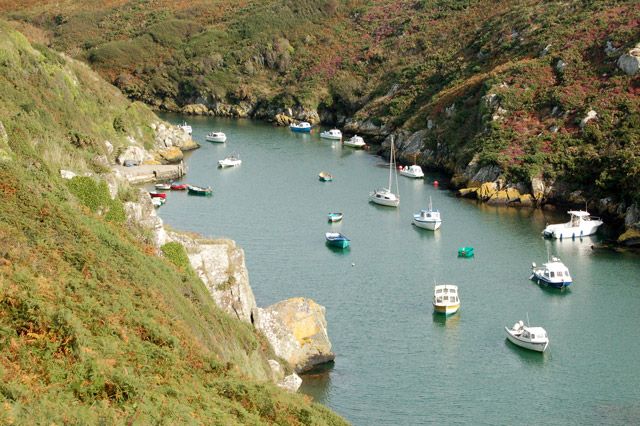
Boats moored in Porthclais harbour. by Andy F / geographorguk — CC BY-SA 2.0
St Justinian's and Ramsey Island Views
St Justinian's sits on a headland a short distance north-west of Porthclais and offers a completely different kind of painting. The RNLI lifeboat station is the foreground anchor, but the real subject is the view out across the sound to Ramsey Island, with the sea running between them and the sky typically doing something interesting above. On clear days the island sits cleanly on the horizon; on overcast days the tonal progression from near water to distant land is subtle and complex in a way that suits painters who enjoy working tonally.
This spot is exposed. The wind that hits St Justinian's is the same Atlantic wind that crosses the sound with nothing to slow it, and it can be strong even on days that feel calm in St Davids itself. There is parking nearby, about five minutes from the viewpoints, and the RNLI station provides a human element that prevents the composition from becoming pure landscape. For painters who want sea and sky over land, St Justinian's is one of the best spots on the peninsula.
St Davids Head
St Davids Head is the most physically demanding of the main peninsula spots and the most spectacular. The clifftop views extend along the coast in both directions, the rock formations are dramatic, and in the right conditions the shallow coves below show a turquoise that painters working in blues and greens will find irresistible. Ancient field boundaries and traces of a promontory fort add quiet archaeological interest to what might otherwise read as pure landscape.
Getting there requires a walk of around twenty to thirty minutes from the nearest parking at Whitesands Bay. The path is good but the terrain is open moorland and cliff, so appropriate footwear matters. The exposure is considerable: this is one of the more genuinely exposed headlands in Pembrokeshire, and on a breezy day it will test your easel setup and your patience with watercolour. On a clear, relatively calm day, however, the views repay the effort easily.
Abereiddi Bay and the Blue Lagoon
Abereiddi is one of the genuinely unusual painting subjects on the Welsh coast. The beach itself is notable for its dark volcanic sand, but the Blue Lagoon immediately adjacent is the real draw. This flooded slate quarry, cut off from the sea except at high water, holds water that ranges from pale jade to deep blue-green depending on the angle of light and the time of day. The ruined quarry buildings on the cliff edge above add architectural structure to what could otherwise be a purely tonal colour study.
The car park is a five to ten minute walk from the lagoon. Be aware that in summer the lagoon is popular with coasteering groups, which means wetsuits, safety boats, and a fair amount of noise and movement around the water. If you want to paint the lagoon in relative quiet, early morning or an off-season visit is worth the extra planning. The surrounding ruins are less affected by this traffic and offer good compositional material throughout the day.
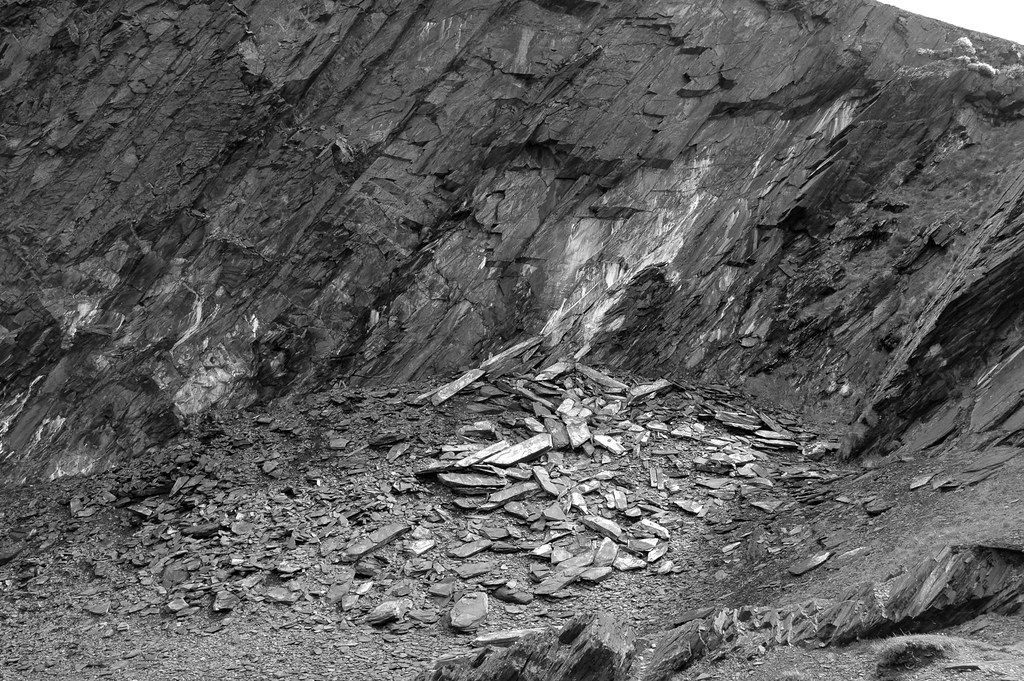
Abandoned slate quarry on the coast of Wales. by Photo by jaybergesen / Flickr — CC BY 2.0
| Location | Best for | Exposure | Walking from parking | Notes |
|---|---|---|---|---|
| Porthclais Harbour | Boats, architecture, reflections | Sheltered | 2–3 minutes | Can be busy in summer |
| St Justinian's | Sea and sky, headland drama | Exposed | 5 minutes | Wind can be strong |
| St Davids Head | Cliffs, panoramas, rock formations | Very exposed | 20–30 minutes | Worth the walk |
| Abereiddi / Blue Lagoon | Colour, quarry ruins, sea | Moderate | 5–10 minutes | Popular with coasteering groups |
South Pembrokeshire: Bosherston, Barafundle and Stackpole
The south coast has a noticeably different character from the St Davids peninsula. The cliffs are higher and more dramatic in places, the bays more enclosed, and the pace of the landscape slower. It is also home to some of the most paintable geology in Wales.
Bosherston Lily Ponds and Barafundle Bay
The Bosherston Lily Ponds offer an unusual subject: calm, reflective inland water surrounded by wooded banks, with the sound of the sea audible but not yet visible. The ponds are a genuine painting destination in their own right, particularly in early summer when the lilies are out, and they provide a useful change of pace from coastal headland work. The light here is softer and more diffused than on the exposed coast.
From Bosherston, a walk of roughly ten to fifteen minutes from Stackpole Quay brings you to Barafundle Bay, which can only be reached on foot. That access restriction is one of the things that makes it worth the effort: outside peak summer weekends, the beach is quiet enough to set up an easel without feeling that you are in the way. The bay faces south-east, so morning light works well here.
The Green Bridge of Wales and St Govan's Chapel
The Green Bridge of Wales is one of the largest natural sea arches in Britain, and it is a genuinely compelling geological subject for painters. The scale is dramatic enough to anchor a large composition, and the rock colouring, warm limestone above, darker wave-washed base, is complex and rewarding to mix. St Govan's Chapel, set directly into the cliff face at the bottom of a steep flight of steps, offers a very different architectural subject a short distance along the coast.
There is an important practical note for this area that painters must plan around. The nearby Castlemartin MOD firing range is active on many weekdays, and when it is, access to the headlands around the Green Bridge and St Govan's Head is restricted. The range is not a theoretical concern: it genuinely closes off access, and the gates will be locked. Always check the Castlemartin Range activity calendar before travelling to this part of the south coast. The range website publishes the firing programme in advance, and it takes thirty seconds to check.
MOD range at Castlemartin
The firing range near the Green Bridge of Wales and St Govan's Head is active on many weekdays. Always check the firing programme on the Castlemartin Range website before planning a visit to the far south coast.
Marloes and the Dale Peninsula
The west-facing beaches of the Marloes peninsula are a consistent favourite among painters who know Pembrokeshire well, and the reason is straightforward: the combination of low-tide rock strata and late afternoon westerly light is one of the most paintable things in Wales.
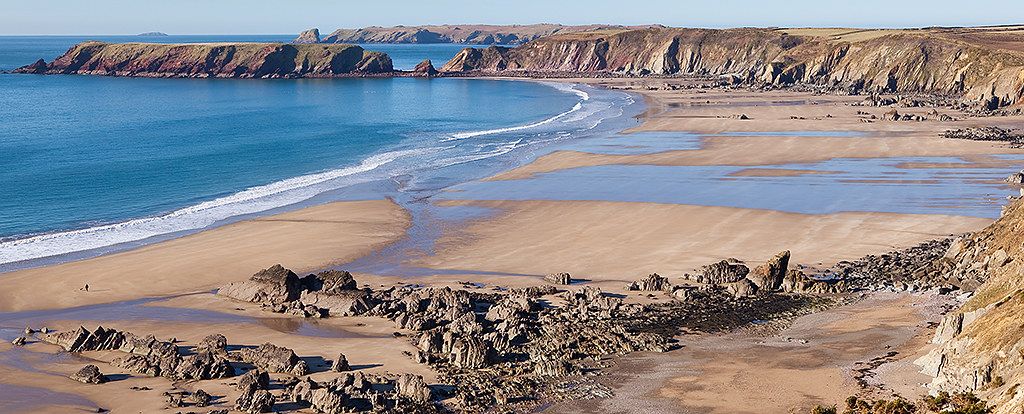
Marloes Sands on the Pembrokeshire coast in southwest Wales. by dave-pemcoastphotos.com — Flickr · CC BY 2.0
Marloes Sands is a long, west-facing beach backed by cliffs, and the rock strata exposed at low tide are visually distinctive: alternating bands of red and grey that create a natural rhythm across the foreground of any composition. The walk from the car park is around fifteen to twenty minutes, which is enough to keep the beach from feeling overcrowded. On clear days, Gateholm Island sits just off the western end of the beach, and beyond it Skokholm Island appears on the horizon, providing natural layers of atmospheric distance that are useful for any painter working on recession and aerial perspective.
Timing matters here more than at most locations. Arrive at low tide for the largest expanse of beach and the clearest exposure of the rock formations. The BBC Weather tide tables will give you the timing; plan to arrive an hour or two before low water so you can work as the tide retreats and the formations are revealed. For late afternoon and evening sessions in the summer months, the westerly light on the red strata is unlike anything else on this coast.
Druidstone and Traeth Llyfn are worth noting for painters who want something quieter. Both offer good coastal subjects with significantly less foot traffic than Marloes or Whitesands, and the drive between them and the main St Davids spots is manageable within a single painting day.
For anyone new to painting on beaches generally, the practical considerations around tide, glare, and working in sand are worth thinking through before you arrive.
Planning Around Pembrokeshire's Weather and Tides
This is where Pembrokeshire requires honesty. It is an Atlantic coast, which means the weather is changeable and sometimes very changeable. That is part of what makes the light so good, but it also requires genuine planning if you want to avoid wasted journeys.
Wind is the main factor on exposed headlands. St Davids Head and Strumble Head (on the north coast) experience gusts that will knock over an unweighted easel and make watercolour work effectively impossible. If you are planning a session on an exposed headland, stabilise your pochade box or easel with a weight hung from the centre column, work smaller rather than larger, and check the forecast for gusts rather than average wind speed. If the forecast shows gusts above 20 to 25mph on an exposed site, consider moving to Porthclais, Solva, or the Bosherston ponds instead. For more detailed strategies for painting in wind, the practical guidance in our wind painting guide covers easel setup and medium choices in detail.
Tides affect several key locations significantly. Marloes Sands and the approach to Barafundle from Stackpole Quay both change substantially between high and low water. The BBC Weather coastal pages include tide times alongside the standard forecast, which makes it easy to check both at once. The UK Hydrographic Office also publishes detailed tide tables for Pembrokeshire ports. Checking both takes two minutes and can save a wasted trip.
Light timing is worth building your day around. The west-facing beaches at Whitesands Bay and Marloes Sands are strongest in the late afternoon and evening, particularly in summer when the sun sets well to the north-west. East-facing harbours like Porthclais catch the morning light well. Plan your locations in sequence rather than visiting randomly, and you will make the most of the available light at each spot.
Overcast days are not wasted days in Pembrokeshire, particularly for watercolour painters. Grey, even light removes the harsh shadows and high contrast that make colour mixing difficult, and produces subtle tonal ranges that work especially well on beaches and estuaries. If you paint in watercolour, an overcast day at the Bosherston lily ponds or along the Daugleddau estuary near Pembroke can be more productive than a bright headland session.
If it is genuinely too wet to paint outside, there is a painting café near Pembroke Dock with views over the Milford Haven waterway that offers shelter and a view worth sketching from.
Checking the tides
The BBC Weather and the UK Hydrographic Office both publish reliable UK tide tables. BBC Weather includes tides alongside the standard forecast, which makes it easy to check both at once when planning a coastal session.
Inland Options: Preseli Mountains and Historic Ruins
The coast is the main draw, but inland Pembrokeshire is worth keeping in reserve for days when the coastal headlands are impractical or simply exhausted.
The Preseli Mountains offer a completely different painting character. Big-sky moorland, wide horizons, ancient bluestone outcrops and standing stones, and the kind of atmospheric perspective work that is hard to achieve on a short stretch of cliff. In overcast or dramatic weather conditions, when the coastal headlands become difficult to work on, the Preselis can be genuinely spectacular. The Welsh-speaking communities around Newport and Fishguard mark a cultural shift that is also reflected in the landscape: quieter, less visited, with a character that feels distinct from the heavily walked coastal path further south.
Llawhaden Castle is an inland ruin with well-maintained grounds that provides a different kind of architectural subject to the coastal chapel and quarry ruins elsewhere in the county. It is a useful counterpoint for painters who want variety across a longer trip, and the surrounding Pembrokeshire countryside offers good material for anyone wanting to step back from the coast for a session.
Solva, on the south side of the St Davids peninsula, deserves a mention as a harbour alternative to Porthclais. It is slightly more sheltered, with colourful village buildings above the water that add a different foreground option, and it tends to be quieter on weekday mornings. Painters who work primarily on harbours and boats will find it worth the short detour.
Practical Tips for Painting in Pembrokeshire's National Park
The Pembrokeshire Coast National Park covers most of the locations in this guide, and painting within it is entirely unrestricted for individuals and informal groups. There are, however, some practical points that will make your visits smoother and more responsible.
Stick to established paths and viewpoints. Fragile dune systems, particularly around Whitesands and Newgale, are easily damaged by repeated foot traffic off the path. Similarly, do not set up on unstable cliff edges. The coastal path gives you access to excellent viewpoints without needing to go off it.
Nesting bird seasons run roughly from March to August. During this period, keep a respectful distance from cliff faces where seabirds nest. You do not need to avoid the coast, but do not position yourself directly against a cliff face or on ledges near active nest sites. The National Park website publishes seasonal guidance if you want specific detail.
The MOD range at Castlemartin applies to the south coast around the Green Bridge and St Govan's Head. Always check the firing programme before visiting. This is not bureaucratic caution: access is genuinely closed on live firing days.
Solvent waste is worth specific mention for oil painters. Take all your waste solvent home in a sealed container. Do not dispose of it outdoors. This applies throughout the National Park but matters especially near water.
Dogs should be kept on leads in conservation areas, near livestock, and on farmland sections of the coastal path. Most of the cliff-top path sections allow dogs off lead, but check locally if you are uncertain.
Groups with easels: if you are running a commercial painting group or workshop, check with the National Park authority beforehand. Organised commercial activities may require permission. Informal groups of friends painting together are not affected by this.
Which Medium Works Best Where
| Location type | Oils | Watercolour | Gouache |
|---|---|---|---|
| Sheltered harbours (Porthclais, Solva) | Excellent — no wind issue | Good | Good |
| Open beaches (Marloes, Whitesands) | Manageable with wind protection | Good on calm days | Very good — fast drying helps |
| Exposed headlands (St Davids Head, Strumble) | Challenging — dust and spray | Difficult in wind | Best option here |
| Inland (Preseli, Llawhaden) | Excellent | Excellent | Good |
| Blue Lagoon / quarry sites | Good | Excellent for colour shifts | Good |
Oil painters can absolutely work on exposed headlands in Pembrokeshire, but it requires the right setup. A pochade box on a weighted tripod, with the box angled away from the prevailing wind, is the most stable arrangement. Panels up to around 25x30cm are manageable; anything larger becomes a liability in gusts. If the forecast shows sustained wind above 20 to 25mph, move to a sheltered location rather than fighting conditions that will exhaust you before the painting does.
Watercolour is particularly vulnerable to wind because it dries unevenly when one part of the wash is being evaporated faster than another, and wet washes can be blown across the paper. On sheltered harbour spots and on calm days at the beach, it works beautifully, and it is arguably the ideal medium for overcast days at the ponds and estuaries. On any exposed headland in a stiff breeze, it is very difficult to control.
Gouache sits between the two in practical terms. It dries faster than watercolour, which is an advantage in wind because the window for unwanted movement is shorter. It handles the fast sessions that changeable Pembrokeshire conditions sometimes require, and it is worth having in your kit even if it is not your primary medium.
Pembrokeshire rewards painters who plan ahead and stay flexible in equal measure. Knowing where to go, when to go, and how to adapt when conditions change is most of the battle. If you arrive at St Davids Head to find a 30mph gale, that is your cue to drive to Porthclais and spend the morning on the lime kilns. If the lagoon at Abereiddi is thick with coasteering groups, the quarry ruins above it are less affected and still paintable.
Give yourself more than a single day if you possibly can. Two days minimum, and three if you want to explore both the St Davids peninsula and the south coast without feeling rushed. Painters who visit Pembrokeshire once tend to come back, and the ones who come back tend to find that their second visit produces better work than their first. The landscape takes a little time to read.
Get there, walk the path, find your spot, and get painting. Pembrokeshire is one of the finest destinations for plein air Wales has to offer, and it will not disappoint anyone willing to work with its conditions rather than against them.
FAQ
Frequently Asked Questions
When is the best time to paint in Pembrokeshire?
Aim for morning or late afternoon depending on the location. East-facing harbours work best in the morning; west-facing beaches are strongest late afternoon. Give yourself at least two days to adapt to changing light.
Which painting medium suits Pembrokeshire conditions?
Use oil on sheltered harbours and inland sites with a weighted pochade for wind. Gouache is a reliable choice on exposed headlands. Watercolour is excellent in sheltered spots and on overcast days but struggles in strong wind.
How should I plan for wind and tides?
Check local forecasts for gusts and tide tables before you travel. If gusts exceed about 20 to 25 mph, choose a sheltered site. For beaches and lagoons, arrive around low tide for best foregrounds and access.
Are there any access or safety restrictions I should know about?
Yes. Check the Castlemartin MOD firing range calendar before visiting the Green Bridge and St Govan's Head. Use established paths, avoid unstable cliff edges, and be aware of nesting bird seasons from March to August.
What practical and environmental rules should painters follow?
Stick to marked paths, keep dogs on leads near livestock and in conservation areas, take solvent waste home in sealed containers, and seek permission for organised commercial workshops.
Author

PleinAirPainting Editorial Team
PleinAirPainting.co.uk helps artists paint outdoors with confidence through UK-focused guides, equipment advice, resources and plein air inspiration.