Snowdonia Plein Air Painting: A Practical Guide to Painting in Eryri
A practical guide to snowdonia plein air painting in Eryri covering access, six great locations, weather strategies, kit adaptations, and permissions for both solo painters and workshops.

Key takeaways
- • Eryri offers dramatic mountain forms and rapidly changing light ideal for short plein air studies.
- • Plan logistics: most car parks use an annual permit; Pen y Pass requires pre-booking and separate fees.
- • Work small (6×8 or 8×10), carry kit in a rucksack, and use grey-ground panels to speed decisions in variable light.
- • Adapt for weather and wind with low-slung pochade boxes, weighted supports, and a compact stool.
- • Painting on public rights of way is fine for individuals; paid workshops need agreements and private land needs permission.
Snowdonia plein air painting rewards effort in a way that few other UK locations can match. The mountain forms here are genuinely sculptural, the light moves constantly across rock and water, and the range of subjects, from lakeside reflections to high ridgelines, means you could return a dozen times and never repeat yourself. Eryri has drawn landscape painters for generations, and the tradition runs deep: paintings from this region fill collections at the National Museum Wales and the National Library of Wales.
That said, this is not an easy place to paint. The weather is volatile, much of the land is privately owned, and some of the most dramatic viewpoints require real planning to access. This guide covers what you actually need to know before you go: where to park, which locations are worth your time as a painter, how to work with the conditions rather than against them, and what the permissions situation looks like.
Why Eryri Draws Plein Air Painters Back
The mountain forms in Eryri are extraordinary material for a painter. Tryfan, the Glyderau, Cadair Idris: these are bold, complex shapes that hold strong light and cast dramatic shadows. Add the lakes, the wooded valleys, and the moorland that rolls between the ridges, and you have a landscape that offers variety at every scale.
The light here shifts fast. Cloud shadows move across the ridges in minutes. A valley can go from muted grey to vivid green in the time it takes to mix a colour. That changeability is genuinely useful for plein air work, because you're rarely waiting for something to happen. Something is always happening.
The honest caveat is that Eryri is logistically demanding. It's a long drive from most of England, parking at the popular spots requires planning, and the weather can shut down a session without warning. None of that should put you off. It does mean this guide needs to be practical, not just enthusiastic.
Getting There and Sorting Parking
Main Access Routes
From England, the two main approaches are the A5 from Shrewsbury and the A55 North Wales Expressway. The A5 takes you through Betws-y-Coed and into the heart of the park via the Ogwen Valley; this is the route for most of the central locations covered in this guide. The A55 runs along the north coast to Bangor and gives you access to Llanberis and the western side of the park.
If you're travelling by rail, Bangor and Llandudno Junction are the main hubs, with bus links (Sherpa'r Wyddfa services) running into the park from both. For painters travelling light with a watercolour kit or a small pochade box in a rucksack, this is a genuinely workable option for locations with roadside access.
Car Parks and Costs
Most of Eryri National Park Authority's car parks are covered by an annual parking permit, which costs £120 and runs from 1 April to 31 March. For anyone planning more than two or three trips to the park in a year, the maths makes sense quickly. Pen y Pass is the important exception: it operates on a pre-book-only system with its own pricing structure and is not covered by the annual permit.
| Location | Annual permit? | Notes |
|---|---|---|
| Ogwen Valley | Yes | A5 roadside; direct access to Llyn Ogwen and Tryfan views |
| Nant Gwynant (Watkin Path) | Yes | Good for wooded lower slopes and lake scenes; pay and display |
| Capel Curig | Yes | A5 accessible; views to Snowdon range and Moel Siabod |
| Nant Peris | Yes | Useful overflow for Pen y Pass days; valley floor access |
| Dôl Idris | Yes | Southern park; Cadair Idris approach; good lake viewpoints |
| Llyn Tegid (Bala Lake) | Yes | Easy terrain; strong water and hill compositions; less exposed |
| Pen y Pass | No | Pre-book only; £25–£45 depending on duration; no extensions |
On overnight parking: as of 2026, overnight stays are permitted again at nine Eryri car parks, following a reversal of the earlier ban. If you're planning a campervan trip to catch dawn or dusk light, check the Authority's current guidance before you travel, and read the signage on arrival. The rules at specific sites can still vary, and policy in this area has changed before.
Pen y Pass is pre-book only
Between April and October, Pen y Pass has no walk-up spaces. Book online before you travel and note that booking extensions are not possible. If your session runs long, you'll need to return to the car, not extend on the day. Lay-bys near Pen y Gwryd and pay-and-display at Nant Peris are the main overflow options.
Where to Paint in Eryri: Six Locations Worth Knowing
These locations are ordered roughly by accessibility. If you're new to mountain landscape painting in the UK, starting with the lower-commitment sites will give you confidence before you commit to longer approaches.
1. Llyn Tegid (Bala Lake)
At the eastern edge of the park, Llyn Tegid is the easiest terrain on this list. The lake is large, the surrounding hills are substantial without being severe, and you can paint from the lakeside with minimal walking. It's a good option on days when the high ridges are in cloud or the wind is too strong for an exposed position. The compositions here are quieter than the dramatic mountain cores of the park, but the water reflections and layered hill shapes are genuinely strong material.
2. Dôl Idris and the Cadair Idris Approaches
The southern part of the park, centred on Cadair Idris, is less visited than the Snowdon area and often quieter even on summer weekends. The Dôl Idris car park gives access to the lower slopes and to Llyn Mwyngil (Tal-y-llyn), where the mountain backdrop is impressive and the terrain is manageable. You won't need to go far to find strong subject matter. The scale here is slightly more intimate than the northern park, which suits painters who want to work carefully rather than fast.
3. Capel Curig
Capel Curig sits at the junction of the A5 and the road south to Llanberis, which makes it an easy base for central Eryri. The views west towards the Snowdon range and south-east to Moel Siabod are well known, and you can access them from the roadside with very little walking. It's a popular area, but the viewpoints are spread out enough that you can usually find a quiet corner. A useful location for a first visit when you want to see the scale of the place before committing to a longer walk.
4. Ogwen Valley
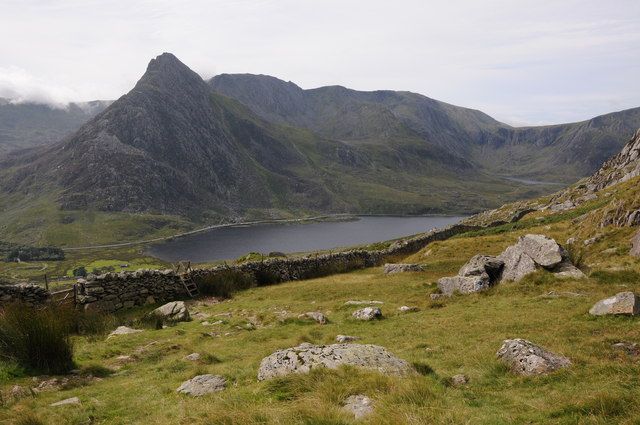
The Ogwen Valley is where the mountain architecture of Eryri is at its most dramatic. Tryfan rises sharply on the north side, the Glyderau fill the skyline, and Llyn Ogwen provides water interest in the foreground. The car park at Ogwen gives direct access to the lakeside, which means you can be painting within minutes of arriving. The rock forms here are complex and reward close attention to value and structure. Wind can be significant; the valley funnels it.
5. Nant Gwynant and the Watkin Path Approach
Nant Gwynant is one of the most varied areas in the park for a painter. The lower sections of the valley offer woodland, waterfalls, and the reflective surface of Llyn Gwynant. It's noticeably greener and more enclosed than the open upland sites, which gives it a different character and a different light quality. On days when you have a pre-booked space at Pen y Pass, the higher ground opens up; on other days, Nant Gwynant itself is more than enough.
6. Nantlle Valley
The Nantlle Valley, reached via minor roads from Caernarfon or Penygroes, is one of the best-kept secrets in Eryri for painters. The layered ridgelines create strong depth, the valley floor gives you breathing room, and you're unlikely to be surrounded by other people. It requires a bit of navigation on narrow roads, but the payoff is a landscape that feels less managed and more raw than some of the more popular spots. Worth knowing for days when the main valleys feel crowded.
Eryri plein air at a glance
- Park area
- 823 sq miles
- Annual parking permit
- £120
- Pen y Pass parking
- £25–£45
- Recommended panel size
- 6×8 or 8×10
- Typical mountain session
- 60–90 minutes
Wales' largest national park
Covers most Authority car parks; April–March
Pre-book only; no walk-up spaces April–October
Finish within a single light condition
Weather can change fast; work small and fast
Tryfan and Llyn Ogwen in a mountainous upland landscape. by Philip Halling — CC BY-SA 2.0 (via Openverse)
What the Weather Actually Does (And How to Work With It)
Welsh mountain weather is the defining practical reality of plein air painting in Eryri. A forecast that looks reasonable in the morning can produce mist, rain, or strong wind by midday. A day that starts grey can open up into extraordinary light by early afternoon. The conditions are not predictable in the way that lowland UK sites tend to be, and that's something to plan for rather than hope against.
Rain is frequent, including on days that aren't forecast to be wet. On the high ground, cloud can descend in minutes. Wind at exposed sites can make a standard easel unusable. None of this means you won't paint; it means you go prepared.
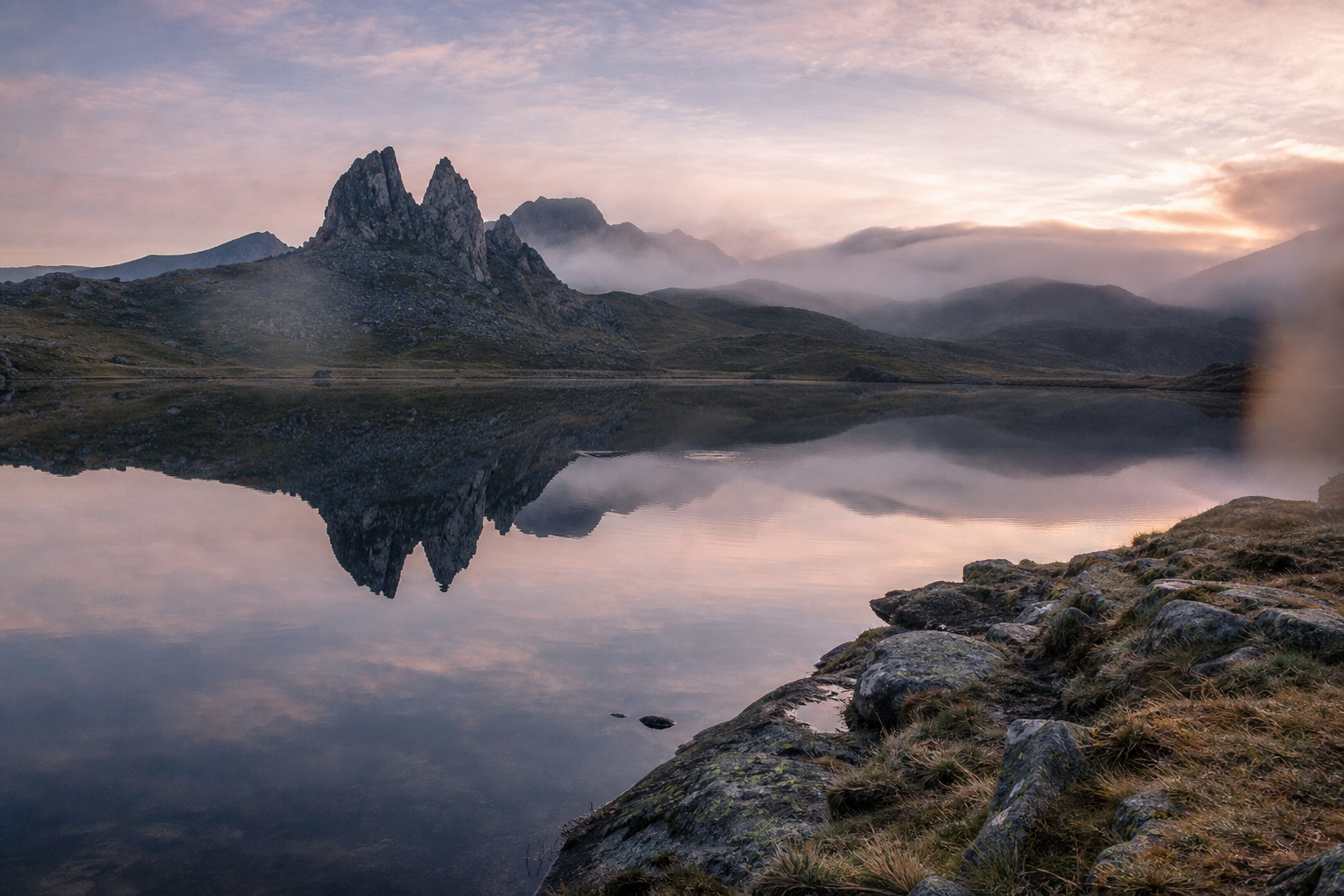
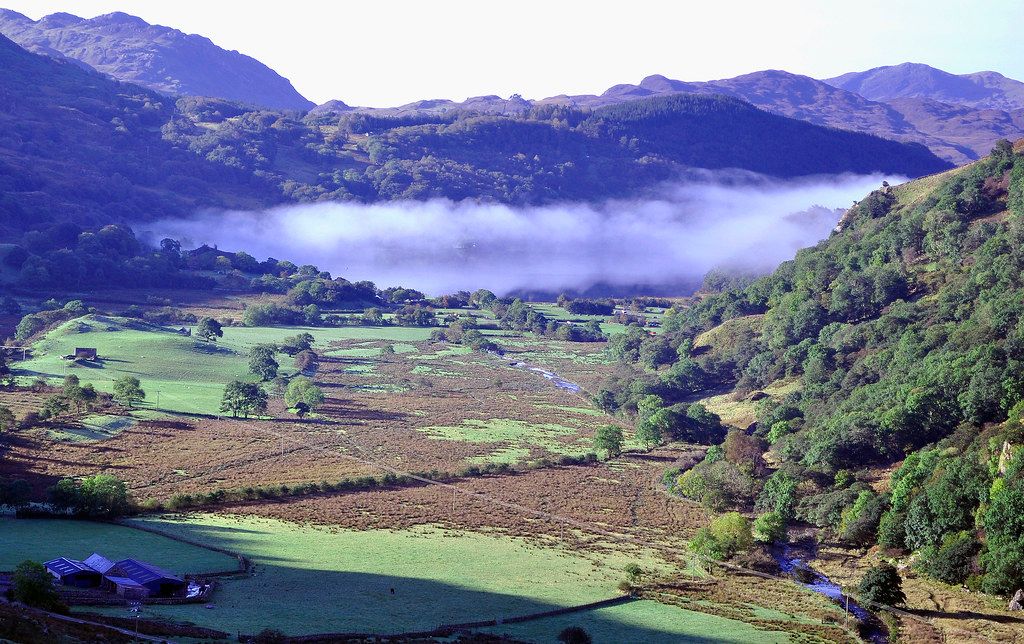
The most useful shift in mindset for Wales plein air work is accepting that you're working with the conditions, not waiting for ideal ones. Welsh painters who work regularly in these mountains talk consistently about capturing mood over topographical accuracy: the atmosphere of a particular light, the weight of cloud on a ridge, the colour temperature shift as mist thickens. These are things that change quickly, which means short, fast studies are often more productive than attempting a considered composition.
Mist drifts through a mountain valley in Snowdonia. by ohefin / Flickr — CC BY-SA 2.0
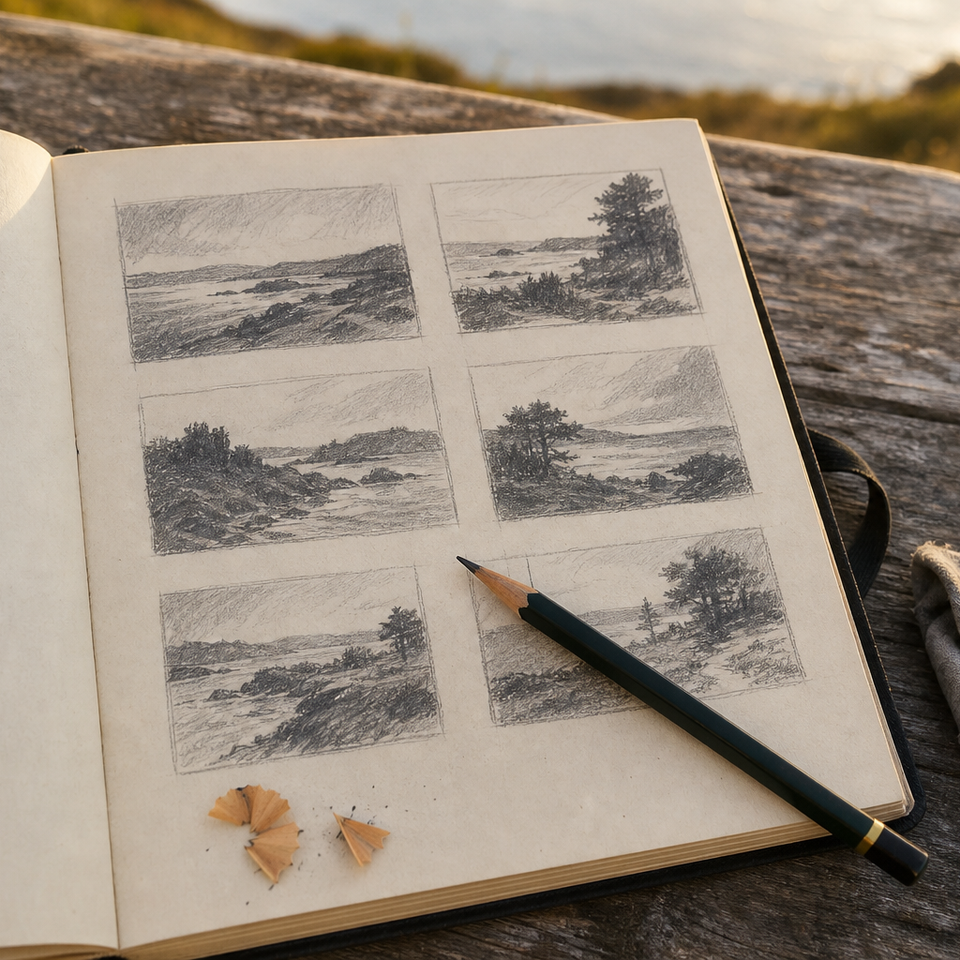
Practically, this means working at 6×8 or 8×10 so you can finish within one lighting condition. It means treating a session as study-gathering rather than expecting a resolved painting at the end of every trip. It means having drawing materials and a notebook for when the weather closes in completely, because colour notes and sketches made on site are still genuinely useful when you're back in the studio. The study-then-studio workflow is not a compromise; for mountain landscape painting in the UK, it's the normal and legitimate approach.
Small format, fast study
In Eryri the light rarely stays still for long. Working at 6×8 or 8×10 gives you a realistic chance of completing a study within a single lighting condition. If the weather closes in, a small panel is also much easier to protect and carry down.
On wind specifically: at exposed sites like the Ogwen Valley or the higher approaches around Pen y Pass, a standard tripod easel can become dangerous or simply unworkable. A weighted brace, a low-slung pochade box attached to a robust tripod, or painting from a seated position with the board rested against your knees are all practical alternatives. /guides/plein-air-painting-in-wind
Adapting Your Kit for Mountain Landscape Painting
The single biggest practical adjustment for Eryri is moving from a trolley or large bag setup to carrying everything on your back. Mountain paths, lakeside approaches, and the rough ground between car parks and viewpoints are not compatible with wheeled kit. A compact pochade box or a lightweight watercolour setup in a rucksack is the right approach here.
Beyond the rucksack itself, a few specific adaptations make a real difference:
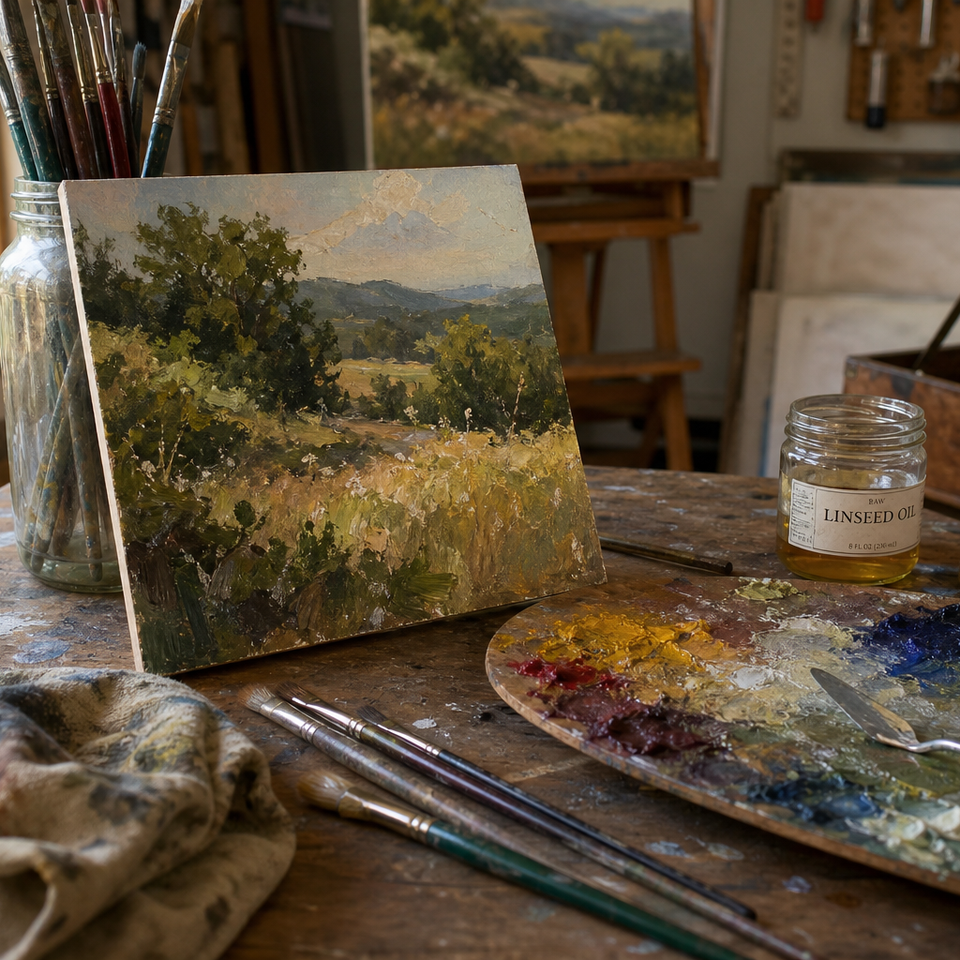
Palette. A limited palette is always useful outdoors; in mountain landscape painting in the UK it becomes almost essential because you're working fast. For oil painters, a warm and cool of each primary, plus yellow ochre, burnt sienna, and titanium white, covers the majority of Welsh mountain conditions. Watercolour painters working with equivalent pigments will find a similar range sufficient. You don't need more colours than you can mix quickly.
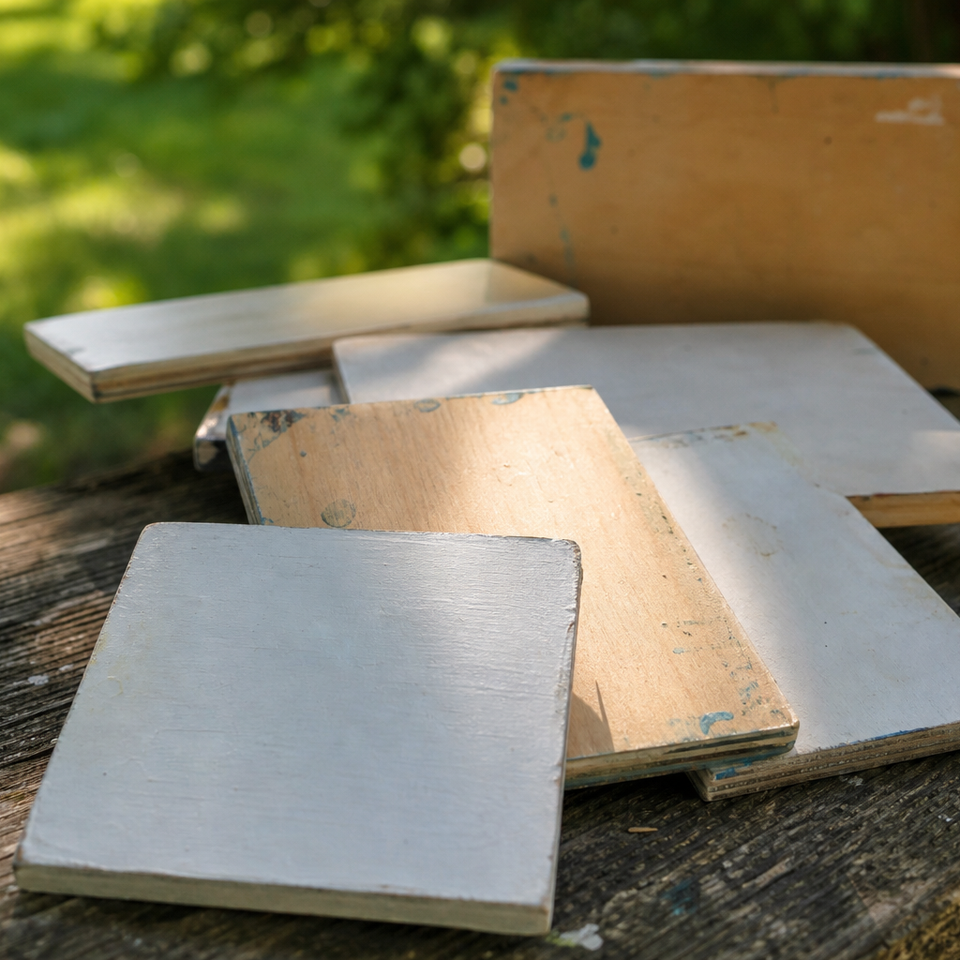
Panels and grounds. Preparing panels with a mid-tone grey ground before you leave home is worth the time. It removes the dead white from your working surface, makes value judgment easier under rapidly changing light, and reduces the number of decisions you need to make on site. Grey-ground panels are particularly useful in overcast or mist-diffused conditions, which are common in Eryri. /guides/plein-air-value-studies
Protecting your work. A wet-panel carrier that seals properly matters more in a mountain environment than in a park or coastal location. You may need to pack up and move quickly. A panel that's safe to carry flat in your rucksack is far more practical than one balanced on the outside.
Medium choice. Water-mixable oils are worth considering for national park settings. No solvents means no risk of spilling spirits on sensitive terrain, no smell in a shared car park, and simple cleanup with water. They handle similarly to traditional oils in most outdoor conditions and the colour range is now good enough for serious work.
A stool. Don't assume you'll find a conveniently flat rock. A small folding pack stool, the kind that weighs next to nothing and folds into a bag pocket, is one of those items you'll be glad of every time you use it.
Permissions: What You Need to Know Before You Paint
For most individual plein air painters, the permissions situation in Eryri is straightforward. Painting quietly on a public footpath or right of way, with kit that doesn't obstruct other users, requires no special permission. You have the right to be there, and painting is a legitimate use of the access.
The important nuance is that most of Eryri's land is privately owned. Public access is via designated paths and rights of way, not blanket open access as applies in some parts of Scotland. You can paint from a public footpath without permission; setting up on private land away from a right of way is a different matter.
For informal small groups painting together on public rights of way, the position is generally the same as for individuals, provided you're not obstructing the path or causing any management issue.
For paid workshops or any organised commercial activity, the situation changes. Running a paid workshop from a specific Authority car park, or using Authority-managed land as a base for commercial activity, requires a location agreement with Eryri National Park Authority. If your activity takes place on private land, you need the landowner's permission separately. For activities within Sites of Special Scientific Interest (SSSIs) or Special Conservation Areas, Natural Resources Wales may need to be involved. If you're in any doubt about your specific situation, contact the Authority's Access Manager before the trip rather than on the day.
Workshop leaders: check before you go
If you're planning a paid workshop that uses a specific Authority car park or viewpoint as a base, contact Eryri National Park Authority in advance. Individual painters working quietly on public paths are unlikely to need formal permission, but any organised, commercial activity is a different matter.
Making the Most of a Painting Trip to Eryri
Eryri rewards return visits. The park is large enough and varied enough that a single day trip will give you a taste of one or two locations at most. An overnight stay, particularly now that overnight parking is permitted again at several sites, opens up the possibility of painting at dawn and dusk when the light is at its most interesting and the car parks are quiet.
If you're driving from central or southern England, the journey is substantial. Building a two-night stay around your trip means you can paint across multiple locations without the pressure of driving back the same day. Ogwen and Nant Gwynant are within easy driving distance of each other; adding the Nantlle Valley on a third morning gives you a genuinely varied series of studies.
A series approach is worth thinking about. Rather than aiming for a single finished painting from each location, building a sequence of studies across different valleys and lighting conditions is both more realistic given the weather and often more artistically productive. You end up with material that shows the landscape in depth rather than a single isolated image.
Check the Authority's parking booking system and car park guidance before each trip, not just before your first one. The Pen y Pass booking system fills up quickly in peak season and the guidance on specific sites can change. It takes a few minutes and saves real frustration.
For connection with other Wales plein air painters, online groups (UK Plein Air communities on social media) often include members who paint regularly in Eryri and are generous with current, on-the-ground knowledge about conditions and access. That kind of informal knowledge is worth seeking out alongside any written guide.
If you've found mountain painting here has built your appetite for dramatic UK upland landscapes, the Lake District offers a different but equally compelling set of challenges and subjects. /guides/lake-district-plein-air
FAQ
Frequently Asked Questions
Do I need a parking permit for Eryri National Park?
Most Authority car parks are covered by an annual permit (£120, April–March). Pen y Pass is pre-book only and not covered; fees are about £25–£45 depending on duration.
What panel size is best for Snowdonia plein air painting?
Work small and fast. Use 6×8 or 8×10 panels so you can finish within a single lighting condition and protect the work easily if weather changes.
How do I manage wind and exposed sites?
Avoid tall tripod easels. Use a weighted brace or a low-slung pochade box on a robust tripod, paint seated with the board on your knees, or secure your kit to reduce movement.
Do I need permission to paint on park land or run workshops?
Individual painters on public footpaths do not normally need permission. Private land requires the landowner's consent. Any paid or organised commercial workshops using Authority land or car parks need a location agreement with Eryri National Park Authority.
Which locations in Eryri are best for plein air painting?
Accessible starters are Llyn Tegid, Dôl Idris, Capel Curig, Ogwen Valley, Nant Gwynant (Watkin Path), and the quieter Nantlle Valley for layered ridgelines and fewer visitors.
Author

PleinAirPainting Editorial Team
PleinAirPainting.co.uk helps artists paint outdoors with confidence through UK-focused guides, equipment advice, resources and plein air inspiration.