Plein Air Painting in the Lake District: Locations, Tips and What to Expect
Practical guide to plein air painting Lake District with top spots, weather and kit tips, and access advice so you can make the most of short light windows.

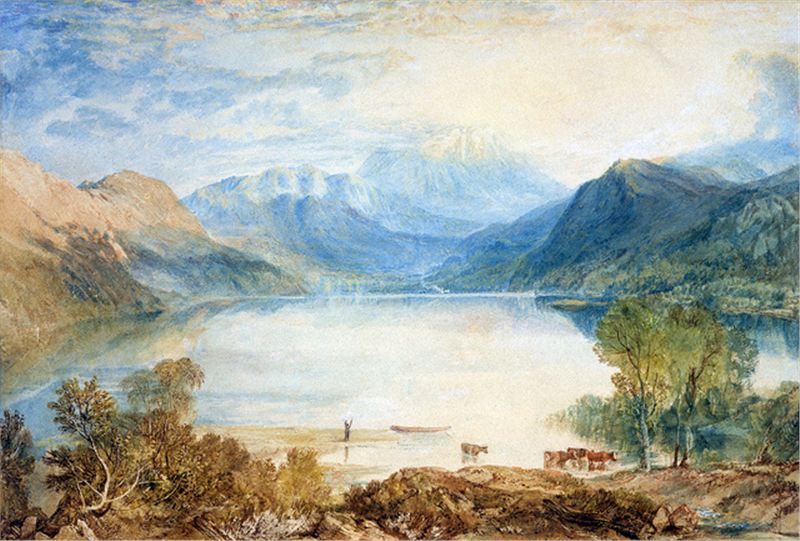
Ullswater from Gobarrow Park by J. M. W. Turner.
Credit: J. M. W. Turner; public domain
Key takeaways
- • Pack small, sturdy kit and favour 6x8 or 8x10 formats for quick studies.
- • Plan three locations by exposure so you can switch if weather changes.
- • Top painting spots include Wastwater, Ravenglass, Tarn Hows, Brockhole, Friar's Crag and Ullswater.
- • Overcast light is excellent for watercolour and value judgement; arrive early on clear days.
- • Respect access rules, ask permission on private land and follow the Countryside Code.
If you're planning a plein air painting trip to the Lake District, you're heading somewhere that rewards the effort handsomely, but only if you go in with a clear plan. The landscape is genuinely extraordinary, but it's also one of the busiest parts of the UK, the weather changes hour by hour, and the roads test your patience before you've even unpacked. This guide covers the best locations for plein air painting in the Lake District, how to get to them, when to go, and how to stay productive when the clouds roll in.
Why the Lake District Works So Well for Plein Air Painters
Few places in the UK pack so much subject variety into a compact area. Within a short drive you can move between high fell panoramas, long reflective lakes, tidal estuaries, dense oak woodland, and old stone villages. That variety makes it genuinely forgiving for painters: if one subject isn't working, another is rarely far away.
There's also a long tradition of landscape painting here. Constable, Turner, and countless others have worked in or been influenced by this landscape. The Lake District National Park Authority actively promotes painting and sketching as part of responsible visitor engagement, and many of the most paintable spots are managed with public access in mind.
The practical accessibility is underrated too. A good number of the best views are reachable from a car park with a short walk, which matters when you're carrying kit. Just plan carefully: on a sunny summer weekend, "accessible" quickly becomes "packed".
The Best Plein Air Painting Locations in the Lake District
The following shortlist draws on the LDNP's own painting recommendations as a starting point, then adds practical detail that most guides leave out: where to park, what the ground is like, when to arrive, and what to watch out for. These are locations that work specifically for painters, not just sightseers.
Wastwater and Wasdale Head
Wastwater is England's deepest lake, and on a calm morning the reflections of Great Gable, Yewbarrow, and the Screes are among the most compositionally powerful subjects you'll find anywhere in the country. The mountain forms are bold and architectural; even a small study captures the drama.
Access is the main challenge. The road to Wasdale Head is a single-track lane that is not suitable for large vehicles or motorhomes. There's a car park at Wasdale Head itself, and a small number of roadside laybys along the lake, but they fill quickly on clear days when walkers are heading for Scafell Pike. Aim to arrive by 7am in summer or you may find yourself parked a long walk from your intended spot. Facilities are limited to a small pub and hotel at Wasdale Head; there are no services along the lake.
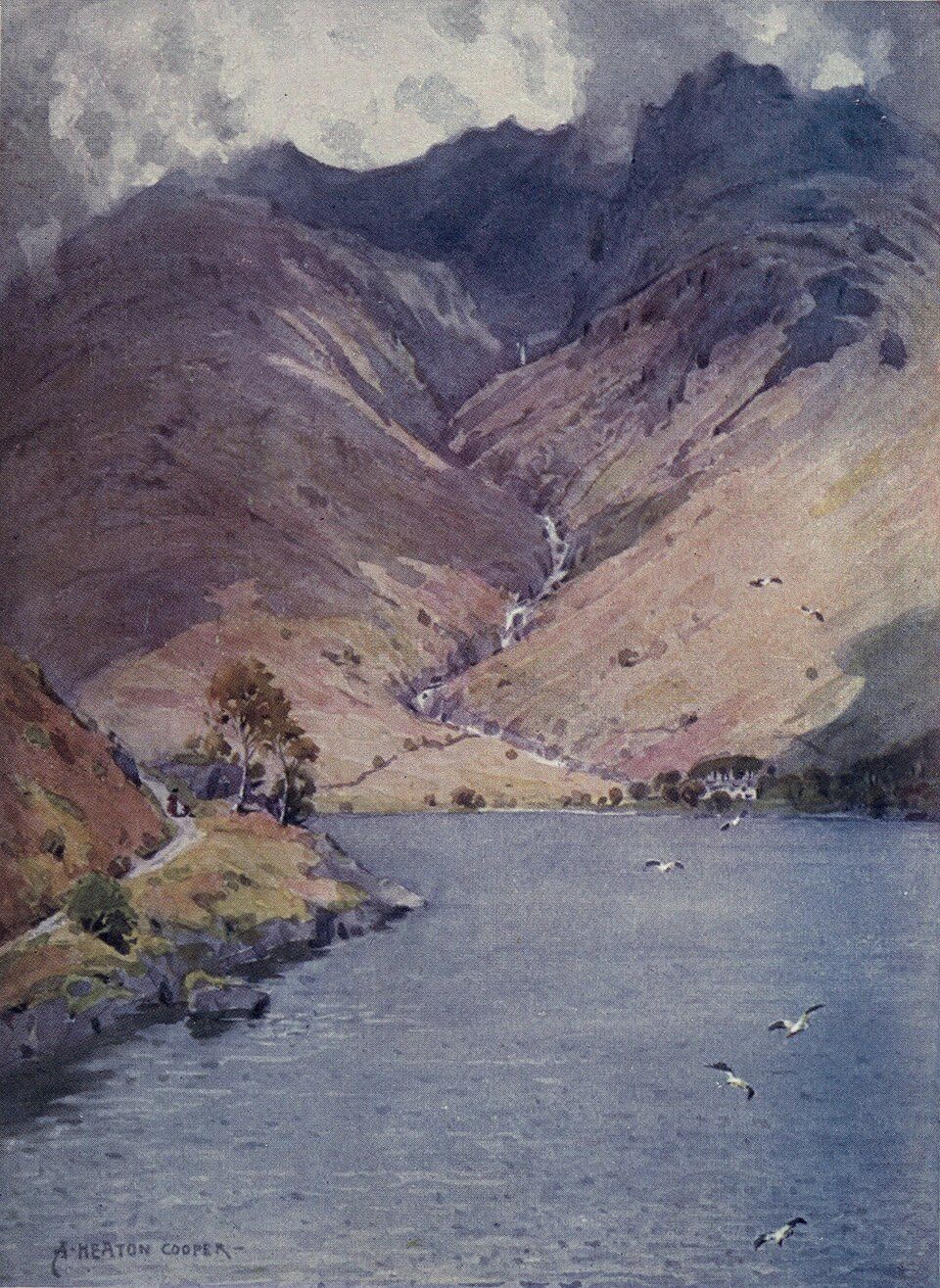
Wastwater and Scafell by A. Heaton Cooper.
Best time is early morning in autumn, when bracken adds warm orange tones to the fell sides. Overcast conditions suit this location well: the contrast between rock and sky can be harsh in full sun. A small panel (6x8 or 8x10) lets you complete a study within a stable light window. Oil or gouache both handle the strong tonal contrasts well.
Ravenglass and Eskdale
Ravenglass sits on the estuary where the Esk, Mite, and Irt rivers meet the sea, and it offers a completely different type of subject from the inland fells. At low tide you get broad expanses of sand and water, boat hulls, reflections, and the simple forms of the village buildings against open sky. The narrow-gauge Ravenglass and Eskdale Railway (known locally as La'al Ratty) passes through the village and gives you a lively, moving subject if you want it.
This is also one of the less crowded locations on this list, which is a genuine advantage if you're painting on a busy summer weekend. The car park in Ravenglass is well positioned and the village is flat and accessible. Check tide times before you go: the estuary is most rewarding at low tide when the hull shapes and sand channels are exposed. Morning light over the water is particularly good.
Tarn Hows
Tarn Hows is a managed National Trust tarn near Hawkshead with a circular footpath and multiple viewpoints around its perimeter. It's not a wilderness spot, but it doesn't need to be: the combination of open water, surrounding woodland, and the distant fells gives you a well-balanced composition from almost any position on the path. Autumn colour here is exceptional, with reflected golds and oranges that make even a modest study look strong.
Access is straightforward: a National Trust pay-and-display car park (charges apply), an accessible path suitable for most mobility levels, and toilets and a basic information point nearby. The downside is popularity. The car park fills early in summer, often by 9.30 to 10am. On weekdays in spring or autumn you'll have the place largely to yourself; on a summer Saturday you'll be sharing the path with a steady flow of families, dogs, and cyclists.
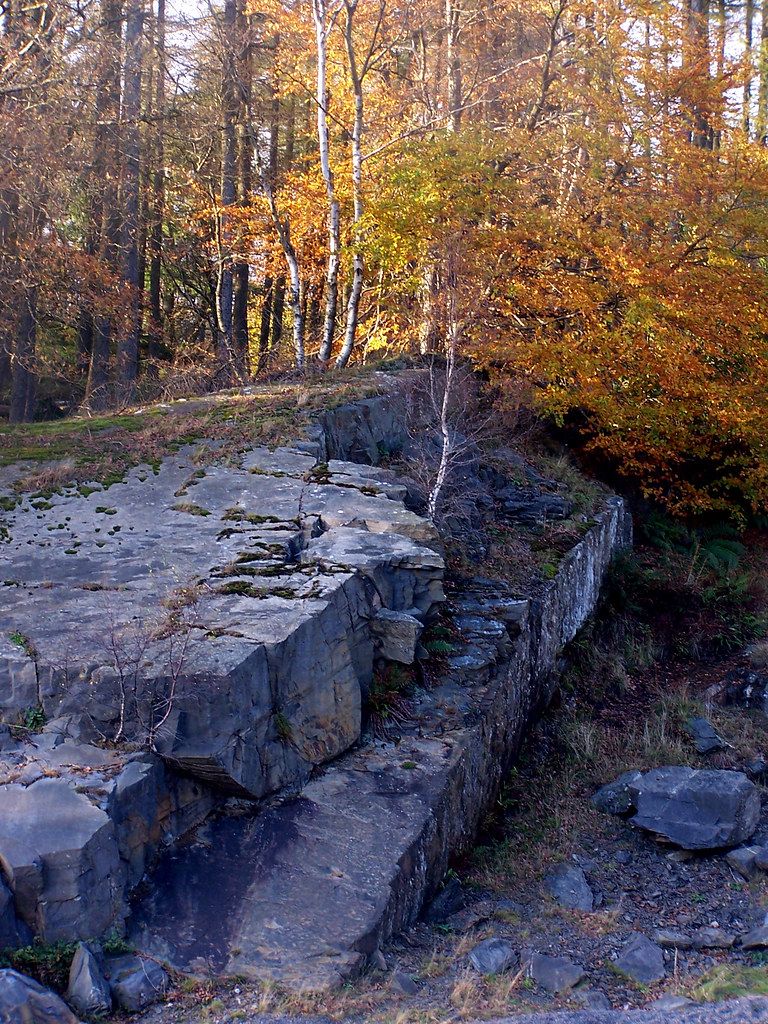
Autumn scene near Tarn Hows in the Lake District. by samsaundersbristol, Flickr — CC BY-SA 2.0
Early morning or late afternoon gives you the best reflections and the softest light. For medium, Tarn Hows is a natural fit for watercolour: the diffused light on overcast days reduces contrast and makes values easier to judge.
Brockhole on Windermere
Brockhole is the LDNP's main visitor centre, set in Mawson-designed gardens on the eastern shore of Windermere. The draw for painters is the combination of subjects in one place: formal garden architecture, views across the lake towards the Langdale Pikes, and the handsome Arts and Crafts house itself. You're rarely stuck for a composition here.
There's a paid car park on site, flat and accessible grounds, and a café and facilities. It's a good choice for a mixed-format session where you want to move between subjects without a long walk. Arrive before 10am for the best lake views; later in the morning, boat traffic on Windermere increases and the reflections break up. It works well in most seasons, though summer weekends are busy with families.
Derwentwater and Keswick
Friar's Crag, a short walk from the Keswick lakeside car parks, gives one of the classic views in British landscape painting: the forested islands of Derwentwater, the calm water, and the dramatic fells of Borrowdale rising behind. It's one of those views that reproduces in any light and in any season. On a still morning with low mist, it's genuinely one of the finest subjects for plein air painting anywhere in the UK.
National Trust car parking is available at the Lakeside area in Keswick, and the town has multiple additional car parks and all facilities. The walk to Friar's Crag takes around ten minutes from the lakeside and is flat. Keswick itself offers good urban subject matter: the covered market hall, slate-built streets, and the River Greta nearby.
The watch-out is crowds. Keswick is one of the busiest towns in the Lakes, and the lakeside path is well trafficked throughout the year. Early morning, particularly in spring and autumn, is the time to paint here. By late morning on a summer weekend, you'll be competing for space with a significant volume of foot traffic.
Ullswater
Ullswater is arguably the most varied lake in the district for composition. The lower end near Pooley Bridge is wide and pastoral; the upper end near Glenridding is narrower, more dramatic, and framed by higher fells. The Ullswater Steamer adds a human element to lake views if you're happy to work quickly from observation.
Pooley Bridge and Glenridding both have car parks and facilities, with varied access points along the shore between them. Some of the most rewarding viewpoints involve a moderate walk of fifteen to thirty minutes from the road; check OS maps and current footpath access before you go. Spring is worth noting specifically: the daffodils at Aira Force, a short walk from the lakeshore near Glenridding, are one of the more celebrated plein air subjects in the region.
Build a backup plan before you leave
Pick three locations spread across different elevations and exposures before you travel. If the fells are in cloud, a sheltered lakeside or village street can still give you a rewarding session.
Painting in Lake District Weather: What to Expect and How to Plan
The weather in the Lake District is genuinely unpredictable; this isn't dramatic framing. The fells create their own microweather, and you can watch clear conditions disappear in twenty minutes. Mist rolls in from the valleys, rain arrives without obvious warning, and wind on exposed ground can make a tall easel unworkable quickly.
The practical response is to plan in tiers before you leave. Think of it as an A/B/C approach: one exposed fell or lakeside spot for good conditions, one sheltered woodland or tarn location for overcast, and one village street, boathouse, or harbour for rain. Decide where you're going in each scenario while you're still at the accommodation with a coffee, not when you're standing in a layby watching the sky.
It's worth noting that overcast light, which can feel discouraging, is actually excellent for painting. Soft shadows and reduced contrast make value judgements easier and give you longer to work within a consistent light. Watercolour in particular benefits from this kind of flat, diffused illumination.
| Conditions | Suggested location type | Notes |
|---|---|---|
| Clear and settled | Open fell or lakeside | Arrive early; light is best in the first two hours |
| Overcast and dry | Woodland, tarn, or sheltered valley | Soft diffused light; good for watercolour |
| Intermittent showers | Village street, harbour, or boathouse | Shelter nearby; shorter sessions work well |
| Heavy or persistent rain | Pack up or paint from the car | Damp paper and slow-drying oils are not worth fighting |
Kit Tips for Painting in the Lakes
The general principle for kit in the Lake District is: smaller, lighter, and more robust than you think you need.
Keep your format small. A 6x8 or 8x10 panel allows you to complete a full study within a single light condition, which matters here more than almost anywhere else. Going larger than 11x14 is only worth it if the weather is clearly settled and you're at a flat, sheltered location. Otherwise you'll find yourself rushing or abandoning an unfinished piece.
Wind is a real problem on exposed viewpoints. A compact pochade box or a lap-based setup is far more stable than a tall A-frame or H-frame easel in a fell-side breeze. If you're committed to an easel, bring something to weigh down the legs; a carabiner and a small stuffsack of stones is standard practice.
Water-mixable oils are worth serious consideration here. Near watercourses, National Trust sites, and in areas where families and dogs are around, carrying solvents outdoors creates unnecessary complications and disposal issues. Water-mixable ranges from Winsor and Newton or Cobra handle well and remove the problem entirely.
For mixed-media flexibility, consider carrying a small watercolour set or a set of gouache alongside your primary medium. When conditions deteriorate quickly, being able to switch to a faster-drying, lighter medium can save a session. A few graphite pencils or a tonal value finder takes almost no space and is useful for mapping compositions on wet or windy days when setting up a full palette isn't practical.
Keep your palette limited to four to six colours. Decision fatigue is real when you're cold, the light is changing, and someone is asking if you're famous. A warm and cool of each primary, plus a reliable earth tone, is enough for the Lakes.
Practical layers matter too. The temperature at Wasdale Head is meaningfully lower than in Ambleside even on the same morning, and sitting still while painting brings the chill on faster than walking. Waterproof over-trousers and a packable insulated layer take very little space. Bring something to kneel or sit on; you will end up on uneven wet ground at some point. Retailers like Jackson's Art and Ken Bromley stock compact folding stools and panel carriers that are worth looking at before your trip.
If you're painting near still water or in woodland in summer at dawn or dusk, bring midge repellent. This isn't optional in Cumbria from June to September. Smidge or similar UK-formulated products work well.
Responsible Painting in the Lake District
The Lake District is a living, working landscape. Much of the most paintable farmland is privately owned, and the scenic fells are maintained by farmers whose livelihoods depend on that land. A few basic principles will keep you on the right side of both the law and the people who live here.
Rights of way allow you to walk and pause on public footpaths, but not to set up an easel on private land without the landowner's permission, even if the view is exceptional. Open access land under the Countryside and Rights of Way Act 2000 allows you to walk on unenclosed upland areas, but "access" means on foot; a tripod or easel on access land near a farm track is a different matter. If you're unsure, ask. Most farmers in the Lakes are used to artists and are perfectly happy to give a quick nod of permission if you approach sensibly.
National Trust sites generally welcome sketching and painting; just check whether specific locations have any restrictions on tripods or easels in certain areas. When in doubt, a quick search of the NT's website for the specific property will give you current guidance.
Follow the Countryside Code throughout. Close gates behind you. Take all your litter home, including solvent-soaked rags, dirty water, and used paper. Avoid disturbing livestock, particularly during lambing in early spring. Keep dogs on leads near animals.
Set up with consideration
Keep easels clear of footpaths, gates, and farm tracks. Many of the most paintable spots sit within working farmland; it's worth a nod to any farmer or landowner you encounter.
When to Visit the Lake District for Plein Air Painting
Every season offers something distinct, but some suit painters better than others.
Spring (March to May) is one of the strongest times to visit. Light is soft and improving, the landscape is greening rapidly, streams are running high and photogenic, and crowds are noticeably lower than in summer. It's the season most likely to give you a productive trip with good locations to yourself. Weather is still changeable, but that's true year-round.
Summer (June to August) brings long days, which is a real asset for painting, but the crowds are significant. Popular spots like Tarn Hows, Friar's Crag, and the Wasdale car park can be very busy by 10am on clear days. If you're visiting in summer, early mornings, before 8am, give you the best light and the fewest people. Midday light is often flat and harsh. Midges near water and in woodland at dawn and dusk are at their worst from late June through August.
Autumn (September to November) is arguably the best overall season for plein air painting in the Lakes. The colour is exceptional, particularly in October. The crowds are more manageable than in summer, and the skies tend to be more dramatic. Midges are largely gone by mid-September. October is the month most experienced painters point to as the peak.
Winter (December to February) is genuinely dramatic but demanding. The low light angle gives you extraordinary atmosphere around Wastwater and the higher fells, and with far fewer visitors you can work undisturbed. That said, cold working conditions require proper preparation: hill-walking base layers and insulated gloves that allow enough finger movement to paint are not luxuries here. Some facilities, including car parks and cafés, may have reduced hours or be closed. Check ahead.
| Season | Light and conditions | Crowd levels | Notes |
|---|---|---|---|
| Spring (Mar–May) | Soft greens; changeable but improving | Lower | Snowdrops and early blossom; streams running high |
| Summer (Jun–Aug) | Long days; harsh midday light | High | Early mornings worth it; popular spots very busy by 10am |
| Autumn (Sep–Nov) | Warm tones; dramatic skies | Moderate | Peak colour in October; midges less of a problem |
| Winter (Dec–Feb) | Low light; frost and mist | Low | Dramatic atmosphere; cold working conditions; some facilities closed |
The Lake District rewards painters who plan with honesty about its conditions. It isn't always easy, the roads are narrow, the weather is real, and you'll share some spots with a lot of other visitors. But the subject matter is extraordinary, the variety within a single day's drive is hard to match anywhere in the UK, and on a good morning above Wastwater or at Friar's Crag before the walkers arrive, it's clear why painters have been coming here for two centuries. Go prepared, go with a backup plan, and make the most of it.
FAQ
Frequently Asked Questions
When is the best time to visit the Lake District for plein air painting?
Spring and autumn are the best overall. Spring offers soft light, fewer crowds and flowing streams. October gives peak colour and dramatic skies. Summer has long days but heavy crowds; arrive before 8am. Winter is atmospheric but cold and demanding.
What kit should I bring for plein air work in the Lakes?
Keep it small and robust. Use 6x8 or 8x10 panels, a compact pochade or lap setup, water-mixable oils or watercolour/gouache, a limited 4–6 colour palette, a folding stool, layers and waterproofs, and midge repellent in summer.
How do I plan for the Lake District weather?
Use an A/B/C plan: pick one exposed fell or lakeside site, one sheltered tarn or woodland, and one village or harbour. Check conditions before you leave, and be ready to switch medium or paint from the car if rain becomes persistent.
Are there access rules or etiquette I need to follow?
Yes. Stick to public rights of way, ask landowners before setting up on private land, follow National Trust guidance, close gates, take litter and solvent waste home, and avoid disturbing livestock.
Which locations work best for particular subjects?
Wastwater for bold fell forms and reflections, Ravenglass for estuary and boats at low tide, Tarn Hows for autumn reflections, Brockhole for gardens and lake views, and Friar's Crag or Ullswater for classic lake and island compositions.
Author

PleinAirPainting Editorial Team
PleinAirPainting.co.uk helps artists paint outdoors with confidence through UK-focused guides, equipment advice, resources and plein air inspiration.