What Size Canvas Should You Use for Plein Air Painting?
Practical advice on choosing plein air canvas sizes. Use an 8×10 as your main panel, bring a 6×8 for warm ups, and avoid large formats until you can finish before light changes.

Key takeaways
- • For most beginners an 8×10 panel is the best single purchase for 1 to 2 hour sessions.
- • Carry a 6×8 for warm ups and quick studies and use 9×12 only once you can finish larger works reliably.
- • Rigid panels and canvas boards are preferred outdoors because they handle wind and transport better than stretched canvas.
- • Always check your pochade box's native panel sizes and avoid adaptors when you are starting out.
- • On exposed or windy locations go smaller; pack 2 to 3 panels to cover main work, a backup, and a quick study.
Most beginners spend far longer worrying about plein air canvas sizes than the decision actually deserves. The good news is that experienced outdoor painters have largely settled on a narrow range of sizes that work reliably, and the reasoning behind those choices is straightforward once you understand the constraints of painting outside. By the end of this guide, you'll know exactly what size to buy, why it matters, and what to pack for your first session.
Why Size Matters More Outdoors Than in the Studio
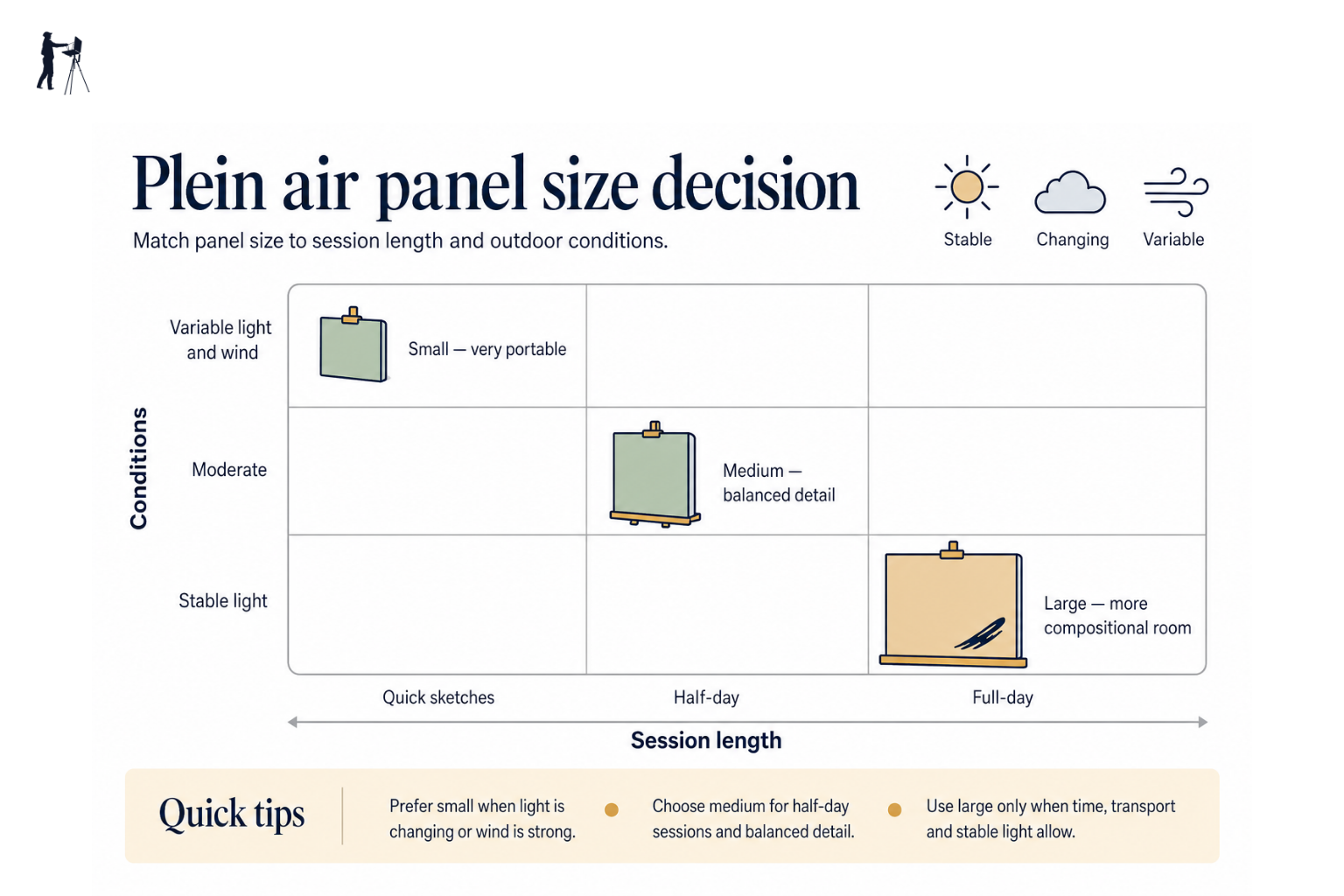
In the studio, canvas size is mostly an aesthetic choice. Outdoors, it becomes something more practical. You're working against the clock in a way that studio painters rarely are: light shifts, clouds roll in, and that golden hour you set out to capture has a habit of lasting about twenty minutes. Your panel size needs to reflect the time you actually have, not the time you wish you had.
Wind is another factor that studio painters never have to think about. A larger canvas on a tripod easel catches the breeze like a sail, pulling and wobbling in ways that make controlled brushwork genuinely difficult. On an exposed coastal path or open moorland, this isn't a minor inconvenience; it's a real problem.
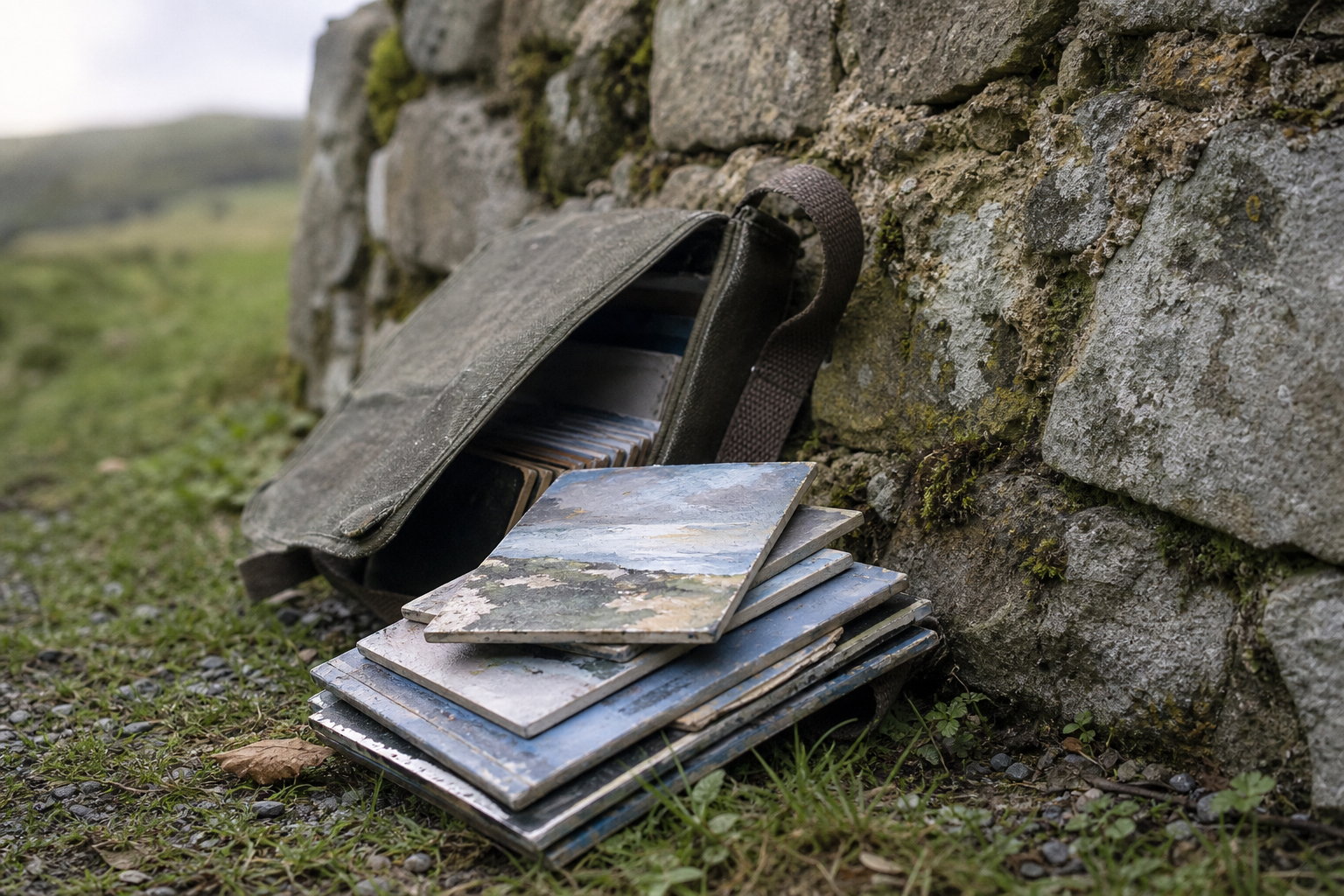
Then there's transport. A finished wet oil painting needs to travel home safely, and standard smaller sizes fit neatly into wet panel carriers and pochade boxes. Larger panels create awkward logistics that beginners rarely anticipate until they're standing at the car with a freshly painted 12×16 and no good way to get it home undamaged.
Panels vs Stretched Canvas: What Most Plein Air Painters Use
If you've been painting indoors on stretched canvas, you might assume you'll carry the same thing outside. Most plein air painters don't, and there are practical reasons for that.
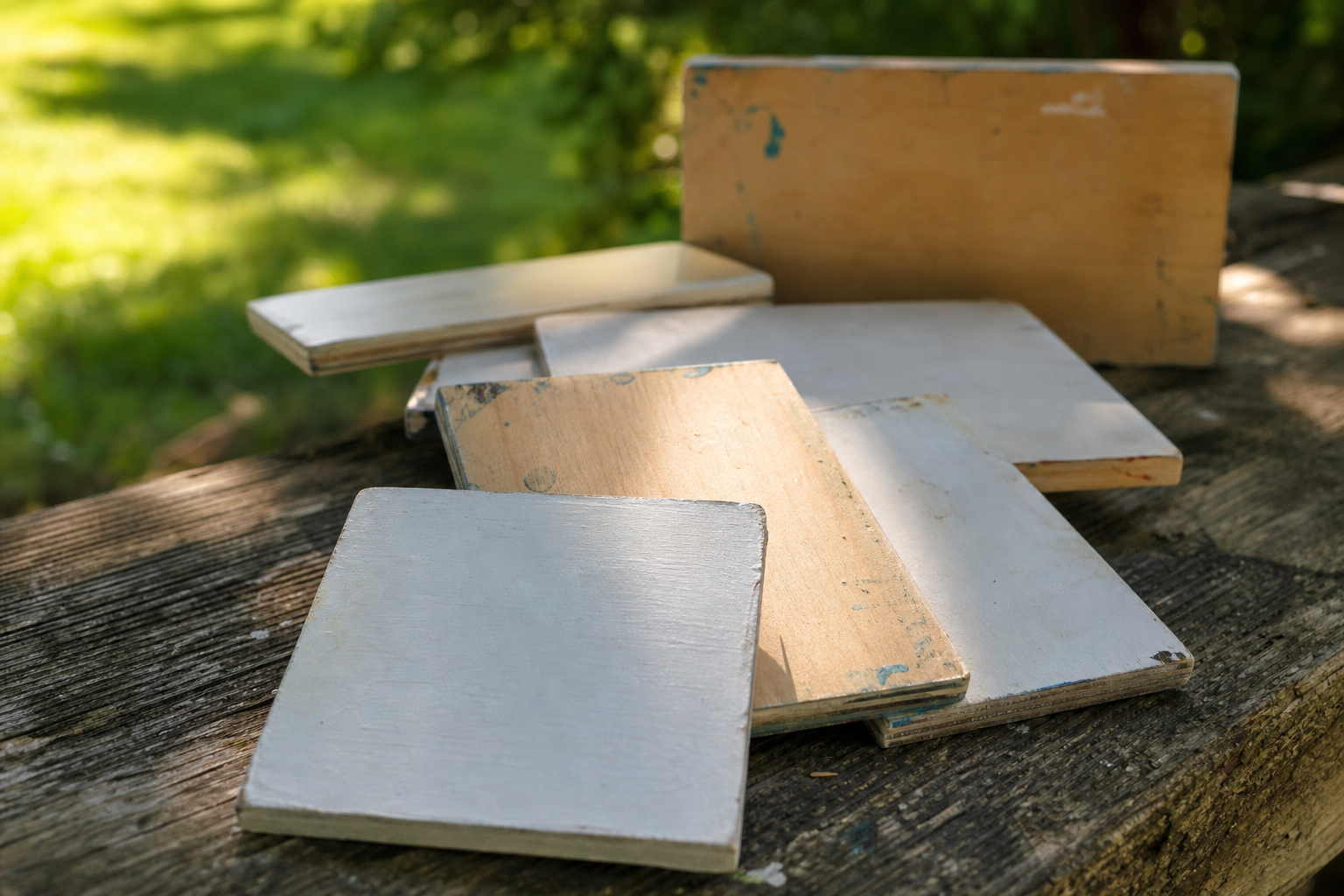
Rigid panels and canvas boards have become the default for outdoor work. They're lighter, more compact, far less affected by wind, and considerably easier to transport when wet. A stretched canvas, by contrast, can flex under wind pressure, is vulnerable to knocks that dent or warp the surface, and is genuinely awkward to bring home before it's dry.
Canvas boards are widely available, inexpensive, and fit neatly into pochade boxes and wet panel carriers. Primed MDF or gesso panels are another popular option, particularly for oil painters. Both are solid choices for getting started.
Panels or canvas?
For outdoor painting, rigid panels and canvas boards are almost always the better choice over stretched canvas. They're lighter, less affected by wind, and far easier to carry home wet without damage.
The Best Plein Air Canvas Sizes for Beginners
This is the practical heart of the matter. Outdoor panel sizes tend to fall into three bands, each suited to different session lengths and subjects. Here's how to think about each one.
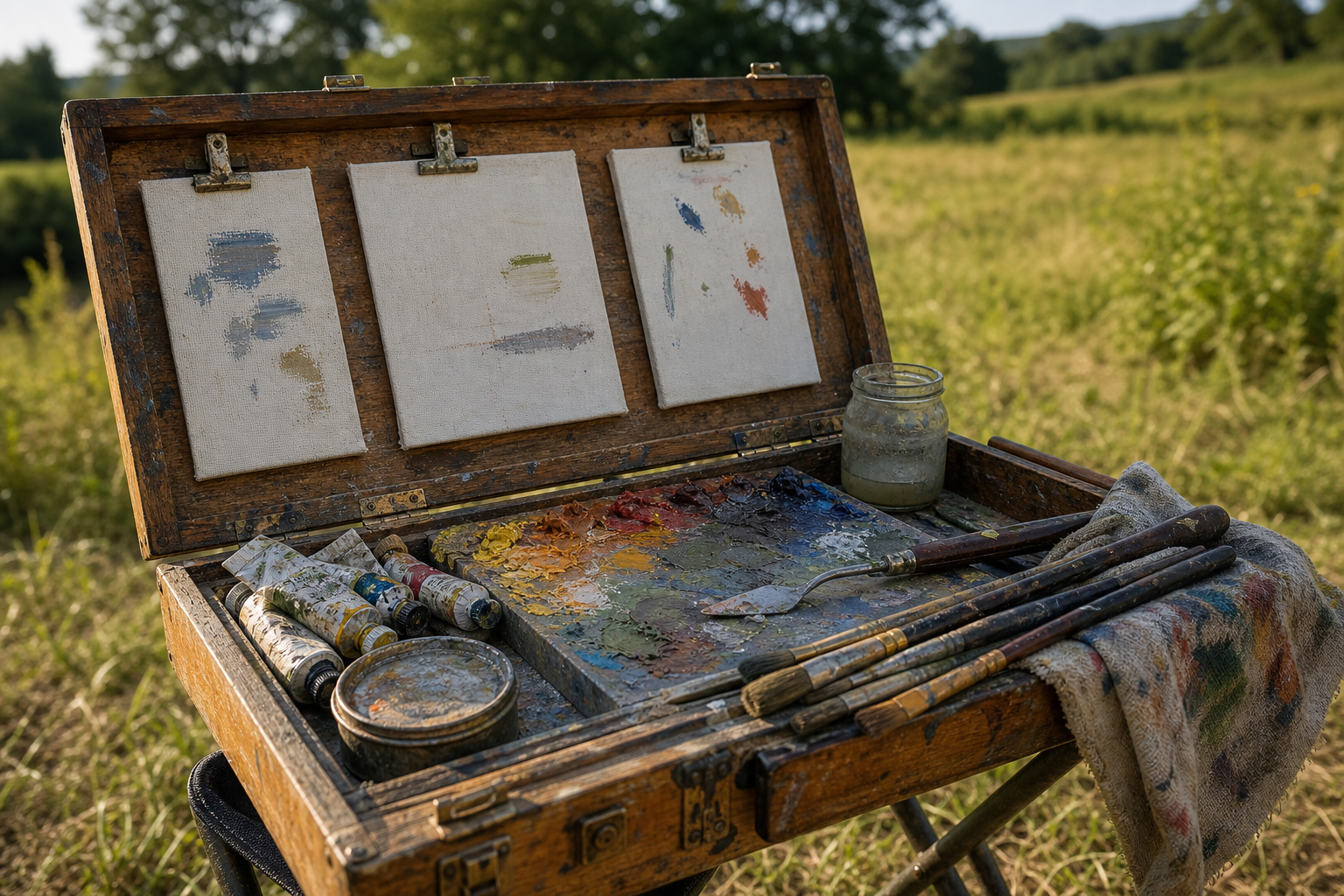
Small Study Sizes: 4×6 and 5×7 Inches (About 10×15 and 13×18 cm)
These small plein air panel sizes are genuinely useful, though not essential for a first outing. At 4×6, you're making rapid colour notes rather than finished paintings: useful for warming up, testing a composition, or working quickly when you're hiking and don't want the weight of a larger panel.
The 5×7 is slightly more forgiving and is the native size for some compact pochade boxes, so if you're working with a small sketching box, this may simply be what fits. Be honest with yourself about the fiddliness, though. Working very small requires a light touch with brush selection, and beginners sometimes find it harder rather than easier.
The Core Beginner Range: 6×8, 8×10 and 9×12 Inches (About 15×20, 20×25 and 23×30 cm)
This is where you'll spend most of your outdoor painting life, at least in the early sessions, and for good reason.
8×10 inches (20×25 cm) is the size we'd suggest for a first painting session. It fits the vast majority of pochade boxes without adaptors. It's large enough to develop a real composition with sky, ground, and a point of interest, but small enough to finish in one to two hours if you work with focus. It doesn't catch the wind badly, and it travels home easily in a standard wet panel carrier. If you're only going to buy one size to start, this is the one.
6×8 inches (15×20 cm) is a step down that's worth having alongside your 8×10. It's ideal for shorter sessions, urban close-ups, harbour studies, or quick responses to unexpected light. When the sky does something interesting and you only have forty minutes, a 6×8 is exactly the right tool.
9×12 inches (23×30 cm) is a natural progression once you've had a few successful outings. It gives you more room for wider landscapes and generous skies, and suits a half-day session where you have time to develop the painting properly. It's not a size to rule out early, but it's worth earning: finish a few 8×10 panels first and you'll use the 9×12 far more confidently.
When to Go Larger: 10×12 and 11×14 Inches (About 25×30 and 28×36 cm)
Larger formats are entirely legitimate plein air sizes, and plenty of experienced painters work at 11×14 and beyond. The honest truth for beginners, though, is that these sizes carry more risk than reward in the early sessions.
A larger panel takes longer to cover, which means it's harder to finish before the light shifts significantly. It catches more wind. It's heavier to carry and more awkward to transport wet. None of these are reasons to avoid larger formats forever; they're reasons to save them for once you're comfortable finishing a painting within the time you have available.
| Size (inches) | Size (cm approx.) | Best for | Session time |
|---|---|---|---|
| 4×6 | 10×15 | Quick colour notes, warm-up studies | 20–40 mins |
| 5×7 | 13×18 | Fast sketches, small pochade boxes | 30–60 mins |
| 6×8 | 15×20 | Short studies, urban details | 45–75 mins |
| 8×10 | 20×25 | First full paintings, most pochade boxes | 1–2 hours |
| 9×12 | 23×30 | Landscapes, half-day sessions | 1.5–3 hours |
| 11×14 | 28×36 | Experienced painters, stable conditions | 2–4 hours |
How to Match Your Panel Size to Your Pochade Box
If you've already bought a pochade box, or you're planning to, this is important to understand before you order panels. Every pochade box is designed around a specific range of panel heights, and the box sets a hard limit on what fits.
Budget boxes, typically those under £100, are usually built around the 6×8 to 8×10 inch range. This is actually useful information for beginners: it means the box is naturally steering you towards sizes that suit shorter sessions and manageable timescales. Mid-range boxes, roughly £100 to £200, often accommodate panels up to 9×12 or even 12×16 inches, giving you more flexibility as your sessions get longer.
The simplest buying rule is this: check the manufacturer's listed panel sizes for your box, then choose from those sizes without adaptors. Adaptors exist, and they work, but adding extra hardware to your setup when you're still learning the basics is an unnecessary complication. Native fit means one less thing to fiddle with when the wind picks up.
Check before you buy
Before ordering panels, look up the maximum panel height your pochade box supports. Choose a size that fits natively — without adaptors — so you're not wrestling with extra hardware when the wind picks up.
For more detail on matching your kit together, the pochade box guide covers how these boxes work and what to look for when buying one.
How to Choose Your Canvas Size for a Session Outdoors
Choosing canvas size outdoors doesn't need to be complicated. Work through these steps before you head out and you'll have the right panel in your bag.
Choosing your panel size before you head out
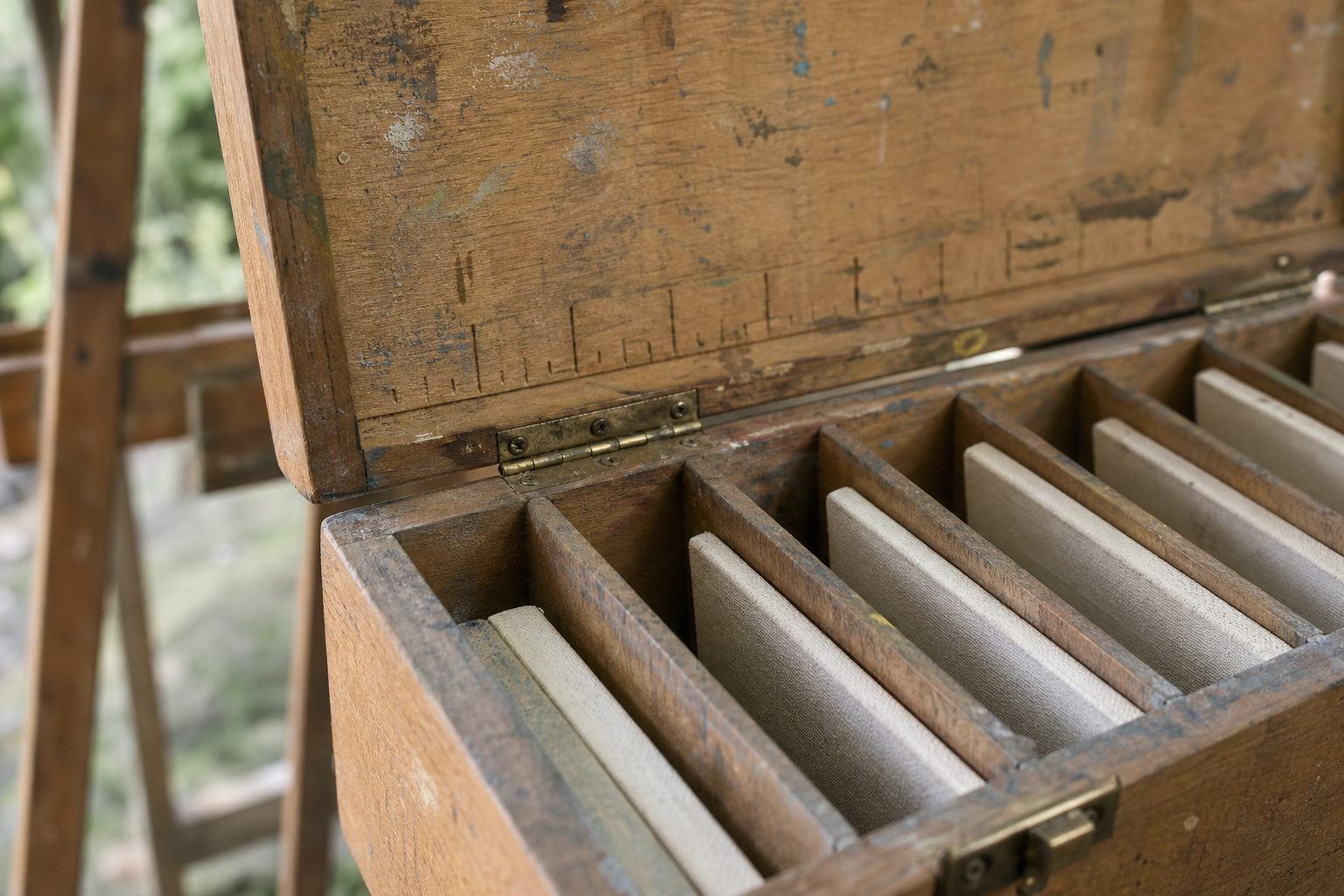
Check what your pochade box holds
Look at the manufacturer's panel size list. Pick a size that fits natively — no adaptors needed.
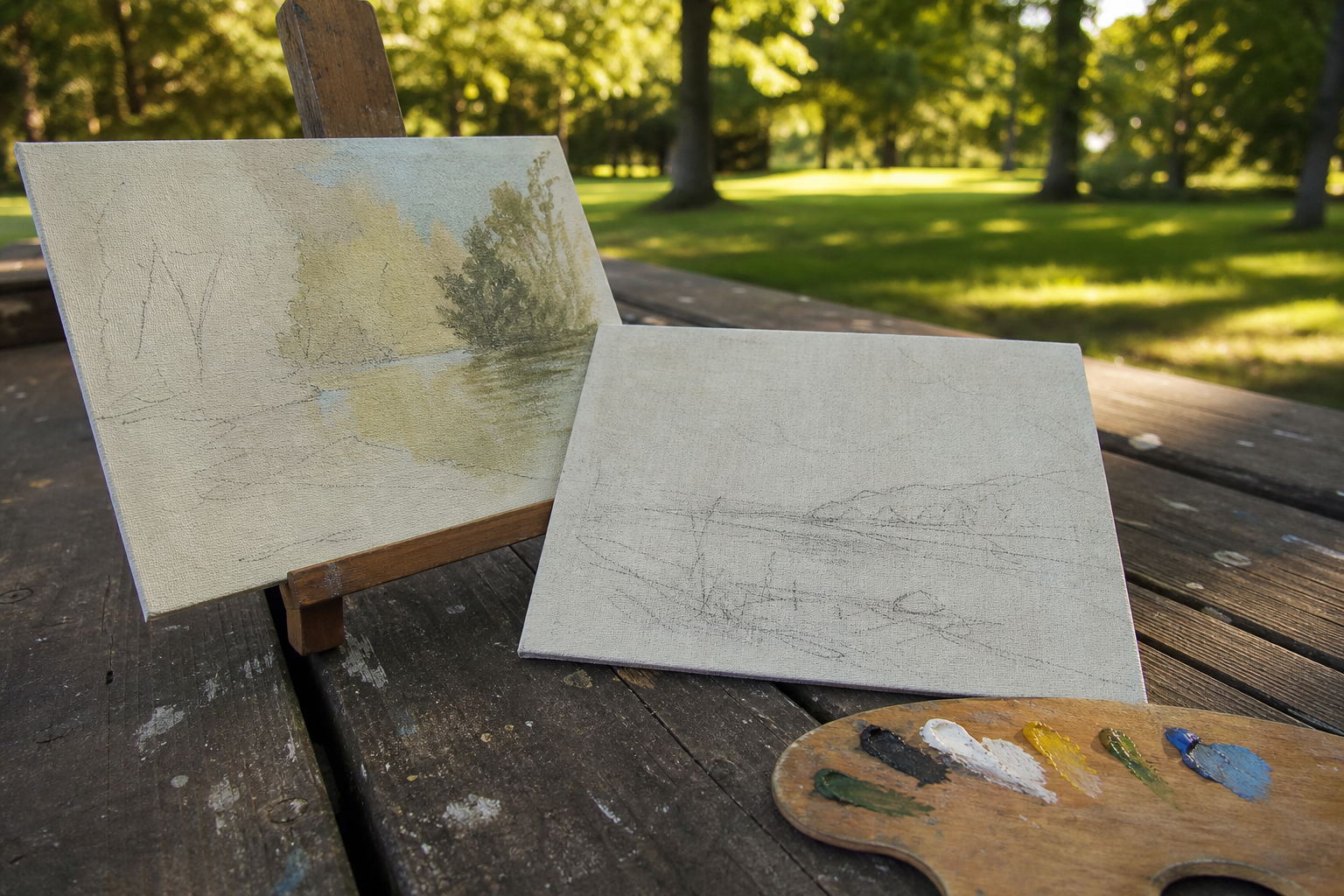
Work out how long you have
For 1–2 hours, choose 6×8 or 8×10 inches. For a half-day, 9×12 can work. When in doubt, go smaller.
Think about your subject
Urban close-ups and harbour details suit 6×8 or 8×10. Wider landscapes and big skies give you a bit more room on a 9×12.
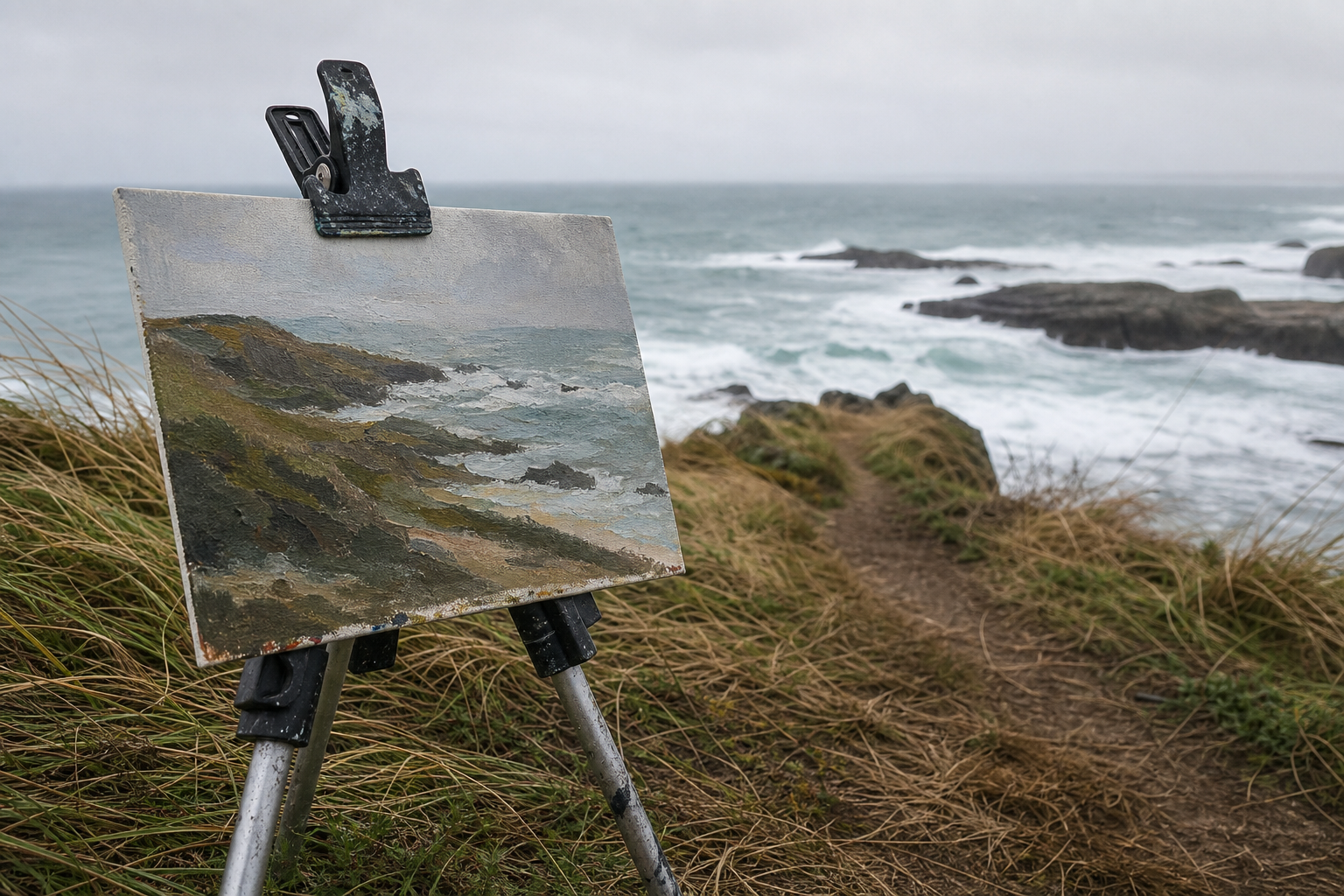
Factor in the weather
Windy day on an exposed headland or moorland? Go smaller — a compact panel is far easier to stabilise. A sheltered garden or courtyard gives you a bit more flexibility.
Pack 2–3 panels
Bring one for your main painting, one backup in case the light changes dramatically, and a small one for a warm-up study.
For a practical first kit, two 8×10 panels and one 6×8 covers almost every scenario a beginner is likely to face on a UK afternoon session. The 6×8 is there for a warm-up study or a quick response if the light does something unexpected. The two 8×10s give you a main painting plus a backup if conditions change and you want a fresh start on a different composition.
UK-Specific Tips for Getting Your Panel Size Right
UK light is one of the strongest practical arguments for painting small. On a clear day in the South Downs or along the Pembrokeshire coast, the quality of light can shift meaningfully within twenty or thirty minutes. Working on a larger panel when conditions are changing that quickly is genuinely frustrating. A small panel keeps the painting within reach of completion before the scene you set out to capture looks like a different place entirely.
Wind exposure is worth taking seriously as a location-specific factor, not just a general inconvenience. An 8×10 panel on a sheltered Somerset lane behaves very differently from the same panel on an open beach in Norfolk or a clifftop in Cornwall. When you know you're heading somewhere exposed, defaulting to the smaller size in your kit is simply sensible.
The practical logistics are also very manageable in the UK. Jackson's Art, Cass Art, Ken Bromley, and Great Art all stock canvas boards and primed panels in standard plein air sizes. Packs of 5 to 10 canvas boards in 15×20 cm (6×8 inches) or 20×25 cm (8×10 inches) are widely available and typically cost somewhere between £10 and £20 depending on quality and quantity. You don't need to cut anything down or order specially; the sizes that work outdoors are the sizes that are already on the shelf.
If you'd like a more sustainable surface option, oil-primed linen panels are available from several UK suppliers and are worth considering once you've established which sizes suit your practice.
For specific product recommendations across different price points and surface types, the painting panels review covers the options in more detail.
Your First Plein Air Session: A Simple Panel Plan
There's no perfect size. There's only the size you can finish before the light changes, and that's the one worth painting on. For most beginners on a typical UK afternoon, that means an 8×10 panel as the main event, with a 6×8 tucked in the bag for a warm-up or a quick study.
That's a simple kit. It fits in a basic pochade box, it travels easily, and it gives you enough room to make a real painting without overwhelming you before you've found your feet outside.
First session at a glance
- Recommended starter size
- 8×10 inches (20×25 cm)
- Panels to pack
- 2–3 per session
- Study size (optional)
- 6×8 inches (15×20 cm)
- Maximum for beginners
- 9×12 inches (23×30 cm)
Fits most pochade boxes, finishable in 1–2 hours
One main, one backup, one small study
Good for warm-ups and fast notes
Save this for once you have a few sessions done
If you're still putting together the rest of your kit and want a clear picture of everything you'll need before heading outside for the first time, the how-to-start guide walks through the full setup from scratch.
FAQ
Frequently Asked Questions
What size canvas should a beginner use for plein air painting?
Start with 8×10 inches as your main panel. Bring a 6×8 as a warm up or quick study and reserve 9×12 for half day sessions once you can finish reliably.
Should I use stretched canvas or rigid panels outdoors?
Rigid panels or canvas boards are usually better. They are lighter, less affected by wind, and easier to transport home wet than stretched canvas.
How many panels should I pack for a session?
Pack 2 to 3 panels: one main, one backup, and a small study for warm ups or quick responses to changing light.
How does weather influence my choice of plein air canvas sizes?
On exposed, windy sites choose smaller panels to reduce wobble and weight. In sheltered locations you can comfortably use slightly larger formats.
How do I know a panel will fit my pochade box?
Check the manufacturer's listed maximum panel height and choose a size that fits natively without adaptors to avoid extra fiddling outdoors.
Author

PleinAirPainting Editorial Team
PleinAirPainting.co.uk helps artists paint outdoors with confidence through UK-focused guides, equipment advice, resources and plein air inspiration.