Which Medium Should You Choose for Your First Plein Air Session?
Start with a medium you already know. This practical UK guide compares watercolour, oils, water-mixable oils and acrylic, and gives kit tips and simple steps to get outside and paint.

Key takeaways
- • Start with the medium you already know to reduce variables when painting outdoors.
- • Watercolour is light and well suited to typical UK overcast conditions but requires planning for whites and firm paper attachment.
- • Traditional oils give long open time and blending options; use low odour solvents or water mixable oils to avoid strong smells.
- • Water mixable oils handle like oils but need acrylic gessoed panels and careful disposal of rinse water.
- • Acrylic dries very fast outdoors; use it for bold, graphic studies or as a second step after gaining plein air experience.
It's easy to spend more time agonising over the right medium than actually getting outside and painting. If you're trying to choose your plein air medium before your first outdoor session, here's the honest answer: start with whatever you already use in the studio. Knowing which medium to choose for plein air painting is really a question of reducing unknowns, and your existing medium is one fewer thing to wrestle with. That said, if you want to understand why, or if you're genuinely weighing up your options for the first time, this guide walks through each medium honestly so you can make a confident, practical decision.
The simplest answer: start with what you know
Learning to paint outdoors is a challenge on its own terms. The light shifts every fifteen minutes. Wind tugs at your paper. Passers-by stop to watch. Your eye is doing work it has never had to do in a quiet studio. All of that is manageable, and most painters find it exhilarating once they've got a few sessions under their belt. But adding a completely unfamiliar medium on top of all that is asking a lot of yourself.
If you paint in watercolour, take watercolour outside. If you work in oils, start there. The transfer won't be seamless, but you'll be troubleshooting the outdoor conditions rather than the medium itself, and that's a far more productive starting point.
If you want to understand the reasoning, or if you don't have a strong studio medium yet, read on. The section below covers what each medium is actually like outdoors so you can match the right profile to your situation.
What each medium is actually like outdoors
This isn't a ranking. Every medium has real strengths and real drawbacks in an outdoor setting, and the right choice depends on what you already know, where you're painting, and what kind of session you're planning. Here's an honest picture of each one.
Watercolour
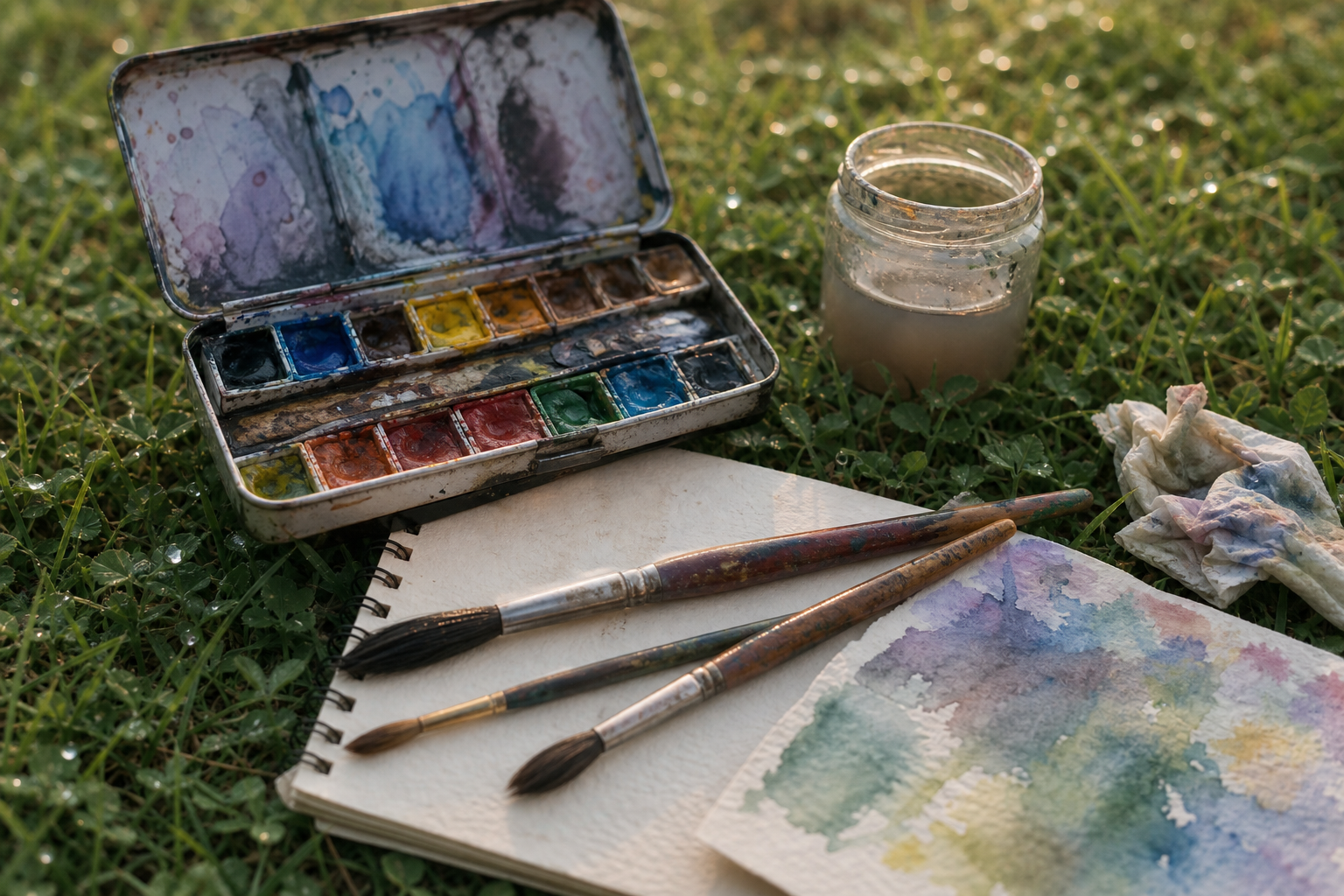
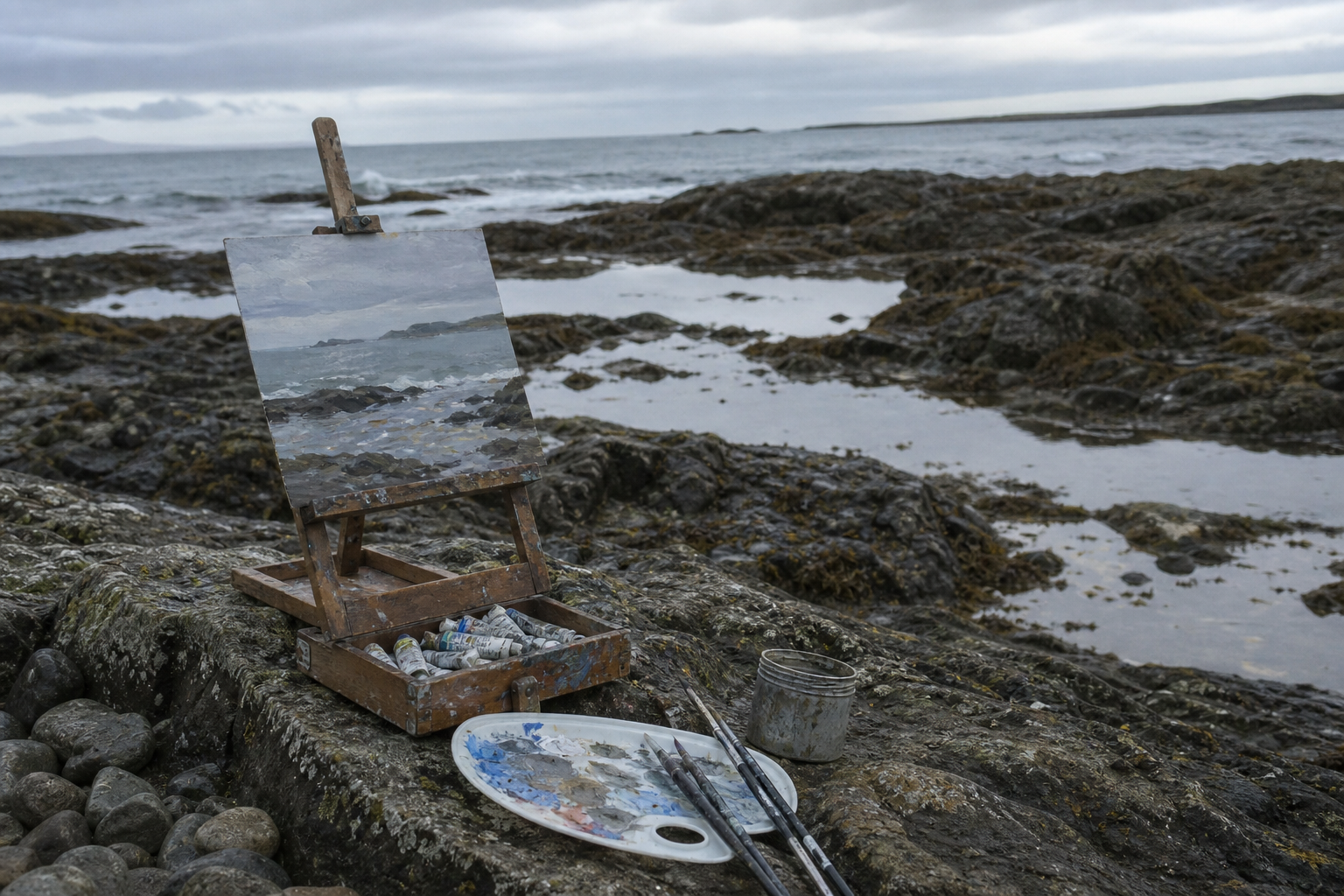
Watercolour is probably the most naturally suited medium to the British habit of grabbing a sketchbook and heading out. The kit is genuinely light: a small pan set, two or three brushes, a sheet of 300gsm paper clipped to a board, and a compact water pot. No solvents, no smell, no mess that a damp cloth can't handle. You can set up on a park bench, a coastal path, or a busy high street without attracting complaint.
The challenges are real but manageable. Whites come from the paper, which means you have to plan them from the very start rather than paint over them later. Mistakes are harder to recover than in oils. Wind and direct sun can dry a wash unevenly before you've finished laying it, leaving tide marks and hard edges where you didn't want them.
Here's something that UK painters don't always hear: British weather is genuinely helpful for watercolour. Overcast skies produce softer, more consistent light, and the cooler, more humid air slows drying enough to give you time to work a wash properly. If you've ever watched a tutorial filmed in California and wondered why your washes don't behave the same way, that's part of the reason. Our conditions are actually well suited to the medium.
Work smaller than you think you need to. An A5 or quarter-sheet study is far more achievable outdoors than a full sheet, especially in your first sessions. Premix larger puddles of colour than you'd expect to need, and keep your paper in shade where possible.
Traditional oils
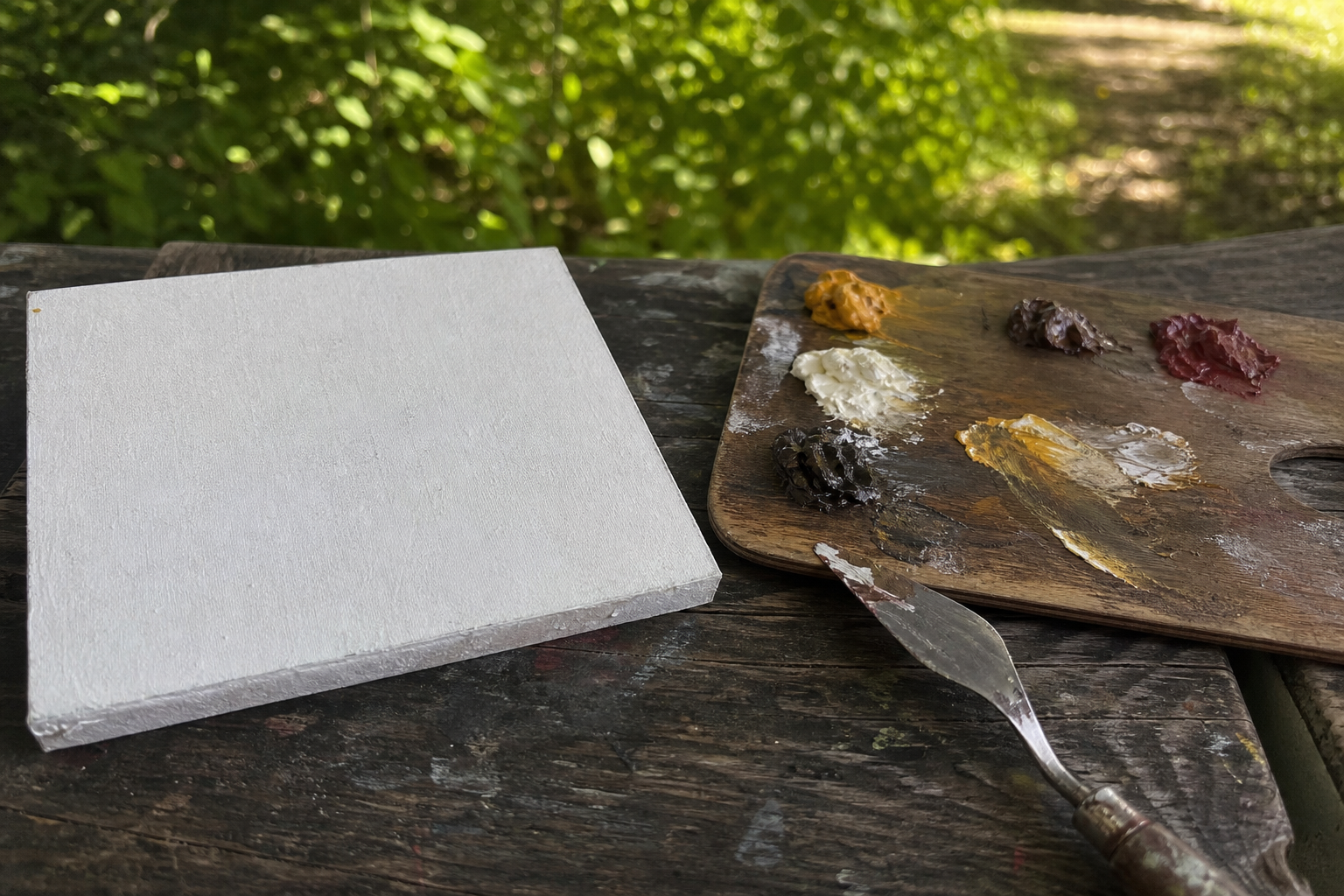
The single biggest advantage of oils outdoors is open time. Paint stays workable for hours, which means you can blend, adjust, and respond to the constantly shifting UK light without the surface crusting over mid-session. Alla prima working, completing a study in one sitting rather than building up layers over days, suits plein air perfectly, and oils handle that approach beautifully.
The practical considerations are worth thinking through before you go. You'll need solvent for thinning and cleaning, unless you use a solvent-free system, which is a real option. Low-odour solvents in a small sealed jar are a practical middle ground for painting in public spaces: they do the job without the sharp smell of white spirit that will clear a park bench in seconds. Alkyd mediums are worth knowing about too; they slightly speed up drying time without changing the handling feel much, which makes transporting a wet panel less of a gamble.
Speaking of wet panels, you'll need a way to carry them home without turning your bag into an abstract painting. Dedicated wet panel carriers are available, but even two panels taped face-to-face with coins as spacers is a functional solution for a first session.
Start small: panels of 15x20cm or 20x25cm are the right scale for outdoor work. A limited palette of six to eight colours is plenty.
Water-mixable oils
Water-mixable oils have moved from a niche curiosity to a mainstream option over the past decade, and they deserve to be taken seriously. These are genuine oil paints with a modified linseed or safflower binder that allows them to be thinned and cleaned with water rather than solvent. They handle very similarly to traditional oils and follow the same lean-to-fat principles: thinner, water-diluted layers first, oil-rich layers later.
For plein air painting, the main appeal is obvious: no solvents, no smell, no awkward sealed jars. You can paint in a public garden or on a crowded seafront without worrying about what the person sitting next to you can smell. Winsor & Newton Artisan, Cobra, and Royal Talens all produce ranges that are available from UK suppliers including Jackson's Art, Cass Art, and Ken Bromley.
A couple of things to keep in mind. Water-mixable oils require an acrylic-gessoed surface; standard oil-primed panels aren't compatible with them, so check your panels before you go. And while the rinse water is free of harsh solvents, it's still contaminated with pigment. Take it home in a sealed container rather than pouring it onto grass or into a drain. This applies to watercolour and acrylic rinse water too, and it's worth making a habit of from the start.
Acrylic
Acrylic is not a bad medium for outdoor painting. It's worth saying that clearly, because it often gets dismissed too quickly. But it is a demanding one, and for a very first plein air session it's usually not the easiest starting point.
The issue is drying speed. In a studio, fast drying is manageable and sometimes useful. Outdoors, in sun or wind, acrylic can dry in a matter of minutes, which makes blending almost impossible and leaves you chasing marks across a surface that's already starting to set. In the cooler, overcast conditions that make up most of the British outdoor painting year, it's more forgiving than in bright sun, but it still moves faster than oils.
If acrylic is your primary studio medium, you absolutely can and should take it outside. Plan for bold, graphic work rather than slow observational blending. Choose subjects with strong shapes and clear tonal structure. Work in sheltered, shaded conditions where you can. Expect your outdoor acrylic practice to develop its own character, which is different from but not lesser than your studio work.
If you don't already use acrylic confidently, it's generally worth holding it back as a second step rather than starting here.
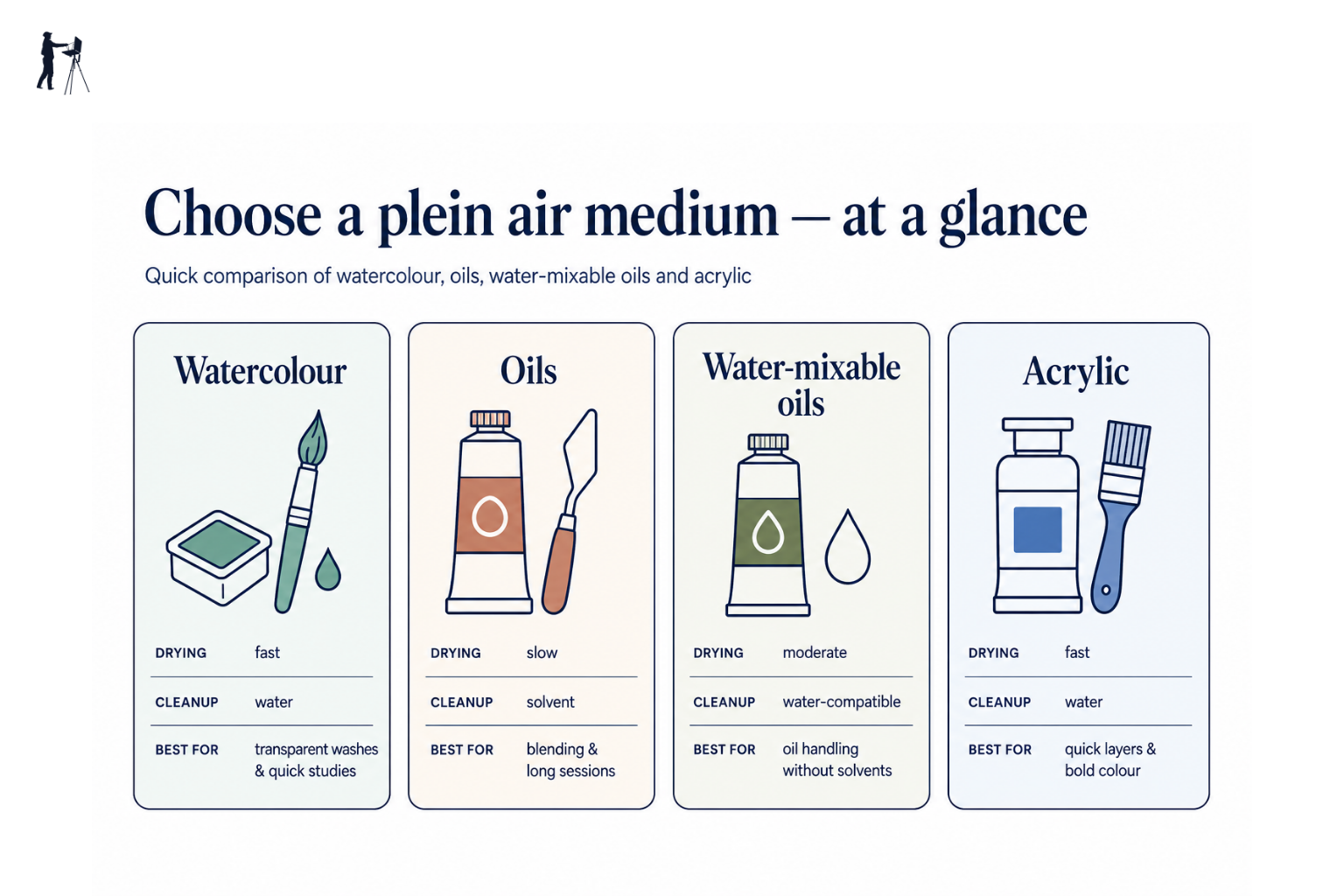
| Medium | Open time | Kit weight | Solvents needed | Best UK condition | Suitable for first session? |
|---|---|---|---|---|---|
| Watercolour | Short to medium | Very light | No | Overcast, sheltered | Yes, if you already use it |
| Traditional oils | Long | Medium | Yes (or solvent-free) | Changeable, cool | Yes, if you already use them |
| Water-mixable oils | Long | Medium | No | Any | Yes, with right surface prep |
| Acrylic | Very short | Medium | No | Cool and overcast | Better as a second step |
How UK conditions shape your choice
Most plein air advice online is written for American conditions: strong sunlight, dry air, wide open spaces. The framing is different here, and it's worth being specific about what British outdoor painting actually looks like.
Overcast skies are your most common working condition, and they're genuinely useful. The light is soft and consistent, shadows are less extreme, and colours read more accurately than under harsh direct sun. Watercolour benefits directly, with washes drying more evenly. Oils are perfectly comfortable. Even acrylic becomes a little more tractable when the sun isn't accelerating the surface.
Wind is the real nuisance, particularly for watercolour. A gust across a wet wash at the wrong moment leaves a mark that's very difficult to recover. Work smaller, clip your paper firmly to a board, and keep sheets in the shade of your body or bag where possible. Oils and water-mixable oils are much less affected.
Rain is a fact of British outdoor painting life. Brief showers are worth planning around rather than surrendering to. A compact travel umbrella mounted to your easel or held in a clamp, a waterproof bag to cover your kit quickly, or simply choosing subjects close to shelter all help. Many outdoor studies can be completed before a shower arrives, particularly if you're working small and fast.
Public spaces deserve specific thought. If you're painting in a park, on a coastal path, or in a town centre, strong solvent smells are both a practical and a social problem. The person walking their dog three metres away shouldn't have to navigate a cloud of white spirit. Watercolour and water-mixable oils sidestep this entirely. Traditional oils are fine with low-odour solvent kept in a small sealed container, opened only briefly when needed.
Painting in public spaces
If you're setting up in a park, on a coastal path or in a town centre, avoid strong-smelling solvents. Watercolour and water-mixable oils are the most neighbourly options. Whatever medium you use, take your rinse water home rather than pouring it on grass or into drains.
A simple decision framework for your first session
If you've read this far and still want a clear, step-by-step process for making your choice, here it is. Most people can work through this in two minutes.
Choosing your first plein air medium
Do you already paint in one medium?
Start outdoors in that medium. Don't add a new material to the challenge of painting outside for the first time.
If you use watercolour
Take a small pan set, 300gsm cold-press paper on a board, two or three brushes, and a compact water pot. Aim for A5 or quarter-sheet studies. Set a 60-to-90-minute time limit.
If you use oils
Decide first: can you manage low-odour solvent, or would you rather go solvent-free? If solvent-free, consider water-mixable oils. Either way, start with small panels (15x20cm or similar), a limited palette of six to eight colours, and a simple wet panel carrier.
If you use acrylic
You can paint outdoors with acrylic, but plan for speed. Choose bold, graphic subjects. Work in cool, sheltered conditions to slow drying, and expect less blending time than in the studio.
If you don't have a strong studio medium
Watercolour is usually the most accessible starting point for UK beginners. The kit is affordable, compact, and easy to carry on public transport or a coastal walk.
What to keep in mind whatever medium you choose
A few things that apply regardless of which medium ends up in your bag.
Keep it small. Whatever you're working in, A5 or postcard-sized studies are far more achievable outdoors than large formats. There's no rule that says a plein air study has to be ambitious. A small, honest piece of observation is worth more than a half-finished larger work abandoned when the light changed.
Set a time limit. Sixty to ninety minutes is a realistic window for a first session. The light will shift, the tide will come in, a cloud will change everything. That's not a problem; that's outdoor painting. Knowing you're working within a defined window helps you commit to decisions rather than hover over them.
Dress for the weather. This sounds obvious, but it's the most common reason people cut sessions short. Layers, a waterproof jacket, something to sit on, and a flask of something warm if there's any chance of cold all make a genuine difference to how long you can stay out and how much you enjoy it.
Your first outdoor study does not need to be good. It needs to exist. Getting outside, setting up, and completing one honest study, even a rough one, is the entire goal of session one. The aim isn't a finished piece; it's learning what outdoor painting actually feels like for you. Everything else follows from that.
It's also worth knowing that gouache is a medium some plein air painters find sits between watercolour and oils in a very practical way. It's opaque, works on lightweight paper or card, dries quickly but can be reactivated with water, and handles light areas without the planning that watercolour demands. If watercolour intrigues you but the planning-ahead-for-whites aspect feels daunting, gouache is a route worth exploring once you've had your first session under your belt.
For a full rundown of what to bring on your first outing, the essential plein air supplies guide covers kit in much more detail without overwhelming you with options. And if you're still working out the basics of how a plein air session actually runs from start to finish, the how to start plein air painting guide walks through the whole process from choosing a spot to packing up.
The medium matters less than you think it does right now. Getting outside matters more. Choose something you already know, keep the scale small, give yourself a time limit, and go and make something. That's where it starts.
FAQ
Frequently Asked Questions
Which medium should I choose for my first plein air session?
Start with the medium you already use in the studio. That way you are only learning the outdoor conditions rather than a new material.
Is watercolour a good choice for UK plein air painting?
Yes. The kit is light and portable and overcast British weather helps washes dry more evenly. Plan whites, work small, and clip your paper to a board to manage wind.
Can I use oils outdoors without strong solvents?
Yes. Use low odour solvents in sealed jars or choose water mixable oils to avoid solvents entirely. Consider alkyd mediums to speed drying and a wet panel carrier for transport.
Do water-mixable oils need special surfaces or care?
They require an acrylic gessoed surface rather than standard oil primed panels. Also take rinse water home in a sealed container to avoid contaminating drains.
How should I plan my first outdoor study?
Keep the scale small (A5 or postcard), set a 60 to 90 minute limit, dress for the weather, and treat the goal as completing one honest study rather than making a finished masterpiece.
Author

PleinAirPainting Editorial Team
PleinAirPainting.co.uk helps artists paint outdoors with confidence through UK-focused guides, equipment advice, resources and plein air inspiration.