New Forest Plein Air Painting: Locations, Access and What to Expect
A practical guide to new forest plein air painting: where to work, how to get there, seasonal light, and simple rules for respectful, low-impact painting in the park.

Key takeaways
- • The New Forest offers compact habitat variety for plein air painters, from ancient woodland to heath and Solent coast.
- • Brockenhurst is the main rail hub; Beaulieu Road and Sway are quieter alternatives; the New Forest Tour helps move between sites.
- • Work small in woodland, prioritise tonal studies, and expect quickly changing light under canopy.
- • Respect paths, give livestock space, follow seasonal access notices, and carry out all waste including solvent rags.
- • Plan around seasons: autumn for colour, spring for fresh light, summer for services but early starts, and winter for bare tree architecture.
The New Forest is one of southern England's most rewarding outdoor painting destinations, and one of the most varied. Within a compact area of Hampshire, you can move from ancient oak woodland to open heathland to estuarine coastline in a single morning. That variety, combined with genuinely good public transport links and a long tradition of artists working here, makes New Forest plein air painting a natural choice for anyone based in London, Hampshire, Dorset, Wiltshire, or Surrey looking for a fresh location.
It is worth being clear from the outset about what kind of place this is. The New Forest is not a manicured country park. It is a working landscape with active forestry operations, freely roaming livestock, and protected habitats managed under careful conservation oversight. Understanding that from the start will shape where you set up, how you move around, and, ultimately, what you paint. That is a feature, not a drawback. Artists who engage with the real landscape tend to produce more interesting work than those looking for a tidy, pre-composed view.
Why the New Forest Works So Well for Plein Air Painting
The main argument for the New Forest is habitat variety within a manageable geography. On a single visit, you might spend the morning working on tree forms and dappled light inside an ancient inclosure, cross a stretch of open heath at midday with a wide sky above you, and finish the afternoon at a tidal harbour or a Solent shoreline with boats and mudflats in front of you. Very few locations within easy reach of London offer that range.
The light here has a particular quality worth understanding before you arrive. The Solent's maritime influence softens and diffuses daylight in a way that is quite different from, say, the harder, more directional light of the Cotswolds or the dramatic atmospheric shifts of the Lake District. On overcast days especially, the New Forest can be extraordinarily paintable: gentle tonal gradations, no harsh shadows, subtle colour relationships that reward close looking. Watercolour painters and tonal oil painters will find the light here particularly congenial.
There is also historical precedent to draw confidence from. Artists have been working in and around the New Forest for well over a century. Brockenhurst and Minstead both appear in historical records of painters working the woodland and surrounding heathland. You are not pioneering unfamiliar territory; you are joining a long tradition of painters who recognised what this landscape offers.
The geography matters too. The core of the national park is roughly 25 by 15 kilometres. You are never far from a different habitat. A short drive or a bus hop can take you from a woodland interior to the open heath; another journey puts you on the Solent coast. For painters who like to move, or who want to try different subjects on the same trip, that compactness is a genuine advantage.
Getting There and Getting Around
By Rail
Brockenhurst is the main rail hub for the New Forest, with direct services from London Waterloo (roughly 90 minutes) and connections from Bournemouth and Southampton. From Brockenhurst, you are immediately adjacent to some of the forest's best woodland and heathland locations, and Lymington (for coastal and harbour painting) is a short branch-line hop away.
Three other stations are worth knowing. Ashurst (New Forest) gives access to the eastern fringes and is a quieter starting point than Brockenhurst. Beaulieu Road station, on the Bournemouth main line, sits in the middle of genuinely remote heathland and is one of the best-kept secrets in the forest for painters who want solitude. Sway station, further south, opens up less-visited woodland and heath to the south-west of the park. Both Beaulieu Road and Sway are worth considering if you find Brockenhurst busy or want to explore further from the popular centres.
By Bus and Open-Top Tour
The New Forest Tour runs during the summer season on three colour-coded hop-on, hop-off routes covering the main habitats and villages. Bikes are permitted, which opens up the possibility of cycling between painting spots once you are dropped off. For painters moving between woodland, heath, and coastal locations in a single day, the Tour is genuinely useful and aligns with the kind of low-impact travel that makes sense in a national park.
Outside the summer season, Xelabus and other local services connect the main villages, though frequency is lower. Check timetables in advance and build in some flexibility if you are relying on buses in spring or autumn.
By Car
If you are driving, Forestry England and the National Park Authority maintain a network of official car parks across the forest. These are well signposted and reasonably priced. Some of the best painting spots require a short walk from the nearest parking area, which is worth framing positively: a ten-minute walk on foot takes you away from the day-tripper traffic and into quieter, more interesting territory. Spots you reach on foot tend to be more compositionally rewarding precisely because fewer people have stood in front of them.
Where to Paint in the New Forest
Ancient Woodland and Inclosures
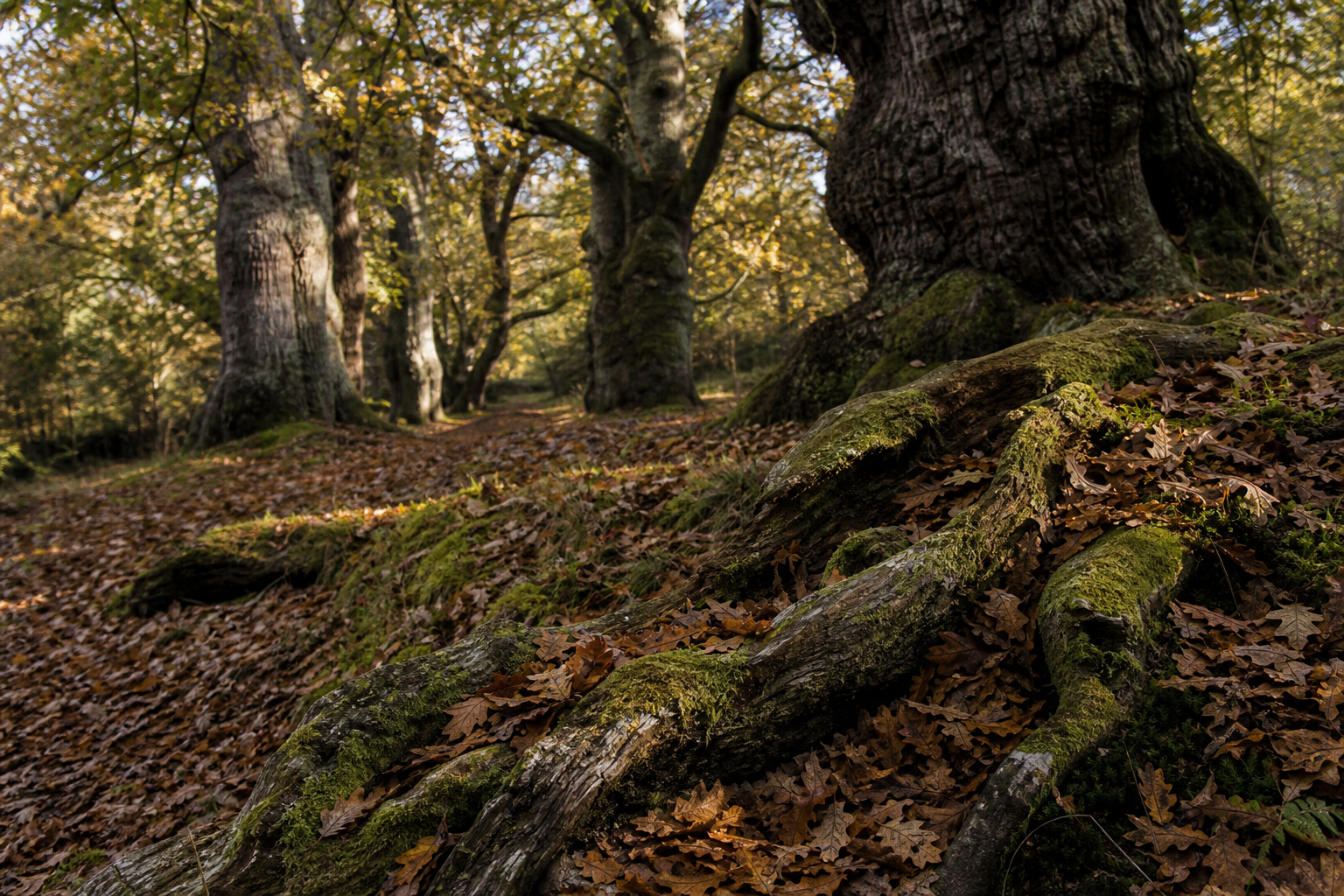
The ancient woodland is what most painters come to the New Forest for, and rightly so. The inclosures (areas of managed woodland, some dating back to the seventeenth century) offer dense, structural tree forms, layered canopy, and the kind of dappled, shifting light that is genuinely difficult to paint and immensely satisfying when you crack it.
Brockenhurst, Lyndhurst, and Minstead are useful bases for woodland access. Around Brockenhurst in particular, you are within easy walking distance of mixed woodland with impressive old oaks and beeches. For less-visited options, Frame Heath Inclosure and Clayhill Bottom are both worth exploring: Frame Heath offers a mix of managed rides and older tree stands with decent westerly light in the morning, while Clayhill Bottom has a quieter, more enclosed character that suits intimate, small-format studies.
The main challenge in dense woodland is light management. The sun moves faster than it appears when you are under a canopy, and the pattern of dappled light across a forest floor can shift dramatically in twenty minutes. Working in a smaller format and treating your first woodland session as a tonal study rather than a finished painting will teach you more and leave you with something genuinely useful.
Woodland painting tip
In dense woodland, the light changes faster than you'd expect as the sun shifts position. Work on a small format (6x8 or 8x10) and treat your first session as a value study rather than a finished piece. You'll learn more and come home with something genuinely useful.
Pools and Wetland Edges
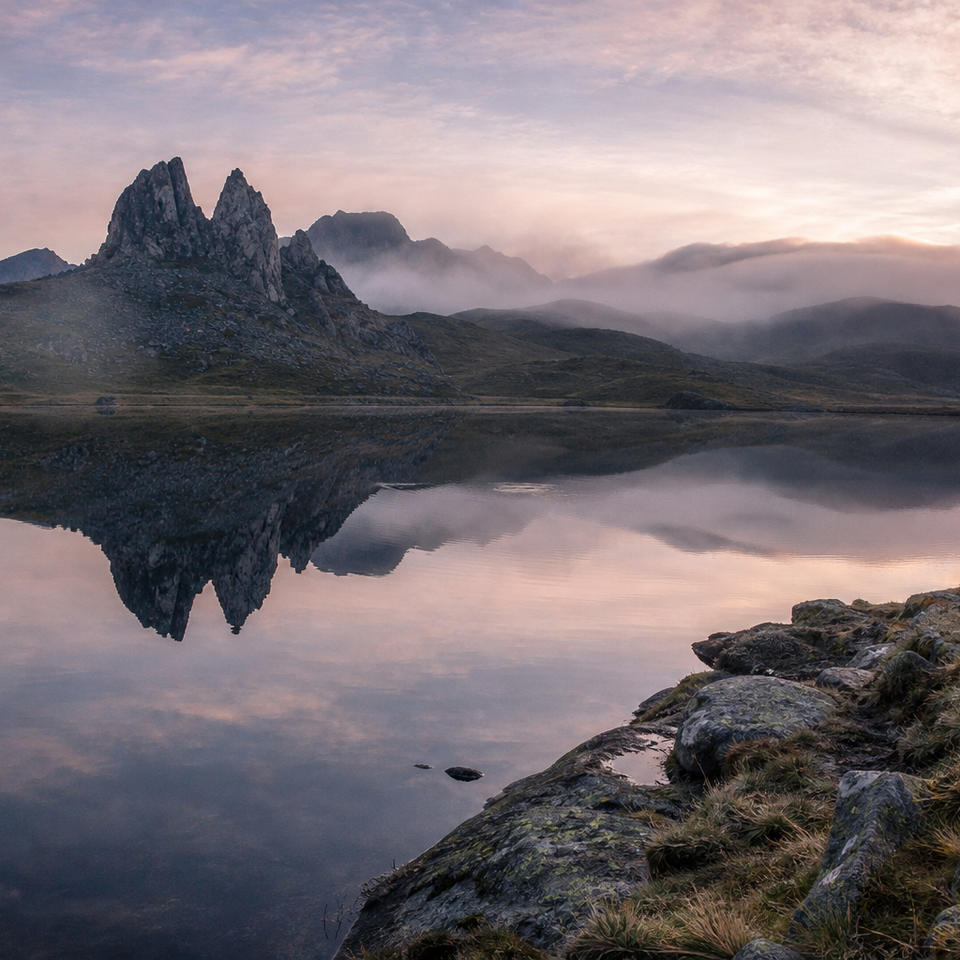
Cadman's Pool, accessible by a short walk from the road near Ogdens, is one of the most paintable spots in the forest. It offers a combination that solves one of woodland painting's persistent problems: the risk of green dominance. The pool introduces open sky reflected in still water, breaking up the surrounding canopy tones with tonal contrast and sky notes that give the eye somewhere to rest.
The foreground interest here is considerable: reeds, grassy margins, and the reflected treeline create a natural layering of near, middle, and far elements that composes itself almost instinctively. Morning light from the east catches the water surface well. It is a well-known spot, so arriving early helps; by mid-morning on a summer weekend it can become busy.
Open Heathland
Broomy Plain and Frame Heath are both good starting points for heathland painting. The compositional logic here is essentially the opposite of the woodland interior: vast sky, low horizon, the visual texture of heather, gorse, and scrub stretching into the distance.
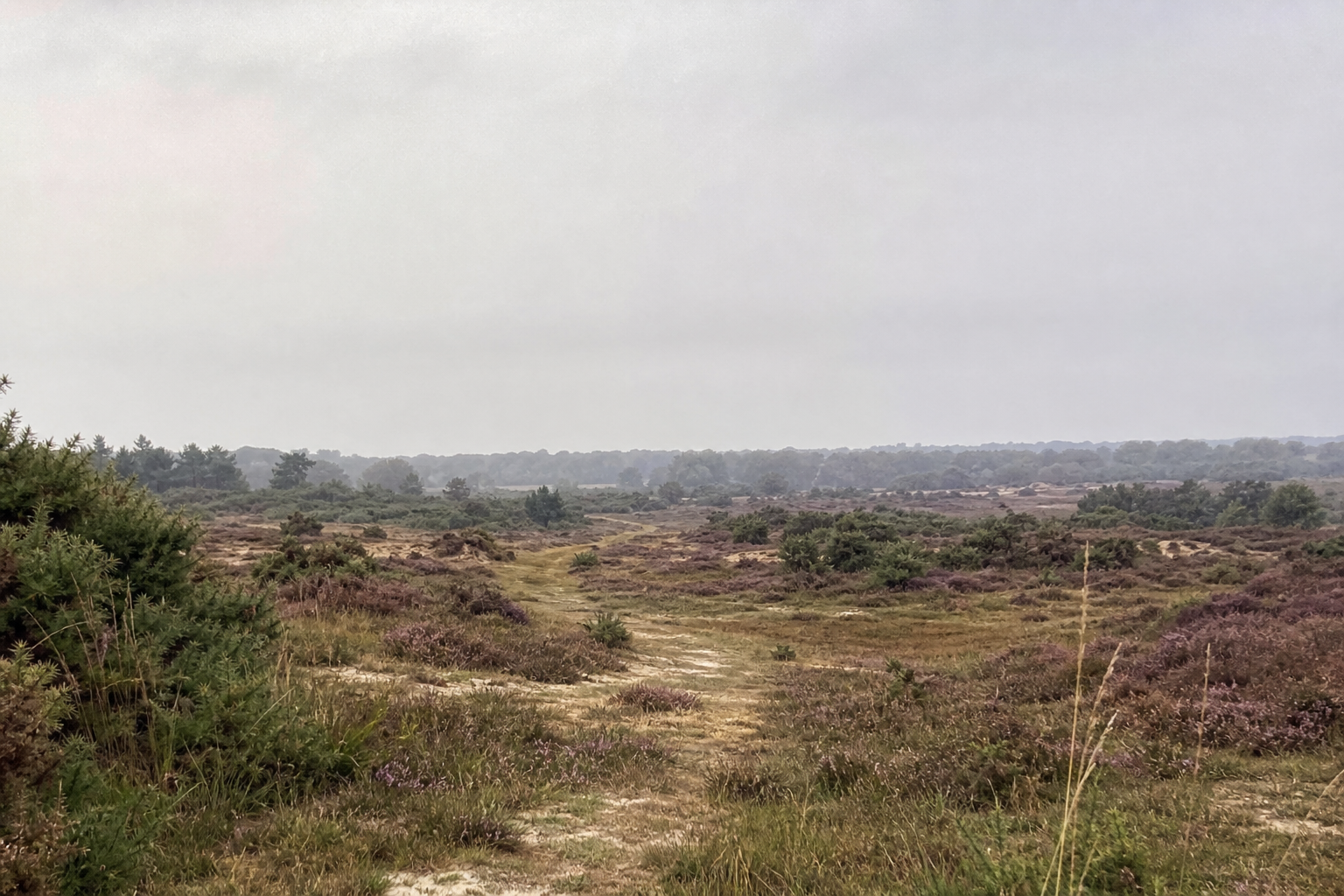
The heathland demands a different approach to colour temperature and sky handling. The purples and russets of heather against the pale sky of an overcast day are deceptively subtle; it is worth mixing carefully before committing. Active forestry operations are sometimes visible from heathland locations: timber stacks at the edge of a ride, the geometric profile of a tractor track, or the fresh-cut smell of felled timber. These are not problems to paint around; they are evidence of a living, working landscape, and they add narrative interest to compositions that might otherwise feel too static. Stay on designated tracks, particularly near active operations.
Wildlife Viewpoints
Bolderwood deer sanctuary, in the heart of the forest between Lyndhurst and Fordingbridge, has a series of viewing platforms and hides overlooking managed clearings and deer lawns. Fallow deer are a near-certain sighting here, and the platforms offer elevated, composed views across open grass and surrounding woodland.
For painters, this is useful for quick movement studies and for incorporating wildlife into landscape compositions without the deer simply being a lucky addition to an otherwise finished picture. If you want to work here, arrive early: Bolderwood has a car park and a seasonal information unit (open approximately April to October on weekends and school holidays) and can become genuinely busy by mid-morning. The information area itself is not the place to set up an easel; find a quieter vantage point along the viewing platforms.
Coastal and Estuarine Scenes
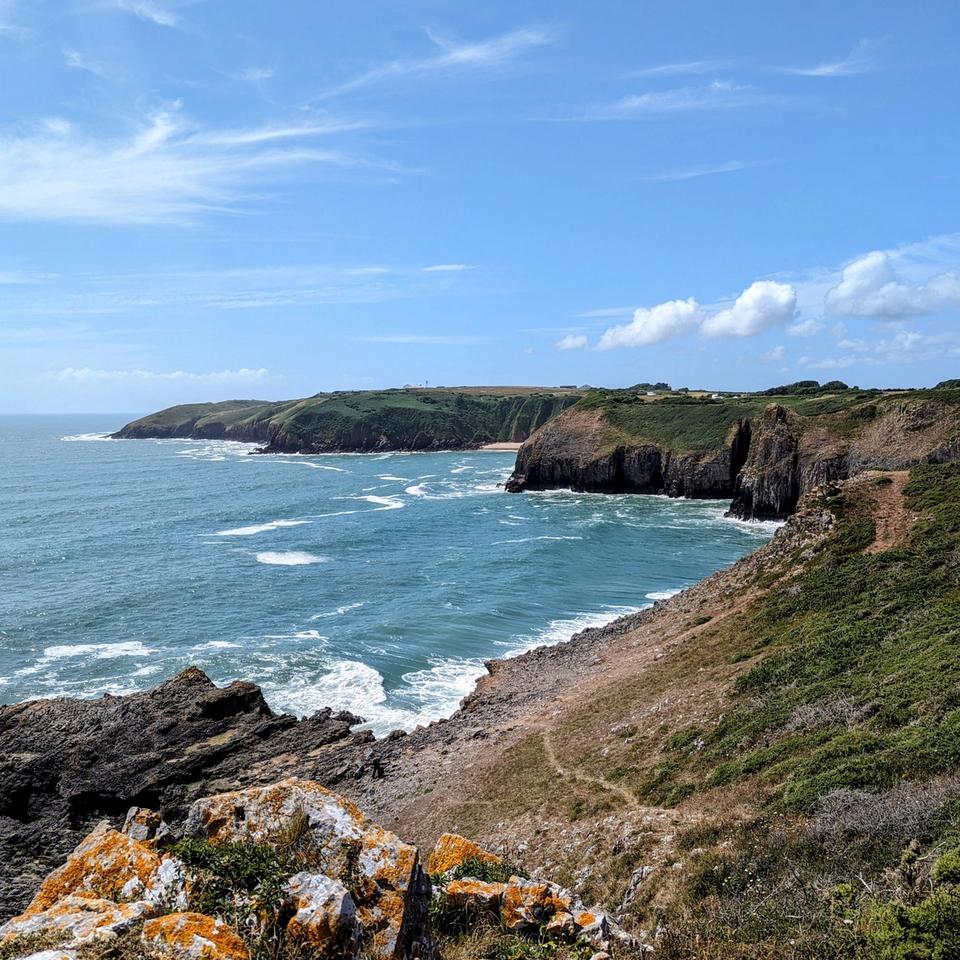
The Solent coastline is the most underrepresented subject in existing plein air content about this area, which makes it a genuine opportunity. Lepe Country Park, Calshot, and Milford-on-Sea all offer wide seascape compositions with the particular quality of Solent light: soft, often grey-silver, with a low horizon and distant shipping adding scale. Barton-on-Sea has eroding clay cliffs above a shingle beach that create a distinctive, less-painted subject.
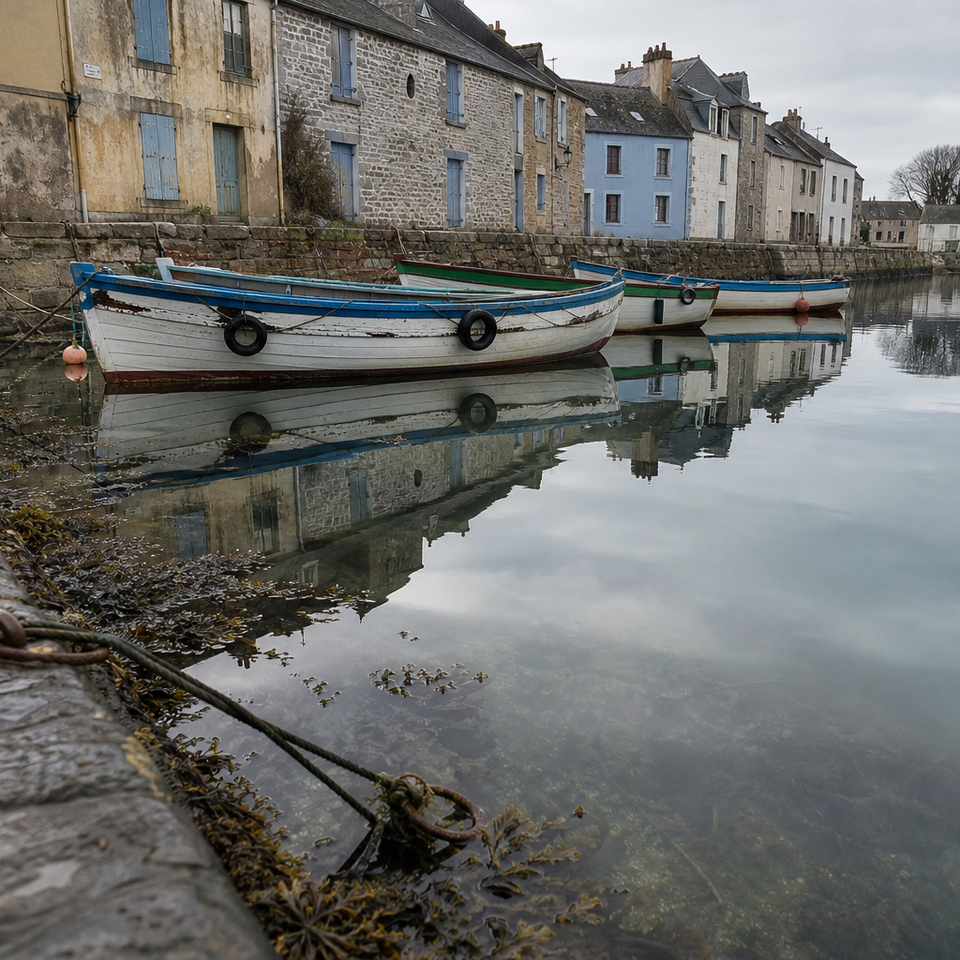
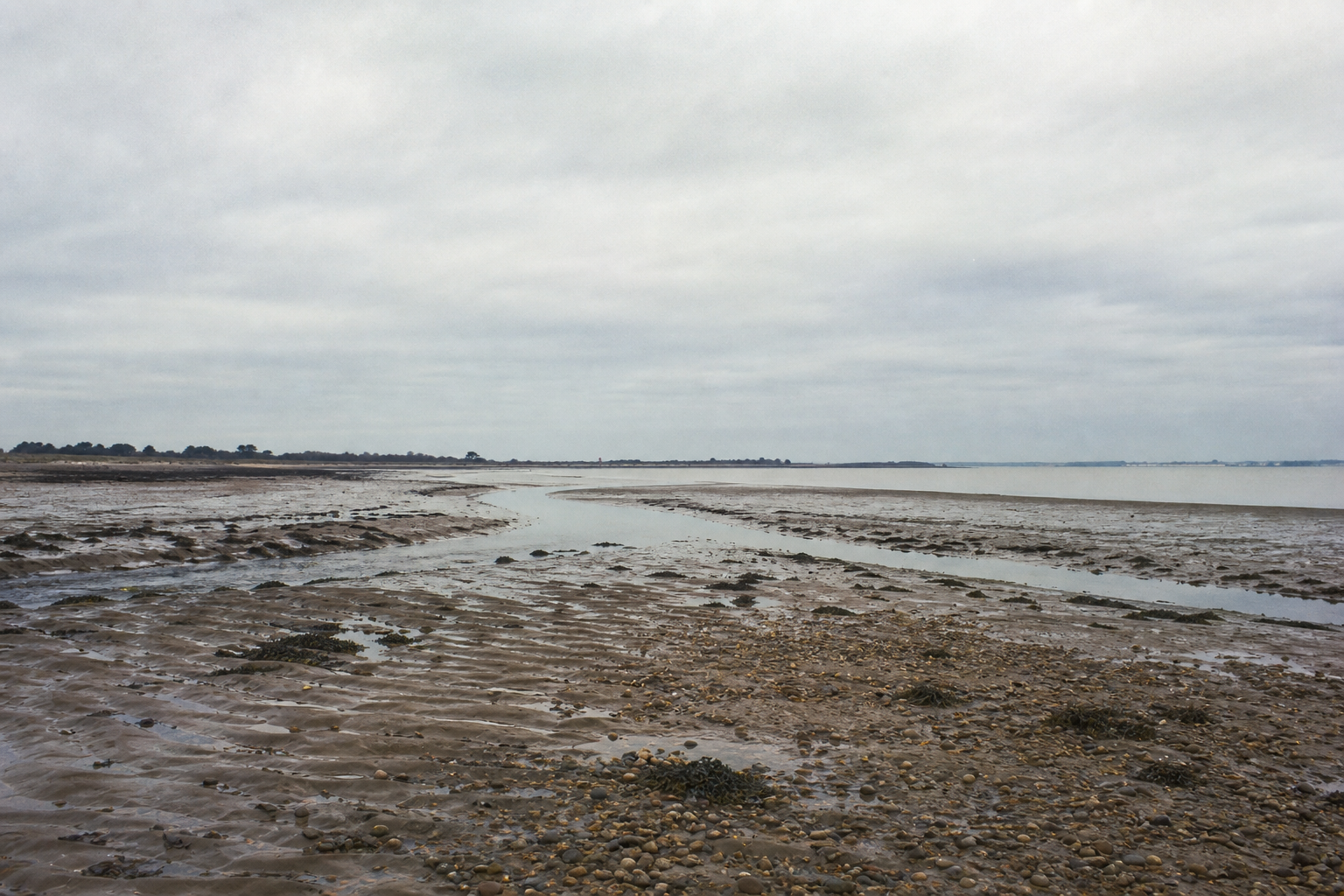
Lymington harbour combines boats, mudflats, and tidal rhythms into a location that rewards multiple visits at different states of the tide. The harbour itself is compact and walkable from Lymington Town station (a short branch from Brockenhurst), and the mudflats at low water offer tonal compositions of considerable subtlety. Overcast days are particularly good here; the flat light on the tidal water is exactly the kind of subject that rewards patient, tonal observation.
| Location | Habitat type | Best for | Access note |
|---|---|---|---|
| Brockenhurst area | Ancient woodland | Tree forms, dappled light | Direct rail access |
| Cadman's Pool | Woodland pool | Reflections, open sky | Short walk from road |
| Broomy Plain | Open heathland | Big skies, wide vistas | Check for forestry operations |
| Bolderwood | Managed woodland clearing | Wildlife studies, composed views | Car park and info unit on site |
| Lymington harbour | Estuarine / coastal | Boats, mudflats, tidal scenes | Rail to Lymington Town |
| Lepe / Calshot | Solent coast | Seascapes, maritime atmosphere | Bus or car; check seasonal services |
Rules, Access and Painting Responsibly
The short answer is that no special permission is required for casual, non-commercial painting in the New Forest. You do not need to apply for a permit or notify anyone before setting up your easel. The national park is a place of open access, and painters are as welcome as walkers, cyclists, and birdwatchers.
The longer answer involves a few sensible habits that will keep you on the right side of both the rules and your fellow visitors.
Stay on designated paths, particularly near forestry operations or areas of active conservation work. The ground around some inclosures can be soft and ecologically sensitive; wandering off the path to find a better angle is tempting but worth resisting. If a path is signed as temporarily closed, respect that.
Give livestock space. New Forest ponies, cattle, and donkeys roam freely throughout the forest and are not tame animals, regardless of how approachable they seem. They will investigate an easel, nudge a palette, and occasionally decide that your painting spot is exactly where they want to stand. Give them a wide berth when moving through the forest, and if a pony approaches your setup, pack up and move rather than trying to shoo it away. This is not a warning to scare off beginners; it is just the practical reality of painting in a working landscape.
Avoid setting up in narrow paths, gateways, or any point that narrows the flow of visitors or livestock. The Bolderwood information area, in particular, gets busy and is not the place to plant an easel. The heritage site associated with the death of King William II (the Rufus Stone, near Brook) is visited by many people and deserves particular sensitivity; if you are nearby, set up clear of the monument and any visitor pathways.
Check the National Park Authority and Forestry England websites before visiting for any seasonal closures or active operations in your intended area.
A simple rule for setting up
Before you put your easel down, ask yourself: could someone walk past comfortably, could a pony get through if it wanted to, and are you clear of any forestry activity? If yes to all three, you're almost certainly fine.
When to Go: Seasons and Light in the New Forest
Spring brings fresh foliage and the early wildflowers on the heath, including gorse in full yellow bloom from February onwards. Crowds are manageable, the ground is firm enough for woodland sessions, and the quality of light through new leaves is quite different from the denser, darker canopy of midsummer. Spring is underrated as a painting season here.
Summer offers the longest days and the full service window: all bus routes running, Bolderwood's information unit open, more flexibility to plan morning and evening sessions. The downside is volume: popular spots like Cadman's Pool and Bolderwood can feel crowded by late morning on weekends. The solution is simple: arrive early. A 7am start at Cadman's Pool on a June morning is a very different experience from arriving at 11.
Autumn is the headline season for woodland painters in the New Forest, and the best time to plan a dedicated trip if woodland is your primary interest. The ancient oaks and beeches turn late and slowly, often peaking in late October and into November. The light is lower, warmer, and more directional than summer; shadows become interesting again. The heath shifts from purple to russet and gold. Composition possibilities that felt too flat in summer come alive.
Winter is possible and genuinely worth considering for the right painter. Reduced services require more self-sufficiency, and you will need to dress for it on the coast in particular. The bare woodland structure, stripped of leaves, reveals the architecture of the trees in a way that summer canopy conceals completely. Winter woodland painting is underexplored and compositionally fascinating.
Throughout all seasons, the maritime microclimate means conditions can change quickly. The Solent influence brings mild but unpredictable weather: a still, overcast morning can become a gusty afternoon with little warning. Always check the Met Office forecast before heading out, and build in a contingency for changing conditions.
New Forest at a glance
- National Park area
- 571 sq km
- Main rail hub
- Brockenhurst
- Best season for woodland colour
- October to November
- New Forest Tour operation
- Summer season
- Bolderwood info unit open
- April to October
One of England's larger National Parks
Direct services from London Waterloo
Ancient oaks and beeches turn late
Hop-on, hop-off with bikes permitted
Weekends and school holidays
Planning a Painting Day in the New Forest
A well-planned day in the New Forest does not need to be a rigid itinerary, but having a shape in mind before you arrive makes the difference between a productive session and an indecisive one. Here are three frameworks that work well.
Woodland focus: Take the train to Brockenhurst and walk or take a local bus to one of the inclosures nearby. Spend the morning on a small-format woodland study, focusing on tonal structure rather than detail. After lunch, head to Cadman's Pool for an afternoon session combining water, reflected sky, and woodland edge. Two studies, both relatively small, is a realistic and satisfying outcome for a day like this.
Heath and coast: Start on the heathland (Broomy Plain or a similar open location via the New Forest Tour or Beaulieu Road station) for a morning sky study with a wide, low composition. Take the Tour or a local bus south in the afternoon to Lymington or Lepe for a tidal or seascape study while the afternoon light softens. The contrast between the two sessions, compositionally and tonally, is instructive.
Full habitat day: Use the New Forest Tour as your primary transport and work with a compact pochade setup. Three short studies across different habitats, none taking more than ninety minutes, will teach you more about the forest's visual variety than a single laboured canvas. This approach works best when you are visiting for the first time and want to get a feel for the landscape before committing to longer sessions.
Kit notes worth flagging: a lightweight setup is strongly recommended for anyone moving between sites. The coastal locations, Lepe and Calshot in particular, can be significantly cooler than the woodland interior, so bring an extra layer even in summer. In humid woodland conditions, a damp cloth for wiping your hands is more useful than you might expect. And if you are working in oils outdoors, manage your solvent waste carefully: carry a sealed container and take solvent-soaked rags home rather than leaving them in the field.
A Few Practical Tips Before You Go
- Register your visit and check current access conditions via the New Forest National Park Authority website and Forestry England's visitor information pages before you travel.
- The New Forest Heritage Centre in Lyndhurst is a genuinely useful first stop: maps, local knowledge, and interpretive displays that help you understand what you are looking at before you try to paint it.
- Beaulieu Road and Sway stations are worth exploring if you want to avoid the Brockenhurst crowds. Both unlock less-visited parts of the forest with good painting potential and significantly fewer day-trippers.
- The New Forest ponies are charming, they are not pets, and they will investigate your palette if given the opportunity. Keep your kit close and give the animals room.
- Carry out everything you bring in. This applies specifically to solvent-soaked rags and oil-paint waste, which count as hazardous materials and should never be left in the landscape. A small sealed tin or a zip-lock bag handles this easily.
FAQ
Frequently Asked Questions
Do I need permission to paint in the New Forest?
No special permit is required for casual, non-commercial painting. Follow site rules, stay on designated paths, respect closures, and carry out all waste.
Which stations give best access for plein air sessions?
Brockenhurst is the main rail hub. Beaulieu Road and Sway provide quieter access to heath and remote woodland. Lymington Town serves the harbour and coast.
What is the best season for New Forest plein air painting?
Autumn is prime for woodland colour. Spring is excellent for fresh foliage and manageable crowds. Summer offers long days but can be busy, and winter reveals strong tree architecture.
How should I handle fast changing light in woodland?
Work small and fast, treat first sessions as value or tonal studies, limit studies to 60–90 minutes, and plan early starts to catch steady light.
Any safety tips around wildlife and livestock?
Give ponies, cattle, and donkeys plenty of space. Keep kit close, do not feed animals, and if a pony approaches pack up and move rather than trying to shoo it away.
Author

PleinAirPainting Editorial Team
PleinAirPainting.co.uk helps artists paint outdoors with confidence through UK-focused guides, equipment advice, resources and plein air inspiration.