15 Best Plein Air Painting Spots in the Cotswolds
A practical guide to 15 of the best plein air painting Cotswolds locations, with timing, access, parking and seasonal light tips to help artists avoid crowds and make the most of each view.

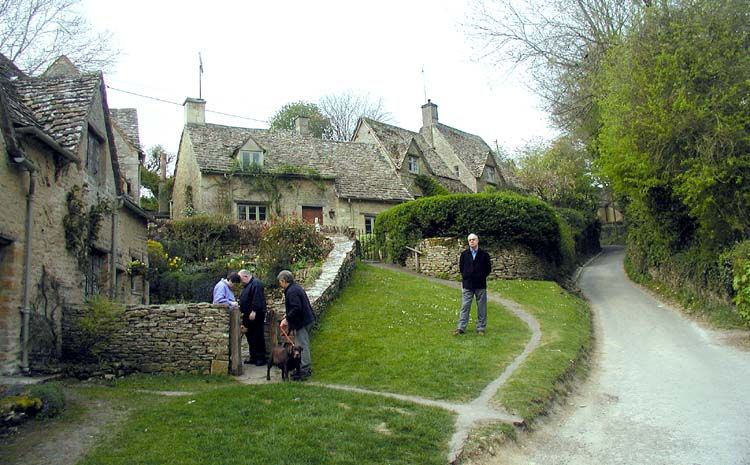
Bibury’s stone cottages and riverside setting.
Credit: Public domain via Wikimedia Commons
Key takeaways
- • Aim for early morning or autumn light to capture warm limestone tones and strong shadows.
- • Arrive before 9am at busy sites; choose lesser-known villages for longer uninterrupted sessions.
- • Check access rules for National Trust and private gardens and confirm painting permissions in advance.
- • Bring weather and wind protection for hilltop painting and secure your materials.
- • Plan parking and seasonal charges; use central towns like Moreton-in-Marsh as a practical base.
Plein air painting in the Cotswolds offers something that's genuinely hard to find elsewhere in England: a concentrated region where honey-coloured stone, structured gardens, river valleys, and open escarpment all sit within an hour of each other. The subjects are exceptional. The light, particularly in spring and autumn, has a warmth that suits almost every medium. The tension, and it's worth being upfront about this, is that you'll be sharing much of it with a great many other visitors. This guide will help you find the right spots, plan around the crowds, and get the most from your time with an easel in one of England's most paintable landscapes.
What Makes the Cotswolds Such Good Painting Country
The visual quality of the Cotswolds comes down to a handful of things working together. The Jurassic limestone that runs through the region gives buildings, walls, and field boundaries a warm, consistent palette that shifts noticeably with the quality of light. In early morning or late afternoon, the stone takes on a deep amber tone. At midday in flat light, it reads almost cream. That responsiveness to light is what makes the Cotswolds so rewarding across the seasons.
Dry stone walls divide the rolling hills into a patchwork of fields that gives the open landscape strong structure and rhythm. Villages sit in valleys or on hillsides with the kind of organic arrangement that took centuries to develop, which means views often compose themselves rather than needing to be constructed. The region was designated as a Cotswolds National Landscape in 2023 (previously an Area of Outstanding Natural Beauty), a recognition that shapes what gets built and preserved, and by extension, what painters find when they arrive.
The landscape particularly rewards early morning visits. Low-angle light throws the texture of stone walls and roof tiles into sharp relief, shadow lines are clean and definite, and the villages are quiet in a way they simply won't be by mid-morning in peak season.
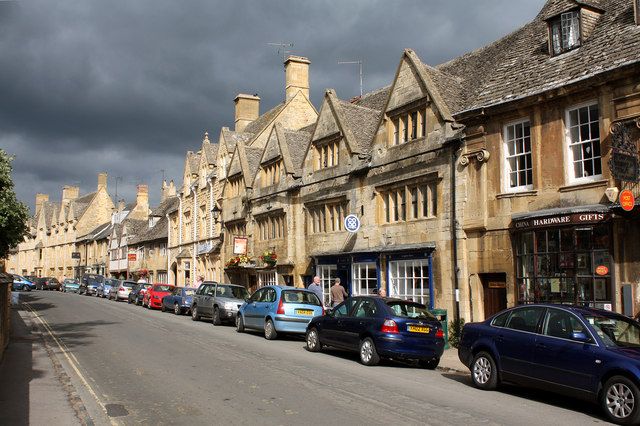
Chipping Campden High Street. Photo by Mike Baldwin / Geograph — CC BY-SA 2.0.
A Few Practical Notes Before You Go
Most of the locations in this guide are accessible via public rights of way, open common land, or paid entry. A few involve National Trust sites or private gardens. The rules differ by type, and it's worth understanding them before you travel.
Access and painting etiquette
Public rights of way and open access land allow you to stop and paint freely. National Trust properties generally permit painting for personal non-commercial use, but always check the specific property's current policy. Private land requires permission. Never assume a beautiful view from a lane gives you the right to enter a field or garden.
On parking: most Cotswold villages have limited spaces and several operate pay-and-display car parks from spring onwards. Arriving before 9am in season isn't just good advice for the light; it's often the only way to guarantee a parking space at the most popular sites. Some locations have free parking year-round; these are noted below where relevant.
Village and Architecture Spots
The Cotswolds' villages are what most painters come for, and rightly so. The range of architectural subjects, from medieval market halls to weavers' cottages and Georgian townhouses, is genuinely excellent. Here's where to go.
Chipping Campden
One of the finest high streets in the Cotswolds, Chipping Campden offers a long run of limestone buildings culminating in a medieval Market Hall and, at the eastern end, the church of St James. The Market Hall is a strong compositional subject in its own right, with its open arches and the street life that surrounds it. The High Street gives you natural perspective lines and varied architectural detail.
Arrive between 7am and 8am, particularly in late spring and autumn, when the raking light catches the stone at its most golden. By 10am in summer, coach parties are arriving. There's a pay-and-display car park off Sheep Street; spaces go quickly, so earlier is better. Chipping Campden is one of the busier Cotswold villages in summer, but an early start makes it very manageable.
Painswick
Often called "the Queen of the Cotswolds," Painswick is less visited than Bibury or Bourton-on-the-Water and considerably more relaxed for a full day's painting session. The churchyard is famous for its 99 clipped yew trees, which make an unusual and compelling subject: strong forms, deep shadow, and a quality of stillness that suits a more contemplative study. The street scenes along Bisley Street and New Street have good variety and scale.
Parking is available on Stamages Lane and the village doesn't attract the same tourist pressure as the honeypot sites further south. This is one of the more reliable options for an uninterrupted session, almost any time of year.
Bibury
Arlington Row is one of the most reproduced views in England: a terrace of 14th-century weavers' cottages reflected in the mill pond of the River Coln. It is an exceptional subject. It is also, in peak season, surrounded by visitors from early morning onwards.
If you want to paint here in summer, aim to arrive by 7am. Outside peak season, October through to March is considerably more workable, and the autumn and winter light on the stone is often better than the summer equivalent. The village green and the river itself offer alternatives to the Arlington Row composition if the primary viewpoint is occupied. Pay parking is available near the trout farm. Be realistic about what peak season looks like here; it's busy, but the early alarm call is worth it if the subject is what you're after.
Snowshill
Snowshill is one of the better alternatives for painters who want genuine Cotswold character without the crowds. The village sits steeply terraced on a hillside and has a quality of quietness that's increasingly rare in the region. Snowshill Manor is a National Trust property; check their current policy on painting before visiting. The surrounding hillside and the village itself are freely accessible.
The National Trust car park near the village has limited capacity but is rarely full early in the morning. This is a location where you'll often find a view entirely to yourself.
Blockley
An underrated village in a steep valley with a brook running through it and former silk mill buildings that give it a slightly different character to the typical Cotswold village. The millponds and the brook offer water subjects; the valley views looking upwards towards the surrounding hills give you strong vertical compositions. Autumn is particularly rewarding here when the valley light goes warm and low.
Parking is limited to roadside spaces; arrive early and be considerate of residents. Blockley rarely features in general Cotswolds tourist content, which is precisely why it's worth knowing about.
Gardens and Floral Subjects
The Cotswolds has some of the best gardens in England, and for painters who enjoy botanical subjects, architectural planting, and the interplay of structure and colour, they offer something quite different to open landscape work.
Cotswold Lavender, Snowshill
A commercial lavender farm with long rows of lavender running across a hillside above Snowshill. The rows provide strong compositional lines leading back to farm buildings and the surrounding landscape, and the colour relationships between the purple lavender and the pale limestone are worth some colour mixing experimentation before you arrive. The warmth of the stone calls for cool purple-blues in the lavender to hold the contrast; the two sit well together.
Peak bloom is mid-June to mid-July. Arrive by 9am for the best light and before the day's visitors are fully established. This is a commercial venue and entry fees apply; confirm that painting on-site is permitted as part of general visitor access before you go. In practice it generally is, but it's worth checking.
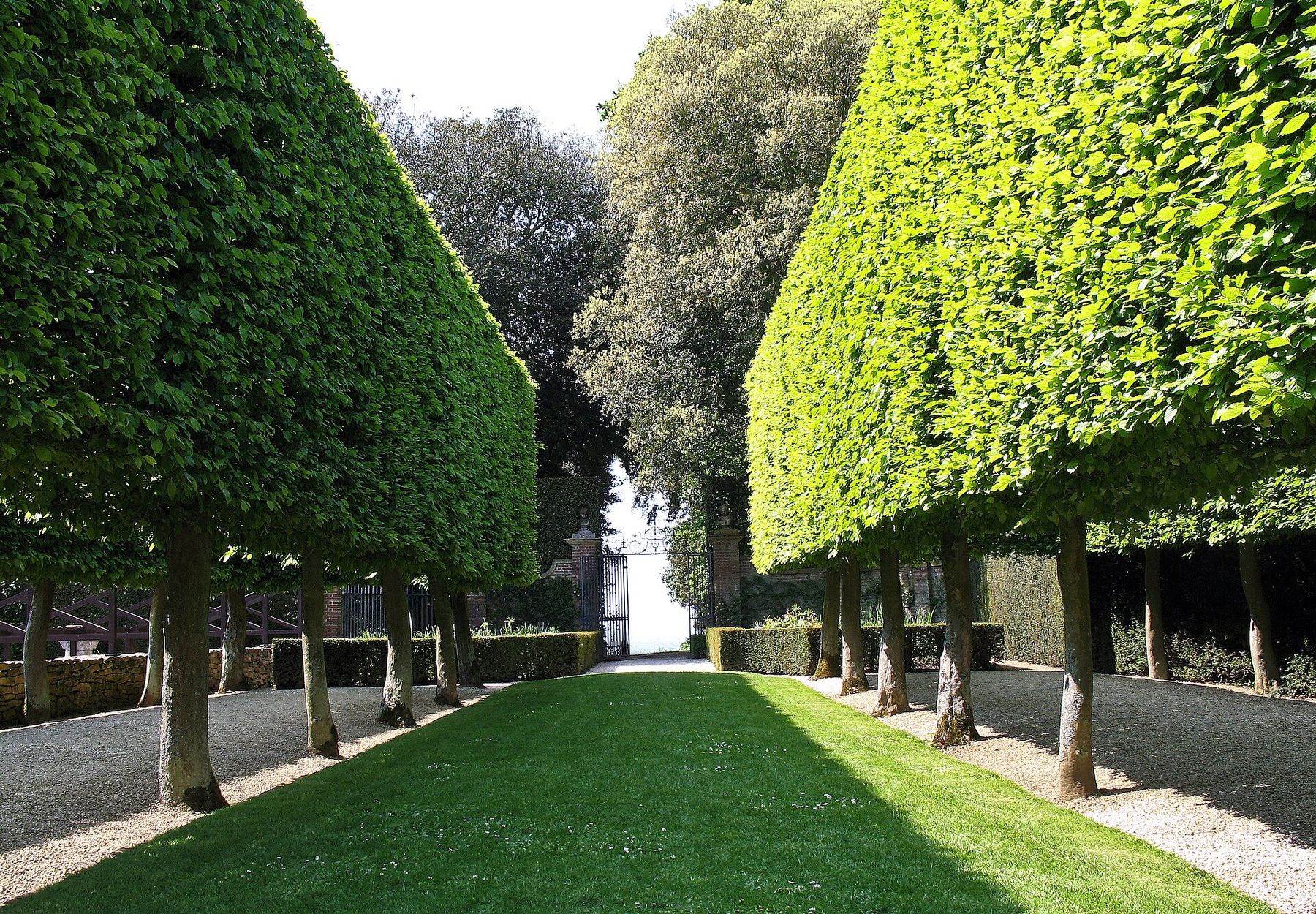
Hidcote Manor Garden — CC0.
Hidcote Manor Garden
One of the most influential Arts and Crafts gardens in England, owned by the National Trust. Hidcote is designed around a sequence of enclosed garden rooms separated by dramatic tall hedging, which gives the whole site a strongly architectural character. For painters, the geometry is the subject: the clipped forms, the sight lines between rooms, the contrasts of scale. Floral colour studies are possible throughout the season, but the structure of the garden works well even without peak bloom.
Spring and early summer offer the best colour; arrive early before the garden fills. National Trust entry applies and painting is permitted for personal non-commercial use. Check the National Trust website for the most current guidance before your visit.
Kiftsgate Court Gardens
A private garden immediately adjacent to Hidcote, less visited and worth knowing about as either an alternative or a complement for a full garden painting day. Kiftsgate is famous for its vast climbing rose (best in June and July) and has a terraced structure with views across the Vale of Evesham that extend the subject matter beyond the garden itself.
The garden opens on limited days, so check their website before planning a visit. Entry fees apply. The smaller scale means less pressure than Hidcote and, on the right day, a more relaxed session.
Open Landscape and Hilltop Views
The escarpment and outlier hills of the Cotswolds offer a completely different painting experience to the villages: wide panoramas, big skies, and exposure to the elements. These spots require some extra preparation.
Preparing for hilltop painting
Elevated spots like Cleeve Hill and Bredon Hill are exposed to wind and weather changes. Pack a windbreak or clip your paper down securely, bring an extra layer, and check the forecast before committing to a long session at altitude.
Cleeve Hill
At around 330 metres, Cleeve Hill is the highest point in the Cotswolds and gives you sweeping views across the Vale of Gloucester, the Malvern Hills, and on a clear day towards Wales. The escarpment edge is a strong compositional element, and the open common land means you can move freely to find your viewpoint. Sky studies and wide panoramic compositions are the natural subjects here.
Early morning light gives the best clarity and the most dramatic shadow across the vale below. Free parking is available at Cleeve Common car park off the B4632. This is open common land with no access restrictions, but it is very exposed; treat afternoon sessions in unsettled weather with caution.
Bredon Hill
An outlier hill sitting technically in Worcestershire but within the Cotswolds National Landscape, Bredon gives broad views across the Severn Valley to the Malvern Hills. Parsons Folly, a tower on the summit, works well as a compositional anchor in wider landscape studies. The rolling agricultural landscape below offers good foreground interest.
Sunrise visits in spring and autumn are particularly rewarding, when mist collects in the valley below and the light comes up warm behind you. Several access routes lead to the summit; Kemerton and Elmley Castle are common starting points. Check OS maps for the public footpath routes.
Dover's Hill
A natural amphitheatre near Chipping Campden owned by the National Trust, Dover's Hill offers open escarpment views across the Vale of Evesham with a relatively short walk from the car park. The site is historically associated with the Cotswold Olimpicks, an annual games held here since the 17th century. For painters, the appeal is the wide, gently curved escarpment and the sky that opens up above it.
Morning or evening light works best here. The National Trust car park is free, and the viewpoint is a short walk from the road. Accessible year-round with no restrictions.
Rivers, Villages, and Quieter Alternatives
Water subjects bring a different quality to Cotswolds paintings: reflections, movement, and the softer light that comes with riverside settings. These locations also include some useful alternatives to the most crowded spots.
Upper and Lower Slaughter
Two connected villages along the River Eye, linked by a footpath along the bank. Lower Slaughter has a working mill and a series of footbridges over the shallow river; Upper Slaughter is quieter still. The river walk between the two gives you a sequence of changing views: willows, stone bridges, cottages reflected in the water. It's one of the best combinations of subject variety for a single location in the Cotswolds.
Pay parking is available in Lower Slaughter. These villages are popular but manageable with an early start, and outside of summer the footpath is often genuinely peaceful.
Bourton-on-the-Water
The low stone bridges over the River Windrush running through the centre of Bourton are genuinely strong painting subjects. The village green alongside the river and the bridge reflections offer compositions that work well in watercolour or oil alike. The honest note is that Bourton-on-the-Water is the most visited village in the Cotswolds and in peak season it becomes very crowded indeed.
If you want to paint here, arrive early or visit between October and March. If crowds are a concern, Upper and Lower Slaughter offer similar water-focused subjects with considerably fewer visitors.
Moreton-in-Marsh
A market town with a wide, long high street of mixed limestone buildings and a Curfew Tower that provides an architectural focal point. The Tuesday market adds movement and colour to street scene compositions. Moreton-in-Marsh is also the most practical base for painters arriving without a car: it has a railway station with direct services from London Paddington via Oxford, making it the natural entry point for non-drivers. Several good locations are within cycling or taxi distance.
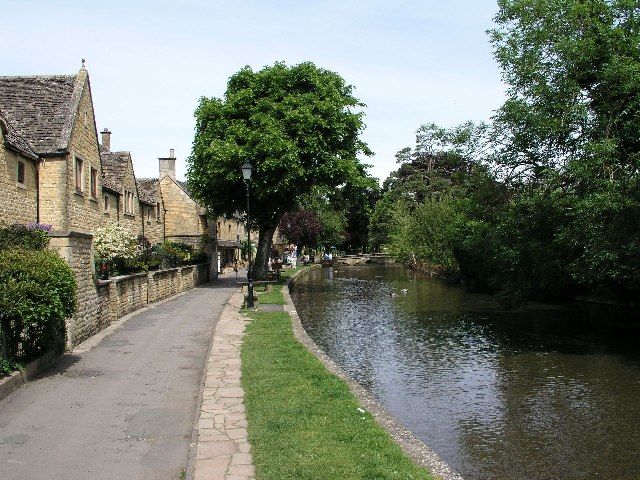
Bourton-on-the-Water — CC BY-SA 2.0 via Wikimedia Commons.
When to Visit the Cotswolds for Plein Air Painting
The Cotswolds works across all four seasons, but the experience varies considerably between them.
| Season | Light quality | Crowd level | Practical notes |
|---|---|---|---|
| Spring (March–May) | Warm morning light, good shadow definition | Building from low | Best balance of light, colour, and manageable crowds |
| Summer (June–August) | Long days up to 16 hours, but harsh midday light | High to very high | Arrive early; avoid peak hours at popular villages |
| Autumn (September–November) | Golden low-angle light, excellent for stone | Dropping off sharply | Arguably the best season overall for painters |
| Winter (December–February) | Very low angle light, dramatic shadows | Low | Short days and cold; rewarding for experienced painters with the right kit |
The quality of Cotswold limestone responds particularly well to low-angle light. In the warm months, that means the hour or two either side of sunrise and, to a lesser extent, the last hour before sunset. In autumn, the low sun sits in that useful range for much of the morning, which is why September and October are arguably the best months for painting the stone villages. The colour temperature shifts warmer in autumn too, which suits the amber tones in the limestone. Cool blue-grey shadows against warm stone is the defining palette of the region; it's most pronounced when the sun angle is low and the light is raking across the surface of the buildings.
Tips for Making the Most of a Painting Trip to the Cotswolds
- Arrive early, especially at Bibury, Bourton-on-the-Water, and Chipping Campden in summer. The difference between 7am and 10am at these locations in July is significant.
- Stay flexible with the weather. Afternoons in the Cotswolds can bring showers even in summer; plan your most ambitious sessions for the morning and keep afternoon slots for sketching or exploring new locations.
- Use the lesser-known villages as your primary destinations and the famous honeypots as early morning treats. Painswick, Blockley, and Snowshill offer comparable quality with far less pressure.
- Check National Trust policies in advance for Hidcote, Snowshill Manor, and Dover's Hill. Policies do occasionally change and a quick check before you travel avoids any difficulty on the day.
- Consider a base town for multi-day trips. Chipping Campden, Moreton-in-Marsh, and Cirencester all offer accommodation, services, and good access to a spread of locations. Moreton-in-Marsh is the best base for non-drivers.
- Seasonal parking charges apply at many sites from spring onwards. Carry change or check whether the car park has a payment app.
Go and Paint It
The Cotswolds is one of the best places in England for a painting trip, and the variety across villages, gardens, open escarpment, and river valleys means you could spend a week here and barely repeat a subject. Plan around the crowds rather than fighting them, use the quieter alternatives where they exist, and prioritise early morning light wherever you go. Before you travel, check access policies for any National Trust or private garden sites on your list, and confirm parking arrangements at your chosen locations. Then go and paint.
FAQ
Frequently Asked Questions
When is the best time to paint in the Cotswolds?
Early morning and autumn are best. Low-angle light in spring and autumn brings warm tones and clear shadows on the limestone. Arrive before 9am in summer to avoid crowds and get the best light.
Do I need permission to paint in National Trust gardens and private sites?
National Trust sites generally allow non-commercial personal painting but check each property's current policy. Private gardens require permission and commercial use needs explicit consent.
What are good alternatives to busy spots like Bibury and Bourton-on-the-Water?
Choose quieter villages such as Painswick, Snowshill, and Blockley, or riverside Upper and Lower Slaughter for similar subjects with far fewer visitors.
What should I pack for hilltop or escarpment painting sessions?
Bring a windbreak or clips for paper, extra warm layers, sun protection, and secure fastenings for canvases. Check the weather and plan for exposed conditions.
How should I plan for parking and crowds?
Arrive early, especially at popular villages, and expect pay-and-display charges from spring. Consider staying in a central base like Moreton-in-Marsh to reduce daily travel.
Author

PleinAirPainting Editorial Team
PleinAirPainting.co.uk helps artists paint outdoors with confidence through UK-focused guides, equipment advice, resources and plein air inspiration.