The Glasgow Boys and the Rise of Scottish Outdoor Painting
How the Glasgow Boys used plein air practice to transform Scottish painting. Practical lessons on location, tonal method, and where to see their work.

Key takeaways
- • A loose group of late 19th century Scottish painters who championed outdoor observation over academic studio art.
- • Their plein air practice was influenced by French naturalists and combined field studies with studio development.
- • They favoured southern Scotland locations such as Kirkcudbright and the Ayrshire coast for steady light and everyday subjects.
- • Key lessons: choose sites for light, focus on ordinary subjects, build paintings from tonal masses, and use outdoor studies in the studio.
- • Their work is held in Glasgow, Edinburgh and other UK collections and continues to influence contemporary outdoor painters.
Picture a Scottish farmyard in the early 1880s. Mud underfoot, geese picking around a kailyard, the light flat and cool off the fields. And somewhere in that scene, a young painter with an easel, working fast, trying to catch the weight of it before the sky changes. This is where the Glasgow Boys plein air story really begins: not in a gallery, not in an academy, but out in the ordinary working landscapes of southern Scotland, with painters who had decided that honest observation mattered more than polished artifice.
The Glasgow Boys were a loose group of Scottish painters who upended the conventions of their time by taking their work outside, embedding themselves in rural communities, and building a new aesthetic from direct experience of light, land, and labour. Their influence reached well beyond Scotland, and their legacy runs directly into the outdoor painting tradition that many UK artists still practise today. This article covers who they were, what drove them outside, and what their approach still has to offer anyone painting in the British landscape.
Who Were the Glasgow Boys?
The Glasgow Boys were approximately twenty painters, active from the late 1870s through the 1890s, connected by shared ideals rather than any formal membership or manifesto. There was no official founding, no joining fee, no president. What held them together was a common frustration with the art establishment and a shared conviction that painting needed to change.
Key figures included James Guthrie, whose austere rural realism anchored the group's early direction; John Lavery, whose fluid, cosmopolitan impressionism would later make him one of the most fashionable portrait painters in Europe; George Henry and E. A. Hornel, whose collaboration produced some of the most daring decorative work of the period; Edward Arthur Walton, a subtle colourist and close friend of Guthrie's; and James Paterson, who brought a quieter, more introspective note to the group's output. Many had trained in Paris before returning to Scotland. All were restless with what they found on their return.
A Rebellion Against Victorian Academic Painting
The Royal Scottish Academy in the 1870s and 1880s favoured a particular kind of painting: polished history pictures with literary or religious subjects, and sentimental Highland scenes populated with misty glens, stags, and kilted figures. These were accomplished works in their way, but to a generation of young painters who had spent time in Paris and seen what Courbet, Millet, and the naturalists were doing with rural life, the formula felt exhausted.
The Boys were not interested in constructing noble or picturesque visions of Scotland. They wanted to paint what they actually saw: farm labourers, goose-girls, potato gatherers, the particular grey-green light of a Galloway afternoon. This was not just a stylistic preference; it was a values argument about what painting was for.
What Took Them Outside: French Influence and the Glasgow Boys' Plein Air Impulse
The single most important outside influence on the Glasgow Boys was the French painter Jules Bastien-Lepage, whose combination of rural subject matter, tonal restraint, and direct observation from nature made him enormously influential across Europe in the late nineteenth century. The Boys absorbed Bastien-Lepage's approach with genuine enthusiasm, alongside a broader engagement with Courbet's earthy realism and Millet's dignity in depicting agricultural labour.
Many of them spent time at Grez-sur-Loing, the artists' colony south of Paris where Bastien-Lepage's influence was felt strongly. The colony model itself was formative: painters living and working together in a rural setting, sharing criticism, pushing each other. When they returned to Scotland, they replicated this approach in their own chosen locations.
It is worth being precise about what "en plein air" actually meant for this group, and honest about what it did not mean. The Glasgow Boys were not strict all-weather outdoor painters in the way the term sometimes implies. Some works were developed from outdoor studies back in the studio; some involved photographs as reference. Their practice was hybrid, and there is nothing shameful about that. What distinguished them was the commitment to working from direct observation, to building pictures from tonal masses and light effects rather than from studio-composed narratives, and to embedding themselves in the communities and landscapes they painted. The work feels of the place because it was made of the place, even if not every square inch was laid down in the field.
Their brushwork reflects this approach: broad, blocky strokes that prioritise tonal structure over fine detail, building from large value shapes toward specific observation. This is not impressionism in the French high-key sense, and it is worth saying so clearly. The "Scottish Impressionists" label gets applied to them occasionally, but it is contested and somewhat misleading. Their palette was often more sombre, their interest in rural realism more specific, than their French contemporaries.
James Guthrie and the Art of Painting What You See
Of all the Glasgow Boys painters, James Guthrie is perhaps the most useful to study if you want to understand what the group were actually doing with their outdoor practice. Largely self-taught as a painter (he began as a law student before committing to art), Guthrie had a directness of vision that was not smoothed away by academic training. His rejection of Royal Scottish Academy orthodoxy was not a gesture; it was built into how he approached every canvas.
His early work from the Borders and Galloway is remarkable for its austerity. In paintings like To Pastures New (1883), the subject is almost aggressively ordinary: children crossing a field, geese, flat light. There is no drama, no picturesque arrangement. The difficulty is the point; how do you make a picture out of something this quiet without either sentimentalising it or losing it entirely?
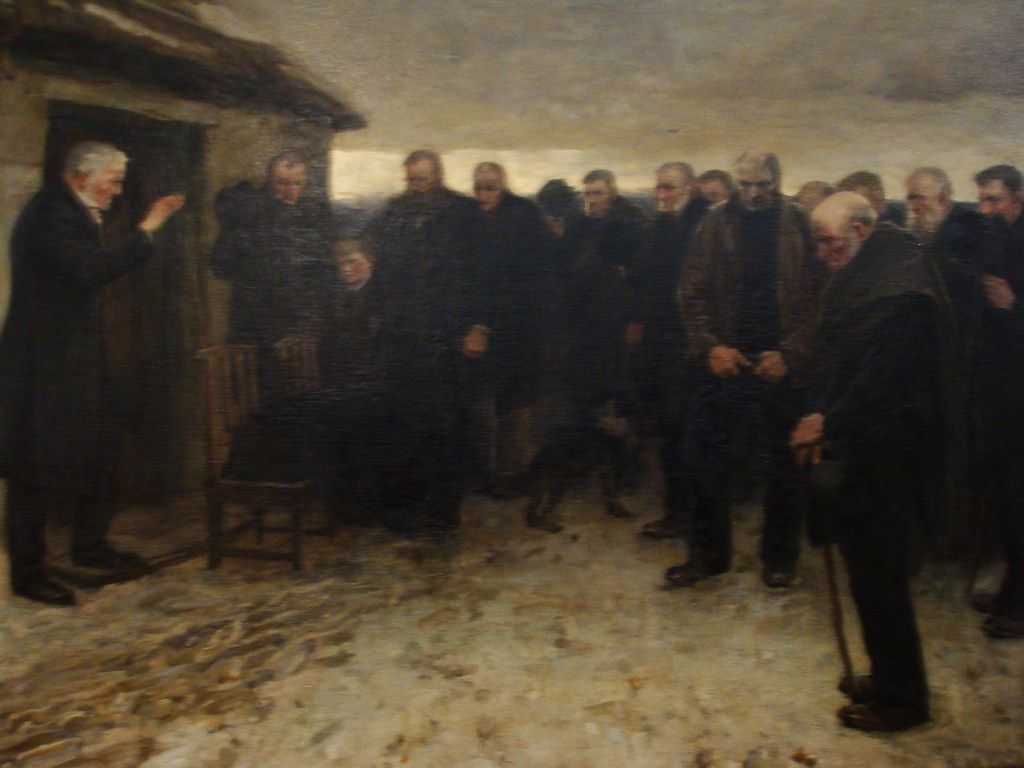
Photograph by Ben Sutherland of the painting 'A Highland Funeral' by James Guthrie. by Ben Sutherland / Flickr / CC BY 2.0
A Highland Funeral (1882) remains one of Guthrie's most powerful early paintings, and it already shows the group's approach in full: a large outdoor canvas, figures in a landscape, tonal masses doing the compositional work, no concession to the expected grandeur of a Highland subject.
Worth knowing
Guthrie's *Midsummer* (1892) is held in the National Gallery of Scotland's collection and can be viewed in Edinburgh. Seeing it in person gives a real sense of how the Boys handled light on a large outdoor canvas.
Across the group, individual trajectories diverged considerably within the shared plein air framework. Guthrie moved toward a sober, increasingly assured realism. Henry and Hornel developed a decorative japonisme that was startling for its time. Lavery became the most cosmopolitan of them all, his impressionism more fluid and fashionable than anything the others attempted. The shared foundation was outdoor observation and tonal discipline; what each painter built on that foundation was their own.
Where They Painted: Scottish Locations Then and Now
One of the most revealing decisions the Glasgow Boys made was where to work. They did not head for the romantic Highlands, with its established associations with Landseer and the picturesque tradition. Instead, they chose southern and western Scotland: Galloway, Ayrshire, the Borders, the modest agricultural country south and west of Glasgow. This was a deliberate choice, and the logic behind it is practically useful for any outdoor painter.
Softer terrain means more consistent light. Southern Scotland's rolling farmland and coastal villages offered the kind of sustained observation that dramatic Highland scenery, with its rapidly shifting weather and high contrast, makes harder to achieve. The Boys wanted to look carefully, and they chose places that allowed that.
Kirkcudbright in Dumfries and Galloway became the key colony. Guthrie, Henry, and Hornel all worked here, and some of their most radical outdoor painting was made in and around the town. Kirkcudbright is still a working artists' town today: compact, accessible by road from Glasgow or Edinburgh, with a picturesque harbour and the kind of modest, particular beauty that rewards careful observation rather than sweeping panorama.
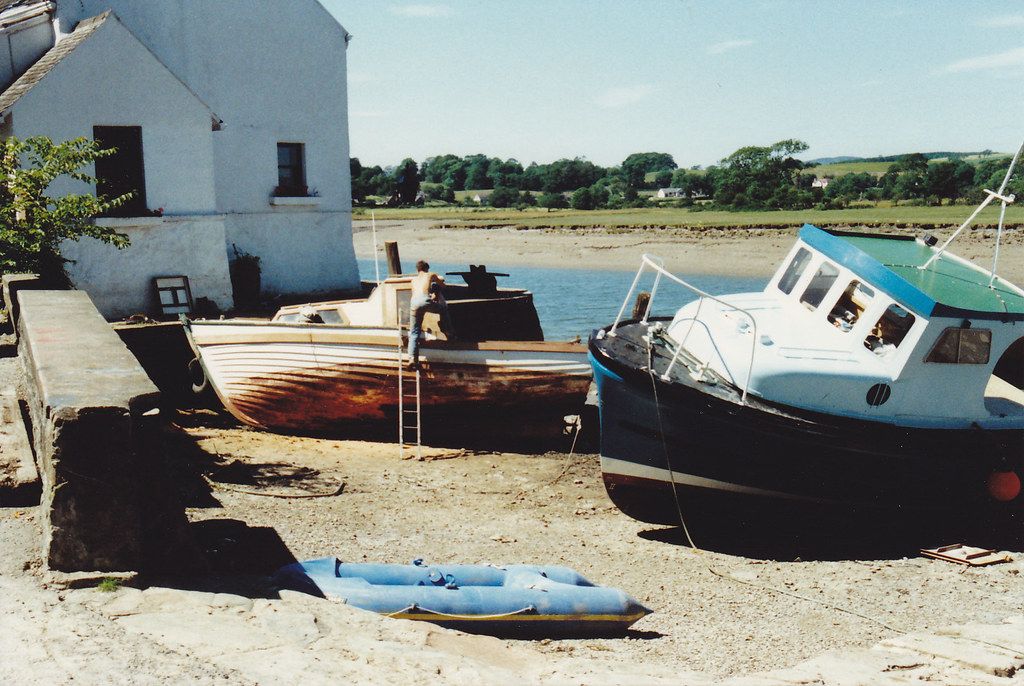
Harbour House in Kirkcudbright with boats, July 1989. by alljengi — Flickr via Openverse; CC BY-SA 2.0.
| Location | Why they painted there | For plein air painters today |
|---|---|---|
| Kirkcudbright, Dumfries & Galloway | Favoured colony; Guthrie, Henry and Hornel worked here | Picturesque harbour town, accessible by road from Glasgow or Edinburgh |
| Ayrshire coast | Coastal farming communities; rural life subjects | Wide skies, farmland and coastline; still underpainted by visiting artists |
| Glasgow surroundings | Easy base; studio networks and urban subjects | Urban plein air painting opportunities; strong gallery infrastructure nearby |
| Grez-sur-Loing, France | International colony; key formative period | Historical reference; shows their connection to European naturalist tradition |
The Ayrshire coast is another area worth noting. Coastal farming communities provided the Boys with exactly the combination they were after: ordinary working life, open skies, and coastal light. This stretch of southwest Scotland is still relatively undiscovered by visiting painters, which makes it genuinely appealing for anyone looking to find unspoiled painting ground within comfortable distance of Glasgow.
What Their Approach Can Teach Us Today
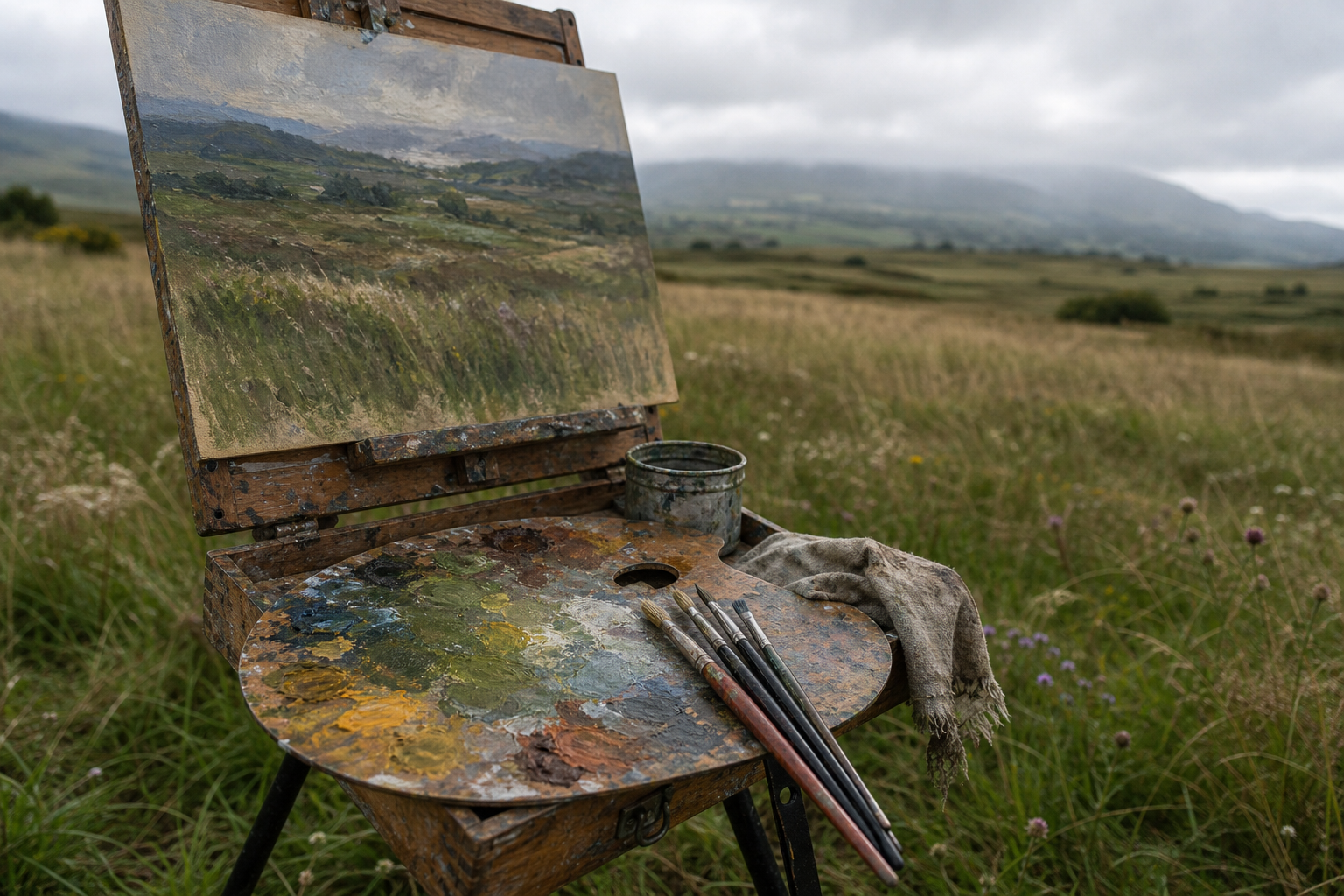
The Glasgow Boys' practice translates into concrete, usable lessons for contemporary outdoor painters. None of these are abstract; all of them can be taken to your next session.
1. Choose locations for the quality of light, not just the drama. The Boys chose southern Scotland over the Highlands not because it was more beautiful, but because it gave them conditions they could actually work in. Before your next painting trip, ask whether the place gives you something interesting to observe, not just something impressive to photograph.
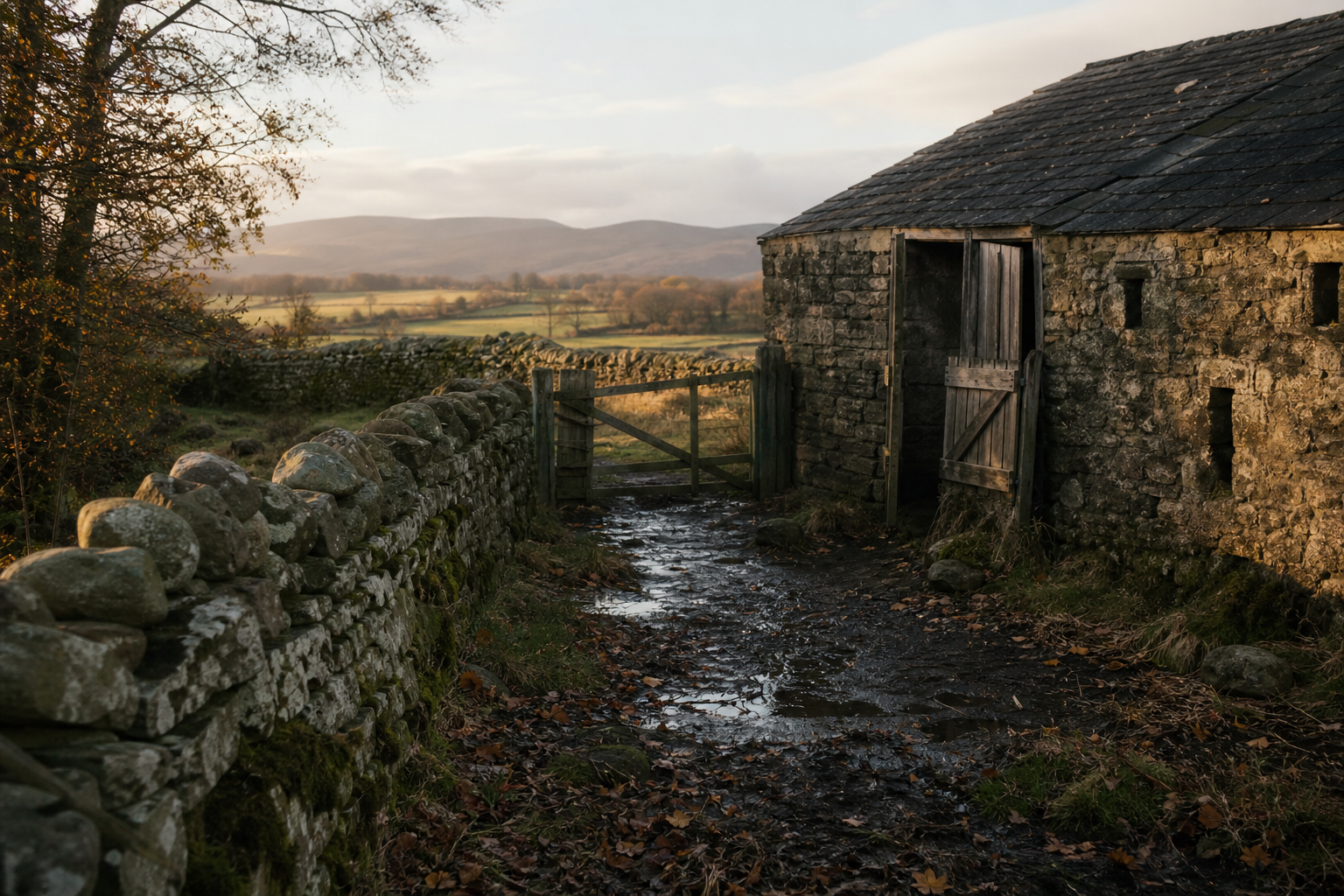
2. Find the ordinary, not the monumental. Potato gatherers, goose-girls, farmyard geese: these were the Boys' subjects by choice. The everyday is rich material. A field gate, a farm track, a harbourside wall in flat morning light, these give you something to really look at, rather than a view that overwhelms you into passivity.
3. Think in tonal masses first. The broad, blocky handling that characterises the best Glasgow Boys work is not a style tic; it is a compositional method. Build your painting from large value shapes before adding observation of colour and detail. This is particularly useful when working quickly outdoors, where the light will change before you can resolve everything.
4. Use outdoor studies to feed studio work, and don't apologise for it. The Glasgow Boys worked in a hybrid way: studies outside, development in the studio. This is an honest model for UK painters who are all too familiar with a promising sky turning to grey drizzle mid-session. There is no shame in taking a strong outdoor study indoors to resolve. The key is that the outdoor observation drives the final picture.
5. Paint with others. The colony model, painters working together in a shared location, sharing critique, pushing each other toward more honest observation, is one of the most underrated accelerators in any artist's development. The Glasgow Boys did not develop their approach in isolation. Contemporary painting days, workshops, and local societies offer exactly this kind of community, and it matters.
A lesson from the Boys
They chose locations for the quality of light and access to everyday life, not just dramatic scenery. Before your next session, ask whether the place gives you something genuinely interesting to observe, rather than just something impressive to look at.
Where to See Their Work: UK Collections
You do not need to travel far to encounter the Glasgow Boys in person. Their work is spread across several major UK collections, and the quality of what is on public display is genuinely impressive.
Glasgow Museums holds works by most of the painters associated with the group. The Kelvingrove Art Gallery and Museum is the most accessible starting point, with a strong permanent collection that gives a clear overview of the group's range and development.
The National Galleries of Scotland in Edinburgh treat the Glasgow Boys as central figures in Scottish modernism. Key works are held here, including paintings by Guthrie, and the galleries' online essays provide a solid historical framework for readers who want to go deeper.
The Hunterian Art Gallery at the University of Glasgow emphasises the Boys as the most radical Scottish painters of their generation, with holdings that include significant works and strong contextual material.
The Fleming Collection in London frames the Glasgow Boys alongside other Scottish painters, with emphasis on their mastery of light and colour. It is a useful resource for readers based in England who want to encounter the work without travelling to Scotland.
For works spread across UK regional collections, Art UK is invaluable. The platform aggregates publicly held art from institutions across the country, and a search for individual Glasgow Boys painters will surface works you might not otherwise know existed in accessible collections near you.
A Legacy That's Still Painting
The Glasgow Boys' influence did not end with the 1890s. The outdoor painting tradition they helped establish in Scotland is alive and active today, in workshops across Ayrshire, in painting groups working on the Western Isles, in the practice of contemporary Scottish plein air artists who are drawing on exactly the same landscape and the same principles of direct observation.
Contemporary Scottish painters like Howard Butterworth and Pascale Rentsch work in ways that feel genuinely continuous with what the Boys were doing: painting from life, respecting local conditions, letting weather and landscape drive their decisions rather than forcing a preconceived image onto the scene. The ethos has not changed, even if the materials and contexts have.
The particular legacy of the Glasgow Boys for outdoor painters in the UK is not about style or period. It is about attitude: get outside, choose your location thoughtfully, look at what is actually in front of you rather than what you expected to see, and build your picture from honest observation. That is as useful a set of principles in a Galloway farmyard today as it was in 1885.
If you have never been to Kirkcudbright, it is worth going. Take your easel. The harbour is right there, the light is good in the mornings, and you will be working in a place where some of the finest outdoor painting in British art history was made. The Boys would have approved.
FAQ
Frequently Asked Questions
What does Glasgow Boys plein air mean?
It refers to the outdoor painting practice of a loose group of late 19th century Scottish painters who worked from direct observation in rural settings rather than in the academic studio.
Where did the Glasgow Boys chiefly paint?
They worked mainly in southern and western Scotland, especially Kirkcudbright, the Ayrshire coast and the Borders, choosing places for steady light and everyday rural life.
Who influenced their outdoor approach?
French naturalists like Jules Bastien-Lepage, along with Courbet and Millet, shaped their focus on tonal observation and honest depictions of rural labour.
Did they paint everything entirely outdoors?
No. Their practice was hybrid: outdoor studies and tonal sketches informed studio work. They prioritised direct observation but often developed paintings indoors.
How can modern plein air painters use their methods?
Choose locations for light quality, seek ordinary subjects, start with tonal masses, use outdoor studies to feed studio work, and paint with peers to sharpen observation.
Author

PleinAirPainting Editorial Team
PleinAirPainting.co.uk helps artists paint outdoors with confidence through UK-focused guides, equipment advice, resources and plein air inspiration.