The Camden Town Group and Landscape Painting: What These Artists Can Teach Outdoor Painters Today
Practical guide to Camden Town Group landscape painting and what outdoor painters can learn from their focus on ordinary parks, suburbs, allotments and working with grey British light.

Key takeaways
- • Camden Town Group landscape painting treats ordinary urban and suburban places as serious subjects for Post-Impressionist study.
- • Key landscape artists include Spencer Gore, Harold Gilman, Charles Ginner, Robert Bevan, William Ratcliffe and James Dickson Innes.
- • Practical lessons for plein air artists: choose unremarkable sites, work with British overcast light, simplify into large shapes, and return to the same place.
- • Their work links Victorian naturalism to inter-war modernism and remains visible in major collections such as Tate Britain.
Most people who've heard of the Camden Town Group picture gloomy bedsit interiors, reclining nudes, and the long shadow of Walter Sickert's mythology. But Camden Town Group landscape painting tells a different, and in many ways more interesting, story: one of parks, suburban streets, garden cities, and rain-grey allotments treated with the same seriousness as any grand vista. For anyone painting outdoors in Britain today, that story has a great deal to offer.
Who Were the Camden Town Group — and Why Do Landscapes Matter?
The Camden Town Group was founded in 1911, under Walter Sickert's leadership, by sixteen male painters working mainly in and around north London. They held three exhibitions at the Carfax Gallery between 1911 and 1913, showing work that was rooted in Post-Impressionism: the broken brushwork and structural approach to colour developed in France by Cézanne, van Gogh and their contemporaries, applied here to the specific textures of British modern life.
The name came from the district where Sickert and Spencer Gore lived and worked. Camden in the early twentieth century was not picturesque. It was crowded, noisy and ordinary, and that ordinariness was, for these painters, exactly the point.
The popular association with seedy interiors and nudes is only part of the picture. Current scholarship, including Tate's Camden Town Group in Context research project and the work of art historian Ysanne Holt, establishes landscapes as central to what these artists actually exhibited and produced. The key landscape painters within the group are Spencer Gore, Harold Gilman, Charles Ginner, Robert Bevan, William Ratcliffe and James Dickson Innes. These are the names the rest of this article hangs on.
The Landscapes Camden Town Painters Actually Made
The range of landscape subjects these painters tackled is wider than most introductions to the group suggest. Rather than a single type of scene, they moved between the edges of the expanding city, planned new towns, rural lanes and patches of urban nature. What connects these different subjects is an attitude: a willingness to find structure and meaning in places that Victorian painting had largely overlooked.
Edges of the City
Spencer Gore was perhaps the most consistently engaged with landscape of all the Camden Town painters. His views of Richmond Park show open grassland and lines of trees handled with a directness that owes something to Cézanne but feels entirely grounded in a specific English place. These are not grand parkland compositions in the tradition of earlier British landscape painting. They're ordinary recreation spaces, caught in a particular light, on a particular afternoon.
Gore also painted the new suburbs pushing out from London. Letchworth Garden City, one of the first planned towns in England, appears in several of his works alongside those of Gilman and Ratcliffe. These are paintings of building sites and fresh-laid streets, landscapes in the process of becoming. The expansion of London and its fringes was understood by Gore as a legitimate subject for serious painting, at a time when many artists still considered such places too prosaic to bother with.
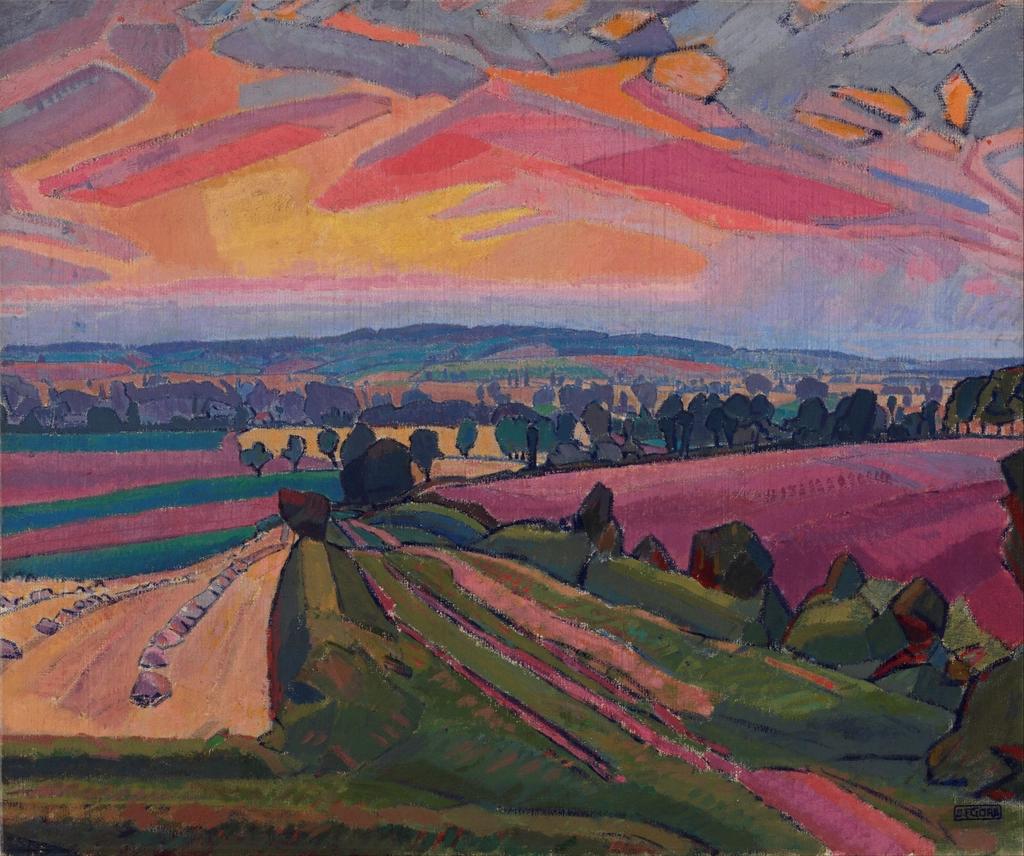
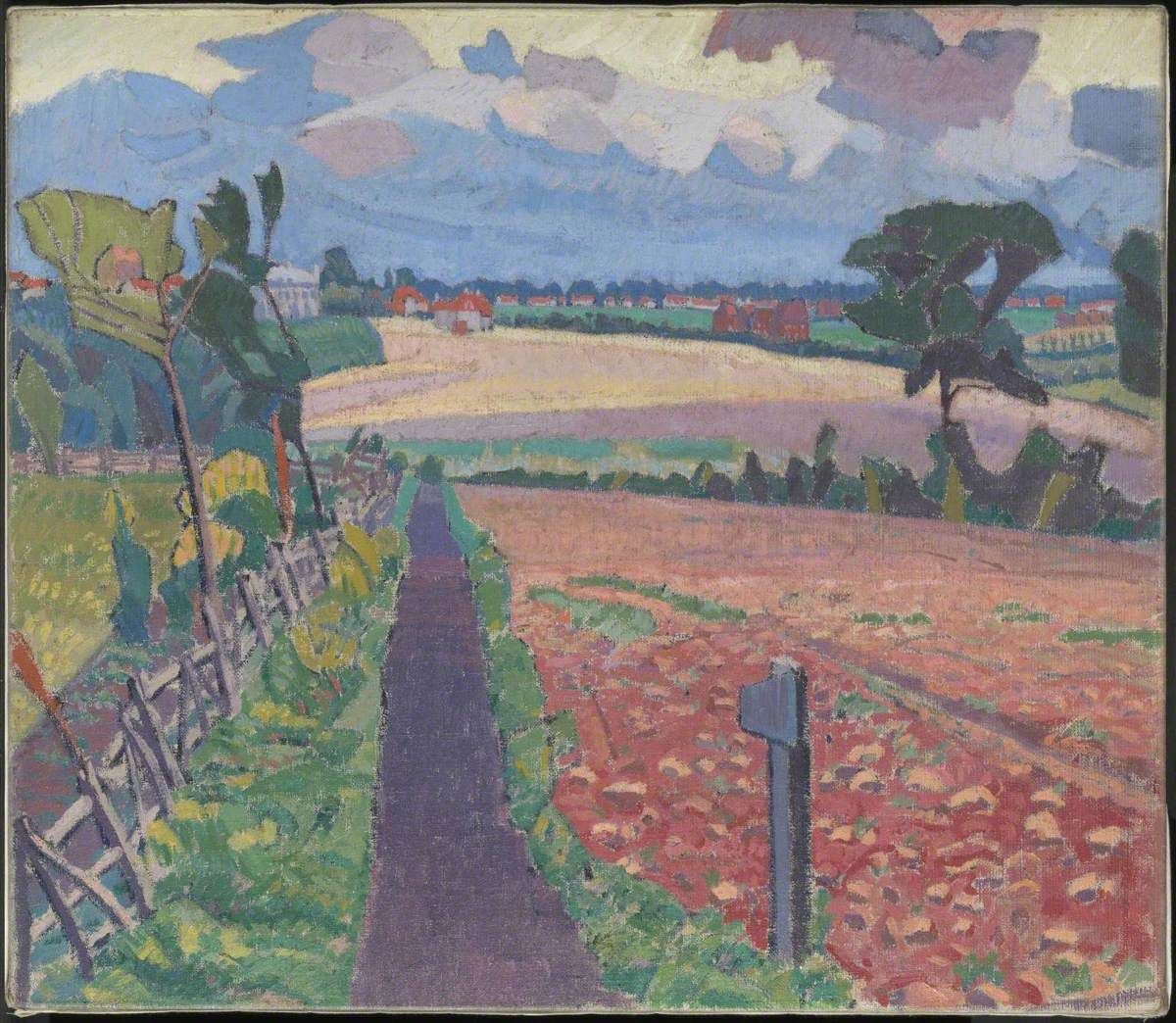
Icknield, an abstract landscape painting by Spencer Frederick Gore. by rawpixel — CC0 1.0 (https://creativecommons.org/publicdomain/zero/1.0/)
Suburban Streets and Garden Cities
The connection between Camden Town and Letchworth was the subject of Camden Town to Garden City, an exhibition held at North Hertfordshire Museum in 2024. It drew out how Gore, Gilman and Ratcliffe moved between their north London studios and the open, planned landscapes of Hertfordshire, treating both with equal visual seriousness.
This is quietly radical. Suburban and new-build landscapes, treated not as failures of the picturesque but as valid and interesting subjects, were unusual territory in British painting at the time. For contemporary UK painters working around housing estates, ring roads and retail-park fringes, there's a direct line of permission running from these works.
Rural Lanes and Small Places
Charles Ginner's Neuville Lane (1911) is a useful anchor here. Thick, deliberate paint application, a modest village lane, no dramatic view, no obvious compositional hook. What carries the picture is the structural confidence of the brushwork: every stroke asserting the weight and texture of the scene. Ginner and his peers brought a modern sensibility to rural subjects, one that had nothing to do with Victorian pastoral nostalgia and everything to do with how a place actually looks and feels under grey northern light.
Nature Inside the City
Parks, back gardens, allotments and railway cuttings all appear in Camden Town landscapes. Ysanne Holt's phrase "glimpses of nature" captures this well: small pockets of green life framed by terraces, factory chimneys, and rooftops. For painters based in London or any other British city, this is one of the most useful legacies of the group. You don't have to leave the city to find a landscape worth painting. You just have to look at it differently.
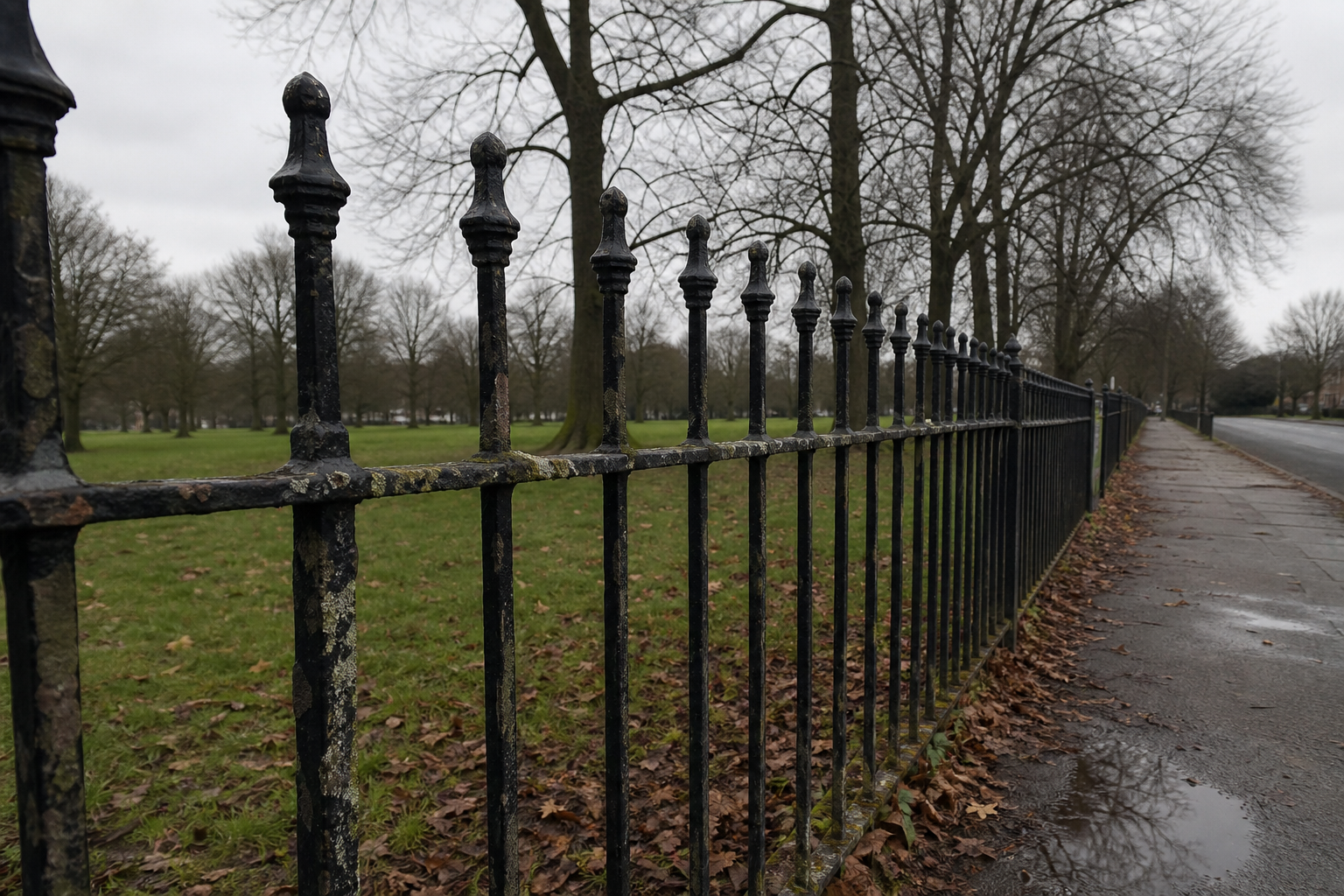
What counts as landscape?
For Camden Town painters, a back garden glimpsed between terraces or an allotment behind a railway cutting was as valid a landscape as a view across open fields. If you're based in a city, that's permission to paint what's actually around you.
Walter Sickert and the Landscape Question
It's worth being honest about Sickert's relationship to landscape painting: he wasn't primarily a landscape painter, and treating him as one would be misleading. His importance to the Camden Town landscapes is methodological rather than direct. He insisted on painting from direct observation of everyday life, on treating ordinary spaces with the same compositional rigour you might bring to a formal subject. That insistence shaped the younger painters around him.
His approach to tonal structure, building a picture from large, simplified masses of tone before adding detail, gave Gore, Gilman and others a way of organising complex, visually busy outdoor scenes. The "Sickert lesson" for a plein air painter isn't about landscapes specifically. It's about how to look at a place: how to crop it, how to stage it, how to find the underlying architecture in what might initially seem like an undifferentiated street or park edge. That's a transferable skill, and it runs through the Camden Town landscape work even where Sickert himself wasn't holding the brush.
Where Camden Town Group Landscape Painting Fits in British Art
Camden Town Group landscape painting occupies a specific and important place in the broader history of British modern landscape painting. It's worth understanding what that place is, rather than treating the group as a colourful footnote.
Post-Impressionism in a British key. Post-Impressionism, in the broadest sense, describes the generation of painters who built on Impressionism while pushing towards greater structure, expressive colour and compositional boldness. In France this often meant Mediterranean sunshine, strong shadows, and saturated colour. In Camden Town it meant grey parks, damp allotments and overcast suburban streets. The formal language was similar; the weather and the light were entirely different. That's what makes these paintings so directly relevant to UK outdoor painters. This is Post-Impressionist thinking applied to exactly the conditions you're likely to encounter on a Tuesday morning in October in north London or any comparable British city.
A bridge between Victorian naturalism and inter-war modernism. The Camden Town painters didn't emerge from nowhere, and they didn't disappear without trace. They absorbed the traditions of British naturalistic landscape painting and pushed them forward. Their structural approach to landscape helped prepare the ground for what Paul Nash, Ben Nicholson and the inter-war British modernists would do with landscape subjects from the late 1920s onwards. Camden Town is not a cul-de-sac in British art history. It's a through line, connecting earlier traditions to the modernism that followed.
Ongoing institutional recognition. Tate holds 127 works by 18 Camden Town Group artists, the largest collection of its kind in the world, many on regular display at Tate Britain. The Camden Town Group in Context research project has been updated through 2025 and 2026, and current British landscape exhibitions at institutions such as Pallant House Gallery and through the Arts Council Collection continue to place these painters within living traditions. These are not historical curiosities. They're active participants in current conversations about British landscape art.
Camden Town Group at a glance
- Founded
- 1911
- Active years
- 1911–1913
- Members
- 16 male painters
- Tate collection
- 127 works
- Landscapes in exhibitions
- Substantial proportion
Under Walter Sickert's leadership
Three exhibitions at Carfax Gallery
Including Gore, Gilman, Ginner, Bevan
Largest Camden Town collection in the world
Often overlooked in popular accounts
Camden Town Group Landscape Painting — What Outdoor Painters Can Take From It
The history is interesting in its own right, but the most useful thing this article can offer a practising outdoor painter is something concrete to carry to their next session. Here are four ideas drawn directly from how the Camden Town painters worked.
Look at the Ordinary Places
The Camden Town artists chose suburban streets, small parks and minor rural lanes over iconic views. They painted places that most of their contemporaries considered beneath serious attention. For a UK plein air painter working today, this might mean a canal towpath, a housing estate boundary, a retail-park fringe, or a stretch of rewilded ground beside a railway cutting. The permission to paint the unremarkable, to treat it with the same visual intelligence you'd bring to a celebrated landscape, is one of the most useful legacies these painters left behind. If you've been waiting for a more photogenic location, stop waiting.
Work with British Weather, Not Against It
Their paintings frequently show overcast skies, damp light and muted colour. This wasn't a compromise. It was a choice. They used structure and paint quality to carry the picture rather than relying on dramatic light effects. For any UK plein air painter who's spent a session frustrated by flat, grey conditions, this is a genuinely useful reframe. Golden hour is lovely when it arrives, but it's not necessary. The picture can work just as well, sometimes better, in the steady, diffuse light of an overcast British afternoon.
Think in Shapes, Not Just Scenes
Ginner and Bevan in particular simplify fields, rooftops and tree masses into interlocking planes of tone and colour. Before picking up a brush, identify the three or four large tonal masses in your scene. Where are the darks? Where are the lights? What are the main shapes? This structural approach works especially well in small formats and short sessions, where there isn't time to build up detail gradually. Getting the shapes right first means the picture holds together even if the light changes before you're finished.
Return to the Same Place
Many Camden Town landscapes came from repeated visits to the same park, street or field. Working in series, exploring slight variations on the same composition across different seasons or times of day, suits tight UK schedules and limited daylight hours. It also tends to produce stronger work than endlessly chasing new locations. Familiarity lets you stop solving the basic compositional problem and start making more interesting decisions. Choose a place you pass regularly and commit to it for a month. The paintings will surprise you.
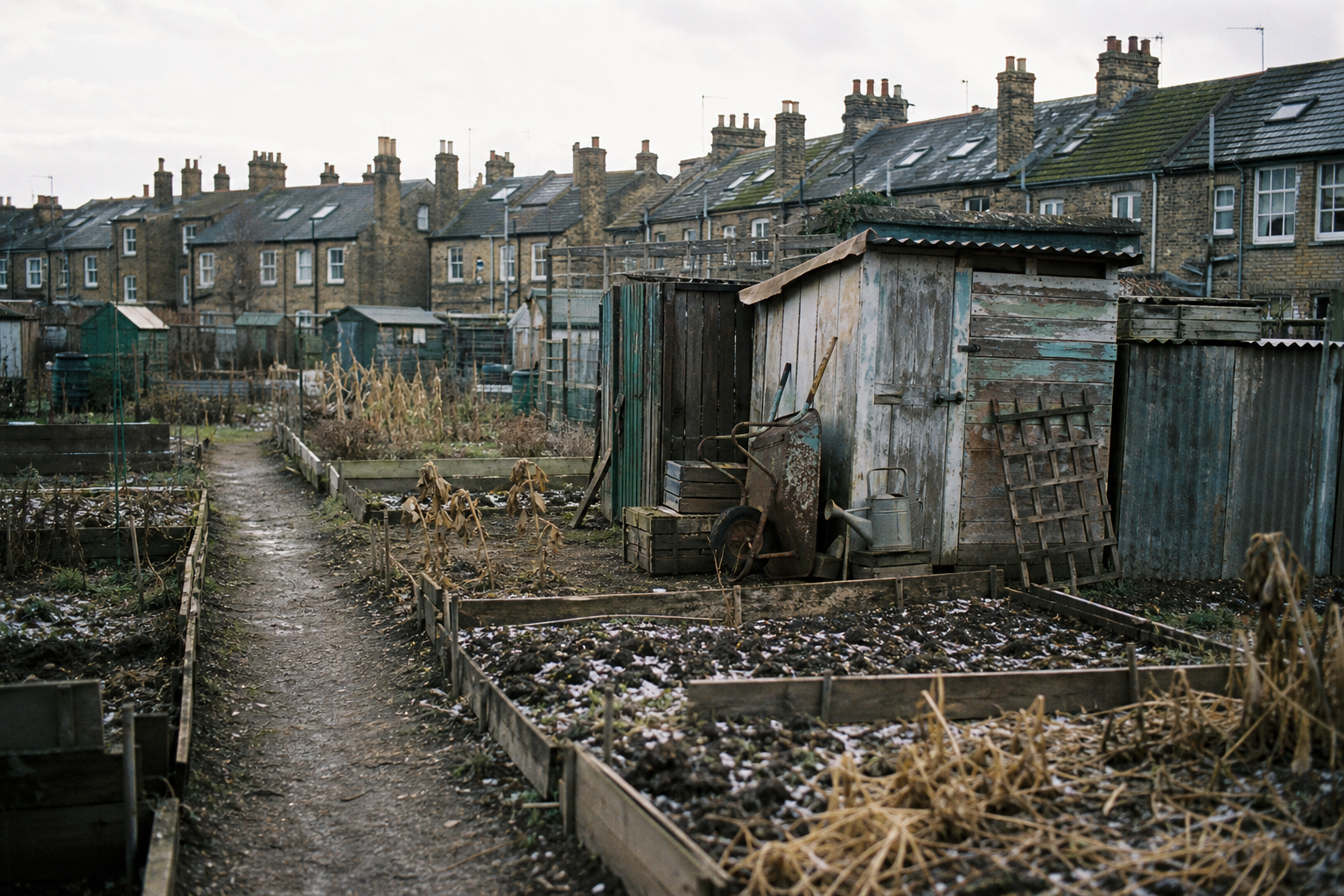
A Camden Town-inspired approach to a familiar place
Choose the unremarkable
Pick somewhere you pass regularly — a park edge, a terrace end, a canal bank. Familiarity is an advantage, not a limitation.
Simplify into shapes
Before picking up a brush, identify the three or four large tonal masses. Ginner and Bevan built pictures on structure, not detail.
Work with your weather
Overcast? Use it. Flat light reveals shape and colour without the distraction of dramatic shadows. Let the paint quality carry the picture.
Come back
Return to the same spot at least once. Slight changes in season, light or your own eye will produce a different — often better — picture.
Where to See Camden Town Landscapes in the UK
Tate Britain, London is the obvious starting point. With 127 works by 18 Camden Town Group artists, it holds the largest concentration of this work anywhere in the world. Many pieces are on regular display, and Tate's online collection is excellent for research, with high-resolution images and detailed scholarly notes for most works.
Art UK has a curated Camden Town Group selection that maps works to regional collections across England and Wales. This is particularly useful if you're outside London and want to find a nearby holding. Several regional galleries carry individual works by Gore, Gilman, Ginner and Bevan that don't always make it into headline shows.
North Hertfordshire Museum hosted the Camden Town to Garden City exhibition through to June 2024. The show has closed, but the museum has longstanding connections to this material and is worth checking for current holdings, particularly works related to the Letchworth subjects.
Beyond Camden Town specifically, exhibitions such as Pallant House Gallery's ongoing British landscape programming and the Arts Council Collection's Close Encounters (June 2026) place these painters within a broader and still very active tradition of British landscape art. Seeing a Gore or a Ginner alongside more recent British landscape painters is a reminder that the concerns these artists were working through have never really gone away.
The weather these Camden Town painters stood in was the same weather you'll face on your next outdoor session: changeable, often grey, occasionally brilliant, always specific to this island. They found it endlessly worth painting. So can you.
FAQ
Frequently Asked Questions
What is Camden Town Group landscape painting?
It refers to works by the Camden Town Group that apply Post-Impressionist structure and colour to ordinary British places such as parks, suburbs, lanes and allotments.
Who were the key landscape painters in the group?
The main landscape painters included Spencer Gore, Harold Gilman, Charles Ginner, Robert Bevan, William Ratcliffe and James Dickson Innes.
What kinds of scenes did they paint?
They painted edges of the city, garden cities and new suburbs, rural lanes, small parks, back gardens and allotments, treating these everyday places with equal seriousness to grand vistas.
How can plein air painters use their approach today?
Look for ordinary locations, work with flat or overcast light, simplify the scene into three or four large tonal shapes, and revisit the same place to build a series of stronger studies.
Where can I see Camden Town landscapes in the UK?
Start at Tate Britain, consult Art UK for regional holdings, and check regional museums such as North Hertfordshire Museum and current exhibitions at Pallant House and Arts Council venues.
Author

PleinAirPainting Editorial Team
PleinAirPainting.co.uk helps artists paint outdoors with confidence through UK-focused guides, equipment advice, resources and plein air inspiration.