Winston Churchill: The Painter Who Took His Easel Outdoors
A focused look at Winston Churchill the painter: his Chartwell landscapes, Mediterranean canvases, compact plein air kit, and lessons for painters on habit, repetition, and adapting to light.

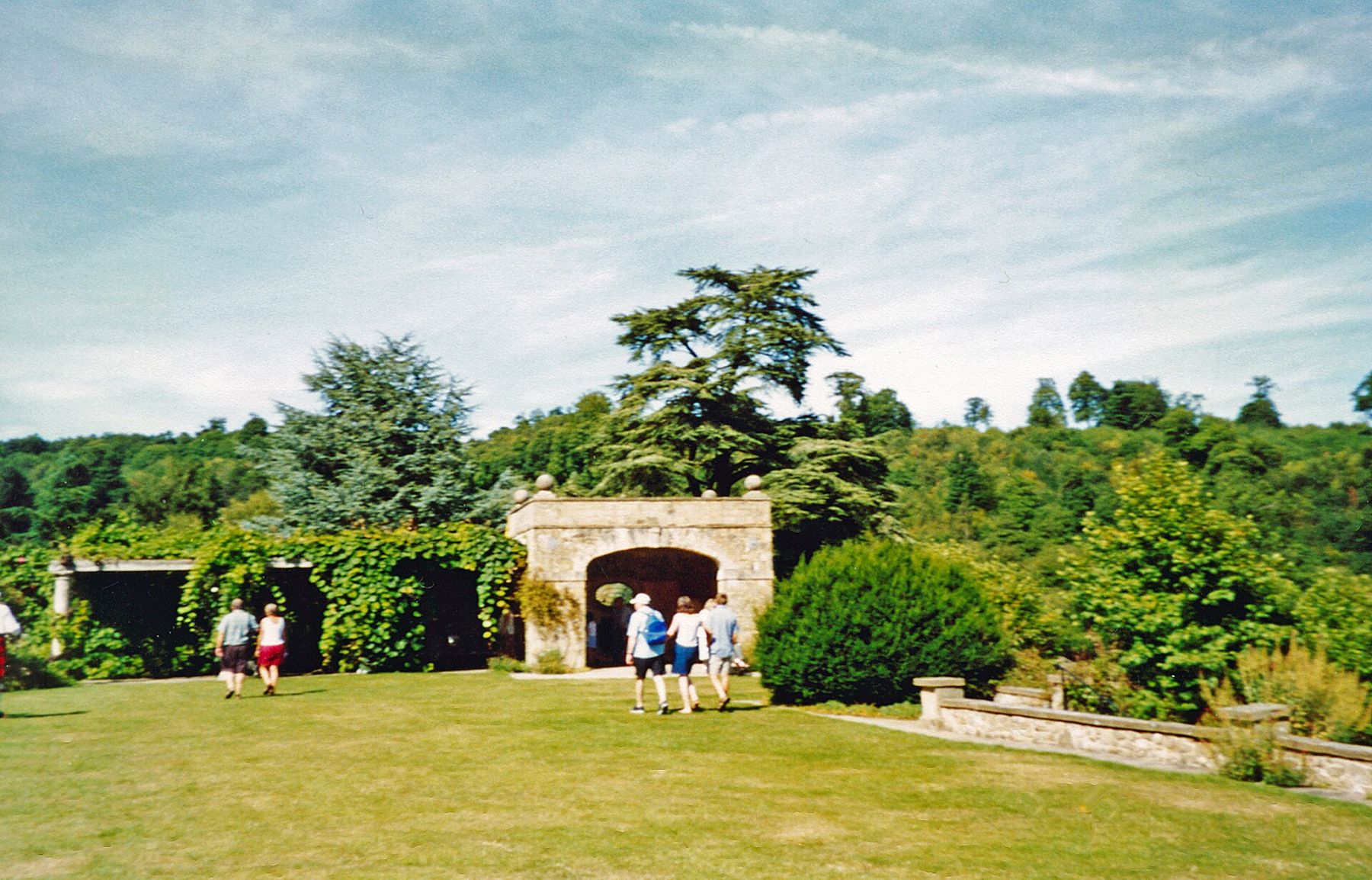
Chartwell House seen across the garden, Westerham, Kent.
Credit: Ben Brooksbank — geograph.org.uk — CC BY-SA 2.0
Key takeaways
- • Churchill began painting seriously at forty one and sustained a practice for about fifty years, making 550 plus canvases.
- • He painted outdoors frequently, favouring Chartwell landscapes and sunlit Mediterranean and North African scenes.
- • Oils were his primary medium and he used a compact, portable paint box for active plein air work.
- • Major 2026 shows at Chartwell and the Wallace Collection present a rare chance to study his development and technique.
- • Practical lessons for plein air painters include repetition, returning to motifs, working with constraints, and adapting to light.
In the summer of 1915, Winston Churchill the painter was born. He was forty years old, politically ruined by the Dardanelles disaster, and looking for something to do with his hands. What he found was oils, an easel, and the habit that would sustain him for the next fifty years. With a major retrospective opening at the Wallace Collection in May 2026 and a dedicated exhibition running at Chartwell throughout the year, this is a particularly good moment to look closely at what he actually made.
This is not a piece about Churchill the statesman. It is a piece about Churchill the painter: what he painted, how he worked outdoors, what his practice looked like across half a century, and what today's plein air painters can genuinely take from his example.
From Political Crisis to Paintbox: How Churchill Came to Painting
The circumstances of Churchill's first encounter with paint are unusually well documented because he wrote about them himself. In "Painting as a Pastime," published in 1948 but drawing on much earlier reflection, he described the moment he picked up a brush belonging to his sister-in-law and began working on a canvas he had been too afraid to touch. The description is recognisable to anyone who has stood in front of a blank surface outdoors and felt that same paralysis.
The Dardanelles campaign of 1915 had ended in catastrophe. Churchill, as First Lord of the Admiralty, bore significant political responsibility and was forced from office. The enforced idleness that followed was, by his own account, genuinely distressing. Painting offered something that politics could not: immediate, physical, absorbing work that had nothing to do with words or argument. He described it as entering a world "of light and colour and joy." He also said, with characteristic directness, "If it weren't for painting, I couldn't live."
That is not the language of a hobbyist. It is the language of someone who has found a serious restorative practice and knows it.
A Late Start, a Lifelong Habit
Churchill was forty-one when he began painting seriously. He had no formal training and no particular background in visual art. What he had was time, determination, and the willingness to be a beginner in public. Over the following decades he produced more than 550 canvases, which is, by any measure, a substantial body of work for someone who never called himself a professional.
For painters who have come to outdoor painting later in life, this is worth sitting with for a moment. Churchill did not discover his subject matter, his palette, or his confidence quickly. The early paintings are tentative in ways the later work is not. Competence came with repetition, and repetition came with sustained commitment over years. That trajectory is available to anyone willing to take it.
What Churchill Actually Painted Outdoors
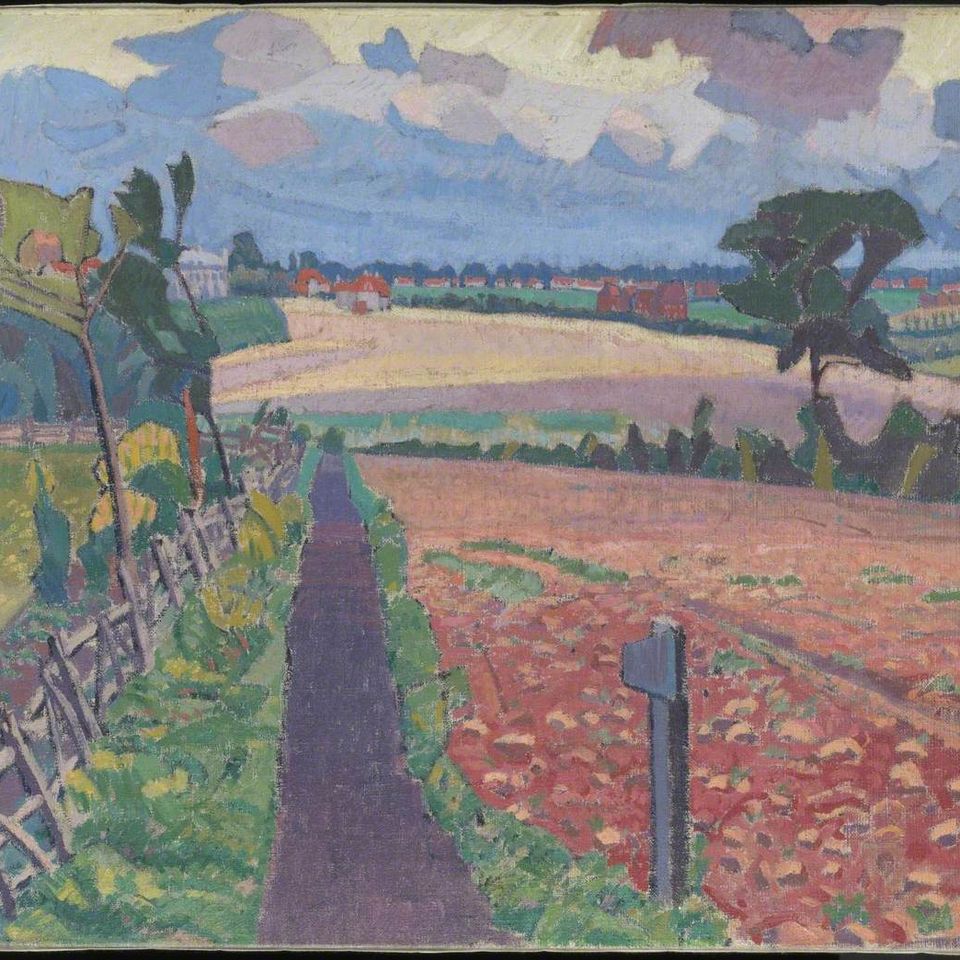
Move past the biography and into the work itself, and a clear picture of an outdoor painter emerges. Churchill was not a studio artist who occasionally ventured outside. He sought out locations, travelled with painting in mind, and returned to favourite motifs repeatedly across decades. His subjects were broadly consistent: landscapes and gardens, seascapes, architectural scenes in France and Italy, the warm-lit walls and water of the Mediterranean, and the rolling farmland visible from his own garden in Kent.
His style drew heavily on French Impressionism and Post-Impressionism, more than on the British plein air tradition of his contemporaries. Where painters like Laura Knight and the Newlyn School were working close to observed naturalism, Churchill was drawn to the bolder colour and looser form of Cézanne and the Impressionists. His palette was warm, his mark-making increasingly confident, and his instinct was always toward simplification rather than fine detail. The question he seems to have asked of a scene was not "how do I describe this accurately?" but "how do I capture the feeling of this light?"
A habit worth borrowing
Churchill returned to the same views at Chartwell repeatedly across different seasons and light conditions. Revisiting a familiar motif is one of the most effective ways to develop your eye and deepen your understanding of a place. It is not a lack of imagination; it is how serious painters learn.
Oils in the Landscape
Oils were Churchill's dominant medium throughout his painting life. Watercolour played only a minor role, and he does not appear to have found it congenial. This matters for how we read the work: oil allowed him the capacity to rework passages, to push paint around, and to build form with confident impasto marks in a way that watercolour does not easily permit.
His early canvases are noticeably more cautious: the colour is cooler, the handling less assured, and there is a tendency to overwork passages that later in life he would have resolved more decisively. By the 1930s and 1940s the work is considerably bolder. The blocks of colour are more committed, the edges between tones are clearer, and the overall impression is of a painter who has learned to trust his first reading of a scene. His Mediterranean and North African work, painted in Morocco and across southern France and Italy, shows the strongest colour saturation: warm ochres, deep shadows, brilliant whites in strong directional light. His British paintings, by contrast, tend toward softer tones and more atmospheric handling, a natural response to the conditions here.
A Compact Kit for an Active Life
Churchill's outdoor setup was practical and portable. Chartwell displays a small silver Roberson and Co. paint box as part of its collection of his materials, and it is the kit of someone who needed to travel light. Roberson and Co. were a respected London art supplier, and a silver paint box of that type would have been a considered investment: compact enough to carry without assistance, well made enough to last.
The problem Churchill was solving with that paint box is the same problem every plein air painter faces now. You need enough pigment, enough medium, enough surface to work on, and enough brushes to handle the marks you want to make. You do not need everything. Churchill's output suggests he understood this instinctively: the work is confident precisely because it does not attempt too much.
There is also evidence that his outdoor sessions fed into considered reworking back at the Chartwell studio. This studio-to-field-to-studio workflow is a recognisable practice: the outdoor session captures the light and the essential information; the studio session allows the painter to resolve passages that could not be finished on location. Neither phase undermines the other.
Churchill's painting practice in numbers
- Canvases produced
- 550+
- Years painting
- ~50
- Works in Wallace retrospective
- 50+
- Chartwell exhibition run
- Feb–Nov 2026
- Wallace Collection exhibition
- 23 May–29 Nov 2026
Across approximately five decades of painting
From 1915 until the early 1960s
Including many from private collections
"Churchill the Artist", National Trust
First major retrospective since 1965
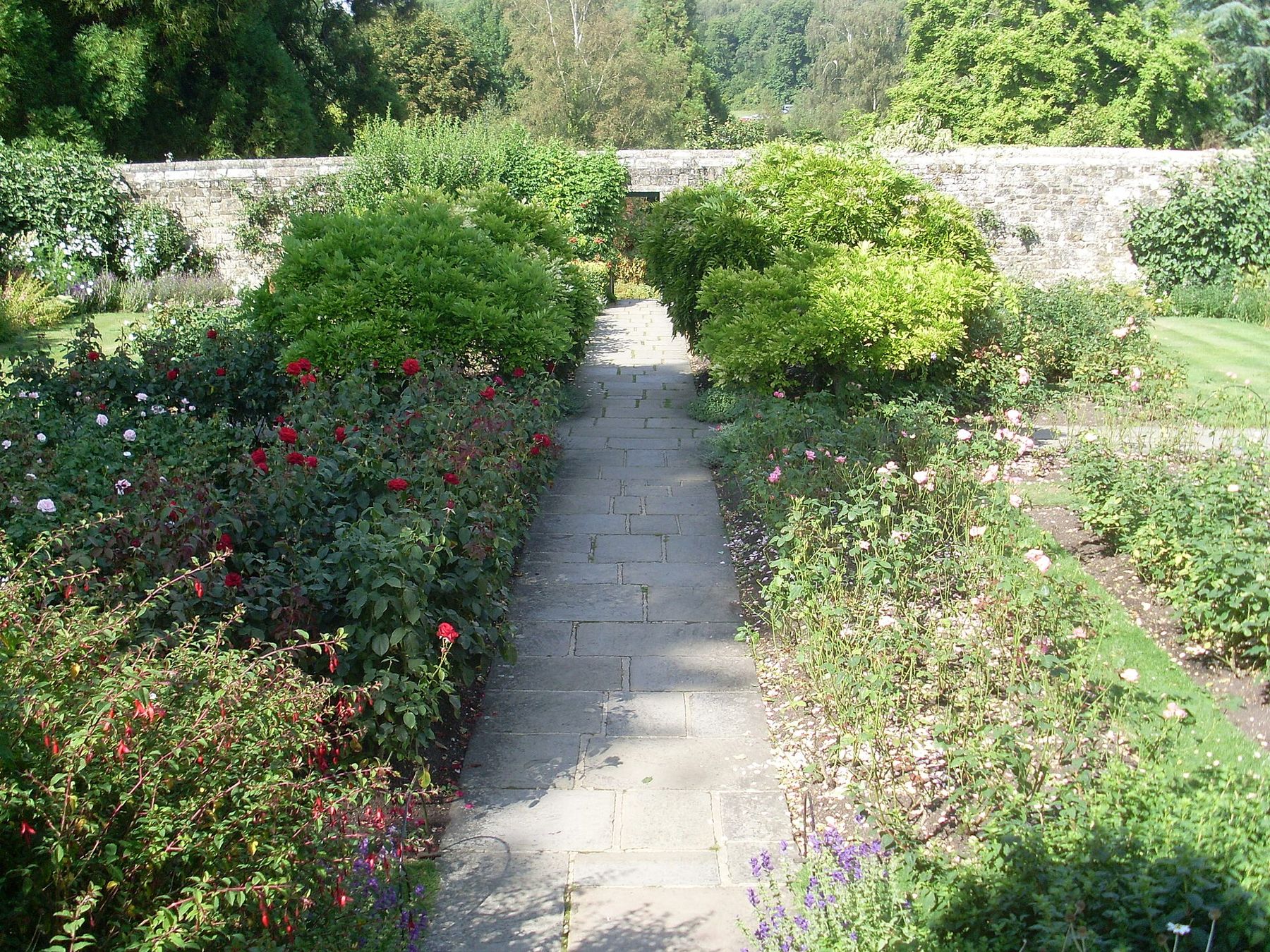
Lady Churchill's rose garden at Chartwell, Kent.
Credit: David Hillas — geograph.org.uk — CC BY-SA 2.0
The Chartwell Landscapes: Painting His Own Back Garden
Chartwell, the house Churchill owned in the Weald of Kent from 1922 until his death, appears in his paintings more than any other single location. The views from the terraced gardens across the valley and the rolling fields beyond are directly visible in canvas after canvas. The lake he had a hand in constructing appears. The kitchen garden walls appear. The particular quality of light on those west-facing slopes in the late afternoon appears again and again across different seasons and different years.
For any UK painter familiar with the Weald, the landscape in these paintings is immediately recognisable. It is not dramatic or picturesque in the way that coastal or upland scenery is. It is the quiet, layered, entirely English landscape of hedgerow and field, of trees that mass together against a pale sky, of a view that is essentially horizontal and asks you to think about tone rather than form. Churchill returned to it because it was his, but also, one suspects, because it kept offering him new problems to solve.
The Chartwell studio is the other essential element of any visit. It was his working space and it remained largely as he left it: it holds the physical evidence of how he painted, the scale at which he worked, the materials he used, and the paintings themselves in the context of their making. The largest standing collection of his work is here.
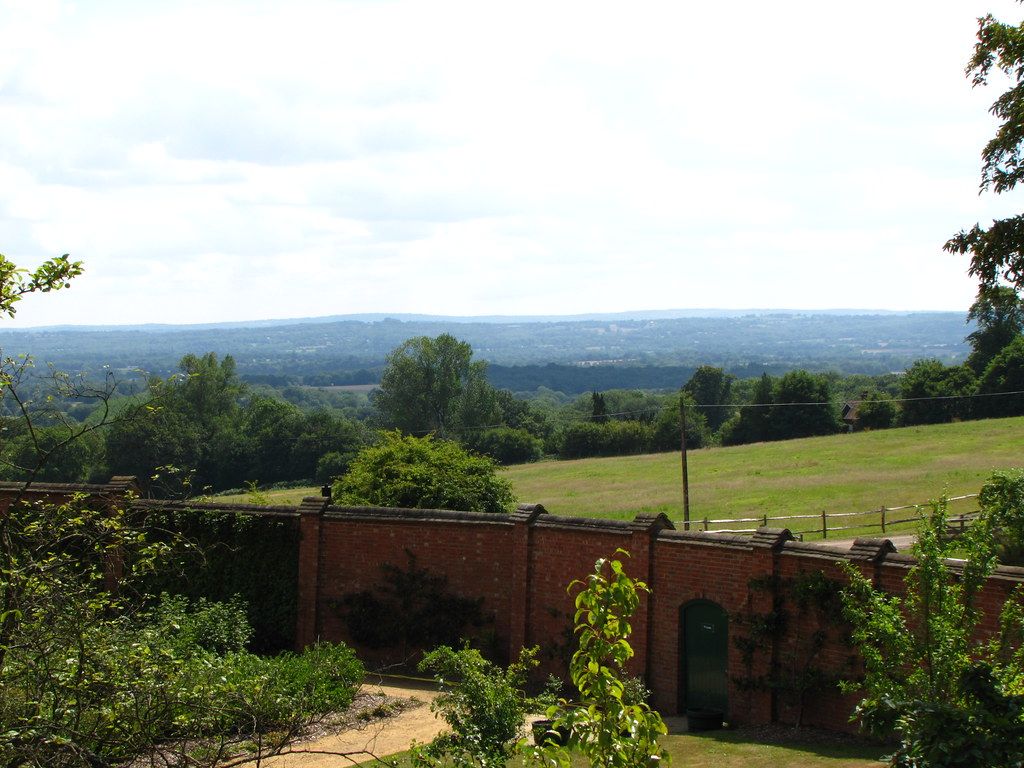
View over the Weald of Kent from Chartwell Gardens.
Credit: Tim Schofield (Flickr) — CC BY 2.0
Visiting Chartwell as a Painter in 2026
The "Churchill the Artist" exhibition runs at Chartwell from late February through to early November 2026, focusing specifically on his materials, tools, and creative life. It is worth planning around this if you can, because the exhibition provides the interpretive context that transforms a general visit into something more purposeful for a painter.
Chartwell is a National Trust property, so standard admission charges apply unless you hold membership. Check opening hours and booking requirements directly with the National Trust before visiting, as they vary by season.
If you are planning to sketch or paint on site, contact the National Trust in advance. Many of their properties permit sketching with small, portable kits but have restrictions on larger easel setups, tripods, and anything that could be read as commercial use. A compact pochade box and a small folding stool will cause far fewer complications than a large French easel. Walking the gardens with a sketchbook is the most straightforward approach and, in many ways, the most useful: you can stand where Churchill stood, look at the views he looked at, and study how he translated what is in front of you into paint.
The Wallace Collection Retrospective: What to Expect
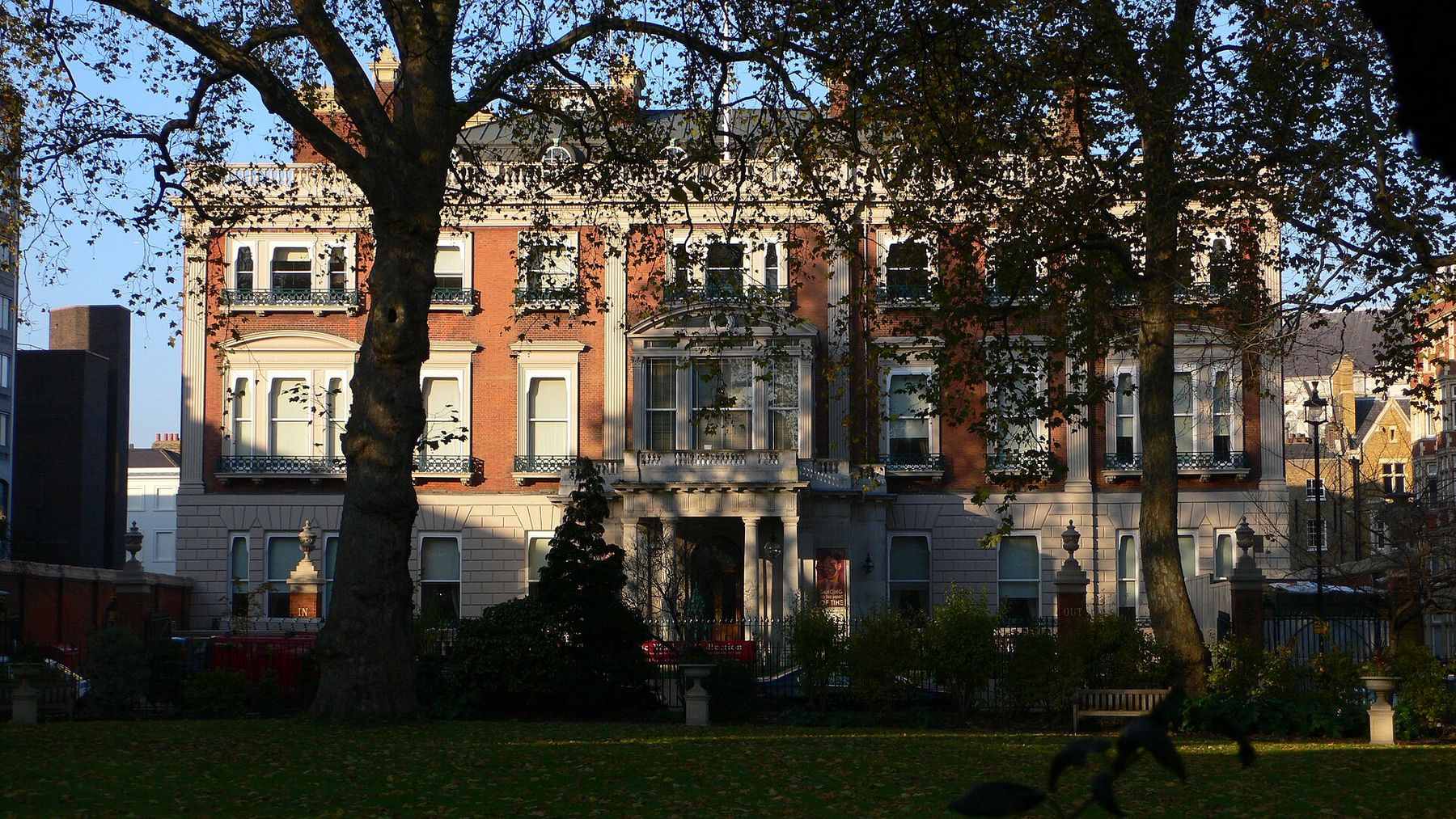
The Wallace Collection across Manchester Square, London.
Credit: Justinc — Wikimedia Commons — CC BY-SA 2.0
"Winston Churchill: The Painter" opens at the Wallace Collection in Marylebone on 23 May 2026 and runs until 29 November 2026. The Wallace Collection charges no general admission, which removes one barrier to visiting. This is the first major retrospective of his paintings since 1965, the year of his death, and it is framed explicitly as a reassessment: an attempt to evaluate the work on its own terms, not as a biographical curiosity attached to a famous name.
The exhibition brings together more than fifty paintings, drawn from Chartwell and from private collections where much of his work has been held, largely unseen, for decades. The hang is chronological, which means you can follow the development of his technique from the tentative First World War-era canvases through to the more assured, looser work of his final painting years in the early 1960s. That arc of development is itself worth studying. Watching a painter find their confidence across forty-odd years of sustained practice is instructive in a way that simply viewing the strongest finished works is not.
The exhibition also includes paintings by John Lavery and Ben Nicholson, positioned to provide context for Churchill's influences and his place in the broader artistic conversations of his time. Lavery, who painted outdoors extensively and was a significant figure in British portraiture and landscape, was a direct friend and influence. Seeing Churchill's work alongside Lavery's makes clear both what he absorbed and what remained distinctly his own.
For plein air painters, the most immediately useful aspect of this exhibition is the opportunity to compare his Mediterranean and Moroccan work with his British landscapes in a single space. The difference in colour temperature, value contrast, and handling between a canvas made in the south of France and one made at Chartwell is stark and instructive. Strong directional Mediterranean sunlight demanded a different palette and a different approach to shadow than the softer, more diffuse light of Kent. Churchill navigated both, and the comparison is directly relevant to anyone working across different light conditions in their own practice.
You can find full exhibition details on the Wallace Collection website at wallacecollection.org.
How to get the most from a gallery visit as a painter
Pick three or four paintings to spend real time with. Study how Churchill handled the sky-to-land transition, where he placed his lightest lights, and how much detail he included in shadow areas. Bring a small sketchbook and make written notes or thumbnail value sketches. You will leave with more than a general impression.
What Today's Plein Air Painters Can Take from Churchill's Example
The threads running through Churchill's painting life add up to something genuinely useful, provided you look at them as a painter rather than as a historian.
- Starting late is not a disadvantage in disguise; it is simply a different starting point. Churchill began painting in his forties with no formal training and built a sustained, serious practice over the following decades. The early work was tentative. The later work was not. The gap between them was filled by repetition and attention, both of which are available to any painter willing to show up consistently.
- Returning to the same motif is a practice strategy, not a failure of imagination. Churchill painted the view from Chartwell across the Weald dozens of times across different seasons, different hours of the day, and different weather. Each return deepened his understanding of that specific quality of light on that specific landscape. This is how painters learn to see, not by constantly seeking new subjects but by looking harder at familiar ones.
- A compact, portable kit is sufficient for a serious outdoor practice. The Roberson and Co. paint box on display at Chartwell is not the kit of someone who painted casually. It is the kit of someone who had worked out exactly what he needed and had stopped carrying everything else. Constraint, in materials as in composition, tends to produce more decisive work.
- Treating painting as a deliberate restorative habit, rather than an occasional leisure activity, is what produces volume and development over time. Churchill did not paint when conditions were perfect. He painted consistently, across decades, through busy periods and fallow ones. That consistency is what 550 canvases look like from the outside. From the inside, it looked like showing up.
- Studying how a painter responds to different light conditions has direct practical value. Churchill's strongest Mediterranean canvases are not simply brighter versions of his British ones. They are differently structured, with harder edges, more saturated colour, and a different approach to shadow temperature. Understanding how he adapted his palette and handling to the light he was actually working in is useful preparation for doing the same yourself.
Both exhibitions, Chartwell through to November and the Wallace Collection from May, make 2026 an unusually good year to see this body of work in person. If you can get to either or both, go with a painter's eye rather than a tourist's. Take a sketchbook. Spend time with the canvases that show you something you have not solved yet outdoors.
And before you next head outside, spend a few minutes with one of his Chartwell paintings. Look at how he simplified the masses of trees, how he handled the division between lit and shadowed grass, and how much or how little he put into the sky. He was solving the same problems you are solving. He just had fifty years of attempts behind him.
References and Further Reading
FAQ
Frequently Asked Questions
When did Winston Churchill start painting seriously?
He began in 1915 at age forty one after the Dardanelles crisis and maintained a sustained practice for roughly fifty years, producing over 550 canvases.
What did Churchill paint outdoors?
He focused on landscapes, gardens, seascapes and architectural scenes, especially views of Chartwell and sunlit Mediterranean and North African subjects.
Which medium and kit did Churchill use for plein air work?
He painted mainly in oil using a compact Roberson and Co. paint box and a portable setup suited to travel and quick outdoor sessions.
Where can I see Churchill's paintings in 2026?
Two major exhibitions run in 2026: "Churchill the Artist" at Chartwell (Feb to Nov) and a Wallace Collection retrospective from 23 May to 29 Nov.
What can plein air painters learn from Churchill?
Key lessons are to treat painting as a habitual practice, revisit motifs across seasons, use a compact kit, and adapt palette and handling to different light conditions.
Author

PleinAirPainting Editorial Team
PleinAirPainting.co.uk helps artists paint outdoors with confidence through UK-focused guides, equipment advice, resources and plein air inspiration.