Laura Knight: Painting the Coast, the Hills, and the Open Air
Tracing Laura Knight plein air from Staithes and Lamorna to the Malvern Hills, this examines her large-scale, site-specific outdoor paintings and their hard-won observation.

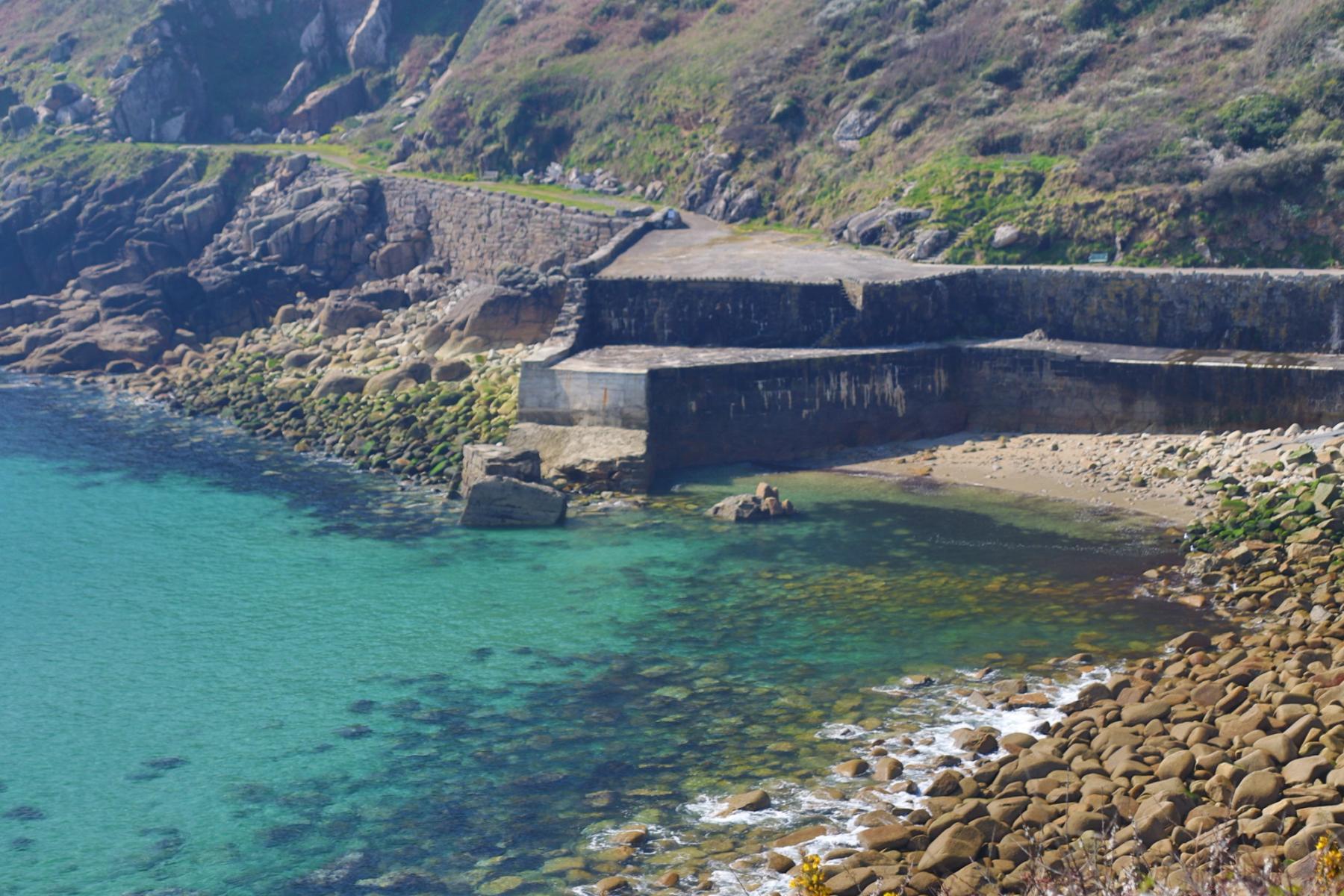
View of Lamorna Cove in Cornwall.
Credit: Cyr~commonswiki / Wikimedia — CC BY-SA 3.0
Key takeaways
- • Laura Knight's plein air work spans Staithes, the Newlyn/Lamorna coast, and the Malvern Hills.
- • She painted large, site-specific compositions outdoors, often placing figures directly into the landscape.
- • Her Cornish paintings are notable for bold colour, confident brushwork, and hard-won observation on cliff tops.
- • Knight returned repeatedly to the same locations to learn their light and compositional possibilities.
- • Her outdoor practice earned her lasting recognition, including becoming the first woman full Royal Academy member in 1936.
There's a particular kind of commitment that plein air painting demands: the willingness to carry heavy kit to an uncomfortable spot, set up in uncertain weather, and stay long enough to get what you came for. Laura Knight understood this as well as any British painter of the twentieth century. Her practice was rooted outdoors, in specific places, in particular light, and at a scale most painters wouldn't attempt in a studio, let alone on a cliff top. Exploring Laura Knight plein air is to trace a thread from the Yorkshire coast to the Cornish headlands to the Malvern Hills, following a painter who refused to let the practical difficulties of outdoor work become a reason to stay inside.
From Derbyshire to the Cornish Cliffs
Laura Knight was born Laura Johnson in 1877 in Long Eaton, Derbyshire. Her early years were shaped more by financial hardship than comfort: her father died when she was young, and her mother's determination to provide for the family led them eventually to Nottingham, where Laura trained at the Nottingham School of Art. It was there she met Harold Knight, whom she married in 1903. Harold was himself a serious painter, and their working partnership was genuinely mutual. But the scale of Laura's ambition outdoors, and the physical boldness it required, was distinctly her own.
Before Cornwall, before the cliff paths and the Atlantic light, there was Yorkshire.
Early years and Staithes
In the late 1890s and early 1900s, the Knights spent time at Staithes, a small fishing village on the North Yorkshire coast. Staithes had drawn a loose colony of artists since the 1880s, attracted by the dramatic harbour, the working fishing community, and the quality of coastal light that shifts quickly along that exposed stretch of coast. The Staithes Group, as it became known, shared something of the ethos that would later define Newlyn: a belief in painting working people and outdoor life directly from observation, without studio idealisation.
For Knight, Staithes was formative. Working in that demanding coastal environment, with its unpredictable weather and strong contrasts of light, sharpened her eye for tonal relationships and her instinct for composition on uneven ground. Staithes today remains a working village and a favourite location among UK plein air painters. The harbour walls and the steep ginnels down to the water are recognisably the same terrain that sharpened Knight's approach to outdoor work.
The Newlyn Years: Laura Knight's Plein Air Practice in Cornwall
The Knights arrived in Cornwall around 1907 to 1908, settling initially at Newlyn before moving to Lamorna, a small cove a few miles to the south. By that point the Newlyn School, founded in the 1880s by painters including Stanhope Forbes, was into its second generation. The original colony had been drawn by the quality of light in the far west of Cornwall and by the presence of a genuine working fishing community. The shared values were clear: paint from life, work outdoors wherever possible, and resist the artificiality of the studio-composed picture.
Knight arrived into an established community and found her footing quickly. Lamorna suited her. The cove itself is sheltered and intimate, but the cliff paths that run east and west from it lead quickly into wilder, more exposed ground where the scale of the landscape opens out.
Lamorna, Carn Barges, and the cliff-top compositions
The paintings Knight made during her Cornish years are the heart of what makes her a significant figure in British outdoor painting. She wasn't content to paint from accessible viewpoints. She sought out the specific rocky outcrops and headlands between Lamorna, Carn Barges, and Porthcurno where the cliffs drop steeply and the sea fills the canvas with saturated greens and blues.
On the Cliffs, one of her most celebrated Cornish works, places two women on rocky ground above a brilliant sea, their figures caught in strong coastal light. The painting doesn't romanticise the setting: the rocks are real, the light is hard, and the figures are part of the landscape rather than decorating it. Wind and Sun has a similar quality: the world is in motion, the light is specific, and the painter is clearly there. The Green Sea, Lamorna works with the extraordinary colour that the sea can produce off the Cornish coast on a clear day, the kind of saturated turquoise that can look invented until you see it in person.
What connects these works is Knight's commitment to placing figures within outdoor settings that she'd observed directly, at the location, in that light. The models she used were sometimes brought down from London, but they were painted on site, in the actual conditions, not sketched from life and then reworked indoors.
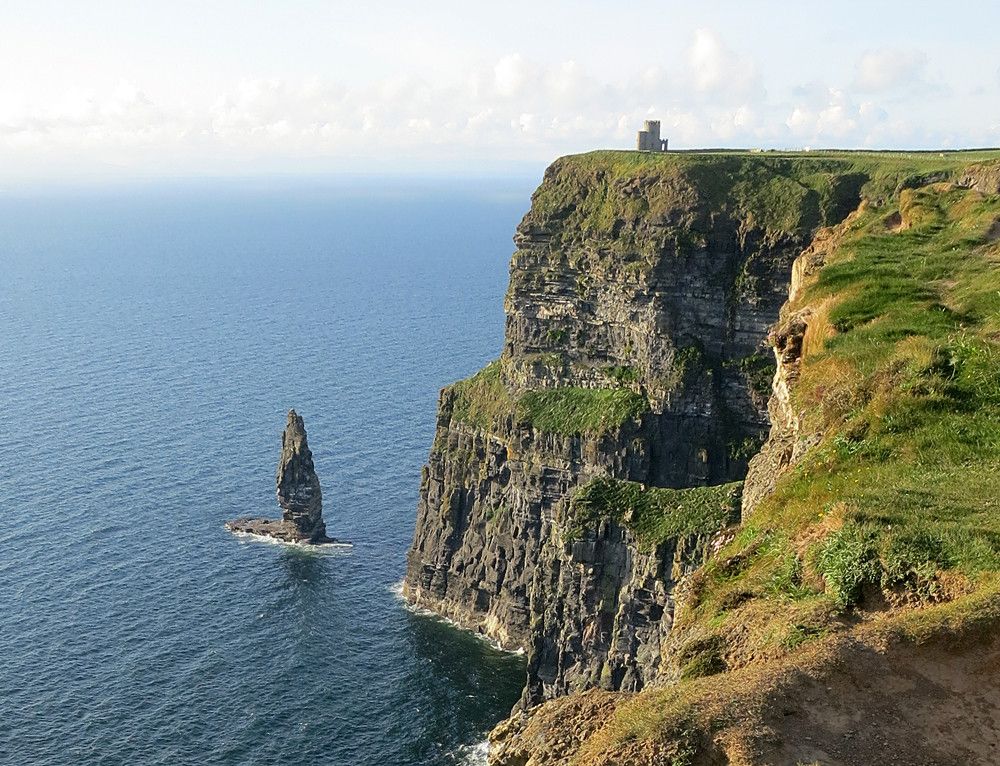
The Cliffs of Moher overlooking the ocean. by alex ranaldi — Flickr — CC BY-SA 2.0
Working outdoors at scale
Knight worked at a size that's unusual for outdoor painting even today. Carrying a large canvas over rough ground, setting it up in coastal wind, and working on it for the time required to capture changing light conditions: these are not trivial demands. Most painters compromise on scale when they work outdoors, for good practical reasons. Knight didn't, or at least not as much as most.
This matters because it tells us something about her priorities. She wasn't making studies for later studio paintings. The outdoor work, in its scale and ambition, was the work. The cliff-top location wasn't a convenience; it was a necessity. She needed the specific light of that particular spot, at that time of day, to paint what she was trying to paint.
Her brushwork in these Cornish paintings has the confidence and brevity that outdoor painting demands. Working within the tradition of English Impressionism, she built surfaces with quick, decisive marks that carry the quality of light without labouring it. The paintings feel painted in conditions, not in comfort.
Painting the same coastline today
The cliff paths between Lamorna Cove and Porthcurno are accessible via the South West Coast Path. Public rights of way allow painting along much of this stretch, though some cliff edges are unfenced and conditions change quickly. Check tide times and weather before heading out.
Laura Knight and the Newlyn School
By the time Knight arrived at Lamorna, the Newlyn colony had both a history and an institution. Stanhope Forbes and his wife Elizabeth had established the Forbes School of Painting in Newlyn in 1899, and the community included painters of genuine quality and varied temperament. Samuel John Birch, who painted so consistently around Lamorna that he eventually took the cove's name as his own and became known as Lamorna Birch, was a near neighbour. Alfred Munnings was another figure in Knight's Newlyn circle during the same years. Harold Knight was always nearby, painting his own quiet interiors and portraits.
Knight was part of this community in a genuine sense. She socialised, collaborated informally, and shared the colony's core commitment to painting from direct observation. But she also pushed further into the landscape than most. Where other Newlyn painters were often working in the villages, the harbours, or the farmland, Knight was out on the cliff edges.
The question of women in the Newlyn colony is worth acknowledging without overstating. Knight was not the only woman artist working there: Elizabeth Forbes was a serious painter in her own right, and other women moved through the community. But Knight became its most prominent woman painter over time, and she earned that position through the quality and ambition of the work itself. She wasn't given a place at the table; she painted her way to one.
Laura Knight — key dates and facts
- Born
- 1877
- Arrived at Newlyn/Lamorna
- c. 1907–08
- First woman full RA
- 1936
- Newlyn period
- c. 1907–1918
- Key Cornish locations
- Lamorna, Carn Barges, Porthcurno
Derbyshire
With husband Harold Knight
Royal Academy of Arts
Core of her outdoor practice
South West Coast Path accessible
Beyond Cornwall: the Malvern Hills and Later Landscapes
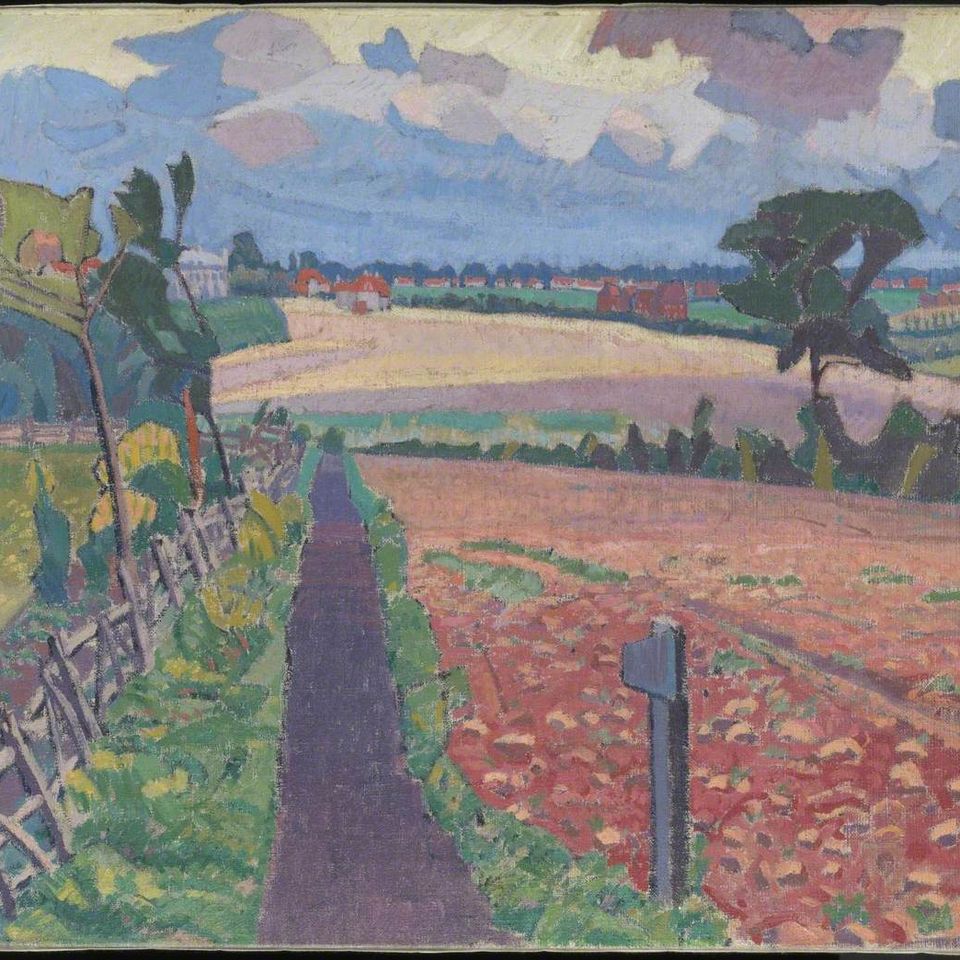
Knight left Cornwall around 1918, and her practice shifted accordingly. The cliff tops and Atlantic light gave way to a different England: broader, greener, less dramatic at the edges but full of its own particular light. Extended periods in the Malvern Hills produced landscape paintings that are less familiar than the Cornish work but carry the same fundamental approach. Wide views across English farmland, big skies, the land read through changing weather and season.
The Malvern Hills offer a panoramic quality that's quite different from the intimate coastal vantage points of Lamorna. Knight's work from this period tends to open out, taking in sweeping views across the Vale of Evesham and the patchwork of fields below the ridge. The painting is less urgent, perhaps, than the cliff-top work, but the commitment to reading the landscape from life is continuous.
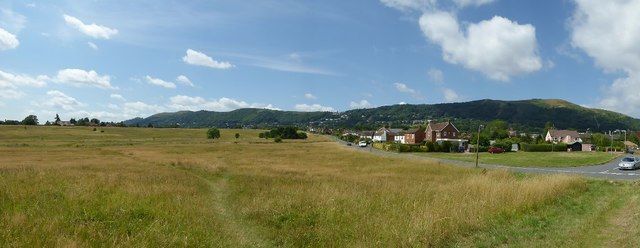
Panoramic view across grassy fields and hills in the Malvern Hills. by Philip Halling / geographorguk — CC BY-SA 2.0
Worcester City Art Gallery and Museum explored this connection through their 2024 exhibition Dame Laura Knight: I Paint Today, which placed her en plein air practice at the centre of its reading of her work and traced her relationship with the Malvern landscape specifically. For painters based in the Midlands or the west of England, this places Knight's later outdoor practice within reach both geographically and institutionally.
What Laura Knight's Practice Means for Painters Today
Knight became the first woman elected a full member of the Royal Academy in 1936. It's worth pausing on that fact, not as a headline achievement to be noted and moved past, but as a measure of something specific: the work that earned her that recognition was her outdoor painting. Her large-scale, physically demanding, site-specific landscapes and figure-in-landscape compositions were what established her reputation. The establishment didn't recognise her despite the plein air work; it recognised her because of it.
For anyone who paints outdoors today, several things in Knight's practice speak directly to the experience.
The value of returning to the same location is one. Knight knew the ground between Lamorna and Carn Barges well. That familiarity meant she knew where the light would fall at different times, which rocky promontories caught the afternoon sun, where the sea colour was most vivid. The plein air painter who keeps going back to one stretch of coast or one hillside isn't failing to explore: they're learning to see what's actually there.
The figure-in-landscape tradition Knight worked within is still live. Many plein air painters work purely in landscape, and there's nothing wrong with that. But placing a figure in an outdoor setting, as Knight did consistently, changes the scale relationships, adds a human presence that anchors the viewer, and introduces a compositional problem that has to be solved on location in changing conditions. Knight is one of the clearest British examples of how this can work at its best.
Painting at a larger format outdoors than feels comfortable is another thread worth pulling. Most of us default to a size that feels manageable: a pad, a small canvas, something portable. Knight's refusal to make that compromise entirely is a useful provocation. You don't have to haul a six-foot canvas up a cliff path. But working slightly larger than usual, even occasionally, changes what you can do with light and space in a painting.
And then there's the physical commitment itself: the carrying of gear over awkward ground to reach the right spot, the setting up in wind, the waiting for conditions to return. Knight dealt with all of this. The specific difficulties of outdoor painting in Britain, the unreliable weather, the difficult terrain, the cold that arrives without warning, are not modern inconveniences. They're part of the tradition she was working in, and part of what gave the best of her work its quality of hard-won observation.
Seeing Knight's Work in Person
Knight's Cornish paintings are most naturally encountered at Penlee House Gallery and Museum in Penzance, which holds a significant Newlyn School collection and has featured her work in its permanent and temporary displays. It's the closest major gallery to Lamorna itself, which means a visit can be combined with time on the coast path she painted from.
The National Portrait Gallery in London holds a number of Knight's works, including self-portraits that show her as a working painter rather than a decorative subject.
The Worcester City Art Gallery and Museum has a direct connection to her Malvern years and mounted the substantial 2024 exhibition focused on her plein air practice.
The Government Art Collection includes Knight works held across public buildings in the UK.
For readers wanting to find Knight's paintings in public collections beyond these, Art UK (artuk.org) is an excellent practical resource. It aggregates works held in public collections across the country, searchable by artist, and includes Knight's paintings held in regional galleries that might otherwise be easy to miss.
Because exhibition loans mean specific works may not be on permanent display, it's worth checking with any gallery before making a dedicated visit. Knight's paintings do travel, which is also a reason to look for her work when you're visiting unfamiliar galleries: she may turn up where you don't expect her.
FAQ
Frequently Asked Questions
What does Laura Knight plein air mean in her practice?
It refers to Knight's commitment to painting outdoors on location, often at large scale, capturing specific light and terrain directly rather than producing studio studies.
Where can I see Laura Knight's plein air paintings?
Key places include Penlee House Gallery and Museum in Penzance for Cornish work, the National Portrait Gallery in London, and Worcester City Art Gallery and Museum for her Malvern pieces. Check galleries for current displays.
Which locations did she paint outdoors?
She painted the Yorkshire coast at Staithes, the Cornish coast around Newlyn, Lamorna, Carn Barges and Porthcurno, and later landscapes in the Malvern Hills.
Did she really work at large scale outdoors?
Yes. Knight often carried and worked on unusually large canvases on cliff tops and hillsides, treating the outdoor pieces as finished works rather than preparatory studies.
What practical lessons does her plein air practice offer painters today?
Return to the same site to learn its light, consider figures in landscape to anchor scale, try working slightly larger than usual, and accept the physical demands of outdoor observation.
Author

PleinAirPainting Editorial Team
PleinAirPainting.co.uk helps artists paint outdoors with confidence through UK-focused guides, equipment advice, resources and plein air inspiration.