The Newlyn School: Cornwall's Plein Air Pioneers
How a group of British painters made Newlyn a leading plein air colony. The Newlyn School painters chose Atlantic light, painted working people honestly, and shaped plein air practice still taught today.

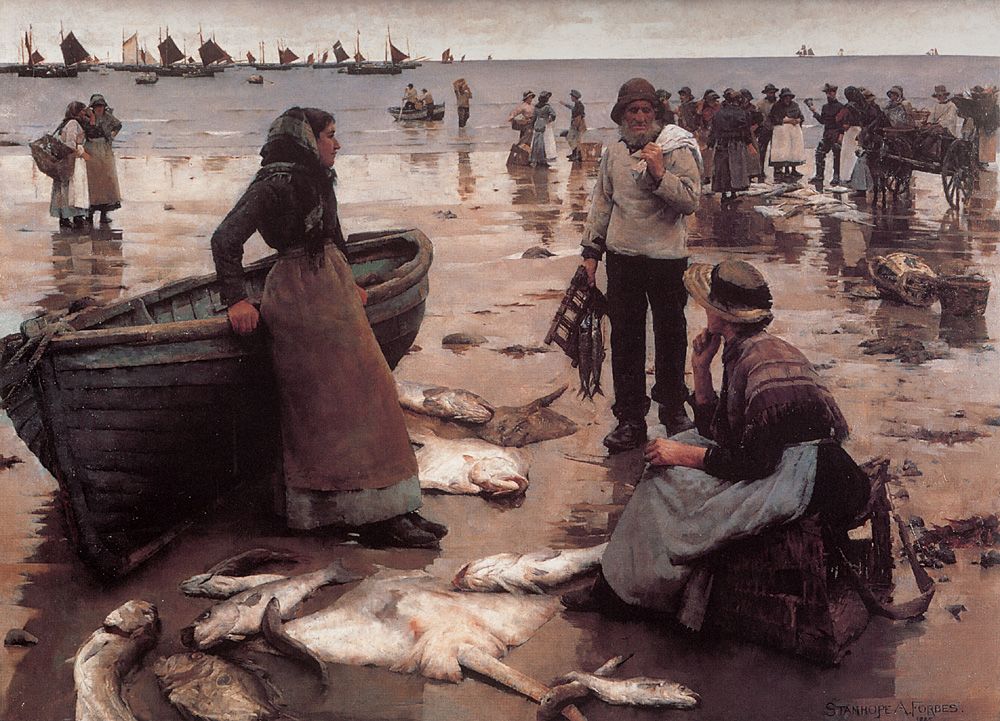
A Fish Sale on a Cornish Beach (1885) by Stanhope Forbes.
Credit: Stanhope Forbes; public domain/CC0 via Wikimedia Commons
Key takeaways
- • Newlyn became a major plein air colony because of its low cost, working fishing community, and distinctive Atlantic light.
- • The painters worked from observation using Grand Naturalist methods, balancing outdoor studies with studio finishing.
- • Figures and social narrative were central; artists showed working life with empathy and technical control.
- • Key artists include Walter Langley, Stanhope Forbes, Frank Bramley, Elizabeth Forbes, and Laura Knight.
- • Penlee House in Penzance holds the largest Newlyn collection and the Newlyn School of Art continues the tradition today.
Imagine arriving in a Cornish fishing village in the early 1880s with a crate of canvases, a head full of ideas picked up in Paris, and very little money. The harbour smells of salt and mackerel. The light on the water is unlike anything you've seen inland. The fishermen and their families go about their days with a kind of dignity that feels worth painting honestly. This is what drew the Newlyn School painters to the far tip of Cornwall, and what kept them there. No manifesto, no movement name, no grand founding moment. Just a place with the right light, the right people, and enough cheap lodgings to make staying possible. What they built, almost by accident, became the most significant plein air art colony Britain has ever produced.
A Fishing Village That Became an Art Colony
By the early 1880s, a loose network of young British painters was returning from training in Paris and Antwerp with new ideas about painting from direct observation. The French Naturalist tradition, and the plein air methods it encouraged, had given them a way of working that felt alive and urgent. The challenge was finding somewhere to put it into practice. London was expensive, and its subjects felt overfamiliar. What they needed was a working community with genuine narrative in it, coastal Atlantic light, and the practical possibility of a sustained stay without burning through what little money they had.
Why Newlyn, and Why Then?
Newlyn ticked every box. The cost of living was low compared with London. The fishing community provided a ready supply of models who were neither theatrical nor self-conscious. They worked with their bodies, lived with real uncertainty, and went about their days in a light that painters found extraordinary: coastal and Atlantic, soft and diffused, constantly shifting between pearly overcast and bright sea glare.
Some of these painters had already worked in Brittany, where similar fishing communities offered comparable subjects. Newlyn was closer to home, the community was English-speaking, and the colony, once it began to form, created its own gravity. Artists came because other artists were already there.
The harbour itself was a constant source of subjects. Fish sales on the beach, boats returning from sea, women waiting at the quayside, children playing in the shadow of the boats. Every day brought something worth painting.
Who Were the Newlyn School Painters?
The colony was never a formal institution. There were no membership rules, no elected committee, no official school. What held the Newlyn School artists together was a shared place, a shared commitment to working from observation, and a shared sense that painting should engage with the actual lives of actual people.
The Pioneers
Walter Langley is often cited as the first to settle in Newlyn, arriving around 1882. He's not always the name people reach for first, but he deserves to be. A Birmingham-born painter from a working-class background, Langley brought genuine political sympathy to his work. He painted in watercolour, which set him apart from most of his contemporaries, and his depictions of fishing families, women waiting for news, children in poverty, carry an emotional honesty that still reads clearly today. He wasn't a romantic tourist in Newlyn; he was someone who understood hardship from the inside.
Stanhope Forbes arrived in Newlyn in 1884 and became, over time, the figure most associated with the school. A Fish Sale on a Cornish Beach (1885) remains the canonical Newlyn work: a large, complex multi-figure composition painted with the freshness of direct observation but the ambition of academic figure painting. Forbes was an organiser and a connector as much as a painter, and his presence helped shape the colony into something more coherent.
Frank Bramley gave the school one of its most powerful single images: A Hopeless Dawn (1888), depicting a fishing family receiving word of a loss at sea. The painting shows a grief-stricken young woman slumped on the floor while an older woman stands at the window as morning light enters the room. The light itself becomes the cruel joke of the title: dawn arrives, and with it the confirmation of what they feared. It's an interior, technically, but it belongs to the Newlyn tradition of using coastal daylight as an active emotional force.
Women at Newlyn
The Newlyn colony was not a boys' club, and writing about it as if it were does a disservice to the painters who worked there on equal terms. Elizabeth Forbes was a major figure in her own right: a skilled painter whose work ranged across figure subjects, children, and landscape. She and Stanhope Forbes co-founded the Forbes School of Painting in 1899, which trained successive generations of painters in figure drawing, plein air observation, and the disciplines that had defined the colony's early years. Elizabeth Forbes was not Stanhope Forbes's appendage; she was his collaborator in both life and work.
The Wider Circle
The circle of Newlyn School artists extended well beyond its central figures. Norman Garstin painted The Rain it Raineth Every Day, a view of a Newlyn street under a downpour that manages to find genuine pictorial beauty in thoroughly miserable weather. Henry Scott Tuke painted coastal figures, particularly boys and young men swimming or working around boats, with a directness of observation and light that feels completely fresh. Thomas Cooper Gotch and Harold Harvey both contributed work that extended the colony's range of subject and feeling.
Slightly later, and centred on the nearby hamlet of Lamorna, a related group developed the tradition into the early twentieth century. S. J. Birch, who became known as "Lamorna" Birch, worked extensively in the local landscape. Laura and Harold Knight brought their own particular quality of observation to the community; Laura Knight in particular became a major figure in British art across a long career that stretched far beyond Cornwall. Alfred Munnings painted horses, landscape, and figure subjects in the area before his reputation became more firmly associated with equestrian painting elsewhere.
Key Newlyn School figures at a glance
- Walter Langley
- 1852–1922
- Stanhope Forbes
- 1857–1947
- Frank Bramley
- 1857–1915
- Elizabeth Forbes
- 1859–1912
- Norman Garstin
- 1847–1926
- Laura Knight
- 1877–1970
Often cited as the colony's first settler
Widely regarded as the school's leading figure
Known for A Hopeless Dawn (1888)
Painter and co-founder of the Forbes School of Painting
Known for The Rain it Raineth Every Day
Extended the Newlyn tradition into the 20th century
What Made Newlyn Painting Distinctive?
We tend to think of late nineteenth-century British plein air painting as a satellite of French Impressionism, and the Newlyn school is often lumped in with that story. It's worth being clear about why that's not quite right, because the distinction matters both historically and practically.
Grand Naturalism, Not Impressionism
The Newlyn painters were shaped by French plein air methods, particularly the example of Jules Bastien-Lepage and the tradition of Grand Naturalism, rather than by the Impressionist approach of Monet and his contemporaries. These are related but different things. Grand Naturalism meant painting from direct observation with careful attention to tonal structure, robust drawing, and controlled edges. The goal was a painting that felt freshly observed without sacrificing structural clarity. Impressionism, in the optical sense, dissolved form into patches of colour to capture the sensation of light. The Newlyn painters were not doing that. Their canvases are carefully built, the figures solidly placed, the light observed rather than dissolved.
Light, Weather, and Water
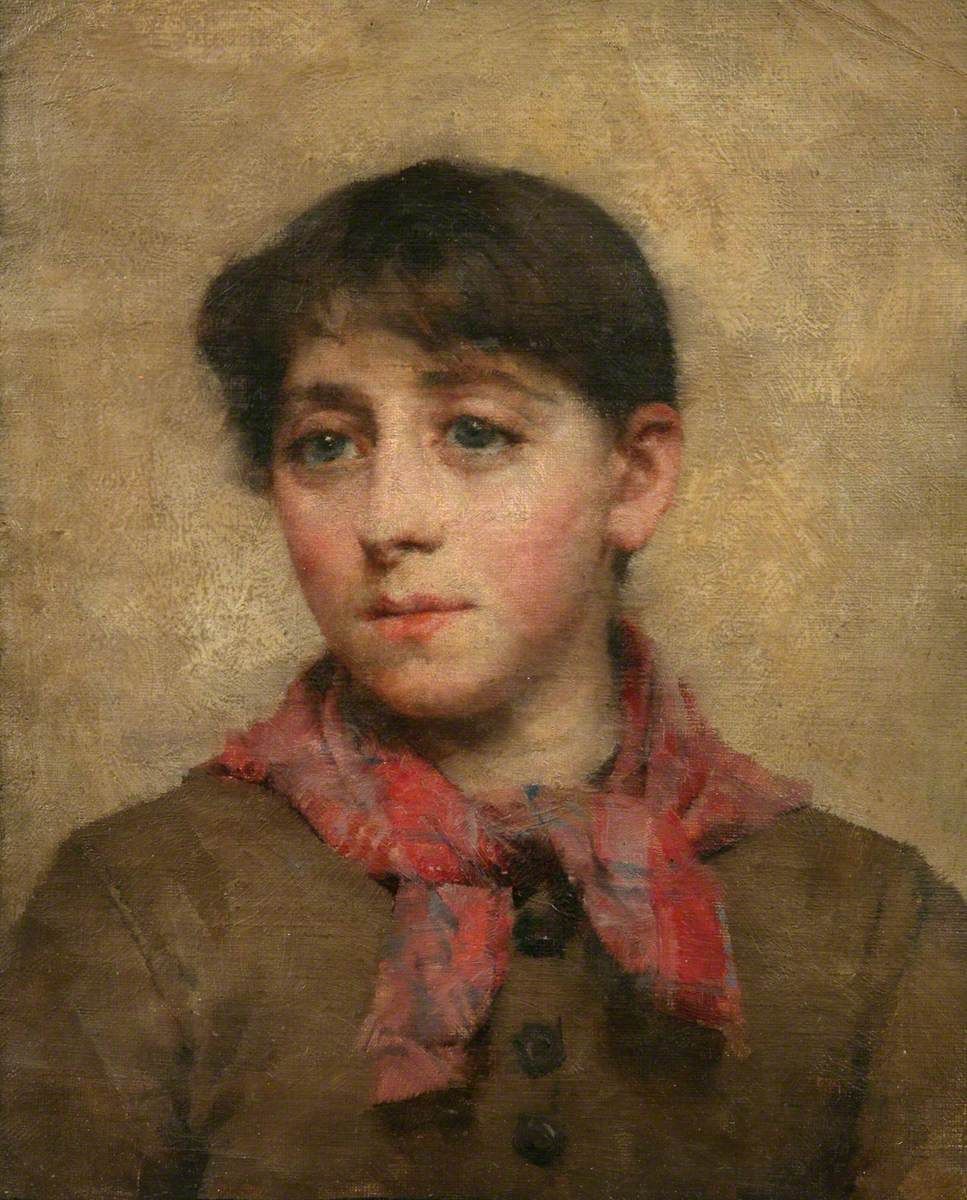
A Newlyn Maid by Elizabeth Adela Forbes.
What the Newlyn painters found in Cornwall, and what gave their work its particular quality, was Atlantic coastal light at its most characteristic: diffused, pearly, frequently overcast, and endlessly variable. This is not a limitation they worked around; it's the light they chose to paint in. The soft reflections in harbour water, the backlit spray of a breaking wave, the particular grey-white quality of a Cornish morning under cloud cover: these became active compositional elements rather than incidental conditions.
For any painter who has stood on a British coastline wondering what to do with the light, or lack of it, the Newlyn painters offer a direct answer. This is the light they worked in deliberately. It has qualities that direct sun cannot produce: a democratic illumination that reveals form without harsh shadow, a tonal unity that holds a complex scene together. They didn't wait for sunshine. They painted.
The Figure at the Centre
Newlyn was never a pure landscape tradition. Working people were at the heart of it: fishermen hauling nets, women gutting fish on the quay, families gathered around a table, a young widow at a window. The landscape and the harbour provided the setting, but human life gave it weight.
This is social realism, handled with empathy rather than sentimentality. The Newlyn painters did not prettify poverty or turn hardship into picturesque quaintness. Walter Langley in particular painted difficult subjects directly. A woman crying. Children in worn clothes. The ordinary grief of a community whose men went to sea and didn't always come back. The paintings are hard to look away from precisely because they don't ask for pity; they simply ask you to see.
How They Actually Worked
The commonly held picture of the plein air painter is someone who sits down in front of a view and completes a finished painting before the light changes. The Newlyn painters had a more practical relationship with the outdoor session than that. Plein air work was the foundation: they went out to observe, to fix the quality of light at a particular hour, to capture the tonal structure of a scene as it actually was. But the major canvases, the large multi-figure compositions that Forbes and Bramley were producing, were finished in the studio.
Many of the Newlyn painters built or adapted studios with extensive glazing, essentially large glass-roofed structures that allowed them to pose models in natural, north-facing light while controlling the conditions. The outdoor study fixed what needed to be fixed; the studio allowed the work to be taken as far as it needed to go.
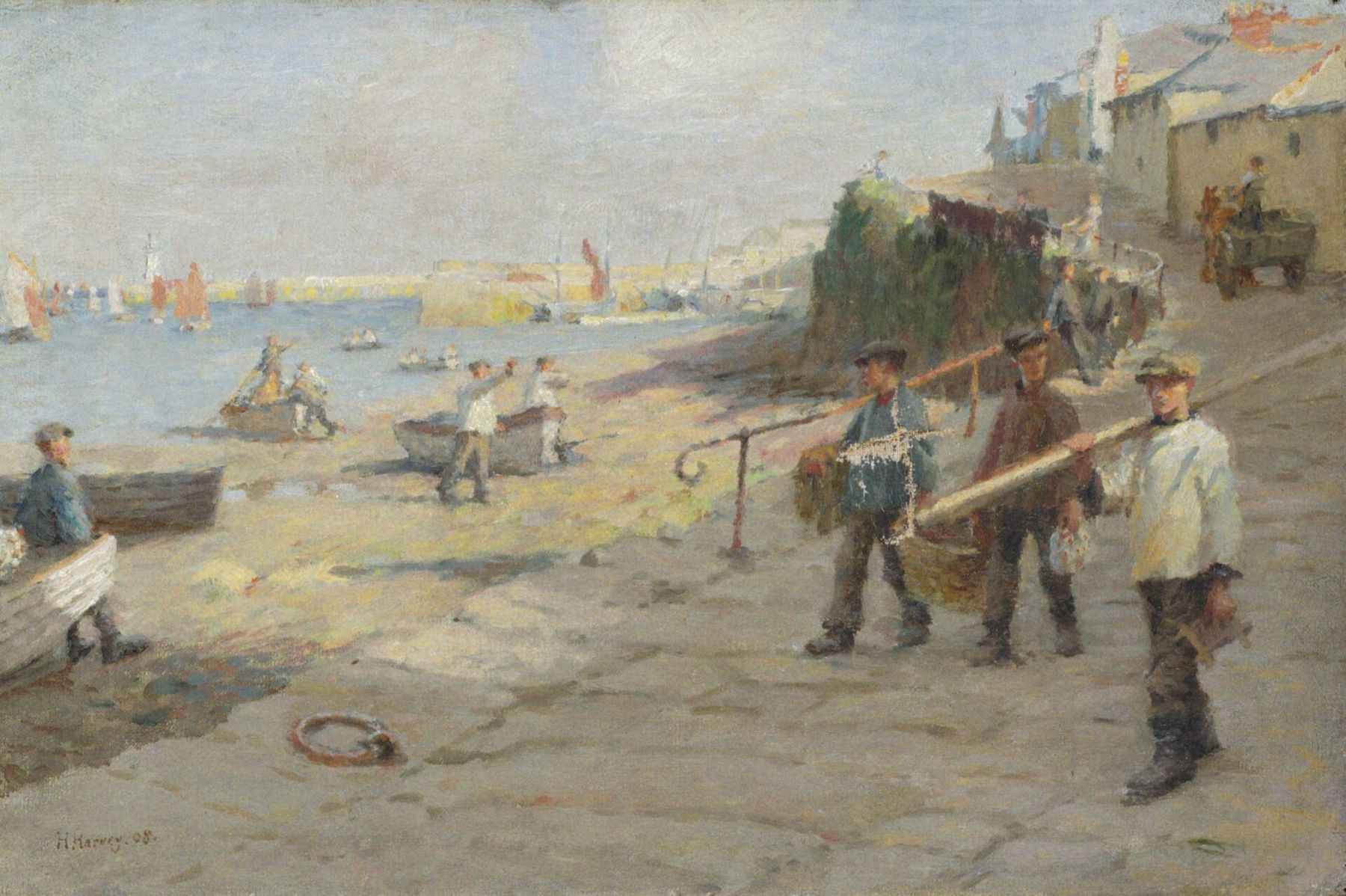
The Old Slip, Newlyn (1908) by Harold Harvey.
A lesson from Newlyn
The Newlyn painters used outdoor sessions to fix light effects and tonal structure, then finished complex figure compositions in the studio. If you sketch on location and develop the work later, you're in very good company.
The Legacy of the Newlyn School Painters in Cornwall Today
The colony reached its peak in the late 1880s and 1890s, but its influence didn't end there. The Forbes School of Painting continued training artists well into the twentieth century. Laura Knight's career ran until the 1960s. And the place itself: the harbour, the light, the Cornish landscape south and west of Penzance, remains one of the most painted stretches of coastline in Britain.
Penlee House Gallery and Museum
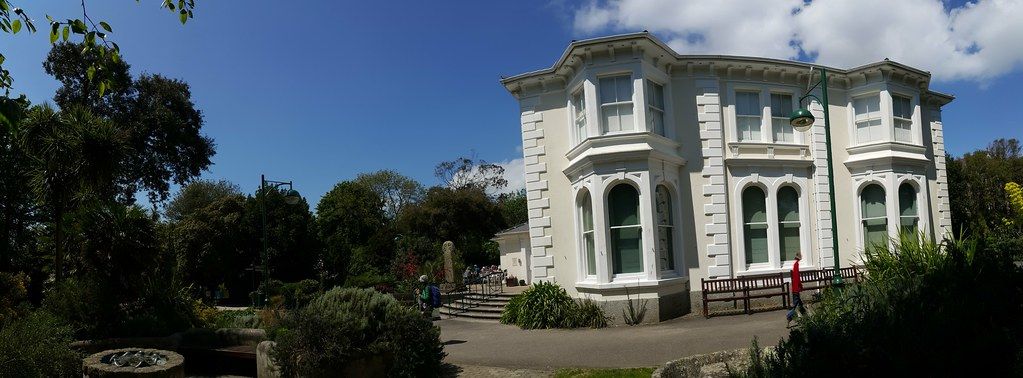
Penlee House Gallery and Museum in Penzance.
Credit: sbittinger / Flickr; CC BY 2.0
Penlee House Gallery and Museum in Penzance holds the largest dedicated collection of Newlyn School work in the UK. Spending an afternoon there before or after painting on location is genuinely useful in a way that looking at reproductions online is not. Scale matters with these paintings. The physical presence of a large Newlyn canvas, with its particular handling of light and its careful tonal structure, tells you things that a screen cannot. If you're travelling to Cornwall to paint, Penlee House should be on your itinerary.
Check the current exhibition listings before visiting, as displays rotate and the gallery periodically runs focused shows on individual Newlyn painters.
Painting in Newlyn Now
Newlyn is still a working fishing harbour. It hasn't been converted into a heritage attraction or a marina for leisure boats. Fish are still landed, boats are still worked on, and the smell of the harbour is exactly what it was when Walter Langley first set up his easel nearby.
That working quality is what makes it worth painting, and it's also what requires a degree of common sense from visiting artists. The harbour's infrastructure exists for commercial fishing, not for painters. Keep your kit compact, stay clear of moorings and access routes, and be prepared to move without complaint if harbour operations require it. The same practical adaptability that drove the Newlyn painters back to their glass studios when the weather turned applies equally well today.
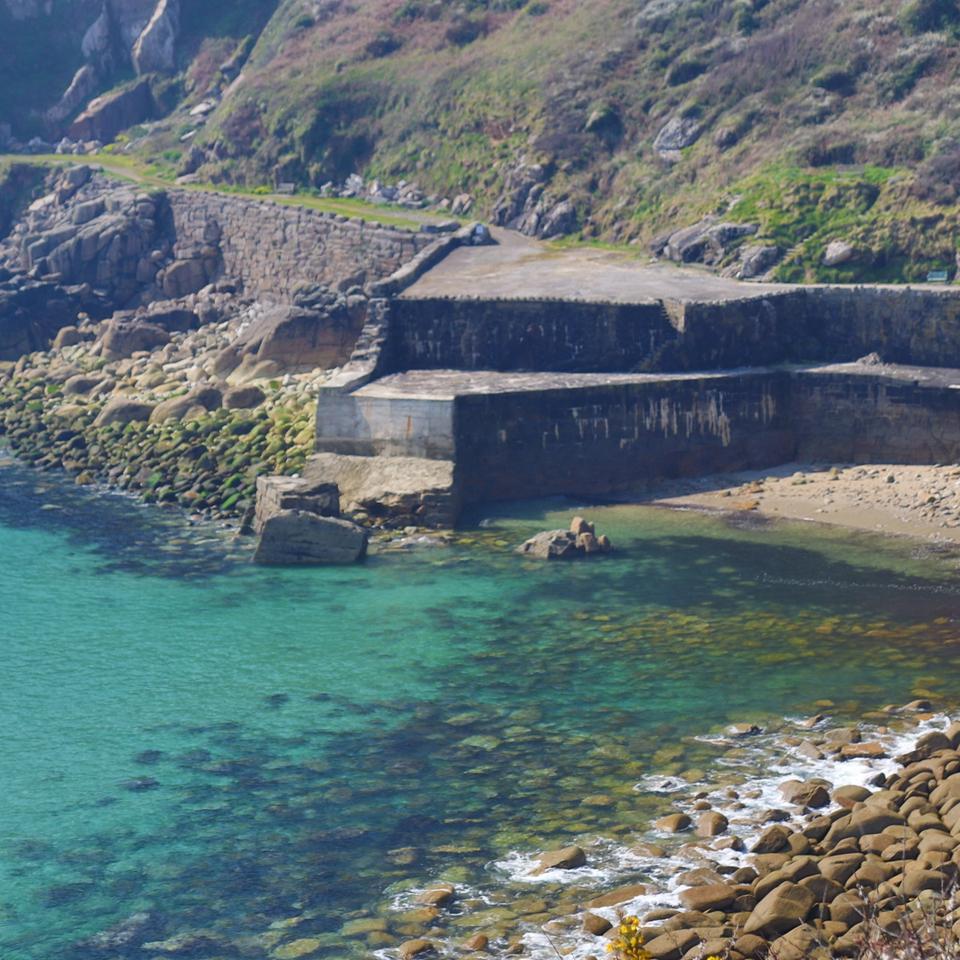
Lamorna, a few miles south along the coast, offers a quieter alternative with its own strong associations. The small cove and wooded valley were central to the later Lamorna group, and the landscape retains the particular quality that drew Birch, Knight, and Munnings to it.
Painting around Newlyn harbour
Newlyn is a working fishing harbour, not a tourist attraction. Keep your kit compact, stay clear of access routes and moorings, and be ready to move if harbour operations require it. The same common sense the Newlyn painters used — retreating to a glass studio when the weather turned — applies today: have a plan B.
The Modern Newlyn School of Art
Founded in 2011, the Newlyn School of Art runs courses from its base in Cornwall, positioned consciously within the tradition of working from direct observation of landscape and light. As of 2025 the school is actively running courses across the year, covering painting, drawing, and printmaking with a clear emphasis on working from the landscape. It's a practical option if you want to develop your practice in Cornwall with proper tuition and the weight of the local tradition behind you.
What Newlyn Can Teach Us About Painting Outdoors Today
The Newlyn school is a hundred and forty years old now. The reason it still speaks to anyone who paints outdoors in Britain isn't nostalgia; it's that the problems they were solving are still our problems.
The first lesson is about how to use the outdoor session. You don't need to complete a finished painting every time you go out. The Newlyn painters used plein air work to fix what mattered most: the quality of light at a specific hour, the tonal relationships in a scene, the colour temperature of a shadow on a white-painted wall. That information, gathered honestly on location, is the foundation everything else is built on. If your outdoor studies are small and focused and your larger work develops in the studio, you're working exactly as Forbes and Bramley did.
The second lesson is about British weather, and it's directly relevant to anyone painting outdoors in the UK. The Newlyn painters were not working under the Provençal sun. They were working under Atlantic cloud cover, in sea mist, in the unpredictable light of a Cornish morning. And they chose it. The diffused light of an overcast day is not a consolation prize; it has real pictorial qualities. Tonal unity, soft shadows, a particular gentleness of illumination that holds a complex scene together. If you're inclined to pack up when the sun goes in, the Newlyn painters suggest you might be giving up too soon.
The third lesson is about figures and narrative. Even the lightest suggestion of human presence changes what a landscape asks of a viewer. A boat on a beach, a crab pot by a wall, a figure at a window: these are not intrusions into a landscape composition, they're what gives it a reason to exist. The Newlyn painters understood that people make places meaningful, and they never let that understanding slip even in their most atmospheric works.
The fourth lesson is about honesty. Newlyn painting endures because it doesn't look away from difficulty. It shows grief, hardship, and physical labour without either sentimentality or cruelty. That's a harder balance to strike than it sounds, and it's one worth thinking about every time you choose a subject.
Where to See Newlyn School Work in the UK
Where to see Newlyn School paintings in the UK
- Penlee House Gallery & Museum
- Penzance, Cornwall
- Tate Britain
- London
- National Portrait Gallery
- London
Largest dedicated Newlyn collection; check current exhibitions before visiting
Newlyn works appear within the British collection; check current displays
Portraits and photographs of key Newlyn figures
Displays in all three venues rotate, so it's worth checking current exhibition listings before making a journey specifically to see Newlyn work. Penlee House is the most reliable destination for a substantial encounter with the school; in London, availability at any given time will vary.
The Newlyn painters built one of the most significant bodies of plein air work in British art from a working fishing village, in conditions most of us would consider inconvenient at best. They worked in Atlantic rain, under pearly overcast skies, in the salt air of a harbour that smelled of fish and diesel and not at all of artistic romance. They used outdoor sessions to gather what they needed and they finished their work wherever they had to. They painted people who worked hard and sometimes died young with enough honesty to make those paintings still difficult to stand in front of without feeling something.
That's less art history and more practical instruction. The light is still there. The harbour is still working. The Atlantic weather hasn't changed in the slightest. There's no reason to wait for better conditions. There never was.
FAQ
Frequently Asked Questions
Who were the Newlyn School painters?
A loose colony of British artists from the 1880s who painted directly from observation in Newlyn, Cornwall. Key figures include Walter Langley, Stanhope Forbes, Frank Bramley, and Laura Knight.
What makes Newlyn painting distinctive?
Its focus on Atlantic coastal light, careful tonal structure from Grand Naturalism, and empathetic portrayals of working people rather than Impressionist optical effects.
Where can I see original Newlyn School works?
Penlee House Gallery and Museum in Penzance holds the largest dedicated collection. Selected works also appear at Tate Britain and the National Portrait Gallery when displays rotate.
Did women play a significant role in the Newlyn colony?
Yes. Artists such as Elizabeth Forbes and Laura Knight were central to the school, teaching, organising, and producing major works on equal terms with their male colleagues.
Any practical tips for painting around Newlyn today?
Treat Newlyn as a working fishing harbour. Keep kit compact, stay clear of access routes, be ready to move, and use outdoor studies to fix light while finishing complex canvases in the studio.
Author

PleinAirPainting Editorial Team
PleinAirPainting.co.uk helps artists paint outdoors with confidence through UK-focused guides, equipment advice, resources and plein air inspiration.