Turner's Margate: The Seaside Town That Inspired Britain's Greatest Painter
Stand where Turner stood in Margate and see the skies that shaped his art. Key Turner Margate paintings, viewing locations, and practical plein air tips.

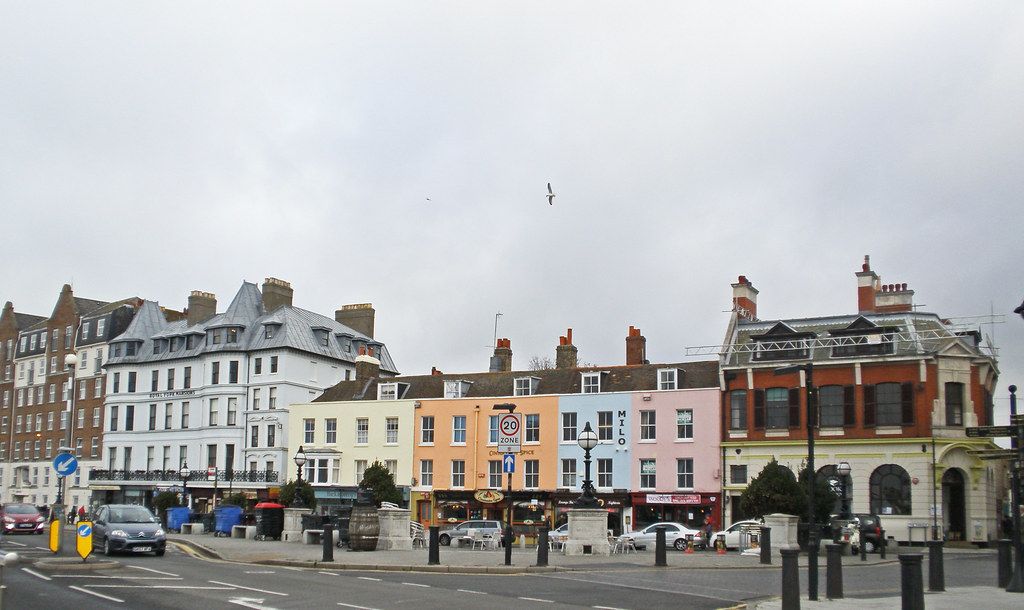
Seafront at Margate, Kent, showing the sea and sky.
Credit: amandabhslater — Flickr; CC BY-SA 2.0
Key takeaways
- • Turner returned to Margate across his life and made the coast a laboratory for atmospheric painting.
- • Margate's low horizon, tidal sands, and fast changing weather created the specific light Turner pursued.
- • Key works range from structured harbour views to near abstract late beach scenes focused on sky and light.
- • Most major Turner Margate canvases are in national collections, while Turner Contemporary connects the town to his legacy.
- • For plein air practice, prioritise sky, work in thin layers or graded washes, and revisit motifs under different conditions.
Stand on Margate's seafront on an autumn morning and you'll understand immediately. The sky here doesn't behave like sky elsewhere. It shifts, layers, and dissolves over the North Sea in ways that feel almost theatrical: bands of pale gold giving way to bruised grey, cloud edges catching light from angles you hadn't expected. The horizon sits so low and wide that the sky takes over everything. It's impossible to look at it and not think about Turner. His Turner Margate paintings aren't simply a chapter in art history; they're a record of this exact quality of light, observed obsessively over decades and pushed until representation became something closer to pure atmosphere. Margate is still that place. You can still stand where he stood, look where he looked, and paint what he saw.
Why Margate Mattered to Turner
Turner's relationship with Margate wasn't a single formative visit that he fondly recalled. It was a sustained, lifelong engagement with a specific stretch of coastline that he returned to again and again, from childhood into old age. The town shaped his eye in ways that no other single place quite did, not even Venice.
A Childhood Harbour, a Lifelong Obsession
Turner first came to Margate as a boy, sent to stay with relatives in the 1780s when his family wanted him out of London. He was around ten years old, and the North Sea coast of Kent was about as far from Covent Garden as it was possible to get. The wide beaches, the working harbour, the fishing boats against the morning sky: all of it seems to have lodged somewhere fundamental in how he understood coastal light.
He kept coming back. As a young professional establishing his reputation, as a mature artist experimenting with atmosphere and dissolution, and into his later years when he lodged with a Margate landlady named Sophia Booth, whose house on Cold Harbour gave him a vantage point over the sea that he used repeatedly. The town wasn't just a holiday retreat. It was a working relationship, renewed across a lifetime.
What the North Sea Gave Him
The specific conditions of the Thanet coast are worth understanding if you want to grasp why Margate mattered artistically rather than just biographically. The beach shelves very gently here, which means a vast expanse of wet sand at low tide that mirrors and diffuses the sky. The horizon is unusually low and uninterrupted. Weather comes in fast from the east with very little warning, and the light can shift from milky grey to sharp gold within minutes.
These are exactly the conditions that plein air painters seek out today: unpredictable, dramatic, and generous with the kind of transitional light that can't be manufactured or waited for. For Turner, Margate offered an open-air laboratory for the atmospheric experiments that would define his later career. The sky here demanded to be painted on its own terms, with the land and sea playing a supporting role.
Turner's Margate Paintings: Key Works to Know
Turner produced a substantial body of work connected to Margate, ranging from early, structured compositions to the near-abstract atmospheric studies of his final decades. A note of honesty is worth offering here: many of his Margate works don't carry definitive titles or confirmed attributions. Scholars have identified them through a combination of viewpoint analysis, dated correspondence, stylistic period, and comparison with known works. Where attribution is well established, that's noted; where there's reasonable scholarly consensus rather than certainty, that's worth keeping in mind.
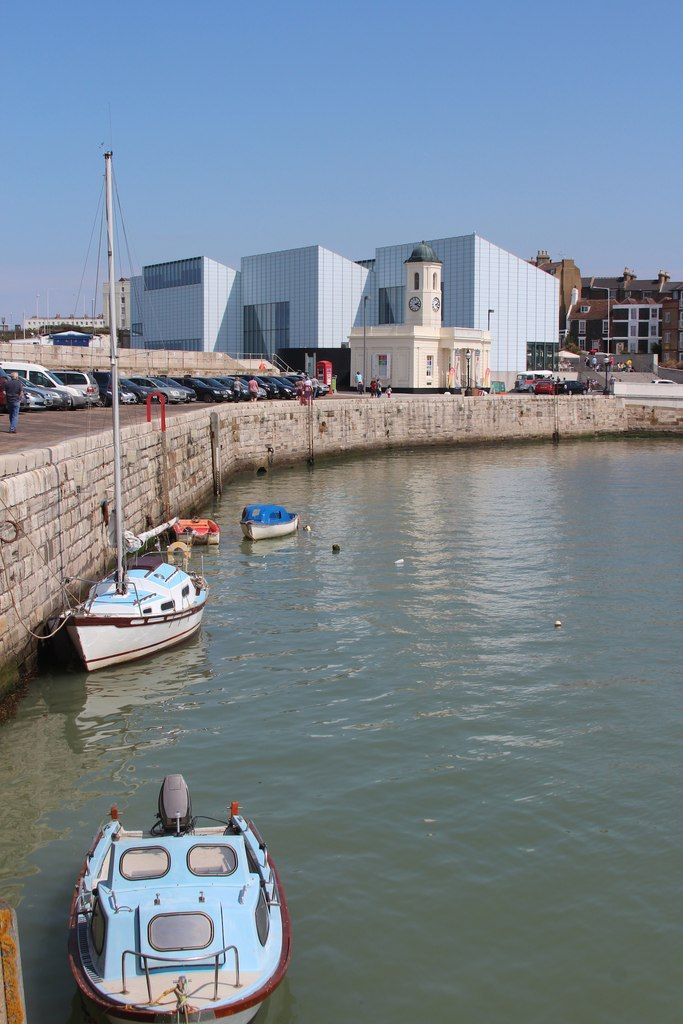
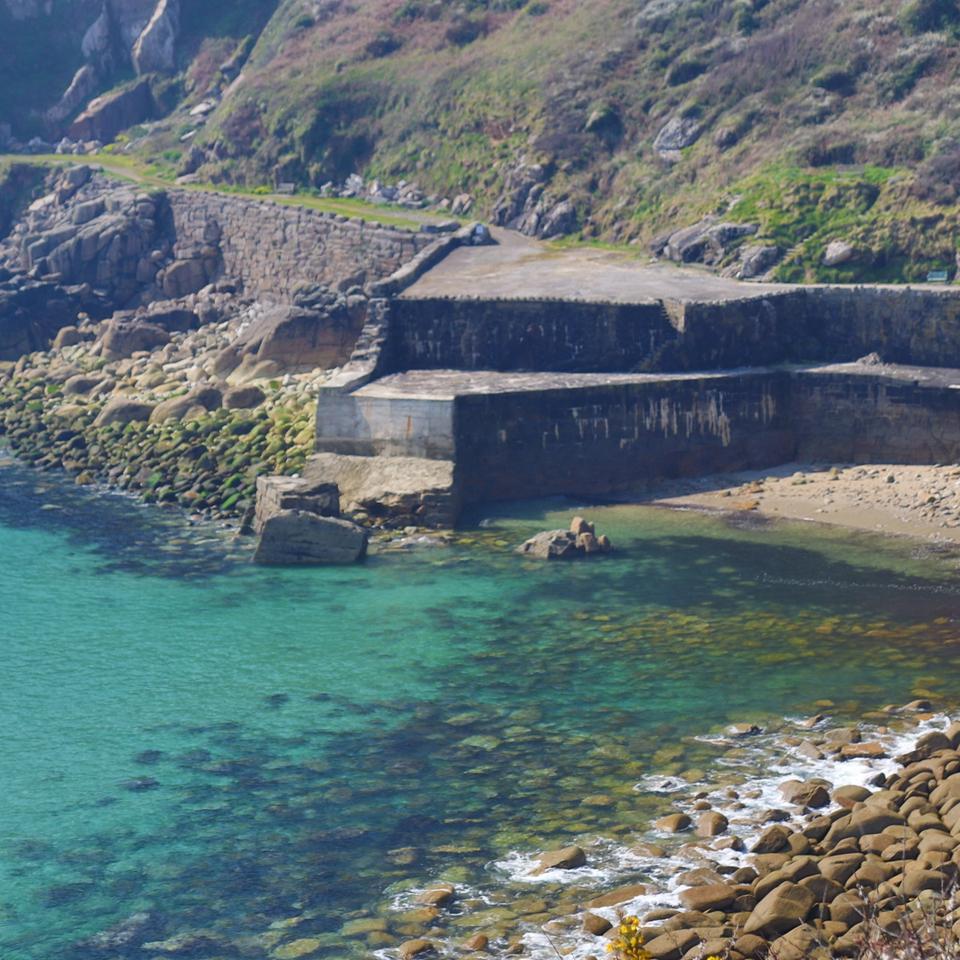
View of Margate Harbour Arm and the Turner Contemporary gallery. by Oast House Archive / Wikimedia. CC BY-SA 2.0.
Key Turner Margate Works
- Margate (1808)
- Oil, Yale Center for British Art
- Sun-rise. Whiting Fishing at Margate
- Watercolour
- Waves Breaking on a Lee Shore at Margate
- Oil, Tate Britain
- Margate Beach Scenes (c.1829–45)
- Oils and sketches, Tate collection
Structured harbour view; early, traditional composition
Dawn light on coastal craft; celebrated for atmospheric gradation
Storm surf and sky; drama over topography
Later, dissolving light and weather; minimal architecture
The 1808 harbour oil at Yale is a useful starting point because it shows Turner before the full dissolution of his later style. The composition is still conventional: harbour structures, boats, sky arranged in legible layers. It's accomplished and clearly observed, but it's the work of a painter still working within established frameworks. What makes it interesting in retrospect is what it doesn't yet do.
Sun-rise. Whiting Fishing at Margate moves further toward the atmospheric quality he would become known for. The watercolour captures dawn light breaking over fishing craft close to the shore, with colour gradations from warm gold through pale green that feel genuinely observed rather than composed. Curatorial analysis of this work highlights the subtlety of the tonal transitions, which Turner achieved through carefully controlled washes and selective reservation of the paper's white.
Waves Breaking on a Lee Shore at Margate, held at Tate Britain, shows the more dramatic register. The surf and spray dominate; the sky presses down; any sense of human habitation is minimal. Turner wasn't recording a scene so much as capturing a condition.
The later Margate beach scenes from the 1829 to 1845 period represent the furthest point of this journey. Architecture dissolves into light and weather; the beach is present mainly as a reflective surface for the sky above it. These works sit very close to abstraction, though they remained, for Turner, grounded in specific observation.
Reading Turner's Skies: What He Was Actually Doing
Understanding Turner's technique at Margate is useful not just historically but practically, because what he was solving on the Thanet coast are the same problems every painter faces there today.
His approach to the sky involved working in thin, luminous layers rather than stating colours directly. Curatorial analysis of his oil works suggests he frequently used a toned ground, often warm, and then built light through successive glazed layers rather than applying opaque paint. This gives his skies their characteristic sense of light coming from within rather than sitting on the surface. Cloud edges and surf highlights were often achieved by scraping or wiping rather than by adding paint: lifting material to reveal lighter layers beneath.
In his watercolours, graded washes do the equivalent work. Turner was technically gifted at controlling how a wash moved across paper, and his reserved whites (areas of unpainted paper that read as sunlight on water or the brightest parts of a cloud) are placed with great precision, even when the overall effect feels spontaneous.
The shallow horizon was a compositional choice as much as a topographic fact. By pushing the horizon low, he gave himself the maximum possible area of sky, and in doing so framed the light conditions themselves as the subject of the painting rather than any particular place or thing within it.
Think atmosphere, not architecture
Turner routinely subordinated buildings to sky and light in his Margate work. When you're setting up on the Margate seafront, try giving the sky at least two-thirds of your canvas. The buildings can wait.
His Margate work sits in an interesting transitional zone: the place is still identifiable, the harbour arm is still there, the fishing boats are still readable, but form is already beginning to yield to light. It's that quality, recognisable but dissolving, that makes these works feel so alive.
Visiting Margate Today: Where to Go and What to See
Most of the major Turner Margate paintings don't live in Margate. It's worth being straightforward about this: if you're making the trip specifically to stand in front of a key Turner canvas, you'll need to combine your visit with a trip to London. What Margate does offer is the gallery that carries his legacy and, more importantly, the actual coastline and light conditions he painted.
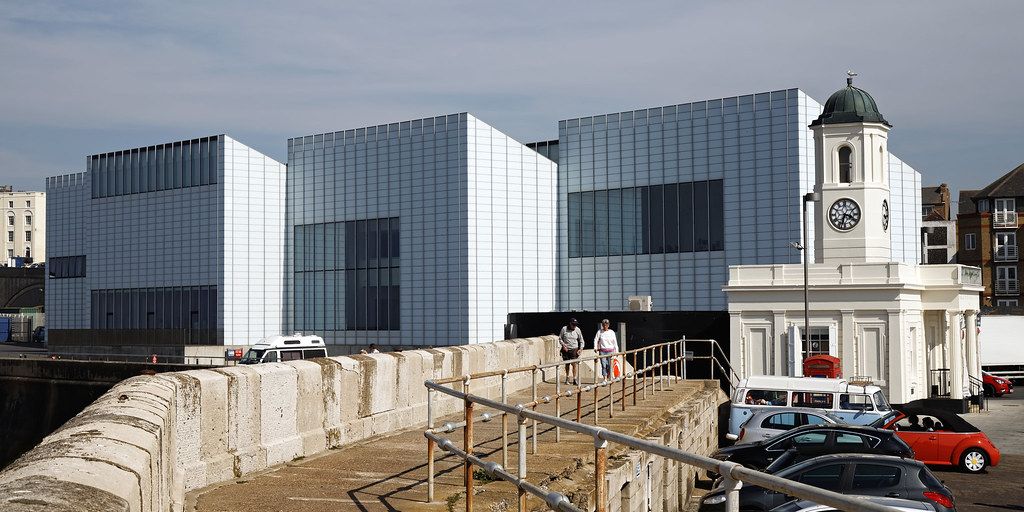
North side of the Turner Contemporary gallery in Margate, Kent, England. by Acabashi / Flickr — CC BY 2.0
Turner Contemporary
Turner Contemporary sits right on the seafront in Margate, built on the site close to where Turner's landlady Sophia Booth had her house. The building's large windows are orientated toward the sea and sky in a way that feels deliberately in conversation with what Turner was doing here. The gallery has a strong Turner-focused educational remit and runs a programme of temporary exhibitions and loans that regularly engage with his work and legacy.
Entry is free. The gallery is open Wednesday to Sunday and Bank Holidays, 11:00 to 17:00. It's worth noting that the special loan of Waves Breaking on a Lee Shore at Margate from Tate Britain, which was on display during the 250th anniversary period, ended in April 2026. The current programme is worth checking before you visit, but even without a major loan the gallery is a genuinely worthwhile stop, and its location means you're standing in Turner's actual working landscape the moment you step outside.
Gallery information was accurate at time of writing; check the Turner Contemporary website before your visit for the current exhibition programme.
Turner's House, Twickenham
For those who want to go deeper into the historical and scholarly side of the Margate connection, Turner's House in Twickenham is currently running "Unfinished Business: The Mystery of Margate and Turner's Bequest," on until October 2026. This exhibition explores the less-visited questions around Turner's later Margate work, his bequest, and what was left unresolved at his death. There's also an associated online lecture series, which makes it accessible even if a trip to Twickenham isn't straightforward. Check the Turner's House website for ticketing and dates.
Tate Britain
This is where most of the key Margate oils and watercolours actually live. Tate Britain holds the largest UK collection of Turner's work overall, and the Margate-connected pieces, including Waves Breaking on a Lee Shore, sit within a broader display of his career that makes the Margate work legible in context. Combining a trip to Tate Britain with a day in Margate gives you both the paintings and the landscape that produced them, which is the fuller experience.
| Venue | What's There | Practical Notes |
|---|---|---|
| Turner Contemporary, Margate | Turner-focused programme; temporary loans | Free entry; Wed–Sun and Bank Holidays, 11:00–17:00 |
| Tate Britain, London | Largest collection of Turner Margate oils and sketches | Permanent collection; check online for current displays |
| Turner's House, Twickenham | "Unfinished Business" exhibition (to Oct 2026) | Includes online lecture series; check website for tickets |
| Yale Center for British Art | Margate (1808) harbour painting | Online access; not a UK visit option |
Painting Margate's Light: A Turner-Inspired Approach for Today's Plein Air Painters
This is what the trip is really about. Turner's Margate skies weren't a historical accident; they were the product of sustained, deliberate observation of a specific kind of light. That light is still there. Here's how to work with it.
Where to Set Up
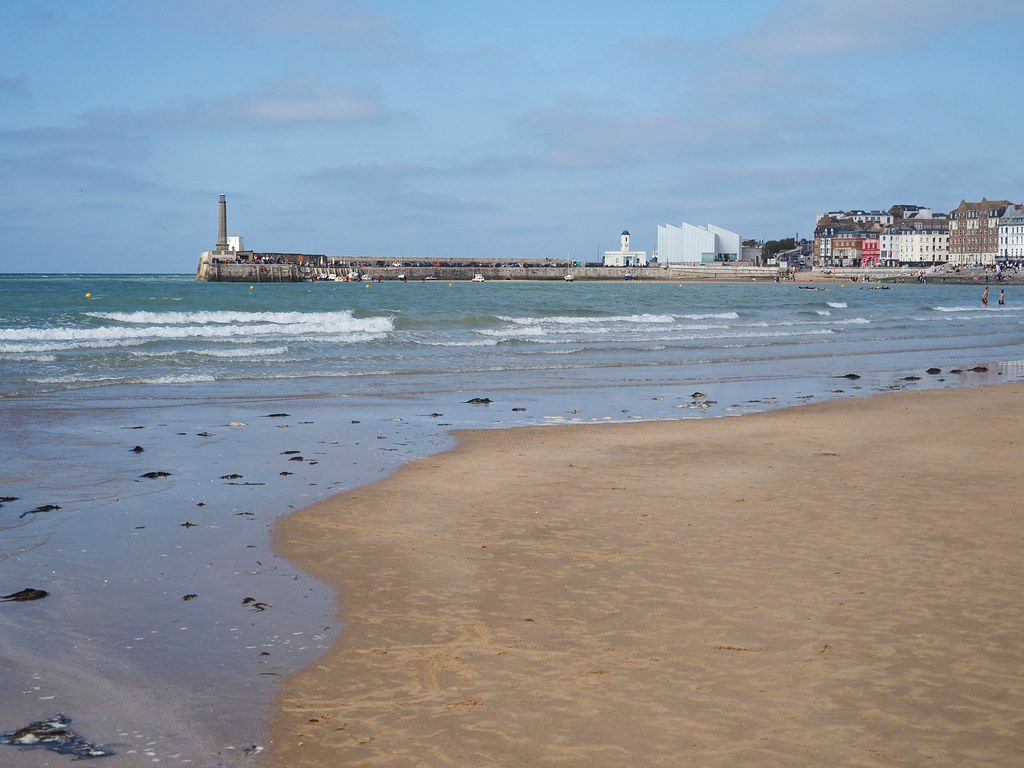
Margate Main Sands, a beach in Kent, United Kingdom. by Bex.Walton — Flickr — CC BY 2.0
Margate's seafront has been heavily developed since Turner's day, and it would be misleading to claim you can stand at his exact viewpoint for any particular canvas. The shoreline has changed, the town around the harbour has changed, and the working fishing fleet that populated his early harbour views is long gone. What hasn't changed is the sky, the tidal sands, and the basic geometry of the coastline.
The harbour arm and the Rendezvous area give you a view back across the harbour with the town and, now, Turner Contemporary framing the background. It's a different view from Turner's, but the quality of reflected light off the sheltered water here is directly comparable. The Main Sands offer the most open and uninterrupted horizon: at low tide, the wet sand extends a long way out and you get that mirror-sky effect that Turner used repeatedly. For a more dramatic register, the shore-level views looking directly out to the North Sea east of the harbour arm give you the sky at its most imposing. Seek out the sessions at dawn or in the late afternoon, when the transitional light is closest to what Turner pursued.
In summer the main sands can get busy. Early morning sessions avoid the crowds and tend to give you the best light conditions anyway.
Working with the Weather, Not Against It
Coastal Kent weather is changeable at any time of year. A session that starts in flat grey can shift to extraordinary broken cloud light within thirty minutes, and back again. The instinct is to wait for conditions to settle, but Turner's approach suggests the opposite: commit to the conditions you arrive in, work quickly, and be willing to begin again if things change substantially.
Turner returned to the same Margate motifs repeatedly, across seasons and across years. That serial approach, coming back to the same viewpoint under different conditions, is a genuinely useful model for capturing coastal variability rather than trying to resolve it in a single session. If you're planning a visit, more than one session is worth building in if at all possible.
Embrace incompletion. Some of the most atmospheric works in Turner's Margate output are the ones where he stopped before everything was resolved, where the weather got into the painting rather than being kept outside it.
Technique Notes by Medium
Turner's method in modern materials
For oils or acrylics, try working in thin glazed layers over a toned ground — knock back the white first, then build light gradually. For watercolour, use graded washes and reserve your whites early. Subtle overlaid washes suit the Margate sky better than bold marks.
North Sea light in Kent is distinctly different from Mediterranean coastal light and very different again from the strong directional light that gives French plein air painting its character. It's more diffuse, more changeable, and often more dramatic in its effects precisely because the drama is less predictable. Your palette may need to be cooler and more restrained than you're used to: the greys and pale golds of a Margate sky are rarely vivid, but they carry an enormous range of subtle tonal variation. Don't reach for saturation; reach for nuance.
Margate's Turner Legacy: Then and Now
Turner's 250th anniversary in 2025 to 2026 brought renewed scholarly and public attention to the Margate connection, and the cultural conversation around what the town meant to him feels more alive right now than it has for decades. Turner Contemporary has played a significant role in shifting Margate's identity from faded seaside resort to genuine art destination: the gallery has consistently framed the town as a site of artistic significance rather than mere biographical interest.
That reframing has gathered momentum. Tracey Emin, who grew up in Margate and has spoken extensively about the town's influence on her own work, represents one thread of a much longer story about this particular stretch of the Kent coast and its capacity to produce and sustain artists. The connection isn't incidental; it has something to do with the light, the scale of the sky, and the particular quality of being on the edge of something that opens outward without limit.
What makes this moment worth remarking on is that the conversation is live. The scholarly questions around Turner's Margate bequest and his late unfinished works are being actively researched. The gallery programme is engaged with the legacy rather than simply commemorating it. And the coastline that drove all of it is still there, still producing the conditions that made Turner come back year after year.
Go and see it. Better still, take your paints.
FAQ
Frequently Asked Questions
Where can I see Turner Margate paintings in person?
Most key Margate works are held at Tate Britain and other national collections. Turner Contemporary in Margate mounts loans and displays related exhibitions, and some pieces can be viewed online.
Did Turner live in Margate?
Turner never lived permanently in Margate, but he lodged there repeatedly and stayed for extended periods, including at a house on Cold Harbour in later life.
What is special about Margate light that Turner painted?
Margate has a low, wide horizon and rapidly changing coastal weather. The wet sands and open sea create reflective, layered skies that reward quick observation and glazed, subtle handling of light.
Can I paint Margate like Turner today?
Yes. Work quickly, give the sky generous space, use thin glazed layers for oils or graded washes for watercolour, and return to the same view across different conditions.
Are all Turner Margate works definitively attributed?
No. Some works have uncertain titles or attribution. Scholars use viewpoints, dates, and stylistic comparison to identify Margate pieces, so a few remain subject to debate.
Author

PleinAirPainting Editorial Team
PleinAirPainting.co.uk helps artists paint outdoors with confidence through UK-focused guides, equipment advice, resources and plein air inspiration.