Social Media for Artists: An Instagram and TikTok Guide for UK Plein Air Painters
A practical Instagram and TikTok guide for UK plein air painters. Learn how to capture process-rich content, grow a local audience, and turn followers into buyers without burning out.

Key takeaways
- • Choose one or two platforms and do them well, with Instagram as the primary platform for most UK plein air painters.
- • Use Reels and short video for discovery, grid posts and carousels for your portfolio, and Stories for day-to-day updates.
- • Batch content capture on plein air days and schedule posts at home to avoid poor signal and save painting time.
- • Use a targeted mix of hashtags, descriptive captions and geotags to reach regional collectors and communities.
- • Build off-platform assets like an email list and protect your wellbeing by keeping social media a sustainable part of your practice.
If you're already painting outdoors regularly and producing work you're proud of, social media is probably the most accessible way to get that work in front of people who might buy it, attend one of your workshops, or simply follow your practice with genuine interest. That's a specific, modest claim, and it's worth keeping it that way. Social media for artists is a useful tool, not a career transformation waiting to happen. Used well, it builds a small, engaged audience over time. Used badly, it eats into your painting hours and makes you feel anxious about likes.
This guide is written for UK plein air painters who are already active and want to use Instagram and TikTok in a way that actually fits around their practice. It's practical, it's honest about the effort involved, and it's rooted in the specific realities of painting outside in Britain: the weather, the locations, the patchy signal, and the particular kind of work that comes from spending a morning on a headland in Pembrokeshire or a winter afternoon on the North Yorkshire Moors.
Why Social Media is Worth Your Time (and How Much of It)
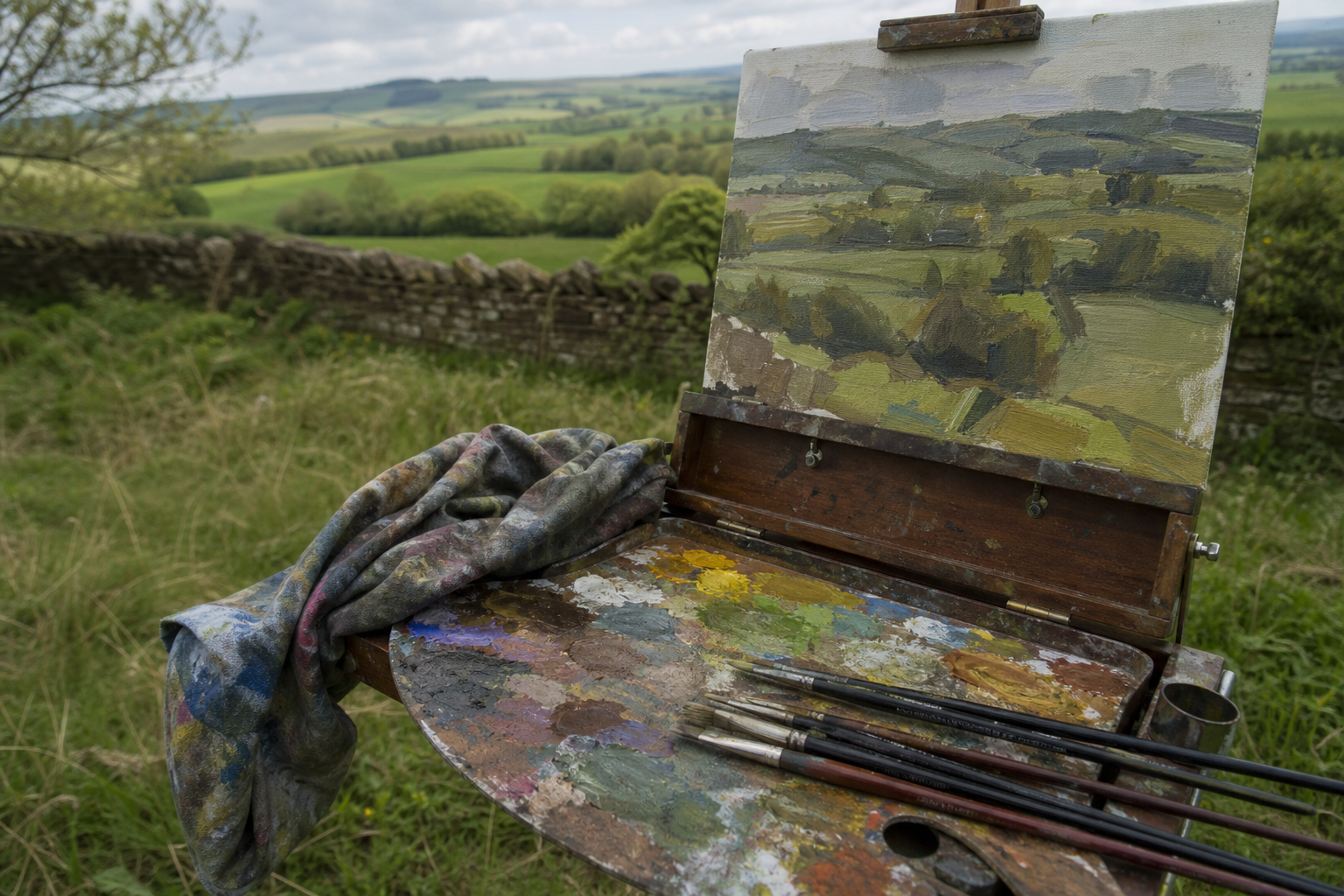
Plein air painting is unusually well suited to social media. It's visual, obviously, but it's also process-rich and location-based, and those two things matter a great deal on platforms built around images and short video. A studio painter can show a finished canvas; a plein air painter can show the moment before the light changed, the half-finished piece propped against a dry-stone wall, the palette smeared with a morning's worth of mixed greys. That's compelling content, and it's content you're already generating every time you go out.
The goal here isn't to go viral. It's to build a small audience of people who are genuinely interested in your work: local collectors, fellow painters, gallery owners, people who commission landscapes of places they love. A following of a few hundred engaged people is worth far more than ten thousand passive followers who never interact. Social media is the top of the funnel; the actual sale, the workshop booking, the commission enquiry, those happen somewhere else. But social media is often what starts the relationship.
That said, not every painter needs it. If you sell well through local exhibitions, have a reliable network of collectors, or simply find the whole thing demoralising, there are valid alternatives: art society membership, direct mailouts, word of mouth. Social media is the most accessible route for most UK plein air painters who want to grow beyond their immediate circle, but it's not the only one.
A realistic time commitment is two to three hours a week, mostly on post-processing and scheduling rather than live posting. We'll come back to that.
Choosing the Right Platforms for Your Practice
The most useful piece of advice in this entire guide is also the simplest: pick one or two platforms and do them properly, rather than spreading yourself thin across five and doing all of them badly.
For most UK plein air painters in 2025, the right answer is Instagram first, with TikTok or Pinterest as a secondary. Facebook is worth maintaining for local groups and event promotion but isn't a primary growth platform. YouTube is genuinely valuable for teaching-focused artists but requires a level of production effort that most intermediate painters shouldn't prioritise.
| Platform | Strengths for plein air painters | Effort level | Best for |
|---|---|---|---|
| Portfolio, Reels, Stories, community | Medium | Most UK plein air artists | |
| TikTok | Discovery, process video, reaching new audiences | Medium-high | Artists comfortable on camera or with voiceover |
| Evergreen traffic to your site or shop | Low once set up | Artists with a website or online shop | |
| Local groups, art societies, older buyers | Low | Events, local networking | |
| YouTube | Long-form demos and tutorials | High | Teaching-focused artists |
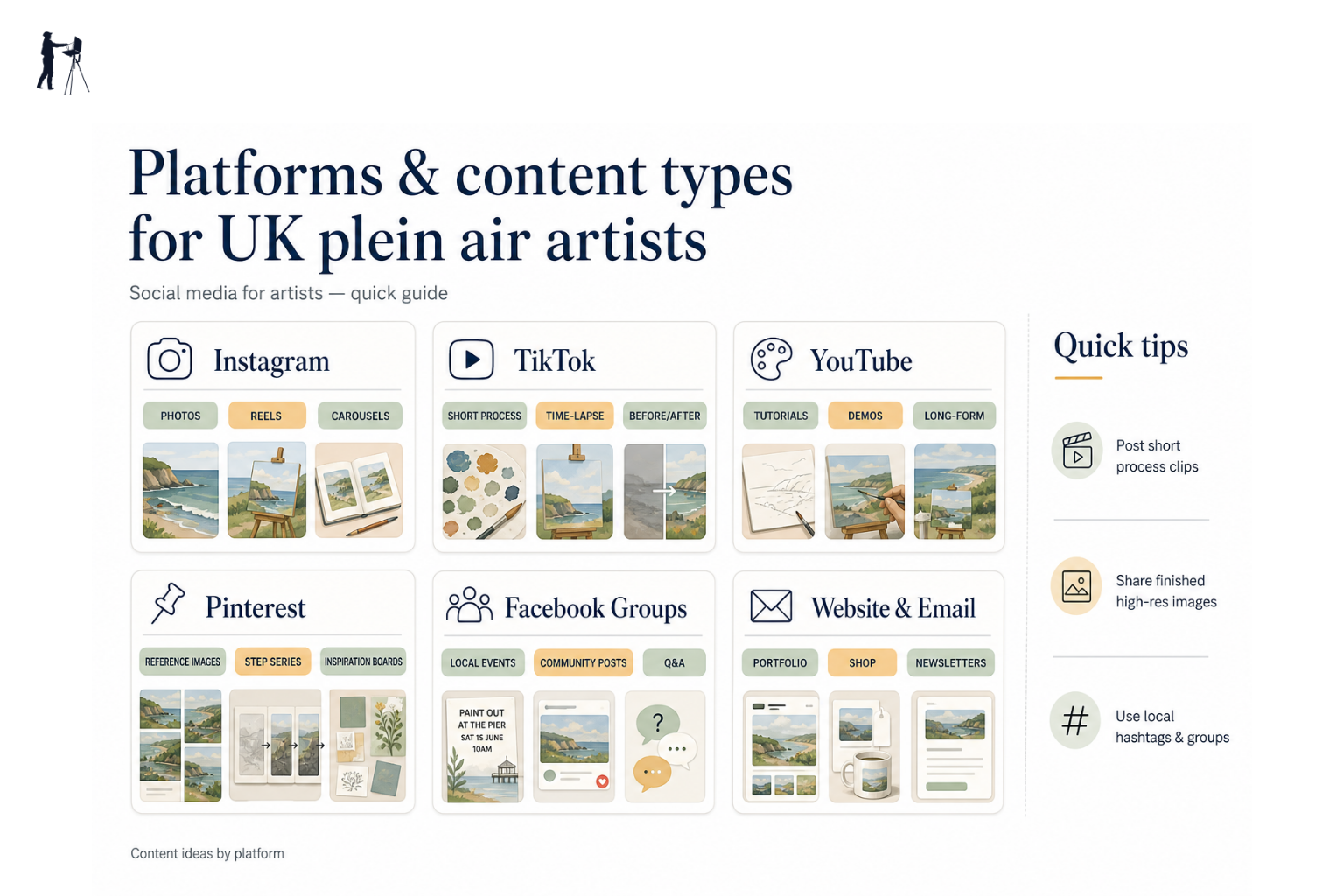
Instagram: the core platform for most artists
Instagram remains the dominant visual platform for artists in the UK. It has a large, established community of painters, collectors, and galleries, and its formats map directly onto what plein air painters already produce.
Reels (short videos, typically 15 to 90 seconds) are now the primary reach tool. They're shown to people who don't already follow you, which means they're your main route to new audiences. Grid posts are your portfolio wall: finished paintings, process shots, and detail images that give a permanent record of your work. Stories (images and short videos that disappear after 24 hours) are the low-pressure, day-to-day layer where you can share the more casual, behind-the-scenes moments of a painting day without worrying about whether it's polished enough for your grid.
UK plein air painters have a genuine advantage on Instagram. British landscape, light, and weather make for striking, atmospheric imagery. The specificity of a particular headland, estuary, or moorland in a recognisable season resonates with people who know those places or wish they did.
TikTok: the discovery engine
TikTok is a discovery-first platform. Its algorithm is unusually good at showing your content to people who've never heard of you, which means it can grow an audience faster than Instagram if you engage with it consistently. It rewards informal, frequent content over polished, infrequent posts.
Many painters dismiss TikTok as being for a younger audience, but this is changing. The platform has a significant and growing community of artists, craftspeople, and makers, and the demographic has broadened considerably. More on TikTok specifically later in this guide.
Pinterest, Facebook, and YouTube: worth knowing about
Pinterest is useful if you have a website or an online shop. Pins drive evergreen, keyword-based traffic, meaning a pin you created two years ago can still send visitors to your site today. It's low effort once you've set up a rhythm, but its value is in long-term discoverability rather than community building.
Facebook is worth maintaining, not growing from scratch. Local art society groups, regional selling groups, and event promotion still happen primarily on Facebook, and many of the collectors most likely to buy plein air landscapes are active there. Keep your page updated and use it for event announcements and community participation.
YouTube is a serious long-term option for artists who want to teach, but it requires a commitment that most painters shouldn't prioritise while they're still building an active practice. It's not the right starting point here.
Setting Up Your Instagram Profile to Work Harder
Even artists who've been on Instagram for years often have profiles that undersell them. Before you think about content, make sure the profile itself is doing its job.
Handle, name, and bio
Your handle (the @username) should be simple, memorable, and searchable. If yours is already established, don't change it. If you're starting fresh, avoid numbers, underscores where possible, and anything that's hard to spell by ear.
Your name field (the bold text at the top of your profile) matters more than your handle for search. This is where keywords should live. Something like "Laura Hennessy | Plein Air Landscapes | Wales" tells Instagram's search function who you are and what you paint. Include "plein air", your medium, or your region if you can fit it naturally.
Your bio has two to three lines to do real work. State what you paint, how you paint it, and what someone can do next.
Bio tip for plein air painters
Your Instagram bio should tell three things in two lines: what you paint, how you paint it, and where you are based. Something like "Oil plein air landscapes | Yorkshire & the Dales | DM for commissions" is clear, searchable, and welcoming.
Link in bio and highlights
Use a multi-link tool, Linktree is the most commonly used, with your portfolio or shop at the top and a newsletter sign-up below. Don't send everyone to your homepage and leave them to navigate from there; put your most important destination first.
Highlights (saved Story collections pinned to your profile) act as mini landing pages. Useful sets for plein air painters include: "Available Work," "Plein Air," "Workshops," and "Exhibitions." Keep them updated. A Highlight showing work from three years ago with nothing recent tells visitors that the profile isn't active.
What to Post: Content Ideas That Play to Your Strengths
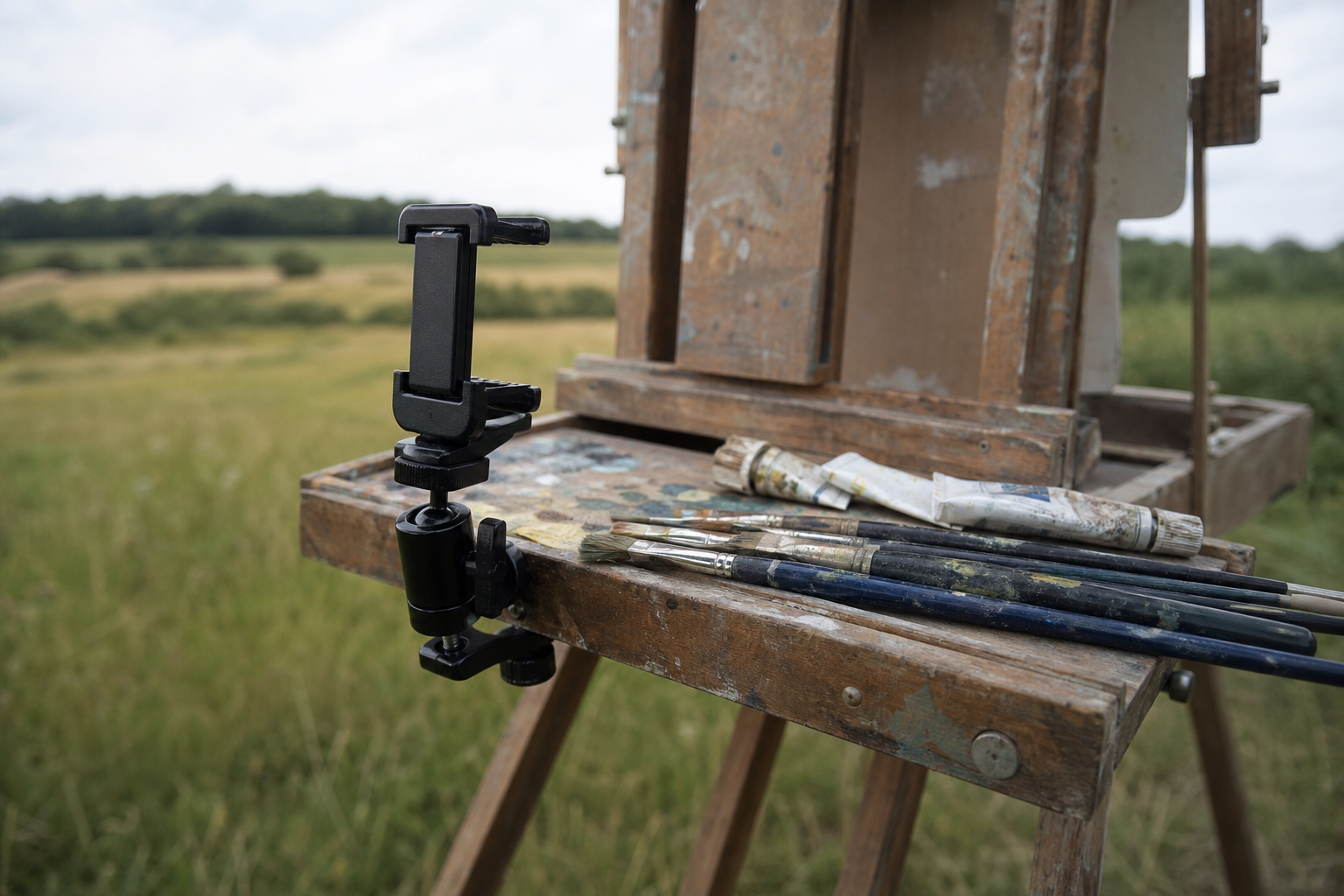
Plein air painting is genuinely excellent social media material. It's visual, it's process-rich, it happens in beautiful places, and it involves real conditions, real light, and real decision-making under pressure. You don't need to manufacture content; you need to capture what you're already doing.
Reels and short video: your reach engine
Reels are how people who don't already follow you discover your work. They don't need to be highly produced. A 30 to 60 second clip of a painting evolving, cut to music or with a brief voiceover, is entirely sufficient.
Specific ideas that work well:
- Start-to-finish plein air clips: Even a basic sequence of blank canvas, mid-point, and finished piece is compelling
- Timelapse as the light shifts: Set your phone up on a small tripod and record the scene changing; the painting evolving against a moving sky is visually arresting
- Scene-to-painting reveals: A landscape photograph, then the finished canvas; the comparison is always engaging
- Environmental and seasonal content: Fog on the Fens, low tide on a Scottish estuary, frost on the South Downs. These have a specificity that generic painting content doesn't
- Short voiceover tips: "Three things I do when the light changes faster than I expected" works well as a 20-second Reel with no face on camera
UK-specific locations add a strong local connection. Painting at a recognisable viewpoint, a named headland, or a familiar market town creates an immediate hook for people who know the place.
Grid posts and carousels: your portfolio wall
Your grid is your portfolio. Finished paintings should form its core. Don't post everything; post the pieces you're genuinely proud of, at a pace that keeps the grid feeling current.
Carousel posts (multiple images in a single post) consistently outperform single images for engagement. A three-slide sequence works particularly well: location photograph, pencil sketch or tonal study, finished painting. It tells the story of the piece and invites viewers to swipe through.
Detail shots and close-ups of texture and brushwork also perform well. They give collectors and fellow painters something to look at beyond the whole composition.
Stories: your day-to-day presence
Stories are deliberately low-polish. They should feel like a genuine day out, not a production. A quick shot of your set-up, a poll asking followers which composition they'd choose, a few seconds of packing up in the rain, a note saying a piece has just been listed: all of these take less than a minute to post and keep your profile feeling active between grid posts.
Use link stickers in Stories to send viewers directly to a specific painting on your site or a workshop booking page. This is one of the most underused features for artists who actually sell work.
Capture content in batches
On a plein air day, spend two minutes gathering footage before you pack up: a wide shot of the scene, a close-up of your easel, a few seconds of brushwork, a final reveal of the finished piece. That one filming session gives you a Reel, a grid post, and a Story, all from a single afternoon.
Hashtags, Keywords, and Geotags: Getting Found in the UK
Instagram's search and recommendation system uses both hashtags and caption text to categorise your content. The days of stuffing 30 hashtags into every post are over; five to ten relevant, well-chosen tags are more effective than a long list of barely-related ones.
Aim for a mix of broad, mid-range, niche, and regional tags. Avoid the broadest possible tags (like #art, which has hundreds of millions of posts) because your work will disappear immediately. Mid-range and niche tags give you a genuine chance of being found.
| Type | Example tags | Notes |
|---|---|---|
| Medium-based | #oilpainting #watercolour | Broad; millions of posts |
| Subject-based | #landscapepainting #seascape | Mid-range; targeted |
| Practice-based | #pleinairpainting #paintingoutdoors | Niche; committed community |
| Regional / location | #yorkshireart #cornwallartist #scottishlandscape | Local collectors and galleries |
| Community | #ukartist #britishart | UK-specific reach |
Write captions as mini search queries. "Plein air oil painting on the North Yorkshire coast at low tide" tells Instagram's algorithm exactly what the post contains and will perform better than "today's session." You don't need to write an essay; a descriptive single sentence is often enough.
Geotag every plein air location. National parks, well-known viewpoints, coastal towns, named headlands: these connect you with people who love those places, including local collectors, regional tourism accounts, and galleries. This is a low-effort, high-value habit to build from the start.
A Realistic Posting Strategy You Can Actually Stick To
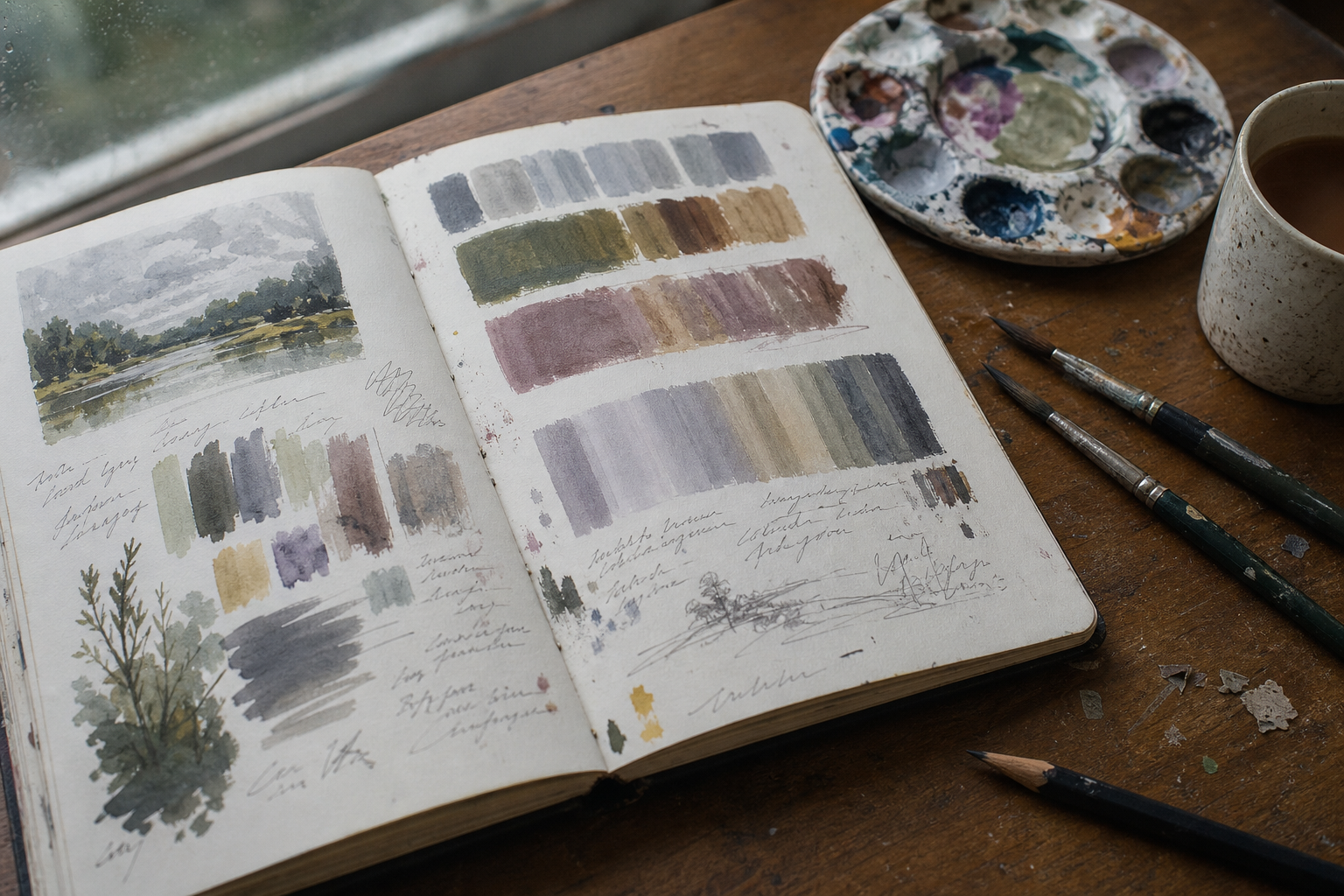
The most common mistake is posting intensively for a few weeks and then going quiet for months. Algorithms and audiences both respond better to consistent, moderate activity than to bursts followed by silence. Two to three grid posts per week plus a handful of Stories is a sustainable rhythm for most painters who also have an active practice. You don't need to post every day.
The key to making this work without it consuming your time is batching. Treat your plein air days as content capture days, not posting days. Film and photograph everything in the field, then edit and schedule your posts from home across the following week.
A single afternoon's painting session can realistically generate:
- One Reel (process clip or scene-to-painting reveal)
- One grid post (finished painting)
- One or two Stories (set-up, location, packing up)
- Material for a carousel (location photo, sketch, final piece)
That's a week's worth of content from one outing. If you paint twice a week, you'll have more material than you need.
A practical note for UK plein air painters: mobile signal in rural and coastal locations is often poor. Don't plan to upload in the field. Capture everything offline, back it up when you're home, and schedule posts using Instagram's built-in scheduler or a third-party tool like Later or Buffer. This also means you can write better captions from home than you would trying to type with paint-covered fingers on a clifftop.
Even if you only get out once a week, or once a fortnight, that's still enough. One session, captured thoughtfully, gives you content to work with.
TikTok for Plein Air Painters: Is It Worth It?
Honestly, it depends on you. If the idea of making short videos feels genuinely daunting, Instagram alone is sufficient and there's no pressure to add TikTok. But if you're curious, or if your Instagram growth has plateaued and you're looking for a way to reach new people, TikTok is worth a considered look.
The platform's core strength is discovery. Its algorithm shows content to people who've never heard of you based on what they've watched before, which means you don't need an existing following to get views. A first video from a new account can outperform a post from an established one if the content connects.
What performs on TikTok for artists
Short, hook-driven videos perform best. The first two seconds determine whether someone keeps watching or scrolls past. A strong opening visual, the reveal of a striking landscape or a dramatic close-up of brushwork, does more than any amount of introduction.
Informal, authentic content consistently outperforms polished production on TikTok. Honest commentary works: "why I changed this colour mid-painting," or "what I did when the tide came in faster than I expected," are the kinds of captions that stop people scrolling.
Caption text matters more on TikTok than Instagram. The platform increasingly uses caption text to categorise content for the recommendation system, so write descriptively: "plein air oil painting on the Yorkshire Dales in winter fog" rather than a list of hashtags.
Plein air content ideas for TikTok
- 15 to 30 second scene-to-painting transformations (these travel extremely well)
- "Painting in [UK location]: a day out" cuts showing travel, set-up, key stages, and the finished piece
- Seasonal and environmental angles: painting in fog, against an incoming tide, in sharp early-morning frost
- Voiceover mini-lessons: "three things I do when the light changes faster than I can mix"
- "What's in my plein air bag" walkthroughs (keep these practical, not product-focused)
Almost all of this content can be repurposed directly as Instagram Reels with minimal extra work. If you're creating for one platform, you're creating for both.
TikTok without being on camera
You do not need to appear on screen. A 20-second clip of a painting evolving against a backdrop of moorland, with a voiceover explaining what you are trying to capture, works extremely well, and you can repurpose it directly as an Instagram Reel.
Turning Followers into Buyers, Workshop Attendees, and Collectors
Social media is the top of the funnel. The sale, the commission enquiry, the workshop booking: these almost always happen somewhere else, via your website, email, or a direct message. The mistake many artists make is assuming that followers will find their way to a purchase without being guided. They won't.
Be explicit in your calls-to-action. Don't assume people know what to do next. Specific language works better than vague invitations:
- "Tap the link in my bio to see which pieces are currently available"
- "Message me with 'WORKSHOP' if you'd like to join a plein air day in the Peak District this autumn"
- "Sign up to my newsletter for early access to new work before it goes to the grid"
Use Stories link stickers to send viewers directly to a specific painting page or booking form. This is far more effective than directing everyone to your homepage and hoping they navigate to the right place.
For UK plein air painters specifically, an email list is worth building from the start. Local collectors and workshop attendees often prefer a more personal relationship than social media allows. A newsletter, even a short monthly one, creates that connection off-platform and means you're not entirely at the mercy of an algorithm deciding who sees your posts. If a platform changes its rules tomorrow, your email list remains yours.
Community engagement also matters more than many artists realise. Following local galleries, regional tourism accounts, and other UK plein air painters, and commenting thoughtfully on their posts, builds genuine relationships that lead to real-world opportunities: exhibition invitations, group painting days, recommendations to collectors. This isn't gaming an algorithm; it's the digital version of being a visible and engaged member of an art community.
Keeping It Sustainable: Social Media Without Burning Out
Social media creates genuine anxiety for a lot of artists, and it's worth acknowledging that honestly rather than brushing past it. The combination of public visibility, unpredictable algorithm performance, and the implicit comparison that comes from seeing other artists' work can be genuinely difficult. A post you felt proud of gets ten likes; a casual shot gets two hundred. Neither outcome tells you much about the quality of your work, but it can feel as though it does.
A few things that help:
Separate your self-worth from your metrics. Reach and likes measure the algorithm's behaviour on a given day, not the quality of your paintings. These are not the same thing, and treating them as though they are will erode your confidence over time.
Build off-platform assets. An email list, a website, and real-world relationships with collectors and galleries mean you're not entirely dependent on any single platform. Platforms change, algorithms shift, and accounts get hacked. The relationships you build off-platform are more durable.
Set a schedule and protect it. Consistency matters more than frequency. Posting twice a week reliably is better than posting daily for three weeks and then stopping entirely. Skipping a week occasionally is fine; disappearing for months means starting again from scratch.
Know when to step back. Some artists find social media genuinely harmful to their wellbeing and peace of mind, and it's entirely valid to reduce your involvement or stop altogether. Local art societies, word of mouth, regional exhibitions, and direct collector relationships are real alternatives. The goal is a sustainable painting practice, and social media should serve that goal, not undermine it.
Used well, and kept in its proper place, social media is a genuinely useful part of a plein air painter's toolkit. It connects you with people who care about the places you paint, puts your work in front of collectors who'd never find it otherwise, and creates a record of your practice that grows over time. That's worth the effort. Just make sure it stays in the service of the painting, not the other way around.
FAQ
Frequently Asked Questions
How much time should I expect to spend on social media each week?
Plan for two to three hours a week, mostly on editing, caption writing and scheduling rather than posting live in the field.
Which platform should I prioritise as a UK plein air painter?
Instagram first for portfolio and community. Use TikTok as a discovery engine if you are comfortable making short videos. Pinterest, Facebook and YouTube have specific uses but are secondary.
Do I need to upload while painting outdoors?
No. Mobile signal is often poor in rural coastal locations. Capture footage offline, back it up at home and schedule posts from there.
What type of content performs best for plein air artists?
Short Reels or TikToks showing process, timelapse or scene-to-painting reveals for reach. Grid posts and carousels for your portfolio and Stories for low-pressure day-to-day updates.
How do I turn followers into buyers or workshop attendees?
Use clear calls to action, link stickers in Stories, a prominent multi-link in your bio and an email list. Direct followers to specific painting pages or booking forms rather than your homepage.
Author

PleinAirPainting Editorial Team
PleinAirPainting.co.uk helps artists paint outdoors with confidence through UK-focused guides, equipment advice, resources and plein air inspiration.