The Best Portable Chairs and Stools for Plein Air Painting
Practical guide to choosing a portable chair for plein air painting. Compare sit mats, stools, ultralight and full chairs to match how far you walk, terrain and session length.

Key takeaways
- • Choose seating based on walk distance, session length, terrain and any back or joint issues.
- • Tripod stools are light, stable on uneven ground and cheap but offer no back support.
- • Ultralight backpacking chairs give a good balance of comfort and weight but can sit low and cost more.
- • Full-size folding and rolling art chairs offer maximum comfort but are heavy and best for car-based painting.
- • Check packed size, seat height (30–40 cm), leg foot design and test a chair on similar ground before buying.
Standing for a full painting session is fine when you're caught up in the moment, but most painters reach a point where their back starts to object before the painting is finished. For shorter outings that might not matter much. For longer sessions, or for anyone with existing back, hip, or knee concerns, having the right seat can be the difference between staying out for two hours and calling it after forty-five minutes.
The trouble is that finding the right portable chair for plein air painting is not as simple as grabbing a camping chair from the shed. The options range from a £6 foam sit mat to a purpose-built rolling art chair that costs as much as a decent easel, and the right answer depends almost entirely on how far you walk, how long you paint, and what ground you're standing on. This article cuts through the options, compares the main types honestly, and helps you work out which one suits your particular way of painting.
The core tension is straightforward: the lightest seats offer the least comfort and support, while the most comfortable options tend to be heavy and bulky. Everything in between involves a trade-off. Knowing which trade-offs matter for your sessions makes the decision much simpler.
Why Seating Matters More Than You Might Think
Sitting to paint is not just about comfort. The position you paint from affects your posture, your arm movement, and your relationship to the canvas or paper in front of you. Watercolour painters, in particular, often find that sitting allows better control over washes and brush angle than standing at a full easel does. Holding a sketchbook in the lap or working at a low pochade box simply works better from a seated position for many people.
Beyond technique, there is the physical reality of long, static sessions outdoors. Standing on uneven ground, shifting weight constantly, or perching on a low wall puts real strain on the lower back and hips over time. On a warm day in a good location, it is easy to lose track of time and paint for two or three hours without moving. Do that regularly from a poor position and you will start to feel it.
For painters with existing back, hip, or knee conditions, seating should be a first-order consideration when putting together a plein air kit, not an afterthought. Getting it right early means more comfortable sessions, not fewer. Think of it as part of the kit in the same way as your easel or your brushes.
The Five Main Types of Plein Air Seating
Sit Mats and Ground Seats
A sit mat is the lightest and cheapest option available. Foam mats, insulating sit pads, and posture-support ground seats (similar to the Backjoy style) all fall into this category. They weigh almost nothing, pack flat, and cost very little.
In practice, they work best for sketchbook painters on dry ground who do not need a freestanding easel. UK grass is rarely dry enough for ground seating to be comfortable for long, and getting up from ground level on a slope or soft surface becomes awkward quickly. There is also no back support at all, which limits how long most people can sit comfortably.
For very light outings, or as a supplement to another seat, a sit mat earns its place. As a primary solution for longer sessions, it falls short for most painters.
Tripod and Folding Stools
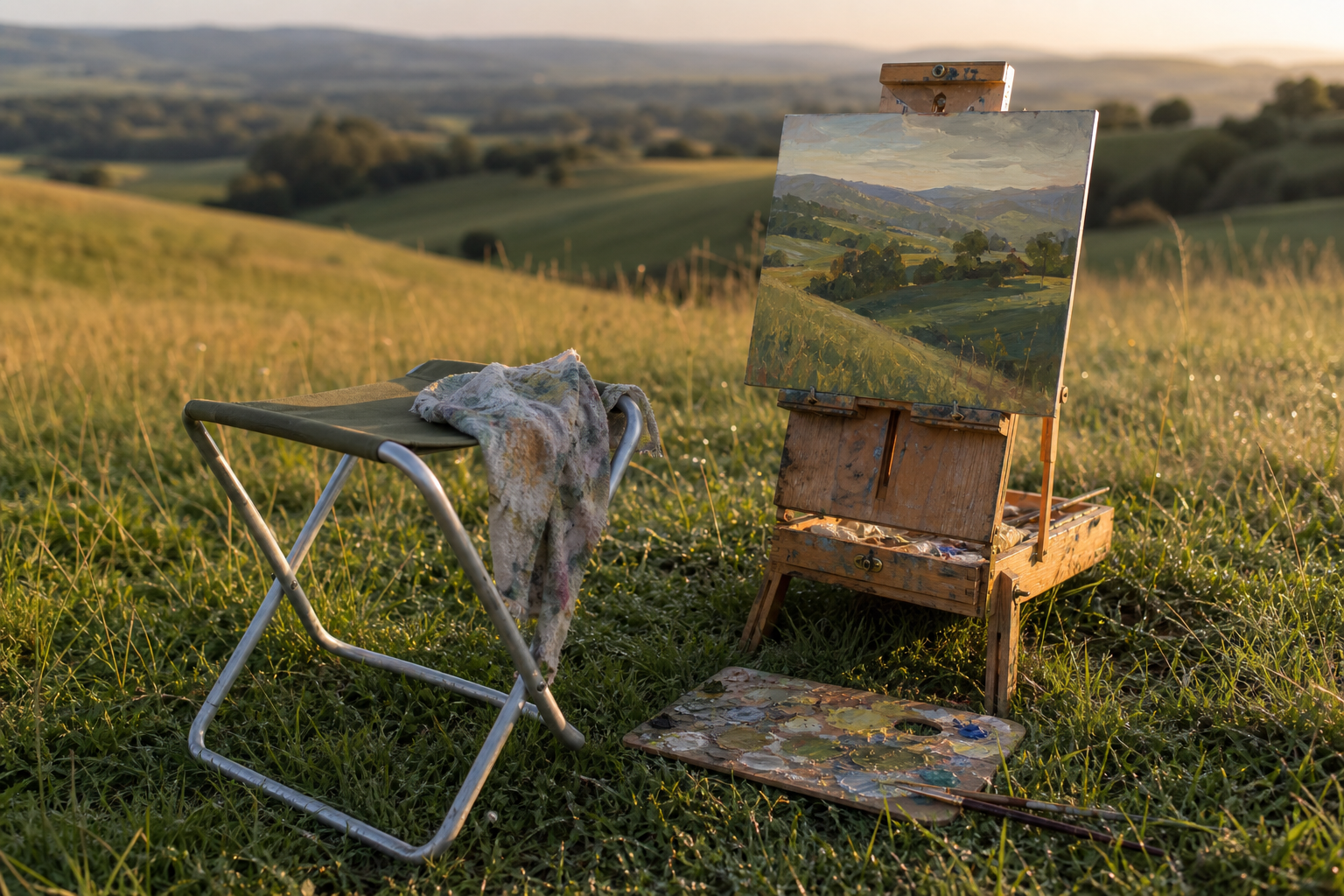
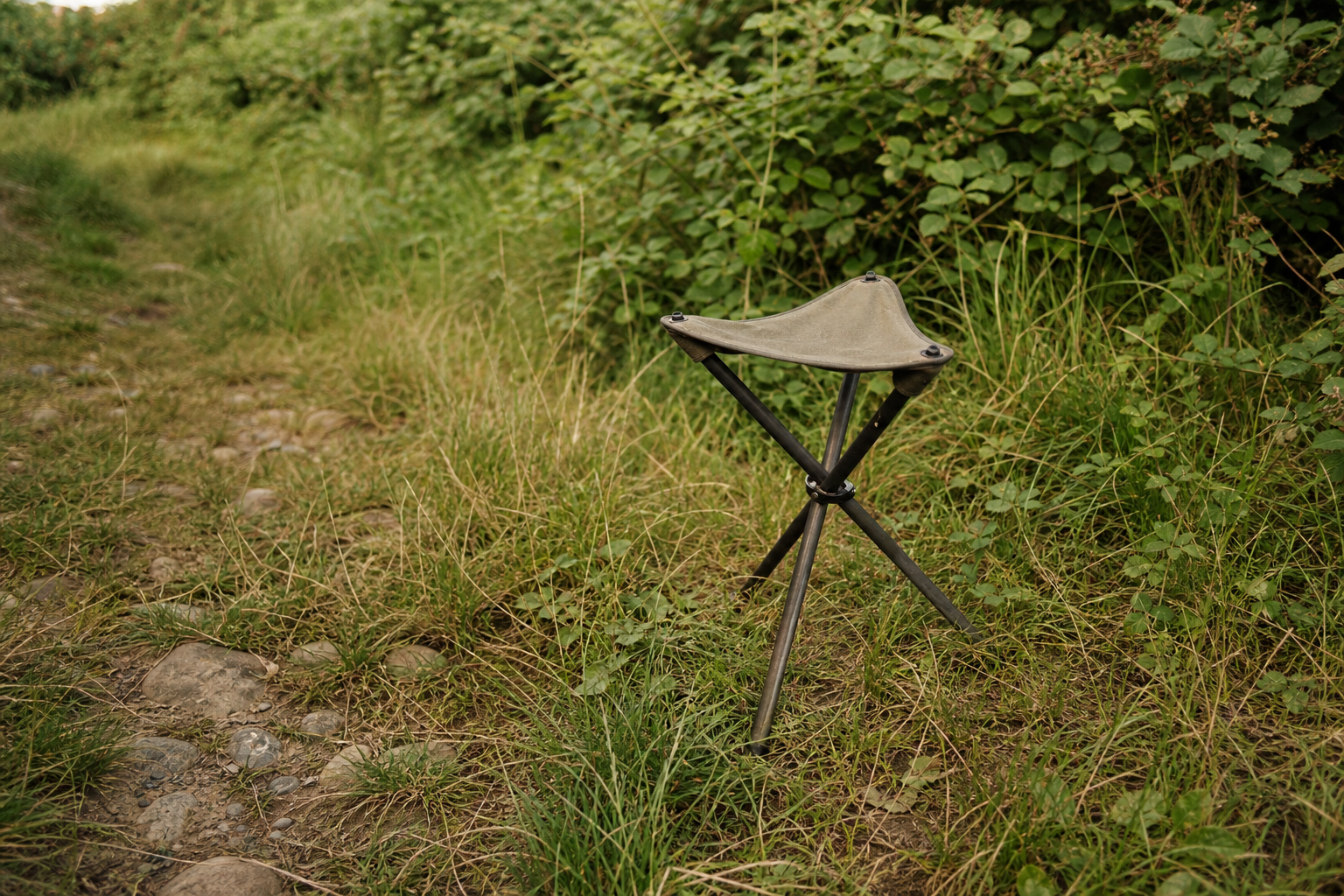
The tripod stool is the classic plein air seating choice, and for good reason. Three legs self-adjust on uneven ground in a way that four-leg stools simply cannot, which matters enormously on the kind of sloped, lumpy terrain common across the UK. They fold down to a compact bundle, deploy in seconds, and weigh very little.
Fishing stools and tripod stools are widely available in UK outdoor and fishing shops as well as online, and the price range is genuinely accessible. A decent folding stool can be had for well under £20. The limitations are equally clear: no back support, and limited comfort on very long days. For sessions of up to 90 minutes, most painters find them perfectly adequate.
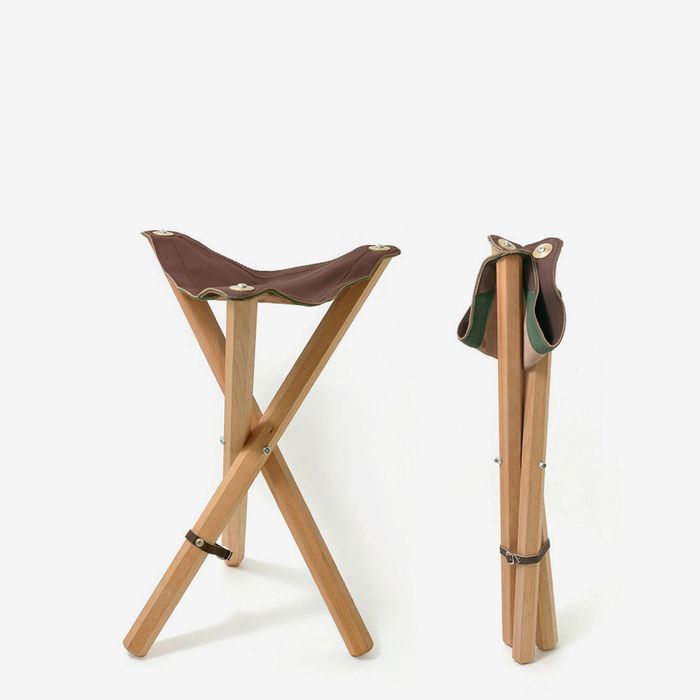
For painters who want something more substantial than a basic fishing stool, the Jullian Folding Stool with Leather Seat combines an oiled beechwood frame with a soft leather seat. At £73, it is a premium option for a folding stool, and like other stools in this category it does not provide back support.
Jackson's
Jullian : Folding Stool With Leather Seat
This Attractive Folding Stool Is Made From Oiled Beechwood And Has A Soft Leather Seat, Reinforced With Brass Retaining Washers. It Is Perfect For Any Plein-air Painter And Will Ensure You Are Comfortable Throughout The Duration Of Your Painting Sessions - Even In The Harshest Co
Ultralight Backpacking Chairs
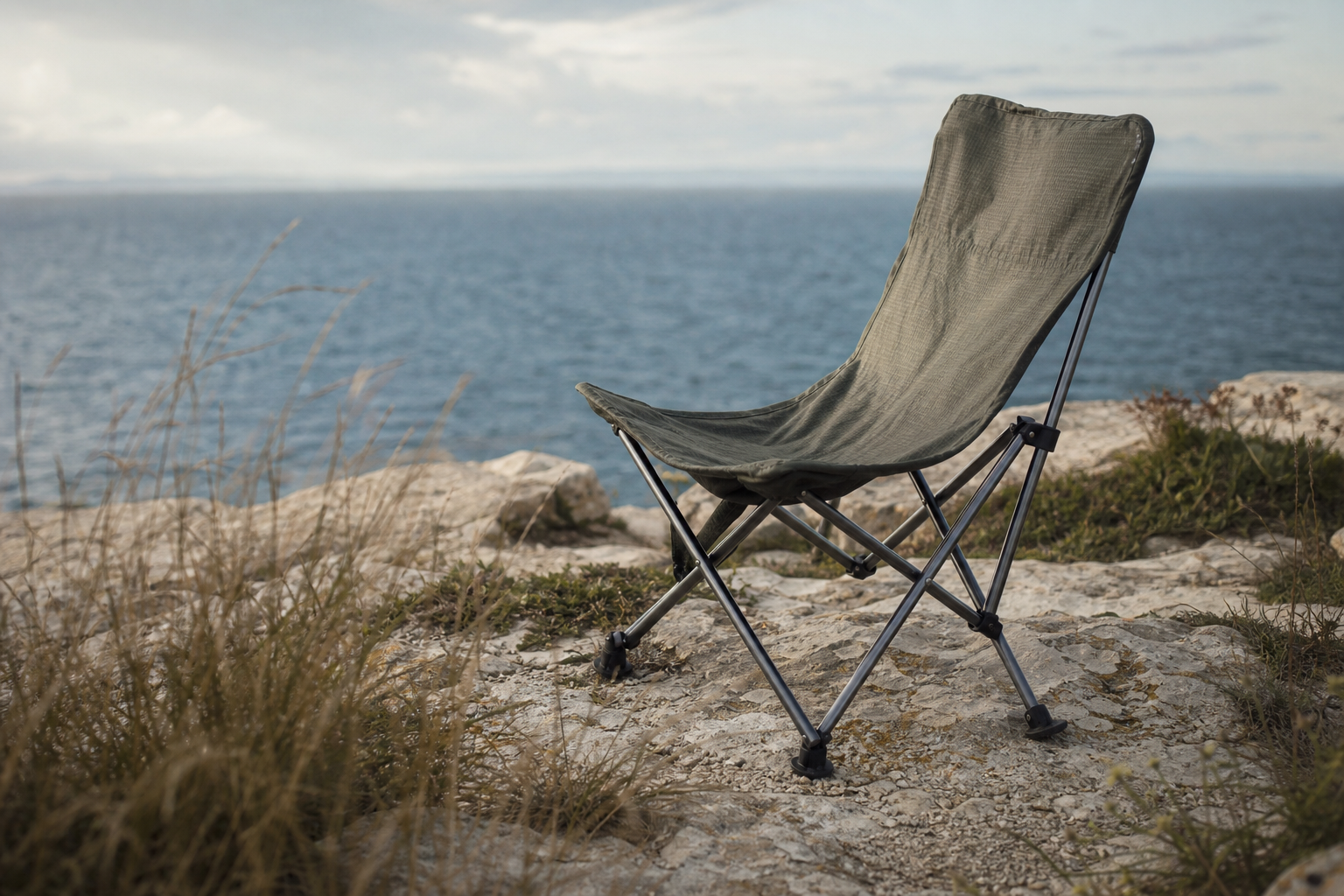
This category has transformed plein air seating options over the past decade. True backpacking chairs with a proper backrest now weigh under 1 kg, and some come in under 500 g. The Helinox Chair One (around 965 g, typically £65 to £100 in the UK) and the lighter Helinox Chair Zero (around 490 g, £70 to £100 or more) are the benchmarks most UK outdoor retailers stock. For painters focused on minimising weight further, the Montbell Lightweight Trail Chair at around 357 g represents the lighter end of what is currently available.
The catch is seat height. Many ultralight chairs sit lower than a standard chair, sometimes as low as 20 to 25 cm from the ground. That is manageable on firm, level ground but can become difficult to get up from on soft or sloped surfaces. Check the seat height carefully before buying. Some models also benefit from a separate ground pad to prevent the legs sinking into soft earth, which is worth budgeting for if you paint on grass or coastal ground regularly.
The cost is the other consideration. A quality ultralight chair costs significantly more than a fishing stool. For painters who walk long distances with a full kit, that investment is usually worth it. For shorter or easier access spots, it may not be necessary.
Full-Size Folding and Director's Chairs
For sessions near the car, or where weight simply is not a concern, a full-size folding or director's chair is the most comfortable option by a considerable margin. Proper back support, armrests, and a seat height that makes getting up easy are genuine advantages for longer painting sessions.
The weight is the obvious limitation. Most full-size folding chairs come in at 3 to 5 kg, which is a significant addition to a full painting kit. Options like director's chairs, Coleman-style deck chairs, or robust camping armchairs are all widely available in the UK in the £30 to £80 range. They are excellent for car-based sessions, painting from a coastal car park, or setting up in a garden or accessible meadow. They are not suitable for anyone walking more than a few minutes to their spot.
Rolling Art Chairs
Rolling art chairs are a distinct category designed specifically with artists in mind. ArtComber-style chairs combine a wheeled trolley, storage compartment, and seat in one unit. The idea is that you load your paints, pochade box, and other kit into the storage section and wheel the whole thing to your painting spot, then use the chair itself as your seat.
They are genuinely useful in the right context. For urban parks, paved promenades, workshops, and well-surfaced outdoor spaces, the combination of storage and seating in one unit is hard to argue with. Before loading, they typically weigh 4.5 to 5 kg, and once loaded they are heavier still.
The limitations are significant in a UK context. Wheels that work well on a paved path or compacted ground become a serious liability on soft grass, muddy fields, coastal sand, or any rough terrain. If your painting spots regularly involve anything other than firm, smooth surfaces, a rolling art chair will cause more frustration than it solves. UK art suppliers stock several versions, typically priced from £120 upwards.
| Type | Typical weight | Approx. UK price | Best for | Main drawback |
|---|---|---|---|---|
| Sit mat / ground seat | Under 500 g | £5–£20 | Sketchbook work, dry ground | No back support, ground level |
| Tripod / folding stool | 500 g–1 kg | £8–£30 | General portability, uneven terrain | No back support |
| Ultralight backpacking chair | 350 g–1 kg | £65–£120 | Long walks, all-day comfort | Lower seat height, cost |
| Full-size folding chair | 3–5 kg | £30–£80 | Car-based sessions, comfort | Heavy, bulky |
| Rolling art chair | 4.5–5.5 kg | £120–£200+ | Urban parks, workshops | Needs smooth surfaces |
How to Choose the Right Plein Air Chair for You
The right seat depends on how you actually paint, not on what sounds appealing in theory. Work through the questions below and the answer usually becomes clear.
Find your ideal plein air seat
How far do you walk?
If you walk more than 15–20 minutes with your full kit, weight is your top priority. Aim for under 1 kg.
How long do you paint?
Sessions under 90 minutes: a stool will probably do. Over 90 minutes, or with back issues: look for a full chair with back support.
What surface do you usually paint on?
Hard ground or pavements: most seats work well. Soft grass, mud, or sand: look for wide feet or a ground pad to prevent sinking.
Do you drive to your painting spot?
Yes and park close by: comfort and size matter more than weight. Consider a full-size chair or rolling art chair. If you walk a significant distance: lightweight is essential.
Do you have back, hip, or knee concerns?
If yes, prioritise a proper backrest and a seat height of 30–40 cm. Avoid very low chairs and ground-level seats.
For most UK painters who walk to their spots, the realistic choice comes down to two options: a tripod stool if budget is a priority and sessions are moderate length, or a lightweight plein air chair with a backrest (Helinox-style or equivalent) if you want real comfort on longer days. Full-size folding chairs and rolling art chairs are genuinely excellent, but they belong in a car boot rather than on your back.
What to Look For When Buying a Portable Chair for Plein Air Painting
Once you have identified the right type, there are a few practical details worth checking on any specific product before you buy.
Before you buy
Check packed size as well as weight — a chair that folds small fits better in or alongside a kit bag. Look for seat heights between 30 and 40 cm; lower than that and getting up on uneven ground becomes awkward. Check whether legs have wide feet or rubber tips, or whether a ground pad is sold separately.
Weight and packed dimensions. These are separate things and both matter. A chair might be light but fold awkwardly, adding bulk to a kit bag that is already full. Check both figures, and if possible look at what a chair looks like packed down, not just what it weighs.
Seat height. The practical sweet spot for most adults is 30 to 40 cm from the ground. Below 30 cm and getting up from uneven or soft ground becomes genuinely difficult, particularly after a long session when your legs are tired. Very low ultralight chairs can be a problem here; always check the seat height figure in the product specs, not just the weight.
Back support. Anyone painting for more than 90 minutes will notice the absence of a backrest. Anyone with existing back or hip issues should make a proper backrest a non-negotiable. The presence of a backrest is not just a comfort question; it affects how long you can paint and how you feel the following day.
Stability on soft and sloped ground. Tripod stools self-level on rough terrain by design. Four-legged stools and chairs need firmer ground to sit stable. On soft grass or sand, narrow legs sink. Look for wide rubber feet, or check whether the manufacturer sells a ground pad attachment.
A word on dry runs. Before relying on any new chair for a full painting session, try it close to home first. Sit in it for an extended period, check that you can get up easily on your usual type of ground, and make sure it actually fits alongside your kit. Finding out that a seat is uncomfortable or unstable is better done in your garden than on a clifftop.
A Note on UK Terrain and Practical Access
UK painting locations are rarely as forgiving as they might look on a sunny day. Wet grass after overnight rain, coastal sand, moorland, and sloped hillside fields are common terrain for UK plein air painters, and they behave very differently from the firm, dry ground that much international gear content assumes.
Narrow chair legs sink into soft ground quickly and can make a seat feel unstable even if it is rated for a high weight. If you paint regularly on grass or sand, it is worth specifically checking leg width, foot design, and whether a ground pad is available. A few rolling art chair owners discover this the hard way.
On the access side, there are no UK-wide regulations restricting portable chairs in most public spaces. Common courtesies apply: do not block footpaths, respect signage, and avoid setting up on fragile habitats such as sand dunes, wetland margins, or archaeologically sensitive sites. National Trust properties, nature reserves, and managed coastal sites sometimes have their own guidance, and it is worth a quick check before visiting somewhere new for the first time.
Our Picks by Painting Style
Quick guide by artist type
Sketchbook painter: sit mat or compact tripod stool. Watercolour with small easel, moderate walks: tripod stool or ultralight chair under 1 kg. Oil painter, longer sessions: ultralight chair with backrest, or director's chair near the car. Urban or workshop painter: rolling art chair on suitable surfaces. Back or joint concerns: go straight to a full chair with proper back support.
The right seat genuinely changes what is possible outdoors. A painter who is comfortable stays longer, makes better decisions about the work, and is more likely to come back the following week. A painter who is uncomfortable starts packing up early, and gradually stops going out at all.
Think of your chair as part of the kit from the beginning rather than something you will sort out later. Try any new setup close to home before depending on it for a full session, and be honest with yourself about how far you walk and how long you actually paint. Get those two things right and the right seating option becomes obvious.
The goal is to stay out longer and come back the next day. Good seating helps with both.
FAQ
Frequently Asked Questions
What is the best portable chair for plein air painting?
There is no single best chair. Choose by how far you walk, how long you paint and the ground you use. For long walks choose an ultralight chair with a backrest; for short trips a tripod stool often suffices; for car-based sessions a full-size or rolling chair gives maximum comfort.
What seat height should I look for?
Aim for 30 to 40 cm. Lower seats can be hard to get up from on soft or sloped ground and are less suitable for long sessions or joint concerns.
Are rolling art chairs suitable for UK terrain?
Only on firm smooth surfaces. Rolling art chairs work well on pavements and compact paths but struggle on soft grass, sand, mud or rough fields.
Do tripod and folding stools work well on uneven ground?
Yes. Three legs self-level on lumpy or sloped ground, making tripod stools very stable and lightweight. They lack back support so are best for sessions under about 90 minutes.
How should I test a new chair before relying on it outdoors?
Try it at home first. Sit in it for an extended period, practise getting up on ground similar to where you paint, check packed size and seat height, and test stability on soft or sloped surfaces.
Author

PleinAirPainting Editorial Team
PleinAirPainting.co.uk helps artists paint outdoors with confidence through UK-focused guides, equipment advice, resources and plein air inspiration.