Weatherproof Plein Air Gear for UK Artists: A Practical Roundup
A practical roundup of weatherproof plein air gear for UK artists, focusing on sturdy umbrellas, layered clothing systems and waterproof transport to keep you painting through wind and rain.

Key takeaways
- • Wind is the primary risk in UK plein air painting, so focus on stability and anchoring.
- • Choose umbrellas with metal clamps, tilt and rotation, a vented canopy and a neutral interior to avoid colour casts.
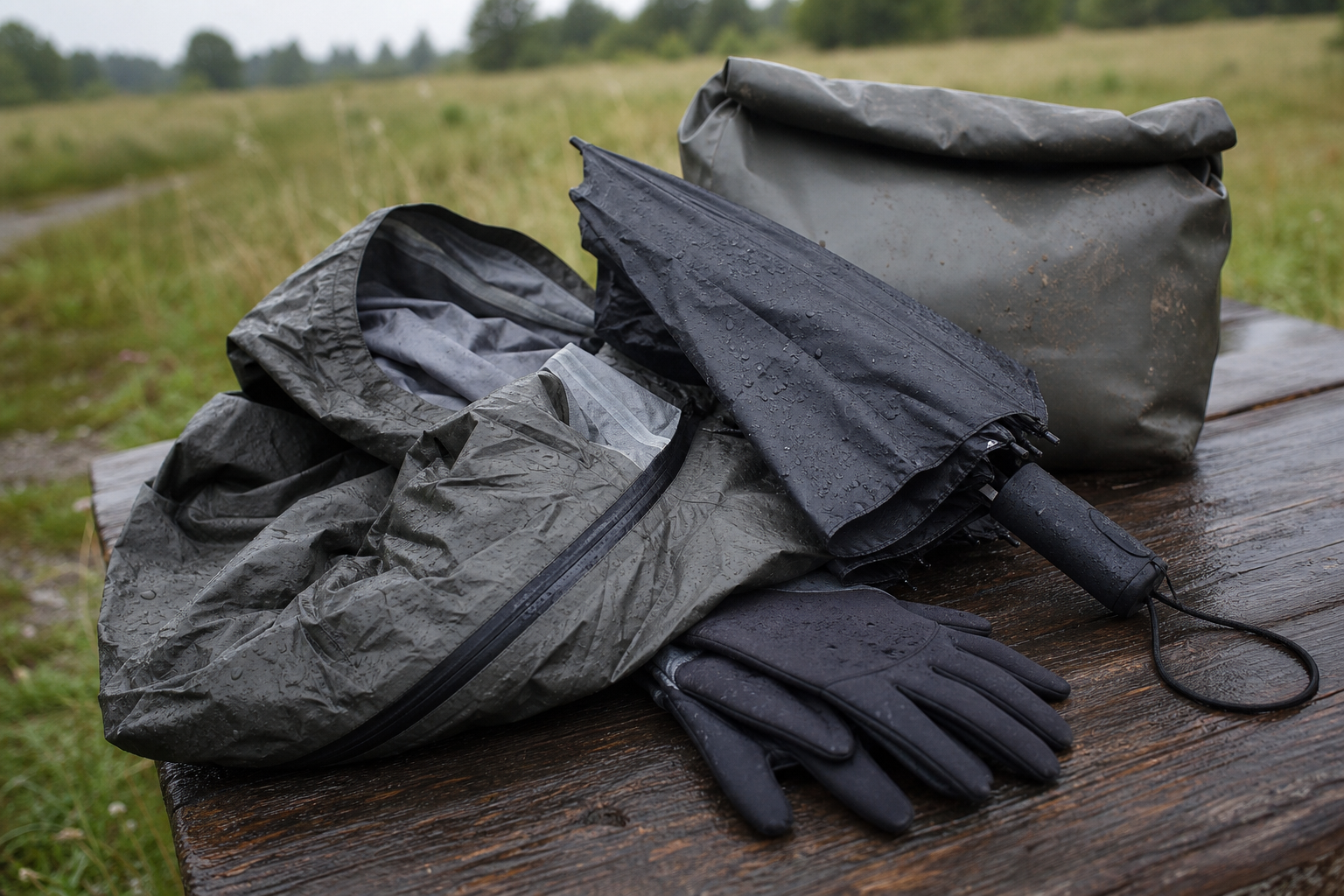
- • Build a clothing system of wicking base layer, insulating mid layer and a waterproof shell with taped seams.
- • Use roll-top waterproof packs or dry bags and dedicated panel carriers to protect finished work in transit.
- • Start small and upgrade gradually, with technical kit for exposed coastal or upland locations.
British weather is one of the most consistent obstacles in outdoor painting, and no amount of technical skill helps when you're cold, wet, and squinting into horizontal drizzle. The right weatherproof plein air gear changes the equation entirely. This roundup treats umbrella, clothing, and transport as a connected system rather than a list of separate purchases, because that's how they actually work outdoors. UK prices are included throughout, and the recommendations are grounded in what performs in British conditions, not what gets discussed on American plein air forums.
Wind first, rain second: how to think about weatherproofing your kit
Before getting into specific products, it's worth understanding how to prioritise. Most artists assume rain is the main enemy. In UK conditions, wind is usually the greater threat.
The golden rule of UK plein air weather
Wind does more damage than rain. It topples easels, inverts umbrellas, and tears wet panels off clips. Prioritise stability and anchoring before worrying about waterproof ratings.
A gust that catches an umbrella at the wrong angle will do more damage in two seconds than an hour of drizzle. This matters when choosing gear, because the lightest and most compact option isn't always the right one for UK conditions. Something that anchors reliably is worth more than something that packs small.
The system this roundup covers has three parts: a painting umbrella or cover to protect your work surface; a layered clothing setup to keep your body functional; and weatherproof transport to get your materials and finished work home safely. These work together. If your clothing fails and you become cold, your painting session is over regardless of how good your umbrella is.
On layering: the principle is a wicking base layer close to the skin, an insulating mid-layer to retain warmth, and a waterproof shell on the outside. A single heavy waterproof coat without layers underneath performs poorly when you're standing still in damp air for two hours. Hiking content gets this broadly right, but the standing-still context matters more for painters than it does for walkers.
All prices quoted in this article are approximate UK RRP as of late 2024. Check current availability before purchasing, as stock can vary particularly for specialist art-supply items.
Painting umbrellas for plein air: what to look for and what to buy
This is the piece of kit most specific to outdoor painting, and it's where most artists have the least guidance. A good painting umbrella solves two problems at once: it keeps rain off your palette and surface, and it blocks direct sunlight that would otherwise flatten your tonal judgement.
Key features of a good plein air umbrella
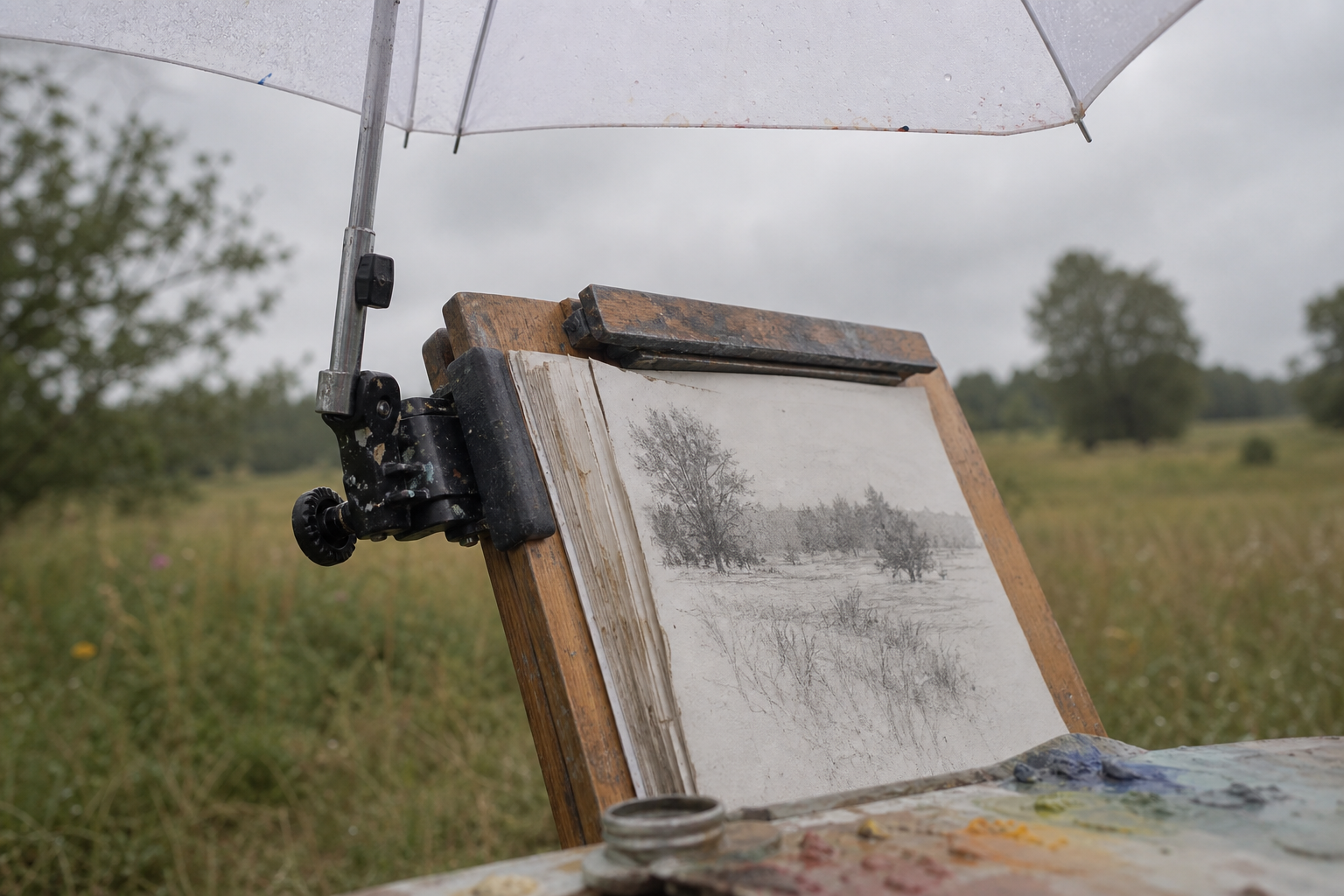
The clamp system is the most important component. It needs to grip your easel or pochade box securely and stay put when the canopy takes wind load. Cheap plastic clamps flex and slip; look for metal hardware where possible.
Tilt and rotation matter because you'll want to angle the canopy to block the light source, not just to stay above you vertically. A good umbrella should rotate through 360 degrees and tilt independently.
A vented canopy (with a small opening at the top) reduces wind uplift significantly compared to a solid canopy. In steady wind conditions, this is a genuine functional difference.
Avoid colour casts
A white or neutral grey interior is essential. Coloured or dark umbrella interiors cast a tint over your palette and surface, making it very hard to judge colour accurately.
The ability to attach guy lines is worth checking before you buy. Some umbrellas have no useful attachment points; others have eyelets or loops built in. In exposed locations, guy lines are not optional.
The three tiers of plein air umbrella (UK buyers)
| Type | Approx UK price | Best for | Main limitation |
|---|---|---|---|
| Premium dedicated (e.g. BestBrella-type) | £110–£130 | Frequent coastal or upland painters | Expensive, bulky, limited UK stock |
| Mid-range clamp-on artist's umbrella | £30–£60 | Most UK artists, most conditions | Limited wind resistance; clamp quality varies |
| Adapted photo or golf umbrella | £35–£80 | Budget option or testing the waters | Interior colour may cause colour cast; trial and error required |
Premium dedicated umbrellas are built specifically for painters. The BestBrella is the most frequently cited example. They're heavier than mid-range options, but the clamp mechanisms are robust, the canopies are properly vented, and the interiors are designed with colour accuracy in mind. The main obstacle for UK buyers is availability: these are often special-order or imported, which adds lead time and occasionally import costs. If you paint regularly in exposed locations, the build quality justifies the price over time.
Mid-range clamp-on artist's umbrellas are stocked by Jackson's Art, Ken Bromley, and Cass Art. These are the most practical starting point for most UK artists. At this price point, quality varies. The canopy is usually fine; the weak point is often the clamp, which may loosen over time or grip poorly on aluminium easel legs. Check whether replacement clamps are available before buying. In moderate UK conditions, a mid-range umbrella with guy lines attached performs reliably.
Adapted photo or golf umbrellas are worth considering if you're not yet sure how much you'll use a painting umbrella, or if you want to experiment before committing more money. The risks are honest: the interior colour needs checking carefully (silver interiors cause a cool cast over your palette), and the clamp attachment is usually a workaround rather than a proper solution. Some artists make this work well; others find it frustrating. If you go this route, test the colour cast indoors before your first session.
Keeping your umbrella down in a gust
Guy lines are the practical answer. Tie them to the umbrella shaft and stake them out with tent pegs, or clip small ankle weights to the lower end of the shaft to add ballast. Neither solution looks elegant, but both work.
In strong gusts above roughly 30 to 40 mph, the honest advice is to lower or remove the umbrella rather than fight the wind. A canopy that's caught a full gust becomes a sail, and the forces involved will either damage the clamp or bring the whole easel down. Experienced painters in consistently exposed locations, on the coast or in upland areas, often forgo the umbrella entirely and rely instead on clothing and cap brim to manage rain and glare.
Waterproof clothing for plein air: building a system that works
The key context that hiking and outdoor gear content misses is that painters stand still. Walking generates body heat that compensates for damp and cold. Standing at an easel for two hours in October does not. This means breathability ratings matter less than insulation and wind resistance, and it means the clothing system needs to work at rest rather than on the move.
The waterproof shell (outer layer)
For the outer shell, look for a hydrostatic head rating of around 20,000 mm or above for prolonged UK rain. Fully taped seams prevent water tracking through stitch holes. Water-resistant zips matter more than most buyers realise: untreated zips on a jacket rated at 20,000 mm will still let water in at the chest and pockets. A structured hood with a stiffened peak is useful for keeping rain off your face without needing to look down.
The branded waterproof membranes (Gore-Tex and its equivalents) perform well, but construction quality matters as much as the membrane itself. A well-built jacket with a less-known membrane will outperform a poorly-constructed one with a premium label.
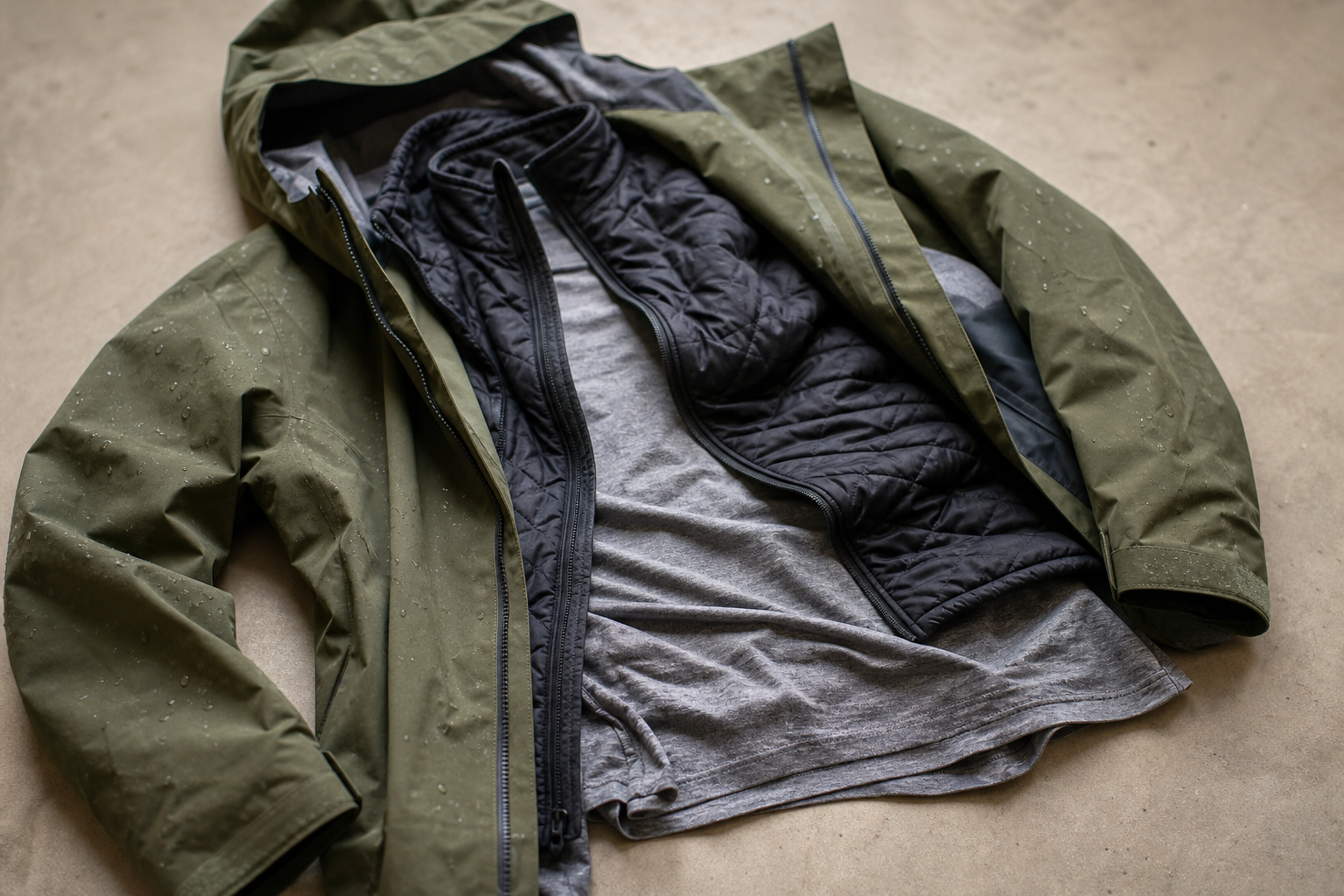
| Category | Approx UK price | Pros | Cons |
|---|---|---|---|
| Mid-range technical shell (e.g. Rab, Montane) | £150–£260 | Durable, repairable, proper waterproofing, good hood | Higher upfront cost |
| Budget technical shell (e.g. Decathlon Forclaz) | £50–£100 | Genuinely waterproof, lighter on the wallet | Less breathable; hood and cut more basic |
| Waxed cotton or heritage coat | £150–£350 | Quiet fabric, excellent standing-still warmth, repairable | Heavy; warm in summer; slower drying |
Rab and Montane are both UK-based brands with strong reputations in technical outdoor clothing. Their mid-range jackets perform reliably in UK conditions and are repairable if they develop faults. Decathlon's Forclaz range is a credible budget option that performs well in tests for its price. It's less breathable than the technical shells above it, but for standing-still use where breathability is less critical, it's a reasonable starting point. Waxed cotton coats are genuinely good for painters: the fabric is quiet (important when you're concentrating), they provide excellent warmth when stationary, and they can be reproofed and repaired indefinitely. The drawback is weight and slow drying time.
Many artists start with a supermarket waterproof and upgrade gradually. That's a perfectly sensible approach. A basic pac-a-mac over a warm mid-layer will get you through most mild UK sessions; the technical gear becomes worthwhile once you're painting regularly in worse conditions.
Legs and feet
Standing still in wet grass soaks through regular trousers faster than walking does. Waterproof overtrousers that pull on quickly over your normal clothing are underrated at this price point. Look for ones that pack small and have full-length side zips so you can put them on without removing your boots. Softshell walking trousers work well on cold dry days: they're more comfortable to move in and dry faster than denim or cotton.
For feet, waterproof walking boots are fine for most locations. In consistently wet terrain, particularly coastal marshes or upland moorland, neoprene-lined wellies offer better protection for prolonged static use. The neoprene lining retains warmth even when the boot is wet, which matters when you're standing in the same spot for an hour.
Hands and head
Hands are the part of the system that requires the most care, because you need fine motor control to paint while also keeping your fingers functional in cold weather.
The liner glove system
A thin liner glove under a windproof or insulated mitt lets you keep most of your hand warm while you paint. Peel the outer mitt back when you need brush control, then pull it back on between strokes.
Liner gloves alone in temperatures below about 8°C will leave your fingers stiff within twenty minutes. The two-layer approach, a thin liner plus an outer mitt that you can quickly remove and replace, keeps your hands usable for much longer. Windproof outer mitts are often enough in dry cold; insulated mitts add meaningful warmth in winter or at altitude.
For the head: a warm beanie under your hood covers most cold-weather situations. In mild wet weather, a wide-brim hat keeps rain off your face and palette better than a hood alone, and it doesn't restrict your peripheral vision.
Waterproof packs, panel carriers, and getting your work home safely
Protecting finished and still-wet work in transit is an area most plein air content ignores entirely. It's also one of the more frustrating failures when it goes wrong: a painting that survived two hours of rain can be ruined in three minutes of transit drizzle.
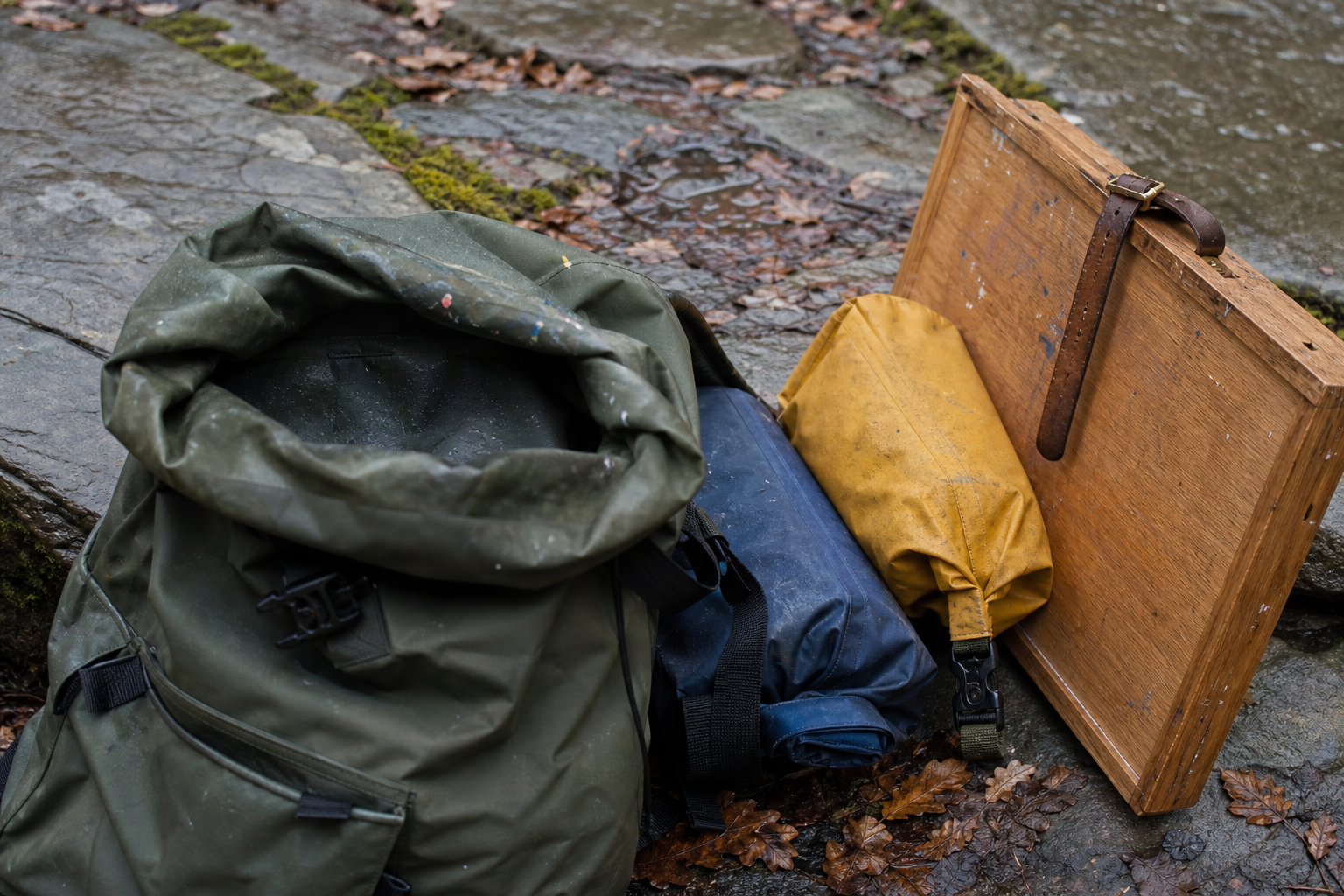
Waterproof backpacks and dry bags
A roll-top waterproof pack (roughly £70 to £130 from outdoor and watersports retailers including OverBoard and similar UK brands) is the cleanest solution if you're carrying kit on foot. The roll-top closure seals properly under rain, and the welded seams prevent ingress through stitching. These are more reliably stocked and often better priced at outdoor retailers than at art suppliers.
The budget alternative is dry bags inside a regular rucksack. Individual dry bags cost roughly £8 to £25 each, and you can size them to fit your sketchbook, paint kit, and spare layers separately. This approach is more flexible and cheaper upfront; the trade-off is more faff when you're packing and unpacking in the field. Both approaches work; the roll-top pack is more convenient if you're out regularly.
Wet panel and sketchbook carriers
For oil painters, a dedicated wet panel carrier, either a wooden slot-based case or a plastic panel safe, keeps freshly painted surfaces from touching anything else in transit. These range from roughly £20 to £60 depending on capacity. They don't fully waterproof your work, but they protect against drizzle and accidental contact. No carrier survives being left out in a downpour; the point is transit protection, not storage in the rain.
For watercolour and gouache, a rigid portfolio or a hard-cover sketchbook inside a zip-lock plastic sleeve handles most transit situations adequately. The sleeve adds almost no weight and costs very little.
Other weatherproof accessories worth considering
These are supporting items rather than the core system, but each one addresses a real comfort or practical issue.
Folding stool or lightweight chair (£20 to £80): Working from a seated position lets you get under a lower umbrella more easily and reduces fatigue in longer sessions. Even on dry days, it makes a significant difference to how long you can paint comfortably.
Insulating foam pad (£10 to £30): Standing on a closed-cell foam pad in cold weather makes a noticeable difference to foot comfort within about fifteen minutes. It's also useful as a seat pad on damp ground.
Reproofing spray (approx £8 to £20): Nikwax and similar DWR restoring sprays work on jackets, rucksack covers, and umbrella canopies. If your waterproof shell starts wetting through rather than beading, the DWR coating has degraded and can usually be restored with a spray treatment rather than requiring a replacement.
Reproof your umbrella too
Reproofing sprays work on umbrella canopies as well as jackets. If your painting umbrella starts letting water through, a £10 spray bottle will often restore it rather than requiring a replacement.
Headlamp or small torch: In winter, usable outdoor light in the UK can disappear by mid-afternoon. A headlamp in your pack means the walk back to the car in the dark isn't a problem. This is a minor item that takes up almost no space and costs little.
Putting it together: a practical weatherproof kit for UK plein air
The temptation when reading a roundup like this is to feel that you need everything at once. You don't. Building up gradually is entirely sensible: start with what solves your most immediate problem, then add items as your painting outdoors becomes more regular and your needs become clearer.
Building your weatherproof plein air kit
Minimum kit (near the car)
Waterproof shell jacket, mid-range clamp-on painting umbrella, waterproof shoes or boots, small dry bag for sketchbook and paints.
Full day-out kit
Add waterproof overtrousers, insulating mid-layer, liner gloves and windproof mitts, roll-top waterproof backpack, panel carrier for wet work.
Exposed locations (coast, upland, winter)
Upgrade to a technical shell (20,000 mm+), add insulated boots or neoprene wellies, insulating foam pad, guy lines and tent pegs for umbrella, consider forgoing the umbrella in strong wind and relying on hood and cap instead.
The point of all of this is simple: British weather is genuinely difficult, but it is solvable. With the right kit in place, a grey October afternoon or a breezy coastal morning stops being a reason to stay home and starts being a perfectly workable painting session. The gear is there. It's just a matter of choosing what suits your conditions and building from there.
FAQ
Frequently Asked Questions
What is the single biggest weather threat for UK plein air painters?
Wind is the greater threat. It topples easels and inverts umbrellas, so prioritise stability, robust clamps and anchoring before waterproof ratings.
Which umbrella features matter most for outdoor painting?
Look for a metal clamp that grips securely, independent tilt and 360 degree rotation, a vented canopy, a neutral interior to avoid colour casts, and attachment points for guy lines.
How should I layer clothing for standing paint sessions?
Use a wicking base layer, an insulating mid layer and a waterproof outer shell with taped seams and a structured hood. Breathability is less critical when you are standing still.
How do I protect wet paintings on the way home?
Use a roll-top waterproof backpack or dry bags for kit. For oils use a wet panel carrier; for watercolour use a rigid portfolio or a hard-cover sketchbook inside a plastic sleeve.
What should I buy first if I am building a weatherproof kit?
Start with what fixes your immediate problem: a waterproof shell, a mid-range clamp-on umbrella, waterproof shoes and a small dry bag. Add overtrousers, panel carriers and stronger kit as needed.
Author

PleinAirPainting Editorial Team
PleinAirPainting.co.uk helps artists paint outdoors with confidence through UK-focused guides, equipment advice, resources and plein air inspiration.