How to Sell Art at Local Markets: A Practical Guide for Plein Air Painters
A practical, step by step guide for plein air painters to sell art at local markets. Covers choosing events, licences, pricing, stall setup, payments, and building a local market practice.

Key takeaways
- • Start local and match your work to the right event type before booking.
- • Sort licences, public liability insurance, and simple tax records before you trade.
- • Offer a range of price points from cards to larger originals and label location details clearly.
- • Create an elevated, gallery style stall with visible pricing and weatherproofing for outdoor events.
- • Bring cash and a card reader, collect emails, and treat each market as part of a growing local practice.
Taking a body of paintings to a local market for the first time is one of those things that feels daunting right up until you actually do it. The setup, the pricing, the question of whether anyone will stop and look: all of it can seem more complicated than it needs to be. In reality, most artists who try it find it far more manageable than they expected, and more enjoyable.
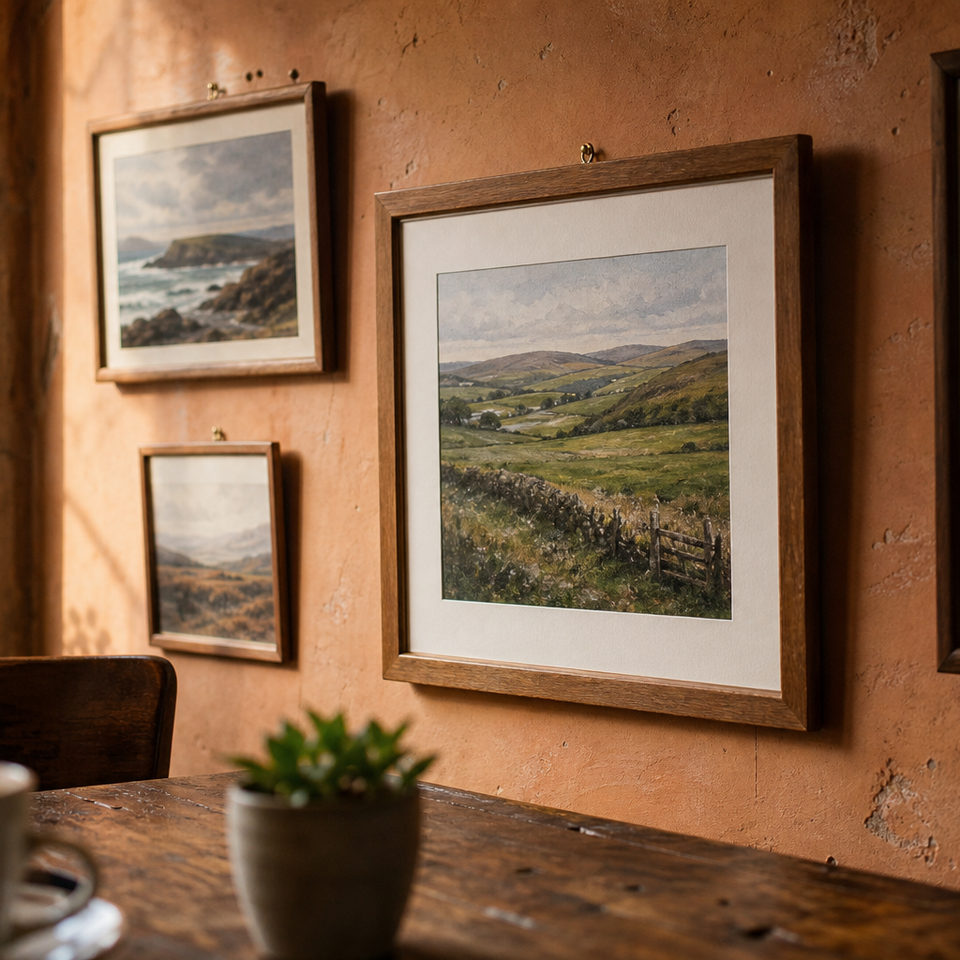
There is genuine demand for affordable, original art in the UK right now, and plein air work sits in a particularly good position to meet it. Paintings made on location have a story built in. A view someone recognises, a coastal scene painted on a blustery morning, a familiar hillside captured at the right moment: these are things that printed reproductions cannot offer. This guide covers everything you need to know to sell art at local markets with confidence, from finding the right events to sorting the practical and legal basics before you arrive.
Why Local Markets Work Well for Plein Air Painters
The market for affordable original art is strong
The UK art market has shown consistent resilience in one particular area: work priced accessibly enough for ordinary buyers. Galleries have reported growing interest in paintings under a few hundred pounds, and local markets and community fairs are part of that shift. People who would never walk into a commercial gallery will happily stop at a well-presented market stall and buy something they love. That is a real opportunity, and plein air painters are well placed to take it.
Plein air work has a built-in story
Most craft market products are things: a candle, a scarf, a piece of jewellery. A plein air painting is all of those things and also a record of a specific place and moment. When a buyer picks up a small oil study of a local church, a field they drive past every week, or a harbour they spent their childhood near, they are not just buying a decorative object. That emotional connection is something you cannot manufacture, and it is why locally painted, locally sold work tends to move in a way that abstract or studio-only work often does not at markets.
What Types of Markets and Events Should You Consider?
The choice of market matters. Turning up at a budget street market with large framed originals, or booking a curated urban fair expecting quick impulse sales, are both ways to have a frustrating day. Matching your work to the right venue makes a significant difference, particularly when you are starting out.
Council-run street and town-centre markets are the most accessible entry point. Stall fees typically run from £10 to £50 per day, the audience is broad and includes regular shoppers, and the barrier to entry is low. They work well for smaller, more affordable work: cards, prints, and modestly priced unframed studies.
Curated craft and makers markets attract buyers who are specifically there to find original, handmade work. Fees are higher (sometimes £80 to £150 and above for a day's pitch), but the audience is more likely to spend on an original painting. Events like local arts-and-crafts fairs, design markets, and independently organised maker events fall into this category. Worth progressing toward once you have a sense of what sells.
Seasonal community fairs and one-day events (village fetes, town festivals, charity fundraisers) are low commitment and low cost, and they put you in front of a local crowd with local pride. These are particularly good for testing a new body of work or getting comfortable with the whole setup before you commit to anything more formal.
Organised plein air events with a selling element are worth seeking out specifically. Events like Paint Garstang en Plein Air, Kenilworth Castle painting days, and Warwickshire Open Studios plein air sessions often include opportunities to sell work to visitors who are already engaged with the painting process. The audience at these events is primed. They have just watched artists work on location; they understand what they are buying.
Finding the right type of market for your work
Start local
Check your council's website and Eventbrite for craft fairs and market listings in your area. Most councils list trader information and upcoming markets publicly.
Match the audience
General street markets suit lower-priced prints and studies. Curated makers markets attract buyers more likely to spend on original work.
Consider plein air events
Organised painting days at heritage sites, competitions, and open studios often include a selling element. These put your work in front of an already-engaged audience.
Do a recce first
Visit a market as a visitor before you book a stall. Check the footfall, the type of work on sale, and the price points other artists are using.
Book a small slot to test
Start with a one-day local event at low cost before committing to pricier, curated fairs. Treat your first market as a learning experience.
What You Need to Know Before You Set Up
This is the section most market-selling guides skip over, or handle so briefly it leaves you uncertain. Getting these basics sorted before you arrive removes a lot of unnecessary stress.
Do you need a licence?
It depends on the type of event, and the answer is usually simpler than people expect.
Council-run markets operate under a market authority licence. As a trader, you will need a market stall licence issued by the local council. The event organiser or market manager will tell you what is required when you enquire about a pitch, and the process is usually straightforward.
Privately organised craft fairs and indoor events are a different situation. The organiser holds the necessary permission to run the event; as a stallholder, you simply book your pitch and show up. You do not need to apply for any separate licence. This covers the majority of craft markets, art fairs, and community events that most artists will start with.
Independent street trading (setting up on a pavement or in a public space outside an organised event) requires a street trading licence or street trading consent from the local council. Trading without one can result in a fine of up to £1,000. This situation is rare for artists and easy to avoid: if you are at an organised event, the organiser has already handled this.
When in doubt, ask the organiser directly before you book. They deal with this question regularly and will tell you exactly what is needed.
Public liability insurance
Most councils and event organisers now require stallholders to hold public liability insurance (PLI) with a minimum cover of £5 million. This protects you if a visitor trips over your display stand, a painting falls on someone, or any other accident occurs at your stall. It sounds dramatic, but it is a practical requirement, not a commentary on how careful you are.
The good news is that for artists, this is inexpensive and easy to arrange.
Insurance is easier to sort than you think
If you're a practising artist, joining Artists' Union England or a-n is likely the most cost-effective route to getting public liability insurance. Both organisations offer it as part of membership, along with other useful benefits for professional artists.
Artists' Union England membership costs around £42 per year and includes £5 million PLI cover. a-n (The Artists Information Company) membership includes £10 million PLI and professional indemnity insurance, at a higher membership fee that is still competitive for the cover provided. Standalone PLI policies for sole traders start at around £45 per year through various providers. Any of these routes will satisfy the requirements of most event organisers.
Do not skip this. It is one of the cheapest things you will spend money on, and some events will not let you trade without proof of cover.
Tax and the HMRC trading allowance
Many painters starting out at markets have no idea this exists, and it makes the tax situation much simpler than it might otherwise seem.
HMRC allows every individual a £1,000 trading allowance per tax year. This means the first £1,000 of gross income you earn from trading activities (including selling art at markets) is completely tax-free. You do not need to register for Self Assessment, keep formal accounts, or do anything at all, as long as your total gross income from trading stays under that threshold.
Once your income exceeds £1,000 gross in a tax year, you are required to register for Self Assessment with HMRC by the 5th of October following the end of that tax year. At that point, you have two options: claim the £1,000 flat allowance and pay tax only on the income above it, or set aside the allowance and instead deduct your actual costs (materials, stall fees, travel, framing) from your gross income. The second option often works out better if your expenses are higher than £1,000.
It is worth noting that from 2027/28, HMRC plans to increase the reporting threshold to £3,000. This is not yet in effect for the 2025/26 tax year, so the current £1,000 figure applies for now.
Keep a simple record from day one
Even if you're below the £1,000 threshold, get into the habit of noting what you sell, when, and for how much. A basic spreadsheet works fine. If your sales grow, you'll be glad you started tracking early.
How to Price Your Work for a Market Setting
Pricing makes almost every artist uncomfortable at first. The discomfort fades with practice, but it helps to have a framework rather than making it up on the spot.
A simple starting point is cost-plus: add up your materials for a piece, add a notional hourly rate for your time, add a proportion of your stall costs for the day, and add a margin on top. That gives you a floor, not a ceiling. From there, check what other artists are charging at comparable local events and on Etsy UK, and see where your work sits in context.
What matters most at a market stall is having a spread of price points. If everything you have is priced at £200, most visitors will admire it and walk on. If you have work ranging from a few pounds to a couple of hundred, there is something for almost everyone.
| Format | Typical price range | Notes |
|---|---|---|
| Greeting cards and mini prints | £3–£8 | Impulse buys; accessible to everyone |
| Small unframed studies (A5–A4) | £40–£80 | Good volume sellers at local fairs |
| Small framed originals | £80–£150 | Strong sellers at curated markets |
| Larger framed originals | £150–£300+ | Fewer sales but anchors your brand; adjust upward as your profile grows |
For plein air work specifically, local scenes genuinely command a premium. A painting of a recognisable church, a market square, or a stretch of coastline in the town where the market is being held will often sell faster than a technically stronger painting of somewhere the buyer has no connection to. Label your work with the location and the month it was painted. It is a detail that matters more than you might expect.
At curated art fairs, buyers tend to be more willing to spend on original work; at general street markets, smaller and more affordable pieces move faster. Adjust your selection accordingly.
Setting Up a Stall That Invites People In
The single biggest mistake at a first market is laying work flat on a table. People walk past flat tables; they stop at displays that have height, depth, and something that catches the eye at a distance.
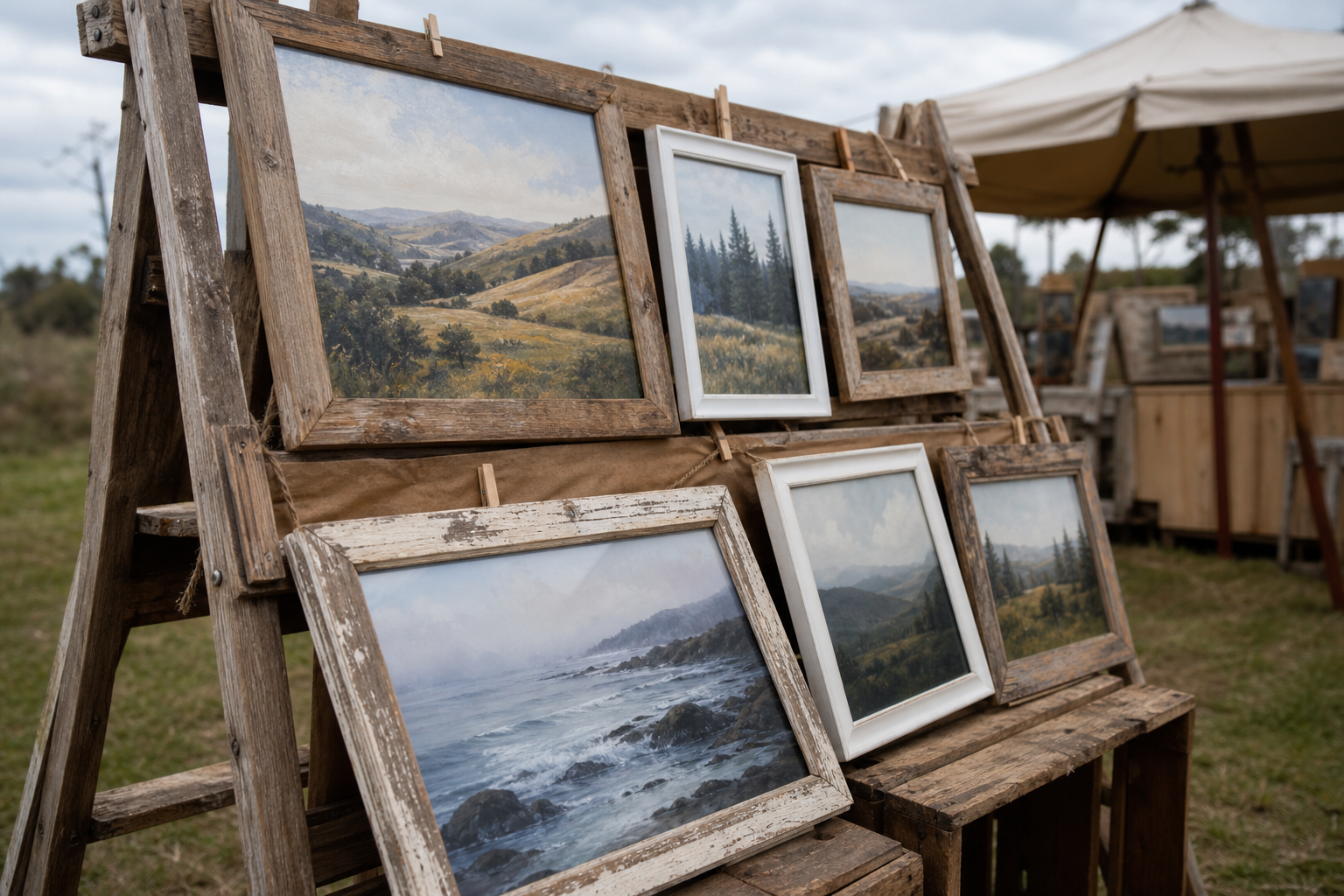
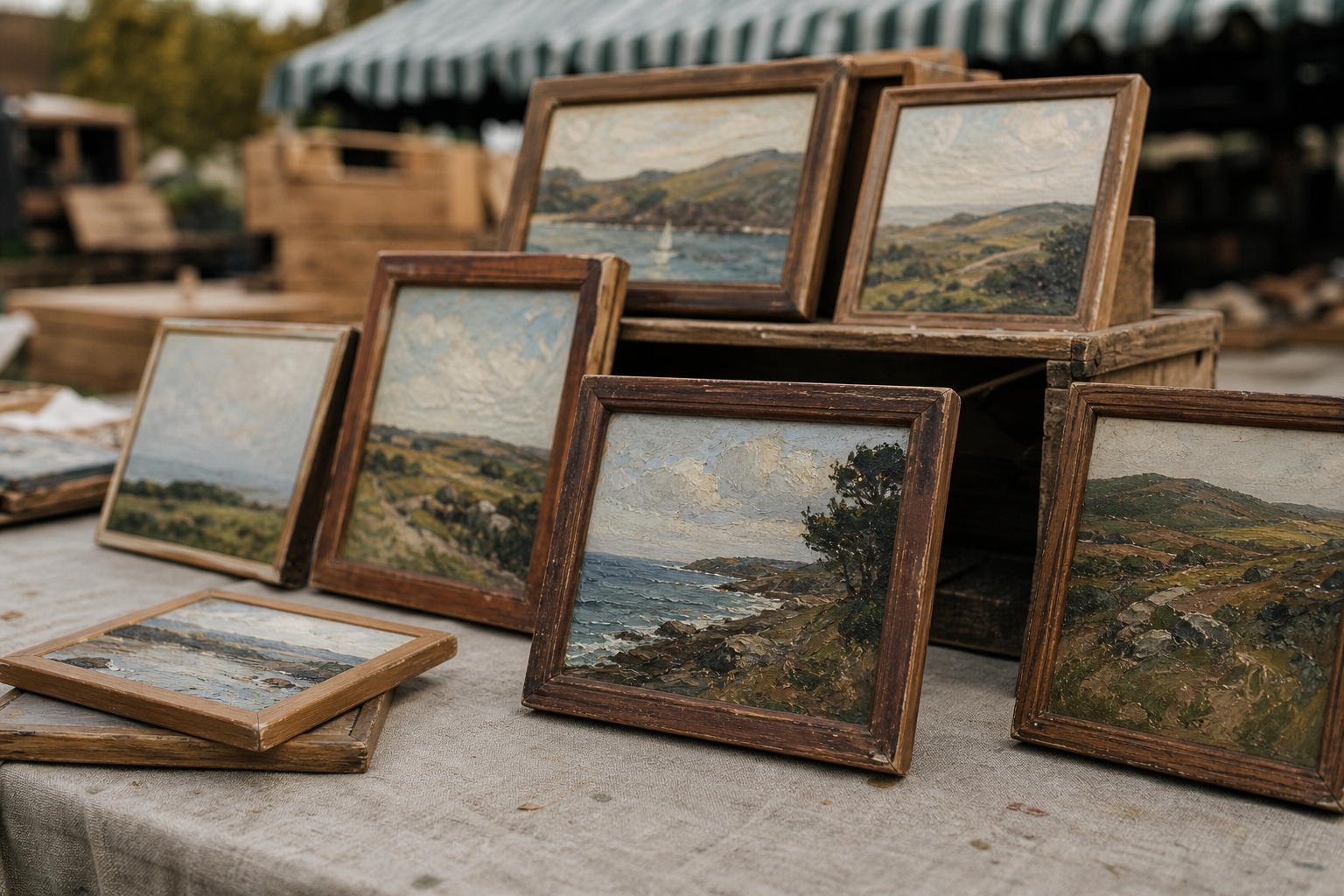
Think in terms of a small gallery rather than a table sale. Framed work should be elevated and visible, not stacked in crates. Use a combination of easels, tiered wooden stands, crates, and display boards to create layers at different heights. The goal is that someone walking past at ten metres can see that there is artwork worth looking at.
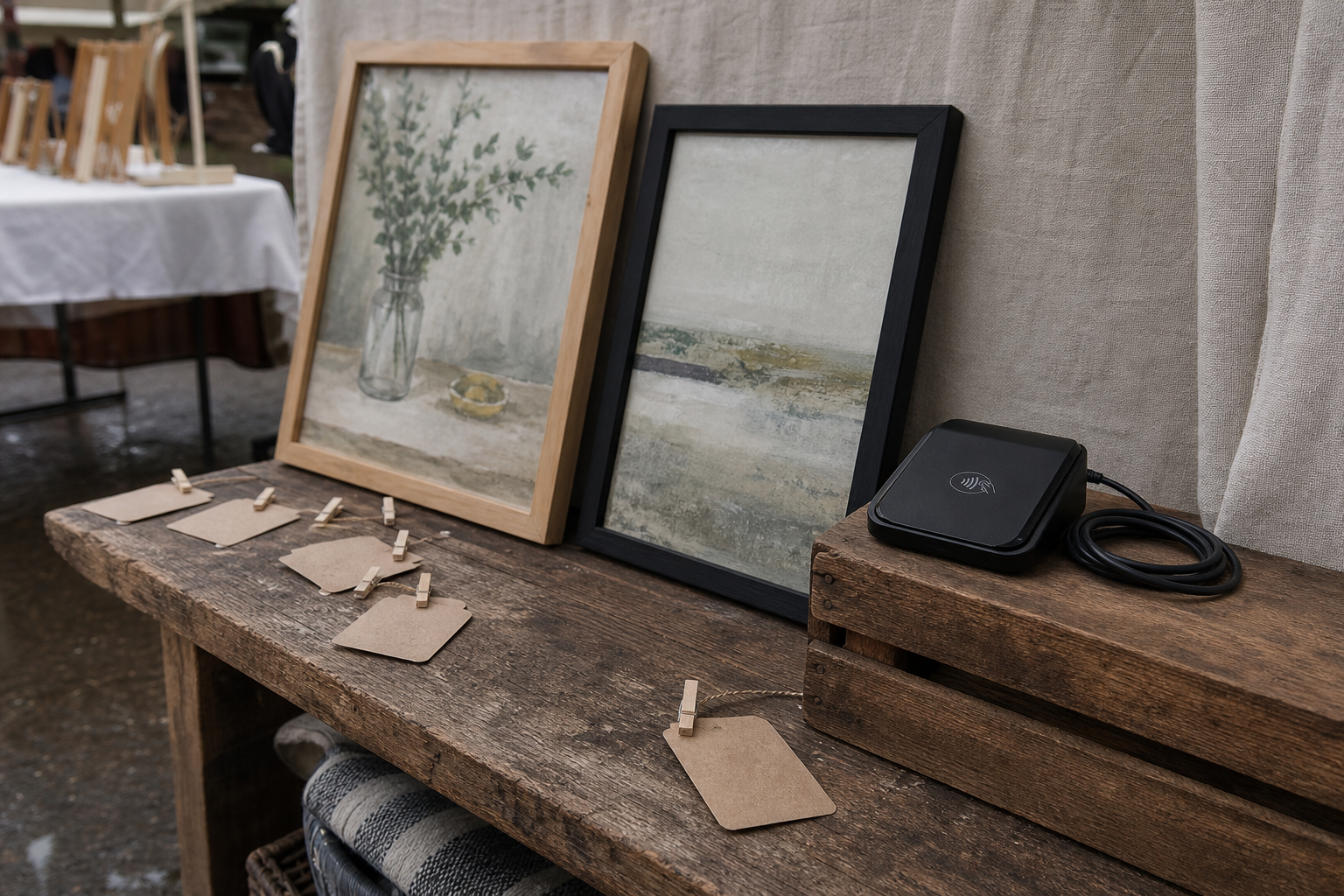
Price everything clearly and visibly. A buyer who has to ask how much something costs will often decide not to ask at all. Small price cards on each piece remove that friction entirely.
Your stall should have a sign with your name, a brief description of what you do ("Original oil paintings of [county or town]"), your social media handle, and contact details. It does not need to be elaborate, but it should be legible from a few metres away.
For outdoor events, weatherproofing is not optional. A gazebo with proper weights (wind is not a hypothetical concern at a British outdoor market), plastic sleeves for any unframed work, and a secure display that will not tip in a gust are all worth sorting before you arrive. A sunny forecast at 8am means very little by noon.
A simple label can do a lot of work
A small handwritten card next to a painting that says "painted on location at [place], [month]" adds context and story that a buyer can share when they hang it. It turns a purchase into a conversation piece.
Handling Sales on the Day
Before you open, sort the practicalities. Bring a cash float with plenty of small change: even in 2025, plenty of market visitors prefer to pay cash, and a sale lost because you cannot change a £20 is frustrating. Get a card reader as well. SumUp, Zettle, and Square are all widely used by UK market traders; all work through a smartphone app, take a small transaction percentage, and are straightforward to set up in advance. There is no reason to turn away a card payment.
When visitors stop at your stall, a friendly greeting and an open question works far better than silence or a pitch. Something like "Are you local?" or "Have you been to this market before?" is enough to open a conversation naturally. If someone picks up a piece and looks at it closely, you can add something brief: where you painted it, what the weather was like, why that particular view caught your attention. Keep it short and genuine. You are sharing something, not performing a sales routine.
Most buyers who spend more than thirty seconds looking at a piece have already made a decision emotionally. Your job is simply not to interrupt that with pressure.
A sign-up sheet for an email list, or a small printed card with a QR code linking to a mailing list, is worth having from your very first market. The people who stop, look carefully, and then do not buy today are often the people who buy later, or who tell someone else about your work. Collecting contact details gives you a way to stay in touch that does not depend on social media algorithms.
Using Your Plein Air Practice as a Selling Advantage
Most craft market sellers have products. You have paintings with provenance, made by hand in specific places. That distinction is worth making visible and explicit, not leaving it for buyers to figure out themselves.
Painting local scenes is not just artistically satisfying; it is commercially sensible. Local pride is a real motivator for purchases. A painting of the harbour, the high street, or the hills visible from the market itself connects immediately with people who live there, have family there, or simply love the place. If you are planning a market in a specific town or area, it is worth making sure you have work from that location in your selection.
Presenting work as "painted on location" rather than from a photograph or in a studio adds genuine value in the eyes of a buyer. It is a form of provenance that prints cannot claim, and it is worth saying clearly on your labels and stall signage.
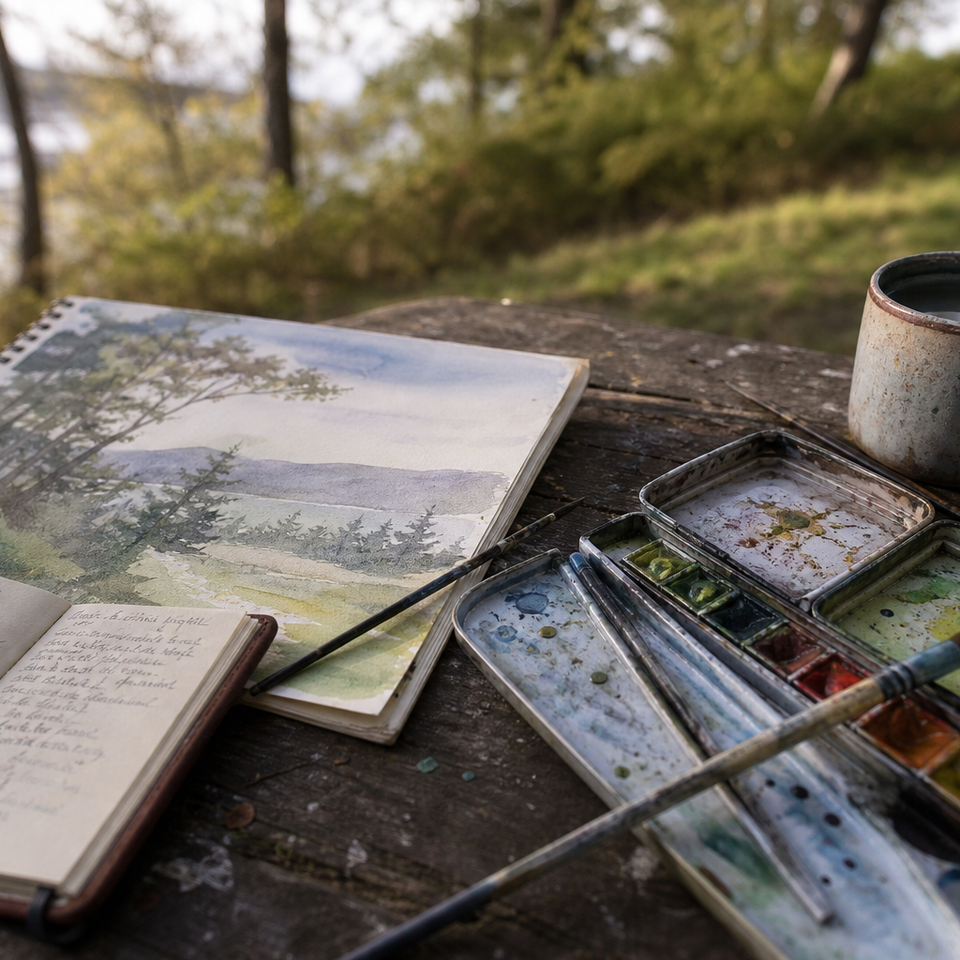
If you are comfortable doing it, painting live at your stall draws attention in a way that nothing else does. People stop to watch. They ask questions. They see the process and understand better what they are looking at when they consider buying. Even a small sketch on a panel is enough to make the activity visible. Organised plein air events at heritage sites and town festivals often have this built in, and these events are worth seeking out as a natural pipeline for sales to an already-engaged audience.
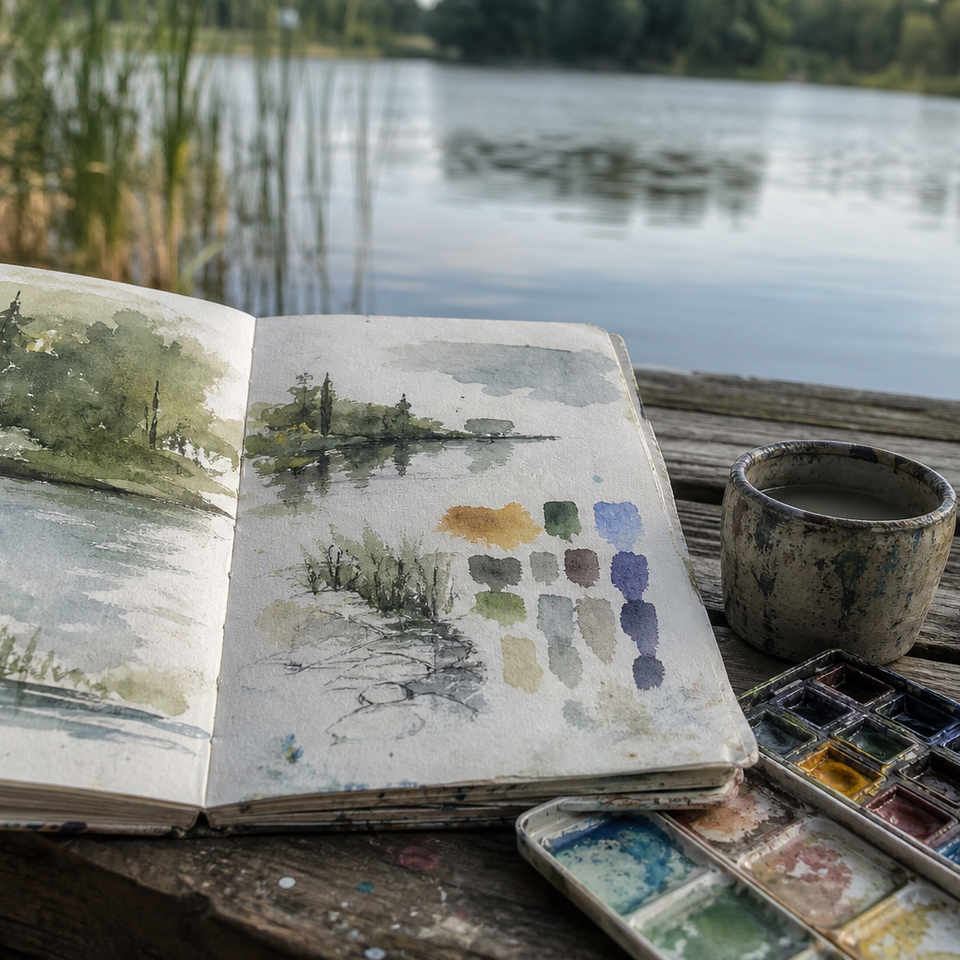
Small studies also serve a dual purpose: they are saleable works in their own right at accessible price points, and they are source material for larger studio paintings that can be offered at higher prices, either at curated fairs or through other channels.
The UK plein air and local market landscape in 2025
- Typical stall fee at a local craft fair
- £10–£50/day
- Curated urban market fees
- £99+ per stand
- HMRC trading allowance
- £1,000/year gross
- Minimum PLI cover expected by most organisers
- £5 million
- Plein air oil studies: typical local market price
- £60–£200
Varies by council and event type
London and larger cities
Tax-free threshold before registration is needed
Check individual event requirements
Depending on size, framing, and location
Building a Local Market Practice Over Time
Your first market is not a test you pass or fail. It is the first session of something that improves with repetition. You will almost certainly rearrange your stall mid-morning. You will price something wrong. You will have a quiet hour and a busy twenty minutes and finish the day with a head full of things to do differently next time. That is normal, and it is how it goes for almost everyone.
Keep a simple log after each event: what sold, at what price, what the footfall was like, what the weather did, what you would bring or leave behind next time. After three or four markets, patterns start to emerge. More of what moves, less of what sits.
Returning to the same events builds something that a first-time stallholder cannot have: familiarity. Regular visitors remember you. Buyers who did not quite commit last time come back. Organisers give you better pitches. A local market presence, maintained consistently, becomes part of how people in your area know your work.
Markets are also one channel among several, not the whole strategy. They sit alongside online selling, open studio events, and local exhibitions as part of a broader practice. The skills you develop talking to buyers, learning what connects, and presenting your work clearly serve you in every other context as well. Start with one market, do it properly, and see what you learn.
FAQ
Frequently Asked Questions
Do I need a licence to sell at a local market?
It depends. Council-run markets usually require a market stall licence handled through the organiser. Privately run craft fairs typically do not require you to apply for a licence. Always check with the event organiser before you book.
Is public liability insurance necessary?
Most organisers now expect public liability insurance of around £5 million. It is inexpensive for artists and available through memberships such as Artists' Union England or a-n, or via standalone policies.
How should I price my plein air work for a market?
Use a cost plus approach as a floor: materials, a notional hourly rate, a share of stall costs, and a margin. Offer a spread of price points from cards and small studies to larger framed originals to appeal to different buyers.
What should I bring for payments and sales on the day?
Bring a cash float with small change and a card reader such as SumUp, Zettle, or Square. Have clear price labels, an easy returns or contact policy displayed, and a QR code or sign-up sheet for a mailing list.
Which types of markets work best for plein air painters?
Start with council-run street markets and seasonal community fairs to test sales. Progress to curated makers markets and organised plein air events once you know what sells, as these attract buyers more likely to buy originals.
Author

PleinAirPainting Editorial Team
PleinAirPainting.co.uk helps artists paint outdoors with confidence through UK-focused guides, equipment advice, resources and plein air inspiration.