The Best Viewfinders for Plein Air Artists (and How to Use One Outdoors)
A practical guide to the best viewfinder for artists painting outdoors. Learn why a mid grey adjustable frame helps composition, the top UK picks under £10, and simple field tips.

Key takeaways
- • A viewfinder turns an overwhelming landscape into a bounded composition by isolating shapes and tonal relationships.
- • Match the viewfinder opening to your paper or panel aspect ratio and favour adjustable frames for multiple formats.
- • A mid grey body helps judge values in flat or overcast light common in the UK.
- • Top pick: Color Wheel Company View Catcher for its adjustable opening and colour isolation feature; Jackson's and Waterside Designs are alternatives.
- • Use consistently: hold at arm's length, close one eye, test multiple crops and make quick thumbnail sketches before painting.
You're standing in front of a beautiful stretch of countryside, sketchbook in hand, and you have absolutely no idea where to start. The scene stretches in every direction. There's too much of everything. That's a composition problem, and it's one of the most common frustrations in plein air painting. A viewfinder solves it. If you're looking for the best viewfinder for artists painting outdoors, this article covers what these small tools actually do, what to look for before you buy, and which of the three readily available UK options is worth your money.
What Does an Artist Viewfinder Actually Do?
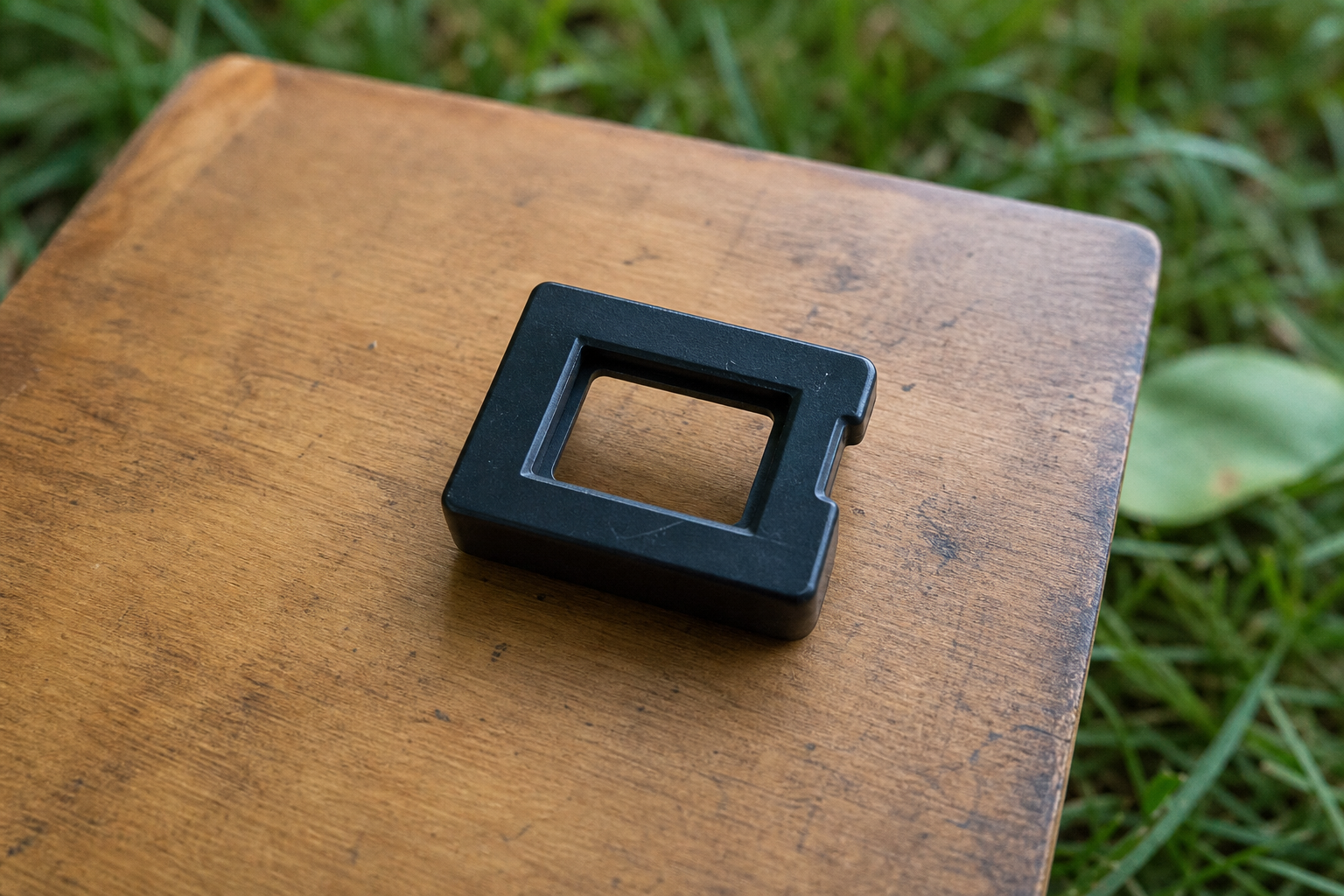
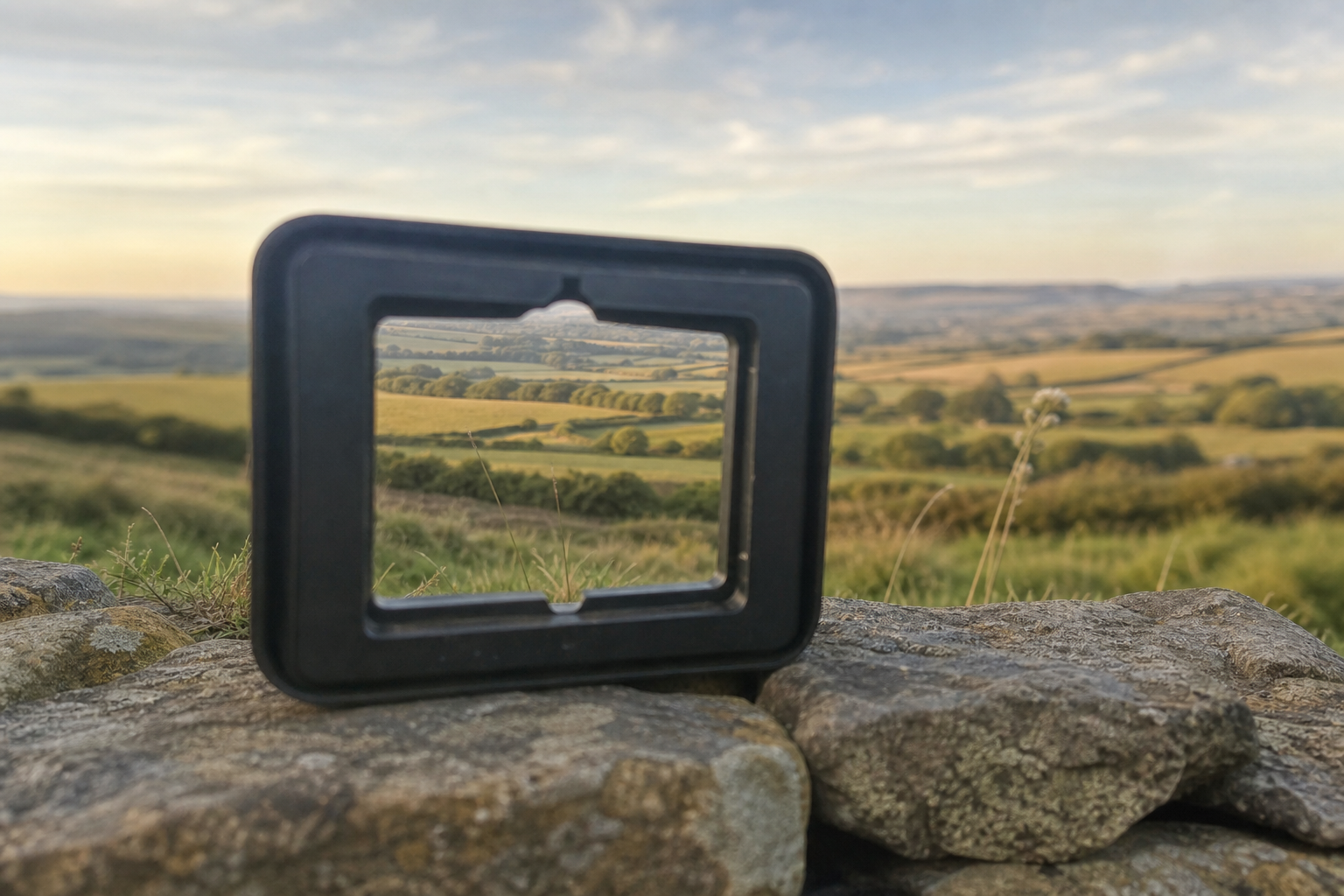
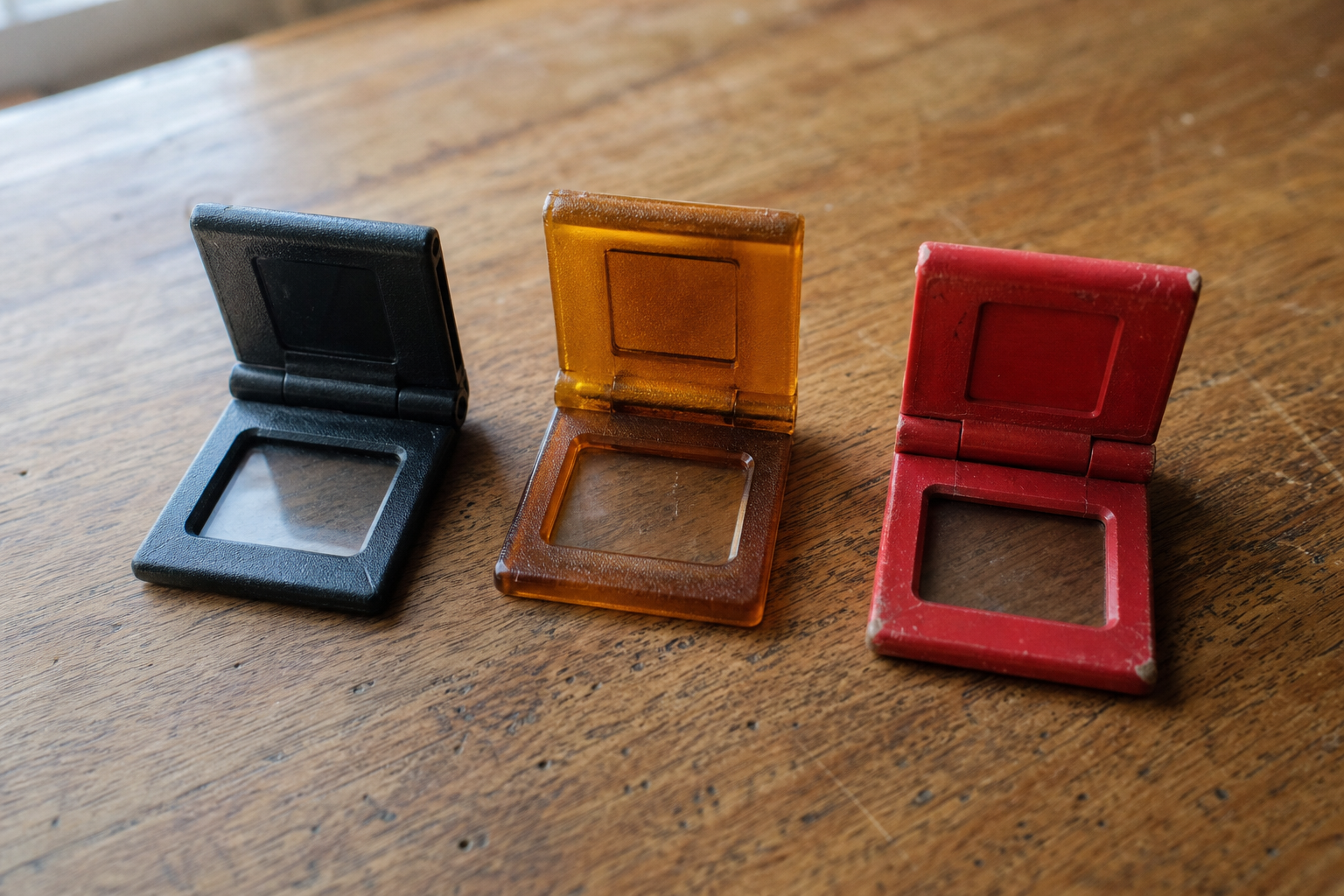
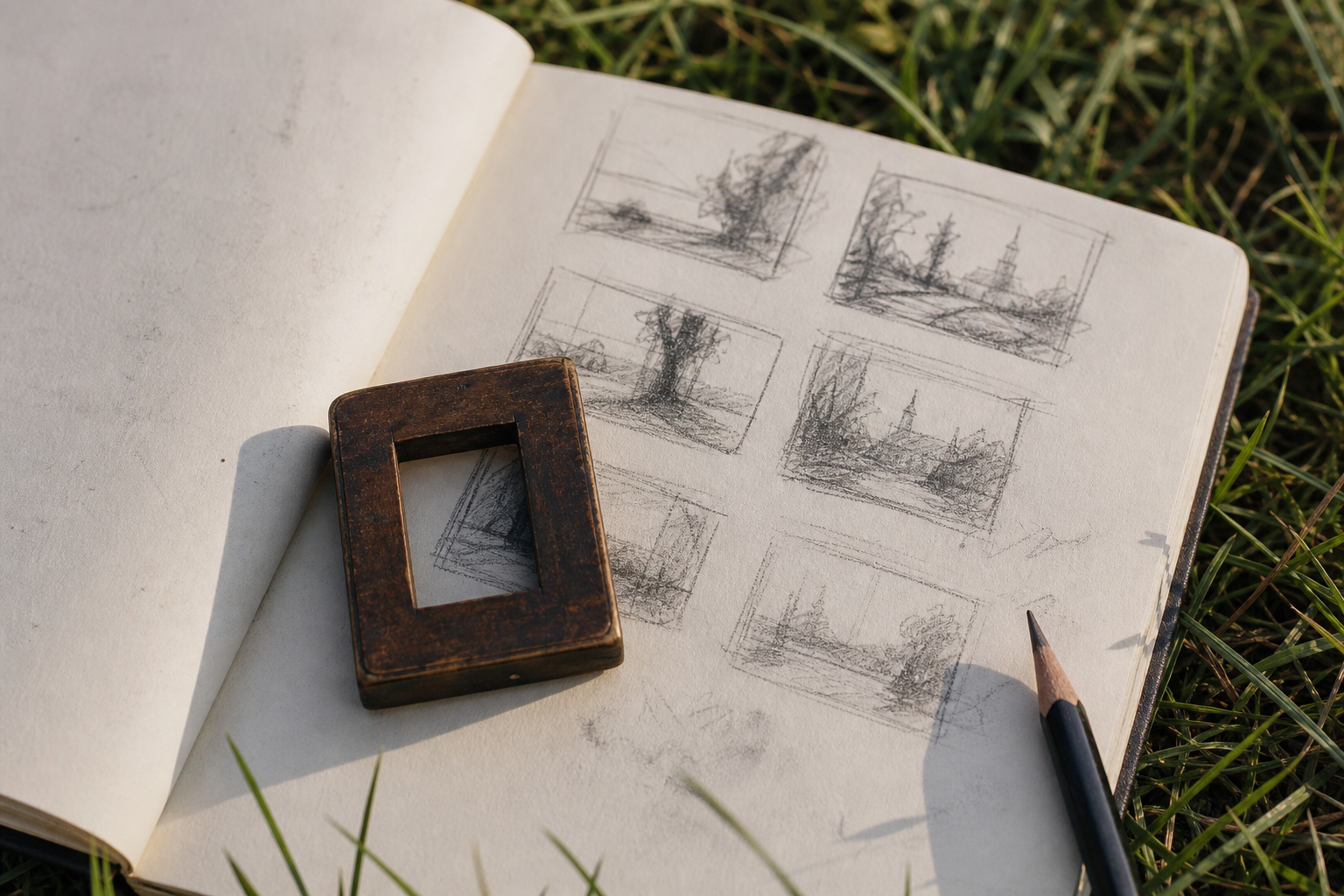
An artist viewfinder is a small rectangular frame, usually plastic, that you hold up at arm's length to isolate a portion of a scene. That's it. But that simple act does something genuinely useful: it converts an infinite, overwhelming landscape into a bounded, flat composition you can actually assess.
When you're standing outdoors without a viewfinder, your brain keeps seeing things: that tree, that barn, that interesting cloud. A composition viewfinder interrupts that habit. Through the frame, you stop seeing objects and start seeing shapes, edges, and tonal relationships. The visual noise drops away. What's left is closer to what your painting surface will actually contain.
Hold it at a consistent arm's length, close one eye, and move slowly across the scene. Try portrait and landscape orientation. Try near and far. Within a few minutes you'll have identified two or three genuinely strong crops from what felt like an unmanageable view. That process is what separates a confident start from a hesitant one.
Many viewfinders are made in mid-grey plastic, which has a practical purpose: it gives you a neutral reference for value judgement. In the flat, overcast light that's standard in Britain for a good portion of the year, that neutral grey helps you see the full tonal range of a scene more clearly. It's a small thing that makes a real difference when the light is even and the values feel compressed.
What to Look For in a Plein Air Viewfinder
Not all viewfinders are equally well suited to outdoor use. Here are the features that actually matter when you're painting in a field in October.
- Aspect ratio match: The opening should correspond to the proportions of your panel or paper. If the ratio is wrong, the composition you find through the viewfinder won't transfer accurately to your surface. This is the single most important criterion.
- Adjustable opening: A sliding frame lets you switch between multiple crop ratios without carrying a separate viewfinder for each format. For plein air work, where you might paint a square panel one session and a long horizontal the next, adjustability is genuinely useful.
- Mid-grey body: A neutral grey frame helps you compare tonal values against a consistent reference. Particularly useful in UK overcast conditions, where the contrast range in a scene can be subtle and easy to misread.
- Grid lines or rule-of-thirds guides: Printed lines dividing the frame into thirds are helpful for beginners learning to avoid centred horizons and focal points. Not essential, but worth having when you're still training your eye.
- Portability and durability: It should fit in a jacket pocket and survive being dropped on rocky ground. You will drop it. A durable plastic construction is far preferable to card when there's any chance of rain, which in Britain means almost always.
Do you need to spend anything at all?
A rectangle cut from card or mount board works perfectly well as a viewfinder. Many experienced painters start there. The advantage of a commercial viewfinder is adjustability, durability, and a value-comparison scale. But if you're not sure yet, try the card version first.
The Best Viewfinders for Artists — Our Top Picks
All three viewfinders recommended below are available from Jackson's Art, ship reliably across the UK, and cost under £10. You're spending less than the price of a tube of paint. Here's how they compare.
Best Overall — Color Wheel Company View Catcher
Jackson's
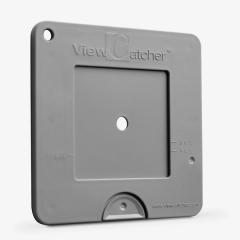
Color Wheel Company : View Catcher
The ViewCatcher Made By The Color Wheel Company Lets You View Your Subject Matter And Artwork To Make Better Decisions About Composition, Colour Value Judgement, And True Colour. It Is Ideal For Plein Air Painting And Drawing As Well As In The Studio. This Practical Artist Access
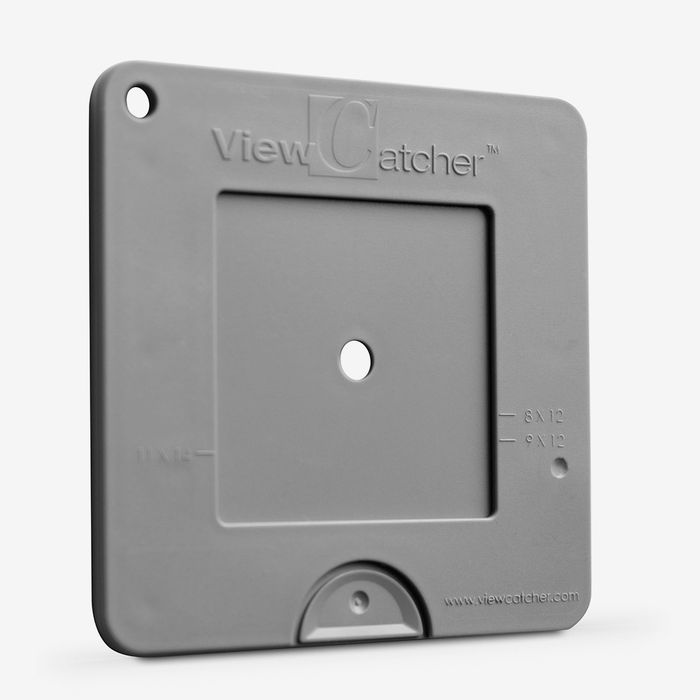
The View Catcher is a mid-grey adjustable viewfinder with a sliding mechanism that lets you set the opening to match your painting format. It also includes a small circular aperture in the corner, which you can hold up to isolate a single colour from the scene and judge it more accurately against your palette. That's a useful bonus for anyone working in oils or watercolour where colour mixing is a regular puzzle outdoors.
The mid-grey body earns its place here. In the compressed, even light of an overcast British day, having a neutral reference in your hand genuinely helps you assess whether that distant hillside is a mid-tone or a dark. It's not magic, but it works.
In terms of field use: the View Catcher is compact enough to fit in most jacket pockets, and the plastic construction handles being dropped without complaint. The one honest caveat is that the sliding mechanism can feel a little stiff until it's been used a few times. Give it a week and it loosens up. At £8.10 it's the most affordable option here and the most fully featured.
Price: £8.10 from Jackson's Art
Best for Beginners — Jackson's Viewfinder
Jackson's
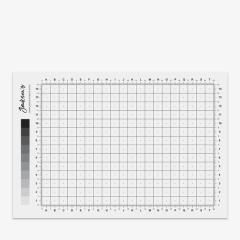
Jackson's : Viewfinder
A Handy Aid For Composition And Scale To Help You When Painting, The Jackson's Viewfinder Is Gridded To Allow You To Effectively Segment And Position A Landscape. This Rectangular, Perspex Viewfinder Can Then Be Drawn Upon To Be Used When Scaling Artwork Up, Perfect For Painting
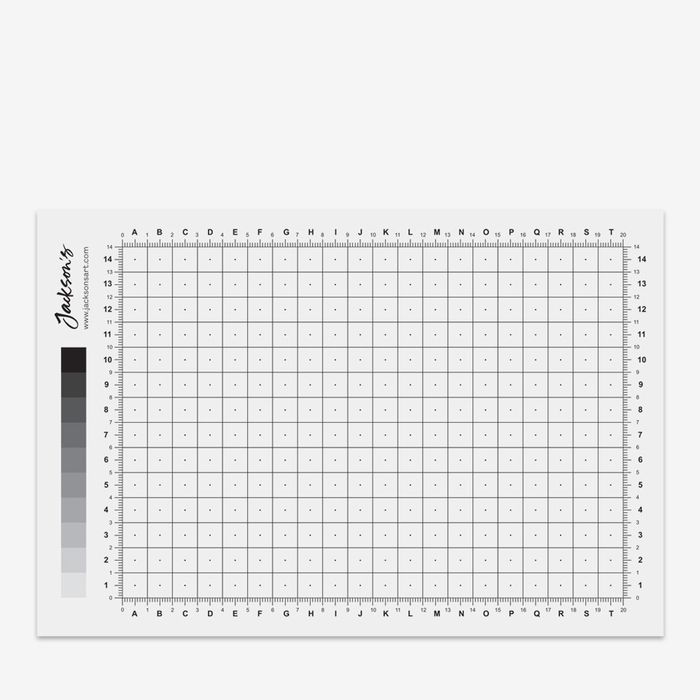
Jackson's own-brand viewfinder is a clean, straightforward adjustable frame that does exactly what it should without fuss. For a beginner who's never used a plein air viewfinder before, there's something reassuring about buying a basic tool from a supplier you already trust, and Jackson's is one of the most reliable art suppliers in the UK for exactly that reason.
The practical case for it is straightforward: if you're already putting together an order from Jackson's, adding this at £9.40 keeps everything in one place with reliable UK shipping and a straightforward returns process. No currency conversion, no import delays, no waiting three weeks for something from a US retailer.
The honest note: at £9.40 it's marginally pricier than the View Catcher for a broadly similar function. If you're deciding purely on features per pound, the View Catcher edges ahead. But if you're a beginner who wants simplicity and a familiar supplier, the Jackson's viewfinder is a perfectly solid choice.
Price: £9.40 from Jackson's Art
Best Budget Pick — Waterside Designs Viewfinder
Jackson's
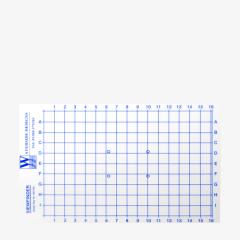
Waterside Designs : Viewfinder
Look Through This Handy Viewfinder To Aid You In The Composition Of Your Paintings And Drawings. This Viewfinder Is Broken Down Into A Rectangular Grid To Help Position The Different Elements Of A Scene And Then Transfer Them To Paper. It Can Also Be Used To Scale Up Artworks. Ma
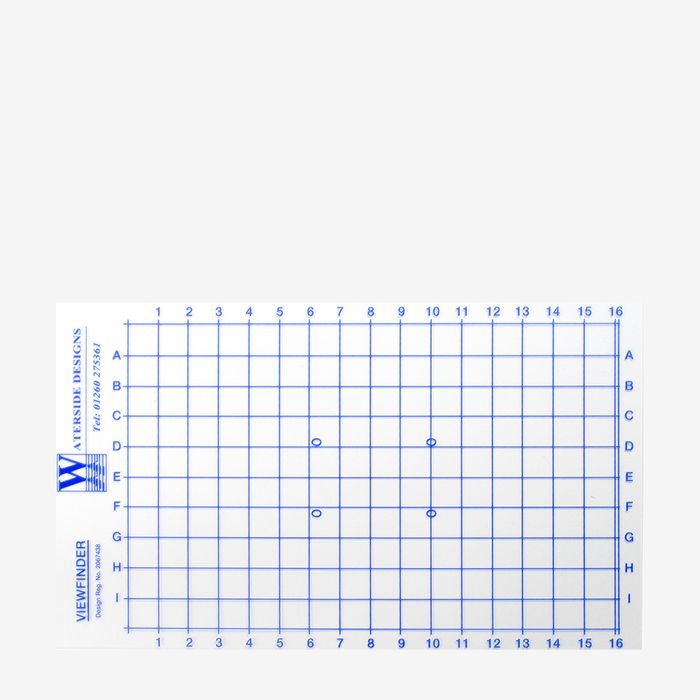
The Waterside Designs viewfinder is a compact option also available through Jackson's, sitting at £8.60. It's a competent tool and worth knowing about, particularly if the View Catcher happens to be out of stock when you're ordering.
To be straightforward about its position here: this is the "also worth considering" option rather than the outright recommendation. It does the job, and at this price point there's no significant risk in trying it. But between this and the View Catcher at £8.10 with its additional colour-isolation feature and well-established reputation, most readers will find the View Catcher the better first choice.
The Waterside Designs viewfinder is included here because UK stock of plein air accessories can be patchy, and it's useful to know there's a close alternative from the same supplier if your first choice isn't available.
Price: £8.60 from Jackson's Art
Viewfinders available from Jackson's Art
Color Wheel Company : View Catcher
Jackson's : Viewfinder
Waterside Designs : Viewfinder
How to Use a Viewfinder Outdoors (Without Overthinking It)
Owning a viewfinder and actually using it well are two different things. Here are five straightforward practices that make the difference outdoors.
- Hold it at a consistent arm's length. Same distance each time you look through it. This keeps scale consistent when you transfer what you see onto your panel or paper.
- Close one eye. This is the technique tip most beginners miss. Closing one eye flattens the scene and removes parallax, so what you're seeing through the frame is genuinely closer to the two-dimensional surface you'll be painting on.
- Move slowly and test multiple crops. Try portrait and landscape orientation. Try close and wide. Try shifting left and right. Give yourself a few minutes to explore before settling on a composition.
- Don't centre the horizon or your focal point. Use the grid lines, or imagine the frame divided into thirds, and position your key elements off-centre. A centred horizon almost always makes for a weaker painting.
- Make a [thumbnail sketch](https://www.pleinairpainting.co.uk/reviews/best-plein-air-sketchbooks) before you start. Take two minutes to sketch the best two or three compositions you've found. This small step clarifies your thinking and means you're not making composition decisions while also mixing colour and judging values.
A note on UK conditions specifically: in overcast light (which is, let's be honest, most of British weather from October to April), the tonal range in a scene is often compressed. Everything feels like a mid-tone. The neutral grey body of a good plein air viewfinder gives you a fixed reference point that helps you see where the darks and lights actually sit. It's in exactly these conditions that the mid-grey ViewCatcher earns its keep most convincingly.
Using your viewfinder outdoors
Hold at arm's length
Keep the same distance every time you look through it. Scale consistency matters when you transfer the composition to your panel.
Close one eye
This flattens the scene and removes parallax. It's the single most important technique tip most beginners miss.
Test portrait and landscape
Rotate the viewfinder and try both. Also try wide and close crops of the same motif before deciding.
Apply the rule of thirds
Avoid placing your horizon or focal point dead centre. Use the grid lines (or imagine thirds) to position them off-centre.
Make a thumbnail sketch
Before committing to a full painting, sketch the top two compositions from memory. Takes two minutes and saves you from a weak start.
Do You Even Need a Viewfinder? (Honest Answer)
The short answer is: a rectangle cut from card or mount board works perfectly well. Many experienced painters use them for years, and some never bother with a commercial viewfinder at all. If you're genuinely uncertain whether this kind of tool suits how you work, cutting a frame from an old mount board is a completely legitimate way to find out.
That said, there are three practical reasons why the commercial options earn their modest price in outdoor conditions.
First, adjustability. A fixed card frame locks you into one crop ratio. A sliding viewfinder lets you test multiple formats in the same session without carrying several pieces of card.
Second, durability. A carefully cut card viewfinder will last about twenty minutes in a Lake District drizzle before it becomes a soggy rectangle that tells you nothing useful. The plastic versions are impervious to the weather in a way card simply isn't.
Third, the value-comparison feature. The mid-grey body on tools like the View Catcher gives you a tonal reference a DIY version won't provide. For anyone who struggles to judge values outdoors, that reference is worth having.
At under a tenner, this is one of the art purchases where the cost-benefit question almost answers itself. But only if you'll actually use it. Even the most experienced plein air painters reach for a viewfinder when they're stuck on a composition. It's not a beginner's crutch; it's a tool that works regardless of your level.
Our Verdict — The Best Viewfinder for Plein Air Painting
The Color Wheel Company View Catcher is the top pick. The mid-grey body, adjustable opening, and colour-isolation aperture make it the most fully-featured option at the lowest price point currently available from a UK supplier. It's compact enough to carry in a jacket pocket, durable enough for outdoor use, and works across multiple painting formats. At £8.10 from Jackson's Art, it's a straightforward decision.
If you're already placing an order with Jackson's and want to keep things simple, their own-brand viewfinder at £9.40 is a reliable alternative. The Waterside Designs option at £8.60 is worth knowing about if stock on the other two is limited.
Whichever you choose, the bigger gain comes from actually using it in the field. Spend a few sessions working with it before you start painting, testing crops and making thumbnails, and you'll find the composition decisions that used to feel overwhelming become much more manageable. From there, it's worth exploring how value structure and subject selection can build on that stronger compositional foundation.
FAQ
Frequently Asked Questions
What does an artist viewfinder do?
A viewfinder is a small rectangular frame you hold at arm's length to isolate part of a scene. It helps you see shapes, edges and tonal relationships so you can choose a strong composition.
Do I need to buy a commercial viewfinder or will a card do?
A cut card frame works perfectly to start. Commercial viewfinders add adjustability, weatherproof durability and a mid grey for value comparison, which is useful in UK overcast light.
What should I look for when choosing the best viewfinder for artists?
Ensure the opening matches your panel or paper aspect ratio, prefer an adjustable sliding opening, choose a mid grey body for value checks, and look for grid lines plus durable, pocketable construction.
How do I use a viewfinder outdoors effectively?
Hold it at a consistent arm's length, close one eye to flatten the scene, test portrait and landscape crops, avoid centring horizons or focal points, and make quick thumbnail sketches before starting.
Which viewfinder is recommended for plein air painting?
The Color Wheel Company View Catcher is the top pick for its mid grey body, adjustable opening and colour isolation feature at about £8.10. Jackson's own viewfinder and the Waterside Designs option are solid alternatives.
Author

PleinAirPainting Editorial Team
PleinAirPainting.co.uk helps artists paint outdoors with confidence through UK-focused guides, equipment advice, resources and plein air inspiration.