PleinAirPainting
Painting Over Oil-Based Paint: What You Need to Know
Practical, step-by-step advice for painting over oil based paint: test the surface, clean, de-gloss, use an adhesion primer and apply two finish coats for a lasting result.

Key takeaways
- • Confirm the paint type with the methylated spirits test before you start.
- • Clean and degrease thoroughly; repeat if surfaces are heavily contaminated.
- • De-gloss with 180–240 grit to create a key but do not strip back unnecessarily.
- • Use a dedicated adhesion or bonding primer before applying finish coats.
- • Apply two full topcoats and respect drying times for a durable finish.
Painting over oil based paint is one of those jobs where the preparation does almost all the work. Get that right and the finish looks great; skip it and you'll be peeling curled strips of topcoat off your skirting boards six months later wondering what went wrong. The good news is that the process is reliable, straightforward, and well within reach if you understand why each step matters. This guide walks you through it properly, from confirming what you're dealing with to applying the final coat.
Can You Paint Over Oil-Based Paint?
Yes, confidently. The combination of old oil-based gloss and a new water-based topcoat isn't inherently problematic. What causes failures is almost always a preparation shortcut: painting over a greasy surface, skipping the de-glossing, or reaching straight for a standard undercoat when what you actually need is an adhesion primer.
The principle running through the whole process is simple: clean, key, prime, topcoat. Each step exists for a reason. Once you understand the logic, the process becomes straightforward to follow and easy to adapt to whatever surface you're working on.
First Step: Identify What You're Dealing With
Before you do anything else, it's worth confirming that what you're looking at is actually oil-based paint. In UK homes, most woodwork painted before the mid-2000s will be oil gloss, but it's not always obvious from looking at it.
The Methylated Spirits Test
Dampen a clean cloth or cotton pad with methylated spirits (the UK equivalent of the denatured alcohol used in US guides) and rub it firmly over a small area of the painted surface.
If the paint softens or comes off onto the cloth, it's water-based. If nothing happens and the surface stays hard and unchanged, treat it as oil-based and proceed accordingly. It's a simple test and takes thirty seconds, but it tells you everything you need to know about how to proceed.
Visual Clues That Support the Test
On top of the spirits test, a few visual signs point fairly reliably to oil-based paint. Old oil gloss tends to have a hard, almost glassy feel underhand. It resists scratching and often has a very high sheen, even after years. On older properties it may have yellowed slightly, particularly in areas that don't get much natural light. If you're working in a house built before the 1990s and the woodwork hasn't been touched since, the odds are strong that it's oil gloss. When in doubt, treat it as oil-based: the preparation process works for both, and it's better to over-prepare than to assume.
Assess the Condition Before You Pick Up a Brush
The condition of the existing surface determines how much work comes before the priming stage. Not all old oil gloss is in the same state, and the approach needs to match what you're actually looking at.
| Surface condition | What it means | What you need to do |
|---|---|---|
| Sound and glossy | Old oil gloss intact, no failures | Clean → de-gloss sand → adhesion primer |
| Peeling or flaking | Adhesion failing in places | Scrape back, feather sand, fill, spot-prime first |
| Chalky or powdery | Old paint breaking down | Thorough clean, possibly stain-blocking primer |
| Heavily contaminated | Nicotine, grease, cooking residue | Clean twice, degrease aggressively |
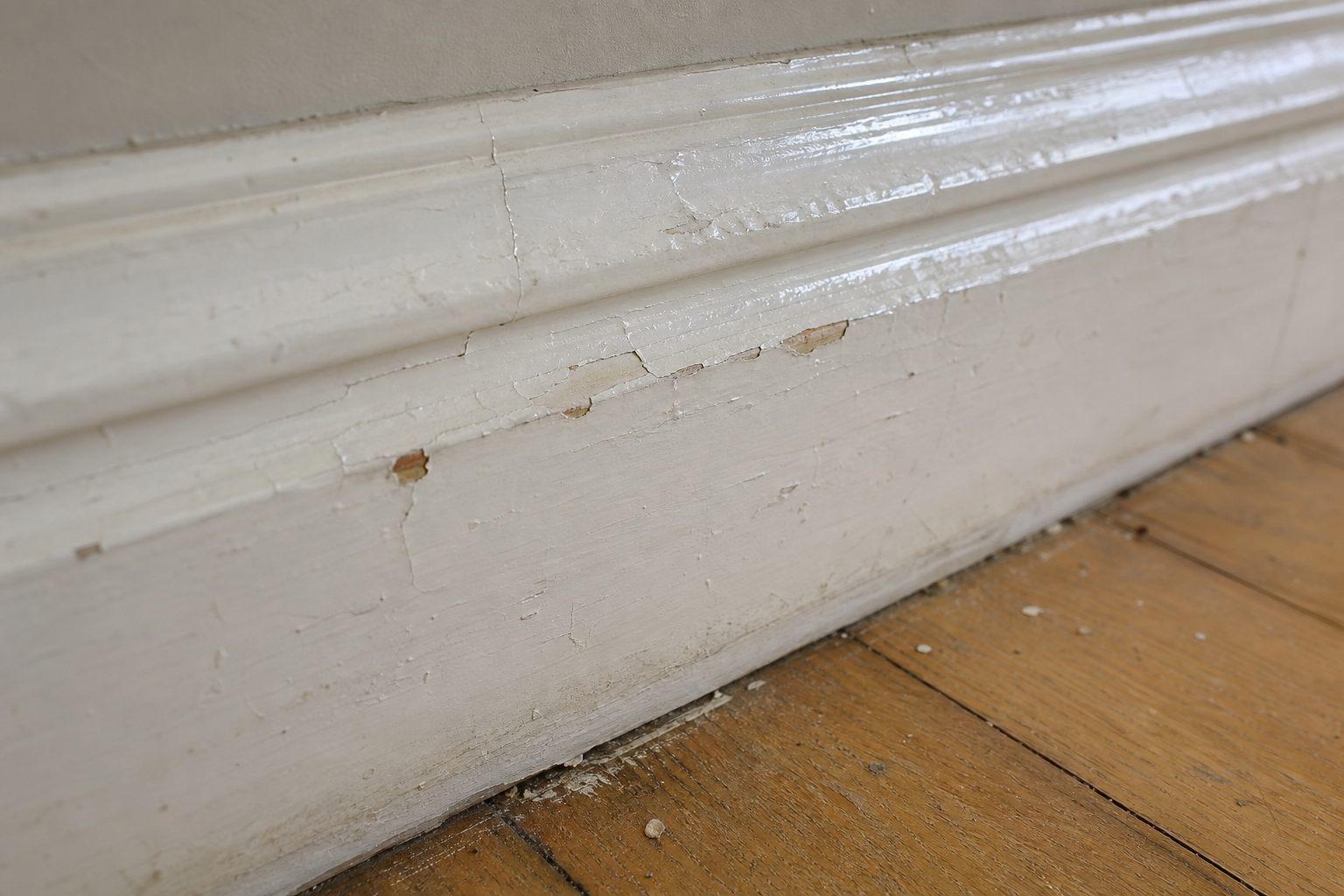
Peeling or flaking paint is the one condition that warrants the most attention. If the existing coat is already failing, a new topcoat over the top won't rescue it. Scrape back everything that isn't firmly attached, feather the edges with sandpaper so there's no hard lip, fill any low spots with a fine surface filler, and spot-prime those areas before you prime the whole surface. It's more work up front but it's the only approach that holds.
Contaminated surfaces, particularly in kitchens or older properties where decades of cooking grease or nicotine has built up, need an especially thorough clean. Don't assume one wash is enough. Two passes with a proper degreaser, with a rinse between them, is the right call.
How to Prepare the Surface Properly
This is the section that decides whether your finish lasts or fails. Preparation for painting over oil based paint isn't glamorous, but it's where the actual work happens.
Cleaning and Degreasing
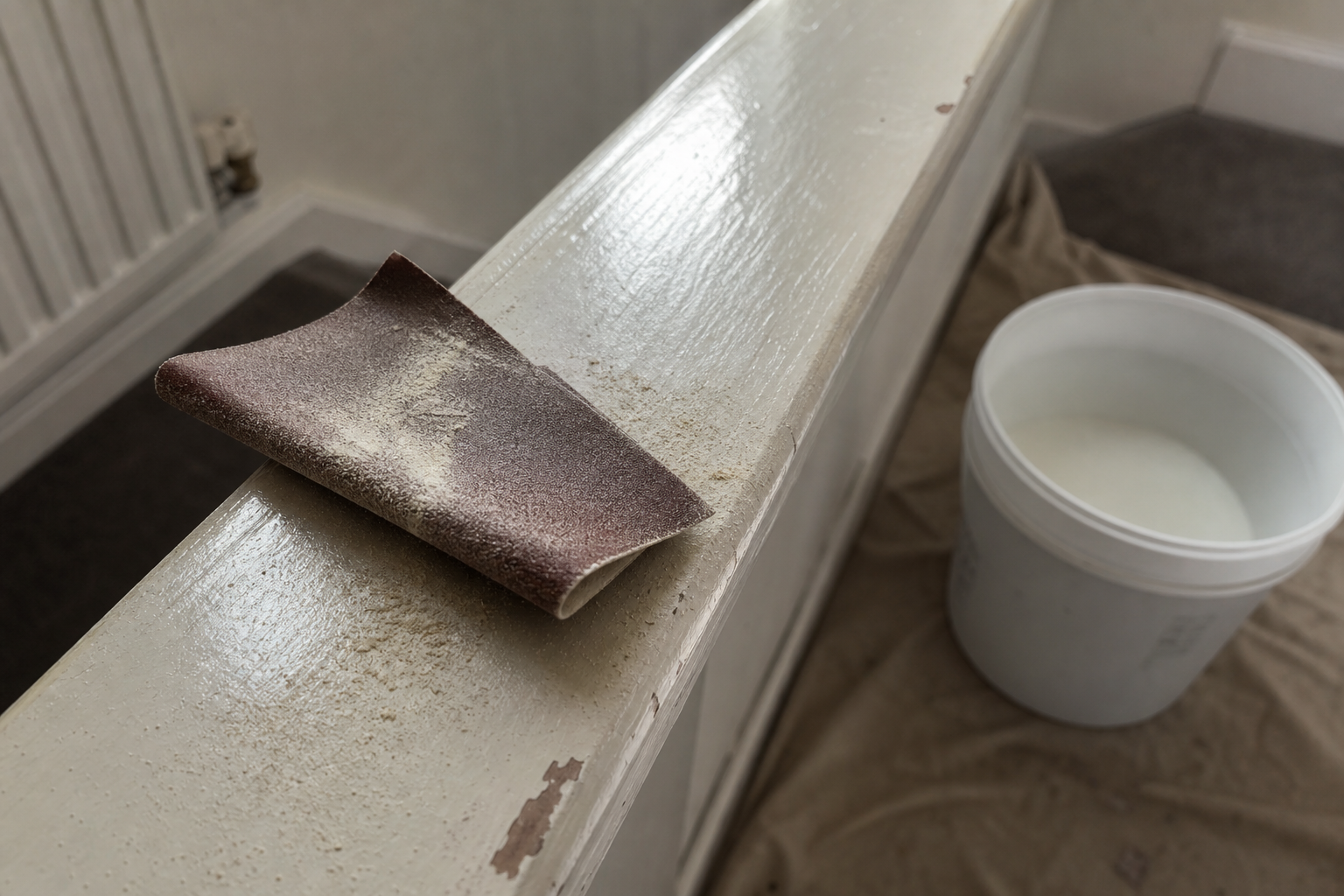
Sugar soap is the standard UK choice for cleaning painted surfaces before repainting. It's widely available, inexpensive, and cuts through the grease, dust, and grime that accumulates on woodwork over years. Mix it to the manufacturer's dilution, work from top to bottom with a sponge or cloth, and rinse thoroughly with clean water afterwards. Change your water regularly as you work; a bucket of dirty water just redistributes the grime you're trying to remove.
If the surface is particularly heavily soiled, a dedicated decorators' degreaser is worth reaching for instead. These are stronger than sugar soap and better suited to the kind of built-up contamination you might find on kitchen woodwork or around a cooker hood.
Once the surface is clean, let it dry completely before moving on. In UK conditions, particularly in autumn and winter, this can take longer than you'd expect. Painting over a damp surface, even slightly damp, is asking for adhesion problems.
De-Glossing and Creating a Key
Water-based paint won't bond reliably to a high-gloss film. The smooth, hard surface of old oil gloss gives the new paint almost nothing to grip. De-glossing, or creating a key, fixes this by introducing microscopic scratches that the primer can bite into.
Don't overdo the sanding
You're not trying to remove the old paint, just dull the sheen uniformly. Fine abrasive (180 to 240 grit) is usually enough. Always sand with the grain on timber surfaces.
Work methodically across the whole surface, using consistent pressure and keeping to the grain direction on timber. The goal is a uniform, matte appearance across the surface; any patches that still look shiny haven't been keyed properly and should get another pass. Once you're done, vacuum off the dust, then wipe down with a barely damp cloth or a tack cloth to pick up anything remaining. Going into the priming stage with dust on the surface is a common and entirely avoidable mistake.
Priming: The Step You Cannot Skip
If there's a single step that separates a finish that lasts from one that fails, it's this one. An adhesion or bonding primer creates the chemical and physical bridge between the old oil-based surface and whatever you're painting over it. Without it, even beautifully prepared surfaces can let you down.
What to look for on the tin
Look for wording like "bonding primer", "adhesion primer", "multi-surface primer" or "grip primer". A standard undercoat is not the same thing and will not give you the adhesion you need over old oil gloss.
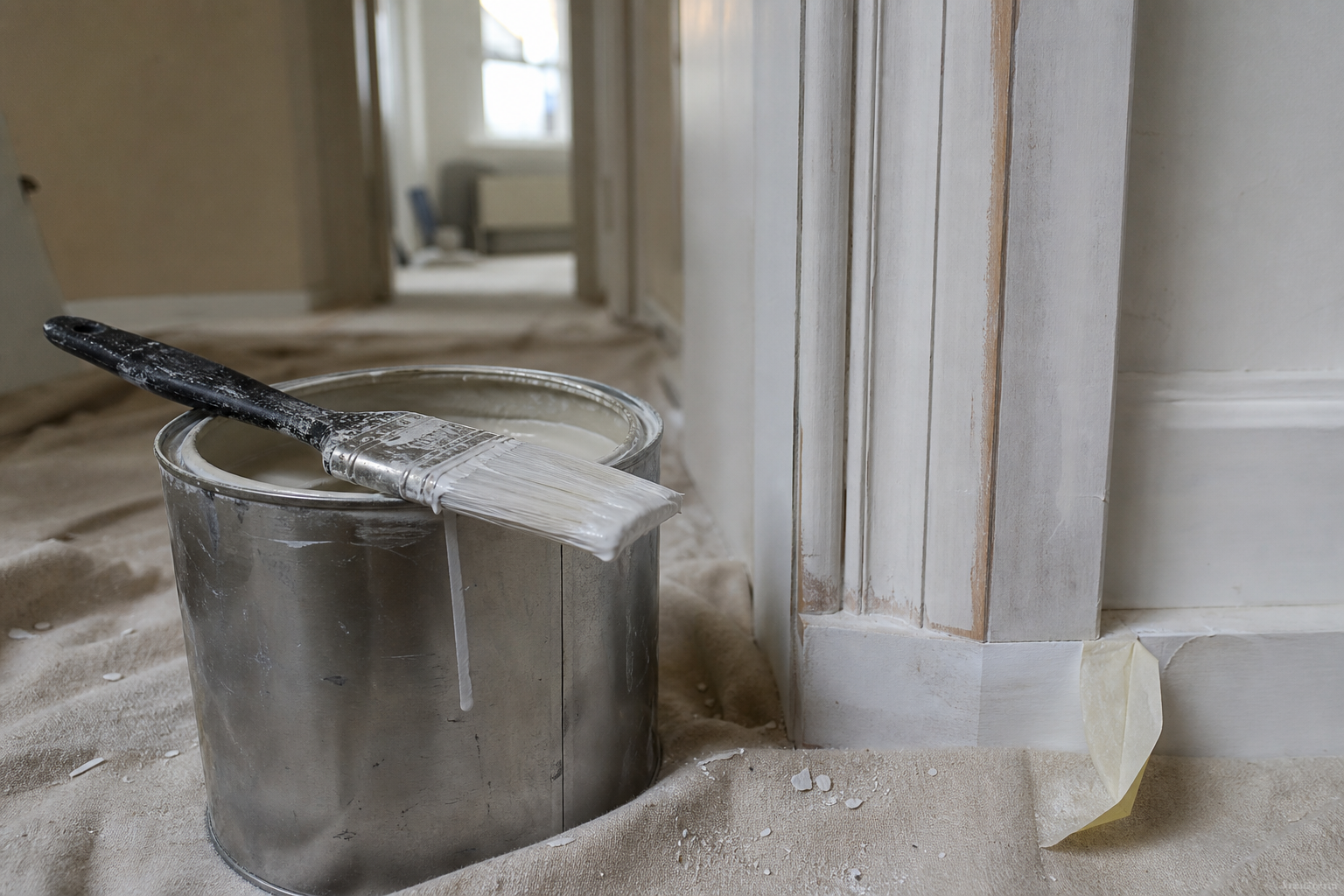
Water-based adhesion primers are now widely used in the UK trade. They're low odour, dry quickly, and perform well as a base for water-based topcoats. Zinsser Bulls Eye 1-2-3 is one well-known example of a water-based bonding primer that's used regularly on problem surfaces. Solvent-based options are still useful where you need maximum tenacity, on exterior joinery, tannin-rich timber like oak, or where you're continuing with an oil-based topcoat system.
Apply in one full, even coat. On doubtful substrates, or where you're making a significant colour change, two coats is a sensible approach. Check the tin for recoat times and respect them; in cooler or damper conditions, water-based primers can take longer to dry than the label suggests.
Applying the Finish Coats
Two coats is the standard, and it's the right call for durability and consistent colour. A single coat, even over a good primer, rarely gives you the coverage or depth you want.
In the UK, water-based trim paints have become the default for most interior woodwork. The shift has been driven partly by VOC regulations, which have tightened significantly since the mid-2000s, and partly because modern acrylic and hybrid alkyd-acrylic enamels have genuinely improved to a point where they're a practical match for oil-based systems in most situations. They dry faster, keep their colour better in low-light areas, and are much easier to live with while you're applying them.
Oil-based enamels remain appropriate where you want maximum hardness, you're working on exterior joinery, or you're continuing an existing oil-based system and want consistency. They take longer to dry between coats and will yellow over time in rooms without much natural light, which is worth factoring in.
For water-based enamels, technique matters more than many painters expect. These paints flash off quickly, particularly in a warm room, so maintaining a wet edge is essential. Work in manageable sections and don't go back over paint that's already started to dry; it'll drag and leave marks. A slightly damp synthetic brush helps, and if you're finding the paint is tacking up too fast, a small amount of a compatible paint conditioner (Floetrol is commonly used in the UK) can extend the open time and help the paint flow out more smoothly.
Lay off in the grain direction with a lightly loaded brush at the end of each section. A light denib between coats with very fine abrasive paper (320 grit) will remove any dust nibs and give the second coat the best possible surface to go onto.
Substrate-Specific Tips for UK Homes
The process is the same across surfaces, but the details vary. Here's what to keep in mind for the surfaces you're most likely to be working on.
| Surface | Common situation | Key considerations |
|---|---|---|
| Interior doors and skirting | Gloss or eggshell oil from 1980s–90s onwards | Standard clean/key/prime process; check for multiple layers on older properties |
| Victorian or Edwardian joinery | Possible multiple layers, possible lead | Wet sand or encapsulate rather than dry-sand aggressively; see lead note below |
| Radiators and metal pipes | Oil-based paint with heat exposure | Use metal-capable primer; check topcoat is heat-tolerant if needed |
| Previously painted walls | Less common with old oil; still seen in older properties | Same process: wash, key, adhesion primer, then emulsion |
A Note on Lead Paint in Older Properties
If you're working on a property built before 1970, particularly on original joinery that may not have been touched since, there's a realistic possibility that one or more of those older paint layers contains lead. Lead paint was common in the UK until it was phased out through the 1960s and 70s.
The practical response is straightforward: don't dry-sand aggressively. Wet sanding keeps lead-containing dust out of the air. Working with extraction, or wearing a suitable respirator, adds further protection. If the existing paint is in good condition, encapsulation is often the most sensible approach: prepare and prime over the existing layers without disturbing them, rather than stripping back. If you're uncertain about what you're dealing with, a lead paint test kit is inexpensive and widely available from hardware suppliers.
Troubleshooting Common Problems
| Problem | Likely cause | What to do |
|---|---|---|
| Paint peeling after a few months | Surface not keyed or primed correctly | Strip back to sound, re-prep fully |
| Finish feels tacky or soft | Water-based topcoat over oil without primer | Allow to cure; if adhesion fails, strip and start again |
| Visible brush marks | Paint worked too hard or drying too fast | Dampen brush slightly, work smaller sections, use a compatible paint conditioner |
| Paint won't cover old colour | Too few coats or wrong primer | Use high-opacity adhesion primer and two full finish coats |
| Finish yellowing over time | Oil-based topcoat in low-light area | Normal with oil enamels; switch to water-based system on next repaint |
Peeling after a few months is almost always a preparation failure, not a product failure. The fix is the same every time: strip back to sound, clean properly, key, prime with an adhesion primer, and repaint. There's no shortcut that reliably rescues a failed adhesion job.
Tackle brushmark problems by working with the paint's drying behaviour rather than against it. Water-based enamels set quickly; working smaller sections, keeping the brush slightly damp, and not over-brushing are the practical adjustments that make the difference.
Painting Over an Old Oil Painting: The Fine Art Version
For painters approaching this from a fine art context rather than a decorating one, the principles are related but the application is different. Reworking an existing oil painting on canvas or board is common, and it can be done successfully if you understand what you're working with.
The key principle in oil painting is fat over lean: each successive layer should be slightly richer in oil, or more flexible, than the layer beneath it. Reversing this relationship, placing a lean, fast-drying layer over a rich, oil-heavy one, risks cracking as the painting ages and moves.
If you want to paint over an existing composition, the most reliable approach is to block out the old image with an opaque oil underpainting. Titanium white or a warm neutral mixed with a little solvent gives you a lean, fast-drying layer to repaint over. Allow this to dry thoroughly, which in practice means at least two weeks in normal studio conditions, before beginning again.
Once dry, redraw your composition in thin, lean paint and build your layers upwards from there, just as you would on a fresh surface. The texture of the original painting will be present beneath the new work, and this can often be worked with rather than fought: it gives the surface a liveness that a smooth ground sometimes lacks.
The parallel to the decorating context is closer than it might seem. Sound, dry, compatible layers that follow the correct flexibility sequence are what keep a painting stable over time. Ignore those relationships and you'll see the same kinds of failures, peeling, cracking, poor adhesion, that show up on a poorly prepared door.
Full Process at a Glance
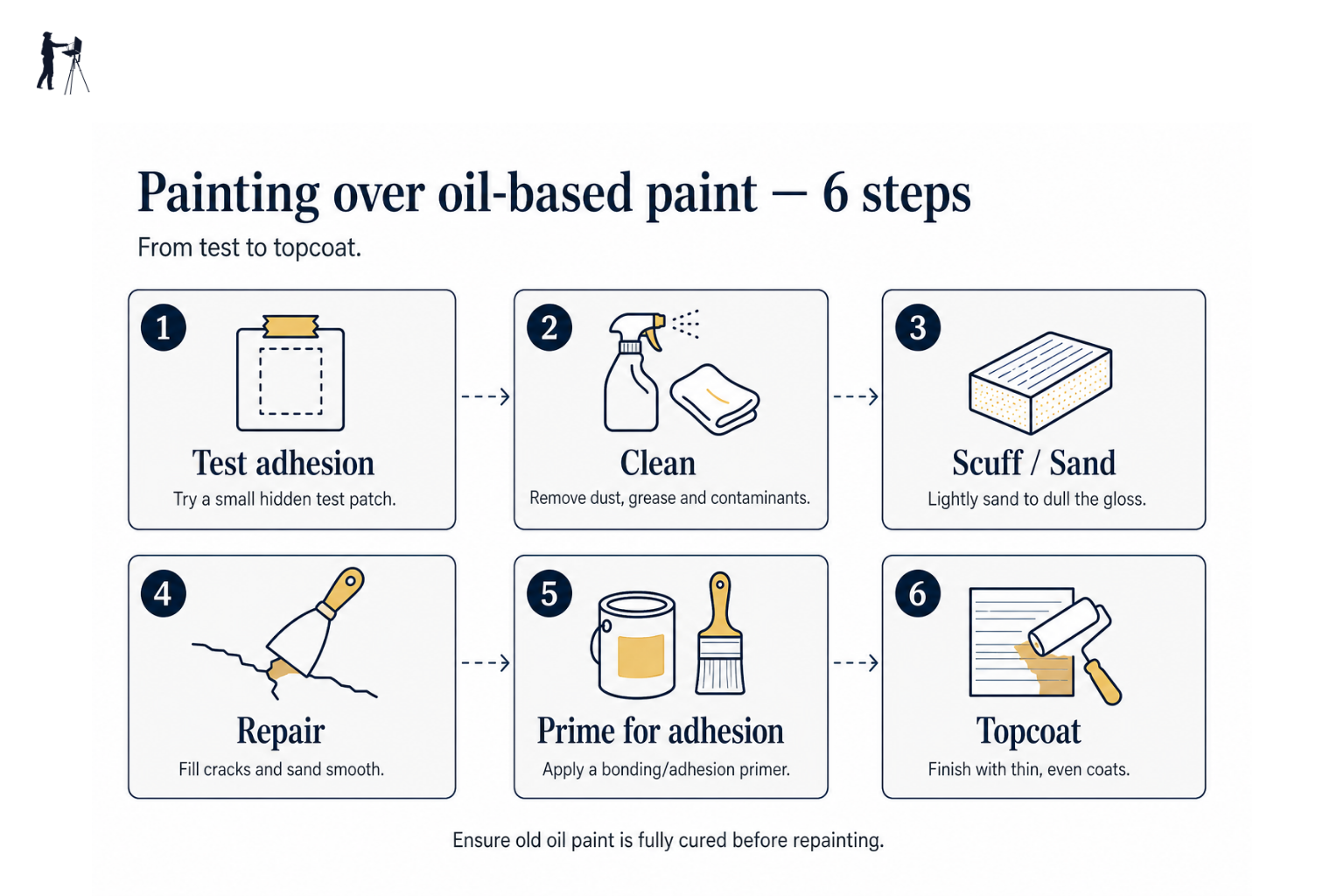
Painting over oil-based paint: the full process
Test the surface
Use the methylated spirits test to confirm the existing paint is oil-based.
Assess the condition
Sound and glossy needs standard prep. Peeling or contaminated surfaces need more work first.
Clean and degrease
Wash thoroughly with sugar soap or a decorators' degreaser. Rinse and allow to dry fully.
De-gloss and key
Sand lightly with 180 to 240 grit abrasive to dull the sheen. Wipe off all dust.
Apply adhesion primer
Use a bonding or multi-surface primer designed for glossy or previously painted surfaces. Allow to dry fully.
Apply two finish coats
Use a water-based or oil-based topcoat of your choice. Two coats for durability and even colour.
The process isn't complicated, but each step earns the next one. Clean surfaces let the key work properly. A good key lets the primer grip. A proper adhesion primer gives the topcoat something it can hold onto for years rather than months. Do all of it and painting over oil based paint is a routine job. Skip any of it and you'll know about it by spring.
FAQ
Frequently Asked Questions
Can I paint a water-based topcoat over old oil-based paint?
Yes. But only after proper preparation: clean and degrease, de-gloss with fine abrasive, then apply an adhesion or bonding primer before the water-based topcoat.
How do I tell if the existing paint is oil based?
Use the methylated spirits test: rub a spirits-damp cloth on a small area. If the paint softens or comes off it is water based. If nothing changes treat it as oil based.
Do I have to sand right back to bare wood?
No. You only need to de-gloss or create a key with 180 to 240 grit abrasive so the primer can grip. Do not overdo it and always sand with the grain.
What primer should I use over oil gloss?
Use a product labelled bonding primer, adhesion primer or multi-surface primer. Water-based bonding primers work well for interiors. Use solvent-based primers for exterior joinery or difficult timbers.
What if the old paint is peeling or contaminated?
Strip back loose paint, feather the edges, fill low spots and spot-prime. For heavy contamination wash twice with a degreaser. If you suspect lead, avoid dry sanding, consider wet sanding, encapsulation or test first.
Author

PleinAirPainting Editorial Team
PleinAirPainting.co.uk helps artists paint outdoors with confidence through UK-focused guides, equipment advice, resources and plein air inspiration.